Healthiest oil choices can lower heart disease risk while keeping meals flavorful — this guide explains which cooking oils support cardiovascular health and how to use them for frying, sautéing, baking, and dressings. Read on for science-backed comparisons, smoke-point guidance, and practical kitchen tips.
Introduction to Healthy Cooking Oils
Choosing the right cooking fat affects flavor, food texture and — importantly — heart health. Oils supply concentrated calories and fatty acids that influence blood lipids (LDL, HDL, triglycerides), inflammation, and oxidative stress. Rather than “one best oil,” the healthiest strategy mixes oils chosen for their fatty acid profiles, antioxidant content, and heat stability matched to each cooking method.
Many oils are high in monounsaturated or polyunsaturated fats, which tend to be cardioprotective, while others have higher saturated fat content and different uses in the kitchen. The Mediterranean diet’s emphasis on olive oil is a model for heart-healthy cooking patterns because it combines beneficial lipids, polyphenols, and whole-food pairings. According to an expert consensus report from 2024, dietary patterns emphasizing unsaturated fats over saturated fats lower cardiovascular disease risk (source type: 2024 expert consensus report).
Throughout this guide you’ll get: a clear explanation of fat types and mechanisms; a comparison table with calories, fatty-acid breakdown and smoke points; practical selection advice for frying, sautéing, baking and dressings; storage and oxidation tips; and concise, evidence-based recommendations you can use in everyday cooking.
Next, we’ll define the fats you’ll see on labels and menus, and explain what they mean for heart health and cooking performance.
Understanding Different Types of Fats in Cooking Oils
Dietary fats in oils fall into four major categories. Knowing them helps you choose the healthiest oil for a given use.
- Monounsaturated fats (MUFA): These are single-double-bond fatty acids such as oleic acid (C18:1n‑9). MUFAs can improve the LDL/HDL cholesterol ratio and are abundant in olive and avocado oils.
- Polyunsaturated fats (PUFA): PUFAs include omega‑3 (alpha-linolenic acid, ALA; e.g., flaxseed oil) and omega‑6 (linoleic acid, LA; e.g., sunflower, soybean). PUFAs can lower LDL cholesterol but balance matters: excessive omega‑6 relative to omega‑3 may influence inflammation pathways.
- Saturated fats (SFA): No double bonds; examples include lauric (C12), myristic (C14), palmitic (C16). High intakes of SFAs raise LDL cholesterol in many people and are prominent in coconut and palm oils. Moderation is advised for heart health.
- Trans fats: Industrial trans fats (partially hydrogenated oils) raise LDL and lower HDL and are associated with increased heart disease risk; these are being phased out of the food supply and should be avoided.
Key practical examples:
- Olive oil: High in MUFA (oleic acid), low SFA — great for dressings and low- to medium-heat cooking.
- Avocado oil: High MUFA, higher smoke point — suitable for high-heat cooking.
- Canola oil: Mixed MUFA and PUFA with low SFA — versatile for frying and baking.
- Sunflower/safflower oils: High PUFA (linoleic) unless high-oleic varieties, which are MUFA-rich.
- Flaxseed and walnut oils: Rich in ALA omega‑3 — best used raw (dressings) due to low heat stability.
- Coconut oil: High SFA, solid at room temp — used sparingly and more for flavor than heart benefits.
To anchor calories to macronutrient understanding: fat provides about 9 kcal per gram, which explains oil energy density and the need for portion control; see calories per gram of macronutrients for context.
Next we’ll unpack what evidence makes an oil “heart-healthy,” focusing on cholesterol effects, inflammation and antioxidants.
What Makes an Oil the “Healthiest Oil” for the Heart?
Labeling an oil as the “healthiest oil” depends on multiple factors: fatty acid profile, effect on lipids (LDL, HDL, triglycerides), antioxidant content (polyphenols, vitamin E), and whether the oil promotes or reduces inflammation and oxidative stress. Clinical trials and meta-analyses provide the strongest evidence for cardiovascular outcomes.
Fatty acids and cholesterol: Replacing saturated fats with unsaturated fats (MUFA or PUFA) lowers LDL cholesterol — a consistent finding in randomized controlled trials (source type: 2022 meta-analysis of RCTs). For example, diets high in MUFA like the Mediterranean diet reduce LDL and often raise HDL modestly; a 2018 randomized trial showed extra‑virgin olive oil reduced cardiovascular events in a primary prevention population (source type: 2018 randomized controlled trial).
Omega‑3 PUFAs: Long-chain omega‑3s (EPA and DHA) from fish oils reduce triglycerides and have modest benefits for cardiovascular risk markers. Plant-based ALA (alpha-linolenic acid) from flaxseed or walnut oils converts partially to EPA/DHA and is associated with lower cardiac events in observational studies (source type: 2020 prospective cohort study).
Antioxidants and polyphenols: Unrefined oils like extra‑virgin olive oil contain polyphenols that reduce oxidative stress and inflammation — mechanisms linked to reduced atherosclerosis progression. According to the American Heart Association, antioxidant-rich oils can contribute to heart-healthy dietary patterns (source type: American Heart Association recommendation).
Balance matters: Excessive omega‑6 intake relative to omega‑3 can promote pro‑inflammatory eicosanoid pathways in theory, but population studies show benefits of PUFA replacement for SFA. Choosing oils with a favorable omega‑6:omega‑3 ratio or combining oils with omega‑3 foods is practical.
Heat stability and oxidation: Some PUFAs oxidize when heated, forming harmful aldehydes and lipid peroxides. Oils with higher MUFA and fewer PUFAs (or refined oils with removed free fatty acids) are more heat-stable. Smoke point matters as a proxy for practical heat tolerance but is not the only indicator; oxidative stability tests and FFA (free fatty acid) content matter too.
Net effect on heart disease: Clinical outcomes depend on overall dietary patterns. A 2023 meta-analysis found replacing dietary saturated fats with polyunsaturated fats reduced coronary heart disease events (source type: 2023 meta-analysis of cohort and intervention studies). Thus the “healthiest oil” for the heart is an unsaturated‑fat dominant oil used appropriately for the cooking method and consumed as part of a balanced diet.
Next, we’ll compare the most common cooking oils side-by-side with nutritional values, smoke points and practical pros and cons to help you choose per cooking need.
Profile of the Most Healthy Oils: Nutritional and Usage Comparison
Below is a practical comparison of eight common cooking oils with typical per‑tablespoon nutrition and smoke-point ranges. Values are averages and vary by processing and brand; calorie content is ~120 kcal per tablespoon for most oils per USDA FoodData Central (source type: USDA nutritional database).
| Oil | Calories (kcal/tbsp) | Total fat (g) | Approx. MUFA (g) | Approx. PUFA (g) | Approx. SFA (g) | Typical smoke point (°F) | Best uses |
|---|---|---|---|---|---|---|---|
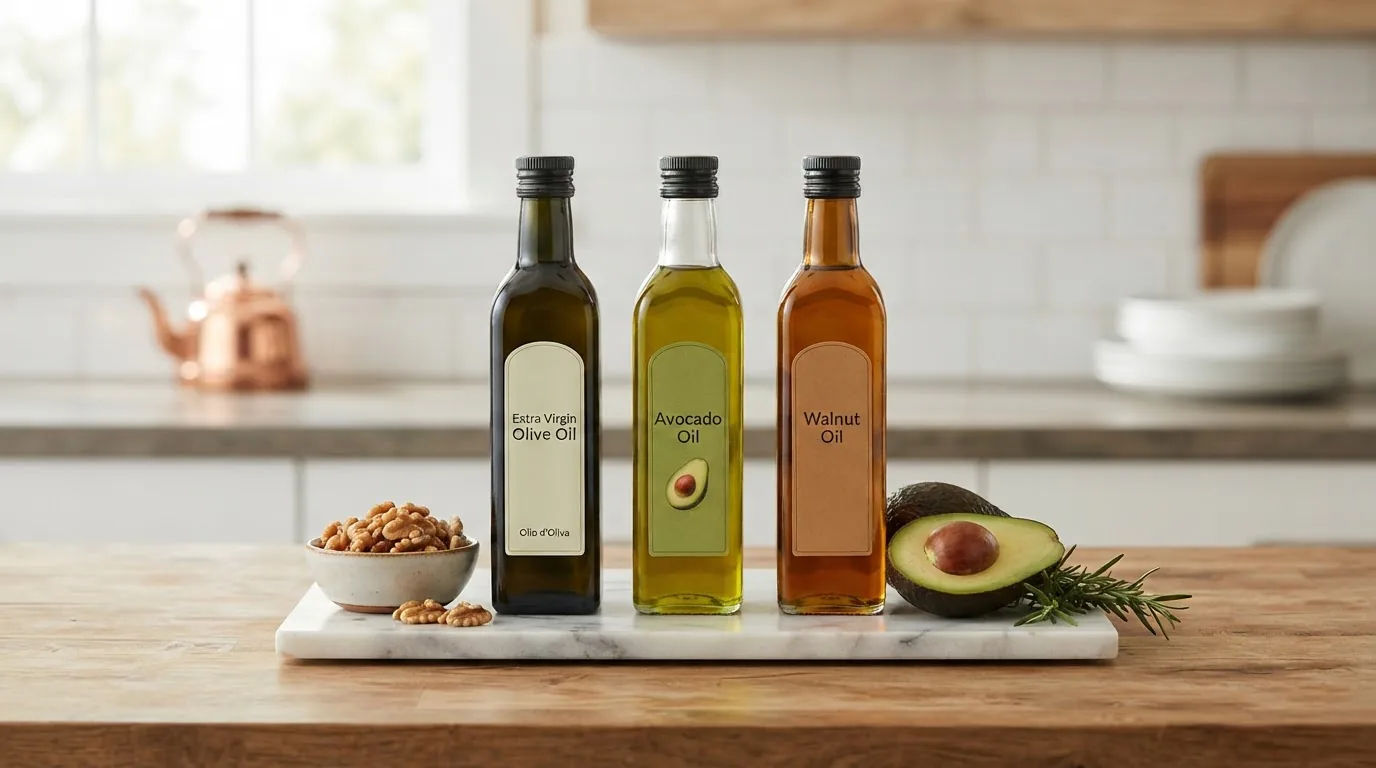
| Extra‑virgin Olive Oil | 120 | 14 | 10 | 1.5 | 2 | 320–375 | Dressings, low‑medium heat sauté, finishing |
| Avocado Oil (refined) | 124 | 14 | 10 | 2 | 1.6 | 480–520 | High‑heat frying, roasting, searing |
| Canola Oil (refined) | 124 | 14 | 8 | 3.5 | 1 | 400–450 | Frying, baking, general cooking |
| Sunflower Oil (high‑oleic) | 120 | 14 | 10 | 2 | 1.6 | 440–450 | High‑heat cooking (choose high‑oleic) |
| Flaxseed Oil | 120 | 14 | 2 | 9.5 (ALA) | 1 | 225–235 | Raw dressings, smoothies (not heated) |
| Walnut Oil | 120 | 14 | 2.5 | 8 (ALA/LA mix) | 1.1 | 320–400 | Dressings, low‑heat finishing |
| Coconut Oil (virgin) | 117 | 13.6 | 1.6 | 0.2 | 11.8 | 350–385 | Baking for texture/flavor, occasional cooking |
| Palm Oil (refined) | 120 | 14 | 5 | 2 | 6 | 430–455 | Frying, processed foods (use sparingly for health/environment) |