high protein meal prep doesn’t have to be complicated—this guide gives step-by-step, time-saving strategies, easy recipes, and smart storage hacks so you can batch-prepare meals that stay fresh, flavorful, and calorie-conscious all week.
Introduction to High Protein Meal Prep
High protein meal prep is the practice of planning, cooking, portioning, and storing protein-focused meals in advance so you can hit your nutrition goals with less daily decision-making. The main advantage is efficiency: prepping once for several days saves time, reduces last-minute takeout, and makes it easier to stick to lean protein and calorie targets.
Think of prepping as batch-assembling a puzzle for your week—each cooked protein, carb, and vegetable is a piece you can mix and match. That flexibility is especially helpful if you follow macro counting (tracking protein, carbs, and fats) or a calorie-controlled plan. Throughout this guide you’ll find practical hacks, beginner-friendly recipes, and storage techniques that preserve texture, flavor, and nutrient value without requiring advanced culinary skills.
This article focuses on actionable prepping and storage tips rather than deep nutrient science. You’ll get quick wins—what to cook, how to portion, best containers, and exactly how to refrigerate or freeze so meals remain safe and nutritious.
Transition: Ready to make the process painless? Start with clear, repeatable tips in the next section.
Essential Tips for Easy High Protein Meal Prep
- Plan one theme per cook day. Choose a protein and two sides (a vegetable and a slow-carb). For example: baked chicken, roasted broccoli, and quinoa. Themed cooking reduces decision fatigue and streamlines shopping.
- Batch-cook compatible proteins. Pick proteins that reheat well together—chicken breast, turkey meatballs, baked firm tofu, and hard-boiled eggs. Cook 2–3 different proteins and rotate them across meals to avoid boredom.
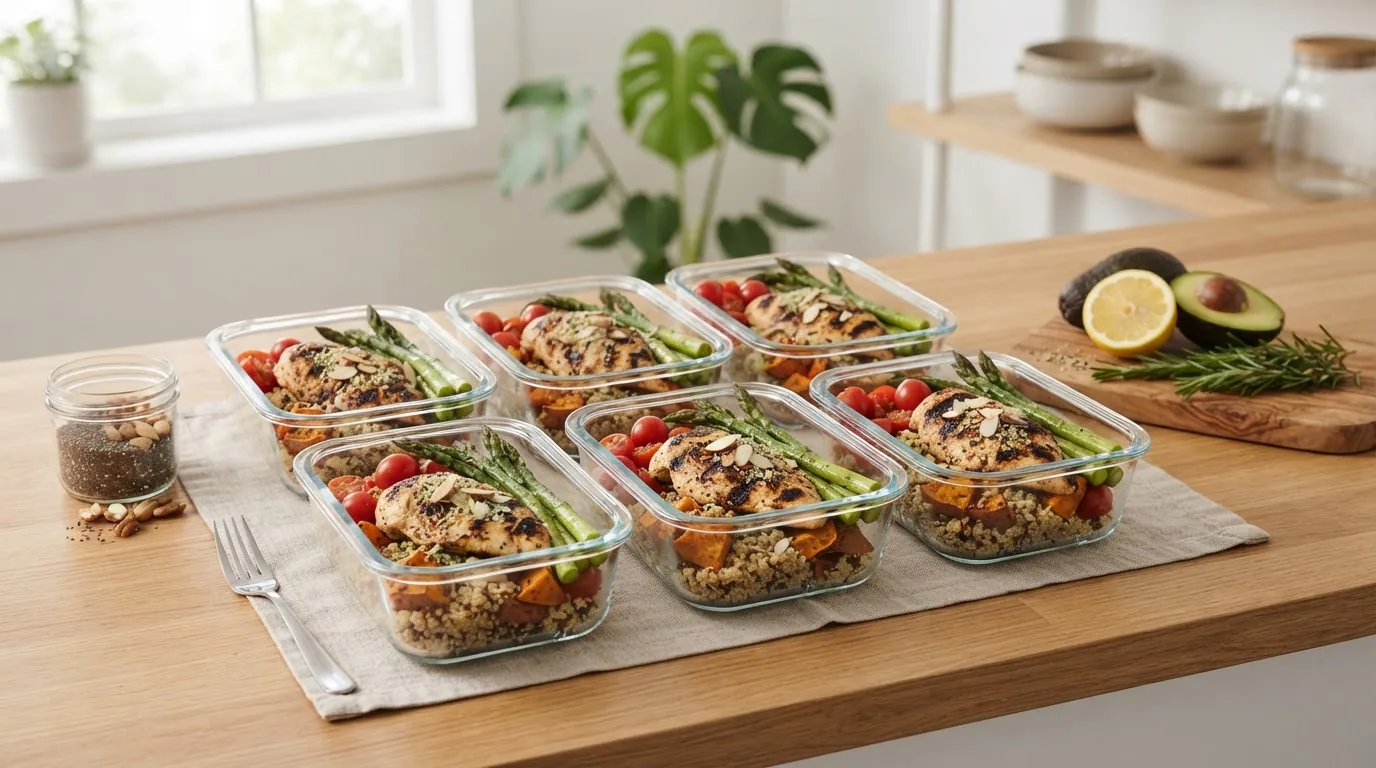
- Portion while warm using a kitchen scale. Measure protein portions (e.g., 4–6 oz cooked per meal) and store in single-serving containers. This simplifies calorie control and helps maintain consistent protein intake for workouts or weight goals.
- Use multi-purpose kitchen tools. A sheet pan, Instant Pot, skillet, and food processor will cover nearly every prep task. Clean-as-you-go reduces kitchen time by up to one third.
- Prep ingredients, not full meals (when flexibility matters). Chop vegetables, cook grains, and sear proteins separately. Mix and match at serving time to keep textures fresh.
- Opt for quick marinades and dry rubs. A 15–30 minute marinade or a dry herb-salt rub adds flavor without long marinating times—ideal when prepping on weeknights.
- Smart seasoning for reheats. Season lightly before storing; save zesty dressings and fresh herbs for the moment of serving to keep brightness.
- Label everything. Note date cooked and reheating instructions on each container. Rotate oldest meals to the front of the fridge; discard after recommended safe windows (see storage section).
- Work in batches to reduce active time. Example workflow: chop 20 minutes → cook 30–45 minutes (sheet pan + stove) → portion 15 minutes → cool & store 10 minutes. You can save active time by overlapping tasks.
- Use budget-friendly protein swaps. When cost matters, choose canned tuna, eggs, beans, and bulk chicken thighs. inexpensive high-protein foods are excellent for large batches without breaking the bank.
- Freeze in portions for longer storage. Freeze individual meals or protein-only portions in airtight containers or freezer bags; thaw in the fridge 24 hours before eating or use quick-thaw methods.
- Pack smart lunch boxes. Include a cold element (e.g., an ice pack) for salads with cooked proteins. Keep dressings separate in small containers to avoid soggy meals.
- Keep a rotating menu of 6–8 meals. This prevents burnout while still being efficient—cook two proteins and three sides per prep day and mix them to create multiple meals.
- Safety-first quick checklist. Cool hot foods within 2 hours, refrigerate at or below 40°F (4°C), and reheat to 165°F (74°C) for leftovers—follow food-safety basics to avoid spoilage (see storage section).
Transition: With smart prep habits in place, pick proteins that fit your routine—next we’ll cover the best lean protein sources for meal prep and how they behave in the fridge or freezer.
Best Lean Protein Sources for Meal Prep
Select proteins that hold up well to batch cooking and reheating. Focus on textures and storage-friendliness rather than exhaustive nutrition profiles—this helps you choose proteins that taste good and last through the week.
- Chicken breast — Versatile, slices cleanly for salads and bowls; bakes and grills well for multiple meals. See detailed cooking tips in our High Protein Chicken Recipes Guide: Lean Chicken Meals Ideas (internal site resource).
- Turkey — Ground turkey for meatballs and patties; turkey breast for sliced meals. Lean and reheats well with moisture-retaining sauces.
- Fish (firm, oily) — Salmon, tuna steaks, and cod are great for 1–3 day fridge storage; oily fish provide omega-3s. omega-3 rich protein sources like salmon are ideal for variety and heart health.
- Eggs — Hard-boiled or scrambled eggs store well in the fridge for 4–5 days and make quick breakfasts or salad toppers.
- Greek yogurt and cottage cheese — High-protein dairy options that serve as bases for bowls or snacks; better stored refrigerated and not recommended for freezing in most recipes.
- Legumes and pulses — Lentils, chickpeas, and black beans are inexpensive and freeze/reheat excellently when cooked in bulk.
- Tofu and tempeh — Firm tofu and tempeh hold up to sautéing and baking; marinate then freeze for long-term storage if desired.
- Lean beef cuts (occasionally) — Use thin-sliced or ground lean beef for quick reheat meals; slice thin after cooking to preserve juiciness. For guidance on selecting meats for health-focused prep, consider lean protein choices.
- Complete protein options — Quinoa, soy, and dairy are complete proteins useful for vegetarian meal prep; see our complete protein foods guide for combinations that meet amino acid needs.
Choosing proteins for meal prep also depends on storage behavior: eggs, Greek yogurt, and cooked legumes generally last 4–5 days in the fridge; most cooked lean meats last 3–4 days. If you need longer storage, freeze single servings for up to 3 months.
Transition: Now use those proteins in practical recipes—below are simple, adaptable meals for breakfast, lunch, dinner, and special diets.
Easy High Protein Meal Prep Recipes and Ideas
1. Meal-Prep Greek Yogurt Breakfast Jars (4 servings)
Prep time: 10 minutes (plus optional overnight). Protein-rich, portable, and customizable.
- Ingredients: 2 cups plain Greek yogurt (approx. 40 g protein), 1 cup mixed berries, 4 tbsp chopped nuts, 2 tbsp chia seeds, 4 tsp honey (optional).
- Method: Divide yogurt into 4 jars, top with berries and nuts. Seal and refrigerate up to 4 days. Add chia seeds at serving for texture.
- Storage tip: Keep granola or crunchy toppings separate to add at serving time.
2. Sheet-Pan Lemon Herb Chicken + Veg (4 lunches)
Prep time: 15 min active, 30–40 min bake. Balanced macro meal ready in one pan.
- Ingredients: 4 chicken breasts (4–5 oz cooked each), 1 lb baby potatoes (halved), 1 lb broccoli florets, 2 tbsp olive oil, lemon, garlic, salt, pepper, herbs.
- Method: Toss potatoes and broccoli with half the oil and roast 15 minutes. Coat chicken with remaining oil, lemon, herbs; add to pan and roast until chicken reaches 165°F. Portion into 4 containers with 1 breast + veg + ½ cup cooked potatoes.
- Storage: Refrigerate up to 4 days; freeze portions for up to 3 months.
3. One-Pot Turkey Lentil Chili (6 servings, freezer-friendly)
Prep time: 10 min, cook 30–40 min. High protein and fiber; great for weight-loss plans.
- Ingredients: 1 lb ground turkey, 2 cups cooked lentils, 1 can diced tomatoes, chili spices, 1 onion, bell pepper, low-sodium broth.
- Method: Brown turkey with onion and spices, add remaining ingredients, simmer until thick. Portion into containers. Each serving ~25–30 g protein.
- Storage: Refrigerate 3–4 days or freeze up to 3 months. Thaw overnight in fridge.
4. Vegetarian Power Bowls (4 servings)
Prep time: 30–35 min. Use tofu or tempeh for protein; include quinoa and mixed greens.
- Ingredients: 14 oz firm tofu (pressed), 2 cups cooked quinoa, roasted sweet potato, kale, tahini lemon sauce.
- Method: Cube and roast tofu with spices, assemble bowls with ½ cup quinoa, ½ cup roasted sweet potato, 1/4 block tofu per bowl, and greens. Sauce stored separately.
- Storage: Quinoa and roasted items keep 4–5 days refrigerated; add dressing at serving.
5. Carnivore-Inspired Prep Option (3–4 servings)
Prep time: 25–30 min. For those following very high-protein plans—lean steaks or ground beef patties reheated with bone broth for moisture.
- Method tip: Cook patties slightly under target temp; finish in skillet at serving to keep moist. For sample very-high-protein rotations see carnivore diet meal ideas.
Recipe customization tips:
- Swap proteins across recipes (e.g., use salmon in the sheet-pan meal or tofu in the chili) to keep meals varied.
- Scale portion sizes to meet your protein targets; check our site tools like “How Much Protein After Workout” and “60 Grams of Protein” guides for per-serving targets.
- For clean eating options and simple, wholesome recipes, explore more clean high-protein meals across our recipe library.
Transition: Once cooked, storage determines safety and texture—read on for best refrigeration and freezing practices.
How to Store High Protein Meals to Maximize Freshness and Nutrition
Correct storage reduces spoilage, protects nutrients, and keeps meals appealing. Use airtight containers, cool foods quickly, and understand refrigerator versus freezer trade-offs.
| Method | Best for | Typical fridge life | Freezer life | Pros | Cons |
|---|---|---|---|---|---|
| Refrigeration (airtight) | Cooked proteins for 3–5 days | 3–5 days | Not applicable | Quick access, preserves texture for short term | Short shelf life |
| Freezing (individual portions) | Long-term storage of single meals/proteins | N/A | 2–3 months (best quality) | Extends shelf life, good for bulk prep | Texture changes for some foods (eggs, yogurt) |
| Partial assembly (store components) | Meals needing fresh textures (salads, bowls) | 3–5 days for components | 3 months for cooked grains/proteins | Keeps freshness, avoids sogginess | Requires quick assembly at serving |
Step-by-step cooling and storing workflow:
- Cool quickly: Spread hot foods thinly on trays, cool at room temp no more than 2 hours, then place in the fridge. For quicker cooling, divide into shallow containers.
- Package airtight: Use glass or BPA-free plastic containers with tight seals. For freezing, remove as much air as possible from freezer bags to prevent freezer burn.
- Label: Write date cooked and reheating instructions on each container.
- Organize fridge: Keep proteins on middle shelves; raw meats separate in a sealed container at the bottom to prevent cross-contamination.
- Reheat safely: Bring refrigerated meals to 165°F (74°C) before consuming; microwave in short intervals stirring between heats to avoid cold spots.
Refrigeration vs freezing trade-offs:
- Refrigeration preserves texture best for most proteins but limits storage to 3–5 days.
- Freezing extends life to months but alters textures—avoid freezing high-water content items like soft cheeses and yogurt in most prepped meals.
- Proper thawing in the refrigerator is safest; for fast thawing, use a sealed bag in cold water or the microwave, then consume immediately.
Food-safety resources:
Consult official guidance for safe storage durations and temperatures. For authoritative storage and safety recommendations, see USDA food safety guidance, FDA food storage recommendations, and meal-planning advice from the Academy of Nutrition and Dietetics.
Transition: Storing meals is only part of weight-focused prepping—next we’ll discuss planning high protein, low calorie meal prep for fat loss and energy balance.
High Protein Low Calorie Meal Prep Planning
When your goal is weight loss, the planning step—what you choose to portion and pair—makes the biggest difference. High-protein meals help increase satiety and preserve lean mass while in a calorie deficit; use portion control and low-calorie sides to maintain a sustainable deficit.
Practical planning rules:
- Set a daily protein target based on goals (e.g., 0.6–1.0 g per lb bodyweight is common for weight loss and muscle retention). Tools and calculators on our site can help estimate needs—see guides like “How Much Protein After Workout” and “60 Grams of Protein” for targets and sample distributions.
- Use lean proteins as the centerpiece and pair with high-volume, low-calorie vegetables to feel full on fewer calories. For curated choices, consult our lean low-calorie choices recommendations.
- Track macros if precision helps you; macro counting (tracking protein, carbs, fats) is an evidence-based method to ensure a calorie deficit while meeting protein needs. Recent studies in nutrition journals show higher-protein diets improve satiety during weight loss—adjust based on personal response (according to recent nutrition research).
- Watch calorie sources in condiments and oils; measure cooking oil and sauces to avoid hidden calories. For specifics on oil choices, combine portion control with heart-healthy cooking oils.
- Understand calories in protein: protein contributes 4 kcal per gram—use this when planning meals for energy balance and refer to our calories in protein guide for details.
- Choose targeted foods from our pillar page on protein-rich food for weight loss to build meals that hit protein goals while keeping calories low.
Portion-control tips:
- Protein: 3–6 oz cooked per meal is a practical range; athletes may require more.
- Vegetables: Aim for 1–2 cups non-starchy vegetables per meal for volume and micronutrients.
- Carbs: ½ cup cooked whole grains or starchy vegetables per meal for moderate energy; adjust based on activity.
- Fats: 1–2 tsp cooking oil or 1–2 tbsp dressings to include heart-healthy fats without excess calories.
According to a 2024 industry report, meal preppers who prioritize portioned proteins and high-volume vegetables report higher adherence to calorie goals and reduced snacking—this supports using batch-prepared, pre-portioned meals to control daily energy intake. For precise substitutions and cut-friendly combinations, review our lean low-calorie choices resources.
Transition: The right tools make all this fast and repeatable—explore efficient gadgets and a hands-on walkthrough next.
Time-Saving Tools and Tips for Successful Meal Prep
Good tools reduce active time and improve consistent results. Below are recommended items and a simple Instant Pot walkthrough to show hands-on application.
- Instant Pot / multi-cooker — Pressure-cook proteins, grains, and legumes quickly with minimal babysitting time.
- Sheet pans — Roast proteins and veg together for hands-off cooking.
- Sharp chef’s knife and cutting board — Speed and safety when chopping large batches.
- Food scale — Essential for accurate portion control and calorie tracking.
- Glass containers with tight lids — Durable, microwave-safe, and clear for quick identification.
- Vacuum sealer (optional) — Extends freezer life and reduces freezer burn for long-term protein storage.
- Slow cooker — Great for set-and-forget batch soups, chilis, and shredded proteins.
- Immersion blender or food processor — Speed up sauces, dressings, and blended dips for flavor variety.
Instant Pot step-by-step walkthrough (hands-on application):
- Measure 1 cup dried lentils and 2 cups low-sodium broth in the Instant Pot; add spices and 1 cup chopped tomato.
- Seal and pressure cook on high for 10 minutes; natural release 10 minutes. While lentils cook, sear ground turkey in a skillet or use the sauté function to brown meat for added flavor.
- Combine seared turkey with cooked lentils, adjust seasonings, portion into containers, and label. Total active time under 20 minutes for a protein-rich base that stores well.
Quick tip on fats: Use measured amounts of heart-healthy cooking oils like olive or avocado in measured teaspoons to add flavor while controlling calories.
Transition: Even with tools and recipes, common problems arise—here’s troubleshooting and quick fixes.
Common Challenges and Solutions in High Protein Meal Prep
- Meal boredom — Rotate sauces and spices weekly; keep a “flavor drawer” of small jars with pre-mixed rubs, citrus zests, and dressings to change profiles quickly.
- Food spoilage — Cool foods quickly, label with dates, and follow fridge-life rules (3–5 days for most cooked proteins). When in doubt, discard. For official guidelines, consult USDA food safety guidance.
- Dry reheated proteins — Add a splash of broth, sauce, or a pat of butter when reheating to restore moisture; reheat gently to 165°F (74°C).
- Time constraints — Use shorter cook methods (pressure cooker, sheet-pan meals) and prep components (chop veg, cook grains) mid-week in 20–30 minutes to refresh meals.
- Dietary preferences and allergies — Keep modular components (protein, grain, veg) separate so each eater can assemble compliant meals; for plant-based options, swap animal proteins for tempeh, tofu, or higher-legume portions.
- Tracking macros accurately — Use a food scale and a nutrition app; pre-weigh portions when storing to simplify logging later.
- Repetitive textures — Mix raw (crisp) and cooked elements: add fresh sliced cucumber, radish, or microgreens at serving to vary mouthfeel.
Case study (anonymized): Sara’s 4-week shift to weekly meal prep
Sara, a 32-year-old office worker, cut grocery time and improved nutrition by prepping twice monthly: she cooked 12 portions of chicken and 8 vegetarian bowls, portioned them into single-serve glass containers, and labeled with dates. According to her logs, she saved about 4 hours weekly on meals and reduced weekend dining out by half—demonstrating how small, repeatable systems produce measurable lifestyle changes. Sara used an Instant Pot and sheet-pan dinners, following steps in this guide for cooling, labeling, and rotating flavors.
Transition: Ready to start? Below is a short summary and encouragement to take the first step.
Conclusion and Encouragement to Start High Protein Meal Prep
High protein meal prep is an efficient, scalable way to support weight loss, muscle retention, and everyday convenience. Start small: pick one protein, one grain, and two vegetables to cook this weekend. Use airtight containers, label with dates, and follow simple cooling and reheating rules. For tailored advice, consult a registered dietitian—this guide provides practical templates and tools that make weekly prepping simple and sustainable. Take one cooking session this week and build on it; your future self will thank you.
Frequently Asked Questions
What is high protein meal prep and why is it important?
High protein meal prep means planning, cooking, and storing protein-centered meals in batches to make daily eating easier and to support satiety, muscle retention, and consistent nutrition during a calorie-controlled plan.
How do easy high protein meal prep ideas differ from regular meal prepping?
Easy high protein meal prep prioritizes proteins as the meal base, focuses on portioned servings, quicker-cooking methods, and component storage to preserve texture and maximize protein intake per meal.
What are the best ways to store high protein meals safely?
Cool foods within 2 hours, store in airtight containers at ≤40°F (4°C) for 3–5 days, or freeze single portions for up to 2–3 months; always reheat to 165°F (74°C) before eating.
How can I make high protein meal prep low calorie and effective for weight loss?
Use lean proteins, measure portions (3–6 oz cooked proteins), add high-volume vegetables, limit added oils/sauces, and track macros or calories to maintain a sustainable calorie deficit.
How long does it typically take to prepare a full week of high protein meals?
A focused prep session can take 1–3 hours depending on recipes and batches; using multi-cookers, sheet pans, and overlapping tasks often reduces active time to under 90 minutes for basic weekly prep.
What should I do if my prepped protein meals taste bland or get repetitive?
Rotate dressings and sauces, reserve fresh herbs and acidic condiments for serving, and maintain a small “flavor drawer” of spice blends to vary profiles without extra cook time.
Are there specific containers recommended for storing high protein meals?
Use airtight glass containers with tight-sealing lids for fridge-to-microwave convenience; freezer-safe BPA-free plastic or vacuum-sealed bags work well for long-term freezing and portion control.
How can I ensure my protein meal prep stays fresh and nutritious when reheated?
Reheat gently to 165°F (74°C), add a splash of broth or sauce to restore moisture, stir during microwaving to avoid cold spots, and add fresh toppings at serving to boost flavor and texture.