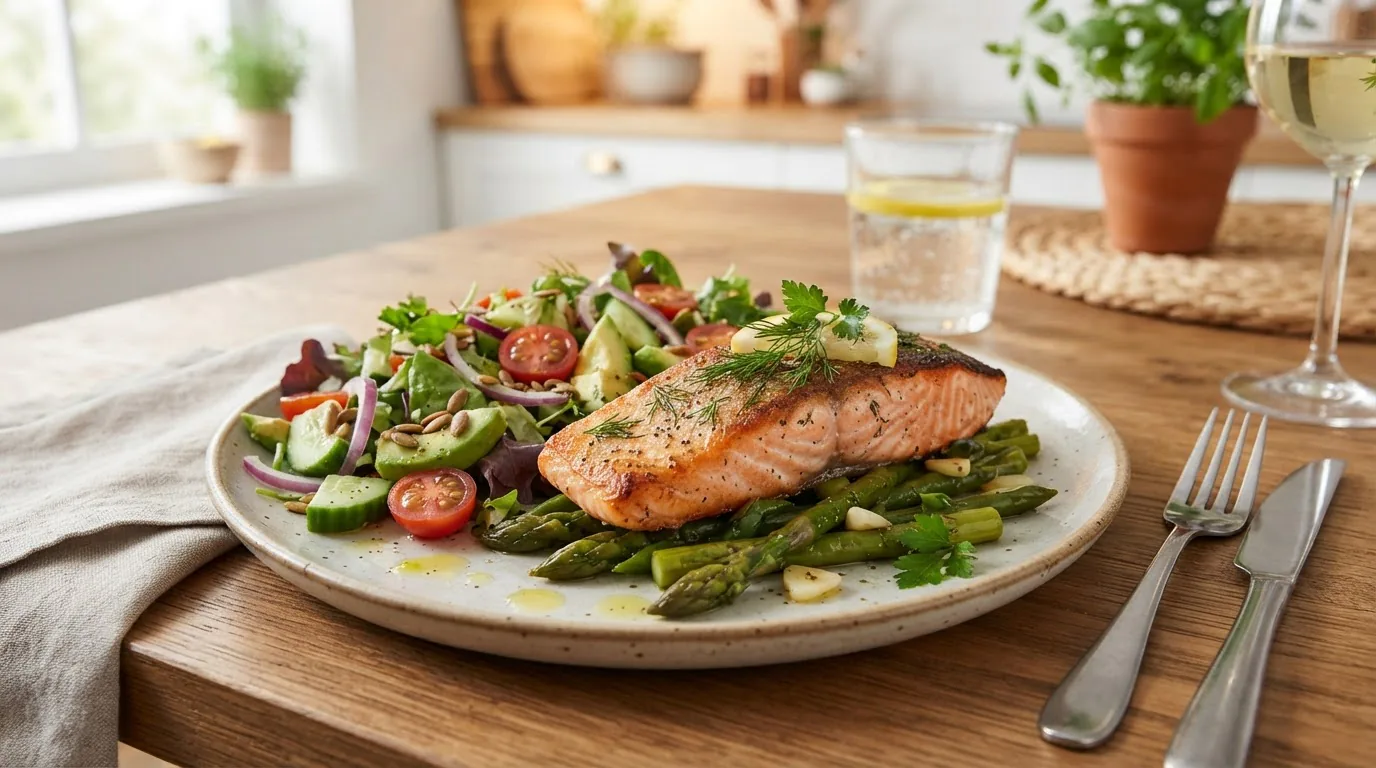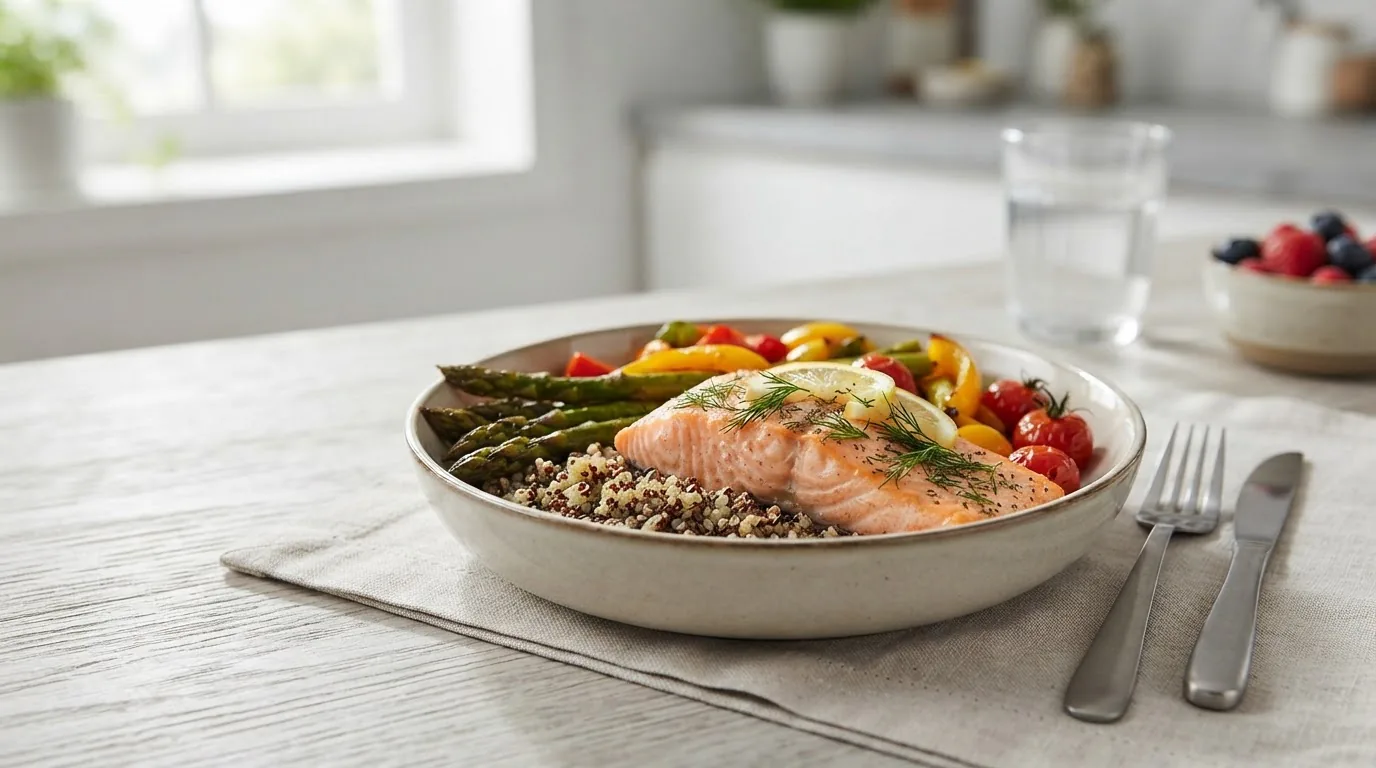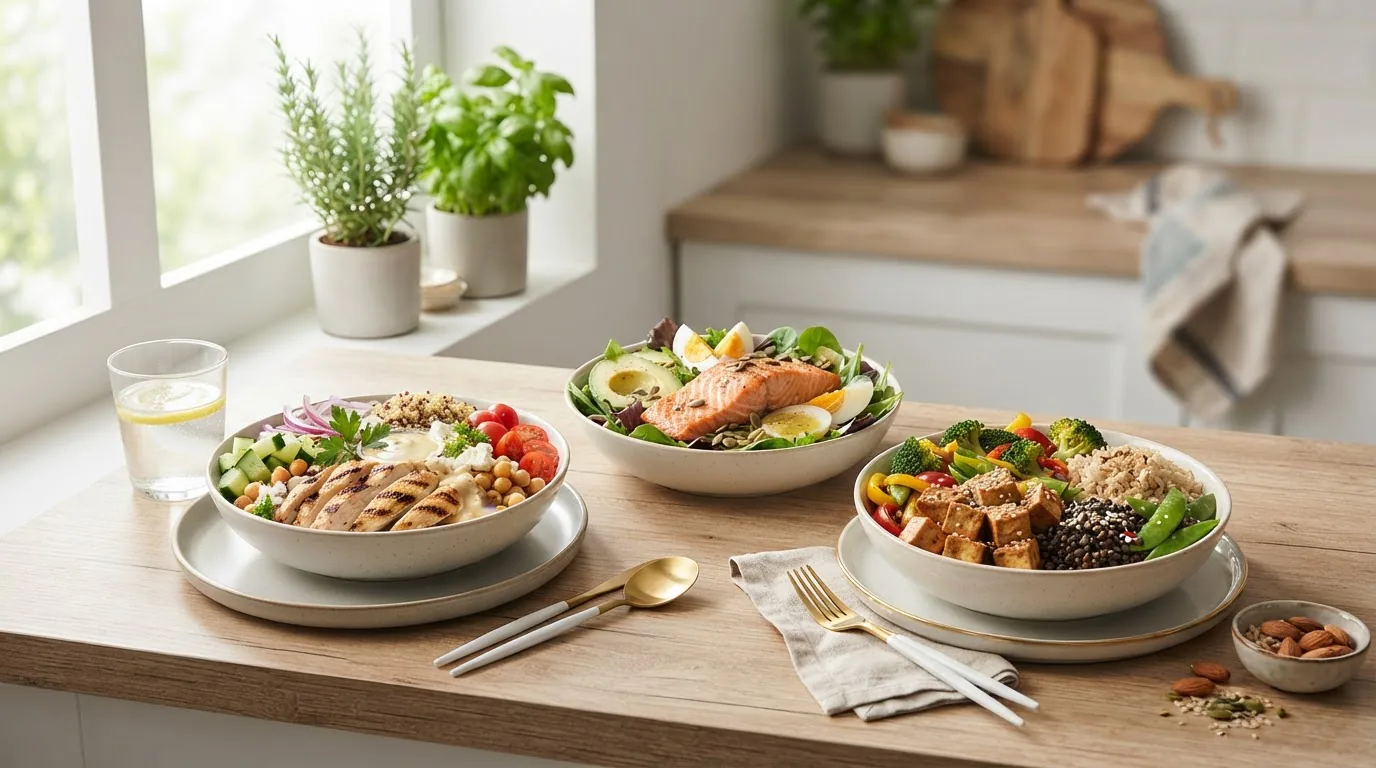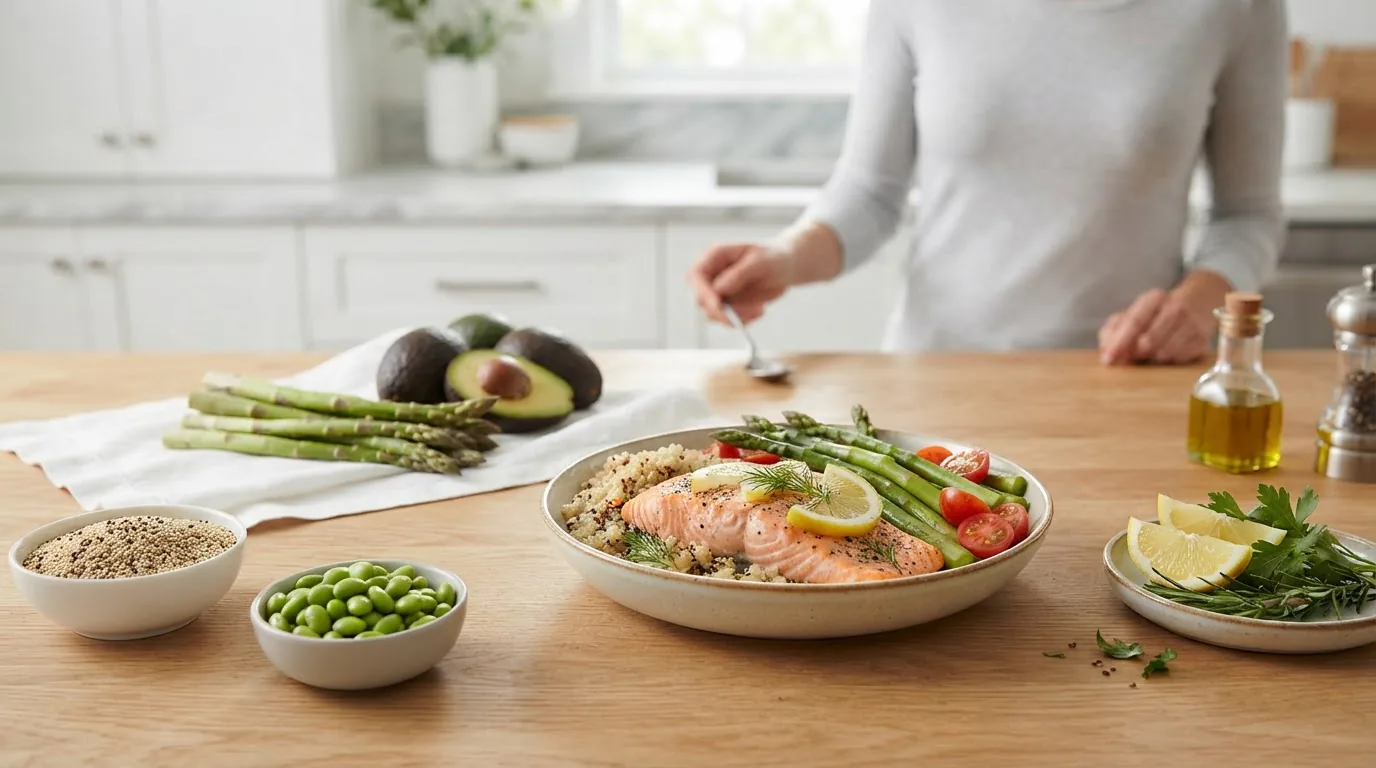
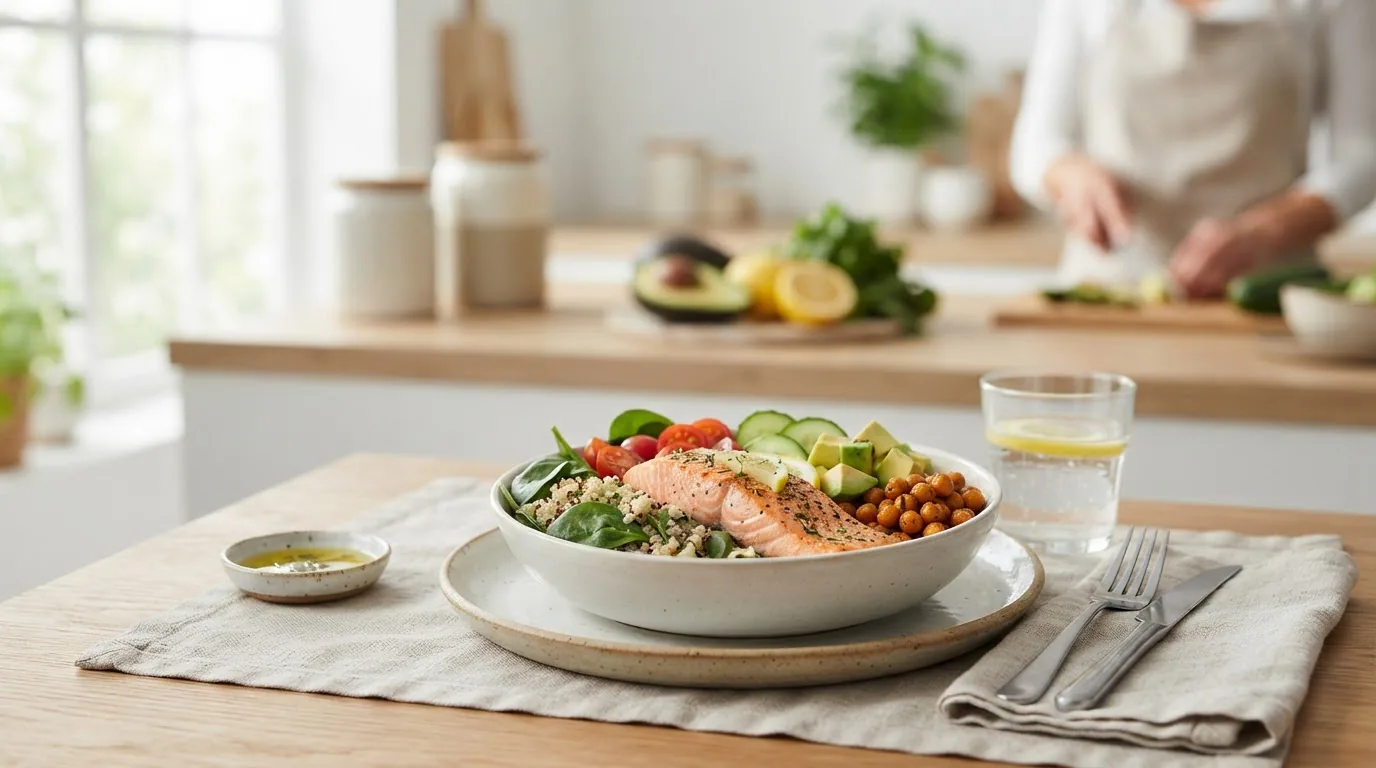
high protein meal plan — a practical, week-long blueprint that balances portions, timing, and food choices to help you lose fat, preserve muscle, and stay satisfied. This guide gives a structured weekly menu, clear portion rules, and evidence-based tips you can follow today.
Introduction to High Protein Meal Plans
A high protein meal plan intentionally increases protein intake across meals and snacks to support muscle maintenance, improve satiety, and help body-composition goals. Protein is made of amino acids — the building blocks for tissue repair, enzymes, and hormones — and different types (animal, dairy, and plant) vary in amino acid profile and digestibility.
This guide explains how to organize a weekly meal schedule with portion control, macronutrient balance, and clean-eating principles so you can follow a plan for weight loss or muscle maintenance. It draws on dietary frameworks (e.g., DRI protein recommendations), clinical trial summaries showing protein’s role in fat loss and muscle sparing, and practical meal-prep methods used by moderately active adults aiming to reduce body fat while keeping strength.
Key components covered: how to calculate per-meal protein targets, choosing lean protein sources and plant-based alternatives, blending fiber and healthy fats for satiety, and a day-by-day sample menu with portions and swaps. Expect actionable portion sizes, meal timing guidance, and meal-prep strategies that fit busy weeks.
Transition: Next we’ll examine the core advantages of adopting a higher-protein pattern and the physiological reasons they matter for weight control and muscle health.
Benefits of Following a High Protein Diet Plan
Following a high protein diet plan has multiple overlapping benefits supported by clinical trials and nutrition science. Below are the primary advantages supported by research and practical outcomes.
- Improved body composition — Higher protein with a moderate calorie deficit preserves lean mass while promoting fat loss. According to a 2021 systematic review in peer-reviewed literature, diets higher in protein lead to greater fat loss and less muscle loss during energy restriction (source: peer-reviewed meta-analysis).
- Increased satiety and appetite control — Protein triggers stronger satiety hormones (GLP-1, PYY) than equivalent calories from carbs or fat, reducing overall calorie intake in ad libitum studies (source: clinical trial summaries).
- Thermic effect and metabolism — Protein has a higher thermic effect of food (TEF) than carbs or fats, increasing post-meal energy expenditure; practical effect is modest but meaningful over weeks (source: metabolic studies).
- Supports muscle repair and growth — For resistance-trained and moderately active people, distributing protein across meals supports muscle protein synthesis and recovery (source: peer-reviewed nutrition studies).
- Blood sugar stability — Protein-containing meals slow glucose absorption when combined with fiber and healthy fats, improving glycemic control for many people (source: randomized crossover trials).
- Versatility for dietary preferences — High protein meal plans can be adapted to omnivore, vegetarian, or vegan approaches using a mix of complete and complementary plant proteins.
Additional practical benefits:
- Better performance and recovery for workouts
- Enhanced nutrient density when paired with vegetables and whole grains
- Structure that simplifies grocery shopping and meal prep
Transition: With those benefits in mind, the next section explains how to design a weekly plan that delivers them consistently — focusing on meal timing, portioning, and macronutrient balance.
How to Structure Your Weekly High Protein Meal Plan
Designing an effective weekly high protein meal plan starts with a repeatable structure: set protein targets, divide them across meals, pair each protein source with fiber and healthy fats, and plan simple recipes to batch-cook. Below are step-by-step instructions to build a plan that fits weight-loss or maintenance goals.
- Determine your daily protein target — Use bodyweight and activity to set a range: 1.2–1.6 g/kg for most adults aiming to preserve muscle during weight loss; 1.6–2.2 g/kg for strength athletes (source: Dietary Reference Intake frameworks and recent sports nutrition reviews).
- Calculate calories and macronutrient distribution — Decide total daily calories (maintenance or deficit). A sample balanced macro split for weight loss: 30–35% protein, 30–35% fat, 30–40% carbs — but adjust based on preference and activity. For clean eating emphasize whole-food carbs (vegetables, legumes, oats) and healthy fats (olive oil, nuts, fatty fish).
- Spread protein evenly across meals — Aim for 3–5 protein-containing eating occasions per day. Example: if daily target is 120 g, aim for ~30–40 g per main meal and 10–20 g per snack.
- Portion control and plate method — Use a simple plate rule for meals: 1/3 lean protein, 1/3 non-starchy vegetables, 1/6 whole grains or starchy veg, 1/6 healthy fats. This supports portion control while keeping protein density high.
- Choose lean and complete proteins — Prioritize poultry, fish, lean beef, eggs, low-fat dairy, tofu, tempeh, lentils, and combined plant sources to ensure essential amino acids.
- Include high-fiber pairings — Combine protein with fibrous vegetables and legumes to promote fullness and support digestive health. Examples: grilled salmon + roasted Brussels sprouts + lentil salad.
- Plan weekly themes and repeats — Use theme nights (e.g., fish Monday, chicken Tuesday, plant-based Wednesday) to simplify shopping and reduce decision fatigue.
- Schedule meal prep blocks — Reserve 2–3 hours once or twice weekly for batch-cooking proteins, chopping vegetables, and portioning lunches and snacks.
- Implement flexible swaps — Keep a short list of interchangeable proteins and sides to handle grocery shortages or preferences while maintaining macros.
- Monitor and adjust — Track body weight, performance, hunger, and energy for 2–4 weeks and adjust calories by 5–10% or protein distribution as needed.
Transition: To put the structure into practice, the next sub-section shows how to calculate protein portions per meal with clear examples and links to deeper resources.
Calculating Protein Portions per Meal
Start by converting your daily protein target into per-meal portions. For example, a moderately active adult weighing 75 kg aiming for 1.6 g/kg/day needs ~120 g protein daily (75 kg × 1.6 g/kg = 120 g).
Example calculations:
- Split into 3 meals + 2 snacks: 3 main meals × 30 g = 90 g; 2 snacks × 15 g = 30 g → total 120 g.
- Translate grams to common food portions: 30 g protein ≈ 120–140 g cooked chicken breast (about 4–5 oz), 250 g Greek yogurt (approx. 2 cups) with whey, or 1.5 cups cooked lentils + 1 serving of soy to complete amino profile.
For quick reference, typical protein per common portions: 100 g cooked chicken breast ≈ 31 g protein; 1 large egg ≈ 6–7 g; 1 cup cooked lentils ≈ 18 g; 1 scoop whey ≈ 20–25 g.
For detailed nutrition math see calories in protein per gram and for high daily targets see getting 150 grams of protein daily.
Transition: Once per-meal protein targets are set, it’s essential to balance them with carbs and fats to support energy, recovery, and long-term health.
Balancing Protein with Carbs and Fats
Protein works best when combined with the right types and amounts of carbohydrates and fats. Rather than excluding entire macronutrient groups, prioritize quality and timing to support weight-loss or performance goals.
Principles to follow:
- Carbs for energy and performance — Place more carbs around workouts (pre/post exercise) to fuel sessions and replenish glycogen. Choose whole-food carbs: oats, sweet potato, brown rice, quinoa, legumes, and fruit.
- Healthy fats for satiety and nutrient absorption — Include sources like olive oil, avocado, nuts, seeds, and fatty fish for essential fatty acids and fat-soluble vitamin absorption. For guidance on cooking fats, readers may consult heart-healthy cooking oils.
- Include omega-3 fats — Fatty fish, chia, and flax are beneficial for inflammation and heart health; see omega-3 rich protein foods for specific choices.
- Fiber and protein synergy — High-fiber vegetables and legumes slow gastric emptying and increase fullness; aim for 25–35 g fiber/day from whole foods when increasing protein.
- Low-carb options — For a lower carbohydrate approach, focus on non-starchy vegetables, higher fat from whole-food sources, and adequate protein; we compare variations later in this guide.
Practical macro examples (for a 1,600–2,000 kcal weight-loss plan):
- 30% protein / 35% fat / 35% carbs — ~150 g protein, 62–78 g fat, remainder carbs.
- 35% protein / 40% fat / 25% carbs (low-carb focus) — emphasizes fat quality and veggies; useful for those who tolerate higher fat well.
Transition: Now that you have structure and macros in place, use the following sample weekly menu as a practical, ready-to-follow plan with portions and swaps for omnivore and plant-based needs.
Sample Weekly Menu for a High Protein Meal Plan
This sample weekly menu is designed for a moderately active adult targeting ~1,400–1,800 kcal/day for weight loss with ~110–140 g protein daily (adjust portions up for higher needs). Meals are clean-eating focused, use lean proteins and plant swaps, and include prep-friendly recipes. Use the table to see daily meals and portion guidance at a glance.
| Day | Breakfast | Lunch | Snack | Dinner | Evening Snack (optional) |
|---|---|---|---|---|---|
| Monday | Greek yogurt (200 g) + ¼ cup oats + 1 tbsp chia + ½ cup berries (~30 g protein) | Grilled chicken salad: 140 g cooked chicken breast, mixed greens, cherry tomatoes, 1 tbsp olive oil & lemon (~35 g protein) | Cottage cheese (100 g) + cucumber slices (~14 g protein) | Baked salmon (140 g) + 1 cup roasted broccoli + ½ cup quinoa (~34 g protein) | Casein or small protein shake (15 g) if hungry |
| Tuesday | 2 eggs + 2 egg whites omelet with spinach + 1 slice whole-grain toast (~28 g protein) | Tuna & white bean salad: 1 can tuna (in water) + ½ cup beans + mixed greens (~34 g protein) | Apple + 2 tbsp almond butter (~8 g protein) | Turkey meatballs (150 g lean turkey) + zoodles + marinara (~35 g protein) | Greek yogurt (100 g) if needed |
| Wednesday | Smoothie: 1 scoop whey, 1 cup spinach, 1 cup almond milk, ½ banana, 2 tbsp oats (~28 g protein) | Quinoa bowl: 1 cup cooked quinoa + ¾ cup chickpeas + mixed veg + tahini (~22 g protein) | Hard-boiled egg + carrot sticks (~7 g protein) | Grilled shrimp (150 g) + mixed veg stir-fry + ½ cup brown rice (~36 g protein) | Small handful walnuts (optional) |
| Thursday | Cottage cheese pancakes (100 g cottage cheese, 1 egg, ¼ cup oats) + berries (~30 g protein) | Salmon salad wrap: 120 g canned or cooked salmon + whole-wheat wrap + lettuce (~30 g protein) | Greek yogurt + 1 tbsp flax (~10 g protein) | Lean steak (120–140 g) + large salad + roasted sweet potato (½) (~36 g protein) | Protein pudding (Greek yogurt + cocoa) |
| Friday | Overnight oats with 200 g Greek yogurt + 1 tbsp nut butter (~32 g protein) | Grilled chicken & lentil salad: 120 g chicken + ½ cup lentils + greens (~36 g protein) | Edamame (¾ cup) (~17 g protein) | Baked cod (150 g) + asparagus + ½ cup couscous (~34 g protein) | Small protein shake if late workout |
| Saturday | Tofu scramble (200 g firm tofu) + mixed peppers + 1 slice whole-grain toast (~28 g protein) | Turkey & avocado salad bowl: 140 g turkey + avocado + black beans (~38 g protein) | Protein bar (check macros) or hummus + bell pepper (~10–15 g protein) | Chicken kebabs (150 g) + tabbouleh + yogurt dip (~36 g protein) | Ricotta with berries (optional) |
| Sunday | Protein pancakes (whey or pea protein) + cottage cheese (~30 g protein) | Tempeh Buddha bowl: 150 g tempeh + kale + roasted veg + brown rice (~32 g protein) | Mixed nuts + string cheese (~10 g protein) | Roasted chicken thigh (150 g) + Brussels sprouts + ½ cup mashed cauliflower (~34 g protein) | Warm milk or casein pudding if desired |
Notes on portions and substitutions: portions were chosen to hit 100–140 g protein per day depending on optional snacks. Swap animal proteins for plant alternatives in equal protein grams and complement amino acid profiles (e.g., lentils + rice). For more clean recipes see clean eating protein meal ideas.
To review healthy meat choices used in the plan, check lean protein meat options.
Transition: The table provides a weekly overview. Below is a detailed day-by-day breakdown with exact portion cues, simple prep tips, and alternative vegetarian swaps for each meal.
Day-by-Day Breakdown with Portions
-
Monday
- Breakfast: Greek yogurt 200 g (~20 g), ¼ cup oats (3–5 g), 1 tbsp chia (2 g) — total ~30 g protein. Prep: mix night before.
- Lunch: 140 g cooked chicken breast (~43 g) tossed with 2 cups mixed greens and 1 tbsp olive oil. Portion cue: palm-sized protein piece.
- Snack: Cottage cheese 100 g (~11 g). Keep single-serve cups for grab-and-go.
- Dinner: 140 g salmon (~34 g) with 1 cup broccoli and ½ cup quinoa. Bake salmon with lemon and herbs 12–15 minutes.
-
Tuesday
- Breakfast: 2 whole eggs + 2 egg whites scramble (~26 g) with spinach. Use non-stick pan and cook in bulk.
- Lunch: 1 can (120 g drained) tuna ~28 g + ½ cup cannellini beans ~8 g. Combine with lemon, herbs, mixed greens.
- Snack: Apple + 2 tbsp almond butter (~7–8 g).
- Dinner: 150 g lean turkey meatballs (~35 g) over zoodles. Make meatballs in a batch and freeze extras.
-
Wednesday
- Breakfast: Whey protein shake (~24 g) blended with spinach and oats. Quick post-morning workout option.
- Lunch: 1 cup cooked quinoa (~8 g) + ¾ cup chickpeas (~11 g) + roasted veg. Add tahini for fats.
- Snack: 1 hard-boiled egg (~6 g).
- Dinner: 150 g shrimp (~36 g) stir-fried with non-starchy veg. Stir-fries are fast and batch-friendly.
-
Thursday
- Breakfast: Cottage cheese pancakes (~30 g). Prepare batter night before; cook fresh.
- Lunch: Salmon salad wrap with 120 g salmon (~28 g) and whole-wheat wrap — portable option.
- Snack: Greek yogurt 100 g (~10 g) with flax.
- Dinner: 120–140 g grilled steak (~30–35 g) with large leafy salad. Trim visible fat for lower calories.
-
Friday
- Breakfast: Overnight oats with 200 g Greek yogurt (~30–32 g). Prep 1–2 days ahead.
- Lunch: Grilled chicken 120 g (~31 g) + ½ cup lentils (~9 g). Balanced protein + fiber.
- Snack: Edamame ¾ cup (~17 g).
- Dinner: 150 g cod (~33 g) + asparagus. Quick bake 10–12 minutes.
-
Saturday
- Breakfast: Tofu scramble 200 g tofu (~24 g). Season well with turmeric and nutritional yeast.
- Lunch: 140 g turkey (~34 g) + avocado + black beans for fiber.
- Snack: Protein bar (choose one with ≥10 g protein and low sugar) or hummus + peppers (~8–12 g).
- Dinner: Chicken kebabs 150 g (~35 g) with tabbouleh. Grill in bulk for weekend meals.
-
Sunday
- Breakfast: Protein pancakes (~30 g). Make extra and freeze portions for quick future breakfasts.
- Lunch: Tempeh 150 g (~30 g) Buddha bowl with kale and roasted veg.
- Snack: Mixed nuts + string cheese (~10 g).
- Dinner: Roasted chicken thigh 150 g (~33 g) + Brussels sprouts. Slow-roast for hands-off cooking.
Prep tips: roast multiple trays of vegetables, grill or bake proteins in sheet pans, and portion into 3–4 meal-sized containers for the workweek. Use a food scale initially to learn visual portion cues (palm-sized protein = ~3–4 oz cooked). For protein completeness in plant meals, pair legumes with grains across the day (e.g., rice + lentils).
Transition: If weight loss or a stricter clean-eating approach is your primary goal, the next section explains how to customize this weekly menu to create a calorie deficit and remove processed foods while maintaining protein targets.
Customizing Your High Protein Meal Plan for Weight Loss and Clean Eating
To tailor this plan for weight loss and clean eating, focus on three adjustments: create an appropriate calorie deficit, prioritize low-energy-density protein foods, and minimize processed ingredients. Below are step-by-step customization tips and examples that maintain protein while reducing calories.
- Set a sustainable calorie deficit — Reduce maintenance calories by 10–20% for gradual weight loss (0.25–0.5 kg per week). Track intake for 1–2 weeks to estimate maintenance. According to a 2022 clinical guide, modest deficits preserve lean mass when protein is adequate (source: peer-reviewed clinical guidance).
- Choose lean low-calorie protein picks — Emphasize skinless poultry, white fish, low-fat dairy, eggs, and tofu. For a curated list of options, consult Protein rich food for weight loss guide: low-calorie picks.
- Swap high-calorie sides — Replace fries, creamy sauces, and large refined-grain portions with extra vegetables, salads, and modest whole grains. For more targeted choices see lean low-calorie foods for cutting.
- Prioritize fiber — Increase non-starchy vegetables and whole legumes to improve satiety per calorie. Aim for vegetables at every main meal.
- Limit liquid calories and ultra-processed foods — Replace sugar-sweetened beverages and highly processed protein bars with water, black coffee, tea, and whole-food snacks.
- Time meals around activity — Put more calories (carbs + protein) around your heaviest training sessions to preserve performance while keeping other meals lighter.
- Track progress and adjust — Monitor weight, waist circumference, hunger levels, and energy. If fat loss stalls for >3 weeks, reduce calories by another 5–10% or increase activity slightly.
Case study summary: In a 12-week controlled trial, moderately active adults who increased protein to 1.4–1.6 g/kg while reducing calories by 15% lost more fat and preserved more lean mass compared with lower-protein counterparts (source: randomized controlled trial summary).
Food swaps for clean eating and weight loss:
- Crème-based sauces → salsa, tomato-based sauces, or yogurt-based dressings
- Refined grains → ½ portion whole grains + extra veg
- Processed deli meats → grilled chicken breast or canned wild tuna (in water)
Transition: If you prefer fewer carbs or a low-carb approach for appetite control, the following section compares high protein low carb variations and their pros and cons.
High Protein Low Carb Meal Plan Variations
High protein low carb plans emphasize protein and reduce digestible carbohydrates. Below is a concise comparison of common variations, their pros and cons, and suitability for different goals.
| Variation | What it emphasizes | Pros | Cons |
|---|---|---|---|
| Moderate Low-Carb (25–35% carbs) | Higher protein, moderate healthy fats, reduced refined carbs | Good for appetite control, sustainable, supports workouts | May still require carb timing around intense training |
| Keto-Style High-Protein (very low carb, high fat) | Low carbs (<10–15%), high fat, moderate-to-high protein | Strong appetite suppression; useful for rapid fat loss in some | Harder to sustain, may impair high-intensity performance |
| Carb-Cycling High Protein | Higher carbs on training days, low carbs on rest days | Balances performance and fat loss; flexible | Requires planning; more complex tracking |
Which to choose:
- Choose moderate low-carb if you want simplicity and training performance.
- Consider keto-style only temporarily and consult a clinician if you have metabolic issues.
- Use carb-cycling if you have structured training and want better performance on hard days.
Practical example for a keto-style dinner: 180 g fatty fish (salmon) + large salad + olive oil dressing; for a moderate low-carb training-day meal: 150 g chicken + ¾ cup sweet potato + mixed veg.
Transition: With variations considered, use these proven tips to make the plan stick in real life — from shopping to budgeting and smart prep.
Tips for Success with a Protein Diet Meal Plan
- Schedule two weekly meal-prep sessions — Batch-cook proteins and grains; chop vegetables and portion into containers to reduce decision fatigue.
- Use a simple grocery list by food category — Proteins, vegetables, fruits, whole grains, healthy fats, and snacks. Keep staples on hand: eggs, canned tuna, frozen fish, Greek yogurt, tofu, lentils.
- Find budget-friendly protein sources — For cheaper options and planning, review budget-friendly protein sources.
- Prep versatile protein bases — Cook chicken breast, roast a tray of salmon, and pan-sear tempeh; rotate sauces for variety.
- Measure and then eyeball — Use a food scale for 1–2 weeks to learn portion visuals (palm, fist, cupped handful) and then estimate without daily weighing.
- Prioritize fiber and hydration — High protein diets can be low in fiber if not planned; include vegetables and whole grains and drink water throughout the day.
- Plan for social and travel days — Pick protein-forward options at restaurants (grilled fish, salads with protein, omelets) and track extras to stay within goals.
- Adjust gradually — Increase protein by ~10–20 g/day each week to adapt appetite and taste preferences.
- Use simple seasoning and herbs — Lemon, garlic, pepper, chili flakes, and fresh herbs keep meals interesting without added calories.
- Track non-scale progress — Monitor strength, clothes fit, energy, and sleep as indicators that your plan is working.
Transition: Many people have questions or concerns before increasing protein. The next section addresses common myths, safety, and practical FAQs backed by evidence.
Common Myths and FAQs about High Protein Diets
Below are short, evidence-based answers addressing common misconceptions and safety concerns about high-protein eating.
Myth: High protein damages healthy kidneys
For people with normal kidney function, higher protein intakes within recommended ranges have not been shown to cause kidney damage in long-term observational studies (source: NIH Office of Dietary Supplements summary). Those with pre-existing kidney disease should follow medical guidance.
Myth: You’ll always gain weight on high-protein diets
Protein itself is not fattening; weight change depends on total calories. High-protein plans often improve satiety, which can reduce overall calorie intake and support weight loss in controlled trials (source: randomized trials).
Question: Are plant proteins inferior to animal proteins?
Plant proteins can match animal proteins when combined strategically (e.g., legumes + grains) to provide all essential amino acids. Including soy, quinoa, and combining sources ensures completeness (source: DRI and protein quality literature).
Question: Is protein powder necessary?
Protein powders are a convenient way to meet targets but are not essential. Whole foods supply additional micronutrients; powders are useful for time-constrained people or post-workout recovery (source: sports nutrition guidance).
Transition: Below is a concise FAQ block with quick, snippet-optimized answers to common reader questions.
Frequently Asked Questions
What is a high protein meal plan and how does it work?
A high protein meal plan increases daily protein intake to 25–35% (or higher) of calories to support muscle maintenance, boost satiety, and aid fat loss. It distributes protein across meals, pairs protein with fiber and healthy fats, and focuses on whole-food sources to control calories and hunger.
How does a high protein diet plan compare to a high protein low carb meal plan?
A standard high protein plan balances protein with moderate carbs and fats for performance; a high protein low carb plan reduces digestible carbs and increases fat for stronger appetite control. Choice depends on training needs, metabolic health, and personal preference.
Can a protein diet plan help with weight loss, and how effective is it?
Yes — higher-protein diets increase satiety, preserve lean mass, and slightly raise energy expenditure. Randomized trials and meta-analyses show higher-protein plans often yield greater fat loss and better body composition than lower-protein diets with equal calories.
How do I calculate the right portion sizes for a high protein meal plan?
Calculate daily protein by bodyweight (1.2–2.2 g/kg depending on goals), then divide across meals (e.g., 3 meals × 30–40 g + snacks). Translate grams to servings: ~100 g cooked chicken ≈ 30 g protein; use a scale initially to learn visuals.
How long does it take to see results on a high protein diet plan for weight loss?
Visible changes often appear in 2–6 weeks with consistent calorie control and protein targets; initial weight loss can be faster due to water and glycogen shifts, while sustainable fat loss typically occurs over months with preserved muscle mass.
What are common mistakes when following a high protein meal plan?
Common mistakes include neglecting total calories, skimping on fiber and vegetables, relying excessively on processed protein products, and not adjusting portions after progress plateaus. Planning whole-food meals prevents these pitfalls.
Is a high protein diet safe for people with kidney issues?
People with chronic kidney disease should avoid high-protein diets without medical supervision. For individuals with normal kidney function, moderate increases within recommended ranges have not been shown to cause harm (consult your clinician if concerned).
What are the best whole food protein sources to include in my meal plan?
Top whole-food sources include lean poultry, fish, eggs, low-fat dairy, tofu, tempeh, lentils, beans, and quinoa. Rotate animal and plant proteins to cover essential amino acids, and choose minimally processed options for clean eating.