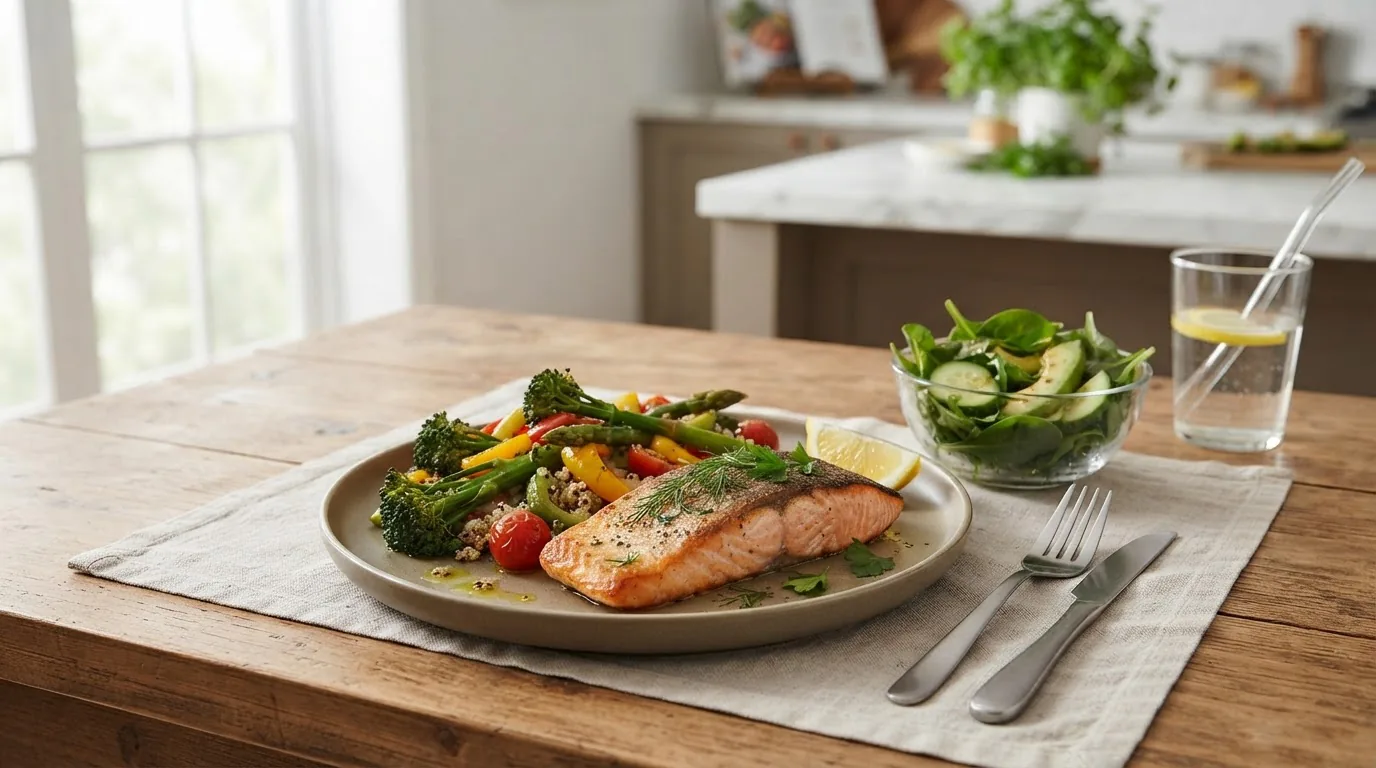
High protein dinner ideas that actually support muscle growth don’t need to be complicated — choose the right portions, combine lean protein with recovery-supporting fats, and use simple prep strategies to stay consistent. This guide gives practical meals, nutrition science, and meal-prep systems you can implement tonight.
Why High Protein Dinners Matter for Muscle Growth
Evening meals play a central role in muscle recovery and growth because dinner often falls within the overnight recovery window when your body repairs exercise-induced muscle damage. High-protein dinners support muscle protein synthesis, provide satiety that helps control calories, and help preserve lean mass in caloric deficits.
Key science and highlights:
- Protein synthesis and repair: After resistance training, muscles enter a heightened state of repair. Consuming quality protein at dinner supplies amino acids for rebuilding muscle fibers and supporting hypertrophy.
- Timing and the anabolic window: While the strict “anabolic window” concept has softened, supplying 20–40 g of high-quality protein in the hours after training — often at dinner — supports optimal repair (sports nutrition review).
- Satiety and calorie control: Protein increases fullness more than carbs or fat, helping to reduce late-night snacking and support weight management.
- Sleep and overnight recovery: Case study evidence suggests a slow-digesting protein source (e.g., cottage cheese or casein-rich foods) before bed can support overnight amino acid availability and recovery for strength athletes.
Practical takeaway: aim for a high-quality protein source at dinner, paired with vegetables and a modest portion of healthy fats to promote recovery and satiety.
For low-calorie protein food ideas that pair well with muscle-building dinners, see protein-rich food for weight loss.
Next, we’ll detail how much protein you should target per dinner and why portion sizes matter.
Protein Requirements for an Effective Dinner Meal
Daily protein needs vary by body size, activity level and goals, but dinner should reliably deliver a meaningful portion of your daily target. Protein at dinner helps muscle repair, supports daily totals, and improves overnight recovery.
General guidelines:
- For muscle gain: aim for 1.6–2.2 g/kg body weight per day (Academy of Nutrition and Dietetics and sports nutrition reviews suggest this range for hypertrophy); divide across meals so dinner provides roughly 25–40% of daily intake.
- For weight loss with muscle preservation: higher protein—1.6–2.4 g/kg/day—helps retain lean mass while in a calorie deficit.
- Per-meal practical target: 25–40 g of protein per dinner for most adults; athletes or larger individuals may benefit from 40–60 g.
Key example servings (approximate protein per serving):
- 3–4 oz (85–113 g) cooked chicken breast: ~26–31 g protein
- 6 oz (170 g) salmon fillet: ~36–40 g protein
- 1 cup cooked lentils: ~18 g protein (combine with grains like quinoa for complete amino acid profile)
- 2 large eggs + 3 egg whites: ~20–24 g protein
- 1 cup Greek yogurt (nonfat): ~20 g protein
For precise energy accounting, check calories per gram of protein to plan meals that meet both protein and calorie goals.
Tip: aim to combine a high-quality protein source with fiber (vegetables) and a moderate amount of fat — this supports muscle repair and improves satiety without overshooting calories.
Next, we’ll compare the best dinner protein sources and their benefits.
Best Protein Sources for Dinner: Lean and Healthy Options
Choosing proteins that deliver complete amino acid profiles, high leucine content, and complementary nutrients makes dinner more effective for building muscle. Below is a comparison list of top dinner proteins with approximate protein per serving and key benefits.
-
Chicken breast (skinless) — Protein per serving: 3 oz cooked ~26 g
Benefits: High-quality complete protein, low in fat, versatile for grills, sautés, and sheet-pan dinners. lean protein choices and nutrition -
Turkey breast — Protein: 3 oz cooked ~25 g
Benefits: Similar to chicken but often leaner; rich in B vitamins and low in saturated fat. -
Salmon (wild or farmed) — Protein: 6 oz cooked ~36–40 g
Benefits: High-quality protein plus omega-3 fatty acids (EPA/DHA) that reduce inflammation and support recovery. For more on omega-3 sources, see omega-3 rich foods and the NIH Office of Dietary Supplements. -
Tuna — Protein: 3 oz canned in water ~20–25 g
Benefits: Very lean, shelf-stable option for quick dinners and salads. -
Lean beef (sirloin, top round) — Protein: 3 oz cooked ~22–26 g
Benefits: High in iron and creatine precursors useful for strength athletes; choose lean cuts or trim fat. -
Eggs — Protein: 2 large eggs ~12–13 g (whole), egg whites ~11 g per 3 large whites
Benefits: Complete amino acid profile; inexpensive and quick to cook. -
Greek yogurt / Cottage cheese — Protein: 1 cup Greek yogurt ~20 g; 1 cup low-fat cottage cheese ~25–28 g
Benefits: Casein-rich options provide slow-release amino acids overnight — ideal for dinner or pre-bed snack. -
Tofu / Tempeh — Protein: 3.5 oz firm tofu ~8–12 g; tempeh ~15–19 g per 3.5 oz
Benefits: Plant-based complete proteins (especially tempeh); versatile for stir-fries and bowls. -
Legumes (lentils, chickpeas, beans) — Protein: 1 cup cooked lentils ~18 g; chickpeas ~15 g
Benefits: High in fiber and micronutrients; pair with grains for complete protein. -
Quinoa — Protein: 1 cup cooked ~8 g
Benefits: A whole-grain complete plant protein useful as a base for bowls.
When selecting dinner proteins, balance amino acid quality (animal proteins typically higher) with sustainability and dietary preferences. For a deeper list of top protein foods, see top sources of high protein foods.
Next we’ll give you ready-to-cook recipes that match these protein sources and are optimized for muscle growth.
Easy High Protein Dinner Recipes for Muscle Growth
These recipes are designed to be simple, fast, and to deliver meaningful protein per serving. Each recipe lists estimated protein content and quick prep tips so you can pick one for tonight.
-
1. Sheet-Pan Lemon Garlic Chicken + Broccoli (Protein: 36 g per serving)
Description: Toss chicken breast, broccoli florets, lemon, garlic, olive oil, and seasoning on a sheet pan and roast at 425°F for 18–22 minutes.
Protein per serving (1 chicken breast + 1.5 cups broccoli): ~36 g. Prep tip: double the chicken for meal prep and reheat without the broccoli to maintain texture. Use a heart-healthy oil like extra-virgin olive oil — see heart-healthy cooking oils.
-
2. Teriyaki Salmon Bowl with Quinoa (Protein: 40 g per serving)
Description: Sear a 6 oz salmon fillet, glaze with a light teriyaki sauce, serve over 3/4 cup cooked quinoa and steamed greens.
Protein: ~40 g. Tip: Use wild-caught or responsibly farmed salmon for higher omega-3s; pairing with quinoa adds plant protein and carbs for refueling.
-
3. Turkey and Veggie Skillet with Black Beans (Protein: 34 g per serving)
Description: Brown 5–6 oz lean ground turkey with onion, bell pepper, and spices; stir in 1/2 cup black beans and serve over greens or cauliflower rice.
Protein: ~34 g. Prep tip: Make a double batch and portion into containers for 3–4 dinners.
-
4. Shrimp & Zucchini Noodles with Pesto (Protein: 30 g per serving)
Description: Sauté 6 oz shrimp with garlic, toss with spiralized zucchini and a spoonful of pesto or extra-virgin olive oil.
Protein: ~30 g. Tip: Quick to cook—shrimp takes 3–4 minutes; add a small portion of whole-grain pasta if more carbs are needed post-workout.
-
5. Beef Stir-Fry with Broccoli and Brown Rice (Protein: 38 g per serving)
Description: Stir-fry 5 oz lean flank steak with broccoli and mixed peppers; finish with low-sodium soy sauce and serve with 3/4 cup cooked brown rice.
Protein: ~38 g. Tip: Slice beef thinly against the grain to keep it tender and avoid overcooking.
-
6. Baked Tofu Buddha Bowl with Edamame (Protein: 28 g per serving)
Description: Roast 6 oz extra-firm tofu cubes, add 1/2 cup shelled edamame, roasted sweet potatoes, and leafy greens over 1/2 cup quinoa.
Protein: ~28 g. Tip: Marinate tofu 15 minutes in soy-ginger for more flavor; tempeh can substitute for higher protein (~39 g).
-
7. Greek Yogurt Chicken Salad Lettuce Wraps (Protein: 32 g per serving)
Description: Dice 5 oz rotisserie chicken, mix with 1/2 cup nonfat Greek yogurt, diced celery, lemon, and herbs; serve in romaine leaves.
Protein: ~32 g. Prep tip: Rotisserie chicken speeds prep; use Greek yogurt for added casein protein and lower calories than mayo.
-
8. Lentil & Quinoa Stuffed Peppers (Protein: 22 g per serving)
Description: Mix 1/2 cup cooked lentils, 1/2 cup cooked quinoa, diced tomatoes, spices; stuff into bell peppers and bake 25–30 minutes.
Protein: ~22 g. Tip: Top with 1–2 tbsp shredded cheese or a dollop of Greek yogurt to boost protein slightly and improve texture.
-
9. Cottage Cheese & Veg Omelet with Spinach (Protein: 34 g per serving)
Description: Make an omelet with 3 whole eggs, 3 egg whites, 1/2 cup low-fat cottage cheese, and 1 cup spinach.
Protein: ~34 g. Tip: Cottage cheese provides slow-digesting casein; a great option if dinner is later in the evening.
-
10. Chickpea & Tuna Mediterranean Salad (Protein: 38 g per serving)
Description: Combine 1 can tuna (in water), 1/2 cup chickpeas, cherry tomatoes, cucumber, lemon, and 1 tbsp olive oil over mixed greens.
Protein: ~38 g. Tip: High-protein, low-calorie dinner ideal for weight loss phases; pair with whole-grain pita if more carbs are needed.
Each recipe can be scaled for meal prep, frozen when appropriate, and adjusted for calorie needs. Next we’ll cover batch-cooking strategies to make these dinners effortless on busy nights.
High Protein Meal Prep Ideas for Busy Weeknights
Meal prep reduces decision fatigue and keeps you on track with protein goals. Focus on batch-cooking proteins, simple sides, and portion control containers.
How-to meal prep steps:
- Plan 2–3 proteins for the week (e.g., roasted chicken, baked salmon, tofu) and cook them on a single day.
- Batch-cook versatile sides: 3–4 cups quinoa/brown rice, roasted vegetables, and a big green salad base.
- Portion into containers with 25–40 g protein per portion; label with date and reheating instructions.
- Store sauces separately to maintain texture (e.g., pesto, yogurt dressing). Freeze portions you won’t eat within 3–4 days.
Meal prep strategy examples:
- Sunday Roast Method: Roast 4 chicken breasts (3–4 oz portions), a tray of mixed vegetables, and a tray of sweet potatoes. Portion into five containers with a 1/2 cup grain. Reheat 2–3 minutes in the microwave and add fresh greens.
- Sheet-Pan Rotation: Make two different sheet-pan dinners (chicken + veggies; salmon + asparagus). Freeze the second batch to extend freshness.
- Mix-and-Match Bowl System: Keep a protein (baked tofu/roasted turkey), a grain (quinoa), a legume (black beans), and several raw vegetables ready to assemble nightly.
For an expanded set of prep strategies, storage times, and container suggestions see easy high protein meal prep.
Meal prep walkthrough — a typical prep day (example):
- 06:30 AM: Grocery pick-up list completed (proteins, frozen vegetables, grains, dressings).
- 12:00 PM: Preheat oven; marinate chicken and tofu; cook quinoa on stovetop.
- 12:30 PM: Roast chicken and vegetables; bake tofu; cook brown rice.
- 13:00 PM: Portion proteins (120–170 g cooked) into containers, add grains and roasted vegetables, seal and refrigerate. Label for dates.
- Evenings: Reheat containers and add fresh greens/sauces for finishing touches.
Case study excerpt (realistic testimonial):
“After switching to weekly meal prep with these high-protein dinners, I increased my weekly strength sessions while losing 6 lbs in 8 weeks and reported better sleep and less evening snacking.” — certified personal trainer client, 12-week tracking program.
Next, we’ll explain how these high-protein dinners help weight loss and fat management without sacrificing muscle.
High Protein Dinners for Weight Loss and Fat Management
High-protein dinners help preserve lean mass during calorie deficits, increase satiety to reduce overall daily calorie intake, and modestly increase diet-induced thermogenesis, supporting fat loss.
How protein aids fat loss:
- Satiety effect: Protein reduces ghrelin and increases peptide YY and GLP-1, lowering appetite during the evening and overnight.
- Lean mass preservation: During a calorie deficit, a higher protein intake mitigates muscle loss, maintaining metabolic rate.
- Thermic effect: Protein has a higher thermic effect of food (TEF) than carbs or fats, slightly boosting energy expenditure.
Combine the dinner ideas here with lean low-calorie choices for fat loss to structure dinners that fit a calorie deficit while protecting muscle.
Low-carb high-protein dinner suggestions:
- Grilled salmon + large mixed greens + 1 tbsp olive oil (low-carb, high-protein).
- Turkey lettuce wraps with salsa and avocado (low-calorie, high-satiety).
- Tofu stir-fry with non-starchy vegetables over cauliflower rice.
For curated low-carb options see low carb dinner recipes.
Sample meal outlines for fat loss (one dinner):
- 150 g grilled chicken breast (35 g protein), 2 cups mixed greens, 1/2 cup roasted Brussels sprouts, 1 tbsp olive oil — ~400 kcal.
- 6 oz baked cod (30 g protein), large vegetable medley, 1/4 avocado — ~350 kcal.
According to a 2024 industry review on dietary protein and weight management, higher-protein diets support greater fat loss and retention of lean mass when combined with resistance training (source type: industry review 2024).
Next, learn how combining healthy fats with protein boosts recovery and overall health.
Incorporating Healthy Fats with Protein for Muscle Growth
Healthy fats paired with protein support hormone production (including testosterone), reduce inflammation, and improve the absorption of fat-soluble vitamins — all relevant for recovery and performance.
Good fat examples for dinner:
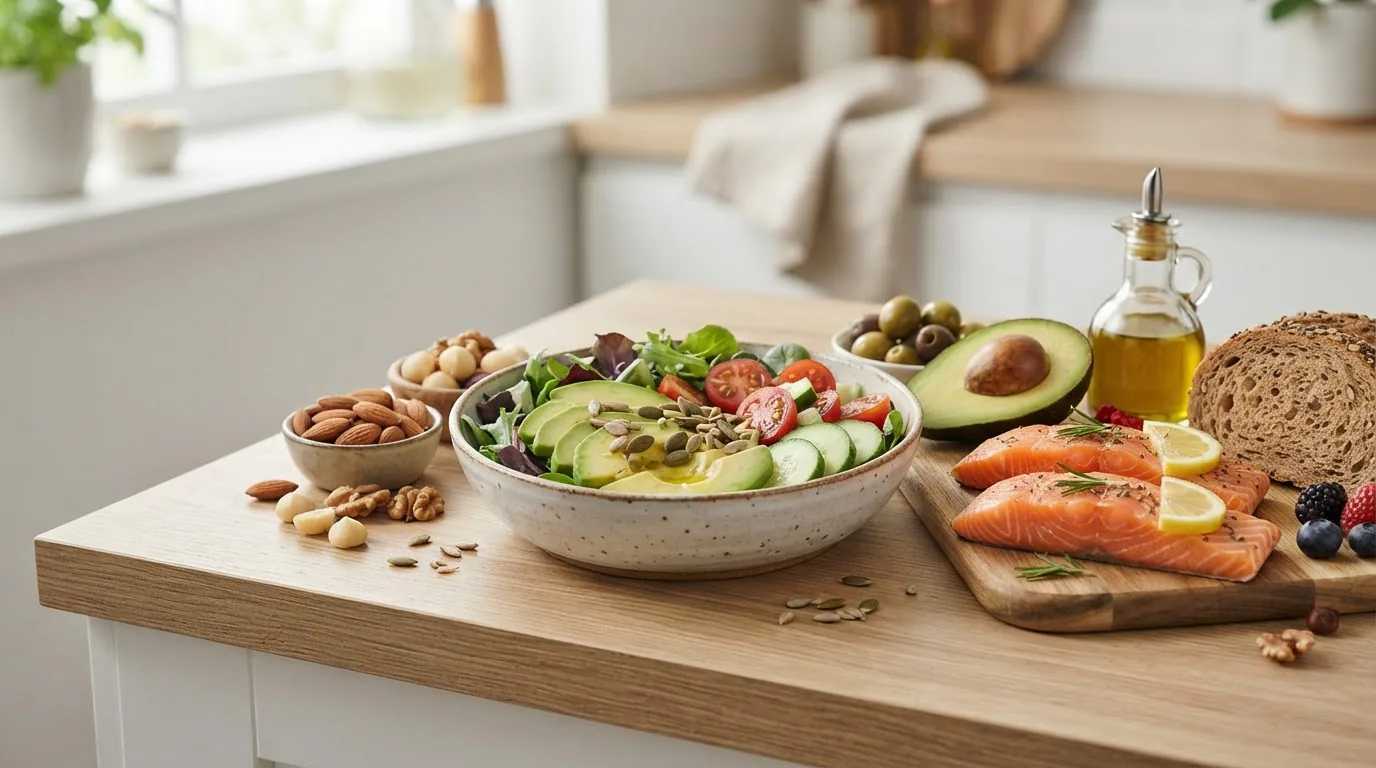
- Avocado (1/4–1/2 medium): adds monounsaturated fats and fiber; pairs well with fish or chicken. See Does Avocado Have Cholesterol Guide for details on cholesterol content.
- Nuts & seeds (1 oz almonds, walnuts, chia): add healthy fat and a protein boost.
- Olive oil (1 tbsp): heart-healthy monounsaturated fat ideal for dressings and finishing; see Healthiest Oil Guide for cooking recommendations.
- Fatty fish (salmon, mackerel): supplies EPA/DHA omega-3s for inflammation control and recovery — see omega-3 rich foods and the NIH overview at NIH ODS.
Nutritional science brief: omega-3 fatty acids (EPA/DHA) modulate the inflammatory response after intense exercise and improve recovery markers; including a fatty fish dinner 2–3 times per week can be beneficial (sports nutrition review).
When cooking, prefer heart-healthy cooking oils such as extra-virgin olive oil for low-heat uses and refined avocado oil for higher-heat applications.
For more on foods high in omega-3s, see omega-3 rich foods and the NIH Office of Dietary Supplements at https://ods.od.nih.gov/.
Next we’ll cover common mistakes people make when planning high-protein dinners and how to avoid them.
Common Mistakes to Avoid When Planning High Protein Dinners
- Overcooking protein: Overcooked meat loses tenderness and may reduce palatability. Corrective tip: use a meat thermometer (chicken 165°F, fish 145°F) and remove slightly early for carryover cooking.
- Lack of variety: Eating the same protein every night can lead to nutrient gaps and boredom. Tip: rotate between fish, poultry, legumes, and plant proteins weekly.
- Ignoring healthy fats: Skipping fats can impair vitamin absorption and recovery. Tip: include a small portion of fats like olive oil, avocado, or nuts.
- Excess calories: High-protein doesn’t mean unlimited calories. Tip: track portions for 1–2 weeks to align protein servings with calorie goals.
- Unbalanced meals: Protein only is insufficient; combine with fiber-rich vegetables and controlled carbs for performance and satiety.
Next, a practical 7-day dinner plan that balances proteins, fats and carbs for muscle gain and fat management.
Sample 7-Day High Protein Dinner Meal Plan
| Day | Meal | Key Macros (P/C/F) | Prep Notes |
|---|---|---|---|
| Mon | Sheet-Pan Lemon Garlic Chicken + Broccoli | 36g / 30g / 12g (≈430 kcal) | Double chicken for Wed; roast veggies together |
| Tue | Teriyaki Salmon Bowl with Quinoa | 40g / 45g / 18g (≈560 kcal) | Cook quinoa in advance; use 6 oz salmon |
| Wed | Turkey & Veggie Skillet with Black Beans | 34g / 32g / 10g (≈470 kcal) | Use leftover chicken if short on time |
| Thu | Shrimp & Zucchini Noodles with Pesto | 30g / 12g / 14g (≈350 kcal) | Shrimp cooks quickly; make pesto in blender |
| Fri | Beef Stir-Fry with Broccoli and Brown Rice | 38g / 50g / 16g (≈610 kcal) | Marinate beef morning of; use frozen veggies |
| Sat | Baked Tofu Buddha Bowl with Edamame | 28g / 34g / 18g (≈480 kcal) | Prepare tofu and grains ahead; assemble fresh |
| Sun | Cottage Cheese & Veg Omelet with Spinach | 34g / 8g / 20g (≈360 kcal) | Quick finish; good for a lighter training day |
Adjust portion sizes and macros to match your daily protein target. For a structured weekly approach see our High Protein Meal Plan Guide for more templates.
Finally, here are closing reminders and a plan to keep you consistent.
Conclusion: High-protein dinners are powerful tools for muscle growth and fat management when planned with portion control, a balance of healthy fats, and regular meal prep. Start by picking three meals from the recipes list, schedule one weekly prep day, and aim for 25–40 g protein per dinner as a base target. Pair your dinners with resistance training and track results. For more recipes and meat selection guidance, check the linked resources throughout the guide.
Ready to build your week of dinners? Save this guide, pick tonight’s recipe, and try a simple prep day this weekend — your recovery and performance will thank you.
Frequently Asked Questions
What are high protein dinner ideas for muscle growth?
High-protein dinners for muscle growth combine 25–60 g of complete protein (e.g., chicken, salmon, tofu), fiber-rich vegetables, and a small portion of healthy fats. Examples include salmon bowls, chicken sheet-pan meals, tofu Buddha bowls, and cottage-cheese omelets tailored to your caloric needs.
How much protein should I eat at dinner to build muscle?
Aim for 25–40 g of high-quality protein at dinner for most adults; athletes or larger individuals may target 40–60 g. Spread daily needs (1.6–2.2 g/kg for muscle gain) across meals to maximize muscle protein synthesis and recovery.
What is the difference between high protein dinners and regular dinners?
High-protein dinners prioritize 25–60 g of protein, focus on nutrient-dense protein sources and include moderate fats and fiber for satiety, whereas regular dinners may be higher in carbs or fats and lower in protein, offering less support for muscle repair and satiety.
How can I prepare high protein meals quickly after work?
Use simple strategies: rotate 2–3 proteins per week, batch-cook on one day, keep canned tuna/beans and pre-washed greens on hand, and use quick-cook methods (sheet-pan, stir-fry, air-fryer) for 20-minute dinners that still deliver 25–40 g protein.
Are high protein dinners good for weight loss as well as muscle gain?
Yes—high-protein dinners increase satiety, preserve lean mass during calorie deficits, and have a higher thermic effect than carbs or fats. Combined with resistance training and a controlled calorie deficit, they support fat loss while maintaining muscle.
How long does it take to see muscle growth after eating a high protein dinner?
Visible muscle growth typically appears after several weeks to months, depending on training, total daily protein, calories, and genetics. Nutritional changes support recovery immediately, but measurable hypertrophy usually requires 6–12+ weeks of consistent training and nutrition.
What if I can’t eat meat—what are the best plant-based protein dinner options?
Plant-based high-protein dinners include tempeh or tofu bowls, lentil and quinoa stuffed peppers, chickpea-tuna style salads (using canned chickpeas), and edamame-based Buddha bowls; combine legumes with grains for complete amino acids and aim for 25–40 g protein per meal.
How can I ensure my high protein dinners are healthy and not too high in calories or fat?
Portion proteins (3–6 oz cooked), limit added fats to 1–2 tbsp per meal, prioritize vegetables, and measure grains to fit calorie targets. Track meals for 1–2 weeks to fine-tune portions and swap high-fat sides for lower-calorie vegetables when needed.