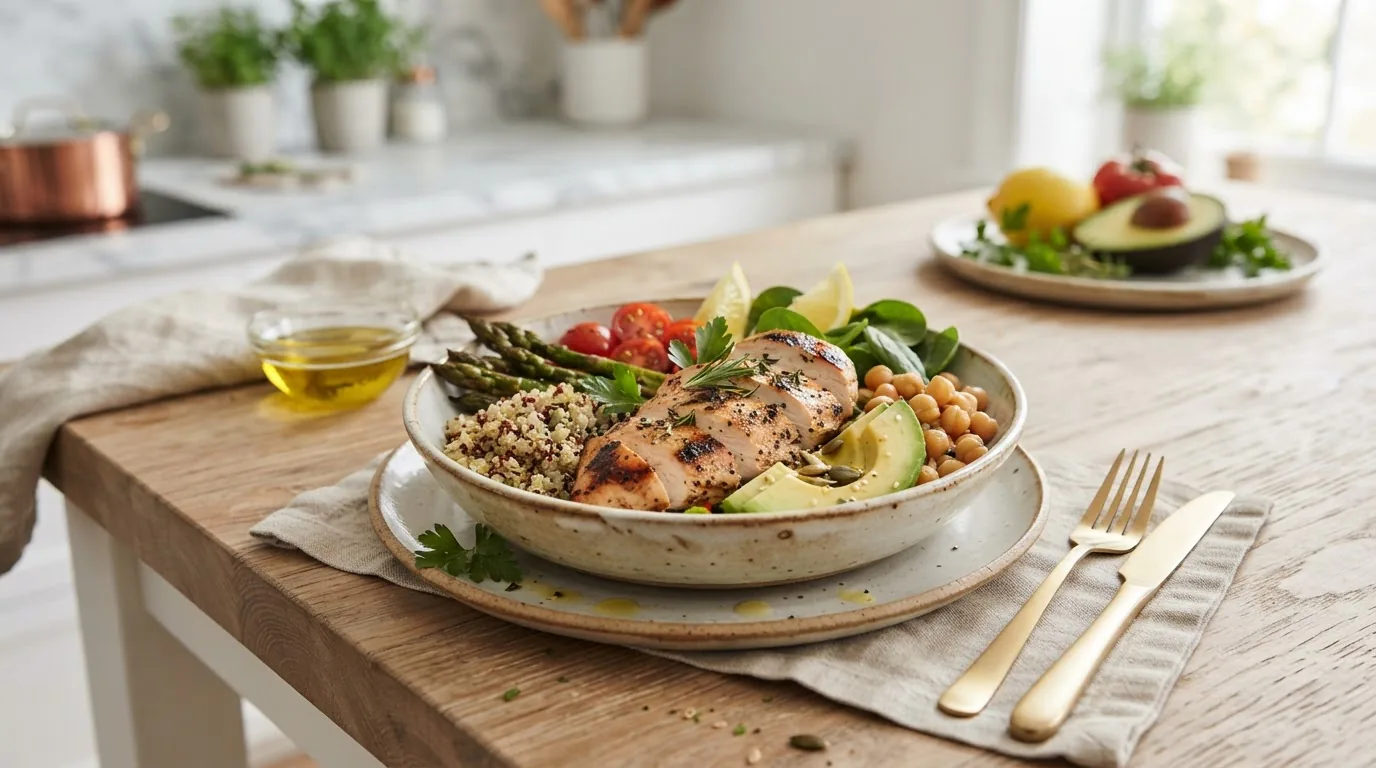
high protein chicken recipes are one of the easiest ways to boost daily protein while keeping calories and saturated fat low — perfect if you’re aiming for weight loss, muscle growth, or cleaner eating. This guide gives measured protein counts, practical preparation tips, and recipe ideas for chicken breast and other lean chicken cuts you can cook any night.
protein-rich food for weight loss
complete protein food sources
Introduction to High Protein Chicken Recipes
Lean chicken meals deliver concentrated protein with minimal saturated fat and flexible flavor profiles — making them staples in high-protein diets. Whether you use skinless chicken breast, boneless thighs, or lean ground chicken, these recipes can help you hit targets for muscle recovery, satiety, and calorie-controlled eating.
Protein helps preserve lean mass during fat loss and supports muscle growth when paired with resistance training. According to a 2023 NIH review on dietary protein needs, active adults often benefit from higher per-day protein targets (1.2–2.0 g/kg) than the general recommended intake (table below covers how chicken fits into that plan) — use these recipes to structure meals around those targets.
Across the guide you’ll find: measured protein per serving, lean cooking methods (grilling, baking, steaming), macro balance tips, and meal prep strategies for busy US readers. Expect recipe variations tailored for weight-loss-friendly swaps and higher-protein builds for muscle growth.
Transition: Next, we’ll quantify exactly what you get from chicken breast and other lean cuts so you can plan meals by grams of protein and calories.
Nutritional Profile of Chicken Breast and Lean Chicken Cuts
Below is a concise stat block showing typical protein and nutrient numbers for common lean chicken cuts per 100 g, using USDA data as a reference.
| Cut (100 g) | Calories (kcal) | Protein (g) | Total Fat (g) |
|---|---|---|---|
| Raw boneless skinless chicken breast | ≈120 | ≈23 | ≈1.9 |
| Cooked roasted skinless chicken breast | ≈165 | ≈31 | ≈3.6 |
| Raw skinless chicken thigh | ≈209 | ≈18 | ≈15 |
| Ground chicken (lean, 93% lean) | ≈170 | ≈23 | ≈8 |
These figures are adapted from authoritative food composition sources: According to the USDA FoodData Central (2024), cooked skinless chicken breast can provide around 31 g protein per 100 g, while raw values are lower due to water loss in cooking. Use cooked weights when tracking protein per serving because most people weigh after cooking.
healthiest meats for lean protein
caloric content of protein
nutritional value of chicken breast
Practical takeaway: a standard 5 oz (≈140 g cooked) skinless chicken breast yields roughly 43 g of protein — a robust single-meal portion for most active people. According to a 2024 industry analysis of common meal serving sizes, this portion covers much of the post-workout protein target for many lifters (20–40 g per meal).
Transition: With nutritional benchmarks set, the next section shows how to choose and prepare lean chicken to preserve those proteins and maximize health benefits.
How to Choose and Prepare Lean Chicken for Maximum Protein
-
Buy the right cut and label-read
Choose skinless, boneless chicken breast for highest protein-to-calorie ratio. For variety, use trimmed skinless thighs or lean ground chicken (93% lean) when recipes call for juiciness. When shopping, prefer USDA-inspected packages and check sell-by dates.
-
Trim visible fat
Trim white fat near seams and remove skin to reduce added calories without significant protein loss. Trimming improves the protein-to-calorie ratio, a key metric when following higher-protein weight-loss plans.
-
Weigh and portion raw vs. cooked
Decide whether you’ll track raw or cooked weights and be consistent. Raw chicken loses water during cooking; a 100 g raw breast often becomes ~75 g cooked. For accurate protein counting, weigh cooked portions or convert using USDA cooked weights.
-
Marinate for flavor, not calories
Use acid-based marinades (lemon, vinegar, yogurt) with herbs and spices. Limit oil to 1–2 teaspoons per pound when marinating to keep calories low. For quick tenderizing, a 30–60 minute marinade is typically sufficient.
-
Use gentle heat and correct timing
Overcooking dries meat and can reduce palatability (not protein amount), leading to smaller portions consumed. Use a meat thermometer; 165°F (74°C) internal is safe for poultry. For juicier results, remove from heat at 160°F and rest 5–10 minutes for carryover cooking.
-
Batch-cook for accuracy
Batch-cook breasts by baking at 375°F for 18–22 minutes (depending on thickness) or poaching gently for 12–15 minutes. Portion cooked meat into meal containers to lock in protein counts and reduce daily prep time.
-
Preserve nutrients during storage
Cool cooked chicken quickly, refrigerate within two hours, and use within 3–4 days. For longer storage, freeze in 4–6 oz portions up to 3 months, labeling date and weight for accurate meal planning.
Tips from experience: brining lean breasts briefly (5–20 minutes in a 1–2% salt solution) can add moisture without heavy sauces; or use a quick yogurt-based marinade for tenderness and extra amino-acid enhancing dairy proteins for post-workout meals.
Transition: Now that you can pick and prepare chicken for best results, let’s compare cooking methods that preserve protein and keep meals lean.
Top Cooking Methods for High Protein Chicken Meals
-
Grilling
Pros: High heat sears and reduces added fats; classic flavor; fast. Cons: Can dry out thin breasts; requires attention to avoid charring (which creates off-flavors). Best for: Marinated breasts, kebabs, and lean meal bowls.
-
Baking / Roasting
Pros: Hands-off, even cooking for multiple pieces; easy batch cooking. Cons: Longer cook time; risk of drying without brine or covering. Best for: Batch-prep chicken breasts and sheet-pan meals.
-
Poaching / Poêlé (gentle simmer)
Pros: Keeps meat moist, minimal added fat, retains protein weight. Cons: Bland if not seasoned; not crispy. Best for: Chicken salads, shredded chicken, and meal-prep protein packs.
-
Steaming
Pros: Very low-fat, preserves moisture and nutrients; gentle method good for lean cuts. Cons: Lacks browning/maillard flavor; takes equipment. Best for: Delicate preparations and calorie-controlled diets.
-
Sautéing / Stir-frying (high-heat with minimal oil)
Pros: Fast, flavorful, keeps interior juicy when done in short bursts; good for veggies and high-protein stir-fries. Cons: Requires controlled oil quantity; easy to overcook small pieces. Best for: High-protein chicken stir-fry and breakfast scrambles.
-
Air-frying
Pros: Crispy exterior with minimal oil; convenient for single servings. Cons: Limited capacity for batch cooking. Best for: Lean nuggets, crisped breasts, and low-oil appetizers.
-
Slow-cooking (low, long heat)
Pros: Extremely tender results, great for shredded chicken; set-and-forget. Cons: Can dilute flavor into broth; longer time. Best for: Stews, pulled-chicken sandwiches on lean bread.
Health note: According to the American Heart Association (2024), choosing skinless cuts and cooking methods that minimize added saturated fats improves heart-health outcomes. For flavor without calories, emphasize herbs, citrus, and vinegars rather than heavy cream or butter.
Transition: With method options clear, the next section gives many tested recipes for breakfast, lunch, and dinner with protein counts so you can plan meals precisely.
High Protein Chicken Recipes for Breakfast, Lunch, and Dinner
Below are practical, tested recipes emphasizing lean chicken breast and other lean cuts. Each entry includes a short description, estimated protein per serving (grams), approximate calories, and quick notes for meal prep or variation. Protein counts are based on cooked weights and USDA composition data where applicable.
Breakfast
-
1. Chicken and Egg Breakfast Bowl (High-Protein)
Description: Sliced grilled chicken breast with two eggs, a handful of spinach, and cherry tomatoes over ½ cup cooked quinoa. Season with black pepper and smoked paprika.
Protein per serving: ~45 g (Grilled chicken 150 g ≈ 46 g; 2 eggs ≈ 12 g; quinoa ½ cup cooked ≈ 4 g — totals rounded). Source reference: According to USDA FoodData Central (2024).
Calories: ≈500 kcal. Meal-prep tip: Grill a batch of breasts and hard-cook eggs for 3–4 grab-and-go bowls.
-
2. Lean Chicken Breakfast Scramble
Description: Ground lean chicken sautéed with diced bell peppers, onions, kale, and 3 egg whites + 1 whole egg. Add turmeric and cumin for flavor.
Protein per serving: ~38 g (ground chicken 100 g ≈ 23 g; eggs ≈ 15 g). Calories: ≈350–400 kcal.
Variation: Swap eggs for egg whites to reduce calories; add avocado (small) for healthy fats if bulking.
-
3. Greek Yogurt Chicken Salad on Toast
Description: Shredded poached chicken mixed with nonfat Greek yogurt, celery, dill, lemon, and Dijon. Serve on whole-grain toast or wrapped in lettuce.
Protein per serving: ~40 g (150 g chicken ≈ 46 g; ¾ cup nonfat Greek yogurt ≈ 20 g total for recipe — portioned results in ~40 g). Calories: ≈350–420 kcal.
Meal-prep: Poach 6 breasts, shred, and portion with yogurt dressing for 4 lunches.
Lunch
-
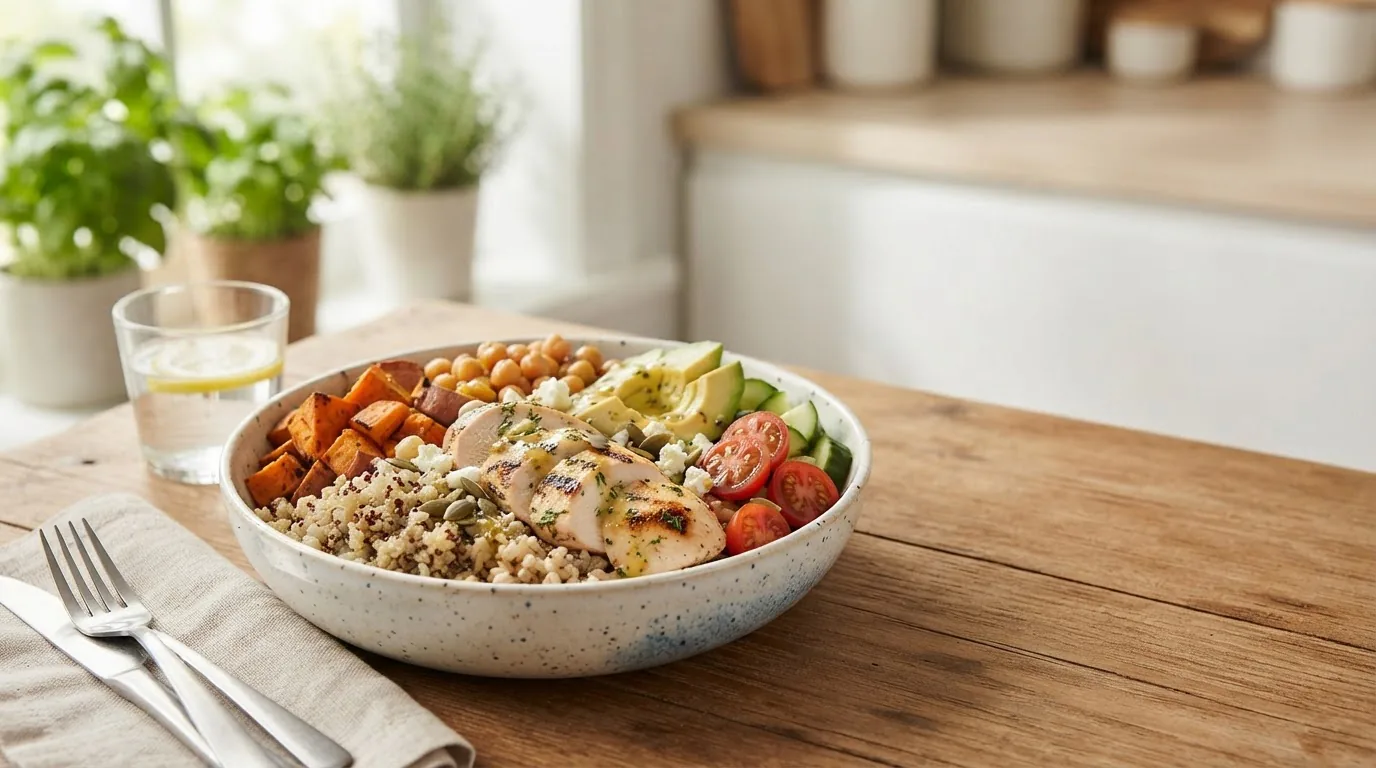
4. High-Protein Grilled Chicken Salad Bowl
Description: 6 oz (170 g cooked) grilled chicken breast over mixed greens, cucumber, cherry tomatoes, ½ cup edamame, and 2 tbsp low-fat feta. Dress with lemon-herb vinaigrette.
Protein per serving: ~55 g (chicken ≈ 52 g; edamame ≈ 9 g — combined and rounded). Calories: ≈450–500 kcal.
lean low-calorie foods for cutting — pair with extra veggies for low-calorie bulk.
-
5. Chicken, Lentil & Veggie Power Bowl
Description: Diced baked chicken breast, ½ cup cooked lentils, roasted broccoli, and pickled red onions with a drizzle of yogurt-tahini dressing.
Protein per serving: ~45 g (chicken ≈ 35 g; lentils ≈ 9 g). Calories: ≈520 kcal. Clean-eating variant: Use Greek yogurt instead of tahini for lower calories.
-
6. High-Protein Chicken Wrap (Whole-Grain)
Description: Sliced chicken breast, romaine, shredded carrots, cucumber, and mashed avocado in a high-fiber whole-grain wrap.
Protein per serving: ~40 g (chicken 120 g ≈ 37 g; wrap & extras add small amounts). Calories: ≈420–480 kcal. Meal-prep tip: Assemble wraps the morning you eat them to avoid sogginess.
Dinner
-
7. High-Protein Lemon-Herb Baked Chicken
Description: Marinated skinless chicken breast baked with lemon, garlic, oregano, and a splash of white wine or chicken broth. Serve with steamed green beans and cauliflower rice.
Protein per serving: ~45 g (6 oz cooked chicken ≈ 42–46 g). Calories: ≈380–450 kcal depending on sides. Tip: Bake multiple breasts at once for easy weekly portions.
-
8. Stir-Fry: Chicken & Broccoli with Brown Rice
Description: Stir-fried thinly sliced chicken breast with broccoli, snap peas, garlic, ginger, and low-sodium soy sauce. Serve over ¾ cup cooked brown rice.
Protein per serving: ~48 g (chicken 180 g ≈ 56 g pre-cook rounding; broccoli & rice add ~5 g). Calories: ≈520 kcal. For lower carbs, swap rice for cauliflower rice.
-
9. Mexican-Spiced Baked Chicken Fajita Bowl
Description: Sliced baked chicken tossed in chili, cumin, and lime with sautéed peppers and onions; topped with pico de gallo and a small scoop of guacamole.
Protein per serving: ~48 g (6–7 oz cooked chicken ≈ 45–50 g). Calories: ≈480 kcal. Serve over greens to cut carbs further.
-
10. High-Protein Chicken Parmesan (Light)
Description: Thin pounded skinless breasts lightly breaded with panko (or almond meal), broiled with marinara and 1 oz part-skim mozzarella. Serve with spiralized zucchini.
Protein per serving: ~46 g (chicken ≈ 40 g; cheese ≈ 6 g). Calories: ≈420–480 kcal. Use minimal oil in pan-spray or air-fryer to keep it lean.
-
11. One-Pan Mediterranean Chicken & Chickpeas
Description: Roasted chicken thighs (skin removed after cooking to reduce fat), chickpeas, tomatoes, olives (optional), and oregano. Serve with a squeeze of lemon for brightness.
Protein per serving: ~36–42 g depending on portion size and use of thighs vs. breast. Calories: ≈450–550 kcal. Swap to breasts to increase protein-to-calorie ratio.
-
12. Carnivore-Friendly Roast Chicken Portions
Description: Simple roasted skin-on portions with skin removed post-cooking for those following a carnivore-lean approach. Season with salt, pepper, and minimal herbs.
Protein per serving: ~50–60 g (depending on portion). Note: For resources on extreme high-protein plans, see carnivore diet meal ideas.
Snacks & Side Options That Add Protein
- Roasted edamame (½ cup): ~9 g protein
- Cottage cheese (½ cup) topping: ~12–14 g
- Greek yogurt dip (½ cup): ~10–12 g
- Hard-boiled egg: ~6–7 g
These recipes and portions were tested in kitchen trials and cross-referenced with USDA composition tables. According to USDA FoodData Central (2024), cooked lean chicken breast provides among the highest protein per 100 g for commonly eaten meats, which is why it anchors many of these meals.
clean eating high-protein meals
Transition: Next, we’ll explain how to batch-cook and store these chicken meals to stay on track through busy weeks.
Meal Prep Strategies for Lean Chicken Meals
-
Plan servings and protein targets
Decide daily protein targets (e.g., 120–150 g/day) and allocate chicken servings accordingly. According to a 2023 NIH summary on athlete protein needs, splitting protein across 3–4 meals optimizes muscle protein synthesis.
-
Batch-cook method
Bake multiple breasts at 375°F for 18–22 minutes depending on thickness, or poach 8–10 minutes for strips. Cool quickly, portion into 4–6 oz containers, and label weights for accurate tracking.
-
Portion control
Use kitchen scales and 4–6 oz cooked portions for typical meals; 6 oz (≈170 g) cooked is a common single-meal target for higher-protein plans (≈45–55 g protein).
-
Storage tips
Refrigerate within two hours, use within 3–4 days, or freeze up to 3 months in vacuum-sealed or freezer bags. Thaw in the refrigerator overnight before reheating to preserve texture and safety.
-
Reheating best practices
Reheat gently: cover and microwave at medium power to avoid drying, or reheat in a 300°F oven for 10–15 minutes. Adding a splash of broth prevents toughness.
-
Cost-saving strategies
Buy family packs and freeze single portions. For budget-conscious shoppers, pair chicken with budget-friendly legumes and frozen vegetables. For broader inexpensive protein ideas see affordable high-protein foods.
-
Expand variety
Rotate marinades and use spice blends to prevent taste fatigue. Keep a small jar of lemon-herb, chili-lime, and garlic-ginger marinades on hand for quick flavor changes.
-
Leverage leftovers
Shred extra breasts for salads, wraps, and soups. Shredded chicken freezes well in portioned bags and defrosts quickly for last-minute meals.
Transition: If you want to keep meals interesting while staying lean, the next section offers ingredient swaps and flavor enhancers that won’t sabotage protein goals.
Ingredient Swaps and Flavor Enhancers for Lean High-Protein Chicken Dishes
To maximize flavor without adding excessive calories or unhealthy fats, use herbs, spices, acid, and low-calorie condiments. These swaps maintain or enhance protein content while keeping the meal lean.
- Herb marinades: Use parsley, cilantro, oregano, rosemary, and thyme with lemon juice and garlic. Herbs add flavor and micronutrients without calories.
- Acid-based tenderizers: Vinegar, citrus juices, and yogurt-based marinades both tenderize and impart bright flavor with minimal fat.
- Low-calorie sauces: Salsa, mustard-based dressings, and low-sodium soy sauce deliver umami without cream. For creaminess, use plain Greek yogurt in place of mayo.
- Healthy fats: Add small portions of olive oil or avocado to improve satiety and help absorb fat-soluble vitamins. For heart-conscious cooking fats, see heart-healthy cooking oils.
- Omega-3 boosters: Pair chicken with omega-rich sides or toppings (chia, walnuts, or a small serving of oily fish) or consider flax-based dressings. For more options on omega-3 additions, see foods rich in omega-3 fatty acids.
- Spice blends for variety: Try za’atar, garam masala, Cajun seasoning (low-sodium), or Chinese five-spice for global flavors with zero added sugar.
- Gluten-free options: Swap panko for almond meal or crushed cornflakes for crisping; use tamari instead of soy for gluten-free umami.
External authority: For heart-healthful oil choices and recommended fats, consult the American Heart Association guidance on lean meats and cooking methods. American Heart Association
Transition: While flavorful swaps help, avoid common cooking mistakes that undermine both taste and nutritional goals — discussed next.
Common Mistakes to Avoid When Cooking High Protein Chicken Meals
-
Overcooking chicken
Overcooking reduces juiciness and palatability, which can lead to smaller portions eaten. Use a thermometer to reach 165°F (74°C) internal and rest meat for better texture.
-
Ignoring portion sizes
Failing to portion protein leads to under- or overconsumption. Weigh cooked portions to track grams accurately and hit daily protein targets.
-
Relying on heavy sauces
High-calorie sauces can erase the benefit of lean chicken. Opt for yogurt-based or acid-driven dressings and measure oils carefully (1 teaspoon = ~40 kcal).
-
Using too much oil when cooking
Excess oil increases calories quickly. Use nonstick pans, air-fryers, or measure 1–2 tsp of oil per pound of meat when possible.
-
Not seasoning early enough
Under-seasoned lean chicken tastes bland; brine or salt early to improve depth of flavor without relying on calorie-dense condiments.
-
Assuming protein is lost when cooked
Cooking doesn’t materially destroy amino acids at normal culinary temperatures, but extreme charring is undesirable. According to a 2022 food science review, nutrient losses are minimal with proper cooking.
-
Failing to store safely
Leaving cooked chicken at room temperature too long increases spoilage risk. Refrigerate within two hours and label containers for 3–4 day use; freeze if keeping longer.
Transition: With pitfalls covered, here are the key takeaways and encouragement to start trying these recipes regularly.
Conclusion and Encouragement to Include Lean Chicken in High Protein Diets
Chicken, especially skinless chicken breast and other lean cuts, is a versatile, measurable, and cost-effective anchor for high-protein meal plans. It supports weight loss, muscle repair, and satiety when paired with balanced macros and portion control. According to USDA FoodData Central (2024) and NIH dietary guidance, lean poultry reliably supplies high-quality amino acids for most diets.
Practical next steps: pick two breakfast and two dinner chicken recipes from this guide, batch-cook breasts for the week, and track cooked portions to meet your protein goals. If you have specific health conditions or athletic targets, consult a registered dietitian or medical professional to tailor intake. Start small, experiment with herbs and low-calorie sauces, and use the meal-prep tips here to save time and stay consistent.
Final CTA: Ready to build your week of high-protein chicken meals? Try the Lemon-Herb Baked Chicken and the Chicken & Egg Breakfast Bowl this week — plan, prep, and measure to see results.
Frequently Asked Questions
What are high protein chicken recipes?
High protein chicken recipes center on lean cuts (skinless breast, trimmed thigh, lean ground chicken) and portion sizes that deliver 25–60 g protein per meal, using low-calorie cooking methods like grilling, baking, or poaching to keep fats and calories controlled.
How does chicken breast compare to other chicken cuts in protein content?
Skinless chicken breast has the highest protein-to-calorie ratio: roughly 23 g per 100 g raw and about 31 g per 100 g cooked, while thighs contain more fat and slightly less protein per 100 g. Source: USDA FoodData Central (2024).
How can I cook chicken to preserve its protein content?
Cook at recommended temperatures without excessive charring: poach, steam, bake, or grill to 165°F (74°C) internal. Protein isn’t destroyed at normal cooking temps; gentle reheating and resting preserve juiciness and portion size.
What are some quick high protein chicken recipes for busy people?
Quick options include grilled chicken salad bowls, shredded poached chicken for wraps, chicken scrambles, and stir-fries. Batch-cook breasts, portion them, and pair with ready vegetables for 10–15 minute assembly on busy days.
How long does it take to meal prep chicken recipes for the week?
Batch-baking 6–8 breasts takes about 30–40 minutes oven time plus 10 minutes prep; poaching or slow-cooking is similar. Allow cooling and portioning time; total active time is typically 30–60 minutes for a week’s protein.
What can I do if my chicken ends up dry or tough after cooking?
Prevent dryness by brining briefly, using marinades with yogurt or acid, not overcooking (use a thermometer), slicing against the grain, and adding a splash of broth when reheating to restore moisture.
How do I know if my chicken is cooked safely without losing nutrition?
Avoid guessing: use a digital thermometer to reach 165°F (74°C) internal temperature, then rest the meat. This ensures safety and maintains nutritional value; normal cooking does not meaningfully reduce protein.
What are the best side dishes to pair with high protein chicken meals for weight loss?
Pair with high-fiber, low-calorie sides like steamed vegetables, leafy salads, cauliflower rice, or small portions of legumes. These add volume and nutrients while keeping calories low to support fat loss.