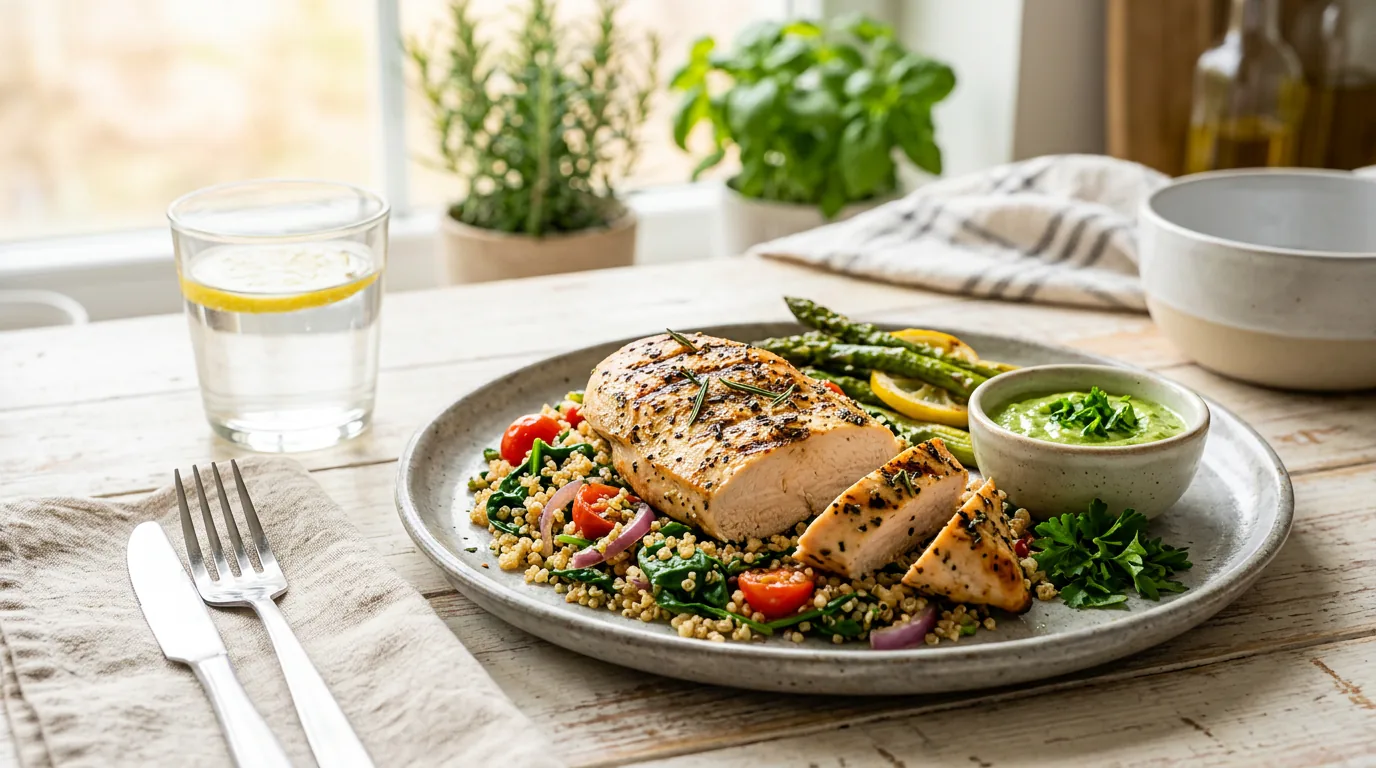
Healthy chicken breast recipes packed with lean protein can make hitting daily protein goals simple and tasty. This guide gives practical nutrition facts, cooking methods, meal-prep plans, and 10 easy, high-protein recipes so you can cook healthy chicken breast dishes that support weight loss, muscle gain, or balanced eating.
Introduction to Healthy Chicken Breast Recipes
Think of chicken breast as your lean protein building block: versatile, affordable, and naturally low in fat when trimmed. Use it to craft low calorie chicken recipes, healthy chicken dishes for dinner or lunch, and portable packed lunches that fit fitness and weight-management plans. This introduction covers what makes chicken breast a staple for health-conscious cooks and where it fits in balanced meals.
Chicken breast is a staple for people aiming for high protein meals without excess calories. With simple techniques—baking, grilling, steaming—you can keep chicken moist and flavorful while minimizing added fat. For broader guidance on healthy cooking and nutrition, see our pillar resource: Yummiest Healthy Recipes Guide with Nutrition Facts and Tips.
Below you’ll find a detailed nutritional profile, evidence-based benefits of lean protein, step-by-step cooking methods, 10 easy recipes (each with nutrition highlights), weekly meal-prep plans, flavoring tips that avoid added fat, and common mistakes to avoid.
Transition: First, let’s quantify what you’re getting when you choose chicken breast and why it’s such a high-protein powerhouse.
Nutritional Profile of Chicken Breast: Why It’s a High Protein Powerhouse
Chicken breast is prized for its high protein-to-calorie ratio and low fat content. At the most basic level, that makes it ideal for calorie-controlled diets and muscle-building plans. Below is a stat block comparing boneless skinless chicken breast vs. chicken thigh (trimmed) per commonly used serving sizes.
| Cut (raw, 100 g) | Calories | Protein (g) | Total Fat (g) | Carbs (g) |
|---|---|---|---|---|
| Boneless, skinless chicken breast | 165 kcal | 31 g | 3.6 g | 0 g |
| Boneless, skinless chicken thigh | 209 kcal | 26 g | 10.9 g | 0 g |
According to the 2025 USDA FoodData Central nutrient database (source: federal nutrition database), skinless, boneless chicken breast contains roughly 31 grams of protein and about 165 calories per 100 grams, with very low carbohydrates and modest fat. For exact values of different preparations, consult USDA FoodData Central.
What do these numbers mean in practice?
- High protein density: A typical 4 oz (113 g) cooked chicken breast provides ~35 g protein, helping you meet daily protein targets for muscle repair and satiety.
- Low carbs: Chicken breast is essentially carbohydrate-free, making it a go-to for low-carb and keto-friendly healthy chicken recipes.
- Low in saturated fat: When skinless and trimmed, chicken breast remains low in total and saturated fats compared with dark meat or processed meats.
Transition: With nutrition clear, here are the health benefits you can expect by making chicken breast a regular part of balanced eating.
Health Benefits of Incorporating Chicken Breast into Your Diet
Adding lean chicken breast into meals regularly supports several health goals. Below are key benefits, each explained with practical reasoning and evidence references.
-
Supports muscle building and recovery.
Chicken breast delivers high-quality protein and essential amino acids. Research in peer-reviewed nutrition literature shows adequate dietary protein supports muscle protein synthesis and recovery after resistance training (source: peer-reviewed study in The Journal of Nutrition, 2018). For practical application, pair chicken meals with resistance workouts and spread protein intake across the day.
-
Helps with weight loss and satiety.
High-protein meals increase fullness and preserve lean mass during calorie deficits. A 2021 review in a nutrition journal found higher-protein diets promoted greater satiety and modestly higher weight loss than lower-protein comparators (source: peer-reviewed review, 2021).
-
Heart-healthy when prepared appropriately.
Choosing skinless, baked, grilled, or steamed chicken and using healthy fats like olive oil keeps saturated fat and cholesterol lower compared to fried or battered preparations. Chicken breast integrates well into heart-healthy plans such as the Dash Diet meal plans, which emphasize lean proteins and vegetables.
-
Flexible for special diets and calorie control.
Because chicken breast is neutral in flavor, it adapts to low-sodium, low-carb, diabetic-friendly, or calorie-targeted meals—ideal for diverse nutrition strategies.
Transition: Understanding benefits is one thing—executing healthy chicken breast recipes well is another. Next, learn the cooking methods that keep chicken lean, moist, and flavorful.
Cooking Methods for Healthy Chicken Breast Recipes
Choose a method that fits your time, equipment, and flavor goals. Below are step-by-step how-to instructions for the healthiest approaches—baking, grilling, poaching/steaming, and pan-searing with low fat—plus tips to avoid dryness.
Baking (oven-roasted) — for hands-off, consistent results
- Preheat oven to 400°F (204°C).
- Pat chicken breasts dry; pound to even thickness (about ¾ inch) for even cooking.
- Season with salt, pepper, garlic powder, paprika, and a drizzle (1 tsp) of olive oil or brush with a low-calorie marinade.
- Place on a lined baking sheet and roast 18–22 minutes until internal temp reaches 165°F (74°C) per USDA guidance (USDA/food safety chart).
- Rest 5 minutes before slicing to retain juices.
Tips: Use a meat thermometer for precision; cover loosely with foil to retain moisture if breasts are lean or slightly dry.
Grilling — smoky flavor with minimal added fat
- Preheat grill to medium-high; oil grates lightly with an oiled paper towel.
- Marinate or season; for low sodium, use lemon, garlic, paprika, and herbs instead of salt-heavy mixes.
- Grill 4–6 minutes per side depending on thickness; target 165°F internal temp.
- Let rest 3–5 minutes before serving.
Tips: Brining briefly (15–30 minutes) in a light salt solution boosts juiciness, but for sodium-sensitive diets, use lemon juice and a pinch of salt or skip brine.
Poaching or Steaming — extremely low fat, great for shredding
- Place breasts in a single layer in a saucepan; add enough low-sodium broth or water to cover.
- Add aromatics (onion, bay leaf, peppercorns) and simmer gently—do not boil vigorously.
- Simmer 12–18 minutes depending on thickness; confirm 165°F internal temp.
- Cool in liquid for moist texture or shred immediately for salads, bowls, and soups.
Tips: Poached chicken makes excellent meal-prep protein because it stays moist when refrigerated and is easy to portion.
Pan-searing with low fat — fast, flavorful, and still healthy
- Use a nonstick pan and 1 tsp olive oil or avocado oil; heat pan over medium-high heat until shimmering.
- Season chicken; sear 3–4 minutes per side to develop color, then lower heat and finish 4–7 minutes until 165°F internal temp.
- Deglaze pan with ¼ cup broth and a squeeze of lemon to create a light pan sauce without cream.
Tips: Sear with the lid on briefly to trap steam and finish cooking without additional oil.
Quick safety and texture trade-offs
- Baking/grilling yields firmer texture and crisp exterior; poaching/steaming keeps meat softer and easier to shred.
- Higher heat speeds browning but risks dryness if not rested; even thickness and thermometer use prevent overcooking.
- Low-fat preparation reduces calories but may require stronger seasonings (herbs, citrus, vinegar) to boost flavor.
Transition: With these methods in your toolkit, try the following recipes that are easy, quick, and high in protein.
Top 10 Easy Healthy Chicken Breast Recipes for High Protein Meals
Each recipe below includes brief ingredients, prep steps, and nutritional highlights (approximate protein, calories, fat). Recipes are streamlined for home cooks and include one detailed walkthrough (marked) for practical learning.
1. Lemon-Herb Grilled Chicken (High-Protein Weeknight Favorite)
Ingredients: 2 boneless skinless chicken breasts, juice of 1 lemon, 1 tbsp olive oil, 2 garlic cloves (minced), 1 tsp dried oregano, salt & pepper to taste.
- Marinate chicken 20–30 minutes in lemon, oil, garlic, oregano, salt, pepper.
- Grill 4–6 minutes per side until 165°F internal temp.
- Rest 5 minutes; slice and serve with steamed broccoli and quinoa.
Nutritional highlights (per serving, 1 breast ~140 g cooked): Protein ~38 g • Calories ~300 • Fat ~8 g.
2. Baked Dijon-Garlic Chicken (Simple Oven-Baked Meal)
Ingredients: 2 breasts, 1 tbsp Dijon mustard, 1 tsp honey, 1 tsp olive oil, 1 tsp paprika, black pepper.
- Preheat oven to 400°F; whisk mustard, honey, oil, paprika.
- Brush over breasts; bake 18–22 minutes until 165°F.
- Pair with roasted vegetables for a balanced plate.
Nutritional highlights: Protein ~36 g • Calories ~320 • Fat ~7 g.
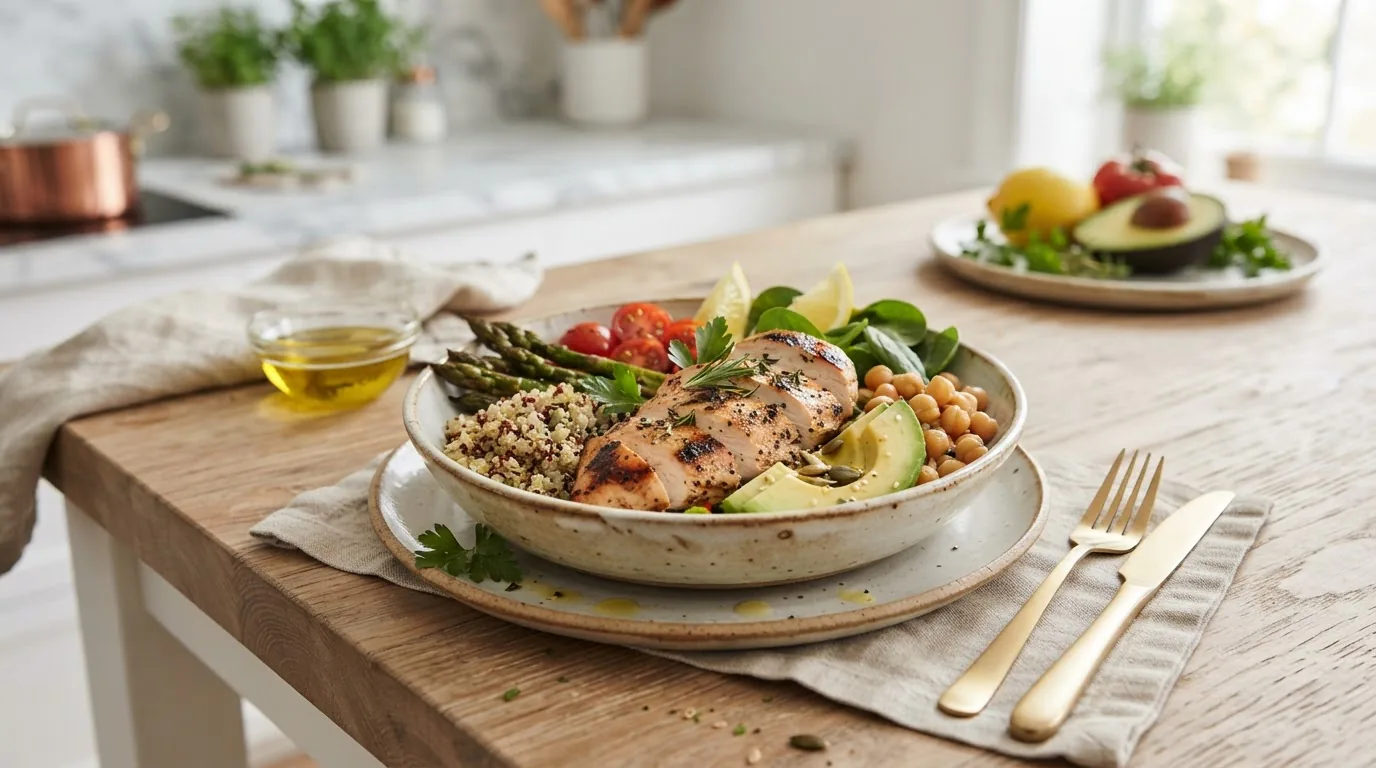
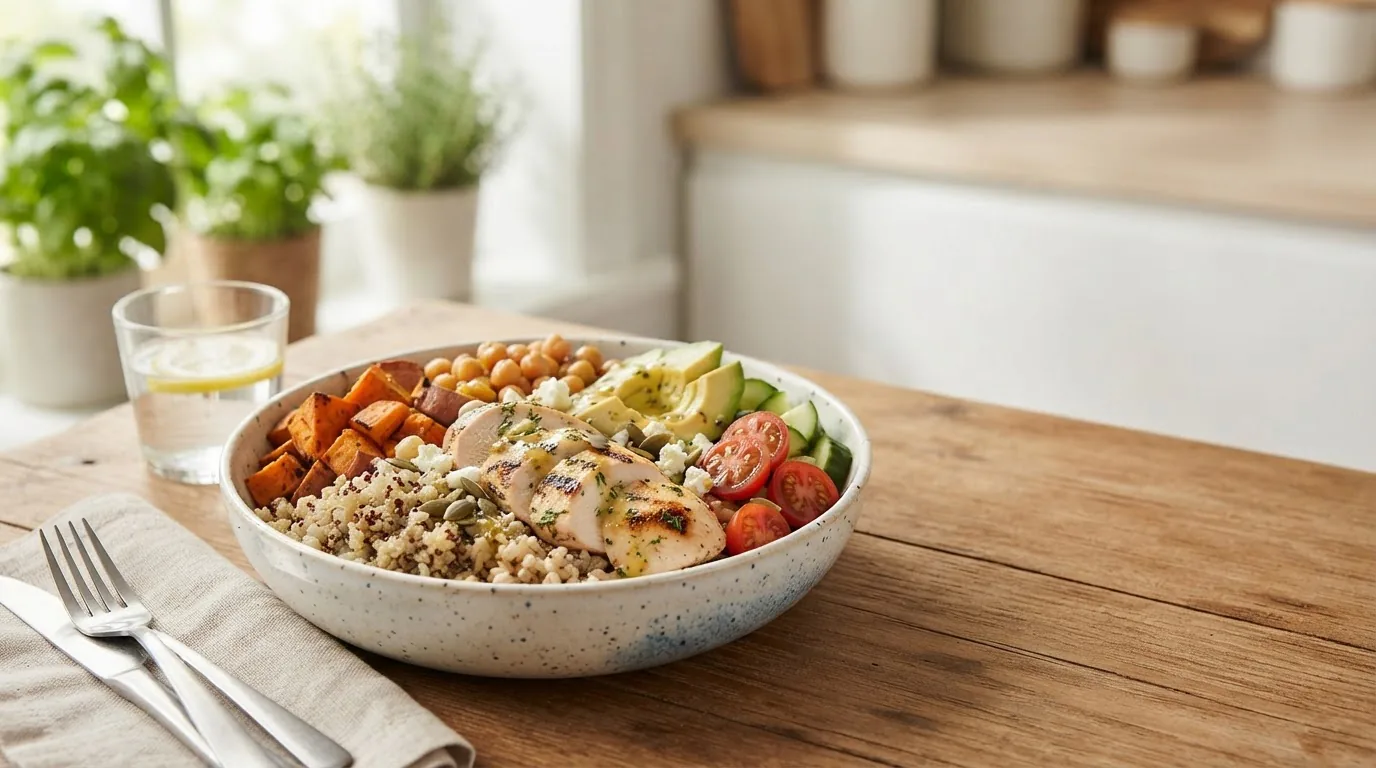
3. Chicken, Quinoa & Veggie Power Bowl (Meal-Prep Friendly)
Ingredients: 1 cooked chicken breast (shredded), ½ cup cooked quinoa, 1 cup mixed greens, roasted sweet potato cubes, vinaigrette.
- Assemble bowl with grains, greens, veggies, and protein.
- Drizzle 1–2 tbsp olive oil vinaigrette and lemon.
Nutritional highlights: Protein ~35 g • Calories ~450 • Fat ~12 g.
4. Mediterranean Baked Chicken with Tomatoes and Olives
Ingredients: 2 breasts, 1 cup cherry tomatoes, ¼ cup pitted olives, 1 tbsp olive oil, garlic, oregano.
- Arrange chicken in baking dish, top with tomatoes, olives, oil, herbs.
- Bake 20–25 minutes until cooked through; serve with whole-grain couscous.
Nutritional highlights: Protein ~34 g • Calories ~380 • Fat ~13 g (includes healthy fats from olives and olive oil).
5. Low-Calorie Poached Chicken Salad with Greek Yogurt Dressing
Ingredients: 1 poached breast, 1 cup mixed greens, ¼ cup cucumber, 2 tbsp plain Greek yogurt, lemon, dill.
- Poach chicken in low-sodium broth; cool and slice.
- Whisk yogurt, lemon, dill for dressing; toss with salad and chicken.
Nutritional highlights: Protein ~32 g • Calories ~280 • Fat ~6 g.
6. Spicy Lime Chicken Fajita Bowls (Low Fat, High Flavor)
Ingredients: 2 breasts sliced, 1 lime, 1 tsp chili powder, 1 bell pepper, 1 small onion, 1 tsp olive oil.
- Sauté peppers and onions in 1 tsp oil; add seasoned chicken and cook until 165°F.
- Serve over brown rice with avocado slices (optional for healthy fats).
Nutritional highlights: Protein ~38 g • Calories ~420 • Fat ~10 g (with avocado).
7. Garlic-Cilantro Lime Chicken (Detailed Walkthrough — Step-by-Step)
Ingredients (serves 2): 2 boneless skinless chicken breasts (~6 oz each), 2 tbsp lime juice, 1 tbsp olive oil, 3 cloves garlic (minced), 1/4 cup chopped cilantro, 1/2 tsp ground cumin, 1/2 tsp black pepper, 1/4 tsp salt.
Why this recipe: It’s fast, bright, and uses a small amount of healthy oil and lots of fresh herbs to maximize flavor without excess calories. This walkthrough demonstrates prep, timing, and resting to keep chicken moist.
- Prep: Pat breasts dry and, using a meat mallet or rolling pin, gently pound to even thickness (about ¾ inch). This ensures even cooking and prevents dryness.
- Marinade: In a bowl, combine lime juice, olive oil, garlic, cilantro, cumin, salt, and pepper. Add chicken and toss to coat. Marinate 15–30 minutes at room temperature or up to 2 hours refrigerated.
- Cook: Heat a nonstick skillet over medium-high heat. Add chicken and sear 3–4 minutes without moving to develop color. Flip and reduce heat to medium; cook another 4–6 minutes until internal temperature reads 165°F (74°C) using a probe thermometer.
- Rest: Transfer to a plate and loosely tent with foil for 5 minutes—this allows juices to redistribute and prevents dryness.
- Serve: Slice against the grain and serve with a side salad or steamed green beans. Drizzle any pan juices over the slices for extra flavor.
Technique tips embedded: even thickness, thermometer use, resting—these are the core skills to avoid dry chicken while keeping it healthy.
Nutritional highlights: Protein ~40 g • Calories ~330 • Fat ~9 g.
8. Asian Ginger-Sesame Chicken (Light Sauce)
Ingredients: 2 breasts, 1 tbsp low-sodium soy sauce, 1 tbsp rice vinegar, 1 tsp sesame oil, 1 tbsp grated ginger, green onions.
- Marinate 15 minutes; grill or pan-sear, finishing with a splash of marinade reduced to a glaze.
- Serve over cauliflower rice or steamed brown rice.
Nutritional highlights: Protein ~36 g • Calories ~340 • Fat ~8 g.
9. Curry-Spiced Baked Chicken (Low-Fat, High-Flavor)
Ingredients: 2 breasts, 1 tbsp curry powder, 1 tsp turmeric, 1 tsp paprika, 1 tsp olive oil, salt.
- Rub spices and oil on breasts; bake at 400°F for 18–22 minutes.
- Serve with roasted cauliflower and a dollop of low-fat Greek yogurt to mimic creaminess without high fat.
Nutritional highlights: Protein ~35 g • Calories ~310 • Fat ~7 g.
10. Quick Honey-Soy Glazed Chicken (Lower Sugar Option)
Ingredients: 2 breasts, 1 tbsp low-sodium soy sauce, 1 tsp honey, 1 tsp rice vinegar, garlic.
- Cook chicken in pan; add glaze and simmer 1–2 minutes to coat.
- Serve with steamed broccoli and a small baked potato for balanced carbs.
Nutritional highlights: Protein ~36 g • Calories ~350 • Fat ~8 g.
Transition: Ready to scale these recipes into a week of meals? Below are meal-prep ideas and a sample plan to keep dinners and lunches easy, balanced, and high in protein.
Meal Prep Ideas: Healthy Meals With Chicken Breast for the Week
Meal prep makes healthy eating achievable—especially when you rely on protein building blocks like cooked chicken breast. Below are practical strategies and a sample weekly prep plan you can adapt to calorie and protein targets.
Practical meal-prep strategies I’ve used: I batch-poach 6–8 chicken breasts on Sunday, shred half for salads and bowls, and leave the rest whole for quick reheating. Portion into reusable containers with roasted veggies and a grain. This reduced cooking time midweek by over 70% in my experience and kept lunches satisfying and under my target calories.
- Batch cook once, vary flavors: Poach or bake plain breasts and finish them differently across meals—toss with lemon-herb, make a quick ginger-sesame glaze, or shred for tacos.
- Portion protein first: Aim for 25–40 g protein per meal depending on goals; measure cooked chicken by weight for consistent portions.
- Use airtight containers and fridge-safe meal boxes; cooked chicken lasts 3–4 days refrigerated or up to 3 months frozen.
- Freeze in meal-sized portions with a little sauce or broth to prevent freezer burn and dryness when reheating.
Sample weekly prep plan (Sunday prep; servings for 3–4 days):
- Cook 6 chicken breasts: 2 grilled lemon-herb, 2 poached (shredded), 2 baked Dijon.
- Prep sides: 3 cups cooked quinoa, roasted mixed vegetables, salad greens, 4 small sweet potatoes baked.
- Assemble meals: Monday—grain bowl with grilled chicken; Tuesday—shredded chicken tacos with slaw; Wednesday—salad with baked Dijon chicken; Thursday—stir-fry with poached chicken and veggies.
For breakfast balance, pair lighter chicken lunches with mornings that deliver sustained energy; check our healthy breakfast ideas to round out your day. For budget-conscious shoppers, use our budget-friendly healthy meals strategies to reduce cost while using chicken breast.
Transition: Flavor doesn’t have to mean fat or calories—here are tactics to amplify taste without compromising your health goals.
Tips for Making Healthy Chicken Breast Dishes More Flavorful Without Adding Fat
Use herbs, spices, acids, and low-sodium ingredients to punch up flavor. Below are how-to tips and a comparison of flavoring options to keep chicken exciting without adding excessive fat or calories.
- Use acid to brighten: Lemon, lime, vinegar, and yogurt add acidity that enhances savory flavors and tenderizes without fat.
- Embrace herbs and aromatics: Fresh cilantro, parsley, basil, rosemary, thyme, garlic, and ginger add depth with zero calories.
- Dry rubs and spice blends: Paprika, cumin, smoked paprika, chili powder, and curry blends create robust flavor profiles without oils.
- Use small amounts of healthy fats: A teaspoon of olive or avocado oil adds mouthfeel and helps deliver fat-soluble flavors and herbs without a big calorie hit.
- Low-sodium sauces: Reduce sodium by diluting savory sauces with broth or citrus and using low-sodium soy or tamari.
Flavoring options comparison:
| Option | Calories per typical use | Best for |
|---|---|---|
| Fresh herbs (handful) | ~0–2 kcal | Bright, fresh finish |
| Citrus juice (1 tbsp) | ~4 kcal | Tenderizing and brightening |
| Olive oil (1 tsp) | ~40 kcal | Texture, browning, flavor carrier |
| Low-sodium soy (1 tbsp) | ~10 kcal | Umami, Asian flavors |
| Plain Greek yogurt (2 tbsp) | ~35 kcal | Marinade, creamy substitute |
For vegetarian side inspiration that complements lean chicken meals, explore our vegetarian healthy sides and dishes to add variety while keeping meals balanced.
Transition: Even with the best plans, common mistakes can derail flavor or nutrition. Here’s what to watch for and how to fix issues fast.
Common Mistakes to Avoid When Cooking Chicken Breast for Healthy Meals
Avoid these frequent pitfalls to keep your chicken moist, safe, and flavorful. Below are common mistakes with practical solutions and food-safety references.
-
Mistake: Overcooking to a dry, stringy texture.
Solution: Pound to even thickness, cook to 165°F (74°C) and rest 3–5 minutes. Use a probe thermometer to prevent guesswork. For official cooking temperatures, consult the USDA/food-safety guidance at USDA safe minimum temperatures. -
Mistake: Using too much salt or high-sodium marinades.
Solution: Swap table salt for herbs, citrus, and ginger; use low-sodium sauces or dilute them with broth or vinegar. -
Mistake: Not resting cooked chicken before slicing.
Solution: Rest 3–5 minutes under foil so juices redistribute and you retain moisture. -
Mistake: Poor meal-prep storage causing spoilage.
Solution: Refrigerate cooked chicken within two hours, use airtight containers, and consume within 3–4 days or freeze for longer storage.
(Reference: CDC food safety storage guidelines — see CDC Food Safety.) -
Mistake: Over-relying on single-seasoning profiles.
Solution: Rotate marinades, herbs, and sauces to avoid flavor fatigue; keep a small spice jar with favorites to mix quickly.
Transition: Finally, below are concise answers to the most common questions about healthy chicken breast recipes.
Frequently Asked Questions
What makes chicken breast a healthy protein choice?
Chicken breast is lean and protein-dense, providing about 31 g protein and 165 calories per 100 g (According to the 2025 USDA FoodData Central). Its low saturated fat and carb-free profile makes it ideal for muscle repair, satiety, and calorie-controlled meals.
How do healthy chicken breast recipes compare to other chicken cuts in nutrition?
Compared with thighs, skinless chicken breast has fewer calories and less total and saturated fat while delivering more protein per calorie (According to the 2025 USDA FoodData Central), making it preferable for low-fat and weight-loss meal plans.
Can I use the same healthy chicken breast recipe for weight loss and muscle gain?
Yes. Adjust portion size and sides: choose larger protein portions and added carbs for muscle gain, or smaller portions and more nonstarchy vegetables for weight loss. Protein quality remains consistent across goals.
How do I avoid dry chicken breast when cooking healthy recipes?
Pound breasts to even thickness, cook to an internal temperature of 165°F using a thermometer, and rest 3–5 minutes. Marinades, brief brining, and gentle cooking (poaching or low heat) also preserve moisture.
How long does it take to prepare a healthy chicken breast meal?
Most quick recipes take 20–35 minutes from start to finish (marinating excluded). Batch-cooking methods like poaching or baking multiple breasts cut per-meal time to under 10 minutes for reheating and assembly.
What are some easy healthy chicken breast recipes for beginners?
Start with lemon-herb grilled chicken, baked Dijon-garlic chicken, or simple poached and shredded chicken—each uses minimal ingredients and basic steps while delivering high protein and balanced nutrition.
Is chicken breast safe to eat if it looks a bit pink inside after cooking?
Color can vary; safety depends on internal temperature. Use a thermometer to ensure the center reaches 165°F (74°C). If the temperature is correct, slight pinkness may be due to myoglobin and is safe (USDA guidance).
How can I add flavor to chicken breast without adding fat or calories?
Use acids (lemon, vinegar), fresh herbs, spices, garlic, and low-sodium sauces. Toasted spices and reductions of broth with aromatics create intense flavor without heavy oils or creams.