What you will have achieved, time, and skill level
By the end of this guide you will be able to design, shop for, prepare, portion, and track nutrient dense meals that meet target macro and micronutrient totals for a typical adult (2,000–2,400 kcal baseline). Expect to complete the initial planning and a first batch cook in 3–4 hours; routine weekly planning and batch-cooking will take 60–90 minutes thereafter. This guide assumes intermediate kitchen competence (you can use a stove, oven, and blender confidently) and basic nutrition literacy (you know calories, protein grams, and how to read a nutrition label).
Before you start
- Prerequisites: a kitchen scale (0.1 oz / 1 g accuracy), measuring cups/spoons, a high-speed blender or food processor, oven and stovetop.
- Tools: 3–5 airtight meal containers (16–32 oz capacity), 1 slow cooker or instant pot (optional), non-stick pan (10–12″), sheet pans, silicone spatulas, cutting board.
- Materials: pantry staples (see shopping list in Step 2), at least 1 digital food-tracking app (MyFitnessPal, Cronometer) or a printed nutrient spreadsheet.
- Time: first full setup and batch cook — 3–4 hours; weekly maintenance — 60–90 minutes.
- Quantities to plan for: weekly plan for 14 meals (lunch + dinner) for one person when batch-cooking, plus breakfast and snacks as outlined below.
Core plan: step-by-step numbered workflow
-
Decide your primary goal and set nutrient targets
Action: write down one primary goal (weight maintenance, weight loss, muscle gain, improved energy). Use these concrete targets as starting points:
- Maintenance (moderately active adult): 2,200 kcal/day; 95–120 g protein; 70–90 g fat; remainder from carbs (~250–300 g).
- Weight loss (0.5–1 lb/week deficit): subtract 300–500 kcal/day (target 1,700–1,900 kcal); keep protein 1.0–1.2 g/kg body weight (e.g., 80–100 g for 80 kg individual).
- Muscle gain: +250–400 kcal/day surplus; protein 1.6–2.0 g/kg body weight; aim 20–25% of calories from protein and 25–35% from fat.
Measure body weight and estimate activity level; record your target calories and protein in your app. These numeric targets drive portion sizes in later steps.
-
Build a one-week nutrient-dense ingredient list and shopping plan
Action: create a shopping list with exact quantities for 7 days based on 14 meals (lunch + dinner), 7 breakfasts, and snacks. Example quantities for one person:
- Lean protein: 2.5–3.5 lb chicken breast or 2 lb salmon + 1 lb tofu (total protein sources ≈ 3.5–4.5 lb raw).
- Legumes and whole grains: 2 cups dry lentils (yields ≈ 4 cups cooked), 4 cups dry quinoa or brown rice.
- Vegetables: 12 cups leafy greens (kale/spinach), 14 cups mixed veg (broccoli, bell pepper, carrots), 7 medium sweet potatoes (~3.5 lb).
- Healthy fats: 1 lb mixed nuts, 1 bottle extra-virgin olive oil (500 mL), 2 avocados.
- Dairy/alternatives: 1 quart plain Greek yogurt (32 oz), 1 block cheese (8 oz) or fortified plant alternative.
- Fruits: 7 medium apples or 14 servings berries (frozen 2 lb bag), 7 bananas.
- Fortifiers: iodized salt, iodized sea salt, 1 jar ground flaxseed (8 oz), 1 jar chia seed (8 oz).
Check your pantry for staples (cumin, turmeric, pepper, low-sodium soy sauce). Use the internal shopping guidance for nutrient focus at /nutrition-tips/healthy-grocery-list-guide-for-smart-and-nutritious-shopping/ and cross-check with high-nutrient food recommendations at /nutrition-tips/nutrient-packed-foods-guide-with-top-healthy-eating-options/.
-
Design balanced plates using concrete portions
Action: Commit to the plate ratio and exact portion sizes per meal. For most adults target per main meal (lunch/dinner):
- Protein: 4–6 oz cooked (120–170 g) per meal ≈ 30–45 g protein.
- Vegetables: 2–3 cups non-starchy cooked or raw ≈ 200–300 g for 10–15 g fiber.
- Whole carbohydrate: 3/4 cup cooked grain or 1 medium sweet potato ≈ 30–45 g carbs.
- Healthy fat: 1 tbsp oil or 1/4 avocado ≈ 10–14 g fat.
For breakfast: 20–30 g protein (Greek yogurt + 30 g oats + 1 tbsp flaxseed) and 1 cup fruit. For snacks: 8–12 g protein (1 oz nuts + 1 small apple) or a 150 kcal Greek yogurt pot.
-
Create a simple nutrient-dense recipe matrix
Action: write 6 interchangeable core recipes you can mix-and-match across the week. Examples with exact ingredients for one batch (2–3 meals per recipe):
- Sheet-pan chicken + veg (makes 3 servings): 1.5 lb chicken breast (approx 24 oz), 6 cups broccoli florets, 2 cups sliced bell pepper, 1 tbsp olive oil, 1 tsp smoked paprika, 1/2 tsp salt. Roast 400°F for 20–25 minutes (internal temp 165°F).
- Salmon + quinoa + greens (2 servings): 14 oz salmon fillet, 1 cup dry quinoa (yields 3 cups cooked), 4 cups spinach, 1 tbsp lemon, roast salmon at 425°F for 12–14 minutes (internal 125–130°F for medium).
- Lentil curry (3–4 servings): 2 cups cooked lentils (use 1 cup dry), 1 can diced tomatoes (14 oz), 1 cup chopped carrots, 1 tbsp curry powder, simmer 18–22 minutes. Add 1 tbsp olive oil per serving.
Label each batch with cooking date and target serving weight (weigh portions to be exact). Freeze any servings you will consume after 3 days.
-
Shop efficiently with exact quantities and timings
Action: schedule your shopping trip the day before batch-cook. Buy perishables last, and use this packing order in the cart: heavy items (grains, dairy) first, chilled last. For a single shopper follow this timetable:
- Shopping time: 45–60 minutes for the list above.
- Perishables refrigeration: put meat in fridge within 30 minutes; if outside >45 minutes use insulated bag with ice packs.
- Frozen options: buy 2–3 lb frozen vegetables or berries as backup.
-
Batch-cook with an organized workflow
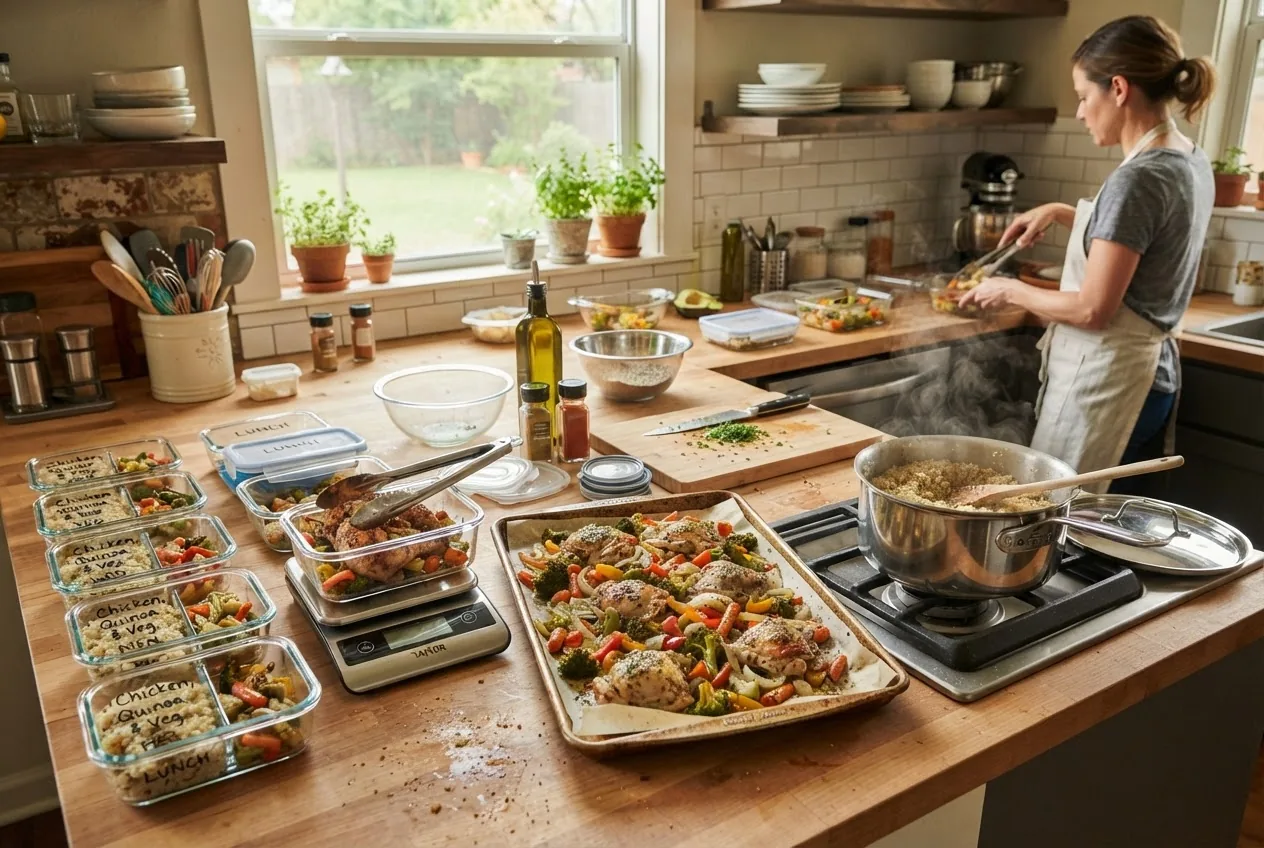
Action: follow a two-zone cook plan — oven zone and stove zone. Start a 3–4 hour session with this sequence:
- Preheat oven to 400°F and start rice/quinoa on stove (1 cup dry to 2 cups water, simmer 18 minutes then rest 10 minutes).
- Chop vegetables (30 minutes). While chopping, season proteins (2–3 minutes per item).
- Roast proteins and root vegetables 20–30 minutes. Use probe or instant-read thermometer to reach internal temps: chicken 165°F, pork 145°F (rest 3 minutes), salmon 125–130°F for medium doneness.
- Cook quick stovetop recipes (lentils, stir-fries) concurrently. Lentils: rinse, boil 2–3 minutes, simmer 18–22 minutes until tender.
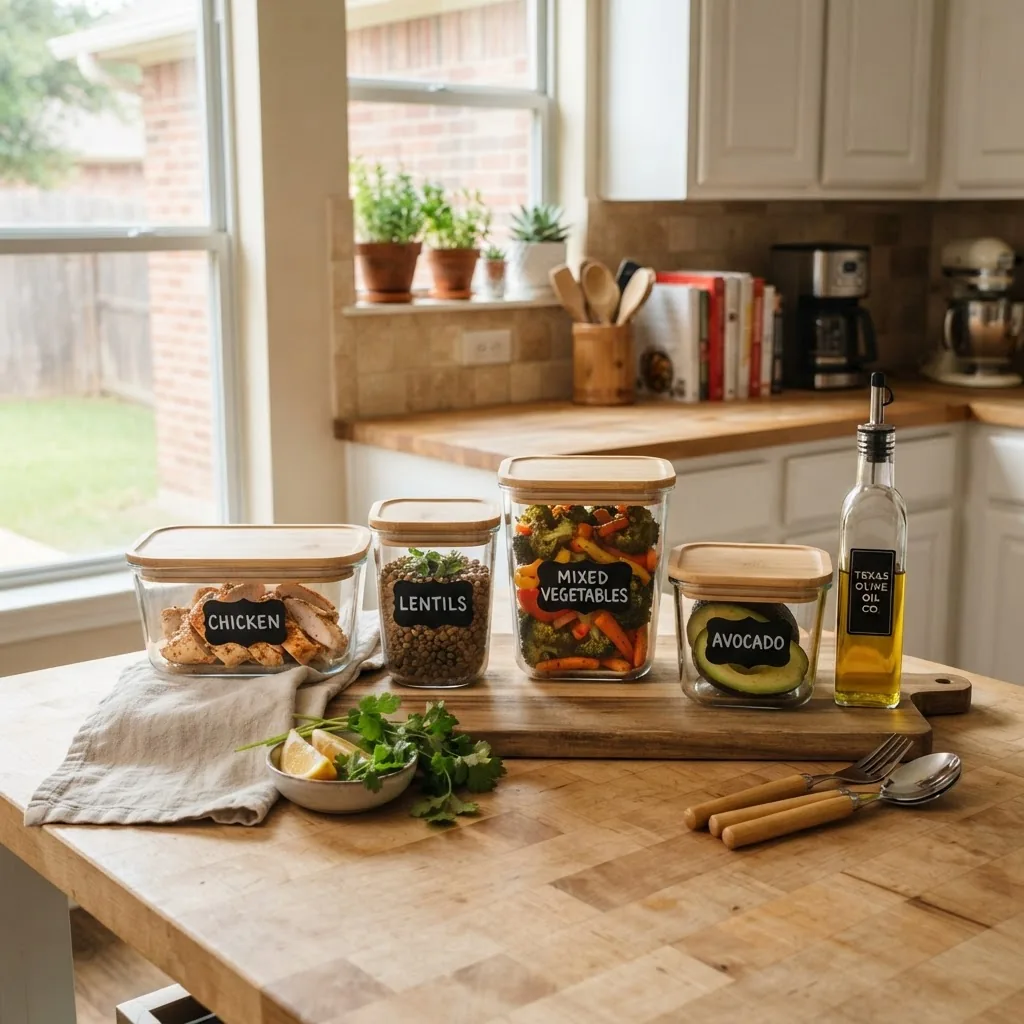
- Divide into containers using kitchen scale: target 450–550 g per container for a main meal (weigh to reach calorie and macro targets determined in Step 1).
Label containers with date and reheating instructions: microwave 2–3 minutes on high (stir halfway) or oven at 350°F for 12–15 minutes covered.
-
Portion and weigh every serving for accuracy
Action: use your kitchen scale for exact portions. Concrete targets:
- Main meal container weight: 450–550 g depending on calorie target (weigh after assembling), containing 4–6 oz cooked protein, 2 cups veg, 3/4 cup cooked grain.
- Snack portions: nuts 28 g (1 oz), Greek yogurt 150 g, fruit 120–150 g.
- Breakfast: oats 40 g (dry) + Greek yogurt 150 g + berries 80 g + 1 tbsp ground flaxseed (10 g).
Record the weighed values in your tracking app immediately; save one master spreadsheet row per recipe with grams per ingredient and per-serving macros to speed future tracking.
-
Optimize cooking methods to preserve micronutrients
Action: adopt cooking methods that retain vitamins and minerals—boil less, steam more, roast at controlled temperatures:
- Steam leafy greens 1–2 minutes to preserve vitamin C and folate.
- Roast root vegetables at 375–400°F for 25–35 minutes to maintain beta-carotene.
- Pan-sear proteins quickly (2–4 minutes per side) and finish in oven if thick; avoid charring which reduces certain nutrients and creates harmful compounds.
Use lemon, vinegar, or light oil dressing to increase absorption of fat-soluble vitamins (A, D, E, K); 1 tbsp oil per salad is sufficient.
-
Fortify meals for micronutrient coverage
Action: add small quantities of nutrient boosters daily. Practical additions and amounts:
- 1 tbsp ground flaxseed (adds omega-3 ALA, 2.3 g) to breakfast or smoothies.
- 1/4 cup cooked lentils or half a can of chickpeas added to salads for folate and iron.
- 2 tsp nutritional yeast (adds ~4 g protein and B-vitamins) sprinkled on roasted veg.
- Use iodized salt at 1/4–1/2 tsp per day to ensure iodine intake; for vegans consider 150 mcg iodine supplement if not using dairy/seafood.
If you are on restricted diets (vegan, vegetarian, low-dairy), track B12, iron, calcium, and vitamin D explicitly in Cronometer and supplement where lab-tested deficiencies exist.
-
Plan breakfasts and snacks to close nutrient gaps
Action: slot breakfasts and two snacks that add specific nutrients not easily met at dinners (calcium, vitamin D, extra protein). Examples with quantities:
- Breakfast A: Greek yogurt 200 g (20 g protein), oats 40 g, 1 tbsp chia (10 g), berries 80 g.
- Snack A: Cottage cheese 110 g (1/2 cup) + 1 medium apple (150 g).
- Snack B (pre/post workout): 1 scoop whey (25 g protein) mixed with 250 mL water + 1 banana (100–120 g).
For older adults target 25–30 g protein at breakfast to support muscle retention; choose Greek yogurt or an egg-based scramble (2 whole eggs + 2 egg whites = ~20 g protein).
-
Track nutrients daily and adjust for trends
Action: log every meal for the first 14 days in Cronometer or MyFitnessPal using the batch servings you weighed. Concrete monitoring rules:
- If protein is below target by ≥10% on average over 3 days, increase protein serving by 1–2 oz (30–60 g raw weight) per meal.
- If fiber below 25 g/day, add 1/2 cup cooked lentils (≈8 g fiber) or +1 cup veg per day.
- Adjust calories in 100–200 kcal steps weekly if weight changes are outside target (±0.5 lb/week).
Export a weekly report and inspect protein, fiber, iron, calcium, vitamin D. Track trends, not single-day noise.
-
Adjust for special populations and restrictions
Action: apply the following concrete swaps when needed:
- Vegetarian: replace 4–6 oz meat with 1 cup cooked lentils + 1/4 cup nuts to match protein and iron; consider 25–50 mcg B12 supplement if no fortified dairy.
- Diabetic-friendly: keep meals to ≤45–60 g carbs; choose 1/2 cup cooked grains (≈25–30 g carbs) and extra non-starchy veg; include 15–20 g protein at each meal.
- Senior nutrition: increase protein to 1.2–1.5 g/kg; include 200–300 IU vitamin D from fortified dairy or 1,000 IU supplement if needed after lab check.
-
Storage, reheating, and food safety with exact thresholds
Action: follow strict temperature and timing rules to preserve safety and nutrients:
- Cool cooked food to <70°F within 2 hours, then refrigerate at ≤40°F. Use shallow containers or ice bath to speed cooling.
- Eat refrigerated meals within 3–4 days; freeze extra portions for up to 3 months at 0°F.
- Reheat to 165°F internal temperature and stir halfway through microwaving; oven reheat at 350°F for 12–20 minutes depending on portion size.
-
Save time with weekly templates and batch schedules
Action: commit to a repeating two-hour weekly routine plus one 3–4 hour batch-cook session every 10–14 days. Example schedule:
- Sunday (3–4 hours): full batch-cook — proteins, grains, roasted veg, assemble 10–12 meals.
- Wednesday (60 minutes): refresh salads, quick stir-fry from frozen proteins, replenish snacks.
Create a spreadsheet with recipe names, cook time, and container counts so you only adjust ingredient quantities and shopping list week-to-week.
-
Sample day menus with exact quantities for three goals
Action: use these concrete menus as templates. Each line lists weight/volume and macro estimate.
Maintenance (≈2,200 kcal)
- Breakfast: Greek yogurt 200 g (20 g protein) + oats 40 g + blueberries 80 g + 1 tbsp flaxseed — 450 kcal.
- Snack: 1 oz almonds (28 g) + 1 medium pear (150 g) — 220 kcal.
- Lunch: 5 oz cooked chicken (140 g), 3/4 cup cooked quinoa (150 g), 2 cups mixed greens + 1 tbsp olive oil — 600 kcal.
- Snack Pre-workout: 1 banana (120 g) + 1 scoop whey protein (25 g) — 240 kcal.
- Dinner: 6 oz salmon (170 g), 1 medium sweet potato (200 g), 2 cups steamed broccoli — 690 kcal.
Weight loss (≈1,800 kcal)
- Breakfast: 2 eggs + 2 egg whites scramble + 1 slice whole-grain toast + 1 cup spinach — 310 kcal.
- Snack: Greek yogurt 150 g — 110 kcal.
- Lunch: 4 oz turkey (112 g), 1 cup lentils (200 g cooked), large salad with 1 tsp olive oil — 420 kcal.
- Snack: 1 apple (150 g) + 10 almonds (14 g) — 150 kcal.
- Dinner: 5 oz grilled cod (140 g), 1 cup roasted Brussels sprouts, 1/2 cup brown rice — 710 kcal.
Muscle gain (+400 kcal surplus)
- Breakfast: 60 g oats + 1.5 scoops whey (37 g protein) + 2 tbsp peanut butter (32 g) + banana — 700 kcal.
- Snack: 1 cup cottage cheese (226 g) + 1 tbsp honey — 300 kcal.
- Lunch: 6 oz steak (170 g), 1 cup sweet potato mash, 2 cups kale — 750 kcal.
- Snack: protein shake + 2 rice cakes with avocado — 450 kcal.
- Dinner: 6 oz chicken, 1 cup cooked quinoa, 2 cups mixed vegetables — 700 kcal.
-
Cost-control and shopping hacks with concrete numbers
Action: reduce per-meal cost using these precise strategies:
- Buy protein in bulk frozen: 5 lb chicken packs at $1.99–$2.49/lb in Texas market — freeze in 12–16 oz portions.
- Use dry beans/lentils: 2 cups dry (~$1.50–$2) yields ~6 cups cooked, ~6–8 servings.
- Frozen vegetables: 2 lb bag (~$2–$3) covers three to four meals and retain nutrients similar to fresh.
Target a per-meal raw ingredient cost of $2.50–$4.00 for nutrient-dense home-cooked dinners versus $9–12 for takeout.
-
Labeling, rotation, and expiry tracking
Action: implement a simple labelling habit using masking tape or pre-printed labels. Label format: “Recipe — Date cooked — Use by.” Example: “Lentil Curry — 09/05 — Use by 09/08.” Rotate older meals to eat first. Maintain a small whiteboard in the fridge with counts of refrigerated vs frozen meals.
-
Conduct a 14-day review and refine
Action: after two weeks, compare actual weight change and logged nutrients to targets. Concrete adjustments:
- Weight changed >1.5 lb in either direction: alter daily calories by 150–250 kcal.
- Protein average
10%: add one 30–40 g protein snack per day or increase portion sizes by 1–2 oz at meals. - Vegetable servings <3/day: add 1 cup raw salad to lunch or dinner for the next week.
Maintain a short note on taste and prep time; drop recipes that feel tedious or less satisfying.
Common mistakes and how to avoid them
I’ve seen these errors happen repeatedly in client kitchens; each one cost time, nutrients, or both.
- Underweighing protein: I once assumed “one chicken breast” would be 6 oz cooked — it was 10 oz raw and 8 oz cooked; the meal overshot and later disrupted my client’s calorie goals. Solution: always weigh cooked portions and log cooked weight.
- Overcooking vegetables: I’ve steamed greens for 10+ minutes until limp — nutrient loss and poor texture. Solution: use quick steam (1–2 minutes) and shock in cold water if storing.
- Not tracking fortification gaps: I advised a vegan client to rely on diet alone for B12; without testing they were low. Solution: track micronutrients in Cronometer and supplement B12/iodine/vitamin D when lab tests indicate or diets lack sources.
- Poor cooling practice: I once put a large pot directly into the fridge; internal temperature stayed >70°F for hours. Solution: divide into shallow containers or use an ice bath to pass through the 70°F -> 40°F window in under 2 hours.
- Too-large initial plan: I tried to batch-cook for 4 weeks and ended up wasting food. Solution: batch-cook 10–12 meals at a time, freeze only what you won’t eat within 3–4 days.
Checklist: verify your nutrient-dense meal planning work
- Daily calories and protein logged in app for 14 days.
- At least 2 cups of vegetables per lunch/dinner and 25+ g fiber daily.
- Protein portions weighed: 4–6 oz cooked for most main meals.
- One batch-cook session completed and labelled containers dated.
- Food safety: cooling to ≤70°F within 2 hours and refrigerated ≤40°F.
- Backup frozen meals available and rotation system on the fridge whiteboard.
- Micronutrient check: vitamin D, iron (if female), calcium, B12 (if vegan) monitored in tracking app.
When to call a professional
Call a registered dietitian or physician if you have diagnosed conditions (diabetes, chronic kidney disease, severe food allergies), unexplained weight loss or gain >5% in a month, persistent nutrient-deficiency lab results (low ferritin, low B12, low vitamin D), or if you need a medically-tailored meal plan. For performance athletes or those wanting advanced testing (e.g., comprehensive micronutrient panel), book a consultation with a sports dietitian.
Additional practical tips and worked examples
Worked example: calculate per-serving macros from a batch recipe
Take the sheet-pan chicken recipe (Step 4). Ingredients for 3 servings cooked yield (approx): 24 oz raw chicken → 20 oz cooked; quinoa 1 cup dry → 3 cups cooked; roasted veg total 8 cups cooked. Weigh final cooked total mass: chicken 560 g (3 servings → ~187 g cooked per serving), quinoa 720 g (240 g per serving), veg 900 g (300 g per serving). Use a nutrition database to find cooked weights macros: 187 g cooked chicken = ~50 g protein, 240 g cooked quinoa = 8 g protein + 60 g carbs, veg = 6 g fiber, 1 tbsp olive oil added across servings = 10 g fat each. Final per-serving macro: protein 58 g, carbs 60 g, fat 12 g, roughly 660–720 kcal depending on oil and exact weights. Adjust portion sizes to match your personal target.
Interchangeable swaps with math
Swap 4 oz cooked chicken (≈28 g protein) for 1 cup cooked lentils (≈18 g protein) + 0.5 oz almonds (≈3 g protein) to keep protein similar but increase fiber and micronutrients. When swapping, always reweigh and re-log the new combination in your tracking app.
Tracking tip: speed up logging with templates
Create one “recipe” entry per batch in your tracking app with the total grams of each ingredient and number of servings. When you serve a container, log “1 serving” instead of multiple ingredients; update recipe if you alter quantities.
Resources and internal reading to deepen knowledge
For more on designing nutritionally complete meals see the related pillar article on balanced diets at Nutritionally Complete Meal Guide with Balanced Diet Advice. For smart shopping check /nutrition-tips/healthy-grocery-list-guide-for-smart-and-nutritious-shopping/ and to expand your high-impact food list consult /nutrition-tips/nutrient-packed-foods-guide-with-top-healthy-eating-options/.
Frequently Asked Questions
What exactly are nutrient dense meals?
Nutrient dense meals deliver a high amount of vitamins, minerals, fiber, and protein relative to their calorie content. Practically, they include concentrated sources like leafy greens, legumes, lean proteins, whole grains, nuts, seeds, and fortified foods, assembled so each meal supplies substantial micronutrients per 300–700 calories.
How do I measure if my meals are truly nutrient dense?
Measure by tracking micronutrients and macronutrients in a database app for 7–14 days. A nutrient dense plan typically supplies 25+ grams fiber, 20–30% calories from protein, adequate iron and calcium levels, and vitamin D close to recommended intake or flagged for supplementation after lab testing.
Can I make nutrient dense meals on a budget?
Yes. Prioritize dry beans/lentils, frozen vegetables, whole grains, eggs, and bulk frozen proteins. Aim for a per-meal raw ingredient cost of $2.50–$4.00 using these staples; batch-cook to reduce waste and buy proteins frozen in bulk at lower per-pound prices.
How long do nutrient dense meals keep in the fridge and freezer?
Refrigerate prepared meals at ≤40°F and consume within 3–4 days. Freeze portions you won’t eat within that window; frozen meals stored at 0°F remain safe for up to 3 months. Thaw overnight in the fridge and reheat to 165°F internal temperature before eating.
How should I adapt nutrient dense meals for weight loss?
For weight loss reduce daily calories by 300–500 kcal, prioritize protein at 1.0–1.2 g/kg bodyweight, increase non-starchy vegetables to maintain volume, and limit high-carb portions to 1/2–3/4 cup cooked grains per meal while maintaining fat at 20–30% of calories.