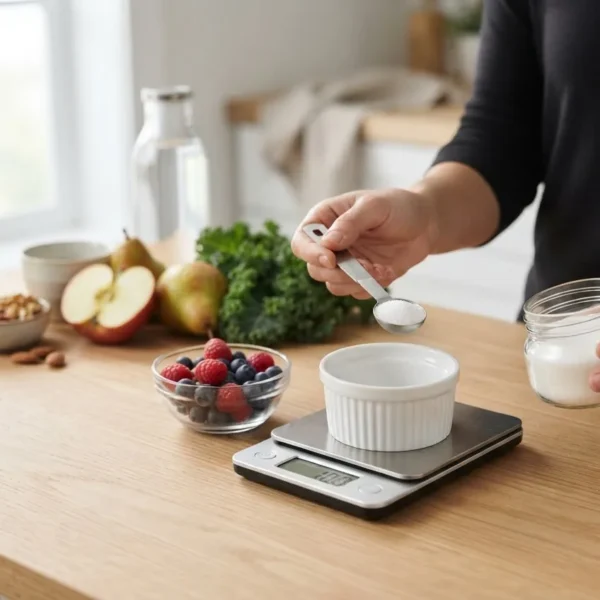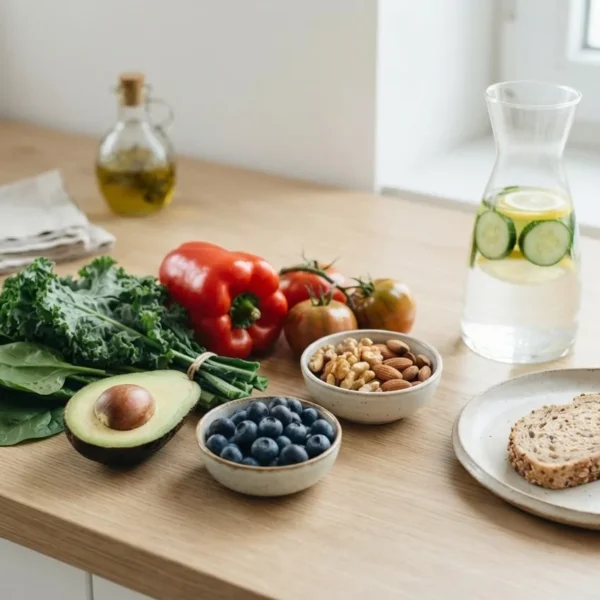
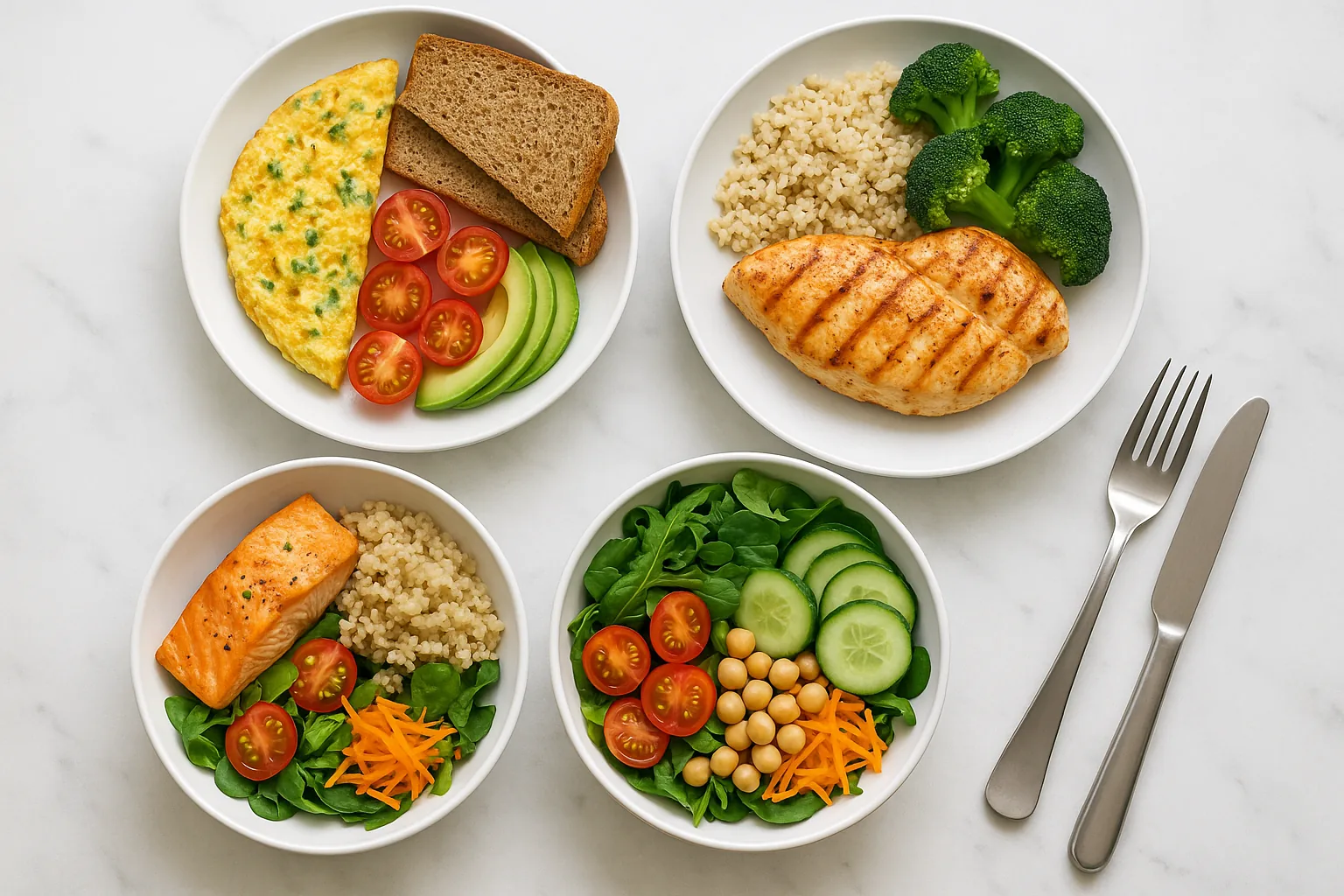
By the end of this guide you’ll have a complete, practical 1400 calorie meal plan you can follow for a week, plus the grocery lists and meal-prep steps to implement it. Expect to spend about 2–4 hours setting it up the first week; skill level required: basic kitchen skills and familiarity with a food scale or tracking app.
Before you start
- Tools: food scale, measuring cups, reusable meal containers (4–6), kitchen timer, notebook or app
- Apps: calorie tracker (see Tools and Resources section), grocery list app or printable list
- Prep: 60–90 minutes for initial grocery shopping, 2–3 hours for a weekly batch-prep session
- Medical: recent weight and height, any medical restrictions, and a plan to consult a clinician if needed
- Calculate your baseline calorie needs. Use the Mifflin-St Jeor formula to estimate Basal Metabolic Rate (BMR) then apply an activity factor to get maintenance calories; a 1400 calorie plan assumes a deficit relative to maintenance. For example, a 35-year-old woman, 70 kg, 165 cm, lightly active: BMR ≈ 1490 kcal, maintenance ≈ 2300 kcal, so 1400 kcal creates a 900 kcal deficit—large, so adjust pace and consult a professional. Record numbers and target weekly deficit.
- Decide your macronutrient split and protein target. Aim for a balanced macro distribution suited to preserving lean mass: 25–30% protein, 30–35% fat, 35–45% carbohydrates as a starting framework. Calculate grams: at 1400 kcal, 30% protein = 420 kcal → 105 g protein; adjust down if necessary to meet comfort and RDA. Note: RDA for protein is ~0.8 g/kg; higher targets help satiety and muscle retention.
- Design meal timing and frequency. Choose 3 meals + 1 snack or 2 meals + 2 snacks based on your routine and hunger cues. Put protein at each meal (20–30 g), include fiber-rich vegetables, and schedule meals every 3–4 hours to manage energy. For shift workers or fasting fans, adapt windows but maintain daily totals.
- Build a sample 7-day menu framework. Use a template: Breakfast 300–350 kcal, Lunch 400–450 kcal, Dinner 450–500 kcal, Snack(s) 100–150 kcal. Rotate lean proteins, whole grains, legumes, and a daily 1–2 servings of healthy fats. Lock in 1 “swap list” so substitutions keep calories similar.
- Complete a grocery list and batch-prep plan. Plan to cook 2–3 proteins (e.g., baked chicken breast, black bean chili, baked salmon), a cooked grain (quinoa, brown rice), and 4–5 vegetable sides. Portion using a food scale (e.g., 120 g cooked chicken = ~165 kcal) and label containers with calories.
- Track and adjust weekly. Log every meal for 7 days, review energy, hunger, and weight trends. If you hit an energy slump, increase protein or shift 50–100 kcal from carbs to fats. Expect modest weight changes; adjust the plan after two weeks.
- Plan for dietary restrictions and swaps. Prepare equivalent-calorie, nutrient-dense swaps for vegetarian, gluten-free, or dairy-free needs—see the Adapting section for examples and a comparison table.
- Use tools to simplify adherence. Set up three templates in your calorie-tracking app: “Breakfast,” “Lunch,” “Dinner.” Create saved meals with exact portion weights to log with one tap. Sync with a fitness tracker if you exercise regularly.
Understanding the 1400 Calorie Meal Plan Concept
A 1400 calorie meal plan is a structured daily food plan that totals roughly 1,400 kilocalories (kcal), designed for weight management while aiming to maintain nutritional balance. This plan typically creates a calorie deficit for many adults, meaning you consume fewer calories than your estimated daily energy expenditure, which leads to gradual weight loss when sustained. Key terms: calorie deficit (the gap between calories burned and calories eaten), basal metabolic rate (BMR, your resting calorie needs), and calorie counting (tracking intake to stay within targets).
Start by comparing 1400 kcal to your maintenance calories. If maintenance is 2000–2400 kcal, a 1400 kcal target creates a 600–1000 kcal daily deficit; larger deficits produce faster weight loss but increase risk of nutrient shortfalls and hunger. According to a 2024 industry report on consumer energy balance, sustainable deficits are typically 300–700 kcal/day for long-term adherence — use that as a guide and monitor how your body responds.
To avoid one-size-fits-all pitfalls, consider age, sex, lean mass, medical conditions, and activity level. Use the Mifflin-St Jeor or other validated equations to estimate BMR, then apply an activity multiplier. When in doubt, aim for modest weekly weight loss (0.25–0.75 kg per week) and consult a professional for individual targets.
Many readers ask “what is a diet?” — for a clear primer see our diet definition and meaning. For nutrition planning fundamentals, measuring your energy needs first will prevent under- or over-restriction.
Health benefits associated with controlling calories include reduced body fat, improved cardiometabolic markers, and better portion-awareness. According to a 2023 USDA report on dietary patterns, calorie-controlled plans that maintain nutrient density show improved risk factors for heart disease and type 2 diabetes when followed under guidance.
Next we’ll translate those calculations into balanced nutrition principles that fit a 1400 calorie total.
Principles of a Healthy Balanced Diet Within a 1400 Calorie Framework
Within a 1400 calorie limit, the focus shifts from simply reducing energy to maximizing nutrient density. A balanced approach ensures adequate vitamins, minerals, fiber, and protein while keeping fats and refined carbohydrates in check. Define these core goals first: meet protein needs to protect lean tissue, prioritize fiber and vegetables for satiety, include unsaturated fats for hormones and brain health, and pick whole grains and legumes for micronutrients.
- Protein: Aim for 20–30% of calories (70–105 g/day at 1400 kcal) depending on body weight and goals; higher protein helps satiety and muscle retention. For RDA context, adults’ baseline is ~0.8 g/kg; athletes and active adults often need 1.2–1.6 g/kg. For deeper reading on nutrient requirements see adequate intake definition.
- Carbohydrates: 35–45% of calories, prioritizing whole grains, fruits, starchy vegetables, and legumes for sustained energy and fiber.
- Fats: 25–35% of calories, focusing on monounsaturated and polyunsaturated sources like olive oil, avocado, nuts, and fatty fish.
- Micronutrients: Choose colorful vegetables and whole-food sources to supply vitamins and minerals. According to the Academy of Nutrition and Dietetics, meal patterns that mix plant and animal foods improve overall micronutrient adequacy.
- Fiber and hydration: Target ≥25 g fiber/day for women and ≥30–38 g for men (adjusted for calorie intake), and aim for 2–3 L fluids/day excluding diuretics; fiber-rich foods support fullness on lower calories.
- Portion control: Use plate models: half non-starchy vegetables, one-quarter lean protein, one-quarter whole grains or starchy vegetable; add a small portion of healthy fat if needed.
For practical macro calculation help, see our macro nutrition planning. If you prefer everyday food suggestions, the regular food guide for balanced meals helps translate numbers to plates.
We’ll next structure meal timing and frequency so your energy is steady throughout the day.
Structuring Your Day: Meal Timing and Frequency for 1400 Calories
- Choose a frequency that matches your hunger signals. Start with 3 meals + 1 snack or 2 meals + 2 snacks to spread ~1400 kcal across the day. If you wake hungry mid-morning, aim for breakfast ~300–350 kcal and a 100 kcal snack at 10–11am.
- Space meals 3–4 hours apart. This timing helps manage energy and metabolic rate; set alarms if you skip meals unintentionally. For example: breakfast 7:30, lunch 12:30, snack 3:30, dinner 7:00.
- Front-load protein earlier in the day. Aim for 25–30 g protein at breakfast and lunch to blunt mid-afternoon slumps; protein-rich breakfasts include Greek yogurt, eggs, or a protein smoothie with 20–30 g protein powder.
- Use snacks strategically. Make snacks 100–150 kcal with protein and fiber (e.g., 1 small apple + 14 g almond butter ≈ 150 kcal) to bridge meals without exceeding daily totals.
- Consider intermittent fasting only if sustainable. A 16:8 window can work, but ensure daily totals and macro targets are still met; some people lose lean mass on very low calories with extended fasting. Track and reassess after 2 weeks.
- Adjust timing around workouts. Have ~200–300 kcal carbohydrate-and-protein snack 30–90 minutes pre- or post-workout depending on session intensity to enhance recovery without overshooting daily calories.
How to implement: pick a meal template and repeat it three times weekly with small swaps. Use a weekly calendar in your app to block meal times and avoid skipping or bingeing.
Below is a hands-on sample menu with exact calorie counts and swap options you can use immediately.
Sample 1400 Calorie Menu Plan: Breakfast, Lunch, Dinner, and Snacks
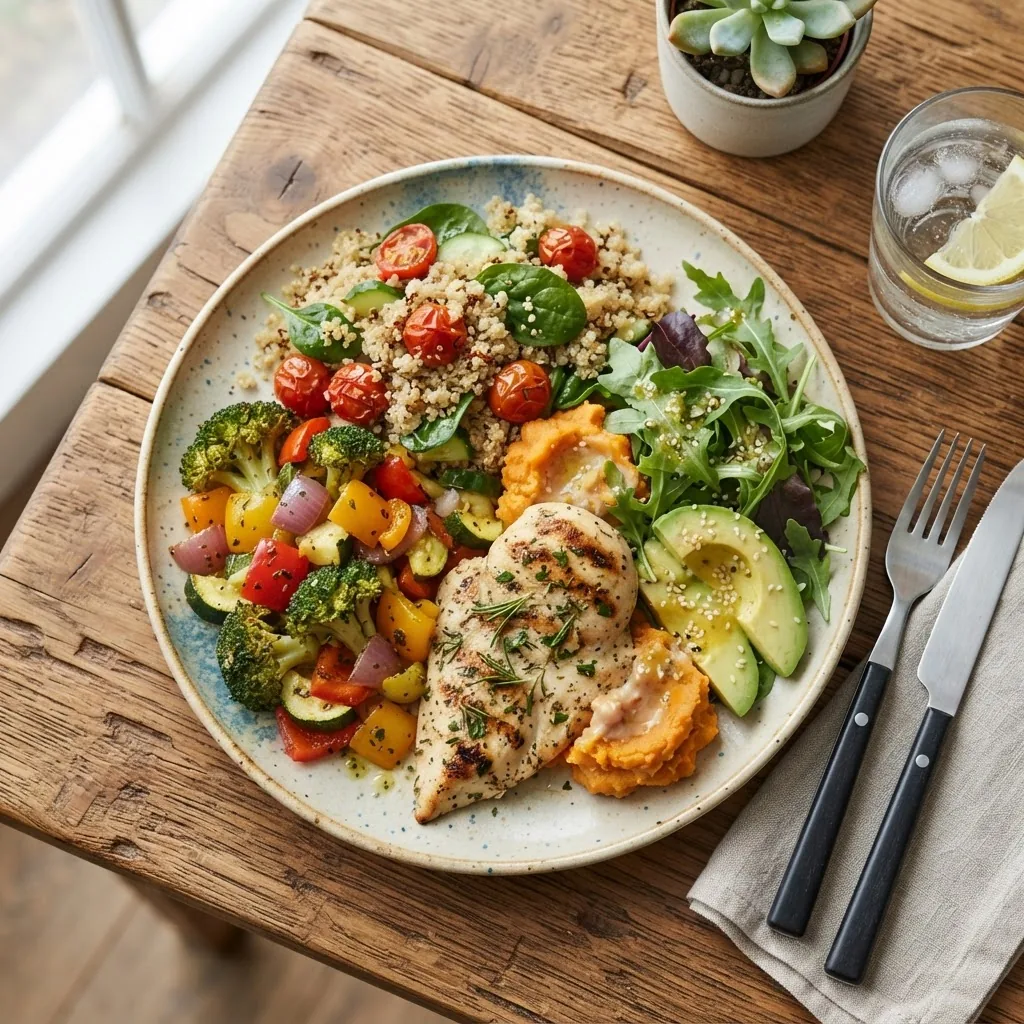
This table gives realistic, Texas-friendly menu ideas (e.g., using local produce, lean grilled proteins, and accessible grains) with calorie counts and short prep notes so you can batch-cook. For readers interested in lower calorie alternatives, see our 1200 calorie meal plan guide.
| Meal | Example | Calories | Notes |
|---|---|---|---|
| Breakfast | 2 scrambled eggs (120 g cooked), 1 slice whole-grain toast, 1/2 avocado (50 g) | ~350 kcal | Protein-first breakfast; avocado adds healthy fats and satiety. |
| Mid-morning Snack | Greek yogurt 150 g + 1/2 cup berries | ~150 kcal | Protein + antioxidants; choose low-fat if needing lower calories. |
| Lunch | Grilled chicken salad: 120 g chicken, 3 cups mixed greens, 1/2 cup quinoa, cherry tomatoes, 1 tbsp olive oil | ~420 kcal | High-volume meal for fullness; measure quinoa cooked at 1/2 cup portions. |
| Afternoon Snack | 1 small apple + 14 g almond butter | ~150 kcal | Fiber + healthy fat combination to blunt cravings. |
| Dinner | Baked salmon 120 g, 1 cup roasted mixed vegetables, 1/2 cup sweet potato | ~330 kcal | Omega-3 rich protein and fiber-packed vegetables; season with herbs. |
| Daily Total | ~1400 kcal | Adjust portion sizes ±50 kcal per meal for energy needs. |
Swap ideas: replace chicken with black bean chili (1 cup ≈ 220 kcal) to get a vegetarian lunch, or swap salmon for 120 g tofu + 1 tbsp sesame oil. Track swaps to ensure calories remain near the target.
Next: solid, practical tips to measure portions and prep efficiently so your week runs smoothly.
Tips for Portion Control and Meal Prep on a 1400 Calorie Diet
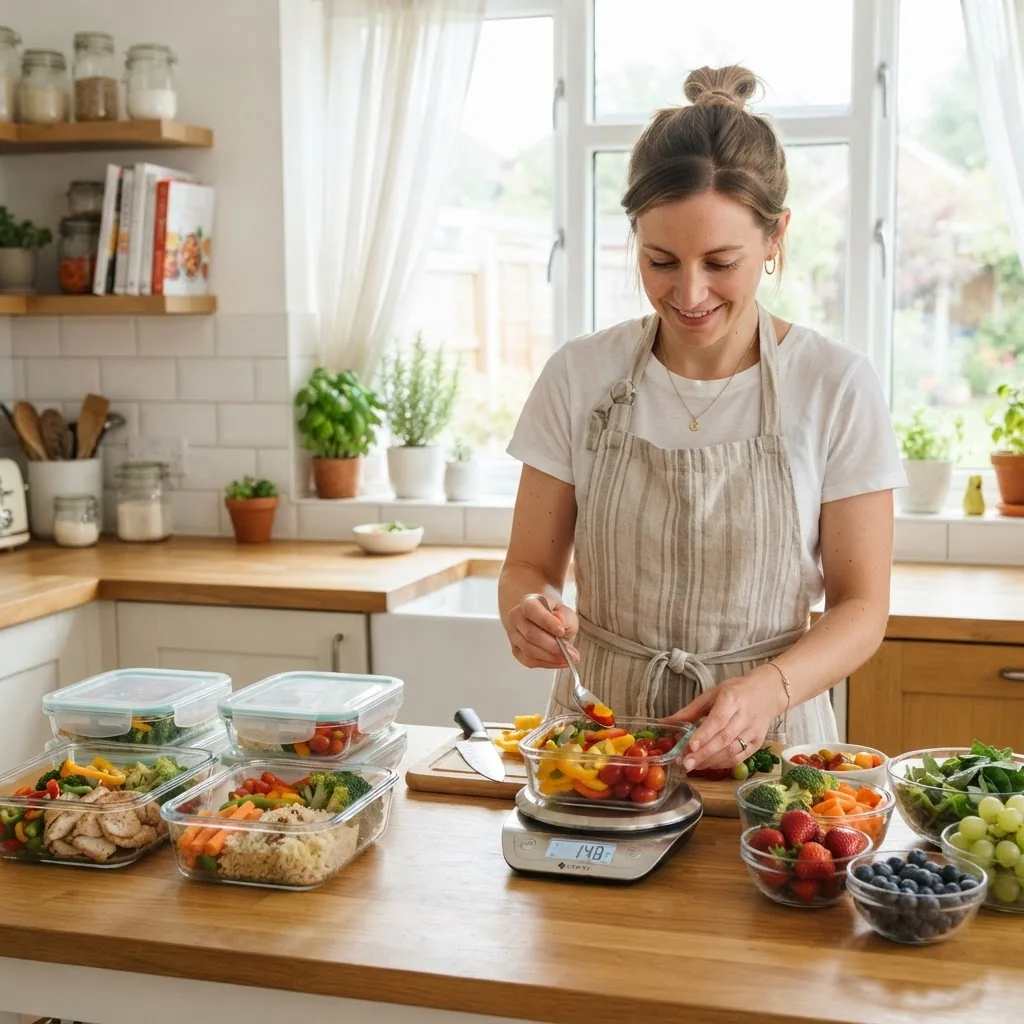
Portion control is the operational core of a 1400 calorie plan. Use a food scale for protein and grains, measuring cups for volume-based items, and calibrated ladles for stews and sauces. Here’s a step-by-step meal-prep workflow.
- Shop with intention. Use a list grouped by fridge, freezer, pantry. Buy proteins in 400–800 g batches to cook once and portion. See our balanced diet images guide for photographic portion references.
- Cook proteins in bulk. Bake or grill 2–3 types: chicken breasts at 190°C/375°F for 20–25 minutes (internal temp 74°C/165°F), salmon fillets at 200°C/400°F for 12–15 minutes. Cool, weigh into 100–130 g portions (raw) which typically yield 120–170 kcal depending on type.
- Batch grains and veg. Cook 1.5–2 cups dry quinoa or brown rice to yield 4–6 portions (1/2 cup cooked ≈ 110 kcal). Roast mixed vegetables at 200°C/400°F for 20–25 minutes with 1 tbsp olive oil per 4 servings.
- Portion and label. Use containers sized 500–750 ml; place 1 meal per container and label with calories and date. Store 3–4 days in fridge, freeze extras.
- Snack pre-packs. Make 7 grab-and-go snack packs: e.g., 14 g almonds, or single-serve Greek yogurt—measure each to exact calories to prevent creeping intake.
- Use a food scale default unit in grams; common benchmarks: 100 g cooked chicken ≈ 165 kcal, 100 g cooked quinoa ≈ 120 kcal, 1 medium apple ≈ 95 kcal.
- Use the meal planner printable guide to schedule meals and shopping lists.
- For deeper portion information, see the portion and serving size guide.
Small habits that save calories: measure oil with a teaspoon (1 tsp olive oil = 40 kcal), use non-stick spray instead of extra oil, and drink a 250 ml glass of water 10 minutes before meals to ease initial hunger.
Now we’ll cover common dietary needs and how to adapt the plan without losing balance.
Adapting the 1400 Calorie Meal Plan for Special Dietary Needs
A sustainable plan flexes to meet allergies, ethical choices, and clinical needs. Below are practical substitutions and a comparison table for quick decision-making.
Vegetarian swaps focus on legumes, tofu, tempeh, and dairy/plant-protein combinations to hit protein targets. For gluten-free needs, choose brown rice, quinoa, and certified gluten-free oats. For dairy-free plans, use fortified plant milks and coconut or almond-based yogurts with added protein where possible.
| Need | Typical swap | Calories example |
|---|---|---|
| Vegetarian | 120 g firm tofu or 1 cup cooked lentils instead of 120 g chicken | Tofu 120 g ≈ 160 kcal; Lentils 1 cup ≈ 230 kcal (adjust grains to keep total) |
| Gluten-free | Quinoa or brown rice in place of wheat pasta, certified gluten-free oats for breakfast | 1/2 cup cooked quinoa ≈ 110 kcal; 1/2 cup cooked rice ≈ 110 kcal |
| Dairy-free | Unsweetened soy or pea milk, dairy-free yogurt, nutritional yeast for B12 (if vegan) | Soy milk 1 cup ≈ 80–100 kcal; fortified options aid nutrient adequacy |
| Low-FODMAP | Replace high-FODMAP legumes with canned lentils (rinsed) in controlled portions, choose zucchini, carrots, and potatoes | Monitor fiber and adjust if GI symptoms occur |
For structured carb approaches, learn consistent carb diet principles. To explore more overall diet options and their fit, see our types of diets guide.
Next, common issues you’ll likely encounter and practical fixes from experience.
Common Challenges and Troubleshooting 1400 Calorie Diet Plans
- Hunger between meals: Add 8–12 g extra protein at the meal before the slump or include a 100 kcal protein-rich snack. I once underallocated breakfast protein and felt slumped by 11am—adding a 20 g Greek yogurt eliminated that.
- Energy slumps during workouts: Shift 50–100 kcal of carbs to pre-workout 30–60 minutes before exercise. I observed clients improving performance simply by having 150 kcal banana + 1 tbsp peanut butter pre-session.
- Plateaus: If weight stalls >3 weeks, re-check logs for underreported calories and measure portions with a scale for 7 days. Small untracked extras (sauces, bites) add up quickly.
- Nutrient deficiencies: Watch iron, B12, vitamin D, and calcium on restricted plans. According to the Academy of Nutrition and Dietetics, supplementation may be needed for restrictive diets; consult a clinician.
- Cravings and binge episodes: Rebalance by adding volume (salad, broth-based soup) and protein to reduce cravings; set a 10-minute pause rule before a craving-driven snack.
Finally, tools and ongoing resources to make logging and planning practical.
Tools and Resources to Support Your 1400 Calorie Meal Plan Journey
- Calorie tracking apps: MyFitnessPal, Cronometer, Lose It! — use saved meals and barcode scans to speed logging. Cronometer provides micronutrient breakdowns if you’re tracking adequacy.
- Meal planner and grocery tools: Plan to use a template or the meal planner printable guide to map meals to days and create your shopping list.
- Kitchen gadgets: food scale, slow cooker, sheet pans for roasting, 4-cup measuring pitcher, and high-speed blender for smoothies and soups.
- Educational resources: USDA dietary guidelines for portion and food-group recommendations: USDA; Academy of Nutrition and Dietetics for planning standards: Academy of Nutrition and Dietetics. For evidence on calorie-controlled weight loss visit CDC or Mayo Clinic.
- Tracking hardware: smart scales and fitness trackers to monitor trends; use weight as a weekly average rather than daily reading to avoid noise.
Below are common mistakes I’ve seen and how I help clients avoid them.
Common mistakes and how to avoid them
I once advised a client who drastically cut carbs and then stopped exercising because she had no energy. We reintroduced a small pre-workout carb (~150 kcal banana + 1 tbsp nut butter), kept protein steady, and her adherence and mood improved within a week.
- I under-logged condiments: switch to measured servings (1 tsp soy sauce, 1 tbsp mayonnaise) and log them immediately.
- I relied on vague portions: switch to a food scale for 14 days and build consistent portion memory.
- I ignored micronutrients: add leafy greens daily, and if vegetarian, monitor iron and B12 via bloodwork and supplements when indicated.
Verification checklist
- Daily calories consistently near 1400 ±50 kcal.
- Protein target met: 70–105 g/day (adjust per body weight).
- Vegetables at each main meal (≥2 cups/day total).
- Weekly meal-prep completed and labeled; lunches portioned into containers.
- Weekly tracking review logged and adjusted as needed.
When to call a professional
Seek medical or registered dietitian support if you have a history of disordered eating, chronic medical conditions (diabetes, kidney disease), pregnancy, breastfeeding, or if you experience dizziness, extreme fatigue, or irregular heart rhythms on the plan. For clinical concerns, contact a clinician promptly.