What you’ll achieve, time investment, and assumed skill level
By the end of this guide you will have a concrete, day-by-day plan to gain 0.25–0.5 kg (0.5–1.0 lb) per week using high fattening foods chosen for health as well as calories. You’ll have exact meal templates, recipes with measured portions, grocery lists, resistance-training basics, and tracking metrics. Expect to spend 2–4 hours setting up your plan and 3–6 hours per week on shopping and meal prep. This guide assumes you are a motivated home cook with basic kitchen skills (can use a blender, oven, and a scale) and comfortable tracking simple numbers in a notebook or app.
Before you start
- Food scale (digital) accurate to ±1 g
- Measuring cups and spoons
- Blender or high-speed mixer
- Set of containers for 5–7 days of meal prep
- Access to a kitchen with oven and stovetop
- Notebook or tracking app (MyFitnessPal, Cronometer) set up
- Resistance bands or access to a basic gym (barbell, dumbbells) — optional but recommended
- If you have medical conditions, clearance from your primary care provider
Quick context: what “high fattening foods” means here
When I write “high fattening foods” I mean energy-dense, nutrient-containing foods you can realistically add to a normal diet to raise calories without resorting to empty calories. Examples: whole milk, nut butters, avocado, olive oil, full-fat dairy, fatty fish (salmon), starchy tubers with added butter, and calorie-dense smoothies. These supply 400–900 kcal per typical serving when combined correctly, and provide protein, essential fats, and micronutrients to support healthy tissue gain.
Core plan: step-by-step numbered actions
-
Calculate your baseline and target calories:
Step 1 is arithmetic. Estimate your Total Daily Energy Expenditure (TDEE) using the Mifflin–St Jeor formula, then add a surplus of 300–700 kcal/day depending on how fast you want to gain.
Example calculation (worked): Male, 28 years, 70 kg, 180 cm, moderately active.
- BMR = (10 × weight kg) + (6.25 × height cm) − (5 × age) + 5 = (10×70)+(6.25×180)−(5×28)+5 = 700+1125−140+5 = 1,690 kcal
- Multiply by activity factor 1.55 (moderately active) → TDEE ≈ 1,690 × 1.55 = 2,620 kcal/day
- Target for slow, steady gain: +300 kcal → 2,920 kcal/day
- Target for faster gain (0.5–1 lb/week): +500–700 kcal → 3,120–3,320 kcal/day
Write these numbers where you will track them. For women, use same formula but subtract 161 instead of adding 5 in BMR, then select activity factor and surplus. If you want 0.25 kg/week, aim for +250–350 kcal/day; for 0.5 kg/week aim for +500 kcal/day.
-
Pick high-calorie, nutrient-dense staples:
Draft a supermarket list of foods that deliver concentrated calories plus protein or micronutrients. Buy in these baseline quantities for a 7-day plan:
- Full-fat milk: 6 liters (2 qts), 600–700 kcal per liter from extra additions
- Natural peanut butter: 1.2 kg (approx 4 jars of 300 g)
- Olive oil (extra virgin): 500 mL — use 2–4 tbsp/day
- Avocados: 8–12 pieces
- Whole eggs: 3 dozen
- Oats: 1.5 kg
- Bananas: 14 pieces (2 per day)
- Quinoa or rice: 2 kg
- Full-fat yogurt or Greek yogurt: 2–3 kg
- Fatty fish (canned salmon, sardines): 1.5 kg total
- Chicken thighs: 2–3 kg
- Nuts (almonds, walnuts): 1 kg mixed
- Sweet potatoes: 6–8 medium
These quantities are tuned to supply extra calories via whole foods and to keep costs manageable if shopping weekly.
-
Prioritise protein: set a minimum target
Protein preserves muscle when adding calories. Aim for 1.6–2.2 g/kg bodyweight per day. For a 70 kg person target 112–154 g protein/day. Spread protein across 3–5 meals — e.g., 30–40 g per main meal and 10–20 g per snack.
Concrete swaps: add 30 g whey or dairy-protein to a 400–500 kcal smoothie; include 150–200 g cooked chicken or 180 g canned salmon at a main meal; eat 2 large eggs (12–14 g protein) with toast every morning.
-
Add healthy fats deliberately: measure tablespoons not “a little”
Fats are energy-dense (9 kcal/g). Adding 2–4 tablespoons of olive oil or 2 tablespoons of peanut butter across a day gives 240–480 kcal. Be specific:
- 1 tablespoon olive oil = 120 kcal. Add 1 tbsp to cooked rice, 1 tbsp to salad, and 1 tbsp for pan-frying — that’s 360 kcal.
- 2 tablespoons peanut butter = 190–200 kcal. Stir into oatmeal or smoothies morning and evening → +380 kcal.
- 1 medium avocado = ~240 kcal. Add half at lunch, half at dinner → +240 kcal per half.
-
Use calorie-dense beverages and smoothies correctly:
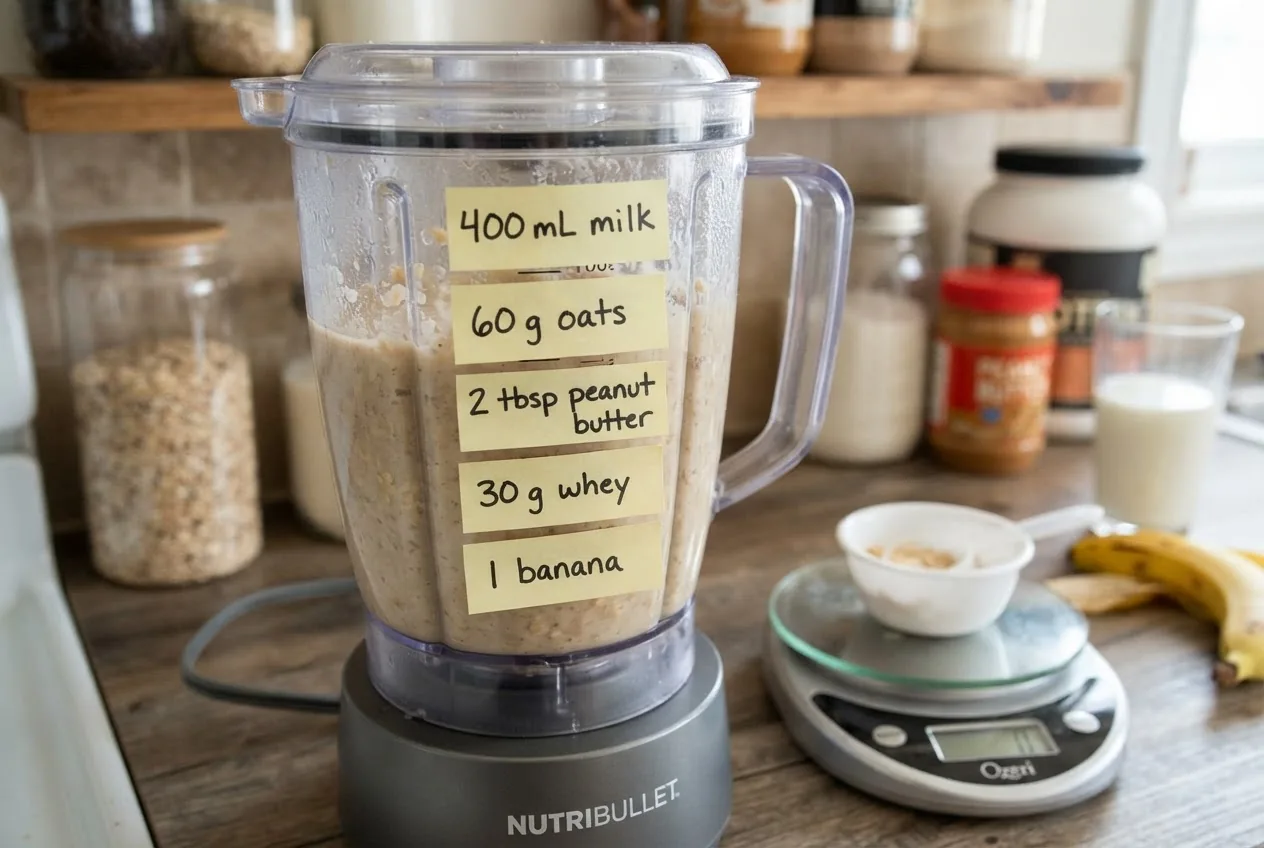
Liquid calories are efficient. Build a routine smoothie providing 600–800 kcal and 25–40 g protein — drink it as an extra meal or snack. Example recipe yields 700 kcal:
- 400 mL whole milk — 260 kcal
- 60 g oats — 225 kcal
- 2 tbsp peanut butter (32 g) — 190 kcal
- 30 g whey protein — 120 kcal (adjust based on product)
- 1 banana (100 g) — 90 kcal
Blend to smoothness and drink within 2 hours after making. Aim to consume 1–2 such smoothies/day if you need a large surplus.
-
Increase meal frequency and portion sizes by exact amounts:
Do not guess portion increases. Use the following practical rule: add 25% more volume or 50–100 kcal per portion for each meal you want to enlarge. Examples:
- Breakfast: add 50 g oats (≈190 kcal) or 1 large egg + 1 slice toast (+120 kcal)
- Lunch/dinner: increase cooked starch by +100 g (cooked rice ≈130 kcal) and add 1 tbsp olive oil (+120 kcal)
- Snack: add 30 g nuts (≈180 kcal) or 2 tbsp hummus and 1 pita (+200 kcal)
On days you lift weights, add an extra 300 kcal in the meal after training to support recovery.
-
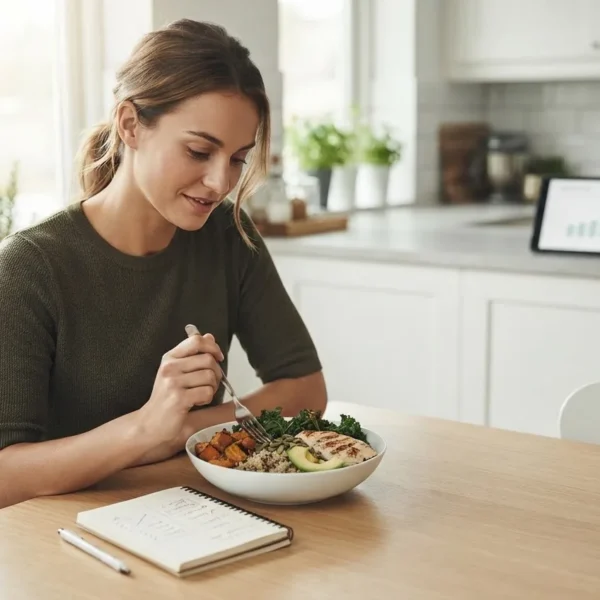
Create a simple meal template (daily):
A replicable template makes tracking easier. For a 3,000 kcal target use these measured meal building blocks:
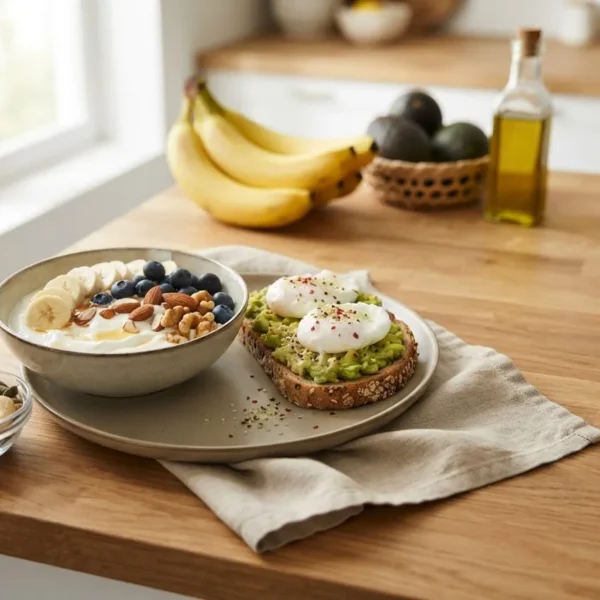
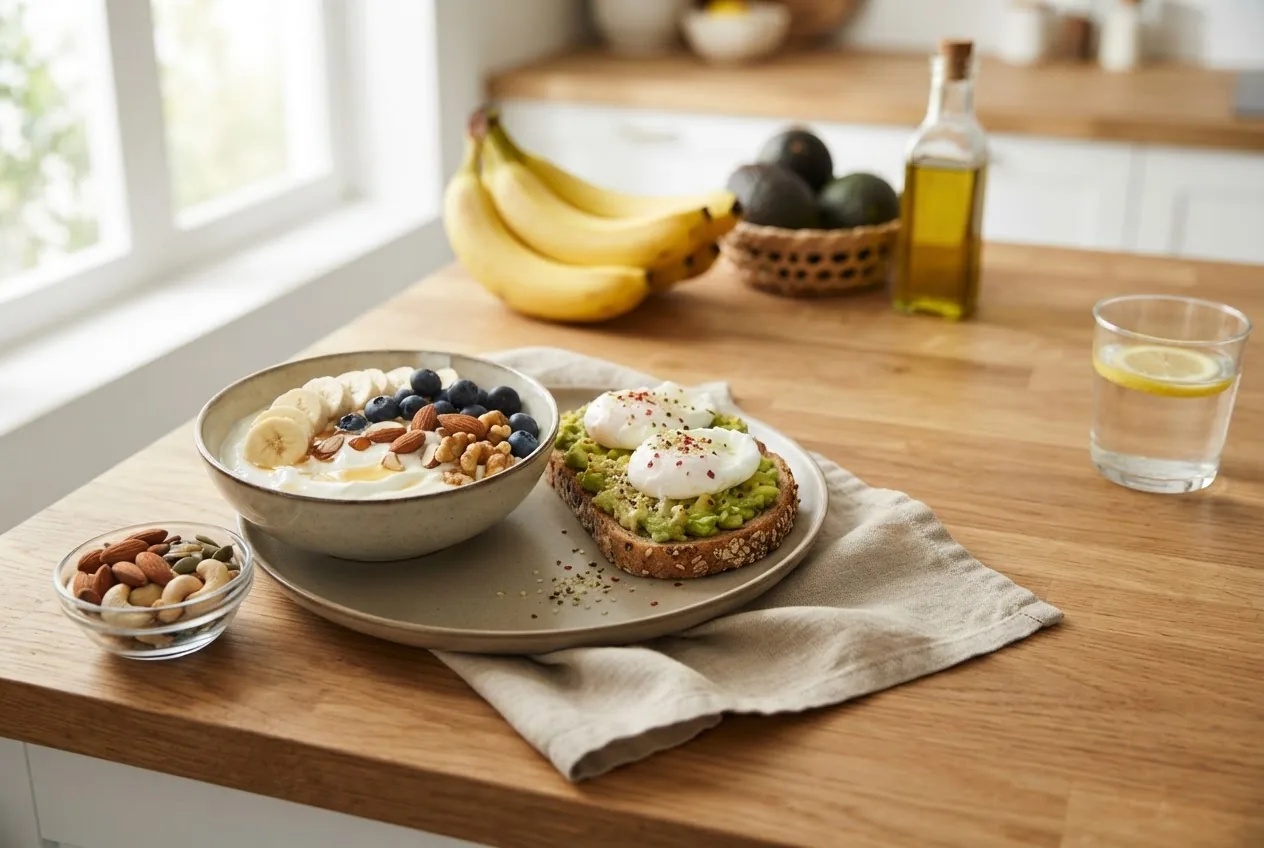
- Breakfast (700 kcal): 80 g oats cooked with 400 mL whole milk, 2 tbsp peanut butter, 1 banana
- Snack 1 (400 kcal): full-fat yogurt 200 g + 30 g mixed nuts
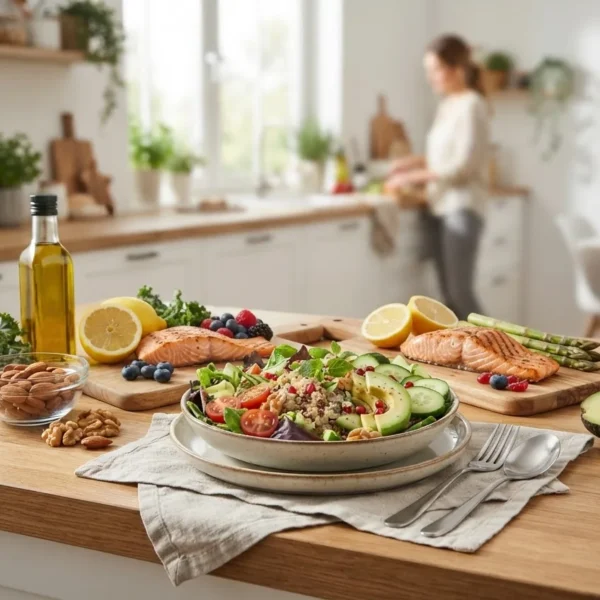
- Lunch (700 kcal): 150 g cooked rice, 150 g chicken thigh (cooked), 1 avocado (half), 1 tbsp olive oil
- Snack 2 (500 kcal): 1 calorie-dense smoothie (see step 5)
- Dinner (600 kcal): 200 g potato or sweet potato, 150–200 g salmon, 1 tbsp butter or olive oil
- Optional bedtime snack (100–300 kcal): 250 mL whole milk or 2 slices toast with 2 tbsp peanut butter
Adjust quantities up or down to meet your calculated target. Keep protein spread across breakfast, lunch, dinner and at least one snack to hit the 1.6–2.2 g/kg target.
-
Build a weekly meal-prep routine (two-hour setup):
Reserve one 120-minute block weekly for batch-cooking and portioning. A recommended schedule:
- 0–20 min: Chop vegetables and preheat oven to 200°C (400°F)
- 20–50 min: Roast 6–8 sweet potatoes and 1.2 kg chicken thighs (season simply with salt and pepper)
- 50–75 min: Cook 1.5 kg rice or quinoa in rice cooker; portion into 6 containers (250 g cooked each)
- 75–95 min: Make two large smoothies and portion into bottles for the first two days; freeze extras
- 95–120 min: Portion nuts, wash fruit, pack snacks and label containers with calorie counts (e.g., “Lunch 700 kcal”)
Label containers with calories and protein. This reduces decision fatigue and ensures you hit daily totals.
-
Pair increased calories with strength training:
Calories alone gain weight; resistance training directs it into muscle. Use a 3-day full-body plan: Squat pattern, horizontal push, horizontal pull, hinge, and overhead press. Keep sessions 45–60 minutes and use loads that allow 6–12 reps for 3–4 sets per main lift.
Weekly example:
- Day A: Back squat 4×6–8, bench press 4×6–8, barbell row 3×8–10
- Day B: Romanian deadlift 4×6–8, overhead press 4×6–8, pull-ups 3×6–10
- Day C: Front squat or leg press 4×8–10, incline dumbbell press 4×8–10, single-arm row 3×8–10
Progress by increasing load 2–5% when you can complete the top end of reps for all sets. If you cannot access weights, use resistance bands: 3 sets of 8–12 reps at a challenging resistance is acceptable.
-
Track progress weekly with precise metrics:
Record the following every 7 days, same scale, same time (morning after voiding):
- Body weight (to 0.1 kg or 0.2 lb)
- One circumference measurement (waist at navel; chest at nipple line)
- Training load summary (total weekly volume: sets × reps × load for compound lifts)
- Average daily calories logged (mean over 7 days)
Aim for 0.25–0.5 kg gain per week. If weight gain is <0.1 kg/week after two consecutive weeks, increase daily calories by 200–300 kcal. If gaining >1.0 kg/week, reduce surplus by 200–300 kcal to avoid excessive fat gain.
-
Choose supplements only to fill gaps:
Supplements are optional. Useful, measurable options:
- Whey protein concentrate/isolate: 20–30 g per shake to help meet daily protein target
- Creatine monohydrate: 5 g daily to support strength and muscle gain — no loading necessary
- Vitamin D3 1,000–2,000 IU daily if low or during winter — test before high-dose use
Avoid weight-gain supplements promising “super-calories” with unknown ingredients. If you use a mass gainer, check label and use it to replace real-food calories only where necessary.
-
Plan meals for people with fast metabolism or low appetite:
If you struggle to eat large meals, rely on calorie-dense snacks and liquids. Tips I use with clients who have high metabolic rates:
- Have 1–2 smoothies of 600–800 kcal daily between meals
- Eat energy bars (300–400 kcal) rather than low-calorie snacks
- Drink calories with meals — e.g., 250–400 mL whole milk or milkshake adds 150–300 kcal
Set an alarm to eat if you forget: schedule 5 eating events spaced 2.5–3 hours apart across 16 waking hours.
-
Use food substitutions to raise calories without changing flavor drastically:
Small swaps deliver big calories. Examples I apply in practice:
- Replace skim milk with whole milk — +50 kcal per 200 mL
- Add 1 tbsp olive oil to cooked vegetables — +120 kcal
- Top oatmeal with 2 tbsp peanut butter — +190 kcal
- Use full-fat yogurt instead of low-fat — +60–90 kcal per 200 g
These are easy to implement and avoid appetite suppression since flavors stay familiar.
-
Construct a seven-day sample menu with quantities and calories:
A sample day aiming for ~3,000 kcal (details below). Use a food scale and measure each item.
Sample Day (≈3,000 kcal)
- Breakfast (720 kcal): 80 g oats (300 kcal) cooked in 400 mL whole milk (260 kcal), 2 tbsp peanut butter (160 kcal)
- Snack (360 kcal): 200 g full-fat Greek yogurt (200 kcal) + 30 g mixed nuts (160 kcal)
- Lunch (760 kcal): 150 g cooked rice (195 kcal), 180 g cooked chicken thigh (380 kcal), 1/2 avocado (120 kcal), 1 tbsp olive oil (120 kcal)
- Pre-workout smoothie (480 kcal): 250 mL whole milk (160 kcal), 40 g oats (150 kcal), 1 banana (90 kcal), 15 g honey (80 kcal)
- Dinner (520 kcal): 200 g roasted sweet potato (180 kcal), 150 g salmon (330 kcal), 1 tsp butter (10 kcal)
- Bed snack (160 kcal): 250 mL whole milk or 2 slices toast with 1 tbsp peanut butter
Multiply or modify across seven days: rotate proteins (salmon, chicken, beans), vary starchy carbs (potatoes, rice, quinoa) and keep two high-calorie smoothies per week to maintain variety.
-
Monitor body composition and adjust approach at 4-week checkpoints:
Every 28 days perform a short review:
- If weight gain ≈ 1–2 kg and strength increased → continue same surplus
- If weight gain mostly fat (waist circumference up >2 cm and strength unchanged) → reduce surplus by 200 kcal/day and increase protein to upper target
- If no weight change and appetite is poor → add 1 smoothie and 1 tbsp olive oil/day (+300–400 kcal/day)
Use photos in consistent lighting to evaluate visual changes and rely on strength numbers to confirm muscle gain.
-
Include a grocery checklist and storage tips:
Grocery checklist for 7 days (single person aiming for +500 kcal/day surplus):
- Full-fat milk — 6 L
- Natural peanut butter — 1.2 kg
- Oats — 1.5 kg
- Bananas — 14
- Chicken thighs — 2 kg cooked weight
- Salmon or fatty fish — 1 kg
- Rice/quinoa — 2 kg
- Sweet potatoes — 6–8 medium
- Olive oil — 500 mL
- Mixed nuts — 1 kg
- Greek yogurt — 2 kg
Storage tips:
- Cooked rice: cool fast, store in fridge for up to 4 days; freeze portions for later weeks
- Bulk-cooked proteins: reheat once; use within 3–4 days or freeze
- Smoothies: refrigerate for 24 hours or freeze in ice-cube style bottles and thaw in fridge overnight
-
Prepare three high-calorie recipes with exact measures:
Recipe A — 700 kcal Peanut Oat Smoothie (makes 1 serving):
- 400 mL whole milk (260 kcal)
- 60 g rolled oats (225 kcal)
- 2 tbsp natural peanut butter (32 g, 190 kcal)
- 30 g whey protein (if used) or 150 g Greek yogurt (120 kcal)
- 1 medium banana (100 kcal)
- Blend 45–60 seconds until smooth.
Recipe B — 800 kcal Dinner Bowl (serves 1):
- 200 g cooked jasmine rice (260 kcal)
- 200 g roasted salmon (approx 400 kcal)
- 1 tbsp olive oil used in cooking (120 kcal)
- Squeeze lemon, add salt and pepper. Total ≈ 780–800 kcal.
Recipe C — Bedtime Toast (400 kcal):
- 2 slices whole-grain bread (200 kcal)
- 2 tbsp peanut butter (190 kcal)
- 1 tsp honey (20 kcal)
These recipes are designed to be fast and measurable — write calories on the container when you meal-prep.
-
Address digestive tolerance and pacing:
Some people gain weight but experience bloating or constipation. Practical fixes I use:
- Increase fibre slowly: add 5 g additional fiber per day for 7 days if constipation occurs
- Split large smoothies into two smaller drinks across 2 hours to avoid nausea
- Stay hydrated: 2.5–3.5 L water/day when increasing fibre and protein
If you experience persistent abdominal pain, blood in stool, or severe reflux, stop increased fat intake and consult a clinician.
-
Fine-tune flavors to keep appetite high:
Variety preserves appetite. Swap spices (smoked paprika, chili flakes), use citrus to brighten heavy dishes, and alternate nut butters (peanut, almond, cashew) to avoid sensory-specific satiety. Plan two “treat” meals weekly to keep motivation high — e.g., a homemade burger with avocado and sweet potato fries (~1,100 kcal) and a dessert like Greek yogurt topped with honey and nuts (~450 kcal).
-
Evaluate safety: health checks and red flags
Before a sustained calorie increase, check:
- Blood pressure: must be under control (<140/90 mmHg). If >140/90, consult your clinician before adding large fat intakes.
- Lipid panel if you have familial hypercholesterolemia or personal hyperlipidemia — get baseline fasting lipids within 3 months of starting.
- Blood glucose if diabetic — monitor and coordinate any changes with your provider.
Stop aggressive calorie increases if you experience rapid breathlessness, significant swelling, or uncontrolled blood pressure rises.
Common mistakes and how to avoid them
I once advised a client to add 1,000 kcal/day using only sugary sodas and saw rapid fat gain, low energy, and poor sleep. Lesson: I now recommend whole-foods first. Another time I watched someone add olive oil by “eye” and overshoot their calories by 600 kcal/day — this created unwanted abdominal fat. I learned to insist on measured tablespoons and a food scale.
I also observed people skimp on protein while adding fats; they gained weight but lost strength. My correction was prescriptive: set a protein floor (1.6 g/kg) and track intake. Finally, skipping strength training led to mostly fat gain — I now mandate a basic 3-day training framework alongside nutrition changes.
Worked example: going from 2,400 kcal to 3,000 kcal
Client profile: Female, 30 years, 60 kg, 165 cm, TDEE estimated 2,400 kcal. Goal: gain 0.5 lb/week (≈0.25 kg/week). Plan: add 500 kcal/day to reach 2,900 kcal/day.
Step-by-step changes I recommended:
- Breakfast: swap 200 mL skim milk for 400 mL whole milk (+120 kcal) and add 1 tbsp peanut butter (+95 kcal)
- Lunch: add 1/2 avocado (+120 kcal) and 1 tbsp olive oil on rice (+120 kcal)
- Snack: add a 500 kcal smoothie mid-afternoon
- Bed snack: 250 mL whole milk (+150 kcal)
Net added calories = 120+95+120+120+500+150 = 1,105 kcal, but some substitutions cut other calories so final increase settled at ≈500 kcal/day. After two weeks weight rose 0.5–0.6 kg and strength in the squat improved 5%. We reduced extra smoothie frequency after month one to slow down fat gain.
High-calorie foods table (per 100 g) — quick reference
| Food | kcal / 100 g | Protein (g) | Fat (g) |
|---|---|---|---|
| Peanut butter (natural) | 588 | 25 | 50 |
| Olive oil | 884 | 0 | 100 |
| Avocado | 160 | 2 | 15 |
| Whole milk | 60 (per 100 mL) | 3.3 | 3.6 |
| Salmon (cooked) | 208 | 22 | 13 |
When to call a professional
Call your primary care provider or registered dietitian immediately if any of the following occur:
- Rapid unexplained weight gain or fluid retention (>2–3 kg in a week)
- New or worsening chest pain, breathlessness, or fainting
- Diabetes or heart disease and you plan to change fat intake significantly
- Persistent gastrointestinal pain, blood in stool, or severe reflux after diet changes
Consider a registered dietitian when you need a personalised meal plan for medical conditions, food allergies, or if you do not gain weight despite following a 500 kcal surplus for 6–8 weeks. Use a licensed clinician for medication adjustments if you start creatine and have kidney concerns.
Compact checklist before you call it done
- I have calculated my TDEE and set a clear daily calorie target (number recorded).
- I can measure food with a scale and I have measured tablespoons and cups available.
- I have a one-week grocery list in the quantities above and have shopped for it.
- I have prepared at least 3 full days of meals and labeled containers with calories.
- I am training with resistance exercises 3×/week or using resistance bands.
- I am tracking weight, one circumference measure, training volume, and daily calories weekly.
- I will adjust calories by ±200–300 kcal after two weeks if progress is too slow or too fast.
Related reading
These pages expand on tactics used here: see the comprehensive Nutritionally Complete Meal Guide for macro-balanced meals, and 10 Ways to Eat Better for simple implementation tips. For calorie pacing and calculators, compare your numbers with the guidance in How Many Calories Must I Eat a Day.
Frequently Asked Questions
What are the best high fattening foods to gain weight healthily?
The best high fattening foods combine calories with nutrients: natural nut butters, olive oil, avocados, full-fat dairy, fatty fish (salmon, sardines), whole eggs, oats, and starchy tubers like sweet potatoes. Use measured portions: 2 tbsp peanut butter (~190 kcal) or 1 tbsp olive oil (~120 kcal) to add consistent calories.
How many extra calories do I need to gain a pound per week?
To gain ~0.45 kg (1 lb) per week aim for a surplus of roughly 500 kcal/day (3,500 kcal/week). For slower gains target 250–300 kcal/day. Adjust after two weeks: increase by 200–300 kcal if weight gain is less than 0.1 kg/week.
Can I gain weight by eating only high fattening foods without protein or training?
You can increase weight by eating high-calorie fats only, but you’ll gain primarily fat and likely lose relative muscle mass. To gain healthy weight, include 1.6–2.2 g/kg protein daily and a 3-day resistance training program to direct calories into muscle rather than fat.
What is a simple daily meal plan to add 500 kcal safely?
Add measured items to familiar meals: breakfast +1 tbsp peanut butter (+95 kcal), lunch +1/2 avocado (+120 kcal), snack add a 500 kcal smoothie, or add 1 tbsp olive oil (+120 kcal) to a meal. Combining two of these choices approximates a 500 kcal/day increase.
When should I see a healthcare professional about gaining weight?
Contact a clinician if you experience rapid fluid-weight gain (>2–3 kg/week), shortness of breath, severe digestive symptoms, or if you have heart disease, uncontrolled hypertension, or diabetes before changing fat and calorie intake significantly.