

Answer: The best supplements for men focus on filling common dietary gaps: a daily multivitamin with B vitamins, vitamin D3, omega‑3 (EPA/DHA), magnesium, zinc, and vitamin B12; add prostate‑support (saw palmetto) or creatine for muscle as needed — doses vary by age, diet, labs and health goals.
What are the single most important supplements for most men?
Answer: For most men the core supplements are a daily multivitamin, vitamin D3, omega‑3 (EPA/DHA), magnesium, and vitamin B12 to support basic metabolic, bone, cardiovascular, and cognitive needs.
Multivitamin: a combined supplement that provides a baseline of vitamins and minerals to reduce deficiency risk.
Vitamin D3: the bioactive form of vitamin D commonly used to raise serum 25(OH)D and support bone and immune health.
Omega‑3 (EPA/DHA): long‑chain polyunsaturated fatty acids found in fish oil that support heart and brain health.
Why these five? They address deficiencies commonly found in U.S. men (low D, low omega‑3 index, inadequate magnesium intake, and suboptimal B12 in older adults or those with limited animal foods). Clinical benefits supported by population data include improved bone strength, reduced cardiovascular risk markers, and better muscle function when combined with exercise.
What vitamins should I take daily as a man?
Answer: Daily essentials are a balanced multivitamin plus targeted doses: vitamin D3 1,000–2,000 IU, omega‑3 500–1,000 mg EPA+DHA, magnesium 200–400 mg, and B12 250–500 mcg (oral) depending on diet and labs.
RDA (Recommended Dietary Allowance): the average daily intake level considered sufficient to meet the nutrient requirements of nearly all healthy individuals in a specific life stage and sex group.
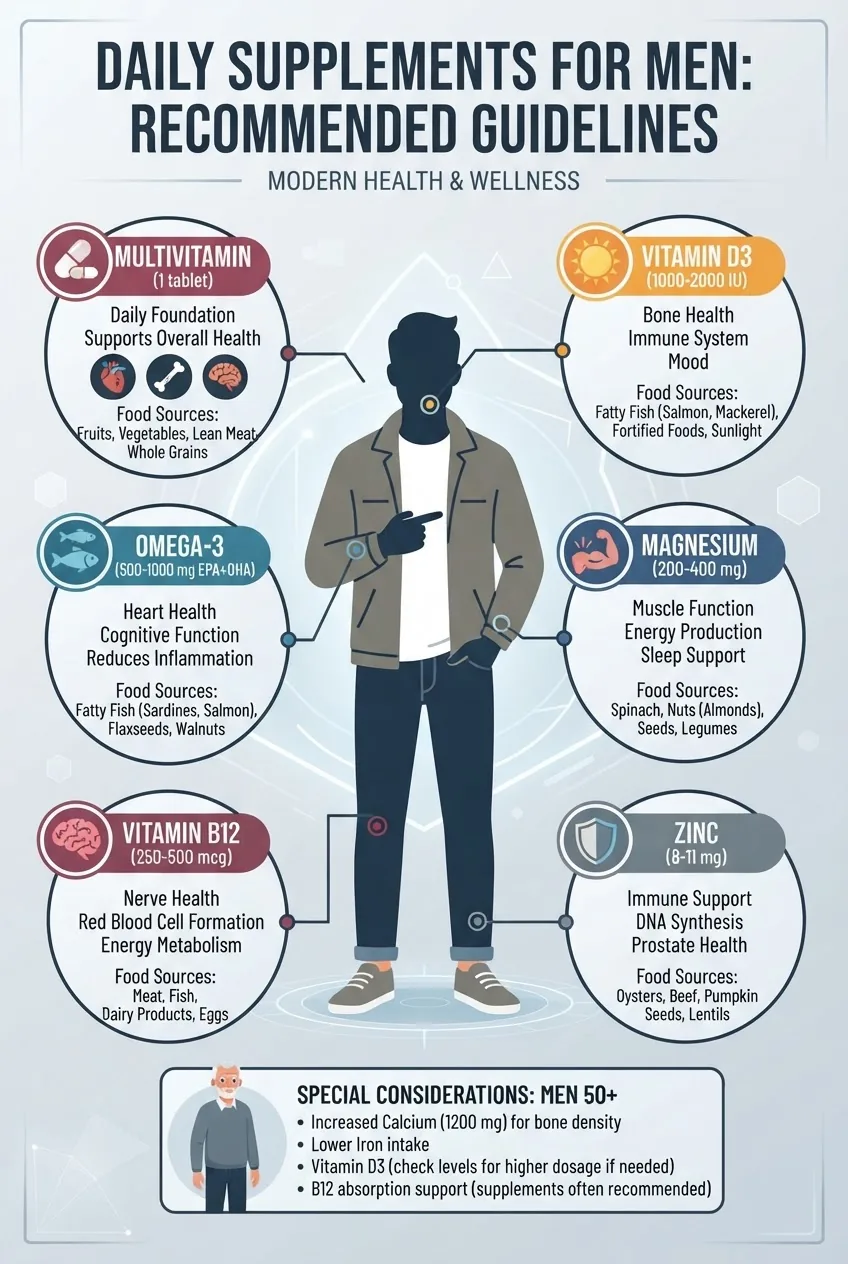
Context and adjustment rules:
- Start with a multivitamin that supplies at least 100% of most B vitamins and 100% of key minerals except iron (men usually should avoid iron unless deficient).
- Test serum 25(OH)D before high‑dose vitamin D; 1,000–2,000 IU/day is safe for maintenance for many men.
- Choose omega‑3 dose based on heart disease risk: 1,000 mg EPA+DHA for prevention, higher therapeutic doses under clinician care.
- Magnesium dose depends on dietary intake and tolerance; split doses reduce laxative effects.
What do each of these vitamins and supplements do for the male body?
Answer: Each supplement targets specific systems: multivitamins cover baseline metabolism; vitamin D supports bone and immunity; omega‑3s support cardiovascular and brain health; magnesium aids muscle and sleep; B12 supports energy and neural function.
EPA/DHA: long-chain omega‑3 fatty acids that lower triglycerides and reduce inflammation.
Magnesium: an essential mineral involved in over 300 enzymatic reactions including ATP synthesis and muscle relaxation.
Breakdown by benefit:
- Energy and metabolism — B vitamins (B1, B2, B3, B6, B12, folate) facilitate cellular energy production and red blood cell formation.
- Bone and immune — Vitamin D increases calcium absorption and modulates immune responses.
- Heart and brain — Omega‑3s reduce inflammatory markers and support cognitive membranes.
- Muscle and recovery — Magnesium and creatine improve contraction, recovery, and exercise performance.
- Prostate support — Saw palmetto and lycopene are commonly used, with mixed evidence; consult a clinician before use.
What are the most important vitamins for men over 50?
Answer: Men over 50 should prioritize vitamin D3, B12, calcium (via diet/supplement if low), magnesium, omega‑3s, and a tailored multivitamin that adjusts for changing nutrient needs and prostate health.
Age-related absorption: gastric acid and intrinsic factor decline with age, reducing absorption of B12 and calcium from food.
Specific recommendations for men 50+:
- Vitamin B12: consider 500–1,000 mcg/day oral or sublingual if labs show low levels or symptoms like numbness.
- Vitamin D3: 1,000–2,000 IU daily as maintenance; test and titrate higher if deficient.
- Calcium: aim dietary intake first (1,000–1,200 mg/day total); supplement only if dietary shortfall exists.
- Omega‑3: 1,000 mg EPA+DHA daily to support cardiovascular health.
- Magnesium: 200–400 mg/day to support sleep, blood pressure, and muscle function.
Are multivitamins worth it for men?
Answer: Multivitamins are worth it as nutritional insurance for men with imperfect diets, restricted eating patterns, or specific medical risks, but they are not a substitute for a balanced diet and do not guarantee disease prevention.
Dietary insurance: the concept that multivitamins provide baseline nutrients to reduce deficiency risk when diet is inconsistent.
Evidence summary and limitations:
- Large observational studies show modest improvement in nutrient status and reduced deficiency; randomized trials show mixed disease‑prevention outcomes.
- Benefits are greater for men with lower baseline nutrient intakes, poor diets, or malabsorption issues.
- Choose formulations without iron for most men and with appropriate dosages to avoid excess of fat‑soluble vitamins.
Which multivitamin should I take — full comparison of popular options?
Answer: Choose a reputable brand with third‑party testing, male-specific formulation (no iron), and adequate B vitamins; below is a comparison of common options by key specs and approximate monthly cost.
| Product | Key features | Typical dose | Approx. monthly cost |
|---|---|---|---|
| Men’s Daily Multivitamin (basic) | 100% B vitamins, vitamin D 1,000 IU, no iron | 1 tablet/day | $8–$15 |
| Men 50+ formula | Higher B12, tailored minerals, prostate support | 1 tablet/day | $12–$20 |
| Whole‑food multivitamin | Food concentrate base, lower isolated nutrients | 1–2 tablets/day | $20–$35 |
| High‑potency multivitamin | Higher doses of vitamins; used for short-term repletion | 1 tablet/day | $15–$30 |
Selection tips: prefer third‑party tested seals (USP, NSF, ConsumerLab), clear labeling of nutrient forms (e.g., methylfolate vs folic acid), and avoid excess iron unless medically indicated.
How much vitamin D should a man take daily and how do I test it?
Answer: Most men can take 1,000–2,000 IU vitamin D3 daily for maintenance; test serum 25‑hydroxyvitamin D (25(OH)D) and aim for 30–50 ng/mL, adjusting dose under clinician guidance.
25(OH)D test: a blood test that measures circulating 25‑hydroxyvitamin D to assess vitamin D status.
Testing and dosing workflow:
- Order serum 25(OH)D if you have risk factors: minimal sun exposure, darker skin, obesity, or bone issues.
- If <20 ng/mL, clinician may recommend higher loading doses (e.g., 50,000 IU weekly) followed by maintenance.
- For maintenance, 1,000–2,000 IU/day typically raises levels safely; re‑test in 3–4 months after dose changes.
What are safe omega‑3 doses and how to choose fish oil?
Answer: Aim for 500–1,000 mg combined EPA+DHA daily for general health; choose fish oil with at least 300 mg EPA+DHA per capsule, purified to remove heavy metals, and third‑party tested for oxidation.
EPA/DHA concentration: the milligram amount of eicosapentaenoic acid (EPA) and docosahexaenoic acid (DHA) per serving; label the combined total as EPA+DHA.
Selection criteria:
- Check EPA+DHA per serving — therapeutic support often requires 1g or more total; read label carefully.
- Look for molecular forms: triglyceride or re‑esterified triglyceride forms have better absorption than ethyl esters.
- Verify purity via third‑party testing (IFOS, USP) and check peroxide/anisidine numbers to ensure freshness.
Should men take zinc and selenium?
Answer: Zinc (8–11 mg/day) and selenium (55 mcg/day) are useful when dietary intake is low or when specific health concerns (immune support, low seafood consumption) exist; avoid high-dose chronic zinc (>40 mg/day) to prevent copper deficiency.
Zinc: an essential trace mineral involved in immune response, testosterone metabolism, and wound healing.
Practical guidance:
- Most multivitamins supply adequate zinc for everyday use; additional zinc supplements are indicated for deficiency or short-term cold support.
- Selenium is concentrated in Brazil nuts and seafood; typical supplement doses are 50–100 mcg/day—do not exceed 200 mcg/day chronically.
How should a man take supplements to maximize absorption and minimize side effects?
Answer: Take fat‑soluble vitamins (A, D, E, K) with meals containing fat, split high doses of magnesium to avoid diarrhea, take B12 and B vitamins in the morning for energy, and separate calcium from iron and high‑dose zinc to avoid absorption interference.
Timing and pairing rules:
- With food: vitamin D, omega‑3, vitamin K, and fat‑soluble nutrients.
- Empty stomach: many B vitamins and vitamin C are tolerated in morning to support energy.
- Avoid mixing: calcium and zinc compete with absorption of other minerals when taken simultaneously in high amounts.
- Split dosing: magnesium 100–200 mg twice daily reduces laxative effects and improves steady blood levels.
Do supplements interact with medications or health conditions?
Answer: Yes — supplements can interact with blood thinners (omega‑3, vitamin E), blood pressure medications, thyroid drugs (iron, calcium timing), and certain antibiotics; review every supplement with your clinician and pharmacist.
Key interactions to watch:
- Warfarin and high-dose omega‑3 or vitamin E can increase bleeding risk; monitor INR closely.
- Thyroid medication (levothyroxine): separate by 4 hours from calcium, iron, and magnesium to avoid reduced absorption.
- Certain herbs (e.g., saw palmetto) can affect hormone tests and possibly prostate medication efficacy; consult a clinician before combining.
Which supplements help muscle, strength, and recovery for men who train?
Answer: Evidence-backed performance supplements include creatine monohydrate (3–5 g/day), whey protein (20–30 g post-workout), omega‑3s for recovery, and adequate vitamin D and magnesium for muscle function and repair.
Creatine monohydrate: a compound that increases intramuscular phosphocreatine stores to improve high‑intensity exercise performance and muscle mass.
Practical stack for strength gains:
- Creatine monohydrate: 3–5 g/day, taken any time; optional loading 20 g/day split for 5–7 days.
- Protein: whey or plant-based 20–40 g/day to hit total daily protein targets (0.7–1.0 g per lb bodyweight for many men training).
- Vitamin D and magnesium: ensure adequacy to support strength and sleep quality.
- Omega‑3s: 500–1,000 mg EPA+DHA to help reduce exercise-induced inflammation.
How to evaluate supplement quality and brand transparency?
Answer: Evaluate quality by looking for third‑party testing seals (USP, NSF, ConsumerLab), clearly labeled ingredient forms and dosages, expiry dates, manufacturing location, and absence of proprietary blends that hide exact amounts.
Checklist for quality:
- Third‑party certificate displayed on product or website.
- Full disclosure of active and inactive ingredients with exact milligrams.
- Standardized extracts (e.g., for saw palmetto or green tea) with defined concentrations.
- Batch/lot numbers and accessible Certificate of Analysis (COA) upon request.
How much will quality supplements cost per month?
Answer: Typical monthly costs range from $8–$40 for a basic multivitamin, $10–$30 for omega‑3s, $3–$10 for vitamin D, and $5–$15 for magnesium; a practical core stack averages $25–$70 per month depending on brands and doses.
| Supplement | Typical monthly dose | Estimated monthly cost |
|---|---|---|
| Multivitamin (men) | 30–60 tablets | $8–$30 |
| Vitamin D3 | 1,000–2,000 IU/day | $3–$12 |
| Omega‑3 (fish oil) | 1,000 mg EPA+DHA/day | $10–$30 |
| Magnesium | 200–400 mg/day | $5–$15 |
| Creatine | 3–5 g/day | $5–$12 |
Budgeting tip: prioritize the core stack (multivitamin, vitamin D, omega‑3, magnesium) before specialty products; buy larger bottles or subscription plans to lower per‑month cost if consistent.
Can supplements fix poor diet or replace whole foods?
Answer: No — supplements are designed to complement, not replace, a nutrient‑dense diet; whole foods provide fiber, phytonutrients and food matrices that supplements cannot fully replicate.
Why whole foods matter:
- Foods deliver micronutrients in bioavailable matrices alongside fiber, antioxidants, and cofactors that modify absorption and physiological effects.
- Supplements can correct single‑nutrient gaps but cannot substitute for dietary patterns linked to long‑term disease prevention (e.g., Mediterranean-style diets).
Integration rule: use supplements to fill measured gaps (via diet tracking and labs) while prioritizing dietary changes that increase vegetables, lean proteins, whole grains, nuts, seeds, and fatty fish.
How to test nutrient status before supplementing?
Answer: Test targeted biomarkers: serum 25(OH)D for vitamin D, serum B12 (and methylmalonic acid if equivocal), ferritin for iron status, and comprehensive metabolic panel for kidney/liver baseline when taking higher doses.
Recommended tests and interpretation:
- 25(OH)D: target 30–50 ng/mL for most men; adjust dose if below target.
- Serum B12: <200 pg/mL indicates deficiency; 200–350 pg/mL may need further testing with methylmalonic acid.
- Ferritin: check before taking iron supplements; men typically do not need iron unless low ferritin is documented.
- Basic metabolic panel and liver enzymes: baseline before high-dose supplements like niacin or chronic herbal use.
How long before I see benefits from supplements?
Answer: Time to noticeable benefits varies: energy and sleep may improve in 1–4 weeks (B12, magnesium), vitamin D normalization takes 8–12 weeks, omega‑3 benefits for lipids may appear in 3 months; strength gains reflect training plus creatine within 2–6 weeks.
Expected timelines:
- Immediate (days to weeks): B vitamins for energy in deficient individuals; magnesium for sleep within days to weeks.
- Short term (4–12 weeks): creatine for strength, omega‑3 for triglyceride reduction, vitamin D blood level changes.
- Long term (3+ months): clinical outcomes like bone density, cognitive decline risk reduction, or cardiovascular event risk—these require sustained use and clinical monitoring.
What supplements should men avoid or be cautious about?
Answer: Avoid or use caution with high-dose vitamin A, iron (unless deficient), unverified herbal blends, testosterone boosters with undeclared ingredients, and excessive fat‑soluble vitamins without clinician oversight.
Red flags on labels:
- Proprietary blends that omit exact mg amounts.
- Claims of rapid disease cures or performance extremes.
- Stimulating herbal complexes that can raise blood pressure or interact with medications.
How to personalize a supplement plan based on goals and diet?
Answer: Personalize using three inputs: dietary intake (food frequency), laboratory results, and specific goals (e.g., muscle gain, heart health); prioritize nutrient repletion first, then performance or longevity supplements.
Personalization steps:
- Record a 3‑day food log to identify shortfalls (e.g., low seafood → add omega‑3).
- Order targeted labs (vitamin D, B12, ferritin) for objective deficiencies.
- Set priorities: basic health (multivitamin, D, omega‑3) before specialized ergogenic aids.
- Reassess labs and symptoms after 8–12 weeks and adjust doses or discontinue unhelpful products.
How do supplements differ for men versus women?
Answer: Men’s supplements often exclude iron and emphasize nutrients tied to male health (e.g., prostate support), while women’s formulas include iron and higher folate for reproductive health; dosage and targets differ based on physiology and life stage.
Iron in multivitamins: iron is included in many women’s multivitamins due to menstrual losses, but omitted in most men’s formulas to avoid iron overload.
Cross‑reference: For female-focused daily recommendations see guidance on what vitamins to take daily for a woman and best vitamin supplements for women in our cluster.
Read our Best Supplements Guide for broader support
Consider age and life-stage differences in the Nutrition and Teens article
How to read supplement labels effectively?
Answer: Read the Supplement Facts panel for active amounts, check the form of the nutrient (e.g., methylated folate vs folic acid), note %DV, review inactive ingredients, and avoid products with vague proprietary blends for key nutrients.
Label reading steps:
- Check serving size and count how many servings per bottle to calculate monthly cost.
- Confirm the form: B12 as cyanocobalamin vs methylcobalamin, magnesium as citrate vs oxide for absorption and tolerance.
- Look for third‑party testing claims and batch numbers for traceability.
What specific supplement stacks work for heart, brain and prostate health?
Answer: Heart: omega‑3 (1g EPA+DHA), vitamin D, and a balanced multivitamin; Brain: B12, omega‑3, vitamin D, and adequate folate; Prostate: evidence is mixed—consider lycopene and saw palmetto but prioritize PSA monitoring and clinician discussion.
Stack examples with typical doses:
- Heart health: Multivitamin + Omega‑3 (1,000 mg EPA+DHA) + Vitamin D3 (1,000–2,000 IU).
- Brain support: Multivitamin with B vitamins + B12 500 mcg + Omega‑3 1,000 mg + Vitamin D3.
- Prostate focus: Discuss saw palmetto standardized extract and lycopene with a clinician; do not self-treat suspicious symptoms without evaluation.
How should men track results and when to stop a supplement?
Answer: Track objective markers (labs), symptoms, and side effects; re‑test 8–12 weeks after starting or changing doses; stop or change supplements if labs normalize, side effects occur, or if no measurable benefit for targeted outcomes.
Tracking checklist:
- Baseline labs and symptom journal.
- Follow-up labs at 8–12 weeks for vitamin D and B12, sooner for symptomatic changes.
- Discontinue supplements that cause adverse effects (digestive upset, palpitations, unusual bleeding) and consult a clinician.
Where can men buy high-quality supplements?
Answer: Buy from reputable retailers with transparent sourcing and third‑party testing: national pharmacies, certified online retailers, or direct from brands that provide Certificates of Analysis and third‑party seals.
Buying tips:
- Avoid marketplace sellers with inconsistent reviews; prefer verified sellers or manufacturer websites.
- Check return policies and freshness dates; confirm batch testing and third‑party certificates are accessible.
- Consider local compounding pharmacies or clinician dispensaries for tailored dosing when needed.
How to minimize cost while keeping quality?
Answer: Minimize cost by prioritizing core supplements, buying larger quantities to reduce per‑serving price, subscribing for discounts, and choosing evidence‑based single‑ingredient products over unproven proprietary blends.
Cost‑saving tactics:
- Buy 90–180 day supplies for stable needs (e.g., vitamin D, omega‑3) to lower unit cost.
- Use independent reviews and ConsumerLab checks to avoid low-quality cheap options.
- Share test results with your clinician to avoid unnecessary supplements you don’t need.
Which lab values should be monitored when taking common supplements?
Answer: Monitor serum 25(OH)D for vitamin D, B12 and methylmalonic acid for B12 status, lipid panel for omega‑3 impact, ferritin if taking iron, and liver enzymes for long-term high-dose niacin or herbal therapies.
Monitoring frequency:
- Baseline and 8–12 weeks after dose change for 25(OH)D and B12.
- Lipid panel after 3 months to assess omega‑3 effects on triglycerides.
- Annual check for stable regimens and sooner if symptoms or medication changes occur.
How to avoid contaminated or adulterated supplements?
Answer: Avoid contamination by choosing products with third‑party testing, batch traceability, and manufacturing in certified facilities (GMP); beware weight‑loss and “testosterone boosting” products that are more frequently adulterated.
Red flags indicating possible adulteration:
- Extraordinary claims with rapid effects.
- No ingredient transparency or missing Supplement Facts panel.
- Products marketed with celebrity endorsements but no testing seals.
What if I have specific health conditions (diabetes, hypertension, prostate disease)?
Answer: Men with chronic conditions must consult their clinician: some supplements alter blood sugar, blood pressure, or interact with medications; a clinician can tailor safe choices and dosing based on medical history and labs.
Condition-specific notes:
- Diabetes: monitor glucose with herbal supplements that affect insulin sensitivity; prioritize omega‑3 and vitamin D under guidance.
- Hypertension: herbs and stimulants can raise blood pressure; avoid unverified stimulant blends.
- Prostate disease: monitor PSA and discuss saw palmetto or other agents with a urologist before use.
Where to get personalized advice and what professionals to consult?
Answer: Consult a primary care provider, registered dietitian (RD/RDN), or board‑certified clinical nutritionist for personalized plans; pharmacists are valuable for drug–supplement interaction checks.
When to seek specialty care:
- Complex medication regimens or chronic disease: primary care physician or specialist.
- Performance or bodybuilding regimens: sports dietitian or exercise physiologist.
- Suspected deficiency with neurologic signs: specialist evaluation and targeted labs.
How to combine supplements with a nutritionally complete meal plan?
Answer: Use the multivitamin and targeted supplements to fill gaps identified by a balanced meal plan; align supplement timing with meals to support absorption and avoid nutrient competition.
Integration example:
- Breakfast: multivitamin and B12 with a meal containing healthy fat and protein.
- Lunch: omega‑3 with salad or source of dietary fat.
- Dinner: magnesium in split dose if needed for sleep support.
- Adjust based on meal composition recommended in the /nutrition-tips/nutritionally-complete-meal-guide-with-balanced-diet-advice/ relative guide.
Final checklist: How to start a safe, effective supplement routine as a man
Answer: Baseline labs, prioritize a core stack (multivitamin, vitamin D3, omega‑3, magnesium, B12), check drug interactions, choose third‑party tested brands, monitor results at 8–12 weeks, and consult clinicians for adjustments.
- Record current diet and medications.
- Order baseline tests: 25(OH)D, B12, ferritin, lipid panel as appropriate.
- Purchase high‑quality multivitamin (no iron unless deficient), vitamin D3, omega‑3, and magnesium.
- Start low, monitor for effects, and re‑test after 8–12 weeks.
- Adjust or discontinue based on labs and symptoms with clinician input.
Frequently Asked Questions
What vitamins should I take daily as a man to stay healthy?
Take a daily multivitamin (male formulation), vitamin D3 1,000–2,000 IU, omega‑3 (500–1,000 mg EPA+DHA), magnesium 200–400 mg, and vitamin B12 250–500 mcg if diet is limited; tailor doses to labs, age, and health goals.
Are multivitamins worth taking for men?
Yes for many men as nutritional insurance against dietary gaps; multivitamins improve nutrient status but do not replace healthy eating and have mixed evidence for disease prevention—choose a third‑party tested product without iron unless deficient.
What supplements do men over 50 need that younger men do not?
Men over 50 often need higher attention to vitamin B12, vitamin D, calcium (if dietary intake is low), magnesium, and omega‑3s due to absorption changes and increased bone and cardiovascular risk; test and personalize dosing with clinical input.
How can I safely add omega‑3 and vitamin D to my routine?
Start with omega‑3 500–1,000 mg EPA+DHA daily and vitamin D3 1,000–2,000 IU; verify product purity and third‑party testing; test serum 25(OH)D before and after dose changes and consult a clinician if taking blood thinners.
Do supplements interact with prescription medications?
Yes — common interactions include omega‑3s and anticoagulants, calcium/magnesium with thyroid medication, and herbal supplements with various drugs; always review new supplements with your clinician or pharmacist to avoid harmful interactions.
How long will it take to notice benefits from creatine or omega‑3?
Creatine often shows performance or strength improvements in 2–6 weeks; omega‑3 effects on triglycerides and inflammation are typically measurable after about 8–12 weeks, while subjective benefits may vary by individual.
Can supplements replace a healthy diet for men?
No — supplements fill specific nutrient gaps but cannot replicate the fiber, phytonutrients, and complex nutrient interactions of whole foods; prioritize diet changes and use supplements as complementary tools based on labs and needs.
Which lab tests should men get before starting major supplements?
Order serum 25(OH)D, serum B12 (and methylmalonic acid if borderline), ferritin if iron is a concern, and a basic metabolic panel when using high-dose or long-term supplements; tailor testing to personal health history.