
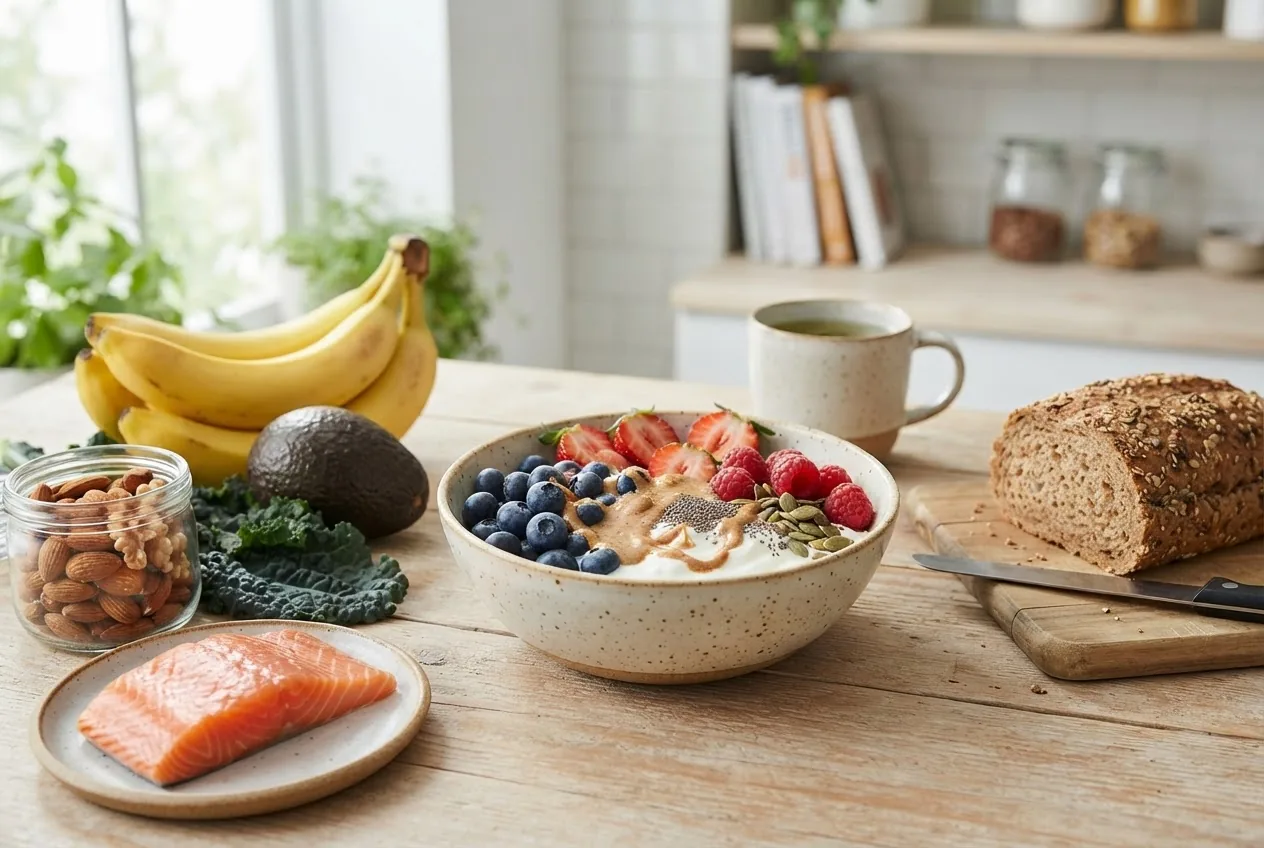
What you’ll achieve, time required, and skill level
By the end of this guide you will have a personalized, practical blueprint for eating foods that give you energy every day: a 7-day meal template, three 5-minute energy snacks, a grocery list organized by nutrient purpose, and a simple tracking plan to measure improvements in energy within two weeks. Realistic completion time to implement the plan: 2–3 hours for initial planning plus 30–60 minutes weekly for prep. Skill level required: basic cooking and ability to read nutrition labels; no advanced culinary skills needed.
Before you start
- Health items: recent basic bloodwork if available (Hb, TSH, fasting glucose) — helps rule out medical causes of low energy.
- Tools: kitchen scale (grams), measuring cups/spoons, simple blender, 1 large mixing bowl, 2 storage containers (16–32 oz), a reusable water bottle (20–32 oz).
- Apps/supplies: a food logging app or notebook, a weekly calendar, pantry inventory (list current staples).
- Time: reserve 2–3 hours on one day for grocery shopping and batch prep; 15 minutes each morning for meal assembly.
- Mindset: willingness to try at least 7 different energy foods and track perceived energy on a 1–10 scale for two weeks.
Core steps — practical, action-first sequence
-
Assess your baseline energy and constraints.
Measure current energy patterns for 3 days: record sleep duration (hours), caffeine intake (mg — e.g., 8 oz brewed coffee ≈ 95 mg), main meals and snacks (time and what you ate), and subjective energy at 9am, 2pm, and 8pm on a 1–10 scale. Note special constraints: shift work, diabetes, vegetarian/vegan, food allergies, or medications. This baseline anchors next steps and tells you where to focus — sleep, hydration, macronutrient timing, or micronutrient deficits.
-
Prioritize hydration first: start with exact daily targets.
Drink water consistently: aim for 30–35 mL per kg bodyweight per day. Practical targets: a 70 kg (154 lb) adult should drink 2.1–2.5 liters (72–85 fl oz) daily. Track intake with a 20–32 oz bottle: drink three full bottles (3 × 24 oz = 72 oz) as a baseline. Add 300–500 mL more on hot days or after exercise. If you sweat heavily, add 1/4 to 1/2 teaspoon of salt to one bottle and sip during prolonged activity.
-
Build a balanced plate for steady energy.
Every main meal should include 3 components: complex carbohydrate (40–50% of the plate), lean protein (25–30%), and healthy fats + fiber (20–30%). Example amounts for an average adult meal: 1 cup cooked whole grains (150–200 g cooked rice/quinoa) or 2 medium potatoes; 4–6 oz (115–170 g) cooked lean protein (chicken, fish, tofu); 1–2 tablespoons olive oil or 1/4 avocado plus 1 cup non-starchy vegetables. This combination maintains blood glucose stability and slows digestion to prevent mid-afternoon crashes.
-
Choose high-energy foods by nutrient role — memorize the top 10.
Eat from a short list of reliable, energy-enhancing foods. Aim to include 4–6 of these across your day:
Food Portion Why it boosts energy Oats (rolled) 1/2 cup dry (45 g) Slow-release carbs + B vitamins Eggs 2 large High-quality protein and choline for brain energy Banana 1 medium (120 g) Quick carbs + potassium to reduce cramping Greek yogurt (plain) 3/4 cup (170 g) Protein + probiotics to support gut and steady glucose Lentils 1/2 cup cooked (100 g) Fiber-rich carbs and iron for oxygen transport Almonds 1 oz (28 g, ~23 almonds) Vitamin E, magnesium, and healthy fats for sustained energy Salmon 4 oz cooked (115 g) Omega-3s and protein for cognitive energy and recovery Sweet potato 1 medium (130–150 g) Complex carbs with beta-carotene and steady glucose release Spinach 1 cup raw (30 g) Iron, folate and magnesium to support cellular energy 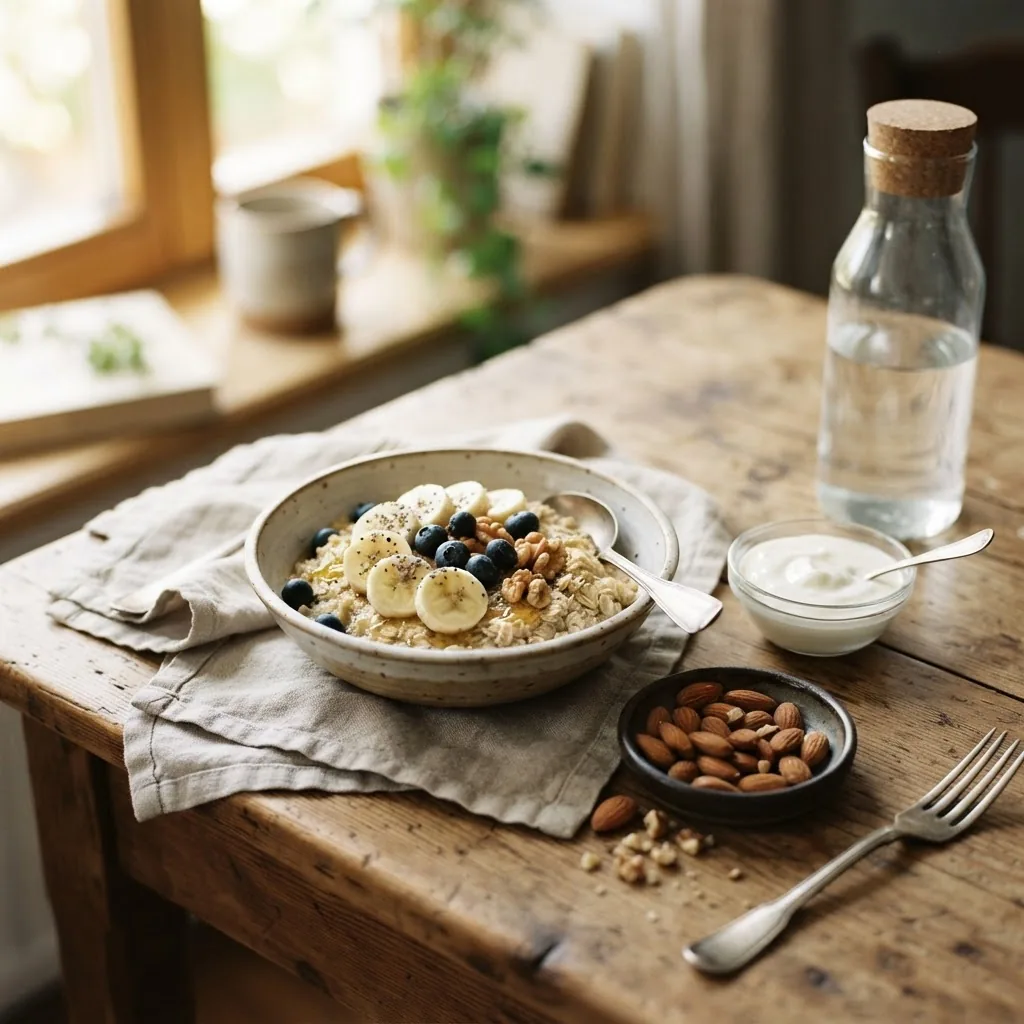
Aim to include at least three items from this list each day. If you have iron-deficiency anemia documented, prioritize lentils, spinach, and lean red meat (3–4 oz cooked once or twice weekly), and pair with 100 mg vitamin C (e.g., 3/4 cup orange juice) with iron-containing meals to boost absorption.
-
Optimize breakfast to prevent mid-morning crashes.
Eat within 60 minutes of waking. Choose a breakfast that delivers 20–30 g protein, 30–40 g complex carbs, and 8–12 g fat. Practical examples:
- Oat bowl: 45 g dry oats cooked with 1 cup milk, 1 scoop (20 g) whey or plant protein, 1 tbsp almond butter, 1/2 banana.
- Veggie scramble: 3 eggs, 1 cup spinach, 1/2 cup cooked sweet potato, 1 tsp olive oil.
- Greek yogurt parfait: 3/4 cup Greek yogurt, 1/3 cup granola, 1/2 cup berries, 1 tbsp chia seeds.
These breakfasts keep blood sugar stable and supply amino acids for brain function; avoid >30 g added sugars at breakfast to limit energy dips.
-
Use targeted snacks for afternoon or pre-work energy.
Snack every 3–4 hours if your day includes long gaps between meals. Choose snacks that combine carbs + protein or carbs + fat to extend energy: examples with exact portions:
- Apple + 1 oz (28 g) cheddar or 1.5 tbsp peanut butter.
- 1 rice cake + 2 tbsp hummus + 1/4 avocado.
- 1 small banana + 1 oz almonds (28 g).
- 3/4 cup plain Greek yogurt + 1 tbsp honey + 2 tbsp granola.
For a rapid pre-work boost 30–60 minutes before activity, choose 20–30 g easily digestible carbs (1 medium banana or 4 oz fruit juice) with no more than 5 g fat to avoid digestive slowdown.
-
Manage caffeine strategically — set daily limits and timing.
Limit total caffeine to 200–300 mg per day for steady effects without disrupting sleep. Practical schedule: if you wake at 7:00, have your first coffee (95 mg) between 8:00–9:00 after breakfast; avoid caffeine after 2:00 pm if you sleep by 10:00 pm. If you need a fast pick-me-up, a 75–100 mg caffeine dose (8 oz black tea or small espresso) plus a 10-minute brisk walk raises alertness quickly while causing less jitter than a large coffee.
-
Prioritize iron, B12, vitamin D, and magnesium where relevant.
Low levels of these nutrients commonly reduce energy. If you suspect deficiency (persistent fatigue despite good sleep and diet), get tests: ferritin (target 50–150 ng/mL for symptoms), serum B12 (goal >300 pg/mL), 25(OH)D (target 30–50 ng/mL), and magnesium RBC or serum if symptoms exist. Food-first targets: include 2–3 servings weekly of iron-rich foods (lentils 1/2 cup cooked or 3 oz lean red meat), 2–3 servings fatty fish/week for vitamin D and omega-3s, and 1 oz nuts/seeds daily for magnesium. Consider lab-driven supplementation only after testing, and consult a clinician for doses (e.g., elemental iron 60–100 mg/day short term if deficient).
-
Plan a 7-day high-energy meal template and shop with exact quantities.
Create a template covering three meals and two snacks per day. Example shopping list for one week (single adult):
- Rolled oats: 500 g (about 11 servings of 45 g)
- Eggs: 18 large
- Bananas: 7 medium
- Greek yogurt (plain): 1.2 kg
- Boneless skinless chicken breast: 1.2 kg
- Salmon fillets: 600 g (2 × 4 oz servings)
- Lentils (dry): 400 g (yields ~10 cups cooked)
- Sweet potatoes: 1.5 kg (6 medium)
- Spinach or mixed greens: 400 g
- Almonds: 200 g
- Olive oil: 250 mL
- Quinoa or brown rice: 500 g
Shop once and batch-cook: roast 6 sweet potatoes (375°F/190°C for 45 minutes), cook 1.5 cups dry quinoa (yields ~4.5 cups cooked), boil 10 eggs for quick breakfasts, and cook a large pot (1.5 cups dry) of lentils for 20–25 minutes until tender. Store in clear containers labeled with date; use within 4 days for cooked chicken, 5–7 days for cooked lentils and grains refrigerated.
-
Prep three energy-boosting grab-and-go meals in 60–90 minutes.
Follow this mini-routine: set oven to 375°F (190°C); line a baking sheet.
- Roast 4 chicken breasts (4 oz each), brushed with 1 tbsp olive oil and 1 tsp smoked paprika, for 20–25 minutes until internal temp 165°F (74°C).
- Roast 4 sweet potatoes whole (see above) in same oven for 40–45 minutes.
- Cook 1.5 cups quinoa (rinse, 1.5 cups water per 1 cup dry; simmer 15 minutes, then rest 5 minutes).
- Steam 4 cups broccoli or use raw spinach for salads.
Assemble three meal boxes: 1) 4 oz chicken + 1 cup quinoa + 1 cup spinach + 1 tbsp olive oil; 2) 1 cup lentils + 1 medium sweet potato + 1 cup roasted broccoli; 3) 4 oz salmon + 1/2 cup brown rice + 1 cup mixed greens. Each box provides ~30–40 g protein and balanced carbs/fat for stable energy.
-
Time meals and naps to support circadian energy rhythms.
Eat meals approximately every 3.5–4.5 hours. Example schedule: breakfast 7:30, snack 10:30, lunch 13:30, snack 16:00, dinner 19:00. If you need a power nap, keep it 10–20 minutes between 1:00–3:00 pm to avoid deep sleep inertia and preserve nighttime sleep. If you nap, reduce late-afternoon caffeine and move dinner earlier by 30–60 minutes.

-
Use exercise to increase natural energy — short sessions work best.
If you’re sedentary, start with 10–15 minute brisk walks after meals (post-lunch walk for 10 minutes lowers postprandial sleepiness). For improved daylong energy, perform resistance training 2× per week and 150 minutes moderate aerobic activity weekly (e.g., 30 minutes × 5 days). For immediate energy, a 5–10 minute set of bodyweight exercises (squats × 15, push-ups × 10, jumping jacks × 30 seconds) raises alertness within 5–10 minutes by increasing blood flow and catecholamines.
-
Handle blood sugar dips quickly and safely.
If you experience a mid-afternoon slump with shakiness, use the 15–20 rule: consume 15–20 grams of fast-acting carbs and reassess in 15 minutes. Practical choices: 4 oz (120 mL) fruit juice, 2 tablespoons raisins (30 g), 1 small banana, or 4 glucose tablets (check package). Follow with a snack that combines protein within 30 minutes (e.g., 1 oz almonds and 1 small apple) to stabilize levels. If you are diabetic or on glucose-lowering medication, follow your clinician’s individualized plan and carry glucose testing supplies.
-
Reduce energy drains: cut refined sugar, heavy fats, and alcohol timing.
Limit added sugars to <25 g/day for women and <36 g/day for men to minimize energy spikes and crashes. Avoid heavy, greasy meals during the workday (e.g., >30 g fat at lunch) which can cause postprandial sleepiness. Limit alcohol to ≤1 drink per day for women and ≤2 for men, and avoid drinking within three hours of bedtime to protect sleep quality, which is foundational for daily energy.
-
Adjust for special populations with specific portion guidance.
Examples with exact quantities:
- Older adults (65+): aim for 25–30 g protein per meal; add a 150–200 mL high-protein drink or 1 cup cottage cheese as needed to reach targets.
- Vegetarians/vegans: include 1–1.5 cups cooked legumes or 6–8 oz tofu per day plus 30 g nuts/seeds to reach ~60–80 g protein/day depending on bodyweight.
- Athletes or heavy laborers: increase carbs to 5–7 g/kg bodyweight/day; e.g., a 70 kg athlete needs 350–490 g carbs/day split across meals and peri-workout nutrition.
Use these specifics to tailor portions rather than guessing.
-
Monitor and iterate with a 14-day tracking protocol.
Track these metrics daily for two weeks: sleep hours, water volume (mL), meals consumed, caffeine mg, exercise minutes, and subjective energy at 9am/2pm/8pm on a 1–10 scale. After 14 days, analyze patterns: look for consistent dips at the same time, link to meals or caffeine, and adjust portion sizes or timing. If energy improves by ≥2 points on average, keep the plan; if not, re-evaluate hydration, micronutrients, and sleep hygiene, and consider medical testing.
-
Use cooking and flavor hacks to keep high-energy foods enjoyable.
Rotate spices and textures to maintain adherence: batch-roast sweet potatoes with 1 tsp smoked paprika and 1 tsp ground cumin; make a yogurt dip with 3/4 cup Greek yogurt, 1 tbsp lemon juice, 1 tsp honey, and 1 tsp za’atar for savory snacks. For salads, use a dressing of 1 tbsp olive oil + 1 tsp apple cider vinegar + 1 tsp Dijon mustard for consistent fat to slow carb absorption. Pack meals in clear containers and label them with reheating instructions: microwave 60–90 seconds and stir; oven reheat at 325°F (160°C) for 8–12 minutes for crispy texture.
-
Introduce one evidence-based supplement only when needed and safe.
Supplements can help when deficiencies are proven. Examples: 1000 IU vitamin D daily if 25(OH)D <30 ng/mL (confirm with clinician); 100–200 mg magnesium citrate nightly for muscle tension or poor sleep (avoid with kidney disease); B12 1000 mcg weekly if low or strict vegan. I do not recommend stimulants for most people. Always check drug–nutrient interactions and consult your healthcare provider before starting supplements.
-
Maintain progress with a sustainable maintenance routine.
After 4 weeks, move to a maintenance pattern: 3–4 varied high-energy meals weekly include at least one new vegetable and one new whole grain. Reassess bloodwork at 3 months if you started supplementation. Continue meal prep for 1–2 hours weekly and keep your two best snacks stocked (e.g., bananas and single-serve almond packs) to avoid low-energy choices when busy.
Worked meal examples and exact recipes
High-energy weekday breakfast bowl (serves 1)
Ingredients and steps with exact measures:
- 45 g rolled oats + 250 mL water or milk, bring to a simmer 5–7 minutes.
- Stir in 1 scoop (20 g) whey or plant protein, 1 tbsp (16 g) almond butter, and 1/2 medium banana (60 g sliced).
- Top with 1 tbsp (10 g) chia seeds and a pinch (1 g) cinnamon. Expected macronutrients: ~18–24 g protein, 45–55 g carbs, 12–15 g fat.
No-cook high-energy lunch jar (serves 1)
- Layer 3/4 cup (170 g) Greek yogurt, 1/2 cup (70 g) mixed berries, 1/4 cup (30 g) granola, and 1 tbsp (16 g) honey.
- Add 1 oz (28 g) chopped almonds on top. Eat with 1 small whole-grain roll if you need extra carbs.
5-minute energy smoothie (serves 1)
- 250 mL milk or fortified plant milk, 1 medium banana, 1 scoop (20 g) protein powder, 1 tbsp (16 g) nut butter, and 1 handful (30 g) spinach.
- Blend 30–45 seconds. Approx. 25–30 g protein and 40–50 g carbs, ideal 30–60 minutes pre-workout for sustained energy.
Common mistakes and how to avoid them
From my clinic and kitchen experience, these are real mistakes I see often and how I fix them.
- I assumed hydration wasn’t important. I once advised a busy client to improve diet only; after tracking, she had been drinking <1 L/day. Adding a 24 oz bottle habit lifted her energy by 2 points in a week. Fix: measure and set a clear mL target based on bodyweight.
- I recommended more protein but not the timing. I told someone to eat 100 g extra protein weekly; they ate it all at dinner and still felt tired midday. Fix: distribute protein across meals (25–30 g each) so amino acids are available throughout the day.
- I overused caffeine to compensate for poor sleep. I saw an office worker drinking 600 mg/day and still fatigued by 4pm. Reducing to 200 mg and improving sleep routine normalized energy. Fix: cap caffeine to 200–300 mg, avoid after early afternoon based on sleep time.
- I ignored iron in vegetarian clients. A vegetarian athlete complained of fatigue despite high calories; ferritin was 15 ng/mL. We added lentils and vitamin C with meals and ferritin rose within 8 weeks. Fix: test ferritin if fatigue persists and pair plant iron with vitamin C.
- I skipped structured meal timing. I advised ‘eat well’ but the patient had erratic meal timing and severe post-lunch crashes. Establishing 3.5–4.5 hour spacing eliminated afternoon crashes. Fix: plan meal and snack windows and set phone reminders initially.
Compact checklist — verify your work
- Hydration: Are you hitting 30–35 mL/kg bodyweight daily? (Yes/No)
- Breakfast: Do you consume 20–30 g protein and 30–40 g complex carbs within 60 minutes of waking?
- Plate balance: Do main meals include a complex carb (1 cup cooked), 4–6 oz protein, and 1 tbsp healthy fat or 1/4 avocado?
- Snacks: Are you eating 2 snacks/day that combine carbs + protein/fat (exact portions listed in plan)?
- Caffeine: Is total caffeine ≤300 mg/day and cut off by 14:00 if you sleep by 22:00?
- Tracking: Did you collect 14 days of energy scores and sleep data to evaluate progress?
- Prep: Did you batch-cook the weekly staples (grains, proteins, vegetables) and label them?
When to call in a professional
Call a healthcare professional if you have persistent low energy despite improving diet and lifestyle for 4–6 weeks, or if you experience additional symptoms: unexplained weight loss, breathlessness, chest pain, palpitations, severe sleepiness during the day (e.g., nodding off while driving), or blood sugar out of range. For nutritional guidance specific to complex conditions (diabetes, pregnancy, chronic kidney disease), consult a registered dietitian or your primary clinician to set safe, individualized targets and supplement dosages.
Related reading and next steps
For broader meal planning and balanced-diet context see the pillar guide Nutritionally Complete Meal Guide with Balanced Diet Advice. If you want practical ways to improve overall eating patterns, check these sibling posts: 10 Ways to Eat Better and 12 Foods You Should Eat Everyday.
Frequently Asked Questions
What are the fastest foods that give you energy right away?
Fast energy comes from 15–30 g of simple carbs paired with a light protein/fat: a medium banana, 4 oz (120 mL) fruit juice, or 2 tablespoons raisins. Follow immediately with a protein-containing snack within 30 minutes to stabilize blood sugar and prevent a crash.
How can I increase natural energy without caffeine?
Prioritize hydration (30–35 mL/kg/day), balanced meals every 3.5–4.5 hours with 20–30 g protein, at least 150 minutes of moderate exercise weekly, and 7–9 hours sleep nightly. Add short 10-minute post-meal walks and 5–10 minute movement breaks to raise alertness without caffeine.
Which high energy foods should I eat before a workout?
Eat 20–60 minutes prior: 20–30 g easily digestible carbs with minimal fat, e.g., 1 medium banana or 4 oz fruit juice. For workouts longer than 60 minutes, add 15–20 g protein beforehand or immediately after to support recovery and sustained energy.
How quickly will I feel more energetic after changing my diet?
Many people notice small improvements within 3–7 days if hydration and meal timing are corrected; robust, measurable improvements typically require 2–4 weeks when combined with improved sleep and exercise. Track subjective energy scores to confirm change.
What should I do if I still feel tired after following this guide for two weeks?
If fatigue persists despite hydration, balanced meals, and sleep, get basic labs (CBC, ferritin, TSH, fasting glucose, vitamin D) and consult your primary care clinician or a registered dietitian to evaluate medical causes or need for tailored nutrition therapy.