Chicken meal prep ideas can transform your week: cook once, eat well, and reclaim hours from the kitchen. This guide delivers practical, healthy chicken meal prep strategies, a week-long sample plan, and 15 diverse recipes so you can meal plan with confidence and variety.
Introduction to Chicken Meal Prep Ideas for Healthy Eating
Meal prep is like setting your week’s GPS: it gives direction, saves time, and keeps nutrition on track. Choosing chicken as the centerpiece of your plan makes sense—it’s versatile, affordable, and high in lean protein, which supports satiety and muscle maintenance. This introduction covers the benefits of meal prep and why chicken is a top pick for healthy eating habits.
Benefits of consistent weekly meal planning include fewer impulsive meals, better portion control, predictable grocery spending, and easier macro-balancing. When chicken is prepared in batches, you can quickly assemble lunches, dinners, and snacks while ensuring balanced plates with protein, complex carbohydrates, and healthy fats.
For readers who want a broader look at healthy recipes and nutrition data to pair with day-to-day meal prep, check this comprehensive resource.
Yummiest Healthy Recipes Guide with Nutrition Facts and Tips
Transition: With the why covered, next are the essential tips that make chicken meal prep reliable and efficient for busy weeks.
Essential Tips for Successful Chicken Meal Prep
- Plan your week first — Start by mapping meals for 4–7 days (breakfasts, lunches, dinners, snacks). Allocate chicken batches to 3–5 meals and vary sides to avoid boredom. Use a calendar or a simple spreadsheet to list proteins, carbs, vegetables, and flavor profiles.
- Buy smart and budget-friendly — Buy whole chickens, bone-in thighs, or family packs on sale for bulk cooking. For cost-saving tips and ingredient prioritization, see a helpful budget resource.
- Batch cook strategically — Cook proteins in multiple styles (e.g., grilled slices, shredded slow-cooker, oven-baked portions) so the same chicken can become tacos, salads, or grain bowls. Use different marinades and finishing sauces to change cuisines without extra work.
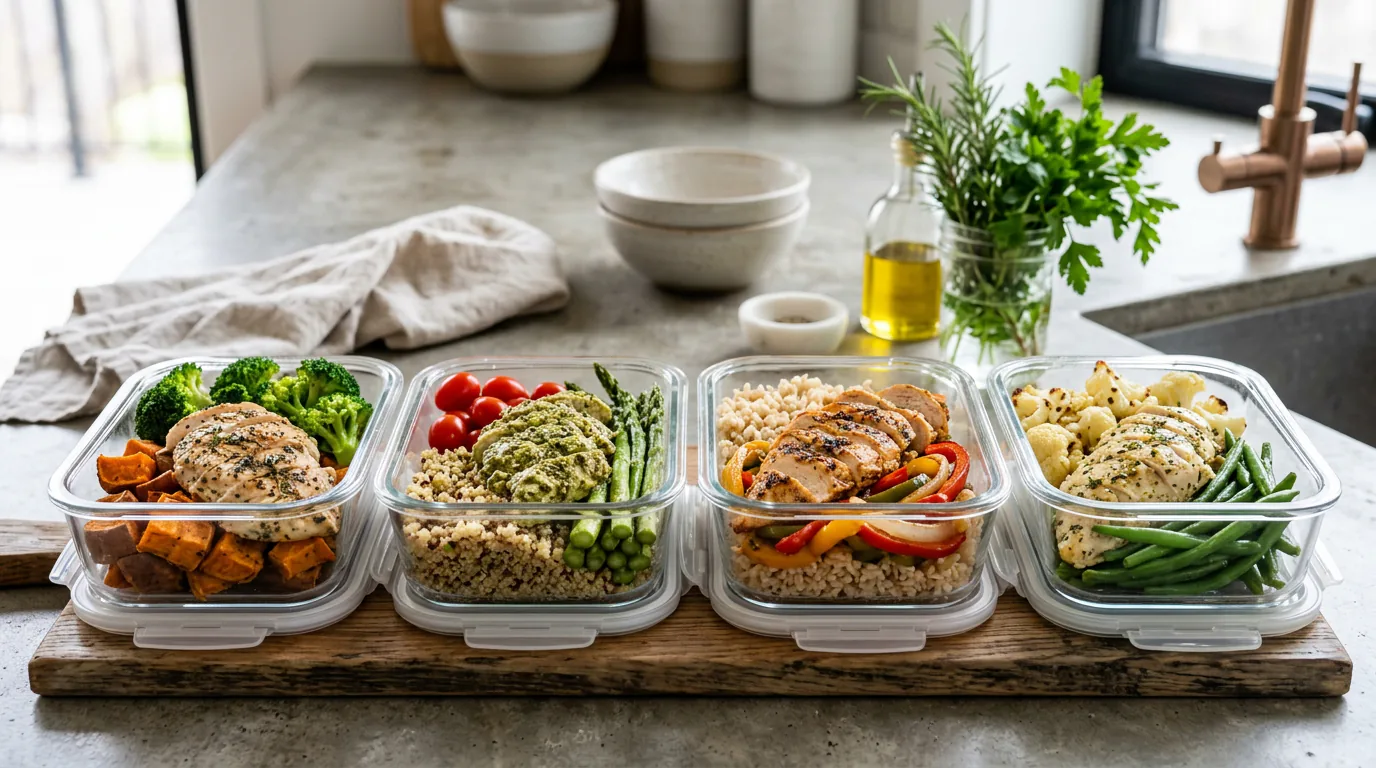
- Portion control and containers — Pre-portion meals into single-serving containers for lunches and family-size containers for dinners. Aim for roughly 3–6 oz cooked chicken per portion for most adults, adjusting for activity level. Use leakproof containers with compartments to preserve textures.
- Use varied cooking methods — Combine baking, grilling, poaching, and slow-cooking across batches. This preserves texture variation across the week and helps nutrient retention; grilling and poaching are lower-fat options, while roasting can concentrate flavor.
- Stagger flavors and sides — Rotate bases like brown rice, quinoa, mixed greens, roasted vegetables, or whole-wheat pasta. Two proteins + two carb bases + three vegetable sides times different dressings yields many unique meals from the same batch.
- Time-saving hacks — Pre-chop vegetables, cook grains in bulk, and use one-skillet sheet-pan meals for easy cleanup. Use an air fryer for quick reheats that restore crispness. Freeze individual portions if you’ll eat them after 3–4 days.
- Label and date everything — Write cook dates and meal names directly on containers. First-in, first-out rotation avoids waste and keeps freshness predictable.
- Food safety basics — Cool cooked chicken quickly (within two hours) before refrigerating. Refrigerate at 40°F (4°C) or below and freeze at 0°F (-18°C). For storage times and official guidance, consult USDA/FDA recommendations.
- Keep a meal remix list — Write simple transformations for each chicken batch (e.g., shredded + salsa = taco bowls; sliced + tahini dressing = Mediterranean salad). This prevents flavor fatigue and simplifies assembly.
- Healthy swaps and macro balance — Build plates that combine lean protein, fiber-rich carbs, and healthy fats. Use avocado, olive oil-based dressings, nuts, or seeds to reach healthy fat goals while keeping meals balanced for energy and recovery.
- Mindful reheating — Reheat chicken to 165°F (74°C) internal temperature before eating. Reheating in an oven or air fryer prevents dryness more effectively than microwaving; add a splash of broth to preserve moisture.
- Track your preferred rhythms — Some people cook once weekly; others prefer two mid-week refresh cooks. Test what fits your routine and adjust batch sizes and freeze-to-refrigerate ratios accordingly.
- Use versatile marinades — Keep a basic marinade template: acid (lemon/vinegar), oil (olive), aromatics (garlic/ginger), salt, and flavoring (chili flakes, herbs, soy sauce). This base adapts to Mediterranean, Asian, or Mexican profiles quickly.
Transition: Now that you have the workflow tips, choose the best chicken cuts and portion sizes to match budget, taste, and meal goals.
Best Chicken Cuts and Portions for Meal Prep
| Cut | Best uses | Pros | Cons | Cooked portion per adult |
|---|---|---|---|---|
| Boneless Skinless Breast | Grilling, baking, stir-fries, sliced salads | Lean, high protein, quick-cooking | Can dry if overcooked | 3–6 oz (85–170 g) |
| Bone-in Thighs | Slow cooking, braises, shredded dishes | Juicy, forgiving, flavorful, cheaper per lb | Higher fat content | 4–6 oz (115–170 g) |
| Whole Chicken | Roasting, mixed cuts for varied uses | Most cost-effective, yields dark and white meat | Longer cook time; requires carving | Portion by serving size |
| Tenderloins | Quick sautés, skewers, snacks | Fast cook, uniform size | Smaller portion per piece | 2–4 oz (56–115 g) |
| Ground Chicken | Burgers, meatballs, tacos | Versatile texture, blends flavors well | Can be lean and dry; needs added fat | 4–6 oz per serving |
Choosing between breast and thigh comes down to nutrition goals and meal types. Breasts are the go-to when you want lean protein and calorie control; thighs add richness and stay moist in longer-cooked meals. For couples or two-person households, adjust quantities with portion guidance—see options for “healthy dinner recipes for two” to scale recipes and costs.
healthy dinner recipes for two
Transition: With cut selection set, the next section walks you through an efficient, repeatable process to meal prep chicken for an entire week.
Step-by-Step Guide: How to Meal Prep Chicken for the Week
- Decide the scope — Choose how many meals you need: lunches (5), dinners (4), snacks (3). Example weekly plan: three grilled breast portions, one shredded slow-cooker chicken, one roasted whole chicken reserved for salads and tacos.
- Create a shopping list — List proteins, produce, grains, condiments, and herbs. Buy enough chicken with a 10–20% buffer for shrinkage during cooking. Include versatile staples like olive oil, lemons, garlic, canned tomatoes, and beans.
- Prep station setup — Clear counter space: three bowls (marinade, flour/spice dust, final), cutting board, baking sheet, slow cooker (if used), pans, and containers. Preheat ovens or grills before starting to maintain momentum.
- Marinate and season — Marinate breast or thigh batches for 30 minutes to overnight depending on time. Use separate bowls for different flavor profiles (e.g., lemon-herb, soy-ginger, smoked paprika). Marinating improves flavor and helps keep chicken moist in the week.
- Batch-cook with varied methods — Cook multiple batches using different methods:
- Oven-bake breasts at 400°F (204°C) for 18–22 minutes until internal temp is 165°F (74°C).
- Slow-cook thighs with broth and aromatics on low for 6–8 hours for shreddable meat.
- Grill sliced breasts or tenders for char and quick assembly meals.
Cooking multiple methods yields texture diversity and prevents meal boredom.
- Rest and portion — Let cooked chicken rest 5–10 minutes before slicing or shredding to retain juices. Weigh or eyeball single portions into containers: 3–6 oz cooked protein for most adults. Add sides or leave them separate for mixing during the week.
- Quick-cook grains and veggies — While proteins cook, prepare batch-friendly sides:
- Cook brown rice or quinoa in a rice cooker; store cooled in shallow containers.
- Roast a sheet pan of mixed vegetables (broccoli, bell peppers, carrots) with olive oil and salt at 425°F (218°C) for 20–25 minutes.
- Chop raw crunchy veg (cucumber, carrot sticks) and store in water-tight containers to keep crisp.
- Assemble thoughtfully — Build meals based on intended use:
- Lunch bowls: protein + grain + veg + dressing in small container.
- Dinner family portions: protein in large container with two sides for reheating.
- Snacks: small skewers or wraps with tenderloins, hummus, and cut veggies.
- Cool and store fast — Divide cooked chicken into shallow containers and cool at room temperature only briefly, then refrigerate. For faster cooling, spread chicken in a single layer on sheet pans before packaging. Label with cook date.
- Refrigeration vs freezing strategy — Plan eating schedule: keep 3–4 days of ready-to-eat meals in the fridge; freeze the rest in single-serving airtight containers if planning beyond 4 days. For freezer guidance and tips, consult the freezer meal prep resource.
- Reheat to safe temps — Reheat refrigerated or frozen meals until an internal temperature of 165°F (74°C) is reached. Use ovens or air fryers to reduce moisture loss; add a splash of broth or sauce for juicier results.
- Reuse bones and trimmings — Save carcasses or bones in the freezer to make quick bone broth later—great for soups or to add flavor to grains.
- Track what worked — Keep a log of portion sizes, flavor pairings, and how long meals stayed appealing. Use this to refine future batches. For breast-specific recipe ideas and high-protein plans, see targeted breast recipe resources.
- Troubleshoot common issues — If meat dries, add sauces, slice thinly, or shred into moist stews. If flavors feel repetitive, use different dressings, acids (lemon/vinegar), or fresh herbs at plating time.
- Adjust for dietary needs — Increase portions for higher-energy needs, reduce grains for low-carb plans, and select skinless breast or dark meat for different fat targets. For quick lunch-specific ideas that pair well with chicken prep, explore curated lunch guides.
healthy chicken breast recipes
Transition: With a reliable cooking routine in place, here are 15 healthy chicken meal prep recipe ideas that cover breakfasts, lunches, dinners, and snacks — each with quick descriptions and nutrition highlights.
15 Healthy Chicken Meal Prep Recipe Ideas for Every Meal
Below are 15 practical recipes that use chicken across cuisines and meal occasions. Each entry includes a short prep note and a nutritional highlight so you can balance macros and calories when planning your week.
-
1. Lemon-Herb Grilled Chicken with Quinoa Salad
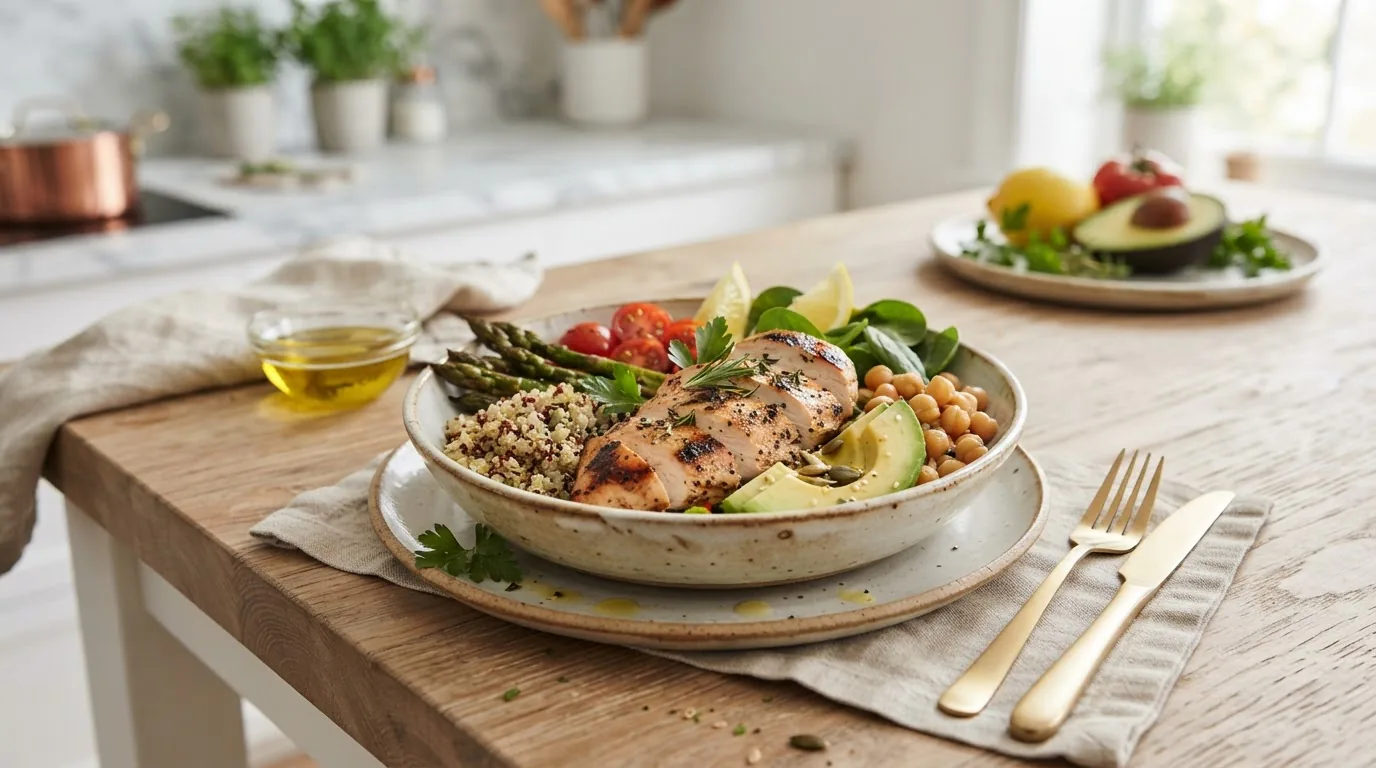
Prep: Marinate breasts in lemon, olive oil, garlic, and oregano; grill, slice, and portion over quinoa mixed with cucumber, cherry tomatoes, and parsley.
Nutritional highlight: Approximately 35–40 g protein and 450–550 kcal per full meal; high in vitamin C (from lemon) and fiber from quinoa.
-
2. Slow-Cooker Shredded Chicken Tacos
Prep: Slow-cook thighs with chipotle, tomato, and onion; shred and freeze in taco portions. Serve with avocado and whole-wheat tortillas.
Nutritional highlight: 25–30 g protein per two-taco serving; adjust tortillas for calorie control. Slow-cooking keeps meat moist and flavorful.
-
3. Mediterranean Chicken Grain Bowls
Prep: Roast chicken thighs, serve with farro, roasted eggplant, tzatziki, olives, and spinach. Assemble bowls for lunches.
Nutritional highlight: Balanced macros with healthy fats from olives and yogurt; about 400–500 kcal depending on portion size.
-
4. Chicken Caesar Mason Jar Lunches
Prep: Layer dressing at bottom, then romaine, cooked sliced chicken, parmesan, and croutons at top to keep crisp until midday.
Nutritional highlight: 30–35 g protein per jar; control calories by using a yogurt-based dressing or smaller crouton portion.
-
5. Asian Ginger-Soy Stir-Fry with Chicken and Broccoli
Prep: Stir-fry sliced breast with a ginger-soy glaze; portion over brown rice and steamed broccoli for quick reheating.
Nutritional highlight: Lean protein and fiber-rich veg; watch sodium levels—use reduced-sodium soy or tamari to keep sodium moderate.
-
6. BBQ Pulled Chicken Sandwiches (Meal-Prep Friendly)
Prep: Shred slow-cooked chicken, toss in light BBQ sauce, and portion. Serve on whole-grain buns or over baked sweet potato fries.
Nutritional highlight: 28–32 g protein per sandwich; choose whole-grain buns and light sauce to lower added sugars.
-
7. Chicken and Vegetable Sheet-Pan Dinner
Prep: Roast breasts or thighs with Brussels sprouts, sweet potatoes, and olive oil on one sheet pan for fuss-free meals and easy cleanup.
Nutritional highlight: Full-meal serving provides balanced macros; fiber and vitamins from mixed vegetables keep you full longer.
-
8. Greek Chicken Pitas for Lunch
Prep: Marinate chicken in yogurt and herbs; grill and slice into pitas with lettuce, tomatoes, and Tzatziki.
Nutritional highlight: 25–35 g protein per pita; yogurt marinade adds tenderness and probiotics if using live-culture yogurt.
-
9. Chicken, Black Bean, and Corn Burrito Bowls
Prep: Combine grilled chicken, black beans, charred corn, brown rice, salsa, and cilantro. Portion in bowls for easy reheats.
Nutritional highlight: High in fiber and plant protein complements (beans) for sustained energy and satiety.
-
10. Low-Carb Buffalo Chicken Lettuce Wraps
Prep: Toss shredded chicken in a light buffalo sauce and serve in romaine or butter lettuce with blue cheese or Greek yogurt drizzle.
Nutritional highlight: Low-carb option with ~25–30 g protein per serving; excellent for calorie-controlled meal plans.
-
11. Chicken and Veggie Stir-Fry Meal Prep Packs
Prep: Quickly stir-fry bite-sized breast pieces with a rainbow of vegetables and a simple garlic sauce; divide into reheatable packs.
Nutritional highlight: High-volume, lower-calorie meals with loadable veg for satiety and micronutrients.
-
12. Curry Chicken with Cauliflower Rice
Prep: Simmer chicken in a tomato-based curry sauce and portion over cauliflower rice for a lower-carb, flavor-packed dinner.
Nutritional highlight: About 30 g protein and lower carbs; curried spices add anti-inflammatory polyphenols per nutrition literature.
-
13. Chicken Salad with Greek Yogurt
Prep: Mix shredded chicken with Greek yogurt, celery, apple, and walnuts for a creamy, protein-rich salad ideal for sandwiches or over greens.
Nutritional highlight: High protein, healthy fats from nuts, and volume from fruits/vegetables; adjustable calorie profile.
-
14. Teriyaki Chicken Meal Prep Bowls
Prep: Marinate and bake teriyaki-glazed chicken, serve with steamed edamame, rice, and pickled carrots for contrast.
Nutritional highlight: Protein plus soy-based flavors; use moderate glaze to control added sugars.
-
15. Chicken Snack Skewers with Hummus
Prep: Thread cooked tenderloins on skewers for portable protein snacks with small hummus cups and sliced raw veggies.
Nutritional highlight: 10–20 g protein per snack; ideal for mid-afternoon hunger and maintaining energy between meals.
Complementary morning meals help support a healthy weekly routine—if you want ideas to pair breakfasts with these chicken-based meals, explore targeted morning options.
For meat-free days that balance your weekly plan and reduce costs, consider pairing these chicken meals with vegetarian options found in budget-friendly guides.
Family dinners can use many of the recipes above—swap portion sizes, double sides, and use kid-friendly seasoning to fit household tastes.
For office lunches, scale the grain bowls and mason jar lunches into compact containers to bring to work.
Transition: These recipes show the breadth of chicken in meal prep; next we’ll cover measurable nutrition benefits that make chicken a foundational protein.
Nutritional Benefits of Chicken in Meal Prep
Chicken is a nutrient-dense, versatile protein source useful for weight management, muscle repair, and overall balanced nutrition. A typical cooked chicken breast (3 oz / ~85 g) provides roughly 25–27 g of protein and 120–140 kcal, depending on cooking method and added fats (according to a 2024 USDA nutritional database summary).
Embedded stat block:
- Protein per 3 oz cooked chicken breast: ~26 g (source: 2024 USDA nutrient data)
- Calories per 3 oz cooked breast: ~128 kcal (source: 2024 USDA nutrient data)
- Typical thigh (3 oz cooked): ~21 g protein, ~170 kcal (source: 2024 USDA nutrient data)
Protein supports muscle maintenance and satiety. Peer-reviewed research indicates higher-protein meals can improve fullness and preserve lean mass during calorie-controlled periods (see a representative review on protein and muscle health).
Representative peer-reviewed protein review
Cooking methods impact nutrient retention and calorie totals: grilling and poaching retain lean profiles with minimal added fat; roasting and pan-searing often add fats and concentrated flavors. Use oil sparingly and prefer heart-healthy fats like extra-virgin olive oil to keep meals aligned with balanced diet principles such as DASH or Mediterranean patterns. For DASH-specific meal planning that incorporates lean proteins like chicken, check targeted resources.
Transition: Now that you understand the nutrition, below are best practices to store and reheat chicken safely so your meals stay healthy and delicious all week.
How to Store and Reheat Chicken Meal Prep Safely
- Cool quickly — After cooking, cool chicken to room temperature briefly, then refrigerate within two hours to limit bacterial growth. For quicker cooling, spread meat in a shallow layer on a rimmed sheet pan before packing into containers.
- Refrigerator storage times — Store cooked chicken in the fridge for up to 3–4 days. According to USDA guidance, refrigerated cooked poultry should be consumed within this time frame to minimize food-safety risks.
- Freezing guidelines — For longer storage, freeze portions at 0°F (-18°C). Properly sealed, frozen cooked chicken retains best quality for 2–6 months; beyond that, texture and flavor may decline. Always label with cook and freeze dates.
- Prevent freezer burn — Use airtight, low-oxygen packaging: vacuum sealers or freezer-safe containers with minimal headspace reduce freezer burn. Wrap in plastic wrap then foil if needed.
- Reheating best practices — Reheat to an internal temperature of 165°F (74°C). Preferred methods:
- Oven: 325–350°F for evenly reheated meals, covered to retain moisture.
- Air fryer: quick crisp-up for 3–7 minutes at 350°F, ideal for breaded or roasted textures.
- Microwave: use short bursts and add moisture (splash of broth) to prevent dryness; cover to steam.
- Thawing safely — Thaw frozen chicken in the refrigerator overnight or use the defrost setting on a microwave. Avoid thawing at room temperature to reduce bacterial risk.
- Avoid refreezing cooked meals — Repeated freeze-thaw cycles degrade texture and increase food-safety concerns. If you need to refreeze, do so only if the chicken has been thawed safely in the fridge and not held at room temperature.
- Food safety signs to watch — Discard chicken that smells off, has slimy texture, or shows discoloration. These are warning signs of spoilage even if within suggested timeframes.
- Labeling checklist — Each container: meal name, cook date, freeze date (if applicable), and reheating instructions (e.g., reheat to 165°F, add 2 tbsp broth).
- Official guidelines — For full food-safety specifics related to meat handling and storage, refer to authoritative resources from USDA and FDA.
Transition: Even with the best planning, common mistakes happen—below are the most frequent pitfalls and how to avoid them.
Common Meal Prep Mistakes and How to Avoid Them
- Overcooking chicken — Problem: Dry, tough meat. Solution: Use an instant-read thermometer and remove chicken at 160–162°F, allowing carryover cooking to reach 165°F; marinade, brine, or add a sauce to retain moisture.
- Freezer burn and poor packaging — Problem: Off-flavors and dry texture. Solution: Use vacuum sealing or double-wrap containers; remove air and label clearly to rotate stock.
- Flavor fatigue — Problem: Boredom leads to skipping meals. Solution: Prepare three flavor profiles (e.g., Mediterranean, Asian, Tex-Mex) and rotate sauces and dressings at plating time to keep meals exciting.
- Improper portion control — Problem: Under- or overeating. Solution: Use a food scale or portioned containers; estimate protein servings (3–6 oz cooked) and pair with vegetables for volume.
- Ignoring reheating method — Problem: Soggy or rubbery reheated chicken. Solution: Reheat in oven or air fryer where possible; add small amounts of liquid and cover to preserve moisture when using the microwave.
- Not cooling food fast enough — Problem: Bacterial growth risk. Solution: Spread cooked food in shallow pans to cool quickly before refrigeration; refrigerate within two hours.
- Poor timing or cooking too much — Problem: Waste. Solution: Start with smaller batches until you know how much your household will consume; freeze the rest in single portions.
- Using too many similar sides — Problem: Repetitive meals. Solution: Keep a base pantry list for quick side swaps (rice/quinoa/greens) and rotate garnishes and sauces.
- Not testing recipes before scaling — Problem: A full-week flop. Solution: Test a new recipe once before committing an entire week to it; adapt seasoning and timing as needed.
- Relying on one cooking method — Problem: Texture monotony. Solution: Mix grilling, roasting, and slow-cooking to diversify textures and flavors.
Transition: To execute the plans above, you’ll want the right tools—here are container and equipment recommendations tailored to chicken meal prep.
Meal Prep Tools and Containers Recommended for Chicken Meals
Good tools make meal prep faster and safer. Invest in a few quality pieces and prioritize multipurpose items for small kitchens.
- Containers: Use glass meal prep containers with snap lids for oven-to-table convenience and longevity. For freezer storage, BPA-free plastic containers with tight seals work well for single portions.
- Vacuum sealer: Extends freezer life and reduces freezer burn—perfect for bulk-cooked shredded chicken and bones for broth.
- Instant-read thermometer: Essential for safe internal temperature checks to avoid overcooking.
- Slow cooker or multi-cooker: Great for shreddable batches and set-and-forget cooking.
- Air fryer: Excellent for reheating to recreate crisp textures and for quick small-batch cooking of tenders or wings.
- Sheet pans and roasting rack: Enable efficient oven batches of chicken and vegetables.
- Rice cooker or multi-grain cooker: Perfect for unattended bulk grain cooking.
- Sharp knives and cutting boards: Keep separate boards for raw meat and produce to prevent cross-contamination.
Product-type highlights: prioritize glass for sustainability and flavor neutrality; choose BPA-free plastics when portability or stacking is a priority; opt for leakproof, compartmentalized containers for salads and bowls.
Transition: Finally, bring everything together with a few strategic habits to maximize weekly chicken meal prep success.
Final Thoughts: Maximizing Your Weekly Chicken Meal Prep
Consistency beats perfection. Aim to prep in a way that fits your schedule—whether that’s one big Sunday session or two shorter midweek refreshes. Keep variety by rotating flavors and using simple remix rules to turn one batch into multiple meals.
Practical habits to lock in: plan three flavor profiles, label containers clearly, and keep a short grocery list of staples to top off meals. Use time-saving tools like a slow cooker and air fryer to reduce hands-on time and improve textures at reheating.
For families, scale recipes and involve kids in simple assembly—this encourages healthy habits and reduces prep burden. For more family-focused menu strategies, consult family dinner resources to scale and adapt meals for all ages.
Meal prep with chicken delivers balanced nutrition, affordability, and convenience when you plan portions, vary flavors, and follow safe storage practices. Try one of the 15 recipes this week and refine the routine—your future self will thank you.
Call to action: Start by choosing two chicken recipes from the list, create a shopping list, and schedule one 90-minute cook session this weekend to experience how meal prep simplifies your week.
Frequently Asked Questions
What exactly are chicken meal prep ideas?
Chicken meal prep ideas are organized plans and recipes for cooking chicken in batches—using varied marinades, methods, and sides—to create multiple healthy meals for the week while saving time and ensuring balanced nutrition.
How do chicken meal prep recipes compare to daily cooking?
Chicken meal prep focuses on batch cooking and portioning to save time and maintain consistency, while daily cooking prepares single meals. Prep recipes prioritize longevity, variety through sauces, and quick assembly versus fresh daily preparation.
What are the benefits of meal prepping chicken breast specifically?
Chicken breast is lean and high in protein, making it ideal for calorie-controlled and high-protein meals; batch-cooking breasts offers predictable portions, easy reheating, and versatile uses in salads, bowls, and sandwiches.
How do I properly store prepared chicken meals to keep them fresh?
Cool cooked chicken quickly, refrigerate within two hours at or below 40°F (4°C), use airtight containers, and consume within 3–4 days; freeze extra portions at 0°F (-18°C) and label with cook and freeze dates.
How long does it take to prep chicken meals for a whole week?
A full weekly prep session typically takes 60–120 minutes depending on batch size and methods used; dividing tasks across two sessions can reduce time pressure while keeping freshness and variety.
Why does my meal-prepped chicken sometimes taste dry or bland?
Dryness often comes from overcooking or lack of fat; use marinades, brines, sauces, or add a splash of broth when reheating. Blandness can be fixed by finishing with fresh herbs, citrus, or a flavorful dressing at plating.
Is chicken meal prep safe to eat after freezing and reheating?
Yes—properly frozen cooked chicken can be safe for months; thaw in the fridge and reheat to an internal temperature of 165°F (74°C). Avoid refreezing multiple times to preserve quality and safety.
Which cooking method is best for healthy chicken meal prep?
Grilling and poaching are excellent for lower-fat, lean meals; roasting and slow-cooking provide flavor and tenderness. Mix methods to balance texture, flavor, and convenience while controlling added fats.