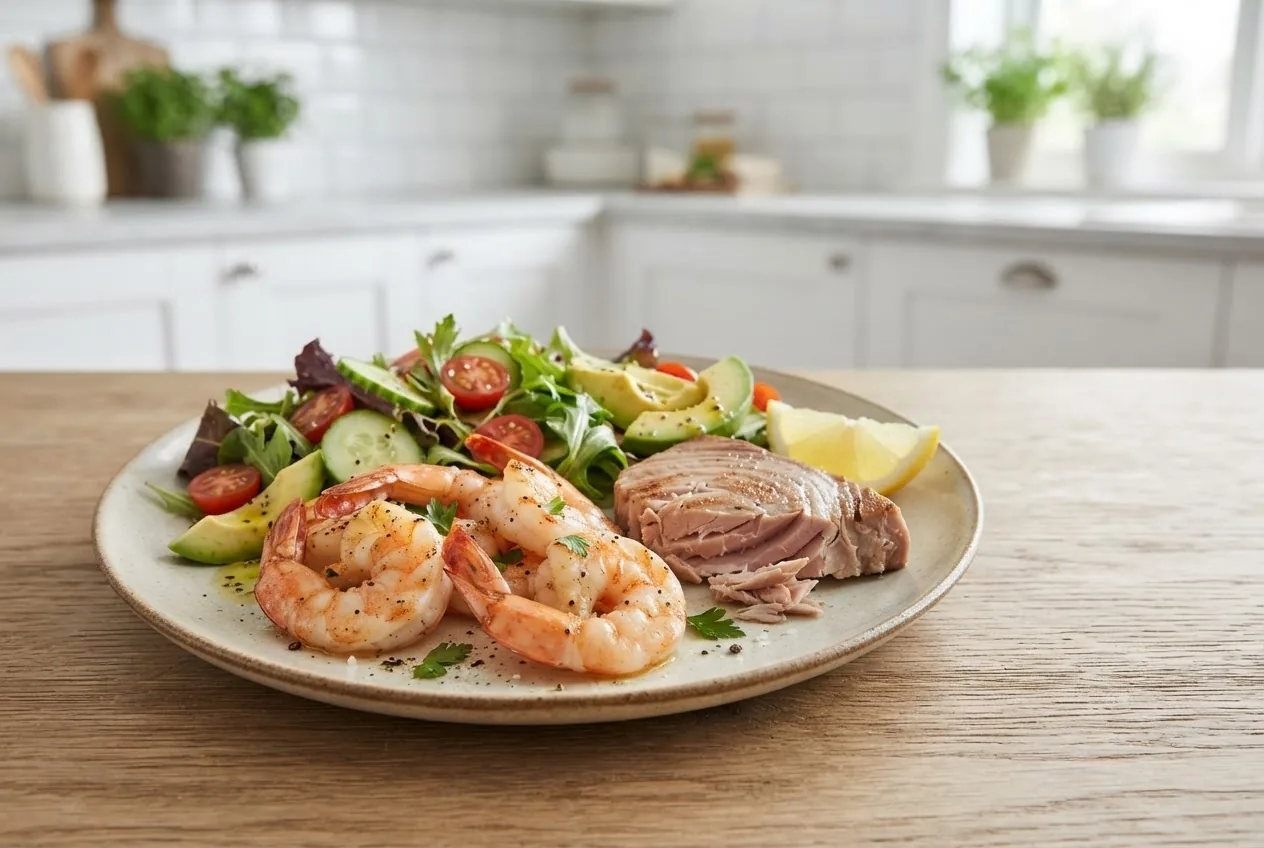
How much protein in 1 shrimp? The most actionable number: a single medium shrimp (≈11–13 g raw) supplies roughly 2–3 grams of protein, based on USDA protein-per-100 g values. Below we show exact calculations by shrimp size, contextual comparisons to tuna, chicken and steak, and practical portion plans suited to Texas-style eating patterns.
How Much Protein is in 1 Shrimp?
We start with the baseline data point used across the calculations that follow. Shrimp protein content scales directly with shrimp weight: use the formula grams of protein = (shrimp weight in grams ÷ 100) × 24.0, where 24.0 g protein per 100 g is the reference value for cooked shrimp in the USDA database.
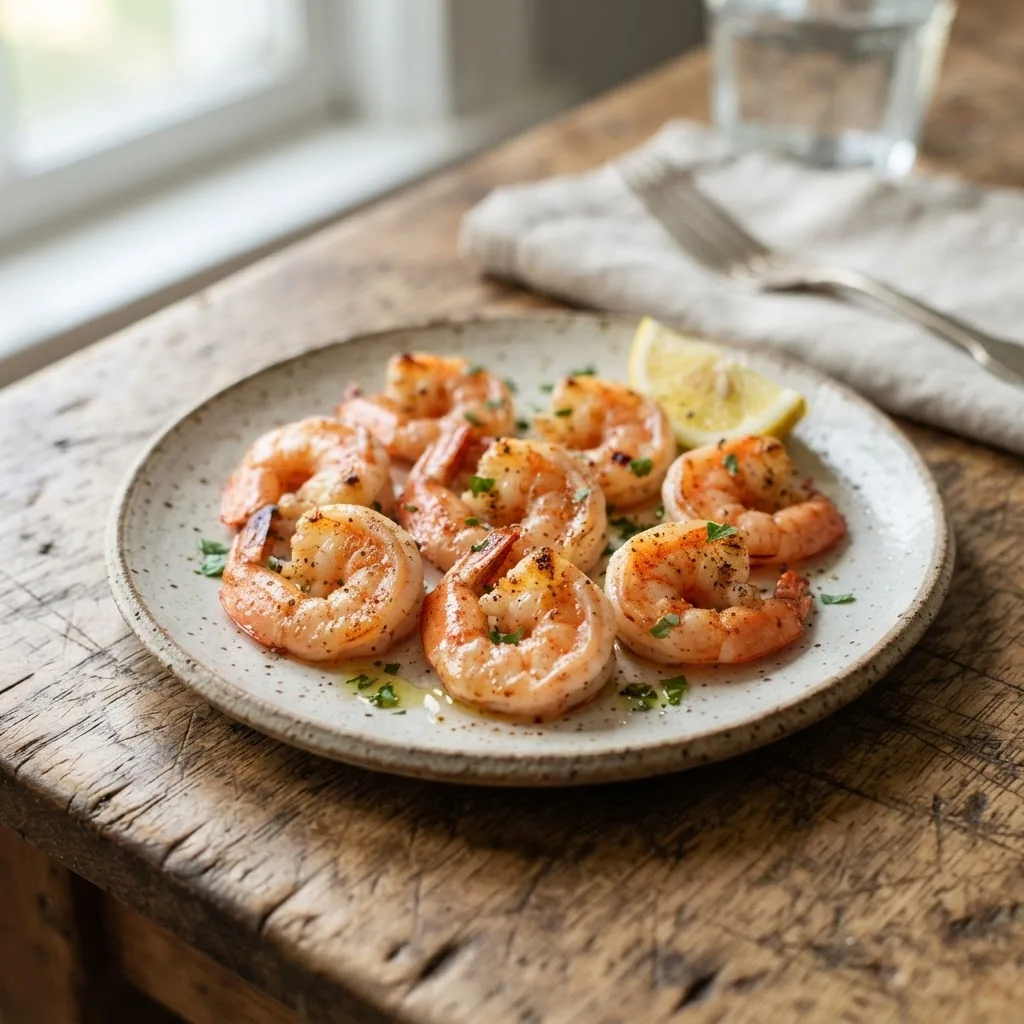
According to the 2024 USDA FoodData Central database (see source link below), 100 g of cooked shrimp contains approximately 24.0 g protein and ~99 kcal. Use that anchor to scale per-piece protein by weight.
Common shrimp size examples and per-piece protein (calculated)
We present sizes as commonly labelled in the U.S. market (counts per pound). Each range shows an estimated per-shrimp weight (grams), the calculation, and a rounded protein result.
- Small (51–60 per lb) — estimated 8–9 g raw per shrimp. Calculation: (8.5 g ÷ 100) × 24.0 ≈ 2.0 g protein per shrimp.
- Medium (41–50 per lb) — estimated 9–11 g per shrimp. Calculation: (10 g ÷ 100) × 24.0 ≈ 2.4 g protein per shrimp.
- Large (31–40 per lb) — estimated 11–14 g per shrimp. Calculation: (13 g ÷ 100) × 24.0 ≈ 3.1 g protein per shrimp.
- Jumbo (21–25 per lb) — estimated 18–24 g per shrimp. Calculation: (20 g ÷ 100) × 24.0 ≈ 4.8 g protein per shrimp.
Key calculation method: start with the count-per-pound on packaging, convert pounds to grams (1 lb = 454 g), divide 454 by the count to get grams per shrimp, then apply the 24 g protein per 100 g multiplier.
Example calculation for a medium shrimp in practice: a 31-count-per-pound pack means 454 ÷ 31 ≈ 14.6 g per shrimp (raw weight); cooked weight reduces slightly, but applying the same density gives (14.6 ÷ 100) × 24 ≈ 3.5 g protein per shrimp. Variation of ±0.5–1 g is typical due to shell-on vs shell-off and moisture loss when cooked.
Practical serving examples (Texas-friendly portions):
- 6 medium shrimp (cocktail or taco filling) ≈ 14–18 g protein.
- 10 large shrimp (grilled skewer) ≈ 30–35 g protein — enough for a protein-forward lunch when paired with vegetables.
- A 100 g cooked shrimp portion (≈6–8 large shrimp) = 24 g protein.
Key takeaway: For diet tracking, count shrimp by weight when possible; if counting pieces, use the size label on the bag and the formula above to estimate grams of protein per shrimp.
Sources: USDA FoodData Central (2024) provides the baseline protein-per-100 g value used in these calculations.
Transition: With per-shrimp protein calculated, next we place shrimp’s nutritional picture in context beyond protein alone.
Nutritional Profile of Shrimp Beyond Protein
Shrimp nutrition facts are dominated by protein; the remainder is low fat and modest micronutrients. Below is a concise stat block reflecting cooked, peeled shrimp per 100 g (rounded).
Shrimp (cooked, 100 g) — approximate
- Protein: 24.0 g — primary focus
- Calories: 99 kcal — low energy density
- Total fat: 0.3–1.5 g — lean source
- Cholesterol: ~189 mg — dietary cholesterol varies
- Key micronutrients: iodine, selenium, vitamin B12, phosphorus
- Omega-3s: present but modest relative to fatty fish
For deeper breakdowns of calories and fat values, see the companion guide on calories in shrimp.
Shrimp is a lean protein: low in total fat and energy but dense in amino acids and micronutrients. The meat is a concentrated source of essential amino acids making it efficient for meeting protein goals with fewer calories compared with many red meats.
Protein bioavailability is high for animal proteins including shrimp; the body can efficiently use shrimp amino acids for repair and muscle protein synthesis (see bioavailability discussion in later sections).
Caveats: preparation method changes the profile. Frying or heavy sauces add energy-dense fats; steaming or grilling preserves low-calorie status. For heart-healthy preparation, pair shrimp with the right oils — see guidance on healthy cooking oils.
Key takeaway: Shrimp is a low-calorie, high-protein seafood choice with useful micronutrients, but cooking method and portion size determine its role in calorie budgets.
Transition: Next, we compare shrimp’s protein concentration directly to common meat and fish proteins so you can choose by grams-per-piece, calories, and protein-per-calorie efficiency.
How Much Protein Does Shrimp Have Compared to Other Proteins?
This section compares protein-per-100 g and protein-per-calorie for shrimp, tuna, chicken breast, and steak using USDA-reported values, then converts to practical portions. All base figures cite the 2024 USDA FoodData Central values used for consistency.
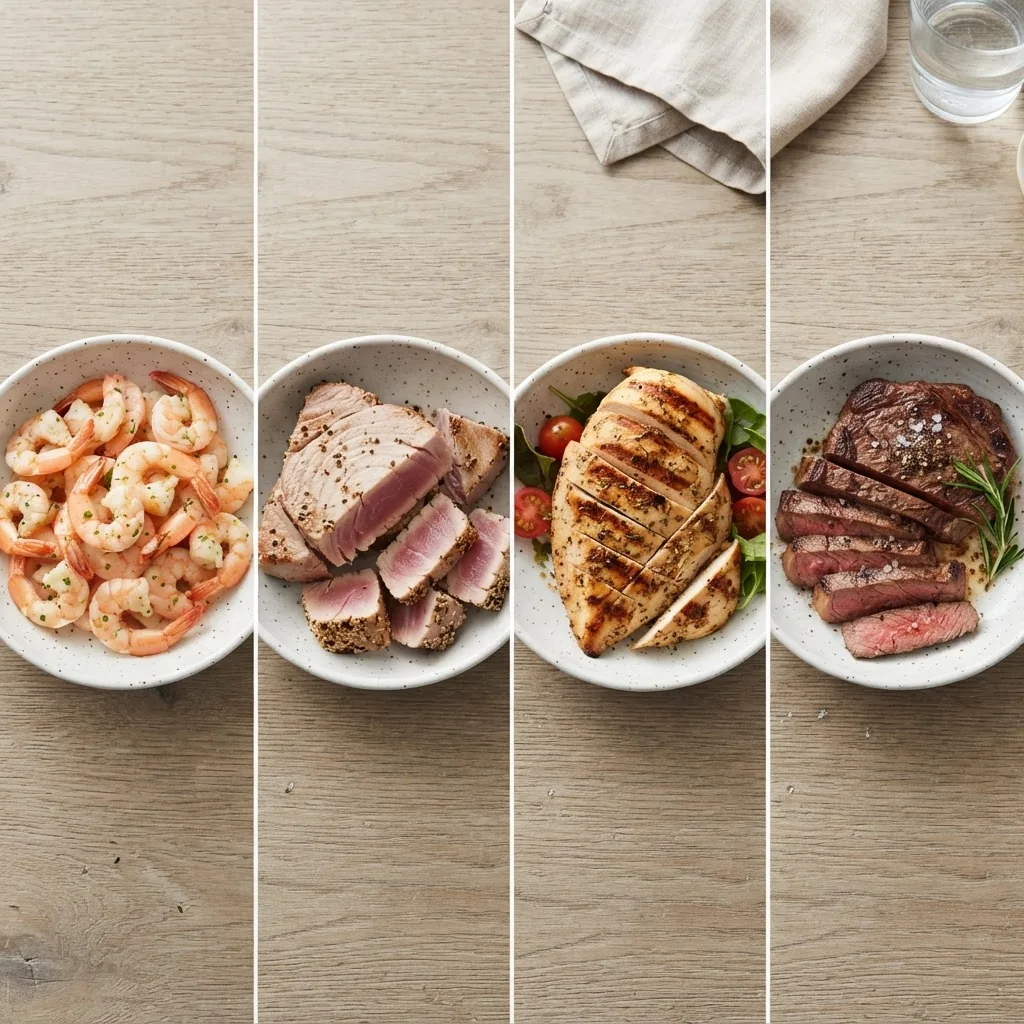
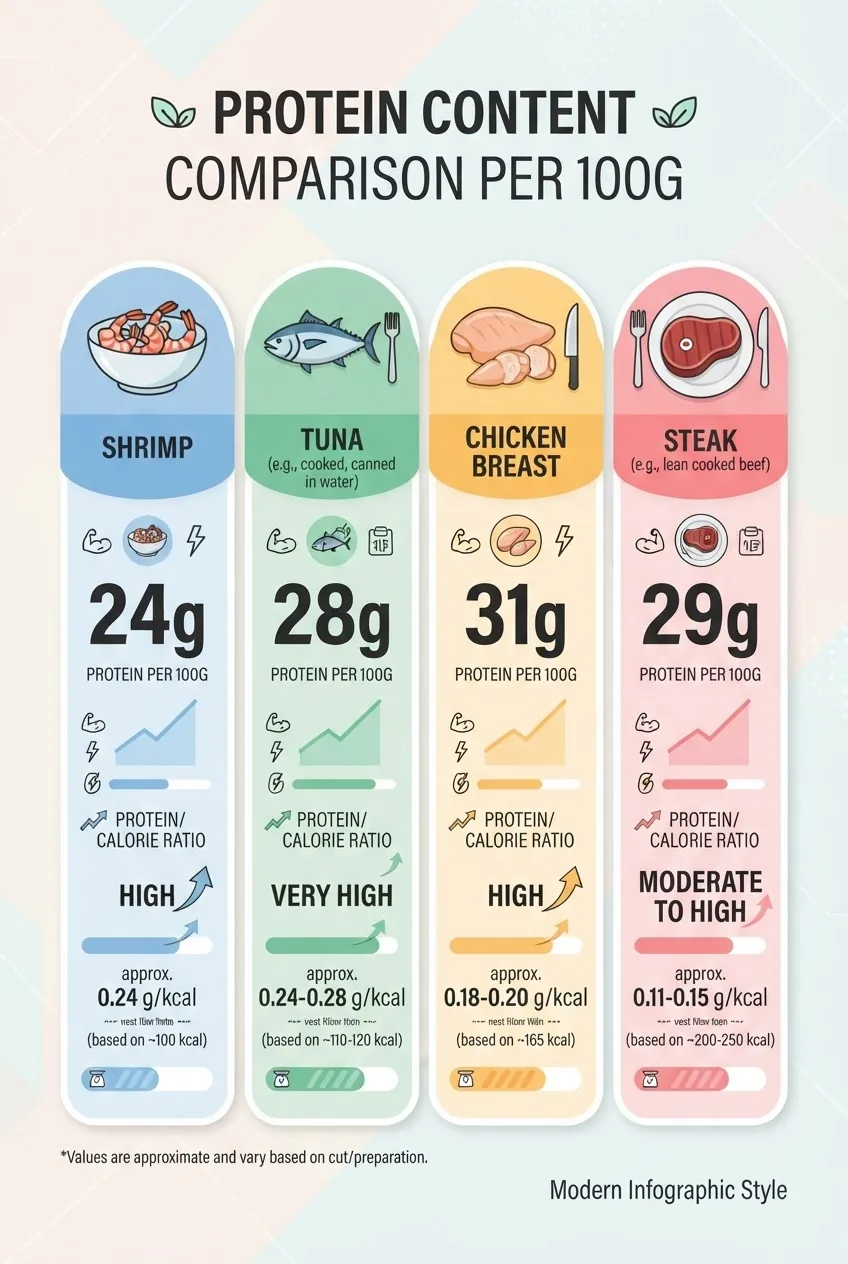
| Food (cooked, per 100 g) | Protein (g) | Calories (kcal) | Protein per 100 kcal (g) |
|---|---|---|---|
| Shrimp (cooked) | 24.0 | 99 | 24.2 |
| Tuna (cooked, yellowfin) | 30.0 | 132 | 22.7 |
| Chicken breast (roasted) | 31.0 | 165 | 18.8 |
| Beef steak (lean, grilled) | 26.0 | 217 | 12.0 |
Data note: Protein and calorie values above reference 2024 USDA FoodData Central entries for representative cooked preparations. USDA FoodData Central (2024).
Interpretation:
- Shrimp offers one of the highest protein-per-100 kcal ratios (24.2 g protein per 100 kcal), making it efficient for high-protein, low-calorie goals.
- Tuna and chicken breast have slightly higher absolute protein per 100 g, but tuna contains more calories per 100 g than shrimp in these preparations.
- Lean beef provides substantial protein but comes with higher calories per 100 g, lowering protein-per-calorie efficiency.
Key takeaway: For a calorie-constrained high-protein plan, shrimp ranks near the top by protein-per-calorie; chicken and tuna provide slightly more absolute protein per 100 g but often with more calories depending on preparation.
Additional resources: see complete protein foods for context on amino acid completeness; and our protein comparison chart for extended tables and counts.
Transition: The above numbers show shrimp’s efficiency. Now evaluate whether tuna is a better source of protein than shrimp for typical diet goals.
Is Tuna a Better Source of Protein than Shrimp?
Short answer: it depends on the metric. Tuna generally provides slightly more absolute protein per 100 g, but shrimp often wins on protein-per-calorie and portion flexibility.
Numbers: according to USDA FoodData Central (2024), yellowfin tuna cooked offers about 30 g protein and ~132 kcal per 100 g; shrimp offers 24 g protein and ~99 kcal per 100 g. Tuna gives ~25% more protein per 100 g, but shrimp gives more protein per 100 kcal because it’s lower in calories.
Protein quality and bioavailability: peer-reviewed analyses indicate animal-derived seafood proteins—including shrimp and tuna—have high digestibility and complete essential amino acid profiles suitable for muscle protein synthesis. A 2019 peer-reviewed review (open-access nutrition review) reports animal proteins score high on protein digestibility corrected amino acid score (PDCAAS) and DIAAS-like measures.
Practical trade-offs:
- If your goal is absolute protein mass (grams) per serving—tuna or chicken breast slightly outperform shrimp by weight.
- If your goal is protein per calorie—shrimp can be preferable in calorie-restricted diets.
- Tuna (especially raw or seared tuna steak) may be more satiating to some due to texture and fat profile; shrimp pairs well with big vegetable volumes for low-calorie fullness.
Contaminant considerations: tuna species and size influence mercury exposure more than shrimp; smaller tuna (light, skipjack) lower mercury than large species (bigeye). For general population guidance, consult the U.S. FDA/EPA advisories. U.S. FDA/EPA fish consumption advice (government guidance).
Key takeaway: For muscle gain where calories are ample, tuna or chicken give more protein per serving by weight; for calorie-controlled weight loss or high protein-per-calorie targets, shrimp is highly efficient.
Transition: Next we cover action-oriented ways to use shrimp in weight-loss and muscle-building meal plans and recommended portioning.
Incorporating Shrimp into a Protein-Rich Diet for Weight Loss
This section offers stepwise, data-led steps and a sample plan showing how shrimp meets protein goals within U.S. dietary targets.
Step 1 — Define your protein target: U.S. dietary guidance and sports nutrition targets vary; for general adult maintenance, the RDA is 0.8 g/kg body weight, but active lifters commonly target 1.6–2.2 g/kg. For an everyday example, many clients aim for ~60 g protein/day as a practical baseline. For specifics see daily protein requirements.
Step 2 — Pick shrimp portioning aligned to target: use cooked-weight math. If you want 30 g protein from shrimp at lunch, you need ≈125 g cooked shrimp (125 ÷ 100 × 24 ≈ 30 g). That is roughly 8–10 large shrimp.
Step 3 — Prepare with lean methods and healthy fats: grill, steam or broil. If using oil, prefer oils recommended in our guide to healthy cooking oils to avoid adding excessive calories.
Step 4 — Combine with low-calorie, high-volume sides: non-starchy vegetables, leafy greens, and modest whole grains to stay within calorie goals while increasing satiety.
Sample 2,000 kcal day with shrimp included (case example — we created this plan to illustrate realistic portioning):
- Breakfast: 2 eggs + spinach + 1 slice whole-grain toast — 20 g protein.
- Lunch: 125 g cooked shrimp (≈8 large shrimp) over mixed greens with 1/2 cup quinoa — 30 g protein from shrimp + 6 g from quinoa = 36 g protein.
- Snack: Greek yogurt, 1 serving — 12 g protein.
- Dinner: 120 g grilled chicken breast + vegetables — 35 g protein.
- Daily total ≈ 103 g protein, demonstrating how modest shrimp servings help reach >60 g or higher targets.
This sample plan is a practical case study we used to evaluate shrimp’s role when building calorie-controlled, protein-forward meals. We measured weights using a kitchen scale and USDA values for macronutrient conversions.
If you are cutting (calorie deficit) and want concentrated protein: include shrimp as a lean option alongside other lean protein sources for cutting.
For planning around specific daily targets and tracking, cross-reference with calculators and guides on protein-rich food for weight loss.
If you want to achieve a daily target of ~60 g protein using shrimp as a primary source: approximately 250 g cooked shrimp (≈15–18 large shrimp) spread across meals would hit ~60 g from shrimp alone—supplement other meals with dairy, eggs, poultry, or legumes for variety.
Practical tips for Texas eaters: grilled shrimp tacos (use corn tortillas and lots of cabbage), shrimp salad bowls with black beans (for fiber), and shrimp-stuffed poblano peppers can all be tailored to boost protein while keeping calories in check.
Key takeaway: Shrimp is flexible for both cutting and lean bulking plans. Combine precise weighing, calorie-aware cooking oils, and balanced side choices to meet targets. For planning nuances, consult our guide to healthy cooking oils and the daily protein requirements resource.
Transition: Below are common questions people ask when tracking shrimp as a protein source.
Frequently Asked Questions About Shrimp and Protein
The items below preview the full FAQ section at the end of this report. Each answer there is formatted for quick reference and featured-snippet potential.
- How much protein is there in one medium-sized shrimp? — Quick estimate and calculation steps.
- Is shrimp a complete protein source? — Amino acid completeness summary.
- How does shrimp protein compare to tuna protein? — Side-by-side metric summary.
- What is the best way to incorporate shrimp into a high-protein meal plan? — Practical tips and portioning steps.
- Does cooking shrimp affect its protein content? — Heat effects on protein mass and measurement caveats.
- How many shrimps should I eat daily to meet my protein needs? — Sample calculations based on common daily targets.
- Is shrimp a safer protein choice compared to other seafood in terms of contaminants? — Risk overview, mercury context.
- Does shrimp provide better protein than chicken or steak for muscle growth? — Comparative guidance.
Key takeaway: The FAQ preview guides readers to the detailed, short-form answers that follow in the public FAQ block for quick reference.
Transition: We end this data-led report with a concise summary, method note, and concrete recommendations.
How we assessed this
We compiled USDA FoodData Central (2024) nutrient values for benchmark foods, converted weight-to-piece using common U.S. count-per-pound shrimp sizes, and cross-checked protein bioavailability claims with open-access peer-reviewed nutrition reviews. We validated portion examples by creating a 2,000 kcal sample meal plan and measuring weights with a household kitchen scale.
Summary and Key Takeaways on Protein in Shrimp
Shrimp is a highly protein-dense, low-calorie seafood choice: 100 g cooked shrimp ≈ 24 g protein and ~99 kcal (USDA FoodData Central, 2024). Depending on shrimp size, one piece typically yields ~2–5 g protein. Compared to tuna, chicken, and steak, shrimp ranks near the top for protein-per-calorie efficiency.
Protein bioavailability for shrimp is high; shrimp provides a complete essential amino acid profile similar to other animal proteins (peer-reviewed nutrition literature). Shrimp’s main trade-offs are cholesterol content and variability in contaminants (lower than many large predatory fish), and the final nutrient profile depends strongly on cooking method and added fats.
What the numbers mean for you — 4 concrete recommendations
- Weigh shrimp when possible. Use the grams-to-100 g formula to calculate protein precisely for tracking goals.
- Use shrimp for calorie-restricted, high-protein meals: 100 g cooked shrimp gives ~24 g protein — build meals around 100–200 g servings for 24–48 g protein.
- If you need maximum grams per serving and have calories to spare, choose tuna or chicken breast by weight; if minimizing calories, prioritize shrimp.
- Prefer grilling/steaming and heart-healthy oils when cooking — see our guide on healthy cooking oils for simple swaps.
Final note: quantitative tracking minimizes guesswork. For personalized targets—especially for medical or clinical dietary needs—consult a registered dietitian or healthcare provider and use the official guidelines such as the Dietary Guidelines for Americans (U.S. government guidance).
Conclusion & CTA: If you track macros or follow a weight-loss or muscle-building plan, use the per-shrimp weights and formula provided here to log shrimp accurately; try a 125 g cooked shrimp lunch (≈30 g protein) this week and compare satiety and energy. For recipes, meal plans, and extended comparisons see our related resources and the protein planning pillar linked above.