

A human diet for adulthood prioritizes balanced macronutrients, adequate micronutrients, portion control, and individual dietary considerations to support health, weight management, and chronic-condition prevention; adults should aim for whole foods, varied plant and lean animal sources, moderate processed foods, and adjustments for age, activity, and medical needs.
What is the practical definition of a healthy human diet for adults?
A healthy human diet for adults is a consistent pattern of eating that provides sufficient energy, essential nutrients, and variety to maintain health, function, and quality of life while minimizing disease risk.
Macronutrient: a nutrient required in large amounts—protein, carbohydrate, or fat—that supplies energy or building blocks for the body.
Key elements are:
- Balanced macronutrient distribution tailored to goals (weight, activity, metabolic health).
- Sufficient micronutrients (vitamins and minerals) to meet RDAs or individualized needs.
- Minimally processed foods, prioritizing whole grains, vegetables, fruits, legumes, nuts, lean proteins, and healthy fats.
- Hydration and sensible portion sizes across meals and snacks.
How much protein, carbohydrate and fat do adults need?
Adults generally need 10–35% of calories from protein, 45–65% from carbohydrates, and 20–35% from fats, adjusted for activity, age, and health conditions.
Calorie: a unit of energy; dietary calories (kcal) measure energy the body uses from food.
Use these practical ranges as starting points:
- Protein: 0.8–1.2 g/kg body weight for most adults; 1.2–2.0 g/kg for older adults, athletes, or during recovery.
- Carbohydrate: 130 g/day minimum for brain glucose needs; higher for endurance athletes.
- Fat: emphasize unsaturated fats; limit saturated fat to under 10% of calories and trans fats to near zero.
Adjust proportionally: for a 2,000 kcal plan, a moderate split is 100–150 g protein, 225–325 g carbohydrate, and 44–78 g fat depending on the chosen percentage.
What are macronutrients and why do they matter?
Macronutrients—proteins, carbohydrates, and fats—provide energy, structure, and regulatory molecules; their balance affects weight, satiety, blood sugar, and chronic disease risk.
Micronutrient: a vitamin or mineral required in small amounts for metabolic functions, immune support, and tissue maintenance.
Roles summarized:
- Protein: repairs tissues, makes enzymes/hormones, and supports immune function.
- Carbohydrate: primary energy source; fiber—a non-digestible carbohydrate—supports gut health and cholesterol control.
- Fat: energy storage, cell membrane integrity, and absorption of fat-soluble vitamins (A, D, E, K).
Choose quality sources: lean meats, legumes, dairy, whole grains, fruits, vegetables, nuts, seeds, and vegetable oils; avoid excessive refined sugars and industrial trans fats.
Which micronutrients are essential for adults and when should I watch them?
Adults must monitor key micronutrients—vitamin D, calcium, iron, B12, potassium, and magnesium—because deficiencies cause specific functional problems and vary by life stage and medical condition.
| Micronutrient | Function | At-risk groups |
|---|---|---|
| Vitamin D | Bone health, immune modulation | Older adults, limited sun exposure |
| Calcium | Bone strength, muscle function | Postmenopausal women, low-dairy diets |
| Iron | Oxygen transport (hemoglobin) | Premenopausal women, vegetarians |
| Vitamin B12 | Nervous system, red blood cell formation | Older adults, vegans |
| Potassium | Fluid balance, blood pressure control | High sodium diets, some medications |
| Magnesium | Muscle & nerve function, energy metabolism | Poor diets, gastrointestinal disorders |
Get micronutrients from food first; supplement only when labs, diet analysis, or clinical need indicate. For tailored dosing, consult a registered dietitian or clinician.
How many calories should an adult eat each day?
Individual calorie needs depend on age, sex, weight, height, and activity; typical ranges for adults are 1,600–3,000 kcal/day: lower for sedentary women, higher for active men and athletes.
Basal metabolic rate (BMR): the calories your body needs at rest to maintain basic physiological functions.
Estimate steps:
- Calculate BMR using a validated equation (e.g., Mifflin–St Jeor).
- Multiply BMR by an activity factor (1.2 sedentary to 1.9 very active) to get total energy expenditure (TEE).
- Adjust calories ±250–500 kcal/day for gradual weight loss/gain (0.5–1 lb/week target).
Worked example: a 35-year-old woman, 165 cm, 70 kg, moderately active. Mifflin–St Jeor BMR ≈ 10*kg + 6.25*cm − 5*age − 161 = 700 + 1031.25 − 175 − 161 ≈ 1395 kcal; activity factor 1.55 → TEE ≈ 2,162 kcal/day.
How do I build a balanced plate and plan daily meals?
Build a balanced plate by filling half with non-starchy vegetables and fruits, one-quarter with lean protein, and one-quarter with whole grains or starchy vegetables, plus a small portion of healthy fats and a serving of dairy or alternative.
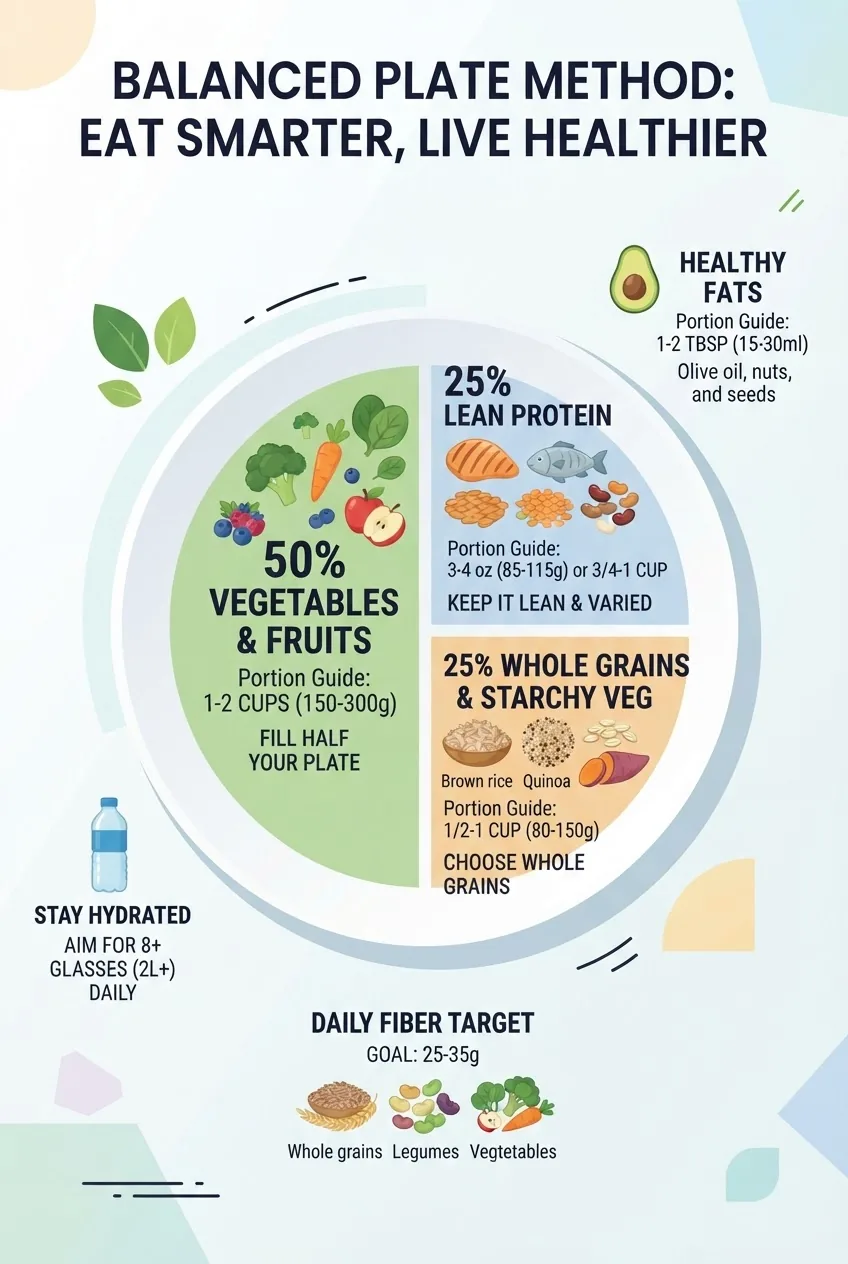
Meal-planning checklist:
- Select a protein source: lean meat, fish, tofu, legumes, eggs, or dairy.
- Choose whole-grain carbohydrate: brown rice, quinoa, oats, whole-wheat bread.
- Include 1–2 servings of vegetables at each meal and fruit as a side or snack.
- Add 1–2 tbsp of healthy fats: olive oil, avocado, nuts, or seeds.
- Practice portion control with hands or measuring tools: palm-sized protein, cupped-hand carbs, fist-sized veggies.
Plan weekly menus with batch cooking, frozen vegetables for consistency, and a shopping list focused on perishable produce and shelf-stable whole grains/legumes.
Which diet patterns have the best evidence for adult health?
Dietary patterns with strongest evidence are Mediterranean and DASH for cardiovascular and metabolic health; vegetarian and plant-forward diets also lower chronic disease risk when well planned.
| Diet Pattern | Characteristics | Evidence-based benefits |
|---|---|---|
| Mediterranean | High vegetables, fruits, olive oil, whole grains, fish | Lower CVD, improved metabolic markers |
| DASH | Low sodium, high potassium, fruits, veg, low-fat dairy | Reduced blood pressure, heart disease risk |
| Vegetarian/Plant-forward | Mostly plants, limited or no meat | Lower BMI, reduced diabetes risk when nutrient-complete |
| Low-carb/Ketogenic | Reduced carbs, higher fat/protein | Short-term weight loss and glycemic control; long-term safety varies |
Select a pattern that matches personal preferences and medical needs; combine Mediterranean principles with DASH elements for broad applicability. For practical tips, see our supporting guide 10 Ways to Eat Better and the pillar page on balanced meals Nutritionally Complete Meal Guide.
How should adults with diabetes manage their diet?
Adults with diabetes should prioritize consistent carbohydrate distribution, focus on high-fiber low-glycemic carbohydrates, adequate protein, and healthy fats while monitoring blood glucose response and adjusting medication in consultation with clinicians.
Glycemic index: a scale that ranks carbohydrate-containing foods by how much they raise blood glucose compared with a reference food.
Practical rules:
- Prefer whole grains, legumes, non-starchy vegetables, and berries over refined grains and sweets.
- Balance carbohydrate with protein and fat to blunt post-meal glucose spikes.
- Use carbohydrate counting or plate method for meal planning; typical carb targets vary by insulin regimen and goals.
- Regularly review HbA1c and glucose logs with your care team and adapt diet accordingly.
For structured meal plans and sample menus, consult our diabetic meal planning guide: Diabetic Food Chart and Meal Plan Guide.
How do dietary needs change with aging?
With aging, adults generally need fewer calories but more protein, vitamin D, vitamin B12, calcium, and fiber to maintain muscle mass, bone health, and digestive function.
Key adjustments:
- Increase protein per meal (20–40 g) to counter sarcopenia (age-related muscle loss).
- Monitor vitamin B12 absorption—consider fortified foods or supplements if deficient.
- Boost soluble fiber and water intake to prevent constipation and improve cholesterol.
- Prefer nutrient-dense foods to meet vitamin and mineral needs with lower energy intake.
Older adults should have regular nutrition screening and a medication review, since some drugs affect appetite and nutrient absorption.
What dietary changes help lower blood pressure and cholesterol?
To lower blood pressure and cholesterol, adopt the DASH or Mediterranean pattern: increase fruits, vegetables, whole grains, lean proteins and unsaturated fats; reduce sodium, saturated fats, and added sugars.
Actionable steps:
- Limit sodium to under 2,300 mg/day; under 1,500 mg/day for better BP control when advised.
- Replace saturated fat with monounsaturated/polyunsaturated fats (olive oil, nuts, fatty fish).
- Eat fatty fish (2 servings/week) for omega-3 benefits.
- Increase soluble fiber (oats, beans, apples) to reduce LDL cholesterol.
How should adults plan for weight loss or maintenance safely?
For safe weight loss, create a moderate calorie deficit (250–500 kcal/day), prioritize protein and fiber for satiety, include resistance exercise to preserve lean mass, and aim for 0.5–1 lb/week long-term.
Evidence-based tactics:
- Track intake and activity for 1–2 weeks to establish a baseline.
- Implement small, sustainable changes: swap sugary drinks, reduce refined carbs, increase vegetables.
- Use structured meals and regular meal timing to prevent overeating.
- Strength training 2–3 times weekly preserves muscle and supports metabolic rate.
For clinically significant obesity or comorbidities, coordinate with clinicians for pharmacotherapy or bariatric referrals when appropriate.
What supplements should adults consider and when are they necessary?
Supplements are necessary only for documented deficiencies, restrictive diets, or life stages with higher needs—common examples include vitamin D, B12 (for vegans/older adults), iron (if deficient), and calcium when dietary intake is inadequate.
Principles for supplements:
- Prefer food sources first; test blood levels before starting routine high-dose supplements.
- Use evidence-based dosing and avoid megadoses unless clinically indicated.
- Consider a general multivitamin if diet is inconsistent, but know it’s not a substitute for a healthy diet.
For targeted recommendations refer to our supplements guides: Best Supplements Guide and Best Supplements for Men.
How do food allergies and intolerances change dietary planning?
Allergies require strict avoidance of the culprit food and emergency planning for reactions; intolerances require symptom-managed avoidance or substitution while ensuring nutrient adequacy through alternatives.
Definitions:
Food allergy: an immune-mediated reaction to specific food proteins that can be life-threatening.
Food intolerance: a non-immune adverse reaction to food, often due to enzyme deficiency or sensitivity (e.g., lactose intolerance).
Management steps:
- Obtain diagnostic testing when necessary (skin tests, IgE, oral food challenges) and written action plans for allergies.
- Find nutrient-equivalent substitutes (calcium-fortified plant milk for dairy allergy; B12-fortified foods for vegan diets).
- Coach family and caregivers on label reading and cross-contact avoidance.
How do I interpret food labels and nutrition facts to make better choices?
Read the Nutrition Facts panel for serving size, calories, percent daily values, and amounts of saturated fat, trans fat, sodium, added sugars, fiber, and protein to compare products and pick nutrient-dense options.
Label reading quick guide:
- Compare similar serving sizes; adjust values to your typical portion.
- Limit foods high in added sugars, saturated fat, and sodium.
- Prefer higher fiber and protein content per calorie for satiety and nutrition.
- Use ingredient lists to identify whole-food ingredients and avoid long lists of unfamiliar additives.
For low-sodium shopping, target products with 140 mg sodium or less per serving and use the % Daily Value (DV) as an easy benchmark: 5% DV or less is low; 20% DV or more is high.
How should adults with kidney disease or other medical conditions modify their diet?
Medical conditions require individualized dietary modifications—kidney disease often limits protein, potassium, phosphorus and sodium; heart failure restricts sodium and fluid; liver disease affects protein and fat handling—follow professional guidance and regular lab monitoring.
Steps to manage condition-specific diets:
- Receive an individualized meal plan from a renal, cardiac, or hepatic dietitian.
- Track nutrient targets daily and adjust medications with clinicians.
- Use low-sodium cooking techniques and phosphate binders when prescribed.
Never make major diet changes without clinician approval for chronic disease—changes can interact with medications and lab results.
How can adults with limited budget eat a nutritious human diet?
Eating nutritiously on a budget is possible by prioritizing whole grains, canned/frozen produce, legumes, eggs, in-season produce, and modest portions of lean proteins while planning meals and reducing food waste.
Money-saving tactics:
- Buy whole grains and legumes in bulk; use frozen vegetables for price and shelf-life benefits.
- Choose cheaper protein sources: eggs, canned tuna/salmon, beans, lentils, and small portions of poultry.
- Plan meals around sale items and cook large batches to refrigerate or freeze.
- Limit convenience foods which often cost more per nutrient.
Use community resources—SNAP, WIC, food banks—and local farmers’ market discounts or community-supported agriculture (CSA) programs when available.
How should active adults time meals around workouts?
For most adults, eat a mixed carbohydrate-protein meal 2–3 hours before exercise or a small carbohydrate snack 30–60 minutes prior; after workouts, consume protein (20–30 g) and carbohydrates within 1–2 hours to support recovery.
Practical timing:
- Pre-workout: 1–3 g/kg carbs 1–4 hours before long endurance sessions; small snacks (e.g., 30–60 g carbs) for shorter efforts.
- Post-workout: 0.3–0.5 g/kg protein and 0.5–1.0 g/kg carbohydrate for glycogen resynthesis and muscle repair.
- Hydrate with water for most sessions; use electrolyte drinks for long or hot workouts.
Adjust by tolerance and sport; strength athletes may prefer higher protein with consistent timing around training sessions.
How do I create a one-week sample meal plan for an average adult?
A one-week plan should meet calorie and macronutrient targets, include variety across food groups, and be practical for shopping and preparation with simple recipes and leftovers.
Sample 2,000 kcal/day framework (daily):
- Breakfast: oatmeal with 1 cup berries, 1 tbsp nuts, and 1 scoop protein or Greek yogurt.
- Lunch: mixed green salad with 4–6 oz grilled chicken or chickpeas, whole-grain roll, olive oil vinaigrette.
- Snack: piece of fruit and 1 oz almonds.
- Dinner: 4–6 oz baked salmon or tofu, 1 cup quinoa, 2 cups mixed roasted vegetables.
- Optional: small evening snack if needed—cottage cheese or hummus with carrots.
Repeat and swap items for variety—use batch-cooked grains, roasted vegetables, and grilled proteins across multiple meals to reduce cooking time and food waste. For a weight-loss version, reduce portion sizes of grains and increase non-starchy vegetables.
How do food sensitivities affect long-term nutrition and what are practical substitutions?
Food sensitivities can create long-term nutrient gaps if major food groups are removed; practical substitutions maintain nutrient balance—fortified alternatives, diverse plant proteins, and targeted supplements when necessary.
Common substitutions:
- Dairy-free: fortified plant milk, leafy greens, tofu for calcium and vitamin D.
- Gluten-free: quinoa, brown rice, certified gluten-free oats for fiber and B vitamins.
- Egg-free: chia/flax egg substitutes in baking; legumes and soy-based products for protein.
Monitor lab values like iron, B12, calcium, and vitamin D when major foods are eliminated, and work with a dietitian to design a nutrient-complete eating plan.
What are practical grocery-shopping and cooking strategies for adherence?
To improve adherence, shop with a list based on planned menus, prioritize whole-food perimeter items, batch-cook staples, keep healthy snacks visible, and practice simple recipes that fit time and skill constraints.
Actionable list-making and cooking tips:
- Create a rotating 2–4 week meal plan and shopping list to reduce decision fatigue.
- Batch-cook proteins and grains, portion to-go meals in reusable containers, and freeze extras.
- Use sheet-pan dinners, slow-cooker recipes, and one-pot meals for minimal cleanup.
- Prep vegetables and fruit for quick access and reduce barriers to eating them.
How do I know when to consult a registered dietitian or clinician?
Consult a registered dietitian or clinician when you have chronic disease, unexplained weight change, nutrient deficiency, complex food restrictions, or when you need a personalized plan for performance, pregnancy, or recovery.
Situations requiring professional help:
- New or poorly controlled diabetes, kidney disease, or heart failure.
- Significant unintended weight loss or gain (>5% body weight in 3–6 months).
- Persistent gastrointestinal symptoms, eating disorders, or malabsorption.
- Desire for a medical nutrition therapy plan (pregnancy, lactation, competitive sports).
For medical questions deserving quick official resources, refer to authoritative guidance such as the CDC’s nutrition pages https://www.cdc.gov/nutrition.
What are common barriers to improving diet and how do I overcome them?
Common barriers include time, cost, taste preferences, habits, and misinformation; overcome them with planning, small gradual changes, accessible recipes, social support, and evidence-based education.
Strategies mapped to barriers:
- Time: use batch cooking, frozen produce, and simple meals with few ingredients.
- Cost: emphasize beans, eggs, frozen vegetables, and whole grains; plan around sales.
- Taste/habits: make gradual flavor shifts (e.g., use herbs, citrus, and spices instead of salt/sugar).
- Misinformation: rely on registered dietitians, peer-reviewed sources, and government guidance.
How does alcohol affect adult nutrition and safe consumption limits?
Alcohol provides empty calories, can impair nutrient absorption, and increases health risks; moderate consumption is defined as up to 1 drink/day for women and up to 2 drinks/day for men, with individual adjustments for health conditions.
Practical guidance:
- One standard drink = 14 g pure alcohol (~12 oz beer, 5 oz wine, or 1.5 oz distilled spirits).
- Limit binge drinking and avoid alcohol when pregnant, on interacting medications, or with certain medical conditions.
- Account for alcohol calories in daily intake and choose lower-calorie mixers when drinking.
How effective are fad diets and how to evaluate them?
Most fad diets promise rapid results but lack long-term evidence; evaluate by safety, nutrient adequacy, sustainability, peer-reviewed evidence, and alignment with personal health goals.
Red flags for fad diets:
- Elimination of entire food groups without medical reason.
- Claims of rapid cures, rigid rules, or proprietary supplements required for success.
- Lack of clinical trial data or short-term only results.
Prefer approaches supported by research: calorie control, balanced macronutrients, emphasis on whole foods, and behavior change techniques for long-term adherence.
What role does sleep and stress play in adult nutrition?
Poor sleep and chronic stress disrupt hunger hormones (leptin, ghrelin), increase cravings for energy-dense foods, and impair glucose metabolism—improving sleep and stress management supports dietary goals.
Practical integrative tips:
- Prioritize 7–9 hours sleep; maintain consistent sleep timing for appetite regulation.
- Use stress-reduction techniques (breathwork, mindfulness, activity) to reduce emotional eating.
- Regular physical activity improves sleep quality and metabolic health.
How do I adapt a human diet for pregnancy and lactation?
During pregnancy/lactation, increase calories modestly (about +300 kcal/day average in pregnancy, +450–500 kcal/day during breastfeeding), and ensure sufficient folate, iron, iodine, calcium, vitamin D, and DHA for fetal and infant development.
Key nutrient actions:
- Take a prenatal vitamin with folic acid and iron as recommended by clinicians.
- Consume safe sources of DHA (low-mercury fish or supplements) for fetal brain development.
- Monitor weight gain targets by pre-pregnancy BMI using clinician guidance.
How can adults track progress and adjust their human diet over time?
Track progress with objective measures—weight, waist circumference, strength/performance, lab markers (lipids, glucose, nutrient levels)—and adjust calorie and macronutrient targets based on trends and goals every 4–12 weeks.
Tracking tools and cadence:
- Weekly weight and biweekly body measurements; monthly strength or performance checks.
- Food logs or apps for short intervals to identify patterns; avoid constant calorie logging long-term if it harms relationship with food.
- Check labs (lipids, HbA1c, vitamin D, B12, iron) annually or as recommended.
Make incremental changes—adjust calories by 100–200 kcal, modify meal composition, and reassess over a month before major further changes.
What are evidence-based tips for maintaining long-term dietary change?
Long-term change is sustained by realistic goals, habit formation, environmental control, social support, and periodic professional review; small consistent changes beat drastic short-term efforts for lasting results.
Behavior-change tactics:
- Set SMART goals (Specific, Measurable, Achievable, Relevant, Time-bound).
- Use implementation intentions: specify when, where and how to act (e.g., “On Monday, I cook quinoa for dinner”).
- Modify food environment—keep produce visible, limit trigger foods at home.
- Schedule regular follow-ups with a dietitian or accountability partner.
Where can I find reliable resources and further reading on adult nutrition?
Reliable resources include national agencies, professional dietetic bodies, and peer-reviewed journals; use registered dietitians and official guidelines for clinical or detailed planning.
Start with:
- CDC nutrition pages for public guidance: https://www.cdc.gov/nutrition.
- Academy of Nutrition and Dietetics for professional resources and locating a registered dietitian.
- Our related articles: What Should I Be Eating Everyday, Meal Plans Guide, and Healthy Grocery List Guide.
Frequently Asked Questions
What is the simplest way to start improving my human diet today?
Start by adding one extra serving of vegetables to two meals per day, replacing sugary drinks with water, and swapping refined grains for whole grains; these actions increase fiber, improve satiety, and lower added sugars quickly without complex planning.
How much protein should an average adult eat daily to prevent muscle loss?
An average adult should aim for 0.8–1.2 g/kg body weight daily; older adults or those resistance-training should target 1.2–2.0 g/kg to preserve or build muscle, split across meals for optimal synthesis.
Can I get all necessary nutrients from a plant-based human diet?
Yes—properly planned plant-based diets supply most nutrients, but attention to vitamin B12, iron, calcium, vitamin D, iodine, and omega-3s is required; fortified foods and targeted supplements are often necessary.
How quickly will dietary changes affect my blood pressure or cholesterol?
Meaningful reductions in blood pressure and LDL cholesterol can appear within 4–12 weeks after adopting DASH- or Mediterranean-style diets, combined with sodium reduction and weight loss where relevant; individual responses vary.
What are safe calorie deficits for sustainable weight loss?
A safe calorie deficit is about 250–500 kcal per day, producing roughly 0.5–1 pound weight loss per week; larger deficits risk lean mass loss and are harder to sustain long-term without medical supervision.
When should I use supplements versus food-first approaches?
Use supplements when laboratory-confirmed deficiencies, restrictive diets, or life-stage needs exist; otherwise prioritize nutrient-dense foods and only supplement based on professional advice to avoid excess or interactions.
How do I adapt my diet if I have high blood sugar but no diabetes diagnosis?
Reduce refined carbohydrates and added sugars, increase fiber-rich whole foods, maintain consistent meal timing, prioritize protein and healthy fats, and monitor fasting glucose periodically; see a clinician if values remain elevated.
Are meal delivery services a practical option for healthy adult nutrition?
Meal delivery services can improve adherence by providing portion-controlled, nutritionally balanced meals; evaluate labels for calories, sodium, and ingredient quality and choose services that match your dietary needs and budget.