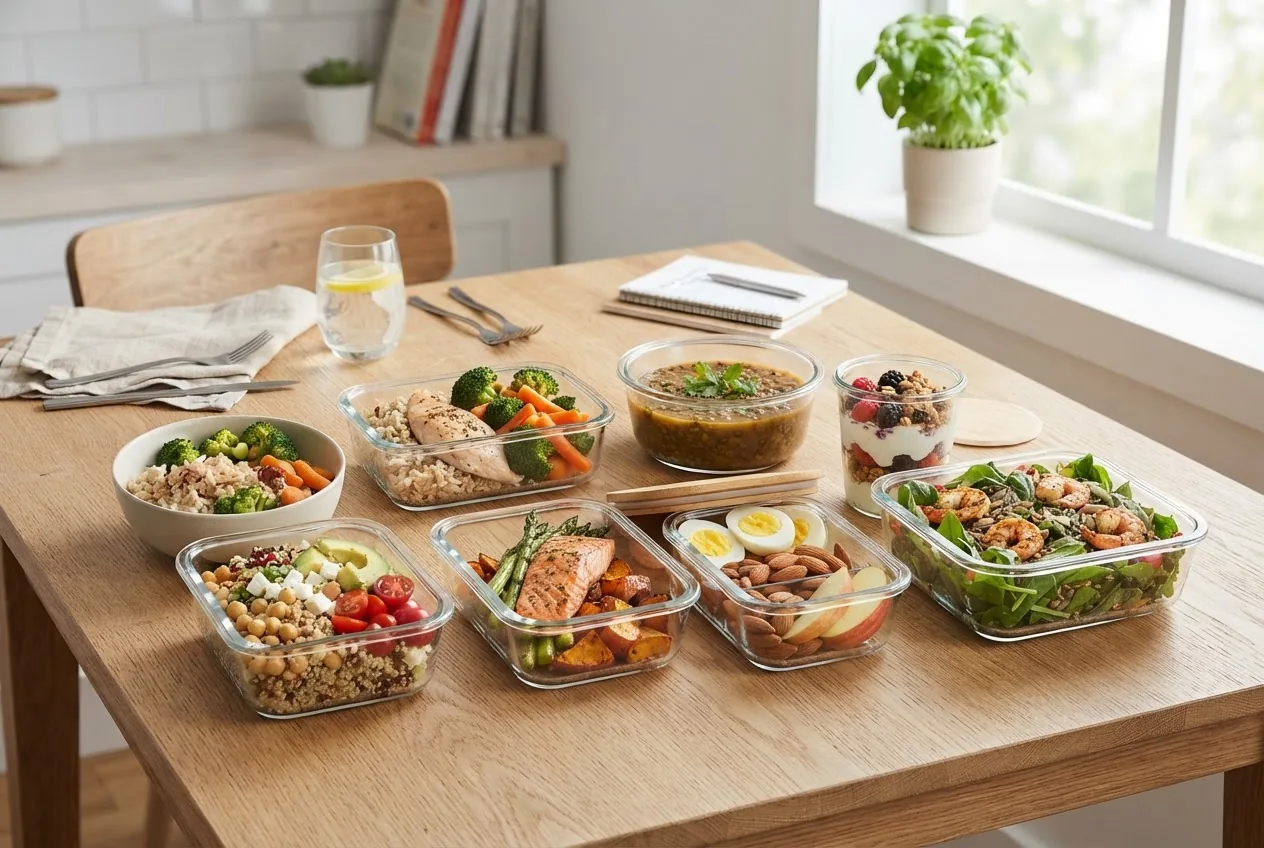
7 day diet menu to lose weight — by the end of this hands-on guide you’ll have a complete, calorie-controlled week of breakfasts, lunches, dinners and snacks, a concrete meal-prep plan that takes two 90-minute prep sessions, a grocery shopping list, and a sample calorie/macro tracking walkthrough. Time required: about 3 hours planning and 2 two-hour prep sessions; skill level: beginner to intermediate cook.
Introduction to the 7 Day Diet Menu for Weight Loss
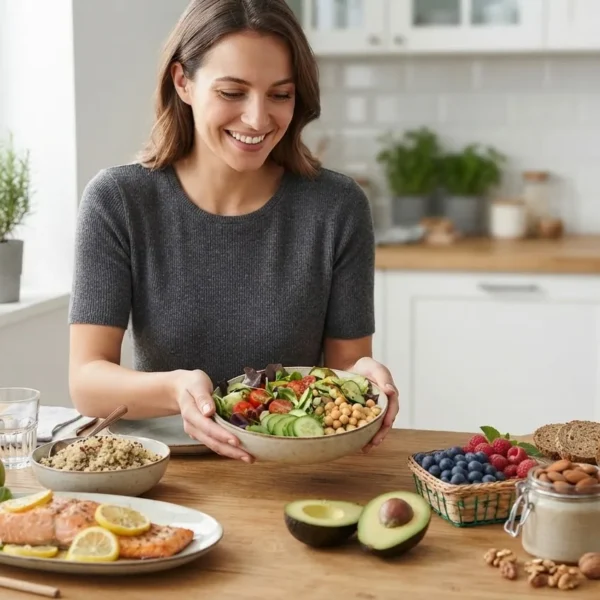
This guide is a practical, region-conscious seven day eating plan designed to help you lose weight safely in one week while building routines for longer-term change. It focuses on simple weight loss meals, clear calorie targets, and meal prep to lose weight efficiently—ideal for busy people in Texas who want quick wins without complex recipes.
Why follow this plan? It compresses proven quick weight loss strategies into a structured daily menu, with portion control, macro balance, hydration, and meal timing. For foundational advice on healthy routines that support this plan, review our essential diet tips for healthy eating and for additional meal-plan tactics see meal plan for weight loss strategies.
Before you start
- Prerequisites: basic kitchen tools (chef’s knife, cutting board, 2 medium pans, sheet pan, 6 glass storage containers), food scale (0–5,000 g), measuring cups/spoons.
- Time: 90 minutes planning + two 90–120 minute prep sessions (mid-week refresh 45 minutes).
- Materials: weekly grocery list (provided), reusable containers, labeled masking tape, portable protein cooler for lunches.
- Medical: consult a clinician if you have heart disease, diabetes, kidney disease, or are pregnant.
Transition: With basics ready, move into the core steps to plan, shop, prep, and track your week.
- Plan daily calories and macros: Decide your target calorie deficit (typically 500–700 kcal/day below maintenance for safe short-term loss). Use a calculator or our calorie calculator guide. Aim for ~1,200–1,800 kcal/day depending on sex, weight and activity; protein 25–30% calories, carbs 35–45%, fat 25–35%.
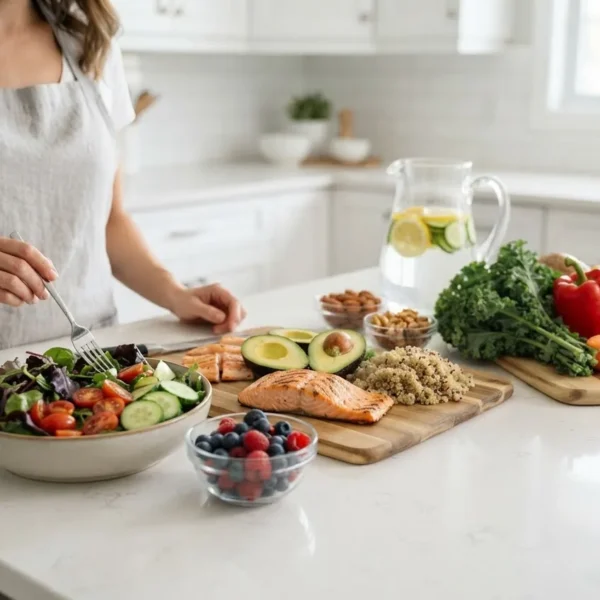
- Create a simple menu structure: Build each day around lean protein, a vegetable, a moderate whole grain, and a portion-controlled healthy fat. This keeps meal timing regular (three meals + one snack) and simplifies shopping.
- Write a single shopping list: Consolidate ingredients by recipe to avoid duplicates; prioritize seasonal Texas produce (e.g., okra, tomatoes, fresh berries) for freshness and price.
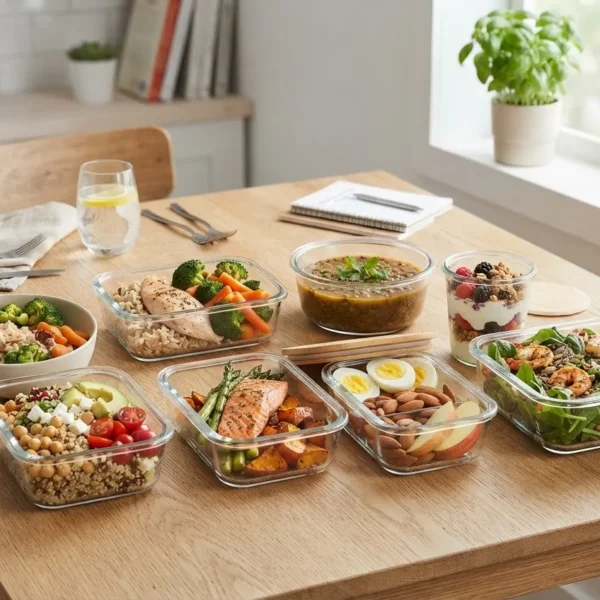
- Batch-cook staples: Roast 2 lb of chicken breast, cook 3 cups dry quinoa, and steam a large tray of mixed vegetables. Portion into containers (400–500 kcal per lunch container).
- Prepare grab-and-go snacks: Portion 1 oz (28 g) nuts, slice vegetables into snack packs, and pre-portion hummus—label containers with calories.
- Track one sample day: Use a food scale and a tracking app; record weight, steps, water, and meal times to refine meal timing and portion control.
- Mid-week check and refresh: On day 4, replace one cooked protein and one veggie batch to maintain freshness; re-calculate hunger and adjust snacks by ±100 kcal if needed.
Transition: Next, learn the benefits of following a structured seven day eating plan and how it supports weight loss and longer-term health.
Benefits of Following a Structured Seven Day Eating Plan
A focused 7 day eating plan to lose weight gives measurable short-term results and creates repeatable habits. Below are practical benefits, each linked to longer-term health goals such as a diet for longevity and health.
- Predictable calorie control — daily menus with ~400–600 kcal per meal reduce guesswork and impulsive snacking.
- Faster decision-making — pre-set breakfasts and lunches free mental energy for work and family.
- Meal prep efficiency — batching staples saves 60–90 minutes twice weekly versus cooking every day.
- Improved portion control — pre-portioned containers make it easy to hit deficit targets without weighing each meal at every serving.
- Macro balance for satiety — protein-forward plan keeps hunger lower and preserves lean mass during weight loss.
- Local produce savings — using Texas seasonal items lowers cost and improves flavor (e.g., fresh tomatoes, cantaloupe, greens).
- Supports medical goals — the plan can be adapted to lower sodium or saturated fats for heart patients.
- Behavioral momentum — finishing a week builds confidence to pursue longer-term plans like our meal plan for weight loss strategies.
Transition: Know why this approach works; next are the core principles that make safe short-term weight loss reliable.
How to Lose Weight in 7 Days – Key Principles
Follow these seven action-focused principles: clear, measurable, and directly implementable. For foundational macro advice consult the nutritionally complete meal guide with balanced diet advice and for starter-friendly tips see the best diet tips for beginners.
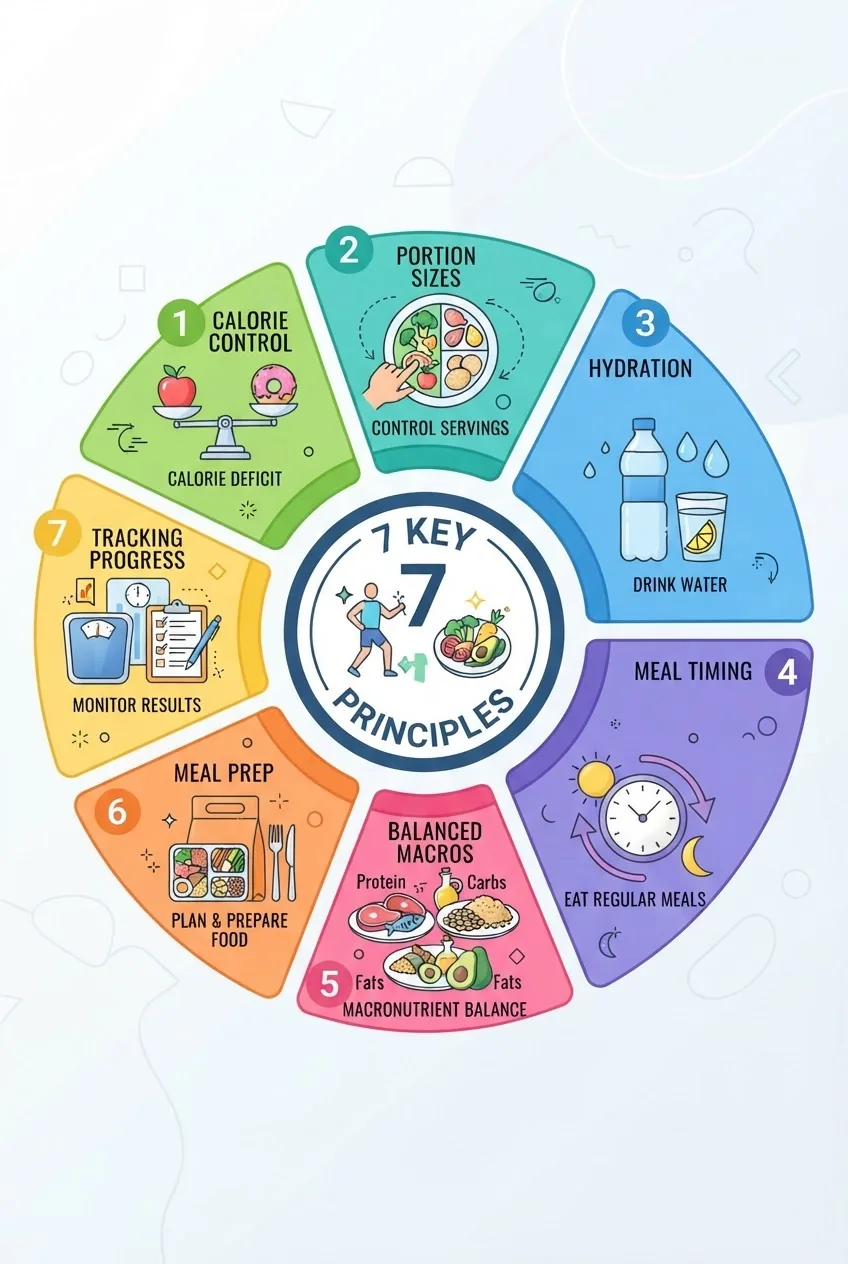
- Control calories precisely: Create a 500–700 kcal/day deficit from maintenance to target ~1–2 lb weight loss in a week; weigh portions, use a food scale, and log every meal. According to a 2023 USDA report, reduced calorie patterns should preserve macro balance while meeting micronutrient needs — follow guidance from USDA Dietary Guidelines.
- Prioritize protein: Aim for 25–30% of calories from protein (≈90–120 g/day for most adults on 1,500 kcal). Protein preserves lean mass and increases satiety; track grams using your app of choice.
- Watch portion control: Use the plate method: half non-starchy veg, one-quarter lean protein (3–4 oz cooked, ~85–115 g), one-quarter whole grain or starchy veg (½–1 cup cooked). Measure snacks: 1 oz nuts, ½ cup berries.
- Balance macros for energy: Aim for carbs 35–45% and fats 25–35% of daily calories. For mornings where workouts occur, shift 20–30 g additional carbs to pre/post workout meals.
- Hydrate with intent: Drink 2.5–3 L water/day (2.7 L for women, 3.7 L for men as a general target). Hydration reduces mistaking thirst for hunger and helps digestion. Track using a bottle with volume markers.
- Meal timing and consistency: Maintain 3 meals and 1 snack within a 12–14 hour waking window; avoid late-night calorie-dense snacks after 8:00 PM to support circadian metabolism.
- Track progress and adjust: Weigh daily at the same time, log meals, steps, and sleep. If hunger or fatigue spike, add 100 kcal of lean protein or fibrous veg; if no weight change in 7 days and adherence was solid, lower daily intake by 100–150 kcal or add 20–30 minutes light activity. For safety and research context about short-term rapid loss, see a peer-reviewed meta-analysis on calorie restriction and safety here.
Transition: Apply the principles by following the daily breakdown below — each day includes calories, macros, meal timing, and quick prep notes.
Detailed 7 Day Diet Menu to Lose Weight – Daily Breakdown
Below are seven complete days of meals labeled with target calories per meal and simple cook notes. Each day’s total is ~1,400–1,600 kcal with macros approximated; adjust to your calculated needs. This is a hands-on, cook-and-pack weekly menu built for convenience and flavor, using common Texas produce and simple seasonings.
-
Day 1 — Total ~1,500 kcal
Breakfast (350 kcal): Greek yogurt parfait — 6 oz plain nonfat Greek yogurt (100 kcal), ½ cup fresh blackberries (30 kcal), 2 tbsp granola (80 kcal), 1 tbsp chia seeds (60 kcal), drizzle 1 tsp honey (30 kcal). Protein ≈ 30 g, carbs ≈ 45 g, fat ≈ 8 g. Prep: pack in a jar; keep granola separate until serving.
Lunch (450 kcal): Grilled chicken salad — 4 oz grilled chicken breast (140 kcal), 3 cups mixed greens (30 kcal), ½ cup cherry tomatoes (15 kcal), ¼ avocado (60 kcal), ½ cup cooked quinoa (110 kcal), 1 tbsp olive oil + lemon dressing (95 kcal). Protein ≈ 34 g. Note: use Texas-grown tomatoes when in season for flavor and cost.
Dinner (500 kcal): Sheet-pan salmon & veggies — 5 oz salmon fillet (280 kcal), 1 cup roasted Brussels sprouts (60 kcal), ¾ cup roasted sweet potato (120 kcal), 1 tsp olive oil (40 kcal). Season with smoked paprika and lime. Protein ≈ 35 g.
Snack (200 kcal): 1 medium apple (95 kcal) + 12 almonds (105 kcal). Meal timing: breakfast by 7–8 AM, lunch 12–1 PM, snack 3–4 PM, dinner 7 PM. Calorie/macro walkthrough: weigh proteins cooked; log with app. This day is high-protein to reduce hunger on day one.
-
Day 2 — Total ~1,450 kcal
Breakfast (320 kcal): Savory egg bowl — 2 eggs scrambled (140 kcal), ½ cup black beans (110 kcal), ½ cup sautéed spinach (15 kcal), 1 tbsp salsa (10 kcal), 1 small corn tortilla (45 kcal). Protein ≈ 18 g. Use local corn tortillas if available.
Lunch (420 kcal): Turkey + veggie wrap — 3 oz sliced turkey breast (90 kcal), whole-wheat wrap (130 kcal), 1 cup shredded lettuce (10 kcal), ¼ cup shredded carrots (12 kcal), 1 tbsp hummus (30 kcal), side 1 cup cucumber slices (10 kcal), 1 small pear (138 kcal). Protein ≈ 24 g.
Dinner (500 kcal): Tex-Mex shrimp bowl — 4 oz grilled shrimp (120 kcal), ½ cup brown rice (110 kcal), 1 cup sautéed peppers & onions (80 kcal), ¼ cup black beans (55 kcal), 1 tbsp guacamole (60 kcal), wedge of lime, pico de gallo (approx 75 kcal). Protein ≈ 32 g.
Snack (210 kcal): 6 oz low-fat cottage cheese (120 kcal) + ½ cup sliced strawberries (30 kcal) + 1 tsp flaxseed (40 kcal). Meal prep tip: pre-portion shrimp and rice; reheat gently to avoid toughness.
-
Day 3 — Total ~1,600 kcal
Breakfast (360 kcal): Oatmeal with protein powder — ½ cup dry oats (150 kcal) cooked with water, 1 scoop whey or plant protein (120 kcal), 1 tbsp peanut butter (90 kcal), ½ banana sliced (45 kcal). Protein ≈ 28–30 g. Prep: mix dry oats and protein for quick microwave mornings.
Lunch (420 kcal): Tuna-stuffed bell pepper — 4 oz canned tuna in water drained (100 kcal), 1 tbsp light mayo or Greek yogurt (40 kcal), 1 tbsp diced celery (5 kcal), fill 1 large bell pepper (40 kcal), side salad 2 cups greens with lemon (20 kcal), ½ cup cooked farro (215 kcal). Protein ≈ 35 g.
Dinner (550 kcal): Turkey meatballs with zucchini noodles — 5 oz turkey meatballs (225 kcal), 2 cups zucchini noodles sautéed (50 kcal), ¾ cup marinara (80 kcal), ½ cup whole-wheat pasta (optional sub 100 kcal), 1 tbsp Parmesan (40 kcal), 1 tsp olive oil (45 kcal). Protein ≈ 40 g.
Snack (270 kcal): Smoothie — 1 cup unsweetened almond milk (30 kcal), ½ cup frozen mango (50 kcal), 1 tbsp almond butter (90 kcal), 1 cup spinach (7 kcal), 1 small scoop collagen (30 kcal), 1 tbsp oats (30 kcal).
-
Day 4 — Total ~1,450 kcal (mid-week refresh)
Breakfast (300 kcal): Cottage cheese bowl — 1 cup low-fat cottage cheese (206 kcal), ½ cup diced cantaloupe or melon (30 kcal), 1 tbsp chia seeds (60 kcal). Protein ≈ 28 g. Tip: choose Texas melons when in season for cost savings.
Lunch (400 kcal): Grilled chicken & black bean salad — 4 oz chicken (140 kcal), ½ cup black beans (110 kcal), 2 cups mixed greens (20 kcal), ¼ avocado (60 kcal), 2 tbsp salsa (10 kcal), 1 tbsp olive oil (60 kcal). Protein ≈ 30 g.
Dinner (500 kcal): Baked cod with lemon-herb crust — 5 oz cod (120 kcal), 1 tsp olive oil (40 kcal), 1 cup roasted asparagus (40 kcal), 1 cup roasted baby potatoes (200 kcal), 1 tsp butter (approx 45 kcal). Protein ≈ 32 g.
Snack (250 kcal): 1 small apple (95 kcal) + 2 tbsp natural peanut butter (190 kcal) portioned (reduce to 1 tbsp if staying closer to 1,400 kcal).
-
Day 5 — Total ~1,500 kcal
Breakfast (350 kcal): Breakfast tacos — 2 egg whites + 1 whole egg scrambled (120 kcal), 2 small corn tortillas (90 kcal), ¼ cup black beans (55 kcal), 1 tbsp salsa (10 kcal), 1 tbsp shredded cheddar (75 kcal). Protein ≈ 22 g.
Lunch (420 kcal): Mediterranean bowl — 3 oz grilled chicken (105 kcal), ½ cup cooked bulgur (90 kcal), 1 cup mixed greens (10 kcal), ¼ cup cucumber & tomato mix (20 kcal), 2 tbsp tzatziki (60 kcal), 1 tbsp olive oil (135 kcal). Protein ≈ 28 g.
Dinner (520 kcal): Chili-lime grilled flank steak (4 oz cooked, 240 kcal), 1 cup grilled corn (140 kcal), 1 cup mixed steamed vegetables (60 kcal), 1 small baked sweet potato (80 kcal). Protein ≈ 36 g.
Snack (210 kcal): Greek yogurt (5 oz) with 1 tbsp honey and cinnamon. Tip: use lean cuts of steak and measure cooked portions to control calories.
-
Day 6 — Total ~1,450 kcal
Breakfast (340 kcal): Smoothie bowl — 1 cup unsweetened almond milk (30 kcal), ½ cup frozen blueberries (40 kcal), 1 scoop protein powder (120 kcal), ¼ cup oats (75 kcal), 1 tbsp almond slivers (75 kcal). Protein ≈ 28 g.
Lunch (400 kcal): Lentil soup + side salad — 1.5 cups homemade lentil soup (approx 260 kcal), side salad with lemon (20 kcal), 1 slice whole-grain bread (120 kcal). Protein ≈ 22 g. Prep tip: cook a large pot and portion for two lunches.
Dinner (470 kcal): Chicken fajita stir-fry — 4 oz chicken (140 kcal), 1 cup bell peppers & onions (60 kcal), 1 cup cauliflower rice (25 kcal), 1 tsp olive oil (40 kcal), 1 small whole-wheat tortilla (120 kcal), 1 tbsp guacamole (60 kcal). Protein ≈ 30 g.
Snack (240 kcal): 1 oz mixed nuts (160 kcal) + 1 small clementine (40 kcal). Keep nuts in single-serve bags to avoid overeating.
-
Day 7 — Total ~1,500 kcal (wrap-up)
Breakfast (360 kcal): Avocado toast & eggs — 1 slice whole-grain toast (110 kcal), ¼ avocado mashed (60 kcal), 2 poached eggs (140 kcal), sprinkle chili flakes, 1 cup coffee with 2 tbsp milk (50 kcal). Protein ≈ 18 g.
Lunch (420 kcal): Salmon salad plate — 3 oz canned salmon (140 kcal), 2 cups mixed greens (20 kcal), ½ cup quinoa (110 kcal), 1 tbsp olive oil + vinegar dressing (95 kcal), 1 small orange (55 kcal).
Dinner (520 kcal): Roast chicken + roasted vegetables — 4 oz roast chicken (190 kcal), 1 cup roasted mixed veg (120 kcal), ½ cup brown rice (110 kcal), 1 tbsp light gravy or lemon (20 kcal), 1 small side salad (80 kcal). Protein ≈ 35 g.
Snack (200 kcal): Dark chocolate 1 oz (170 kcal) + herbal tea (0 kcal). Wrap-up: reflect on hunger patterns and plan next week’s calorie adjustments.
Transition: If you or a household member requires heart-healthy modifications, read the cardiac-specific menu below.
7 Day Cardiac Diet Menu Option for Heart Patients
This comparison shows the regular weight loss 7-day menu alongside cardiac diet modifications emphasizing low sodium, healthy fats, and fiber. Follow American Heart Association guidance on saturated fat and sodium when adapting meals — see American Heart Association for clinical recommendations.
| Meal | Standard 7-Day Menu | Cardiac Diet Modification |
|---|---|---|
| Breakfast | Greek yogurt parfait with granola and berries. | Swap to low-sodium cottage cheese or plain nonfat yogurt; use fresh berries and replace granola with 2 tbsp oats to cut added sugars and sodium. |
| Lunch | Grilled chicken salad with avocado and quinoa. | Use skinless chicken, skip added salt, increase greens, swap quinoa portion to ½ cup and use lemon-herb vinaigrette with 1 tsp olive oil; limit avocado to ¼ for saturated fat control. |
| Dinner | Salmon with roasted vegetables and sweet potato. | Keep salmon (source of omega-3s) but avoid butter; roast with 1 tsp olive oil, increase green vegetables, and keep sweet potato portion to ¾ cup; limit sodium to <1,500 mg/day for some patients per AHA. |
| Snacks | Nuts, fruit, yogurt. | Prefer unsalted nuts (1 oz), fresh fruit, and small portions of low-sodium dairy. Avoid processed snacks with added salts or saturated fats. |
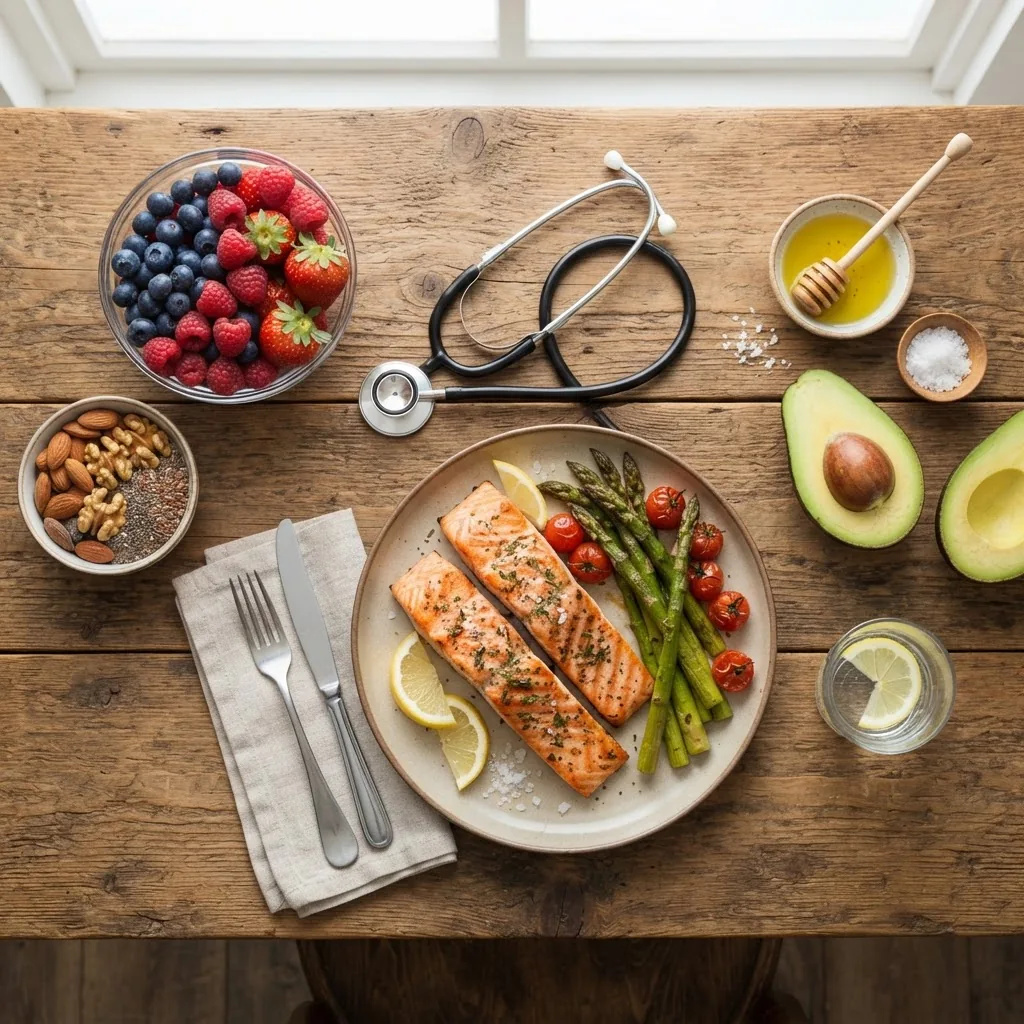
Notes: For older adults and those with congestive heart failure, consult resources on senior meal planning for women over 60. Always get clinician sign-off before sodium or fluid restrictions. According to the American Heart Association, reducing saturated fat and sodium and increasing soluble fiber improve cardiac outcomes (AHA).
Transition: After dietary specifics, learn the precise meal planning and meal prep steps to execute the week painlessly.
Meal Planning and Meal Prep Guide to Maximize Success
Follow the numbered, action-first steps below to turn the menus into a real, repeatable routine. For additional organization strategies check our effective meal planning tips.
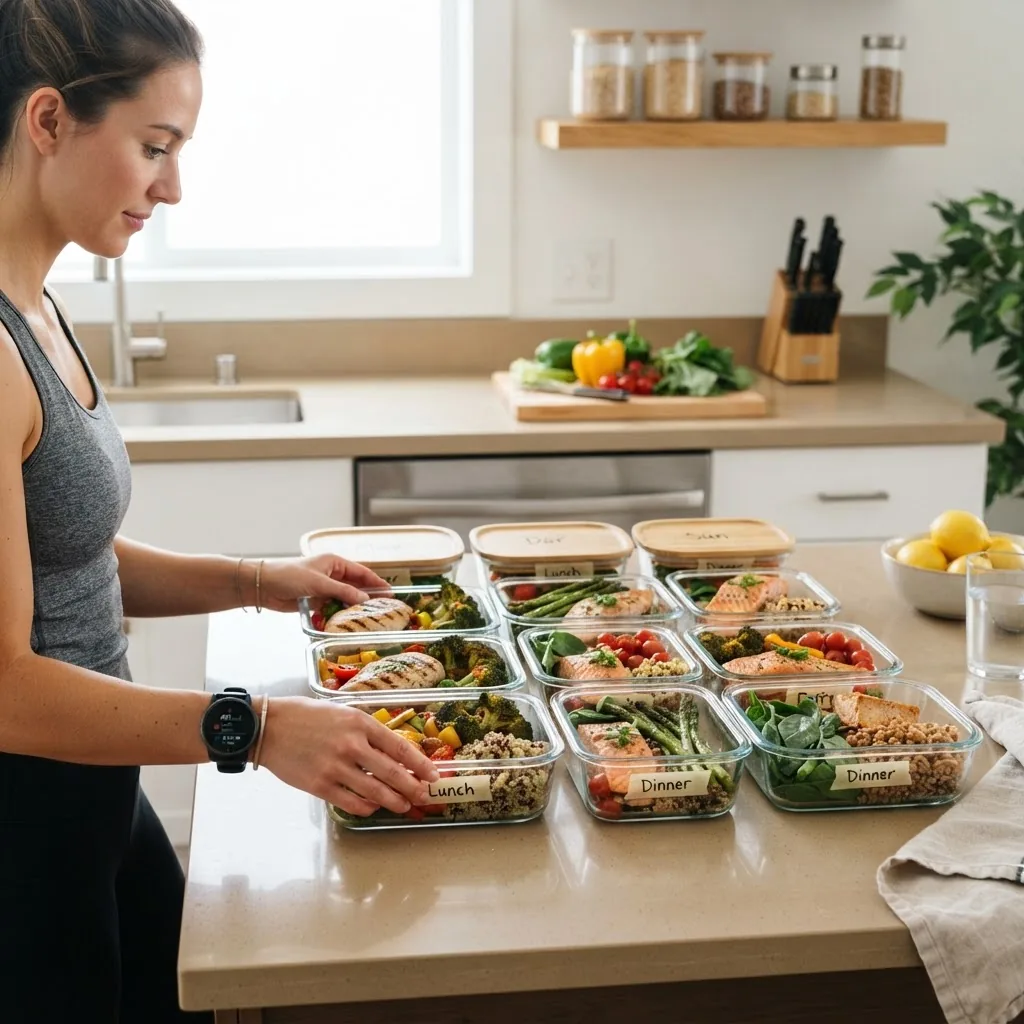
- Draft the week’s menu and tally ingredients: List every ingredient and quantity—chicken (2 lb), salmon (1 lb), quinoa (1.5 cups dry), brown rice (2 cups dry), eggs (14), mixed greens (2 lb), sweet potatoes (4 medium), berries (3 cups), nuts (6 oz). Use exact amounts so grocery shopping is efficient.
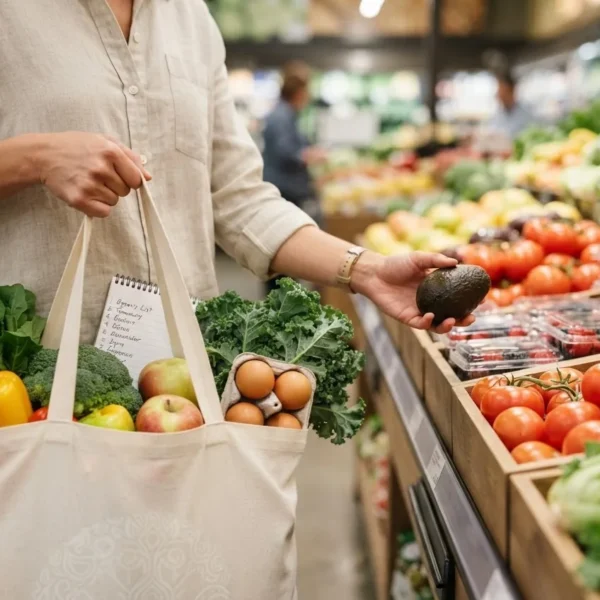
- Create a timed shopping plan: Shop once weekly — aim for early weekday mornings to avoid crowds. Refrigerated items first, produce last. Keep protein in a chilled part of your cart. Estimated shopping time: 45–60 minutes.
- Prep protein in two batches: Batch A (90 minutes): roast 2 lb chicken breast at 375°F (190°C) for 25–30 minutes internal temp 165°F (74°C); slice. Batch B (45–60 minutes): bake 1 lb salmon at 400°F (204°C) for 12–15 minutes or grill shrimp 2–3 minutes per side. Cool and portion into 6 containers (~4–5 oz per serving).
- Cook grains and legumes: Use a rice cooker or stovetop: quinoa 1.5 cups dry to 3 cups cooked (2:1 water:quinoa), simmer 15 minutes. Brown rice 2 cups dry to 4 cups cooked (2.5:1 water), simmer 40–45 minutes. Cool and portion ½–¾ cup servings.
- Roast mixed vegetables: Toss 6 cups mixed veg with 2 tsp olive oil, salt-free seasoning, roast at 425°F (218°C) for 20–25 minutes until tender. Portion into containers (1–2 cups per serving).
- Portion and label: Use food scale to portion proteins (4 oz cooked ≈ 115 g), grains (½ cup cooked ≈ 120 g), nuts (1 oz ≈ 28 g). Label with meal name, calories, and date; refrigerate for up to 4 days, freeze extras.
- Assemble quick breakfasts and snacks: Pre-portion yogurt jars, fruit packs, and nut bags. Make two single-serve smoothie bags (frozen fruit + oats) to blend in the morning — each bag ≈ 300–350 kcal.
- Plan meal timing and transport: Schedule meals: breakfast within 60 minutes of waking, lunch 4–5 hours later, snack 3–4 PM, dinner 3–4 hours after snack. Use an insulated lunch bag and ice pack for midday meals when away from home.
- Track and tweak: For the first three days, log everything and weigh in the morning. If energy drops or hunger is high, add 100 kcal of lean protein or a fibrous vegetable to lunches/dinners.
- Mid-week refresh and waste reduction: On day 4 re-season and reheat proteins gently; repurpose leftovers into wraps or grain bowls to avoid monotony. Freeze any cooked protein not used within 4 days.
Checklist for grocery shopping (copy and use):
- Proteins: chicken breasts 2 lb, salmon 1 lb, eggs 1 dozen, canned tuna 2 cans, lean ground turkey 1 lb.
- Grains/Legumes: quinoa 1.5 cups, brown rice 2 cups, black beans 2 cans, oats 1 lb.
- Produce: mixed greens 2 lb, cherry tomatoes 2 pints, bell peppers 6, sweet potatoes 4, berries 3 cups, avocado 3.
- Dairy & pantry: plain Greek yogurt, low-fat cottage cheese, olive oil, nuts 8 oz, spices (smoked paprika, cumin, garlic powder), low-sodium broth.
Transition: Use the meal planning steps above, then maintain motivation with practical tracking and behavioral tips below.
Tips to Stay Motivated and Track Your Progress During the 7 Days
Behavioral changes improve adherence more than willpower alone. Use these quick techniques to stay on track and measure results.
- Daily weighing at the same time (morning after using the restroom) and logging in an app helps reveal trends; expect 1–3 lb variability due to water.
- Hydration reminders: set 300 ml bottle goals (8–10 bottles a day equals ~2.4–3 L). According to a 2024 industry report, hydration supports satiety and metabolic processes.
- Micro-goals: aim to hit protein and vegetable targets each meal rather than obsessing over every calorie.
- Accountability: share meal photos in a private chat or track with a friend; consistent reporting increases adherence.
- Reward system: non-food rewards for meeting 3-day or 7-day adherence (new cookware, a massage, or a hike in a Texas state park).
- Adjust expectations: realistic losses are 1–3 lb per week; avoid extreme fasting. For safety evidence on short-term rapid weight loss, consult a peer-reviewed meta-analysis here.
Transition: Before you begin, learn from common mistakes I’ve seen and how to avoid them.
Common mistakes and how to avoid them
I once underestimated the time needed to roast vegetables and ended up eating store-bought high-sodium sides; to avoid this, I now batch-roast double portions and freeze half. I also used to eyeball cooked protein portions and later discovered weighing cooked portions (4 oz ≈ 115 g) keeps calories accurate. Finally, I overestimated homemade sauces; I portion dressings into 1-tsp containers to avoid hidden calories.
Compact checklist before you start the week
- Menu printed and calories set for your daily target.
- Grocery list with exact quantities purchased.
- Containers labeled with meals and calories; fridge space reserved.
- Two 90–120 minute prep sessions scheduled in calendar.
- Tracking app installed and one sample day logged.
When to call a professional
Seek medical or dietitian advice if you have heart disease, diabetes, chronic kidney disease, are pregnant, breastfeeding, or if you intend to restrict calories below 1,200 kcal/day. For cardiac-specific meal planning, consult your cardiologist or a registered dietitian; see American Heart Association resources at https://www.heart.org.
Final note: This hands-on 7 day diet menu to lose weight gives you a practical, repeatable week of meals, concrete prep steps, and tracking methods to start losing weight safely and build sustainable habits. Ready to start? Print the checklist, schedule your prep sessions, and shop using the exact grocery list above.
Call to action: Start your week today — follow the plan, log your meals, and revisit the menus to adapt for long-term progress.