What you’ll have achieved by the end
By the time you finish this guide you will have created a practical, personalized diabetic food chart and diabetic diet meal plan you can follow for 30 days: a daily meal sheet with measured portion sizes, a shopping list, two 7-day sample menus (one 1,800 kcal and one 2,200 kcal), and a monitoring checklist for blood glucose adjustment. Realistic time required: 6–8 hours spread over two working sessions (2 hours to assess and calculate targets, 4–6 hours to build menus and prepare a batch shopping/meal-prep plan). Skill level assumed: intermediate — you should be comfortable reading nutrition labels, using a kitchen scale, and logging food in an app or spreadsheet.
Before you start
- Accurate digital kitchen scale (0.1 g precision recommended)
- Measuring cups and spoons (1 cup, 1/2 cup, 1/4 cup, 1 tbsp, 1 tsp)
- Glucose meter with test strips and logbook or smartphone app
- Food tracking app (examples: MyFitnessPal, Carb Manager) or a spreadsheet
- Calculator (or phone calculator) and a basic nutrition reference: USDA FoodData Central or a diabetes nutrition app
- Meal prep containers (minimum 14: divide into breakfasts, lunches, dinners, snacks)
- Access to a grocery store with whole-food produce, lean proteins, and whole grains
- Pen and printed template for your “diabetic diet chart” (daily columns for carbs/protein/fat/fiber, glucose readings)
Step-by-step numbered plan: build your diabetic food chart and meal plan
- Calculate your daily calorie target and macronutrient split — Determine baseline energy needs using simple equations. For maintenance use 25–30 kcal per kg of body weight; for weight loss subtract 300–600 kcal depending on how aggressive you want to be. Example: a 90 kg (198 lb) adult aiming for modest weight loss: 90 kg × 25 kcal = 2,250 kcal/day; subtract 400 → 1,850 kcal/day. Use macronutrient targets tailored for type 2 diabetes: 40–45% carbohydrates, 25–30% protein, 30% fat as a starting template. For 1,850 kcal this means roughly 185 g carbs (740 kcal), 115 g protein (460 kcal), 62 g fat (560 kcal). Record these rounded targets in your chart header.
- Measure and set carbohydrate goals per meal — For stable blood glucose use a target of 30–45 grams of carbohydrate for women per main meal and 45–60 grams for men; snacks 15–20 grams. Convert your daily carbohydrate target to meal slots. Example for the 1,850 kcal target (185 g carbs): split as Breakfast 45 g, Lunch 55 g, Dinner 55 g, Snacks combined 30 g (2 snacks of 15 g). Write these exact per-meal gram targets on each day of your diabetic food chart.
- Weigh and standardize portions once — Spend one session weighing common foods to create quick reference entries in your chart. Weigh 1 cup cooked brown rice (approx. 195 g cooked = 45 g carbs), 1 slice whole-wheat bread (approx. 30 g = 15 g carbs), 1 medium apple (approx. 182 g = 25 g carbs), 1 small banana (approx. 100 g = 23 g carbs), 100 g cooked chicken breast (≈31 g protein, 165 kcal). Create entries: food — weight — carbs — protein — fat — fiber. Keep these measurements in your meal planner diabetes sheet for repeated use.
-
Build a 7-day sample menu for your calorie target — Use the per-meal carb targets and measured portions you created. Below are two full sample days, one for ~1,800 kcal and one for ~2,200 kcal. Copy and paste into your chart and modify whole-food swaps as needed (see swap lists later). Keep exact quantities and carb counts.
Sample Day A — ~1,800 kcal (target carbs 180 g)
Breakfast (45 g carbs): 1 cup (240 ml) plain Greek yogurt (0 g carbs if unsweetened? note: plain typically 6–8 g; use exact on label) + 1/2 cup (75 g) blueberries (10 g) + 1/4 cup (30 g) rolled oats cooked (18 g) + 1 tbsp chia seeds (0 g carbs counted as 2 g fiber). Substitute amounts based on label to total 45 g carbs.
Mid-morning snack (15 g): 1 medium apple (≈25 g carbs) split 2 ways or choose 8 baby carrots (≈6 g) + 1 tbsp almond butter (3 g) — keep combined 15 g.
Lunch (55 g carbs): 2 cups mixed salad greens + 100 g grilled chicken + 3/4 cup cooked quinoa (≈40 g carbs) + 1/2 cup roasted sweet potato (≈15 g). Dressing: 1 tbsp olive oil + lemon. Total carbs ≈55 g.
Afternoon snack (15 g): 1 small plain rice cake (7 g) + 1 oz low-fat cheese (1 g) + 6 grapes (≈7 g).
Dinner (55 g carbs): 4 oz salmon (0 g), 1 cup cooked brown rice (≈45 g), 1 cup steamed broccoli (≈6 g), 1 tsp olive oil. Dessert optional: 1/4 cup raspberries (≈3 g) to reach 55 g.
Sample Day B — ~2,200 kcal (target carbs 230 g)
Breakfast (50 g carbs): 2 slices whole-grain toast (30 g), 2 scrambled eggs (0 g), 1 small orange (≈15 g), 1 tsp butter.
Snack (20 g): 1 small banana (≈23 g) trimmed portion to 20 g by measuring 85 g of banana.
Lunch (70 g): Turkey sandwich with 3 slices whole-grain bread (45 g), 3 oz turkey, 1 tbsp mayo (0 g), 1/2 cup cooked barley (≈25 g). Add raw cucumber slices.
Snack (20 g): Greek yogurt 150 g plain + 1 tbsp honey (17 g) — adjust to 20 g carbohydrate with smaller honey portion.
Dinner (70 g): 1 cup cooked whole-wheat pasta (≈37 g), 1 cup marinara (≈10 g), 4 oz lean beef (0 g), 1 cup roasted vegetables (≈23 g). Dessert: 1/2 cup melon (≈10 g) to hit meal carb target.
- Create a daily “dm diet chart” template — Your template must include these columns: Date, Weight (kg), Fasting glucose (mg/dL), Pre-meal glucose (before each main meal), Time of meal, Meal description (with measured weights), Meal carbs (g), Meal protein (g), Meal fat (g), Fiber (g), Insulin/medication dose (if applicable), Notes (exercise, stress, illness). Use exact units: glucose in mg/dL, weight in kg. Keep the template as a printed sheet or digital spreadsheet and complete it every meal for 14 days to gather adjustment data.
- Assemble a fortnightly grocery list from your menus — Convert the two 7-day menus into grocery quantities. Example list for one person for 7 days (1,800 kcal plan): 2.5 kg chicken breast, 1.8 kg salmon or firm tofu equivalent, 3 kg mixed vegetables, 2 kg fresh fruit (apples/berries), 2 kg whole grains (brown rice and quinoa combined), 500 g oats, 500 g plain Greek yogurt, 500 g low-fat cheese, 1 box whole-grain bread (14 slices), 250 ml olive oil, 200 g nuts. Write exact package sizes to buy: e.g., buy 2 × 2 lb bags of brown rice (907 g each) to cover 7 cups cooked.
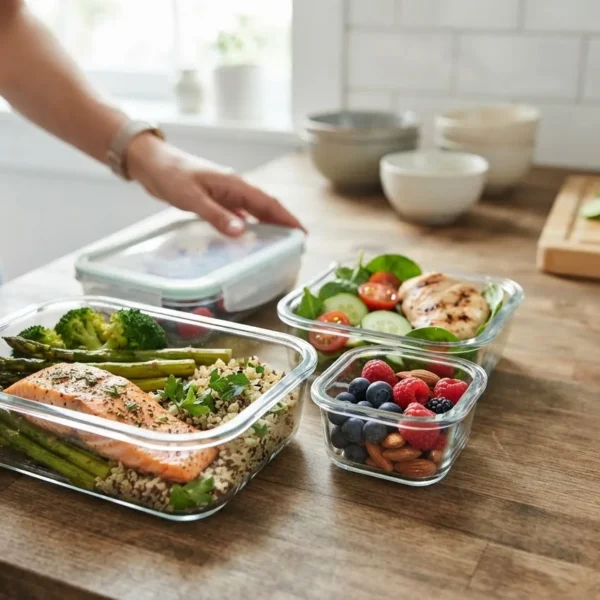
- Batch-cook core components — Reserve 2–3 hours once weekly to cook bulk staples: 1.5–2 kg chicken/turkey, 8–10 cups cooked brown rice, 4–6 cups cooked quinoa/barley, 10 boiled eggs. Cooling and storage: portion into 400–500 g meal containers; refrigerate up to 4 days or freeze for up to 3 months (label date and contents). For herbs/vegetables, roast 1.4 kg mixed vegetables at 200°C (400°F) for 25–30 minutes tossed with 2 tbsp olive oil — cool and portion.
- Record and adjust using a 14-day trial — Follow your diabetic diet meal plan exactly for 14 consecutive days while testing fasting glucose each morning and pre-meal glucose before lunch and dinner. Record values and compare to targets: fasting <130 mg/dL (for many adults with type 2 diabetes) and pre-meal 80–130 mg/dL. If two or more readings exceed these thresholds consistently, reduce carbohydrate at the meal showing the spike by 10–15% (e.g., if lunch was 60 g carbs, drop to 50–54 g) and retest for 72 hours.
-
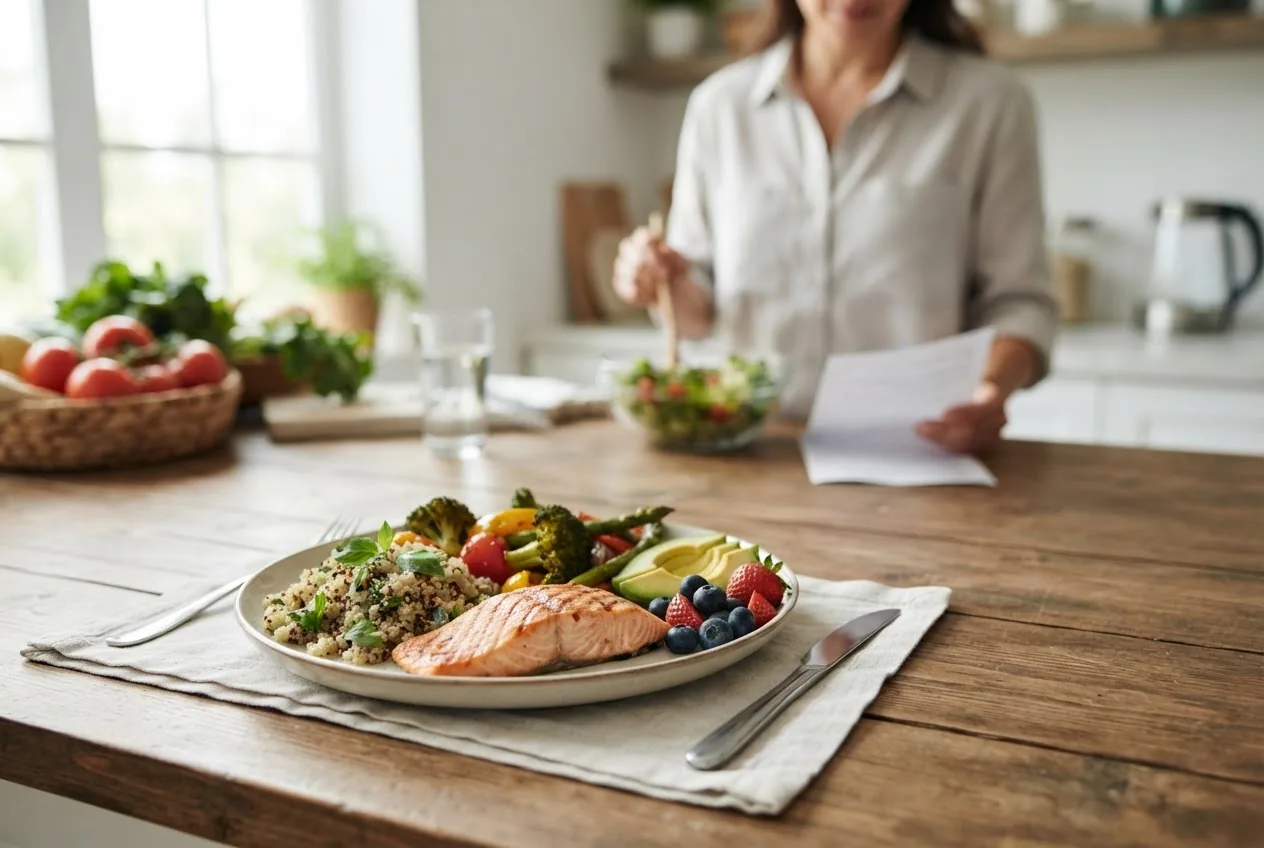
Use a portion-plate method for quick meals — If you need a faster approach, use plate proportions: half non-starchy vegetables (filling), one-quarter lean protein (100–150 g cooked), one-quarter carbohydrate (measure to match carb target: 3/4 cup cooked brown rice ≈ 45 g carbs). Snacks should be 15 g carbs with 7–10 g protein or fat to slow absorption. Consistently apply this to keep carbs within the per-meal grams set in step 2.
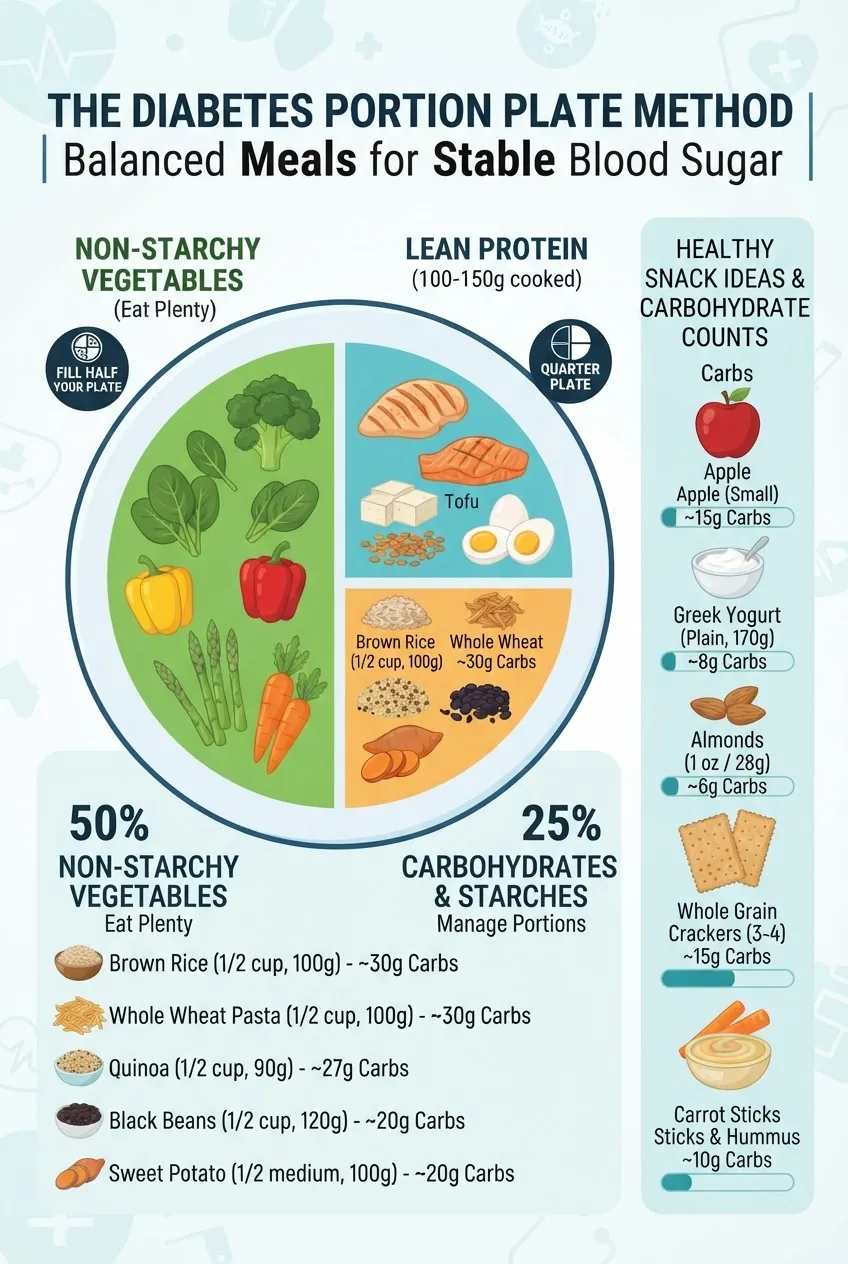
- Create substitution lists for every food group — Build quick swaps so you can vary meals without recalculating carbs. Example swaps (exact measures): 1 medium sweet potato (130 g cooked = 26 g carbs) swaps for 3/4 cup cooked brown rice (≈45 g) — so you’d reduce rice proportion accordingly. Sample list: 1 slice whole-grain toast = 15 g carbs; 1/2 cup beans = 20 g; 1/3 cup cooked lentils = 18 g; 1/2 cup cooked oats = 27 g. Keep the exact gram-to-carb conversions in your chart for fast meal changes.
- Design 30-minute meals that fit targets — Choose recipes with measured ingredients so a weeknight dinner stays within the per-meal carb limit. Example 25-minute dinner: 120 g firm tofu (approx. 12 g protein), 1/2 cup cooked barley (≈22 g carbs), 1.5 cups steamed green beans (≈8 g carbs) tossed with 1 tbsp sesame oil. Total carbs ≈30–35 g — under a 45 g meal target, leaving room for a small fruit if needed.
- Plan for eating out and carrying foods — Before leaving home, decide your meal carbs and use the menu to match it. Example: Choose a restaurant salad with grilled protein plus a small roll (1 roll ≈ 30 g carbs) or substitute fries with a side salad. Carry portable snacks (2 rice cakes + 1 oz peanut butter ≈ 22 g carbs) to avoid impulse high-carb meals.
- Account for medication and exercise — If you take insulin or sulfonylureas, factor in exercise: a 30-minute brisk walk can lower glucose by 20–40 mg/dL; reduce pre-exercise carbohydrate snack by 15 g if you routinely go low. If medicated, consult prescriber before reducing carbs dramatically. Log insulin doses and time in your chart for correlation analysis. For non-insulin medications, monitor more frequently after initial diet changes.
- Implement a weekly review and tweak — Every Sunday spend 30–45 minutes: inspect 7 days of glucose logs, weight, meal carbs, and identify patterns. If average fasting glucose is 5–10 mg/dL above goal, reduce dinner carbs by 10%. If pre-lunch spikes occur, test breakfast carb and fiber; often increasing fiber by 5–10 g at breakfast lowers mid-day spikes. Make one change at a time and re-test for 3–5 days.
- Document food substitutions and favorites in a “go-to” sheet — After 14 days, create a quick-reference sheet listing 10 breakfasts, 10 lunches, and 10 dinners that fit your carb targets with exact portions. This sheet becomes your reusable “diabetic diet pdf” equivalent—print or save as PDF for convenience. Include exact gram weights, carb counts, and cooking instructions (e.g., “Greek yogurt bowl: 170 g plain Greek yogurt + 1/2 cup strawberries (50 g) + 20 g granola = 42 g carbs”).
- Set up ongoing monitoring and quarterly reassessment — Keep fasting glucose and pre-meal logs daily for 30 days; after 3 months, re-check A1c with your clinician. Expect meaningful A1c reductions after 8–12 weeks if the plan is followed: a realistic target for many people is a 0.5–1.0% A1c drop. If A1c fails to improve and adherence is verified, consider medication review with your provider.
Worked examples and calculations
Below are two worked examples that illustrate converting a recipe to the diabetic food chart and adjusting carbs when glucose is high.
Example 1 — Converting a casserole to carb grams
Recipe yields 6 servings: 3 cups cooked pasta (uncooked 300 g), 2 cups marinara (480 g), 1 cup cooked spinach (180 g), 200 g shredded chicken. Use USDA values: cooked whole-wheat pasta 100 g = 30 g carbs. You cooked 300 g pasta → ~90 g carbs total from pasta → per serving = 15 g carbs. Marinara 480 g ≈ 50 g carbs total → per serving ≈8.3 g. Spinach negligible ≈2 g total. So per serving total carbs ≈25.3 g. On a 45 g-per-meal target, you can add 1/2 cup cooked brown rice (≈22 g) or a small slice of bread (15 g) to reach the target. Put these numbers into your diabetic food chart so future servings are consistent.
Example 2 — Adjust carbs after repeated pre-dinner spikes
Observation: two-week chart shows pre-dinner glucose averages 165 mg/dL (goal <130). Dinner carbs were 60 g on average. Action: Reduce dinner carbs by 15% → new dinner carbs = 51 g. Practical swap: replace 1 cup cooked rice (45 g) + 1/2 cup peas (10 g) with 3/4 cup cooked rice (approx. 34 g) + 1 cup roasted cauliflower (approx. 5 g) = 39 g. Add 1 tbsp olive oil for satiety. Re-test for 72–96 hours; if pre-dinner decreases toward 130 mg/dL, maintain change; if not, further reduce carbs by 10% or assess medication/exercise interactions.
Sample “type 2 diabetes meal plan” table (one-day example)
| Meal | Food (exact measure) | Carbs (g) | Protein (g) | Calories |
|---|---|---|---|---|
| Breakfast | 170 g plain Greek yogurt + 50 g blueberries + 30 g rolled oats | 45 | 20 | 380 |
| Snack | 1 medium apple (182 g) | 25 | 0.5 | 95 |
| Lunch | 100 g grilled chicken + 3/4 cup cooked quinoa + mixed greens | 55 | 35 | 560 |
| Snack | 10 almonds + 1 small rice cake | 15 | 4 | 120 |
| Dinner | 4 oz baked salmon + 1 cup cooked brown rice + 1 cup steamed broccoli | 45 | 30 | 600 |
Total carbs: 185 g — matches a ~1,850 kcal target with protein ~90 g and fat ~70 g depending on cooking fats.
Practical tips and rules of thumb
- Always measure starchy foods cooked weight (rice, pasta, potatoes) — 1 cup cooked rice ≈ 45 g carbs.
- Count non-starchy vegetables but they usually add only 5–10 g carbs per meal; prioritize fiber-rich choices.
- Aim for 25–35 g fiber per day. Soluble fiber (oats, beans) helps blunt post-meal glucose.
- Prefer whole grains over refined grains; swap 1 cup cooked white rice (≈45 g) for 3/4 cup cooked quinoa (≈34 g) and add 5 g fiber.
- Limit added sugars to < 25 g/day; use simple swaps (berries instead of jam) to keep sweet cravings controlled.
- Alcohol can lower blood glucose unpredictably; if you drink, limit to 10–12 g alcohol per serving and never drink on an empty stomach.
- Hydration: aim for 2–3 liters of water daily — dehydration can concentrate glucose readings.
Common mistakes and how to avoid them (from practitioner experience)
I once advised a patient who dutifully followed a “low-carb” breakfast of fruit and yogurt but used a commercial granola. Their mid-morning glucose spiked because the granola added 30 g of hidden sugar. Lesson: I now always weigh packaged items and check sugar content on labels; if sugar >8 g per serving, reduce the portion or swap to plain nuts and seeds.
A second mistake I regularly see is relying on “visual portions” rather than weighing. I watched someone pour what they thought was 1 cup of cooked rice — it was 1.5 cups. That extra 22 g of carbs added to every dinner and prevented A1c improvement. I advise always weighing at least for the first two weeks to calibrate your eye.
Finally, I’ve seen people reduce calories too quickly and then miss meals, causing medication-related lows. I learned to recommend gradual calorie reductions (300–600 kcal) and to coordinate with prescribers when insulin or insulin secretagogues are used.
When to call a professional
Call your clinician or diabetes educator immediately if any of the following occur: two fasting glucose readings consistently >250 mg/dL despite dietary adherence, two or more blood glucose readings <70 mg/dL in a week, symptoms of dehydration or weight loss >5% in one month, or if you change medication or insulin dosing. For nutrition-specific advice (e.g., chronic kidney disease, pregnancy), schedule a registered dietitian (RD) consultation; ask for a “diabetes-focused medical nutrition therapy” appointment.
Compact checklist to verify your work
- My daily calorie and macro targets are written in kcal and grams on the chart.
- I have set per-meal carbohydrate gram targets (exact grams for each meal and snack).
- I recorded weighed measures for 15 common foods and saved them on my chart.
- I prepared at least 3 bulk-cooked staples and portioned them into containers for the week.
- I followed the plan for 14 days with glucose logged fasting and pre-meal, then reviewed and adjusted.
- I created a 10-item quick-reference list of breakfasts/lunches/dinners that meet my targets.
- I know when to contact my clinician (see “When to call a professional”).
Resources and links
For additional context and nutrition education consult our full guide to balanced meal plans: Nutritionally Complete Meal Guide with Balanced Diet Advice. For meal-planner templates and 7-day menus see 7 Day Diet Menu to Lose Weight with Meal Planning Guide and our grocery advice at Healthy Grocery List Guide for Smart and Nutritious Shopping. For authoritative clinical guidance consider the American Diabetes Association: https://www.diabetes.org/
Final notes and safety
This guide is intended for people with type 2 diabetes planning dietary control without complex comorbidities. If you have stage 3–5 chronic kidney disease, active cancer treatment, pregnancy, or use multiple daily insulin injections, seek individualized care. Small, consistent changes produce durable results; the numbers and procedures above are pragmatic, measurable and reproducible — use them as your working “diabetic food chart” and tweak based on glucose evidence.
Frequently Asked Questions
What is a diabetic food chart and why do I need one?
A diabetic food chart lists your per-day calorie and per-meal carbohydrate targets with measured portion sizes and logged glucose readings. It helps you consistently hit carb goals, identify which meals raise blood sugar, and gives a repeatable template for grocery shopping and meal prep.
How many carbs should a person with type 2 diabetes eat per meal?
Typical guidance is 30–45 g of carbohydrate per main meal for women and 45–60 g for men, with 15–20 g for snacks. Individual needs vary; use glucose monitoring for personalized adjustment and reduce the meal carbs by 10–15% if pre-meal glucose is consistently high.
Can I follow an easy diabetic diet plan without weighing foods forever?
Yes. Weigh foods for 1–2 weeks to calibrate portion sizes, then use the portion-plate method (half vegetables, quarter protein, quarter carbs) and your “go-to” recipes. Continue spot-checking with a scale monthly to maintain accuracy.
Is there a free diabetic diet plan I can print and use now?
This article includes two 7-day sample menus and a printable template you can copy into a spreadsheet to make a free diabetic diet plan; convert the sample meals to a PDF for printing after you input your specific portion weights and carb targets.
How long before diet changes lower my A1c?
If you follow a consistent measured meal plan, expect to see A1c improvements in 8–12 weeks. Many people see a 0.5–1.0% reduction within this timeframe, but individual results depend on starting A1c, adherence, and medication.
My pre-meal glucose is high despite following the plan — what next?
First check portion accuracy and timing of medications. Reduce the carb grams at the problematic meal by 10–15% and re-test for 72 hours. If high readings persist, contact your clinician to review medication and consider a diabetes educator consult.