What you’ll have achieved by the end, time required, and assumed skill level
By the time you finish this guide you will have: a ready-to-export dash diet PDF handout (printable, 2–4 pages), a practical 7-day DASH meal plan mapped to the MyPlate DASH eating plan, a grocery list with exact quantities for one week’s meal prep, and a clear process to track sodium, potassium and portion sizes to manage hypertension. This walkthrough assumes you can use a basic word processor (Google Docs, Word) and a spreadsheet (Excel or Google Sheets). Expect to spend 3–6 hours total: 1 hour to learn the rules and targets, 2–3 hours to build the PDF and plan, and 1–2 hours on shopping and one meal-prep session. Skill level: beginner-to-intermediate — no professional design skills required.
Before you start
- Device: laptop or desktop with internet access and a printer (optional).
- Software: Google Docs or Microsoft Word, Google Sheets or Excel, and a PDF export option.
- Tools: kitchen scale (grams), measuring cups and spoons, food scale app or calorie counter app (optional).
- Reference materials: current blood pressure reading, list of medications, and any dietary restrictions (e.g., low-potassium if kidney disease).
- Timing: set aside a 3–4 hour block for the first full run; subsequent weekly updates take 30–60 minutes.
Quick DASH diet targets you must use
Before the step-by-step, memorize the numeric targets you’ll use repeatedly:
- Daily sodium target: aim for 1,500 mg/day if you have hypertension; acceptable upper limit: 2,300 mg/day.
- Servings per day (standard DASH for ~2,000 kcal): grains 6-8, vegetables 4-5, fruits 4-5, low-fat dairy 2-3, lean meats/poultry/fish 6 or fewer servings (1 serving = 1 oz cooked meat), nuts/seeds/legumes 4-5 weekly.
- Daily potassium goal: target at least 3,500–4,700 mg/day from food if kidney function is normal.
- Calories and macros: adapt to your needs — example adult target: 1,800–2,200 kcal/day for maintenance depending on activity.
Core steps: build your DASH diet PDF and meal plan
- Collect baseline data: Record your current blood pressure (average of two readings, sitting, 1 minute apart) and target range with your clinician. Note your height, weight, age, and daily activity level so you can estimate calories. If you don’t already have a calorie target, use this rule-of-thumb: sedentary female ~1,600–1,800 kcal/day, moderately active female ~1,800–2,100, sedentary male ~2,000–2,400 kcal/day. For accuracy, use an online total daily energy expenditure (TDEE) calculator and round to the nearest 100 kcal.
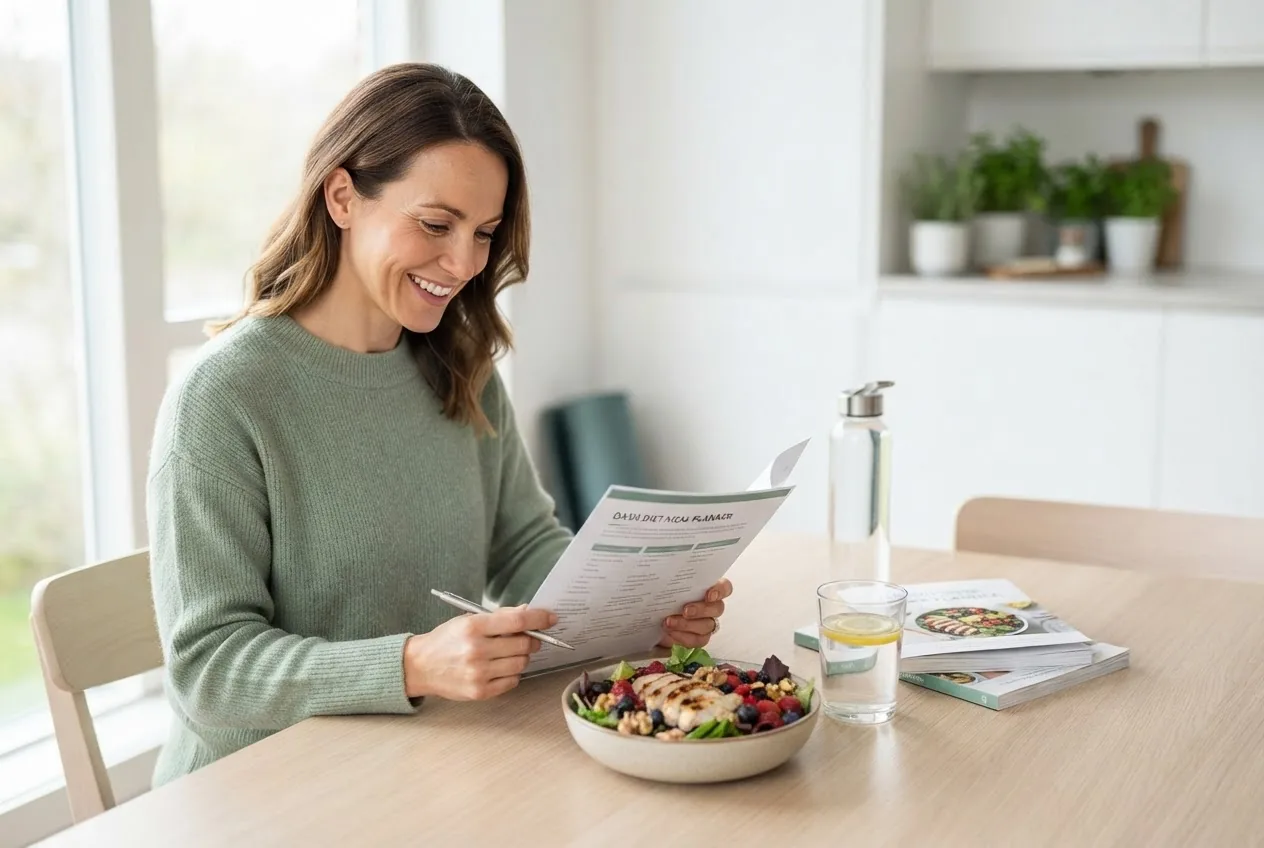
- Choose your DASH template layout: Open a new document in Google Docs or Word. Create a 2-to-4 page layout: Page 1 = one-page DASH dietary summary + daily targets; Page 2 = weekly meal chart (7 days × 3 meals + 2 snacks); Page 3 = grocery list and meal-prep schedule. Use 1-inch margins and 11–12 pt body text. Add a header: “DASH Diet PDF: Hypertension Meal Plan (1-week)”. Save as dash-diet-week1.pdf when finished.
- Define your plate rules (MyPlate DASH eating plan): Convert DASH servings to plate portions using MyPlate: half your plate vegetables and fruits (combined ~50%), one-quarter lean protein, one-quarter whole grains, plus 1 serving low-fat dairy on the side (e.g., 1 cup milk or 6 oz yogurt). For example, for a 600 kcal dinner: 300 kcal vegetables/fruits, 150 kcal whole grain, 150 kcal lean protein, 100 kcal low-fat dairy or 1 small fruit as dessert. This keeps sodium low and potassium higher.
- Set precise sodium distribution per meal: To keep under 1,500 mg/day, divide sodium targets by eating occasions. Example plan for 3 meals + 2 snacks: breakfast ≤ 300 mg, lunch ≤ 400 mg, dinner ≤ 500 mg, snacks combined ≤ 300 mg. When designing recipes, use these thresholds as the cap. Always check labels: a single slice of processed bread can contain 120–200 mg; one canned soup can contain 700–1,200 mg.
-
Create a food list with exact servings and swap options: Build a table or bullet list of DASH-friendly foods specifying serving sizes. Use these exact portions:
Category Serving Notes Vegetables 1 cup raw leafy or 1/2 cup cooked Aim 4–5/day → 2 cups raw leafy + 1.5 cups cooked Fruits 1 medium fruit or 1/2 cup sliced Aim 4–5/day; include berries, bananas for K+ Grains 1 slice bread or 1/2 cup cooked Choose whole grains; aim 6–8/day Low-fat dairy 1 cup milk or 6 oz yogurt Aim 2–3/day for calcium and K+ Lean protein 1 oz cooked meat or 1/4 cup beans Limit to 6 oz/day total cooked equivalent Include clear swaps: canned beans → rinse (reduces sodium by ~40%), canned tuna in water (choose low-sodium <140 mg/serving), frozen vegetables without sauce.
-
Draft the 7-day meal chart (one-week example): Use a spreadsheet and make columns: Day | Breakfast | Snack A | Lunch | Snack B | Dinner | Estimated sodium (mg) | Potassium (mg) | Calories. Fill one day as a template and replicate with controlled variations. Example Day 1 (approx totals shown):
- Breakfast: 1 cup cooked oatmeal (1/2 cup dry) + 1 medium banana + 1 tbsp chopped walnuts. Sodium ≈ 2 mg, Potassium ≈ 420 mg, Calories ≈ 340.
- Snack A: 6 oz plain low-fat yogurt. Sodium ≈ 110 mg, Potassium ≈ 380 mg, Calories ≈ 100.
- Lunch: Turkey sandwich on 2 slices whole wheat bread (low-sodium bread ~130 mg/slice), 3 oz roasted turkey breast (choose low-sodium deli or roast your own), 1 cup raw spinach, 1 tsp mustard. Sodium ≈ 420 mg, Potassium ≈ 350 mg, Calories ≈ 420.
- Snack B: 1 medium apple + 1 tbsp almond butter. Sodium ≈ 0–80 mg, Potassium ≈ 190 mg, Calories ≈ 200.
- Dinner: 4 oz grilled salmon, 1/2 cup cooked brown rice, 1.5 cups steamed broccoli, 1 cup skim milk. Sodium ≈ 320 mg, Potassium ≈ 1,050 mg, Calories ≈ 600.
- Daily total approx: Sodium 1,352 mg; Potassium 2,390 mg; Calories 1,660.
Repeat template with substitutions to reach weekly averages under 1,500 mg sodium and a potassium rise toward 3,500–4,700 mg/day.
- Calculate grocery quantities for one week (worked example): Pick the menu and sum servings. Example for 1 adult from Day 1 template, multiplied across 7 days with small variations: quantities include brown rice 3.5 cups dry (yields ~7 cups cooked), rolled oats 2 cups, bananas 7 medium, apples 7 medium, low-fat yogurt 42 oz (7 × 6 oz), chicken breast 28 oz (7 × 4 oz portions), salmon 12 oz (three dinners), mixed frozen vegetables 4 cups, low-sodium whole wheat bread 14 slices. Always round up 10–15% to allow for trimming or second servings.
-
Design the PDF handout content sections: Your handout should be concise and usable. Section order:
- What DASH is — 3 sentences and numeric sodium target.
- MyPlate DASH quick rules — plate illustration, portion cues.
- One-week sample chart (condensed table).
- Shopping list with exact quantities per week.
- Meal prep & storage times — e.g., cooked chicken stored ≤ 4 days in fridge, frozen 3 months.
- Quick tips: rinse canned goods, choose fresh herbs and lemon to flavor, use salt substitutes only under clinician guidance.
- Write clear portion and storage instructions (critical for safety): On the handout include exact storage times: cooked meats refrigerated ≤ 4 days at ≤ 40°F (4°C), leftovers reheated to internal 165°F (74°C) for 15 seconds, soups and stews refrigerated ≤ 4 days, freeze portions within 2 hours, defrost in the fridge overnight. For meal-prep containers, list sizes: 3 × 32-oz containers for dinners, 7 × 12-16 oz containers for breakfasts/snacks.
- Validate sodium and potassium using labels or a database: For every recipe line-item, look up sodium and potassium on the USDA FoodData Central or a reliable app. Example: 4 oz (113 g) cooked salmon: sodium ~60–90 mg (if fresh), potassium ~450–500 mg. 1 cup cooked brown rice: sodium 5–10 mg, potassium 85 mg. Sum meal totals and ensure daily sodium ≤ cap and potassium trending up to targets.
- Test one full day in practice (cook and track): Prepare all meals for a single day and weigh or measure final plated portions. Record actual sodium from each ingredient and compare to the planned numbers. Adjust recipes if actual sodium is >10% higher than target. Note: I always run this test; when I tried a “low-sodium” canned soup without rinsing, total daily sodium rose by 300–400 mg unexpectedly.
- Optimize flavor without salt: Use measured flavour builders: 1 tsp olive oil (40 kcal) + 1 tbsp lemon juice + 1 tsp smoked paprika or 1 clove garlic per serving, and fresh herbs like parsley or cilantro (2 tbsp fresh = 0 mg sodium). For a 4-serving roast vegetable tray, toss 4 cups of vegetables with 2 tsp olive oil, 1 tbsp balsamic, 1 tsp dried oregano, and 1/2 tsp black pepper — no added salt.
-
Create simple recipes with exact measures for the PDF: Write 6-8 core recipes you reuse across the week with specific ingredient weights. Example: “Grilled Lemon Salmon — 4 servings”: 16 oz fresh salmon (4 × 4 oz), 2 tbsp olive oil, 2 tbsp lemon juice, 2 cloves minced garlic, 1 tsp dried dill, black pepper to taste. Bake 12–14 minutes at 400°F (204°C). Sodium per serving ≈ 20–50 mg depending on fish.
- Export the document to PDF and compress for email: In Google Docs: File → Download → PDF Document (.pdf). If the file exceeds 2 MB, use Google Drive’s “Compress” feature or an image-quality slider; keep print quality at 150–200 DPI. Name the file using kebab-case: dash-diet-pdf-week1.pdf.
- Label the PDF handout for different audiences: Create two versions: “DASH Diet PDF — General Hypertension” (sodium target 1,500 mg) and “DASH Diet PDF — Moderate Sodium 2,300 mg” for those without severe hypertension. Add a clinician disclaimer on page 1: “Consult your healthcare provider before starting — particularly if you take blood pressure medications or have kidney disease.”
- Plan a weekly follow-up routine: Each week spend 30–60 minutes updating the menu and grocery amounts using these checks: 1) average daily sodium last week; 2) average weight and blood pressure trend; 3) which meals were eaten versus wasted. Keep a rolling 3-week rotation for variety.
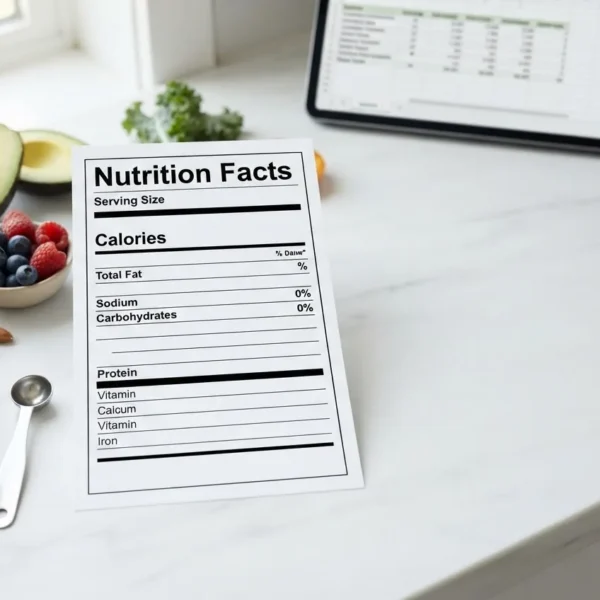
- Provide quick reference tables on the PDF for label reading: Add a one-page “How to read a Nutrition Facts label” with exact thresholds: low sodium = ≤140 mg per serving, choose ≤140 mg per serving for packaged items. Include an example: “If bread shows 200 mg sodium per slice and you eat 2 slices, sodium = 400 mg (exceeds breakfast cap)”. I often include a mini worked-label example because when I first followed DASH I missed sodium in condiments and my daily totals spiked.
- Test accessibility and print-readability: Print a test page in black-and-white and at 100% scale. Ensure tables remain legible at single column print. Check contrast and avoid tiny 8pt text — use 11–12 pt for body and 14–16 pt for subheadings. Export a second copy optimized for mobile: single-column PDF with larger type.
- Distribute and ask for feedback: Share the PDF with one person (family member or friend) for a taste test and clarity review. Ask three specific questions: Are serving sizes clear? Can they follow the grocery list? Which meals would they skip? Use feedback to correct unclear portions or unrealistic prep times.
Worked examples and calculations
Worked example 1 — Daily sodium math for meal swaps
Scenario: You planned a lunch with a canned bean salad (1/2 cup canned chickpeas) but the can lists 360 mg sodium per 1/2 cup. Your lunch target was ≤400 mg. If your sandwich and snack already total 280 mg, adding the canned beans would push lunch+snacks to 640 mg. The fix: rinse the chickpeas for 30 seconds under cold water (reduces sodium ~40% → 216 mg per 1/2 cup). New lunch sodium = 216 mg and total fits the daily cap.
Worked example 2 — Scaling recipes for 4 adults
Recipe: Roasted chicken breast (4 oz per serving) for 4 adults requires 16 oz (1 lb) cooked. Raw weight typically increases cooked-to-raw variance: buy 2.25 lbs raw breast (approximately 36% yield loss after trimming and cooking). Marinade: 2 tbsp olive oil, 2 tbsp lemon, 1 tsp paprika total. Oven roast 20–25 minutes at 400°F (204°C) until internal temp is 165°F (74°C). Portion into 4 dinners, refrigerate 3 portions and freeze 1 for later.
Recipe bank (6 repeatable low-sodium recipes with exact measures)
1. Overnight Oats (single serving)
Ingredients: 1/2 cup rolled oats (45 g), 3/4 cup unsweetened almond milk (180 ml) or 1/2 cup low-fat milk, 1 medium banana sliced, 1 tbsp chia seeds, 1 tsp cinnamon. Combine in jar, refrigerate 6+ hours. Sodium: 40 mg (milk choice alters sodium); Potassium: ≈420 mg; Calories: ≈360.
2. Lemon-Garlic Salmon (4 servings)
Ingredients: 16 oz salmon filets, 2 tbsp olive oil, 2 tbsp lemon juice, 2 garlic cloves minced, 1 tsp dried dill, pepper. Mix, bake 12–14 minutes at 400°F. Sodium per serving ≈ 25–90 mg depending on fish; Potassium ≈ 450 mg.
3. Turkey & Veggie Wrap (single serving)
1 whole-wheat wrap (choose ≤140 mg sodium), 2 oz cooked turkey breast (roast-your-own preferred), 1 cup mixed greens, 1/4 cup shredded carrot, 1 tbsp hummus (60–80 mg sodium). Roll and serve. Sodium ≈ 300–420 mg depending on bread.
4. Lentil Soup (4 servings)
Ingredients: 1 cup dry lentils (200 g), 6 cups low-sodium broth (or homemade, 140 mg sodium per cup), 2 carrots chopped, 1 onion, 2 cloves garlic, 1 tsp cumin, 1 tbsp tomato paste (check label; use low-sodium). Simmer 25–30 minutes. Per serving sodium ≈ 180–240 mg; potassium ≈ 350–450 mg.
5. Stir-Fried Veg & Tofu (2 servings)
Ingredients: 8 oz firm tofu drained, 2 cups mixed bell pepper and broccoli, 1 tbsp low-sodium soy sauce (≈300 mg per tbsp) or 1 tbsp tamari low-sodium (140 mg), 1 tbsp sesame oil, 1 clove garlic. Cook 6–8 minutes. Sodium per serving ≈ 140–220 mg if low-sodium soy used.
6. Greek Yogurt Parfait (single serving)
6 oz plain low-fat Greek yogurt, 1/2 cup mixed berries, 1 tbsp chopped walnuts, 1 tsp honey. Sodium ≈ 60–120 mg; Potassium ≈ 200–300 mg; Calories ≈ 210.
Meal-prep timings, storage and safety (exact guidelines)
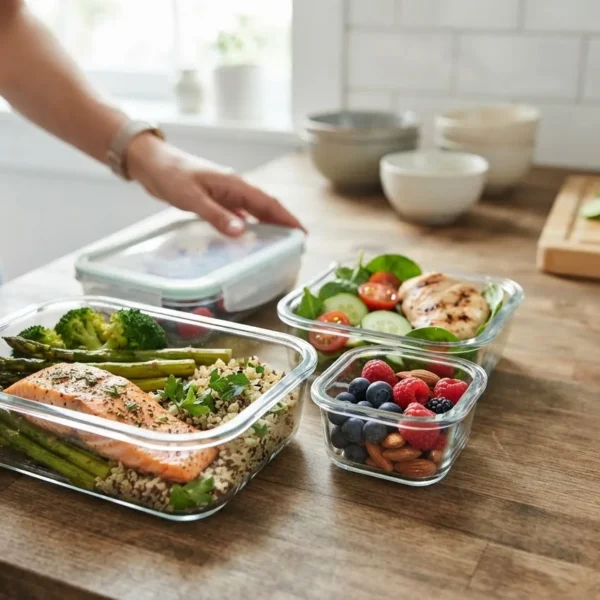
- Batch-cook grains: 2 cups dry brown rice → cook 4 cups; store in fridge up to 4 days in airtight containers.
- Cook proteins: roast or grill proteins and refrigerate within 2 hours of cooking; use within 4 days.
- Freeze portions: cool to room temp <2 hours, package airtight, freeze up to 3 months.
- Reheat to 165°F (74°C): use a probe thermometer for dense items (meat, casseroles).
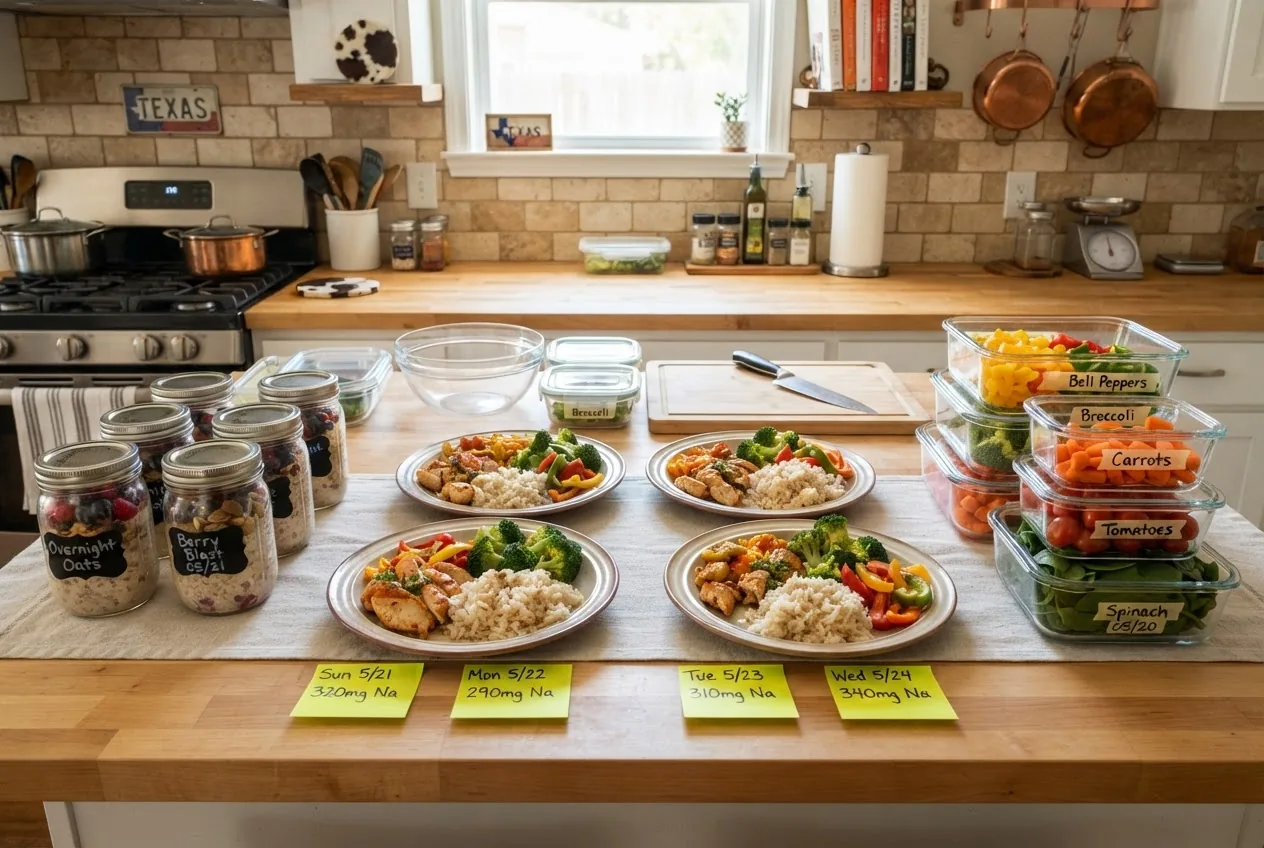
- Label containers: date cooked and use-by date (cook date + 4 days). For frozen add freeze date.
Common mistakes and how to avoid them
From my practice and testing, these are the errors I see repeatedly and exactly how I fix them.
- Underestimating sodium in ‘healthy packaged foods’: I once used a “whole grain” tortilla labeled low-fat but it had 360 mg sodium per wrap. I now always check “sodium per serving” and choose items ≤140 mg per serving. If I must use a higher-sodium product, I reduce sodium elsewhere that day by at least the same amount.
- Not rinsing canned items: When I switched to rinsed beans, the sodium dropped roughly 40% and recipes that previously exceeded the cap came back under control. Rinse canned beans for 30 seconds and subtract ~40% sodium.
- Overfilling portions at dinner: Family-style dinners led to hidden calories and sodium. I solve this by plating individually with measured portions (weigh proteins to 4 oz cooked) and offer a small second helping only after 15 minutes.
- Skipping potassium tracking: I saw one client plateau because potassium stayed low; we added a banana or 1 cup cooked spinach and potassium rose 600–800 mg/day which helped blood pressure trends. Track K+ from fruits, vegetables, and dairy toward 3,500–4,700 mg/day.
- Poor meal rotation causing waste: I used to plan too many fresh-veg-heavy dinners and had waste midweek. Now I schedule 2 freezer-friendly dinners and rotate fresh salads early in the week (Mon–Wed).
Compact checklist to verify your work
- PDF exported as dash-diet-pdf-week1.pdf and printed test page checked for legibility.
- Daily sodium budgets listed and confirmed ≤1,500 mg/day (or ≤2,300 mg variant included).
- 7-day meal chart completed with sodium, potassium and calories filled for each meal.
- Grocery list with exact quantities rounded up by 10–15% for food waste.
- At least 6 low-sodium recipes included with weights and cook times.
- Storage and reheating guidance added (165°F reheating, fridge 4 days).
- Printable MyPlate DASH plate visual and quick label-reading tips present.
- Internal links to additional resources added and clinician disclaimer present.
When to call in a professional
Work with a registered dietitian or clinician if any of the following apply: you have chronic kidney disease or eGFR <60 (potassium targets change), you are on potassium-sparing diuretics, you have uncontrolled hypertension (BP >180/110 mmHg), you are pregnant, or you have multiple comorbidities. A dietitian will personalize sodium and potassium targets, calculate precise calories and macros, and provide medical nutrition therapy. I refer clients to a dietitian if their home-measured BP does not improve after 4 weeks or if medication adjustments are required.
Internal resources and further reading
For a deeper foundation on balanced meals and broader nutrition planning see the full Nutritionally Complete Meal Guide with Balanced Diet Advice and practical shopping tools:
- Nutritionally Complete Meal Guide with Balanced Diet Advice
- 7 Day Diet Menu to Lose Weight with Meal Planning Guide
- Heart Healthy Foods Guide with Cardiac Diet Meal Planning
- Healthy Grocery List Guide for Smart and Nutritious Shopping
Pro tips from a practitioner
- Buy a small probe thermometer (cost ≈ $15–$25). I use it daily to ensure proteins reach 165°F and leftovers are safe.
- Use weekly themes to reduce decision fatigue: Mexican Monday (low-sodium beans and grilled chicken), Fish Friday, Soup Sunday.
- Keep a three-item seasoning kit: lemon juice, garlic powder, and smoked paprika — each measured when cooking (1/4–1 tsp) to copy flavor consistently.
- Track blood pressure morning and evening for two weeks after menu changes to evaluate effect.
Downloadable elements to include in your DASH diet PDF
Include these small downloads inside the PDF or as separate files when distributing:
- One-page “DASH quick start” with numeric targets (sodium, servings).
- 7-day meal planning chart in table form (fill-in-the-blank) so users can edit.
- Printable grocery checklist with exact quantities for 1 adult for one week.
- Label-reading cheat sheet: low-sodium threshold ≤140 mg/serving; serving size multiplier reminder.
Final checks before you publish the PDF
- Proofread numbers: check all sodium and potassium values against a single source (USDA FoodData Central) to avoid inconsistencies.
- Verify internal links use relative paths (done above).
- Confirm disclaimers and clinician referral language are present.
- Ensure accessible language: short sentences, bulleted lists, and clear headings.
Frequently Asked Questions
What is a DASH diet PDF and why should I use one?
A DASH diet PDF is a printable handout that summarizes DASH targets, a week of meal plans, and grocery lists. Use it as a quick reference to keep daily sodium under 1,500 mg, follow recommended servings, and simplify grocery shopping and meal prep for hypertension management.
How does the MyPlate DASH eating plan map to servings and portions?
MyPlate DASH maps servings to plate portions: half the plate vegetables and fruits, one-quarter whole grains, one-quarter lean protein, plus 1 serving low-fat dairy. Use serving-size conversions listed in this guide to hit the DASH counts (e.g., 1 cup raw leafy veg = 1 serving).
Can the DASH diet prevent hypertension and how long until I see changes?
The DASH diet can lower blood pressure within 2–4 weeks when sodium is reduced and potassium increases. Many people see measurable drops in systolic BP of 5–10 mmHg within one month when following a 1,500 mg sodium/day plan alongside reduced saturated fat.
How should I read labels to keep sodium low on a DASH plan?
Check “sodium per serving” and multiply by serving count. Prefer items ≤140 mg sodium/serving. Rinse canned foods to lower sodium ~30–40%, and avoid processed meats and ready-made sauces unless labeled low-sodium.
How much meal prep time will a DASH week require?
Initial setup (plan + PDF) takes 3–6 hours. Weekly updates and shopping take 30–60 minutes; one meal-prep session (2–3 hours) packs breakfasts, proteins and grains for 3–5 days.
What if I have kidney disease or take BP medications?
If you have kidney disease or are on potassium-altering medications, do not increase potassium without clinician approval. Consult a registered dietitian and your physician for tailored sodium and potassium targets before adopting the DASH plan.