

The best diet for longevity is a mostly plant-forward eating pattern—rich in vegetables, fruits, whole grains, legumes, nuts, olive oil and moderate fish—combined with calorie mindfulness, limited ultra-processed foods, regular physical activity and status-based supplementation; this pattern consistently links to lower chronic disease risk and longer, healthier lifespans in population studies.
What exactly do we mean by “best diet for longevity”?
Answer: The best diet for longevity is an evidence-aligned, sustainable dietary pattern that reduces chronic disease risk, preserves muscle and cognitive function, and supports healthy metabolic biomarkers across decades.
This article treats “best diet for longevity” as a practical, population- and mechanism-based approach rather than a single prescriptive menu; it prioritizes foods and behaviours shown in clinical trials, cohort studies and metabolic research to slow biological aging and prevent common age-related diseases.
Term: Longevity: the length of life combined with the quality of health during those years (healthspan).
Term: Dietary pattern: a habitual combination of foods and beverages consumed over time that determines nutrient intake and metabolic effects.
Which eating patterns have the strongest evidence for extending lifespan?
Answer: Mediterranean-style, Blue Zones/Okinawan-style, plant-forward (predominantly whole-food plant-based), DASH and moderate-calorie approaches show the strongest, reproducible associations with longer, healthier lives.
Large cohort studies and meta-analyses associate these patterns with reduced all-cause mortality, lower cardiovascular events, improved metabolic health and reduced inflammation. Randomized controlled trials show benefits for risk factors like blood pressure, LDL, HbA1c and weight.
Term: Blue Zones: geographic areas where people live significantly longer than average, often linked to shared dietary and lifestyle habits.
| Diet pattern | Core features | Evidence & benefits | Who it suits |
|---|---|---|---|
| Mediterranean | Olive oil, vegetables, legumes, whole grains, moderate fish, low red meat | Strong cohort + RCT data: lowers CVD, metabolic disease, mortality | Most adults; flexible and culturally adaptable |
| Blue Zones / Okinawan | Plant-forward, soy/legumes, low-calorie density, community meals | Observational longevity clusters; strong population signals | People seeking community-based, lifestyle-integrated changes |
| Whole-foods plant-forward | Minimally processed plants, limited animal products | Reduces CVD, diabetes risk; improves weight and inflammation | Health-motivated individuals and those with metabolic disease |
| DASH | Low sodium, high potassium, fruits, veggies, low-fat dairy | Proven BP reductions; lower CVD risk | People with hypertension or high CVD risk |
| Caloric restriction / CR mimetics | Sustained reduced calorie intake, or drugs/nutrients that mimic CR | Strong animal data; human biomarker improvements but adherence issues | Monitored clinical settings; not for everyone |
What foods should I prioritise for long-term health?
Answer: Prioritise vegetables, fruits, legumes, whole grains, nuts, seeds, olive oil, oily fish, and fermented foods; these supply fiber, phytonutrients, unsaturated fats and nutrients that protect against chronic disease.
Term: Phytonutrients: plant-derived compounds (e.g., polyphenols, carotenoids) that reduce oxidative stress and inflammation.
- Leafy greens & colourful vegetables: high nitrate, antioxidants and fiber; linked to slower cognitive decline.
- Legumes: beans, lentils and chickpeas stabilise blood sugar and provide plant protein.
- Whole grains: oats, brown rice, quinoa for consistent energy, fiber and improved lipids.
- Nuts & seeds: supply healthy fats, vitamin E, magnesium and satiety; associated with lower mortality.
- Olive oil & other monounsaturated fats: heart-protective when replacing saturated fats.
- Oily fish (2–3x/week): source of EPA/DHA omega-3 fats that reduce CVD risk.
- Fruits (esp. berries): rich in polyphenols improving vascular and cognitive markers.
- Fermented foods: yogurt, kefir, natto for gut microbiome diversity linked to systemic health.
Choose whole, minimally processed forms of these foods, prioritise variety, and fit them into weekly patterns—eating daily servings across meals improves nutrient adequacy and longevity biomarkers.
What foods and habits accelerate aging or worsen long-term health?
Answer: Regular intake of ultra-processed foods, sugar-sweetened beverages, excessive red and processed meats, industrial trans fats, high-salt processed meals and chronic overeating raise inflammation, cardiometabolic risk and mortality.
Term: Ultra-processed foods: industrial formulations with additives, refined starches, sugars, hydrogenated fats and little intact food (examples: sweetened cereals, many ready meals, packaged snacks).
- Sugary drinks: rapid effects on weight gain, insulin resistance and fatty liver risk.
- Processed meats: linked to higher colorectal cancer and CVD risk in dose-dependent manner.
- High-sodium packaged foods: worsens blood pressure and cardiovascular workload.
- Frequent overeating/nighttime eating: disrupts circadian metabolism and accelerates insulin resistance.
- Chronic alcohol excess: increases cancer and liver disease risk; keep within low-risk guidelines.
How many calories and what macronutrient balance supports longevity?
Answer: Aim for calorie intake that maintains healthy body composition (avoid chronic positive energy balance), moderate protein (1.0–1.2 g/kg for most adults, higher for older adults), predominantly unsaturated fats, and carbohydrates from whole-food sources—adjust to age, activity and goals.
Term: Macronutrients: the three major nutrient classes—protein, fat and carbohydrates—that supply energy and building blocks for the body.
General starting ranges for healthy adults pursuing longevity:
- Calories: individually determined to maintain stable, healthy weight; typical ranges 1,600–3,000 kcal depending on sex, age and activity.
- Protein: 1.0–1.2 g/kg body weight daily for adults; 1.2–1.5 g/kg for older or sarcopenic adults to preserve muscle.
- Fat: 25–35% of calories, prioritising monounsaturated and omega-3 fats; saturated fat <7–10% for high CVD risk individuals.
- Carbohydrates: 40–55% of calories from whole grains, fruits, vegetables and legumes; limit refined sugars and starches.
Worked example: a 70 kg moderately active adult
Answer: For a 70 kg adult needing ~2,200 kcal to maintain weight: protein 70–84 g/day, fat 61–86 g/day, carbs 220–303 g/day—focused on quality not just totals.
Calculation steps:
- Estimated energy needs: ~2,200 kcal/day (varies by sex/age/activity).
- Protein: 1.0–1.2 g/kg = 70–84 g (280–336 kcal from protein).
- Fat: 30% of kcal ≈ 660 kcal → 73 g (choose olive oil, nuts, fish).
- Carbs: remaining calories ≈ 1,204–1,260 kcal → 301–315 g from whole grains, fruits, legumes.
Adjust macros for weight loss, gain or medical goals; older adults should prioritise slightly higher protein and resistance training to prevent muscle loss.
Is intermittent fasting or time-restricted eating useful for longevity?
Answer: Time-restricted eating (e.g., 10–12 hour eating window) and intermittent fasting can improve metabolic markers—insulin sensitivity, blood pressure, weight—and may support longevity mechanisms, but long-term human lifespan data is limited; choose approaches you can maintain safely.
Term: Time-restricted eating: limiting daily eating to a fixed number of consecutive hours each day, often 8–12 hours, aligning feeding with circadian rhythms.
Mechanisms proposed include improved circadian alignment, reduced overall calorie intake, enhanced autophagy and metabolic flexibility. Clinical trials show consistent short-term benefits for weight and cardiometabolic biomarkers; long-term adherence and effects on human lifespan are still under investigation. Contraindications include pregnancy, type 1 diabetes, eating disorder history, and certain medications—consult a clinician before starting.
How should protein intake change with age to support longevity?
Answer: Increase protein modestly with age—target 1.0–1.5 g/kg/day in older adults to maintain muscle mass and function, distribute protein evenly across meals, and include high-quality sources rich in leucine.
Term: Sarcopenia: age-related loss of muscle mass and strength that increases fall and disability risk.
Older adults experience anabolic resistance, meaning muscles respond less to dietary protein; therefore higher per-meal protein (25–40 g with adequate leucine) and resistance exercise maximise muscle protein synthesis. Prioritise complete proteins (dairy, eggs, fish) or combine plant proteins (legumes + grains) and consider a professional assessment for frail individuals.
Do supplements help people following a longevity diet?
Answer: Supplements can fill specific nutrient gaps—vitamin D, B12 (for vegans), and omega-3 (if fish intake is low) are common evidence-based options; however, whole-food sources are preferred and supplementation should be personalised with blood testing and clinical guidance.
Key, commonly recommended supplements for longevity contexts:
- Vitamin D: deficiency is common and linked to poorer outcomes; dose based on serum 25(OH)D levels.
- Vitamin B12: required for vegans and older adults with absorption issues.
- Marine omega-3 (EPA/DHA): when dietary fish intake is insufficient, helps cardiovascular health.
- Protein supplements: useful for older adults unable to meet needs from food.
Evidence for many other “longevity supplements” (resveratrol, NAD+ precursors, rapalogs) is preliminary; discuss any off-label or experimental approaches with a clinician. For guidance, see the practical supplement overview in our internal /nutrition-tips/best-supplements-guide-for-nutritional-and-health-support/.
How do you build a weekly meal plan that supports long-term health?
Answer: Build a weekly plan that prioritises daily servings of vegetables, legumes or lean protein, whole grains, nuts/seeds, and two to three fish servings per week; schedule consistent meals, plan snacks, and prepare batches to increase adherence.
Principles to apply when constructing a weekly plan:
- Start each meal with vegetables or salad to increase satiety and nutrient density.
- Include a protein source at every meal, aiming for 20–35 g per meal depending on needs.
- Choose whole grains and starchy vegetables for sustained energy; limit refined carbs.
- Use healthy fats for cooking and flavor—olive oil, avocado, nuts.
- Plan two plant-based dinners and two fish-based dinners weekly to diversify nutrients.
- Batch cook legume stews, roasted vegetables, and whole grains for quick meals.
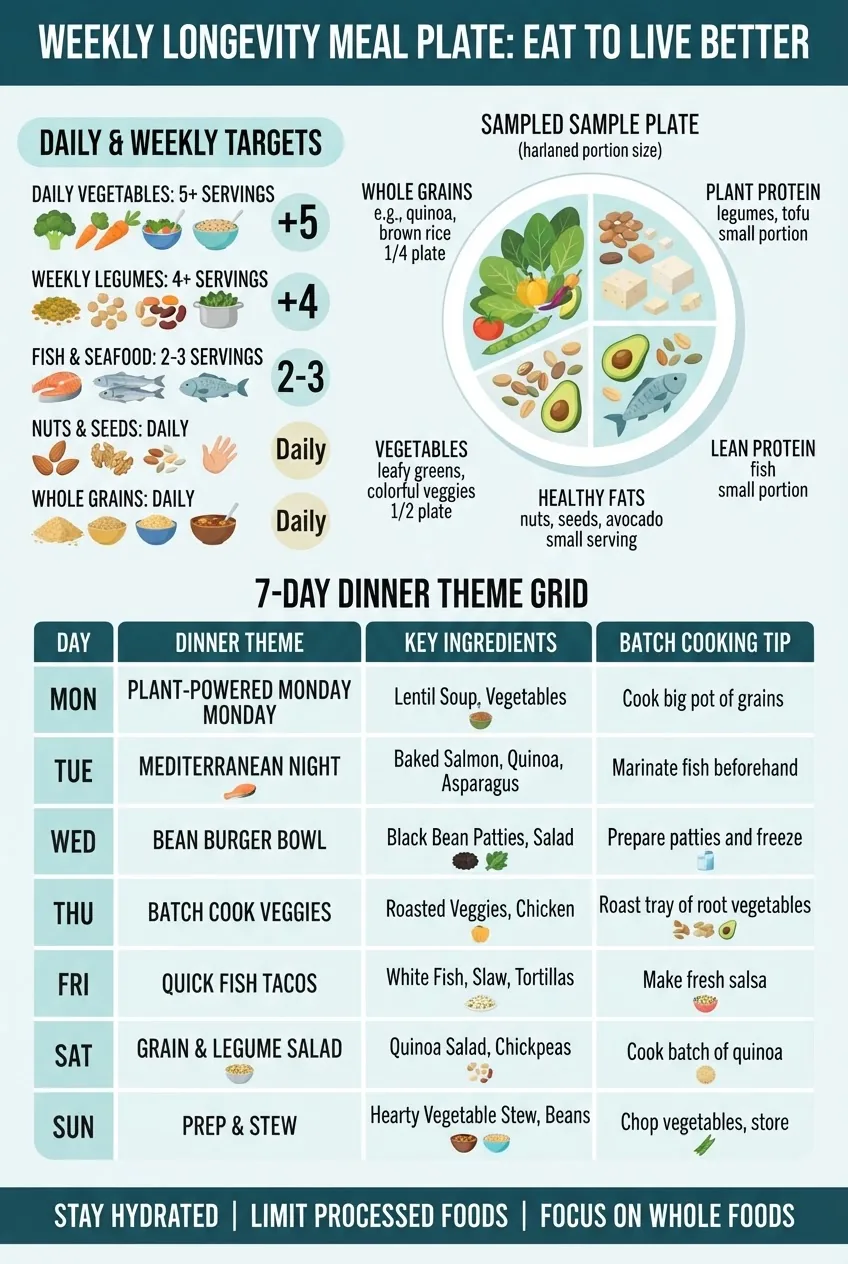
Example 3-day template with portions for a 2,000 kcal target
Answer: Three-day rotating template: Day 1 fish + veggies, Day 2 legume stew + whole grain, Day 3 poultry or tofu stir-fry—each meal contains vegetables, a protein, whole grain or starchy veg, healthy fat and a fruit or fermented food for dessert.
- Breakfast: Greek yogurt (or fortified plant alternative) with berries, 1 oz nuts, and ½ cup oats.
- Lunch: Mixed salad with 4 oz grilled salmon (or chickpea salad), olive oil dressing, 1 cup quinoa.
- Dinner: Legume-based chili with vegetables, 1 cup brown rice, side steamed greens.
- Snacks: Fruit, small handful of nuts, or carrot sticks with hummus.
Rotate themes and use leftovers for lunches to reduce decision fatigue and food waste. For strategies to improve everyday choices, see /nutrition-tips/10-ways-to-eat-better-guide-with-essential-diet-tips/ and /nutrition-tips/what-should-i-be-eating-everyday-guide-to-balanced-nutrition/.
How should you monitor progress and which tests give actionable feedback?
Answer: Track body composition, waist circumference, blood pressure, fasting glucose/HbA1c, lipid panel, vitamin D, and inflammatory markers (hs-CRP); use these metrics quarterly to annually to adjust diet and activity.
Measurable markers and suggested monitoring frequency:
| Metric | Why it matters | Suggested frequency |
|---|---|---|
| Body weight & waist | Energy balance and visceral fat risk | Monthly (weight), quarterly (waist) |
| Blood pressure | Cardiovascular risk predictor | At home weekly; clinical check annually |
| Fasting glucose / HbA1c | Diabetes risk and glycemic control | Annual or more if at-risk |
| Lipid panel | Cardiovascular risk and dietary fat response | Annual or per clinician advice |
| Vitamin D, B12 | Deficiency can impair healthspan | Annually, or when supplementing/at-risk |
| hs-CRP / inflammatory markers | Chronic inflammation predicts morbidity | Conditional testing every 6–12 months |
Work with a clinician to interpret results. Small improvements in glucose and lipids can appear within weeks to months; structural changes like atherosclerosis require years to shift meaningfully.
How do exercise, sleep and social factors interact with diet for longevity?
Answer: Diet produces the largest controllable effect on blood lipids, weight and glucose; combining it with resistance and aerobic exercise, 7–9 hours sleep, stress reduction and strong social ties multiplies benefits for muscle, metabolic health and cognitive resilience.
Key interactions:
- Resistance training: boosts muscle protein synthesis and potentiates protein intake benefits—critical to prevent sarcopenia.
- Aerobic exercise: improves insulin sensitivity and cardiovascular fitness, enhancing diet benefits.
- Sleep: poor sleep disrupts appetite hormones and glucose control; aligning eating windows with circadian rhythm improves metabolic outcomes.
- Social connection: communal eating and social support increase adherence to healthy patterns commonly seen in Blue Zones.
What practical barriers stop people adopting a longevity diet and how to overcome them?
Answer: Common barriers are time, cost perceptions, taste preferences and decision fatigue; solve them with batch cooking, cost-effective plant proteins, simple seasoning strategies and small habit changes that stack gradually.
Actionable solutions:
- Time: prepare large pots of legumes/grains on weekends; use slow cooker or sheet-pan recipes.
- Cost: buy in-season produce, frozen vegetables, dried beans and bulk grains to lower per-meal expense.
- Taste: learn 4–6 flavor combinations (acid, fat, salt, heat, herb) to make simple foods satisfying.
- Decision fatigue: create a rotating four-week menu and shopping list to reduce daily choices.
How quickly do dietary changes affect health markers and perceived wellbeing?
Answer: Improvements in blood glucose, blood pressure and mood can appear within days to weeks; lipids and body composition typically change over weeks to months; disease risk reductions accumulate over years of sustained habits.
Typical timelines:
- Days: lower post-meal glucose excursions and reduced bloating after cutting refined carbs.
- Weeks (2–12): weight loss, improved fasting glucose, lower triglycerides and better blood pressure.
- Months (3–12): meaningful LDL reductions, improved fitness and body composition.
- Years: reduced incidence of cardiovascular events, diabetes onset and some cancers with long-term adherence.
Are there specific dietary changes recommended for people over 60?
Answer: Yes—prioritise higher-quality protein (1.2–1.5 g/kg), vitamin B12 and D monitoring, calcium/weight-bearing exercise for bone health, and adjust calories for lower activity while maintaining nutrient density to prevent sarcopenia and frailty.
Older adults should:
- Ensure adequate protein per meal with leucine-rich sources (dairy, eggs, fish, soy).
- Focus on nutrient-dense snack options to meet micronutrient needs without excess calories.
- Work on balance and strength training to translate nutritional gains into functional capacity.
See our targeted guidance at /nutrition-tips/healthy-diet-for-women-over-50-with-senior-nutrition-guide/ and /nutrition-tips/healthy-eating-for-seniors-guide-with-nutrition-planning-tips/ for age-specific meal planning ideas.
When should you consult a healthcare professional about your diet?
Answer: Consult a clinician or registered dietitian when you have chronic disease (diabetes, heart disease, kidney disease), unexplained weight loss/gain, nutrient deficiencies, medication interactions, or if you plan radical caloric restriction or major supplement regimens.
If you need structured guidance or medical monitoring, consider a registered dietitian consult (in person or online); see /nutrition-tips/nutritionist-online-guide-with-virtual-diet-consultation-options/ for practical next steps and how to choose a qualified professional.
How do cultural preferences and local food availability affect implementing a longevity diet in Texas?
Answer: Local foods in Texas—fresh vegetables, legumes, seafood along the Gulf, lean poultry and whole grains—can be integrated into Mediterranean/Blue Zones patterns; adapt recipes to regional tastes while preserving core nutrient principles.
Practical Texas-adaptations:
- Use black beans, pinto beans and grilled fish as protein staples.
- Replace high-fat barbecue sides with grilled vegetables, salads, and whole-grain tortillas.
- Incorporate locally available produce—collards, sweet potatoes, peppers, citrus—into daily meals.
What are evidence-backed strategies to maintain a longevity diet long-term?
Answer: Use habit stacking, social accountability, meal prep routines, periodic re-assessment of biomarkers, and flexible rules (e.g., 80/20 principle) to create a resilient, enjoyable long-term pattern rather than rigid short-term fixes.
Concrete tactics:
- Set non-scale goals: energy, mobility, lab improvements.
- Prepare two large vegetable-based recipes weekly for quick meals.
- Plan for occasional discretionary treats to avoid deprivation and improve sustainability.
- Track a small set of metrics (weight, waist, BP) and labs annually to maintain motivation.
How much does a longevity-friendly diet cost and how can you reduce expenses?
Answer: A longevity-focused diet can be affordable when you favour seasonal produce, legumes, frozen vegetables and whole grains; cost per meal often drops below processed convenience meals when cooked at home and planned in batches.
Ways to cut costs:
- Buy dried beans and lentils in bulk instead of canned varieties.
- Choose frozen berries and vegetables which retain nutrients and lower price volatility.
- Purchase whole chickens or fish fillets and use leftovers across meals.
- Use simple seasoning and one-pot recipes to minimise waste and time.
What are common troubleshooting scenarios and fixes when a longevity diet isn’t working?
Answer: If weight stalls, reassess calories and activity; if energy or mood drops, check macronutrient balance and micronutrients (iron, B12, vitamin D); if hunger is excessive, increase protein, fiber and healthy fats at meals.
Specific fixes:
- Persistent hunger: increase protein to target, add legumes or nuts, and assess meal timing.
- Plateaued weight loss: track intake for a week, adjust portion sizes, and increase NEAT (non-exercise activity thermogenesis).
- Low energy: screen for iron deficiency, hypothyroidism, poor sleep and consider small carbohydrate redistribution around workouts.
How should you personalise the longevity diet to genetics, medical history and personal goals?
Answer: Personalisation should consider family disease history, current medical conditions, medication interactions, and personal preferences; use diagnostic tests and professional input to modify macronutrients, sodium, potassium, and supplement needs.
Personalisation steps:
- Collect baseline labs and medical history.
- Identify modifiable risks (high LDL, hypertension, prediabetes).
- Create a meal framework that addresses those risks (e.g., DASH for hypertension, increased fiber for hyperlipidemia).
- Monitor and iterate every 3–6 months using objective markers.
Where can I find reliable recipes and further practical guidance?
Answer: Use trusted nutrition resources, registered dietitian-produced meal plans, and evidence-based guides in our cluster—start with the pillar Nutritionally Complete Meal Guide and sibling practical guides for daily food choices and 7-day menus.
Internal resources to consult:
- Nutritionally Complete Meal Guide with Balanced Diet Advice
- 10 Ways to Eat Better Guide with Essential Diet Tips
- 7 Day Diet Menu to Lose Weight with Meal Planning Guide
Frequently Asked Questions
What is the single best food to add for longevity?
A single best addition is vegetables—especially leafy greens—because they provide fiber, potassium, nitrates, folate and polyphenols that reduce blood pressure, improve endothelial function and supply a diverse set of micronutrients linked to lower mortality.
Can I follow a longevity diet if I’m vegetarian or vegan?
Yes. A plant-based longevity diet works well when planned to provide adequate protein (combine legumes and grains), vitamin B12 (supplement if vegan), iron and omega-3s (ALA sources and consider algae DHA or fish if acceptable).
How much fish should I eat for longevity benefits?
Aim for two to three 3–4 ounce (85–115 g) servings of oily fish per week (e.g., salmon, mackerel) to provide EPA and DHA levels associated with cardiovascular risk reduction; if not consuming fish, consider a marine omega-3 supplement after clinical discussion.
Is reducing carbohydrates necessary for longevity?
Not universally; carbohydrate quality matters more than quantity—prioritise whole grains, legumes and vegetables while limiting refined sugars and ultra-processed carbs; low-carb approaches can help some people with metabolic disease but are not required for everyone.
How do I balance calorie reduction for longevity without losing muscle?
Combine modest calorie reduction with higher relative protein intake (1.2–1.5 g/kg for older adults), distribute protein across meals, and perform regular resistance training to preserve lean mass during weight loss.
Are anti-inflammatory diets better for longevity?
Yes—diets rich in whole plant foods, omega-3 fats, polyphenols and low in processed foods reduce chronic inflammation markers like hs-CRP, and lower inflammation correlates with reduced age-related disease and mortality.
Can alcohol be part of a longevity diet?
Moderate alcohol intake (if consumed at all) should be limited—no more than one drink per day for women and up to two for men, with lower intake preferable; alcohol increases certain cancer risks even at low levels.
How can I make the longevity diet affordable on a tight budget?
Buy seasonal and frozen produce, use dried beans and lentils, buy whole grains in bulk, plan batch meals, and prioritise plant proteins which generally cost less per gram of protein than many animal sources.