
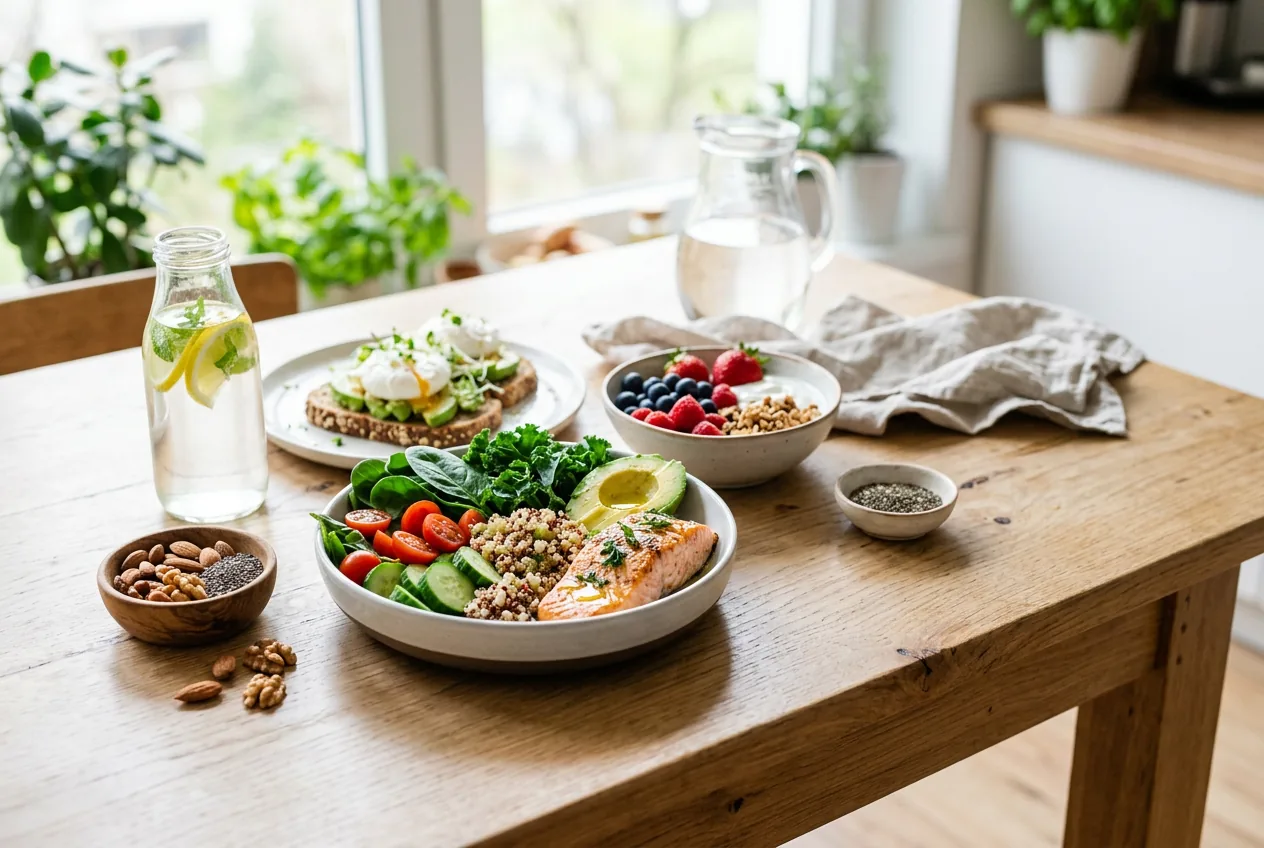
Eat a variety of vegetables, fruits, whole grains, lean protein, healthy fats and dairy or fortified alternatives every day, aiming for portion control and nutrient density; prioritize fiber, omega-3 fats, and potassium while matching total calories to your goals for weight, activity and health conditions.
What should I be eating every day for balanced nutrition?
Answer: Every day, prioritize vegetables, fruit, whole grains, quality protein, healthy fats, and calcium-rich foods in portions that match your calorie needs; emphasize nutrient-dense choices and steady protein across meals to preserve muscle and satiety.
Macronutrient: a nutrient class needed in large amounts for energy and structure—carbohydrates, proteins, and fats.
Balance means each meal contains:
- Vegetables and fruit for vitamins, minerals and fiber.
- Whole grains or starchy vegetables for energy and B vitamins.
- Lean protein to maintain muscle and metabolic health.
- Healthy fats (unsaturated fats) for cell function and fat-soluble vitamins.
- Calcium-rich foods or fortified alternatives for bone health.
What are the core food groups and how many servings should I eat daily?
Answer: Aim for daily servings roughly split between vegetables (3–5 cups), fruit (1.5–2 cups), whole grains (3–8 servings depending on calories), protein (2–6 servings), dairy/alternatives (2–3 servings), and fats in moderation to fit calorie needs.
Serving: a standard measured portion used to count food intake (for example, 1 cup vegetables or 1 ounce grains).
| Group | Typical serving examples | Daily range (per person) |
|---|---|---|
| Vegetables | 1 cup raw leafy, ½ cup cooked veg | 3–5 cups (mixed types) |
| Fruit | 1 medium fruit or ½ cup chopped | 1.5–2 cups |
| Whole grains | 1 slice bread, ½ cup cooked rice/oats | 3–8 servings (calorie-dependent) |
| Protein (lean) | 3 oz cooked meat, ¼ cup beans, 1 egg | 2–6 servings (15–30 g protein per meal) |
| Dairy or fortified alternative | 1 cup milk, ¾ cup yogurt, 1.5 oz cheese | 2–3 servings |
| Fats (healthy) | 1 tsp oil, 1/8 avocado, 1 tbsp nuts | 2–6 small portions to meet calorie needs |
Adjust servings by total daily calories, sex, age, and activity—the table above maps typical ranges rather than exact prescriptions.
Which 3 nutrients should you strive to get more of?
Answer: Prioritize more dietary fiber, omega-3 fatty acids, and potassium because they support heart health, metabolic balance, blood pressure control, and long-term disease prevention.
Fiber: indigestible plant carbohydrate that slows digestion, supports gut health, and reduces heart disease risk.
- Dietary fiber — Target 25–38 grams daily from whole grains, legumes, vegetables, fruit, nuts, and seeds; fiber lowers LDL cholesterol, stabilizes blood sugar, and supports bowel regularity.
- Omega-3 fats — Include EPA/DHA from fatty fish (salmon, sardines) twice weekly or plant ALA sources (flaxseed, walnuts); omega-3s reduce inflammation and support brain and heart health.
- Potassium — Aim for ~3,500–4,700 mg daily through fruits, vegetables, potatoes, beans and dairy; potassium helps lower blood pressure and balance sodium effects.
Food-first strategies:
- Boost fiber: swap refined bread for oats, brown rice, or barley; add beans to soups and salads; eat fruit with skin when edible.
- Boost omega-3s: have two 3–4 oz servings of fatty fish per week or consider algae-based supplements if vegan.
- Boost potassium: add a banana, a baked sweet potato, and a cup of cooked spinach across the day.
How many calories should I eat and how do portions change by goal?
Answer: Calories depend on age, sex, height, weight, and activity—general daily ranges are 1,400–1,800 for weight loss in many women, 1,800–2,400 maintenance for women, and 2,200–3,000 for men; adjust portions and macronutrients to meet your goal.
Calorie: a unit of energy; dietary calories represent kilocalories that fuel body functions and activity.
Quick method to estimate maintenance calories: multiply body weight in pounds by 10–15 for sedentary to active lifestyles; modify by ±300–500 kcal/day for slow weight change. Example worked calculations follow to show portioning:
Worked example: 1,500 kcal day (weight loss)
Answer: A 1,500 kcal day typically targets ~25–30% protein, 30–35% fat, and 35–45% carbohydrate with three meals and one snack to maintain satiety and preserve muscle.
- Protein: 25% ≈ 94 g (376 kcal)
- Fat: 30% ≈ 50 g (450 kcal)
- Carbs: 45% ≈ 169 g (676 kcal)
Sample menu:
- Breakfast: 1 cup cooked oats (150 kcal), 1 tbsp peanut butter (90 kcal), 1 cup berries (50 kcal) — 290 kcal.
- Lunch: Large salad with 3 oz grilled chicken (140 kcal), 2 cups mixed greens, ½ cup quinoa (110 kcal), 1 tbsp olive oil vinaigrette (120 kcal) — 370 kcal.
- Snack: Greek yogurt ¾ cup (120 kcal) with 1 tbsp flaxseed (40 kcal) — 160 kcal.
- Dinner: 4 oz salmon (240 kcal), 1 cup roasted Brussels sprouts (60 kcal), ½ cup brown rice (110 kcal) — 410 kcal.
- Evening fruit: 1 medium apple (95 kcal) — 95 kcal.
Total ≈ 1,325 kcal — add portion increases (extra ½ cup grains, 1 tsp oil) to reach 1,500 kcal while keeping protein steady.
Worked example: 2,000 kcal day (maintenance)
Answer: A 2,000 kcal day usually provides 20–30% protein (100–150 g), 25–35% fat, and remainder carbohydrate; distribute food across three meals and snacks to sustain activity and recovery.
Sample menu:
- Breakfast: 2 eggs scrambled (140 kcal), 1 slice whole-grain toast (80 kcal), 1 cup spinach sautéed (40 kcal) — 260 kcal.
- Snack: 1 banana (105 kcal) with 12 almonds (85 kcal) — 190 kcal.
- Lunch: Turkey sandwich with 4 oz turkey (120 kcal), 2 slices whole-grain bread (160 kcal), 1 cup raw veggies, 1 tbsp mustard — 300 kcal.
- Snack: Hummus ¼ cup (100 kcal) with carrot sticks (30 kcal) — 130 kcal.
- Dinner: 5 oz grilled chicken (230 kcal), 1 cup cooked quinoa (220 kcal), 1 cup steamed broccoli (55 kcal) — 505 kcal.
- Dessert: ¾ cup low-fat yogurt (120 kcal) with 1 tbsp honey (64 kcal) — 184 kcal.
Total ≈ 1,569 kcal — increase grain/protein portions or add healthy fats to reach 2,000 kcal matched to activity demands.
Worked example: 2,500 kcal day (active individuals)
Answer: A 2,500 kcal day supports higher activity or muscle gain; aim for 1.2–1.6 g/kg protein, adequate carbs for performance, and healthy fats to round out calories.
Sample menu includes larger portions and nutrient-dense snacks: breakfast with oats and peanut butter, lunch with 6 oz lean protein and 1.5 cups grains, two snacks containing nuts and fruit, and a calorie-dense dinner with vegetables and healthy oils. Adjust macros to maintain lean mass during training.
What does a balanced meal look like on my plate?
Answer: A balanced plate is roughly half vegetables and fruit, one-quarter lean protein, and one-quarter whole grains or starchy vegetables, with a small serving of healthy fat and a calcium source as needed.
Plate method: a visual approach to portioning meals using the plate as the guide: 50% non-starchy vegetables/fruits, 25% protein, 25% carbohydrate.
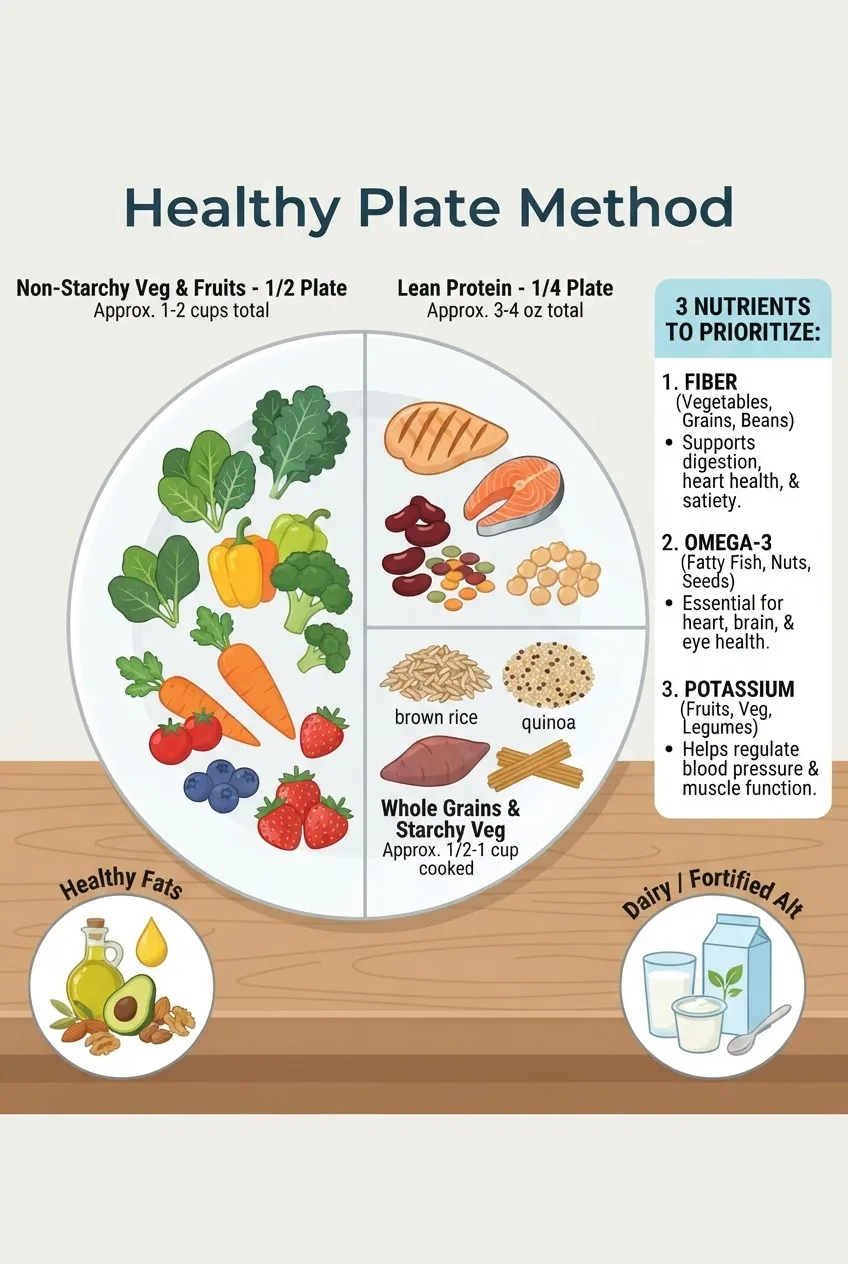
Practical plate examples:
- Breakfast plate: vegetable omelet (2 eggs + vegetables), ½ cup cooked oats, 1 small fruit — protein + veg + whole grain.
- Lunch plate: bowl with 3 oz grilled salmon, 2 cups mixed greens, ½ cup cooked farro, 1 tbsp olive oil — balanced macro and micronutrient mix.
- Dinner plate: 4 oz tofu stir-fry with 1 cup mixed vegetables and 1 cup sweet potato cubes — plant protein, veg, starchy vegetable.
How do I build a weekly grocery list that matches daily needs?
Answer: Build a list based on your meal templates, buying vegetables (frozen and fresh), fruits, whole grains, lean proteins, dairy/fortified alternatives, nuts, seeds and pantry staples; plan portions for the week and buy batch-friendly items to minimize waste and cost.
Grocery planning rules:
- Plan 3–5 core dinners and reuse ingredients across lunches and breakfasts to simplify shopping.
- Buy frozen vegetables and fruits to extend freshness and reduce spoilage.
- Choose whole-grain staples: brown rice, oats, whole-wheat pasta, quinoa.
- Stock lean protein: canned fish, chicken breast, tofu, eggs, legumes.
- Include healthy fats: olive oil, avocados, nuts, seeds.
- Buy dairy or fortified plant milks for calcium and vitamin D.
Sample one-week shopping list for one adult (approximate):
- Vegetables: 2 heads of leafy greens, 6 carrots, 1 lb broccoli, 1 lb bell peppers, 2 sweet potatoes.
- Fruits: 7 bananas, 4 apples, 2 pints berries (or frozen), 3 oranges.
- Grains: 2 lb brown rice, 1 lb oats, 1 package whole-grain bread.
- Proteins: 3–4 chicken breasts (about 2 lb), 2 cans tuna or 2 filets salmon, 2 cans beans, 1 block tofu, 1 dozen eggs.
- Dairy/alternatives: 1 quart milk or fortified plant milk, 1 container plain yogurt.
- Pantry: olive oil, nut butter, nuts, seeds, vinegar, spices, low-sodium broth.
Prep tips:
- Batch-cook grains and proteins on one day and portion into containers for 3–4 days.
- Pre-cut vegetables for snacks and fast sautéing.
- Freeze single-serving cooked meals to maintain variety and reduce daily cooking time.
How should I adapt everyday eating for common dietary restrictions?
Answer: Replace restricted foods with nutritionally equivalent alternatives—vegetarians/vegans need extra plant protein, B12 and iron attention; gluten-free eaters choose naturally gluten-free grains; lactose intolerance relies on lactose-free or fortified alternatives while preserving calcium intake.
RDA: Recommended Dietary Allowance—the average daily intake level sufficient to meet the nutrient requirement of most healthy people.
Common adaptations and key nutrient reminders:
- Vegetarian: prioritize legumes, dairy or eggs, nuts, and whole grains; monitor iron and B12; consider fortified foods or B12 supplements.
- Vegan: emphasize soy, legumes, tofu, tempeh, seitan (if gluten-tolerant), quinoa; use fortified plant milks for calcium and vitamin D; consider B12 and algae-based omega-3 supplements.
- Gluten-free: use brown rice, quinoa, buckwheat, millet and certified gluten-free oats; check labels on processed foods for hidden gluten.
- Lactose intolerance: use lactose-free milk or fortified plant milks and include calcium-rich leafy greens, canned salmon with bones, or fortified products.
What supplements might support a daily eating plan and when are they necessary?
Answer: Supplements can fill persistent dietary gaps—common, evidence-backed choices include vitamin D, B12 (for vegans), omega-3 (if low fish intake), and a basic multivitamin when food diversity is limited; get blood tests or dietitian advice before starting.
| Supplement | Typical dose | When to consider |
|---|---|---|
| Vitamin D | 600–2,000 IU/day or per lab-based recommendation | Low sun exposure, older adults, low serum 25(OH)D |
| Vitamin B12 | 250–1,000 mcg orally daily (or monthly injection if deficient) | Strict vegetarians/vegans, older adults with absorption issues |
| Omega-3 (EPA/DHA) | 250–1,000 mg combined EPA+DHA daily | Low fish intake, cardiovascular risk |
| Iron | Per deficiency treatment; often 18 mg/daily for prevention in menstruating women | Documented iron-deficiency anemia or at-risk groups (pregnant, heavy menstrual bleeding) |
| General multivitamin | One tablet daily (varies) | When diet lacks diversity or during recovery; not a substitute for good food |
Safety note: High-dose supplements can interact with medications and cause harm—get labs and professional advice before starting therapeutic doses.
How can I track my intake without obsessing over every calorie?
Answer: Use the plate method, simple portion rules, and occasional food logs: track one week to identify gaps, then switch to plate-based portions and periodic checks rather than constant logging.
Practical tracking steps:
- Start with a 3–7 day food diary to establish baseline intake—use a phone app or paper and note portions.
- Assess alignment with the plate method and the three priority nutrients (fiber, omega-3, potassium).
- Adopt simple rules: half plate vegetables, ¼ plate protein (3–4 oz), ¼ plate whole grains, include a fruit portion and a fat source.
- Weigh or photograph meals once weekly to confirm portions; adjust if weight or performance trends diverge from goals.
When to seek professional help:
- Persistent unexplained weight loss/gain, low energy, or abnormal lab results.
- Complex medical conditions (kidney disease, heart failure, severe food allergies) that change nutrient targets.
- Need individualized meal plans—for example, performance athletes or people with metabolic disorders should consult a registered dietitian or physician.
How do I make healthy eating affordable and time-efficient?
Answer: Save money by buying staples in bulk, choosing seasonal produce, using frozen fruits/vegetables, planning batch meals, and focusing on plant proteins like beans and lentils which are cost-effective and nutrient-dense.
Cost-saving tactics:
- Buy whole grains and legumes dried in bulk—cheaper per serving than canned or packaged alternatives.
- Use frozen produce for smoothies, stews, and stir-fries—nutrient retention and lower waste.
- Shop sale flyers and plan meals around discounted proteins; rotate cheaper animal or plant proteins through the week.
- Cook large casseroles or grain bowls and freeze single portions for grab-and-go meals.
How do I handle common pitfalls like cravings, late-night eating, or eating out?
Answer: Manage cravings by balancing protein and fiber at meals, schedule a small planned treat to reduce binge risk, choose grilled or steamed dishes when dining out, and prioritize portion control and vegetables to limit excess calories.
Targeted tactics:
- Cravings: have a protein-rich snack and water first; wait 10–15 minutes and reassess hunger.
- Late-night eating: shift the main carbohydrate earlier in the day and include protein at dinner to reduce night hunger; if eating late, choose a small protein-rich snack rather than calorie-dense sweets.
- Eating out: scan menu online to choose grilled/roasted items, ask for sauces on the side, and substitute fries for vegetables or salad.
How should I change everyday eating as I age?
Answer: As metabolism and muscle mass change with age, increase protein to preserve muscle (1.0–1.2 g/kg body weight), maintain calcium and vitamin D for bone health, and prioritize fiber and potassium to support digestion and blood pressure.
Age-focused adjustments:
- Protein distribution: aim for 20–30 g high-quality protein per meal.
- Bone health: ensure 1,000–1,200 mg calcium daily from diet or fortified products; monitor vitamin D status.
- Digestive changes: increase fiber gradually and keep fluids high to prevent constipation.
How does physical activity change what I should eat every day?
Answer: Activity raises calorie and carbohydrate needs for performance and recovery; increase carbohydrate around workouts and keep protein intake elevated to support muscle repair (20–40 g per meal or 0.25–0.4 g/kg per feeding post-exercise).
Pre- and post-workout guidance:
- Pre-workout (1–3 hours): a mixed meal with carbohydrates and protein (e.g., toast with nut butter and banana).
- Post-workout (within 1 hour): 20–40 g protein and carbohydrate to refill glycogen and start repair (e.g., yogurt with fruit or a chicken sandwich).
- Hydration: include electrolyte-rich foods or beverages for sessions longer than 60–90 minutes or in high heat.
Where can I find reliable additional guidance or personalized plans?
Answer: Consult a registered dietitian for personalized meal plans, use evidence-backed nutrition resources, and cross-reference with reputable guides for specifics on clinical needs; start with comprehensive guides and then local professionals for tailored care.
Recommended next reads on this site:
- Nutritionally Complete Meal Guide with Balanced Diet Advice — for structured meal templates and nutrient completeness.
- 12 Foods You Should Eat Everyday for Health and Wellness — quick list of high-impact foods.
- Healthy Grocery List Guide for Smart and Nutritious Shopping — practical shopping lists and budgeting tips.
How long until I see results after changing what I eat every day?
Answer: Expect measurable changes in energy and digestion within 1–3 weeks, modest weight changes in 2–6 weeks, and improved blood lipids or blood pressure over 6–12 weeks depending on baseline health and adherence.
Timeline expectations:
- 1–3 weeks: improved energy, regularity, reduced bloating for many people.
- 2–6 weeks: shifts in body weight from water loss and calorie balance.
- 6–12 weeks: laboratory improvements (cholesterol, triglycerides, HbA1c) with consistent diet changes.
How do I troubleshoot if I’m not feeling better after changing my diet?
Answer: Re-check calorie adequacy, macronutrient balance, and sleep/stress; look for micronutrient deficiencies via blood tests, ensure adequate protein and fiber, and consult a clinician or registered dietitian if symptoms persist.
Troubleshooting checklist:
- Confirm you are eating enough for activity level—under-eating can cause fatigue.
- Assess protein distribution across meals to support satiety and muscle.
- Increase fiber gradually and hydrate to counter constipation or GI changes.
- Schedule lab work for vitamin D, B12, iron, thyroid if low energy continues.
- Consider food sensitivity or intolerance if GI symptoms persist despite balanced eating.
How can I maintain healthy eating habits long-term?
Answer: Create sustainable patterns—consistent meal templates, accessible healthy foods, scheduled prep, and flexible planning for social events—focus on progress over perfection and make gradual, maintainable changes.
Long-term strategies:
- Routine: set consistent meal times and batch-cook staples each week.
- Variety: rotate proteins, grains, and vegetables to avoid boredom and nutrient gaps.
- Flexibility: allow occasional treats while keeping overall patterns healthy.
- Accountability: use brief weekly check-ins with a friend, journal, or professional.
Frequently Asked Questions
What should I eat in the morning to start the day well?
Eat a morning meal combining protein, whole grains and fruit or vegetables—examples: oatmeal with Greek yogurt and berries, eggs and spinach with whole-grain toast, or a smoothie with protein powder, banana, spinach and oats; this combo stabilizes blood sugar and sustains energy for hours.
How can I get enough protein without eating meat every day?
Combine plant proteins to reach amino acid needs: include legumes (beans, lentils), soy products (tofu, tempeh), quinoa, dairy or fortified plant milk, nuts and seeds; target 20–30 g protein per meal and consider a protein-rich snack like Greek yogurt or a chickpea salad.
What three nutrients should I increase for better heart health?
Increase dietary fiber, omega-3 fatty acids, and potassium—fiber lowers LDL cholesterol, omega-3s reduce inflammation and support heart rhythm, and potassium helps counterbalance sodium to lower blood pressure; aim to meet these through food first.
Is it okay to skip snacks if I’m trying to lose weight?
Yes—skipping snacks can reduce calories if it reduces total intake without causing overeating later; prioritize a balanced lunch and dinner with protein and fiber, and allow a small snack if hunger undermines adherence or performance.
What are easy daily swaps to improve nutrition immediately?
Swap refined grains for whole grains, choose water instead of sugary drinks, replace fried snacks with nuts or fruit, add a vegetable to every meal, and choose lean proteins or plant proteins more often—small swaps compound into large health gains over weeks.
How do I make a nutritionally complete plate when eating on a budget?
Use inexpensive staples: canned beans, eggs, oats, frozen vegetables, brown rice, and seasonal fruit; plan blended meals such as grain bowls with beans and greens, and bulk-cook to reduce per-meal cost while maintaining nutrient density.
When should I see a registered dietitian instead of following general guides?
See a registered dietitian for chronic conditions (diabetes, kidney disease), pregnancy, complex food allergies, disordered eating, or when personalized macronutrient timing and medical nutrition therapy are required—RDNs provide tailored plans and monitoring.
How can I increase fiber without causing gas or bloating?
Increase fiber gradually over 2–4 weeks, drink more water, and diversify fiber sources (soluble and insoluble); start with small servings of whole grains and cooked vegetables, and introduce legumes slowly, using soaking or canned options to reduce fermentable oligosaccharides.