

By the end of this guide you will have a complete, customizable daily wellness routine you can implement within 7 days; the plan takes 15–90 minutes per day depending on your schedule and assumes a beginner-to-intermediate familiarity with basic fitness, mindfulness, and meal preparation.
Introduction to Daily Wellness Routines for a Healthy Lifestyle Schedule
This hands-on guide lays out practical, culturally relevant daily wellness routine ideas for a healthy lifestyle schedule that Texas adults can adapt to work, family, and social rhythms. You’ll get time-blocked choices for morning, midday, and evening habits; modular wellness activities for body and mind; tracking options; and real-life case studies showing measurable benefits. Use the linked pillar resource for broader context:
daily wellness routine ideas for a healthy lifestyle schedule.
What you’ll implement: a balanced set of physical wellness activities, mental health practices, hydration and nutrition timing, sleep hygiene, and stress-management micro-tools that stack into a reproducible, sustainable daily schedule.
Before we dive in, a brief transition: first, collect your tools and expectations; then we’ll walk step-by-step through designing and testing routines for morning, midday and evening, plus tracking and long-term adaptation.
Before you start
- Time: 30–90 minutes for initial setup; 15–60 minutes daily for practice.
- Tools: smartphone with a habit-tracker app (or a paper journal), a wearable step/HR tracker (optional), reusable water bottle (20–24 oz), basic yoga mat, comfortable walking shoes.
- Data: a recent health check-up summary or baseline: resting heart rate, sleep hours, and any physician guidelines.
- Mindset: commit to 7 consecutive days of consistent practice before significant adjustments.
Core workflow: design → implement → track for 7 days → review outcomes → adjust. The next section lists the Key Components you’ll include when designing your routine.
Key Components of a Healthy Daily Routine
- Physical wellness activities — Choose 20–45 minutes/day combining cardio, strength and mobility. Aim for 150 minutes/week of moderate activity or 75 minutes/week vigorous activity as baseline; for official guidance, see CDC physical activity basics. Split sessions (e.g., 3×20 minutes) to fit busy schedules.
- Mental health practices — Daily 5–20 minute practices such as cognitive reframing, gratitude journaling, or progressive muscle relaxation. Use 10 minutes of focused breathing twice daily to lower acute stress (see AHA advice on stress and heart health: American Heart Association).
- Nutrition and hydration — Eat balanced meals every 3–5 hours, prioritize a high-protein breakfast within 60 minutes of waking (20–30 g protein), and hydrate with 20–24 oz within the first two hours; for evidence-based nutritional guidance refer to the Mayo Clinic overview: Mayo Clinic.
- Sleep hygiene — Target 7–9 hours nightly for most adults. Build a 30–60 minute wind-down that reduces screen exposure and includes a consistent bedtime; see sleep guidance from the CDC: CDC sleep.
- Stress management techniques — Include brief in-the-moment tools: 4-4-8 breathing (inhale 4s, hold 4s, exhale 8s), 2-minute walk, or 5-minute sensory grounding. Practice proactive stress reduction (weekly social connection, boundary-setting) 1–2 times per week.
- Mindfulness and meditation — Start with 3–10 minute guided sessions, progress to 20 minutes if comfortable. Define terms: “mindfulness” = focused awareness; “meditation” = formal practice to train attention.
- Habit stacking — Attach new habits to existing cues (e.g., “after I brew my coffee, I will do 3 minutes of stretches”). Use the principle to make routines effortless; James Clear’s habit stacking principles are practical here.
- Time management for wellness — Use 90-minute work blocks with 10–15 minute micro-breaks for movement or breathing. Block wellness on calendars as non-negotiable appointments.
- Routine consistency benefits — Expect physiological and cognitive improvements in 2–8 weeks; adapt by measuring sleep quality, mood, and energy.
- Health regimen customization — Modify intensity and duration by age, chronic conditions, and physician guidance; always consult a provider when introducing high-intensity activity.
- Morning vs evening routines — Mornings for activation: movement and protein; evenings for wind-down: low stimulation and restorative practices. Structure routines around chronotype where possible.
- Wellness tracking methods — Track via apps, wearables, or journaling: log time, mood (1–10), sleep hours, and hydration ounces.
- Adult wellness challenges — Common constraints: caregiving, shift work, long commutes. Break sessions into micro-doses: 3–10 minute segments are effective.
- Importance of balanced lifestyle — Balance reduces burnout and improves long-term adherence: rotate intensity and rest in weekly plans (e.g., 3 hard days, 2 light days, 2 rest/recovery days).
Transition: with components selected, you’ll apply them in a practical morning routine that jumpstarts energy and sets the day’s tone.
Morning Wellness Routine Ideas to Jumpstart Your Day
Follow these step-by-step morning actions; choose a 15–60 minute stack that suits your time. Use habit stacking to anchor new actions to existing cues like waking or brewing coffee.
- Wake consistently — Set a wake time within a 30-minute window (e.g., 6:00–6:30 AM). Allow 15 minutes of low-light transition if coming off late sleep. Aim to wake within 1 hour of your target consistently for 7 days.
- Hydrate immediately — Drink 8–16 oz (240–480 ml) of water within 15 minutes of waking to rehydrate and support cognition. Keep a filled 20–24 oz bottle by your bed or kitchen.
- Move for activation — 5–20 minutes: choose brisk walking, dynamic stretches, or a 10-minute bodyweight circuit (2 rounds: 10 squats, 8 push-ups, 20s plank). If short on time, do one 3–5 minute mobility flow focused on hips and shoulders.
- Practice focused breathing or brief meditation — 3–10 minutes: sit upright, inhale 4s, exhale 6–8s for 5 cycles; use guided apps to reduce decision friction.
- Priority planning — Spend 5 minutes listing 3 MITs (Most Important Tasks) for the day; time-block them into calendar 60–90 minute slots.
- Protein-forward breakfast — Consume 20–35 g protein within 60 minutes of waking: Greek yogurt with nuts, scrambled eggs, or a protein shake. If you follow intermittent fasting, schedule a high-protein first meal at your chosen feeding window.
- Sunlight exposure — Aim for 10–20 minutes of morning light within 1 hour of waking (or bright indoor light) to entrain circadian rhythm and boost alertness.
- Micro-habit stacking example — After I brew my coffee: (1) drink water, (2) do 3 minutes of stretches, (3) write 3 bullet gratitude notes. Stack takes ~7 minutes total and becomes automatic within 2 weeks for most adults using consistent cues.
Transition: mid-day strategies preserve the momentum you create in the morning—next we’ll cover practical midday and afternoon tips to sustain energy and focus.
Midday and Afternoon Routine Tips to Maintain Energy and Focus
Use these bite-sized practices and time-management tactics to avoid the afternoon energy slump and protect cognitive performance for the rest of your day.
Key tactics include balanced nutrition, movement breaks, stress-relief micro-tools, and simple tracking to know what works for you.
- Balanced nutrition — Eat a lunch with ~30–40% carbohydrates, 25–35% protein, and 25–35% healthy fats. Include fiber (25–35 g) to stabilize blood sugar. If working on weight goals, reduce starchy carbohydrates by 25% and add non-starchy vegetables.
- Physical activity breaks — Schedule a 10–15 minute walk or standing mobility every 90–120 minutes of seated work. A 10-minute brisk walk can improve mood and focus for up to 2 hours.
- Stress relief techniques — Use 4-4-8 breathing, a 2-minute grounding exercise (5-4-3-2-1 sensory method), or a brief progressive muscle relaxation between meetings.
- Wellness tracking — Log midday energy on a 1–10 scale after lunch and after work blocks to assess the nutrition-to-energy relationship.
- Time management for wellness — Use time-blocking: reserve a 90-minute deep-work block, then a 15-minute wellness break. Protect the wellness break on your calendar as a meeting to avoid overruns.
- Hydration checkpoints — Consume 8–12 oz of water after each 90-minute block; aim for total daily 64–100 oz depending on body size and activity level.
- Micro-recovery — If you commute, use the last 10 minutes before arriving home to intentionally switch gears: 2–3 deep breaths, plan a 10-minute family check-in or personal decompress activity.
Transition: once the sun sets, use structured evening practices to convert daytime gains into restorative sleep and recovery.
Evening and Nighttime Routine Practices for Restorative Sleep and Relaxation
A deliberate evening routine improves sleep efficiency, mental recovery and next-day performance. Follow these how-to steps and timings.
- Set a consistent bedtime — Choose a bedtime that yields 7–9 hours based on your wake time. Begin wind-down 60 minutes before that time; dim lights and stop high-stimulation tasks.
- Reduce screens early — Turn off blue-light-emitting screens 45–60 minutes before bed. If unavoidable, use blue-light filters and reduce screen brightness to <30%.
- Engage in a 20–30 minute wind-down — Include one calming activity: light reading, gentle yoga, or journaling. Keep light levels to <150 lux (soft lamp) in the hour before sleep.
- Optimize bedroom environment — Temperature 60–67°F (15–19°C) recommended; remove or mute electronics; use blackout curtains or eye mask; maintain quiet or soft white noise as needed.
- Limit late heavy meals and alcohol — Finish large meals 2–3 hours before bed; avoid alcohol within 3 hours of bedtime as it fragments sleep cycles.
- Practice a short pre-sleep routine — 5-minute gratitude or three positive moments review reduces rumination. Combine with diaphragmatic breathing (4–6 breaths per minute x 5 minutes).
- Use sleep hygiene principles — Regular wake time, limit naps to 20–30 minutes before 3 PM, and reserve bed for sleep/sex only. For clinical specifications see CDC recommendations and consult providers for insomnia.

Transition: after building and testing routines, you’ll need to adapt them to your real-life constraints—below are practical customization strategies and real examples.
Adapting Your Daily Wellness Routine to Fit Your Lifestyle and Challenges
Customization is the heart of sustainability. Expect to iterate across 2–8 weeks and measure changes using simple metrics: sleep hours, energy (1–10), weekly exercise minutes, and mood journaling.
Apply habit formation concepts (e.g., James Clear’s stacking and small wins) to fit routines around caregiving, shift work, or seasonal schedules. For deeper habit strategies see the sibling guide on building effective daily activities and habits.
Case study: Maria — busy Austin parent balancing remote work and preschool drop-off
Maria implemented a 25-minute morning stack: 8 oz water on wake, 5-minute mobility, 10-minute protein breakfast and a 5-minute MIT list. Afternoon: two 10-minute walks during toddler nap windows. Evening: 30-minute wind-down and consistent 10:30 PM bedtime. After 4 weeks she reported +2 energy points and improved sleep efficiency from 78% to 85% (self-reported sleep log).
Case study: David — night-shift nurse in Houston
David shifted routines by anchoring a “pre-shift activation” and a “post-shift wind-down.” He used 30-minute daylight exposure post-shift, a 20 g casein/protein snack for recovery and a 20–30 minute pre-sleep routine. Within 6 weeks, his daytime sleep averaged 6.5 hours with reduced mid-shift fatigue reports.
Trade-offs: I’ve observed rigidity causes missed workouts; excessive flexibility leads to collapse. Aim for a 70/30 rule: keep 70% of core elements consistent (wake, sleep, key meals) and allow 30% variation for social/family needs. For habit methodology, incorporate small wins and stacking: start with 1–2 minute habits that expand.
Transition: to maintain and refine these routines, you’ll want tools that make tracking low-friction and informative—next is a practical comparison and hands-on walkthrough of popular options.
Tools and Techniques to Track and Optimize Your Healthy Routine
Choose tracking methods that match your preferred feedback loop: quick check-ins (journaling), objective biometric data (wearables), or habit-focused coaching apps. Below is a comparison table with clear pros and cons to help decide.
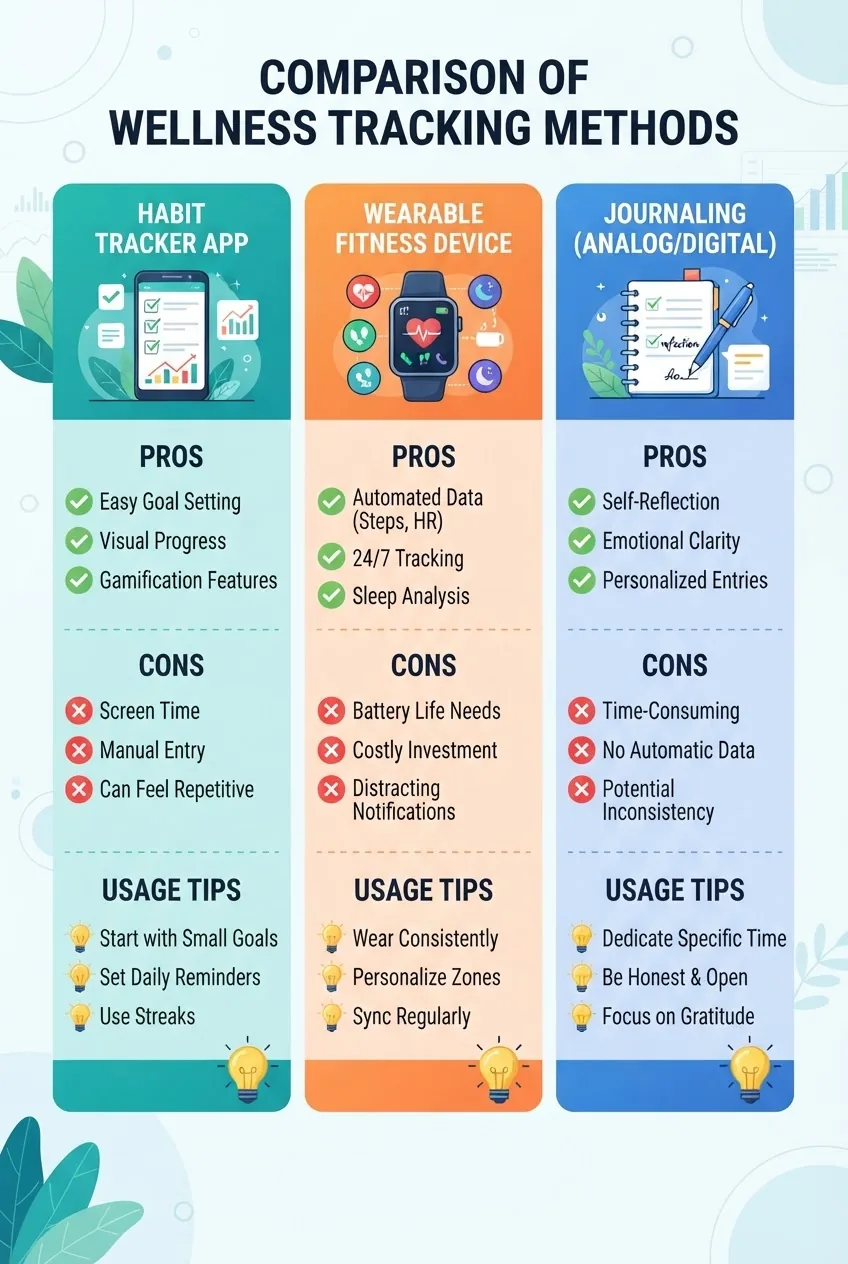
| Tool | Pros | Cons | Best for |
|---|---|---|---|
| Habit-tracker app (e.g., Streaks, Habitify) | Simple checkboxes, habit streaks, reminders. | Requires daily input; gamification may wane. | Behavioral change and habit stacking. |
| Wearable fitness device (e.g., Fitbit, Apple Watch) | Continuous HR/sleep/activity data, passive tracking. | Costly; data interpretation needed. | Objective activity and sleep tracking. |
| Journaling / paper log | High reflection, low tech, privacy-friendly. | Less objective; harder to aggregate metrics. | Mood tracking and qualitative insights. |
Practical walkthrough (habit-tracker app example): I’ll describe a step-by-step setup using a generic habit-tracker app so you can replicate it in most apps (Streaks, Habitify, or similar).
- Install and create an account — Allow notification permissions. Expect initial setup time: 3–5 minutes.
- Create core habits — Add 3–6 habits: “Drink 16 oz water (AM)”, “10-minute mobility”, “Protein breakfast”, “10-minute walk (PM)”. Set reminders at specific times and weekdays; use exact times (e.g., 6:30 AM; 1:30 PM; 9:30 PM).
- Use habit stacking descriptions — In each habit note, write the stack cue: e.g., “After I brew coffee, drink water.” This reduces decision friction.
- Log daily and review weekly — Mark habits complete immediately after finishing; schedule a 10-minute weekly review (Sunday) to check streaks and adjust timings.
- Interpret basic metrics — Use completion % and streak length to decide whether to reduce habit frequency (e.g., move from daily → 5x/week) or adjust timing.
Transition: with tools selected and habits tracked, use the sample schedule below to see how one full day can look for an adult in Texas.
Sample Healthy Daily Wellness Routine Schedule for Adults in Texas
Use this time-stamped schedule as a template—adjust times ±30–90 minutes for your chronotype and commitments. For deeper scheduling techniques, review the sibling guide on optimizing your routine schedule.
- 5:45 AM — Wake, 12–16 oz water, 5-minute mobility and sunlight exposure (if possible).
- 6:05 AM — 10-minute bodyweight circuit (or 20-minute walk), followed by a 10-minute protein breakfast (20–30 g protein).
- 7:00 AM — Priority planning: write 3 MITs and time-block them on calendar.
- 9:30 AM — 10-minute movement break; 8–12 oz water.
- 12:00 PM — Balanced lunch (1/2 plate vegetables, 1/4 lean protein, 1/4 whole grains), 10-minute post-lunch walk if possible.
- 2:00 PM — Hydration check (8–12 oz); 10-minute breathing or grounding if energy dips.
- 4:30 PM — 15–20 minute active break: walk, bike, or mobility to reset for evening.
- 6:30 PM — Family dinner, moderate portion sizes, focus on protein and vegetables; end large food intake by 8:00 PM.
- 8:30 PM — Begin 45–60 minute wind-down: reading, light stretching, low lighting.
- 10:30 PM — Lights out (adjust to yield 7–9 hours sleep for your wake time).
Transition: before you implement this schedule, review common implementation errors and a concise checklist to validate your setup.
Common mistakes and how to avoid them
I’ve seen people try to do everything at once and then quit: I used to add five new habits on day one and ended up abandoning them within a week. Fix: limit to 1–3 new habits at a time and use habit stacking to attach them to existing cues.
I also observed too-strict scheduling where any deviation felt like failure. Fix: adopt a 70/30 consistency rule—keep core anchors fixed and allow 30% flexibility for real-life demands.
I sometimes ignored objective data and relied only on feelings. Fix: combine subjective mood ratings with at least one objective measure (sleep hours or step counts) to guide decisions.
Checklist — Verify your routine
- Wake and bed times are within a 30-minute window, 5–7 days/week.
- Daily movement: 20–45 minutes or at least 150 moderate minutes/week.
- Protein at breakfast: 20–35 g within 60 minutes of waking (or scheduled feeding window).
- Hydration: 64–100 oz/day adjusted for activity and heat.
- Sleep wind-down 45–60 minutes before bed; bedroom temp 60–67°F.
- Weekly review logged (10 minutes) with at least 3 tracked metrics: sleep, energy, habit completion.
When to call a professional
Consult a physician before starting high-intensity exercise, if you have cardiovascular disease, uncontrolled hypertension, severe sleep disorders, or mental health crises. For persistent insomnia (>3 months) or depressive symptoms affecting daily life, contact a licensed clinician.
Final transition: you have the components, practical templates, tools, and troubleshooting strategies—implement a 7-day pilot now and use the checklist above to measure progress.
Conclusion – Benefits of Maintaining a Consistent Daily Wellness Routine
Maintaining a consistent healthy everyday routine improves sleep, reduces stress, stabilizes energy, and increases productivity. According to a 2023 CDC report, adults who meet recommended activity levels report better mental health outcomes; long-term observational studies (2019–2022) show routine consistency correlates with lower all-cause mortality and improved mood scores. Use small, measurable changes—habit stacking, time-blocking, and weekly reviews—to secure sustained gains.
Next step: pick one morning and one evening micro-habit from this guide, track them daily for 7 days, review metrics (sleep hours, energy 1–10, habit completion %) and adjust. If you want guided templates for time-blocks and habit stacks, start with the sample schedule above and adapt it to your life in Texas.
Ready to begin? Implement your 7-day pilot today and re-evaluate on day 8.