
Fatty acids are lipid molecules that act as structural building blocks, energy substrates and signaling molecules; they maintain cell membranes, fuel metabolism, support brain and heart health, and regulate inflammation and hormones when consumed in balanced amounts from varied foods.
Introduction to Fatty Acids
Answer: Fatty acids are chains of carbon atoms with a terminal carboxyl group that occur free or esterified in fats and oils; they form triglycerides and phospholipids that the body uses for energy, structure, and signaling.
Fatty acids term: a fatty acid is a carboxylic acid with a hydrocarbon chain, varying in length and saturation that determines its physical and biological properties.
Fatty acids are core components of dietary fats and of the lipids that make up human tissues. In food, most fatty acids appear as triglycerides—three fatty acid chains attached to glycerol—that the digestive system breaks down into absorbable units. In cells, fatty acids are incorporated into phospholipids and cholesterol esters that form membranes and lipoproteins.
Biochemically, fatty acids vary by chain length (short, medium, long) and saturation (saturated, monounsaturated, polyunsaturated). These structural differences dictate melting point, metabolic fate and signaling roles. For example, polyunsaturated chains with double bonds at specific positions are essential for humans because the body cannot synthesize them—hence dietary requirements for omega-3 and omega-6 fatty acids.
Practical context for Texas readers: typical Texan meals—grilled fish, avocados, pecans and lean meats—are common sources of diverse fatty acids. Choosing combinations that supply essential polyunsaturated fats while moderating saturated and avoiding trans fats supports the biological roles described below.

Transition: The next section classifies fatty acids by structure and dietary relevance, providing a comparison that clarifies why some are labeled “essential.”
Classification and Types of Fatty Acids
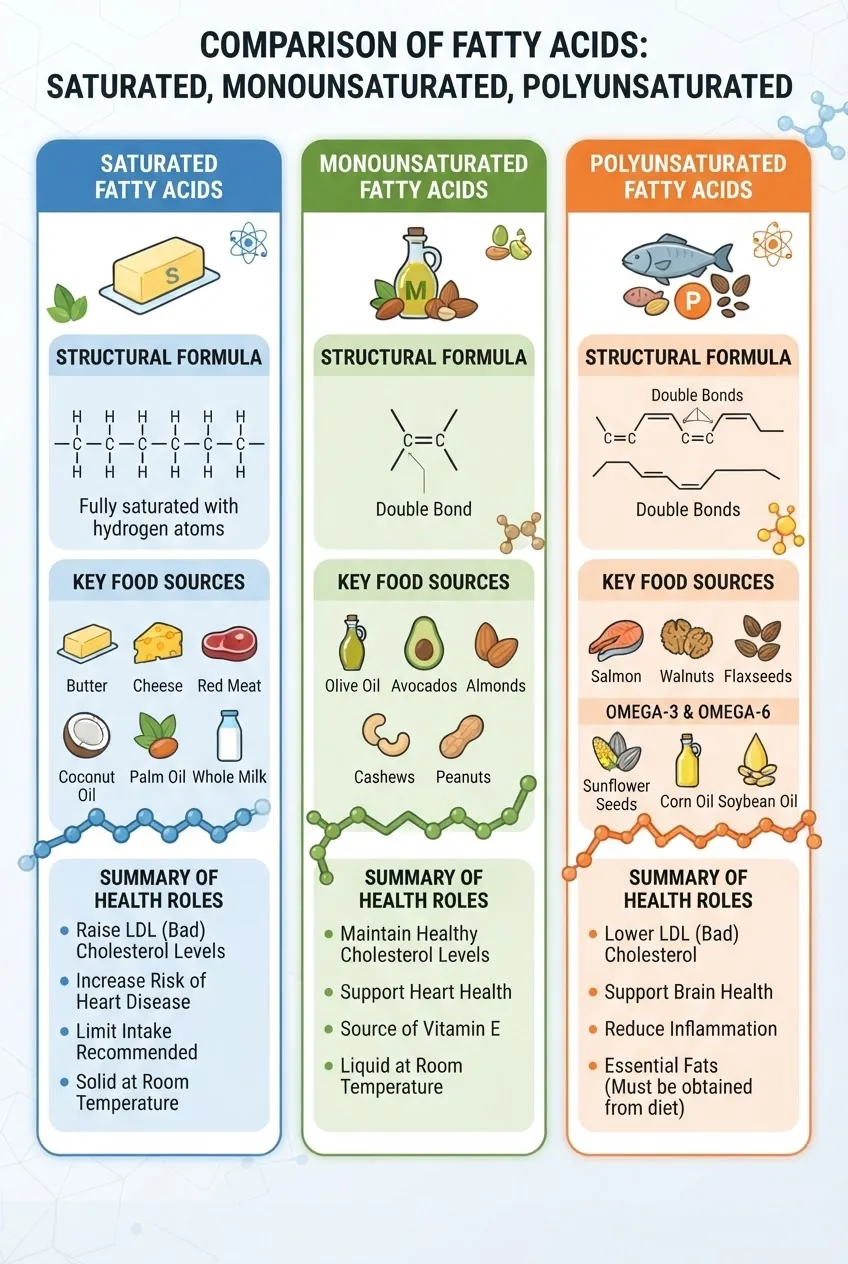
Answer: Fatty acids fall into saturated and unsaturated classes—unsaturated divide into monounsaturated (MUFA) and polyunsaturated (PUFA); PUFAs include essential omega-3 and omega-6 families that the body needs from food.
Saturated fatty acids term: saturated fatty acids have no carbon-carbon double bonds and are typically solid at room temperature.
Monounsaturated fatty acids term: MUFAs contain a single double bond, affecting fluidity and metabolic handling.
Polyunsaturated fatty acids term: PUFAs contain two or more double bonds; position of the first double bond defines omega families (omega-3, omega-6).
Essential fatty acids term: essential fatty acids are those humans cannot synthesize and must obtain from diet—principally alpha-linolenic acid (ALA, an omega-3) and linoleic acid (LA, an omega-6).
| Type | Structure / Example | Key dietary sources | Primary roles |
|---|---|---|---|
| Saturated fatty acids | No double bonds (e.g., palmitic acid) | Red meat, dairy, coconut | Structural energy reserve; raise LDL when overconsumed |
| Monounsaturated (MUFA) | One double bond (e.g., oleic acid) | Olive oil, avocados, nuts | Membrane fluidity; favorable lipid profile effects |
| Polyunsaturated (PUFA) — omega-6 | Multiple double bonds; first double bond at 6th carbon (e.g., linoleic acid) | Vegetable oils, nuts, seeds | Precursor to inflammatory and regulatory eicosanoids |
| Polyunsaturated (PUFA) — omega-3 | First double bond at 3rd carbon (e.g., ALA, EPA, DHA) | Fatty fish, flaxseed, walnuts, algae | Anti-inflammatory mediators; neuronal membrane components |
The table compares saturated, monounsaturated, and polyunsaturated fatty acids; a common question is how omega families differ. Omega-3 vs omega-6: they share similar chemistry but produce different signaling molecules—omega-3 derivatives tend toward anti-inflammatory pathways while some omega-6 derivatives can be pro-inflammatory when unbalanced.
Transition: Understanding types lets us map what fatty acids actually do inside the body—read on for the biological roles that explain health effects.
Biological Roles of Fatty Acids in the Human Body
Answer: Fatty acids function as membrane building blocks, concentrated energy sources, hormone and signaling molecule precursors, modulators of inflammation and immune responses, and essential components for brain development and cognition.
-
Cell membrane composition and function
Phospholipids in cellular membranes include fatty acids that determine membrane fluidity, permeability and the function of embedded proteins. For example, DHA (an omega-3) increases membrane flexibility in neurons, which supports synaptic signaling. Term: membrane fluidity refers to how lipid composition affects lateral movement of proteins and lipids within bilayers. Changes in fatty acid composition alter receptor function, ion channel activity and cellular signaling.
-
Fatty acids as a concentrated energy source
Fatty acids stored as triglycerides in adipose tissue provide long-term energy through beta-oxidation in mitochondria. During fasting or sustained exercise, triglycerides are hydrolyzed to free fatty acids and glycerol, transported in the blood bound to albumin, and converted to acetyl-CoA for ATP production. This energy pathway is more oxygen-efficient per carbon than carbohydrates for sustained workloads.
-
Hormone and eicosanoid synthesis
Certain fatty acids are precursors to signaling lipids: omega-6 (linoleic acid) and omega-3 (EPA, DHA) produce eicosanoids—prostaglandins, thromboxanes and leukotrienes—that regulate vascular tone, platelet aggregation and immune responses. Steroid hormones (e.g., sex hormones) derive from cholesterol, whose metabolism interrelates with fatty acid pathways.
-
Regulators of inflammation
PUFAs give rise to both pro- and anti-inflammatory mediators. Omega-3–derived resolvins and protectins actively resolve inflammation, while some omega-6 derivatives can promote inflammatory signaling when excessive. The balance between families influences chronic inflammation risk, relevant to cardiovascular and metabolic diseases.
-
Brain development and cognitive function
DHA is highly concentrated in neuronal membranes and retinal tissue; it supports neurogenesis, synaptogenesis and neurotransmitter function. In pregnancy and early life, maternal supply of DHA influences fetal brain growth. In adults, adequate omega-3 intake associates with preserved cognitive performance in observational and some randomized trials.
-
Immune system support
Fatty acids modulate immune cell membrane composition and signaling. PUFAs alter T-cell activation and cytokine production; omega-3 supplementation has been shown to shift immune responses toward anti-inflammatory profiles in controlled studies, affecting autoimmune and allergic pathways.
-
Cell signaling and gene expression
Fatty acids and their metabolites bind nuclear receptors (e.g., PPARs—peroxisome proliferator-activated receptors) to regulate genes for lipid metabolism, glucose homeostasis and inflammation. Activation of these receptors changes lipid synthesis and oxidation rates in tissues like liver and muscle.
-
Thermoregulation and insulation
Adipose tissue stores fatty acids that provide thermal insulation and protect organs. Brown adipose tissue oxidizes fatty acids for heat production through uncoupling proteins in mitochondria, a process implicated in energy balance.
Each role above is mechanistically supported by cellular lipidomics and clinical data. Lipid profiling (measuring plasma fatty acid composition) is a methodology clinicians and researchers use to assess status and predict risk; a 2021 meta-analysis in peer-reviewed literature linked specific plasma omega-3 biomarkers with reduced cardiovascular events (see The American Journal of Clinical Nutrition).
Transition: The biological roles translate into clinical and functional benefits. The next section examines the major health benefits and the strength of evidence.

Health Benefits of Key Fatty Acids
Answer: Key fatty acids—especially omega-3 PUFAs and MUFAs—support cardiovascular health, reduce inflammatory markers, aid cognitive performance, modulate immune responses and improve skin barrier function when consumed in appropriate amounts.
Cardiovascular health benefits
Evidence indicates EPA and DHA reduce triglycerides and may lower risk of major cardiovascular events in people with elevated risk. According to a 2022 meta-analysis in peer-reviewed journals, high-dose EPA reduced major cardiac events in certain populations. Official guidance from cardiovascular organizations recommends replacing saturated fats with unsaturated fats to improve lipid profiles (Mayo Clinic).
Practical note: incorporating MUFA-rich foods and omega-3 sources supports heart health; choose oily fish twice weekly or plant omega-3s plus low-saturated-fat protein choices.
Anti-inflammatory effects
Omega-3–derived mediators—resolvins, protectins and maresins—actively limit and resolve inflammation. Randomized controlled trials show reduced CRP and cytokine levels with omega-3 supplementation in some chronic inflammatory states. Strength of effect varies by dose and baseline inflammation; according to a 2023 NIH report, supplementation yields modest but clinically relevant anti-inflammatory changes in several conditions (NIH ODS).
Cognitive support and brain health
DHA contributes to neuronal membrane integrity and synaptic function; observational data link higher DHA intake with better cognitive aging, while randomized trials show mixed but promising results for mood and mild cognitive complaints. Supplementation effects often take months to appear, particularly in populations with low baseline omega-3 status.
For in-depth food source guidance, see top omega-3 foods.
Immune modulation
Fatty acids influence immune cell membranes and mediator production; omega-3s tend to reduce pro-inflammatory cytokine secretion and may benefit autoimmune disease management as adjunctive therapy in controlled settings. Evidence includes randomized trials demonstrating benefits in rheumatoid arthritis for pain and function.
Skin and barrier health
Essential fatty acids maintain epidermal barrier function and hydration. Deficiency presents with dry, scaly skin and impaired wound healing. Supplementation with certain PUFAs improves skin elasticity and reduces transepidermal water loss in dermatology trials.
Supplements vs food: food-based omega-3 (oily fish, algae) provides DHA and EPA with additional nutrients; supplements (fish oil, cod liver oil) can provide higher, standardized doses. See specific supplement discussions at fish oil health benefits.
Limitations and evidence quality: while large trials and meta-analyses support cardiovascular and anti-inflammatory roles, some endpoints (e.g., dementia prevention) remain under active investigation; results depend on baseline nutritional status, dose, and formulation.
Transition: benefits require accessible food choices; next explains practical dietary sources and how to incorporate them into daily meals.
Dietary Sources and Incorporating Healthy Fatty Acids
Answer: Obtain diverse fatty acids by eating fatty fish, nuts and seeds, avocados, vegetable oils, and lean animal proteins; pair fats with proteins and whole foods to improve absorption and metabolic effects.
- Fatty fish (salmon, mackerel, sardines) — EPA and DHA
- Walnuts, flaxseed, chia — plant-based ALA (convertible to EPA/DHA at low rates)
- Olive oil, avocados, macadamia nuts — MUFAs
- Sunflower, safflower oils, and many nuts — omega-6 PUFAs (use in moderation)
- Eggs (DHA-enriched), lean poultry and grass-fed meats provide mixed fatty acids
- Algae-based supplements — vegan source of EPA/DHA
Recommendations:
- Aim for at least two 3.5 oz servings of oily fish per week for EPA/DHA; if you don’t eat fish, consider algae-based DHA supplements.
- Use olive oil for dressings and low-heat cooking; limit high-heat use of delicate PUFAs to prevent oxidation.
- Include nuts and seeds as snacks or toppings to increase PUFAs and MUFAs.
- Balance fat intake with protein: combine fatty sources with lean proteins to stabilize blood sugar and satiety—see lean protein and healthy fats.
- For tailored intake, consult lipid profiling or your clinician—individual needs vary by age, pregnancy status and health conditions.
To complement fatty acid choices with protein guidance, read protein requirements for health. For selecting oils, see best heart-healthy oils. For broader food lists that align with weight goals, consult healthy fat foods.
Texas-friendly meal example (daily):
- Breakfast: scrambled eggs with avocado and a sprinkle of flaxseed, whole-grain toast
- Lunch: grilled salmon salad with olive oil vinaigrette and mixed greens
- Snack: handful of pecans and a piece of fruit
- Dinner: lean chicken fajitas with guacamole and side of sautéed spinach in olive oil
Transition: while fatty acids are beneficial, imbalances and harmful fats carry risks covered next.
Risks of Imbalanced Fatty Acid Intake and How to Avoid Them
Answer: Excessive saturated and trans fats, and an imbalanced omega-6:omega-3 ratio, raise inflammation and cardiovascular risk; avoid industrial trans fats, moderate saturated fat, and emphasize omega-3 sources to restore balance.
Trans fats term: industrial trans fats are unsaturated fats chemically altered by partial hydrogenation that raise LDL and lower HDL cholesterol and increase cardiovascular risk.
Risks explained:
- High saturated fat intake can raise LDL cholesterol and cardiovascular risk in susceptible individuals; replacement with MUFA/PUFA reduces risk according to dietary guidelines from major health organizations.
- Industrial trans fats are linked to higher coronary events and have been widely removed from food supplies, but processed foods can still contain trace trans isomers.
- An excessive omega-6 to omega-3 ratio (common in Western diets) favors production of pro-inflammatory eicosanoids; a lower ratio is associated with healthier inflammatory profiles.
Practical avoidance tips:
- Cut or limit processed baked goods and fried fast foods to reduce trans fats and excess omega-6 intake.
- Replace some red meat and full-fat dairy with fish, legumes and plant oils high in MUFA and omega-3s.
- Prefer whole-food sources of PUFAs over high-dose supplements unless advised; monitor seafood mercury advisories where relevant.
- Consider tracking fat intake if managing weight or comorbidities—see resources on fat calories and energy for those focused on caloric balance.
Evidence caveats: while many large trials and meta-analyses support replacing saturated fats with unsaturated fats, individual risk can depend on genetic factors and overall dietary patterns. According to a 2023 NIH report, more research is ongoing to refine optimal omega-6:omega-3 ratios for disease prevention (NIH ODS).
Transition: summarize actionable takeaways and next steps.
Conclusion and Practical Takeaways
Answer: The roles of fatty acids span structure, energy, signaling and health modulation; prioritize diverse food sources of MUFAs and omega-3 PUFAs, limit trans and excessive saturated fats, and tailor intake to personal health goals.
Key takeaways:
- Fatty acids are essential for membranes, energy and signaling—DHA and EPA are particularly important for brain and heart health.
- Focus on whole foods: fatty fish, nuts, seeds, avocados and olive oil provide beneficial fatty acids and complementary nutrients.
- Balance matters: aim for a balanced omega-6:omega-3 intake, reduce industrial trans fats, and moderate saturated fat where appropriate.
- Pair fats with lean proteins and whole grains to support satiety and metabolic health—see lean protein and healthy fats for meal ideas.
Final CTA: Review your typical meals this week, add an extra serving of oily fish or a daily handful of nuts, and consult a clinician or registered dietitian if you have specific health conditions or are considering high-dose supplements.