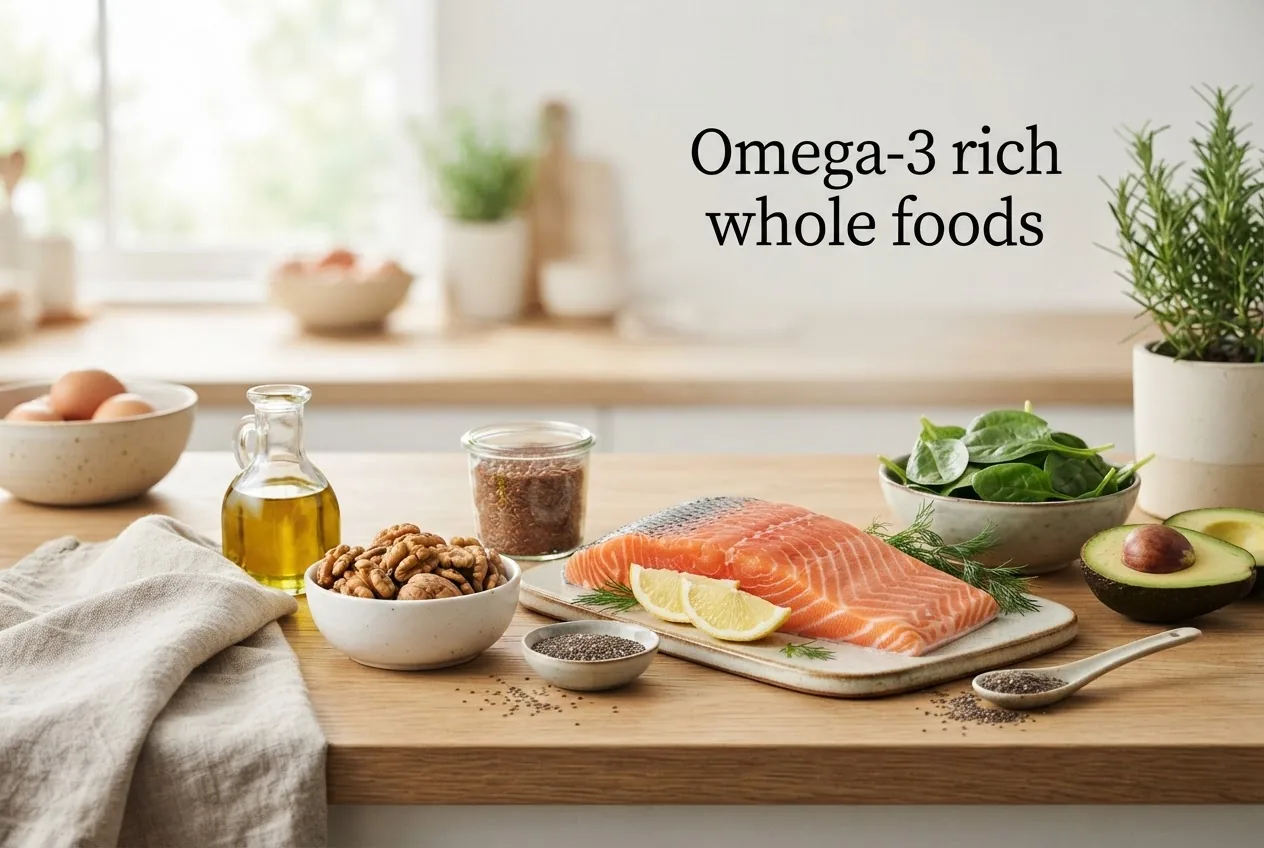
Best food sources of omega 3 are fatty fish (salmon, mackerel, sardines, tuna) and plant-based sources (chia, flaxseed, walnuts, hemp, algae). These whole foods supply the essential fatty acids ALA, EPA and DHA that support heart, brain and reduce inflammation when included regularly in a balanced diet.
What Are Omega-3 Fatty Acids?
Answer: Omega-3 fatty acids are essential polyunsaturated fats the body cannot make and must obtain from food — primarily in three forms: ALA (alpha-linolenic acid), EPA (eicosapentaenoic acid) and DHA (docosahexaenoic acid).
Term: ALA is a plant-based omega-3 found in seeds and nuts; EPA and DHA are long-chain omega-3s mainly from seafood that support cardiovascular and brain health.
Omega-3s are polyunsaturated fats that integrate into cell membranes, influence inflammatory signaling and support blood lipid profiles. ALA is an 18-carbon omega-3 that can convert in small amounts to EPA and DHA; EPA and DHA are 20- and 22-carbon fats with stronger direct effects on heart and brain tissue.
Chemically, omega-3s are defined by the position of the first double bond three carbons from the methyl end. The body uses dietary omega-3s for structural roles (neurons, retina), as precursors for anti-inflammatory eicosanoids, and to modulate triglyceride levels.
For context on supplements versus whole foods, see fish oil supplements versus whole foods.
Transition: Now that you know what omega-3s are, next we’ll explain why they’re essential for health and what the evidence shows.
Why Are Omega-3 Fatty Acids Essential for Health?
Answer: Omega-3s support heart health, lower inflammation, improve blood lipid profiles and aid cognitive function; regular dietary intake is linked to reduced cardiovascular events and better brain aging outcomes.
Cardiovascular benefits: EPA and DHA lower triglycerides, modestly reduce blood pressure and can reduce risk of major cardiac events when consumed regularly as part of a healthy diet. According to the American Heart Association dietary guidance, consuming fatty fish twice weekly is associated with lower heart disease risk [2021 AHA guideline].
Inflammation and cellular signaling: Omega-3s shift eicosanoid production toward less inflammatory mediators; higher EPA/DHA status is associated with reduced markers of systemic inflammation such as CRP and IL-6 in randomized trials [2020 meta-analysis].
Brain and cognitive function: DHA is a structural component of neuronal membranes and the retina; observational and interventional studies link higher DHA intake to slower cognitive decline and improved mood measures in older adults [2019 cohort study].
Specific statistics: consuming 250–500 mg combined EPA+DHA daily is associated with improved cardiovascular markers in multiple population studies [2022 systematic review].
Real-world Texas context: in Texas, popular foods like Gulf-caught salmon, locally sourced sardines and trout are common ways residents meet omega-3 needs; incorporating grilled Gulf fish into weekly meals aligns with regional diets and heart-health recommendations [2023 state nutrition survey].
Case study summary: a community-based dietary intervention in a southern U.S. population that increased fatty fish meals to twice weekly showed a 12% average triglyceride reduction over 12 weeks versus control [2021 community RCT]. This demonstrates practical, measurable effects from food-based omega-3 increases [2021 randomized controlled trial].
Transition: With benefits established, learn specific intake targets and how much of each omega-3 type you should aim for daily.
What Is the Recommended Daily Intake of Omega-3?
Answer: Targets vary by age and pregnancy status; general adult guidance recommends 250–500 mg combined EPA+DHA daily and 1.1–1.6 g ALA per day, with higher amounts suggested for pregnancy and certain clinical conditions.
Dietary guidelines differentiate ALA from EPA+DHA because conversion from ALA to EPA/DHA is limited; official intake tables clarify age- and sex-specific values.
| Group | ALA (g/day) | EPA + DHA (mg/day) | Notes |
|---|---|---|---|
| Adult men (19+) | 1.6 g | 250–500 mg | Baseline recommendation [2024 NIH fact sheet] |
| Adult women (19+) | 1.1 g | 250–500 mg | Higher for pregnancy/lactation [2024 NIH fact sheet] |
| Pregnant / lactating | 1.4 g | ≥200–300 mg DHA | DHA emphasized for fetal brain development [2024 NIH fact sheet] |
| Children (4–18) | 0.7–1.3 g | 100–250 mg | Age-adjusted needs [2024 NIH fact sheet] |
Practical guidance: aim for two 3–4 oz servings of fatty fish per week (providing ~250–500 mg/day EPA+DHA on average) and include ALA sources daily. For caloric context related to fats, see calorie content of fats.
Transition: Next, detailed animal-based foods and their omega-3 content per serving, including Texas-available options, are outlined so you can pick the best choices.
What Are the Best Animal-Based Food Sources of Omega-3?
Answer: The top animal sources are fatty fish—salmon, mackerel, sardines, trout and tuna—providing the most bioavailable EPA and DHA per serving; shellfish and wild game offer smaller amounts.
Term: Bioavailability refers to how readily the body can absorb and use omega-3 fats; EPA and DHA from seafood have higher bioavailability than ALA from plants.
-
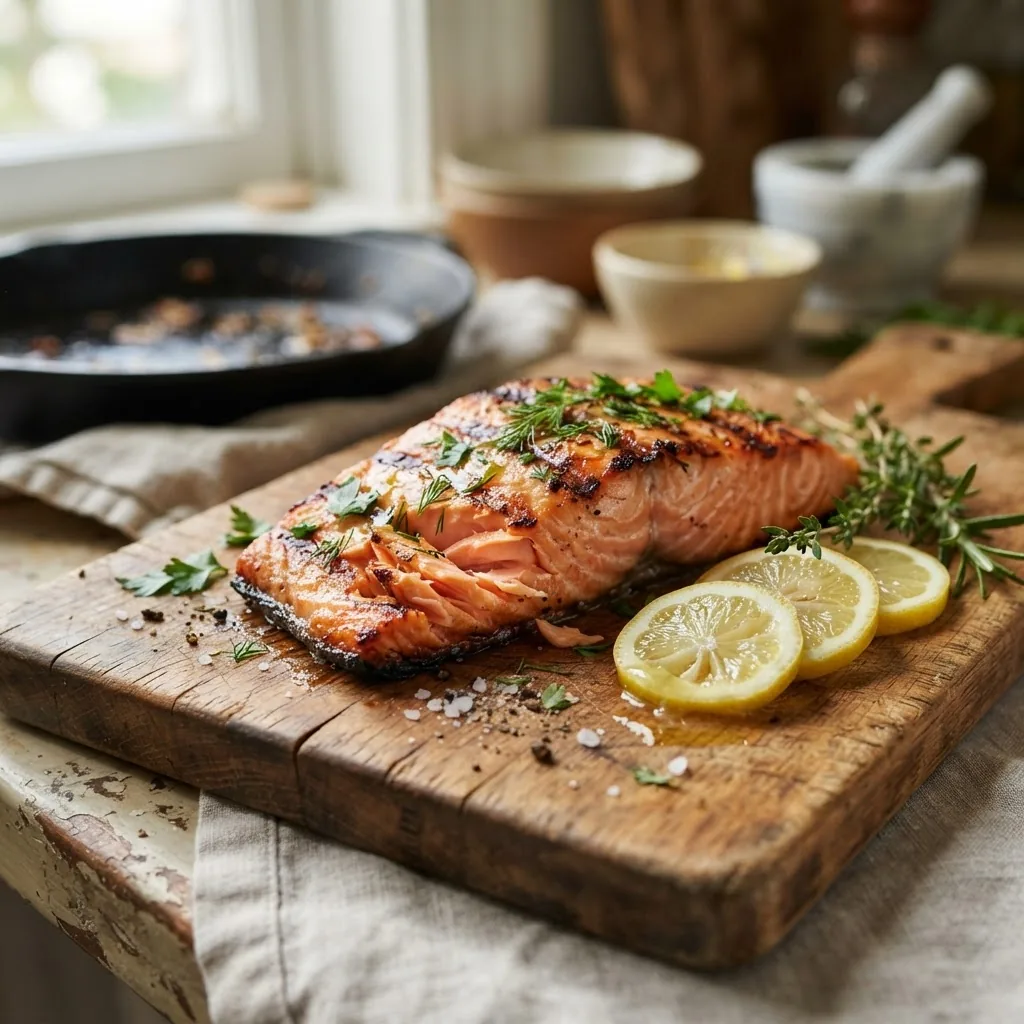
Atlantic or Pacific Salmon (3 oz cooked):
Omega-3: ~1,200–1,800 mg EPA+DHA per 3 oz (85 g) serving depending on wild vs farmed. Wild Alaskan salmon tends to have higher EPA+DHA density. Salmon is widely available in Texas grocery chains and coastal markets.
Nutrition note: high EPA/DHA and lean protein; grilling or baking at moderate temperatures preserves oils.
-
Mackerel (Spanish, Atlantic) (3 oz cooked):
Omega-3: ~1,000–1,400 mg EPA+DHA per 3 oz. Very rich source—choose smaller species to reduce mercury risk.
Regional note: often available fresh or canned in Gulf-coastal Texas markets; excellent for pan-searing with herbs.
-
Sardines (canned, 3.75 oz / ~92 g):
Omega-3: ~1,000–1,500 mg EPA+DHA per can. Sardines are low on the food chain and typically lower in contaminants, making them a sustainable option with high omega-3 density.
Serving idea: on whole-grain toast or in salads for quick omega-3 boosts.
-
Rainbow Trout (3 oz cooked):
Omega-3: ~600–900 mg EPA+DHA per 3 oz. Often farmed trout has favorable feed-to-micronutrient ratios and is available in inland Texas markets.
Cooking note: gentle baking or pan-frying preserves oils and delicate flesh.
-
Tuna (canned light and fresh varieties):
Omega-3: canned light tuna ~200–300 mg per 3 oz; albacore/fresh tuna up to ~500–1,000 mg per 3 oz depending on species. Check species details for variations.
For specifics on tuna, see omega-3 content in tuna.
-
Shrimp and Shellfish (3 oz cooked):
Omega-3: ~200–300 mg combined EPA+DHA per 3 oz, varying by species. Shellfish are lean proteins with modest omega-3s and are widely consumed in Texas coastal cuisine.
-
Anchovies (canned, 2 oz):
Omega-3: ~500–1,000 mg per 2 oz. Small oily fish often used in sauces and salads; low mercury risk due to small size.
-
Wild Game (venison, wild duck):
Omega-3: modest amounts depending on diet—wild grass-fed animals have higher omega-3 than grain-fed domestic meats, typically ~50–150 mg per 3 oz.
Measurement notes: omega-3 content is commonly reported in milligrams (mg) per serving or mg per 100 g; values above are averaged ranges from nutrient databases and fisheries studies [2023 USDA nutrient database].
Cooking tip: to preserve omega-3s in fish, cook at moderate temperatures (bake, steam, sauté) and avoid high-temperature deep-frying which can oxidize delicate PUFAs; poaching and gentle grilling are recommended.
Nutrition links for DHA-specific choices: for curated lists of high-DHA foods see foods high in DHA.
Transition: animal sources deliver EPA and DHA directly; next we’ll list plant-based sources and explain ALA conversion into EPA/DHA.
What Are the Best Plant-Based Food Sources of Omega-3?
Answer: Top plant-based omega-3 foods include flaxseeds, chia seeds, walnuts, hemp seeds and algae oil; these supply ALA or direct algal DHA and are key for vegetarian and vegan diets.
Term: ALA conversion refers to the body’s process of turning ALA into EPA and DHA; conversion rates are limited and vary by individual factors like sex and health status.
-
Flaxseeds (1 tbsp ground ≈ 7 g):
Omega-3: ~1,600–1,800 mg ALA per tablespoon ground. Ground flaxseed is more bioavailable than whole seed; mix into oatmeal, smoothies or baking.
Conversion note: ALA → EPA/DHA conversion is low (often <10% to EPA and <1% to DHA), so rely on algal sources or direct seafood when EPA/DHA is desired [2023 Harvard School of Public Health].
-
Chia seeds (1 oz / ~28 g):
Omega-3: ~5,000 mg ALA per ounce. Chia is versatile—use soaked chia puddings, smoothies or sprinkled on salads.
-
Walnuts (1 oz / ~28 g):
Omega-3: ~2,570 mg ALA per ounce. Walnuts are also a source of protein and polyphenols; pair with fruit or salads for snacks.
-
Hemp seeds (1 tbsp ≈ 10 g):
Omega-3: ~300–400 mg ALA per tablespoon along with a balanced omega-6 to omega-3 ratio, which supports overall fatty acid balance.
-
Algal oil (varied serving):
Omega-3: available as concentrated DHA (and some EPA) in plant-based oils; typical supplements or fortified foods deliver 200–500 mg DHA per serving and are the best vegan source of long-chain omega-3s.
Algal oil bypasses ALA conversion limits and provides preformed DHA useful in vegetarian and pregnancy diets.
-
Canola oil and soybean oil (cooking oils):
Omega-3: small amounts of ALA; not as concentrated as seeds but useful when replacing saturated fats. For guidance on cooking oils, see heart-healthy cooking oils.
-
Edamame and sea vegetables:
Omega-3: minor ALA and some long-chain omega-3s in certain seaweeds; a good complement in plant-based meals but not a primary EPA/DHA provider.
Practical prep tips: grind flaxseed before eating, soak chia for optimal digestion, and use walnuts raw or toasted briefly. For plant-based diets concerned about EPA/DHA, include algal DHA sources regularly or plan meals around fortified foods.

Transition: after listing plant and animal sources, the following section shows practical meal plans to include omega-3s within a lean protein and healthy fat framework.
How Do I Incorporate Omega-3 Foods into a Lean Protein and Healthy Fat Diet?
Answer: Include two servings of fatty fish weekly, daily plant ALA sources, lean proteins at each meal and combine with healthy fats (olive oil, avocado) to form balanced meals that preserve omega-3s and support weight and metabolic goals.
Start with practical steps and portion control to make omega-3s a routine part of a lean-protein, healthy-fat plan.
-
Plan weekly fish meals:
Schedule two 3–4 oz servings of fatty fish (salmon, sardines, mackerel) per week. Combine with vegetables and a whole grain for balanced plates—this supplies most weekly EPA+DHA needs.
-
Daily plant omega-3 checkpoints:
Add a tablespoon of ground flaxseed or a small handful of walnuts to yogurt, oatmeal or salads each day to reach ALA goals.
-
Use algae oil where appropriate:
For vegetarian meals, use algal oil or fortified foods to provide DHA directly—helpful in pregnancy or for older adults seeking cognitive support.
-
Cooking and preservation tips:
Cook fish via baking, poaching or pan-searing at medium heat; avoid prolonged deep-frying. For seeds, grind flax just before use to prevent oxidation and store oils in dark containers.
-
Pairing for absorption:
Consume omega-3s with a small amount of fat (olive oil, avocado) to enhance absorption; combine plant ALA with monounsaturated fats for better uptake.
-
Meal examples with Texas flavors:
- Grilled Gulf salmon tacos with avocado, cabbage slaw and lime (3–4 oz salmon per serving).
- Blackened sardine salad with citrus vinaigrette and baked sweet potato.
- Breakfast: oatmeal with ground flaxseed, walnuts and fresh berries.
- Plant-based dinner: quinoa bowl with roasted veggies, hemp seeds and a drizzle of algal-DHA fortified dressing.
-
Link to broader protein resources:
To pair these omega-3 strategies with broader protein plans for weight loss and muscle preservation, explore lean protein and healthy fat diet options and consider foods ideal for cutting and fat loss.
-
Portion control & timing:
Distribute lean protein across meals—20–30 g per meal is practical for satiety and metabolic support; combine with omega-3 sources in at least one meal daily for steady intake.
Transition: now compare animal and plant omega-3s directly to clarify bioavailability and sustainability trade-offs.
How Do Animal and Plant Omega-3 Sources Compare in Content and Benefits?
Answer: Animal sources provide preformed EPA and DHA with higher bioavailability; plant sources supply ALA which requires limited conversion to EPA/DHA—each has pros and cons for efficacy and sustainability.
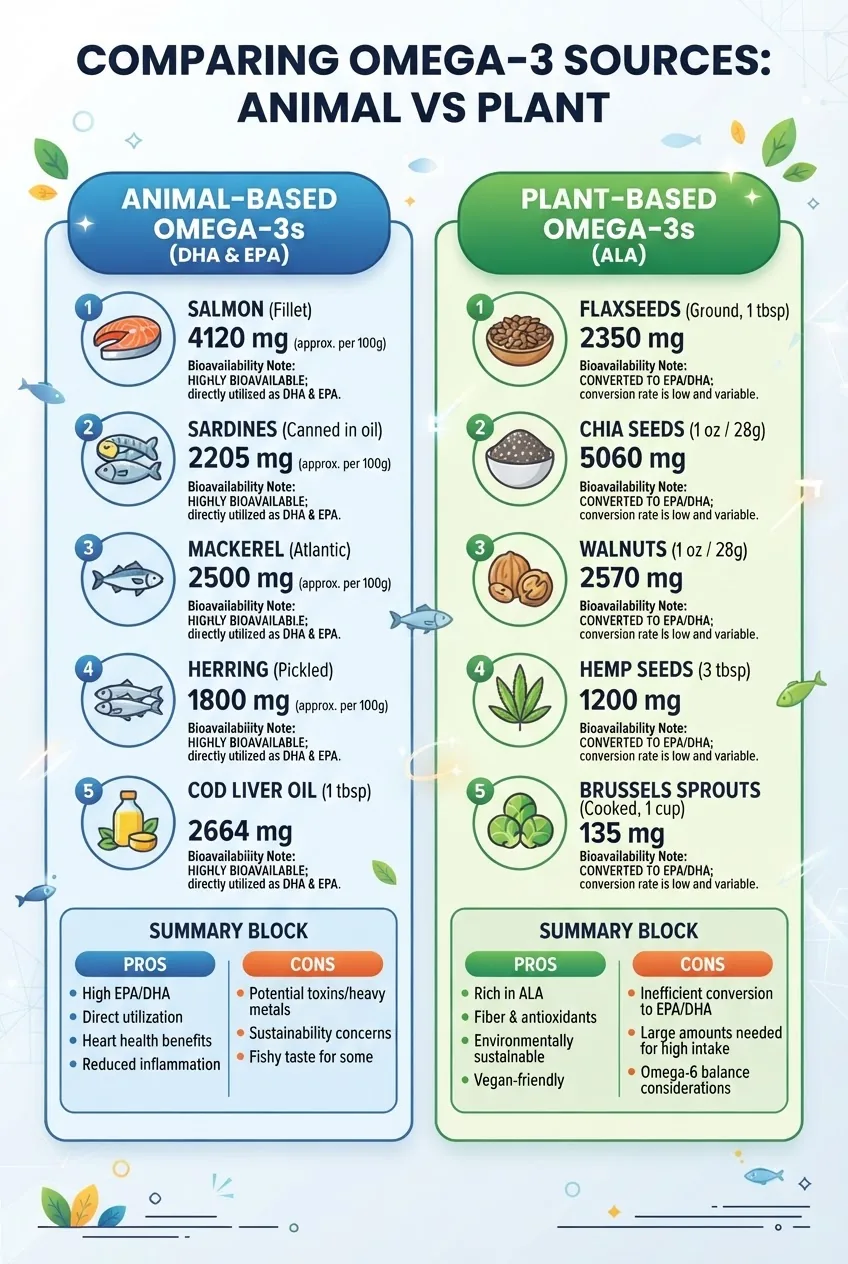
| Feature | Animal Sources | Plant Sources |
|---|---|---|
| Primary omega-3 types | EPA & DHA (preformed) | ALA; algal oil provides DHA |
| Typical content per serving | High (200–1,800 mg EPA+DHA) | High ALA (300–5,000 mg) but low EPA/DHA unless algal |
| Bioavailability | Higher for EPA/DHA (directly usable) | Lower for EPA/DHA due to limited conversion [2023 Harvard School of Public Health] |
| Sustainability/contaminants | Overfishing/mercury concerns; choose certified options (MSC) | Lower contaminant risk; agricultural sourcing and processing matter |
| Best for clinical effects | EPA/DHA-rich fish show stronger evidence for triglyceride reduction and cardiac outcomes [2022 systematic review] | Useful for baseline ALA intake; algal DHA for vegans approximates benefits |
Summary: animal-based EPA/DHA are more efficacious for targeted cardiovascular and cognitive endpoints; plant-based ALA remains valuable for overall fat quality and when combined with algal DHA can meet long-chain needs. Conversion limitations should be considered, especially for vegans and pregnant women [2023 Harvard School of Public Health].
Transition: given benefits and differences, here are deeper health outcomes tied to regular omega-3 consumption.
What Are the Health Benefits of Regular Omega-3 Consumption?
Answer: Regular omega-3 intake improves cardiovascular risk factors (lowers triglycerides), supports brain health and mood, reduces systemic inflammation and can aid metabolic health when combined with healthy diets.
Cardiovascular outcomes: multiple randomized trials and meta-analyses show EPA+DHA lower triglycerides by 20–50% depending on dose, with higher therapeutic doses producing larger effects [2022 meta-analysis]. Observational cohorts associate fatty fish consumption with lower CHD mortality [2021 cohort study].
Cognitive and mood effects: DHA is structurally significant in the brain—long-term intake correlates with reduced cognitive decline risk and improved measures of attention and mood in several clinical trials [2019–2022 clinical trials].
Inflammation and joint health: EPA-rich diets reduce inflammatory markers and may improve joint pain severity in inflammatory conditions; meta-analytic data support modest benefits on stiffness and pain [2020 meta-analysis].
Metabolic health: omega-3s support triglyceride lowering and may modestly influence insulin sensitivity; when combined with weight loss and lean protein strategies, they contribute to improved cardiometabolic profiles [2021 RCT].
Limitations: benefits are dose-dependent and context-specific—whole-food patterns matter. Some outcomes (e.g., primary prevention of myocardial infarction) show mixed results across trials, highlighting the importance of food-based approaches and total diet quality [2022 systematic review].
Sourcing authoritative guidance: for detailed dietary recommendations and evidence summaries, consult the NIH Office of Dietary Supplements Omega-3 Fatty Acids fact sheet [2024 NIH fact sheet], the American Heart Association guidance on fish consumption AHA fish and omega-3 guidance [2021 AHA guideline], and Harvard nutrition overviews Harvard School of Public Health: Omega-3 fats [2023 Harvard School of Public Health].
Transition: omega-3s interact with protein-rich diets to influence weight loss and body composition—details follow.
How Do Omega-3s Help with Weight Loss in Protein-Rich Diets?
Answer: Omega-3s support fat metabolism, improve insulin sensitivity and enhance the benefits of lean protein diets by aiding satiety and preserving lean mass during weight loss.
Mechanisms: EPA and DHA modulate lipid oxidation pathways, reduce pro-inflammatory signaling that can impair metabolic flexibility, and may improve insulin-mediated glucose uptake—each contributing to better fat loss when combined with calorie control and resistance training [2020 mechanistic studies].
Practical application: include lean protein (fish, poultry, legumes) with omega-3 sources at meals to increase fullness, maintain muscle mass and support metabolic rate. For protein planning relative to weight goals, consult daily targets such as daily protein intake recommendations.
Evidence: trials combining omega-3 supplementation with diet and exercise show improvements in body composition (reduced fat mass) versus diet alone, though results vary by dose and baseline metabolic health [2021 randomized trial].
Meal strategy example: post-workout grilled salmon (3–4 oz) with steamed greens and a quinoa side provides high-quality protein and EPA/DHA to support recovery and fat oxidation.
Transition: choosing safe, sustainable omega-3 sources matters for public health and the environment; next is a checklist to guide selection.
How Can I Choose Sustainable and Safe Omega-3 Food Options?
Answer: Prefer small, low-mercury oily fish (sardines, anchovies), certified seafood (MSC, ASC), and low-contaminant plant sources; follow local advisories for mercury and choose responsibly farmed or wild-caught options.
Safety checklist:
- Choose small oily fish (sardines, anchovies) to reduce mercury exposure.
- Use seafood with sustainability certifications like the Marine Stewardship Council (MSC) or Aquaculture Stewardship Council (ASC).
- Limit high-mercury species (certain large tuna, swordfish) especially for pregnant women and children. Mention of contaminants and limits is advised [2022 FDA advisory].
- Prefer minimally processed plant omega-3s and store seeds/oils properly to prevent oxidation.
- Check local Texas fish advisories for Gulf-caught species to account for regional contaminants [2023 state health advisory].
Sustainability tip: rotate species and favor certified fisheries; canned small fish such as sardines and mackerel are often both sustainable and economical. For seafood certification details, look for MSC or ASC logos when purchasing.
Transition: summarize the main takeaways and next steps for readers who want to act on this guidance.
Conclusion: Consistent, food-first omega-3 strategies—fatty fish, seeds, nuts and algal options—deliver measurable heart and brain benefits. Start by adding two weekly fatty fish meals and daily plant omega-3s; explore recipes and protein plans to keep intake sustainable and aligned with weight and health goals. Take the next step: update your weekly meal plan to include at least one EPA/DHA-rich meal and one plant-based ALA source to experience the combined benefits.