

Nutrition science studies how food and nutrients affect health, growth and disease; it combines human trials, population studies and biochemical research to produce actionable guidance for diet, calories, macronutrients and meal planning backed by current evidence and clinical guidelines.
What is nutrition science and why does it matter?
Answer: Nutrition science is the scientific study of nutrients, foods and dietary patterns and how they influence human physiology, disease risk and performance; it matters because it translates evidence into dietary recommendations that prevent chronic disease and support functioning across the lifespan.
Term: nutrition science: the multidisciplinary field that examines nutrients, food intake and their effects on health using experimental and observational methods.
Nutrition science integrates biochemistry, physiology, epidemiology and clinical trials to answer practical questions such as how many calories a person needs, which dietary patterns reduce cardiovascular risk, and how micronutrient deficiencies are identified and treated.
Practitioners and policymakers use nutrition science to set standards like RDAs and dietary guidelines, and clinicians apply it to manage conditions such as diabetes, obesity and malnutrition.
How does scientific nutrition determine individual nutrient needs?
Answer: Scientific nutrition determines nutrient needs using population reference intakes (RDAs, AIs), individualized factors (age, sex, activity, health status) and clinical testing, then adjusts recommendations with monitoring and functional outcomes like weight, labs and symptoms.
Term: RDA: Recommended Dietary Allowance, the average daily intake level sufficient for nearly all healthy individuals in a group.
Term: AI: Adequate Intake, a recommended intake value used when RDAs cannot be determined from available data.
Reference values are derived from controlled metabolic studies, balance studies, and long-term health outcome data; they provide population-level guidance and must be tailored using:
- Individual energy needs (calculated from BMR and activity).
- Physiological states (pregnancy, lactation, growth, aging).
- Medical conditions requiring specific nutrient adjustments (renal disease, malabsorption).
Term: Basal metabolic rate (BMR): the energy the body requires at rest to maintain vital functions for 24 hours.
Clinical evaluation includes dietary intake assessments (24-hour recalls, food frequency questionnaires), laboratory markers (iron studies, vitamin D, lipids), and physical outcomes (weight, body composition, energy levels) to refine needs in practice.
Which macronutrient ratios does the evidence support?
Answer: Evidence supports flexible macronutrient ranges rather than a single ideal ratio; most adults do well with 45–65% of calories from carbohydrates, 20–35% from fat, and 10–35% from protein, adjusted for goals, metabolic health and personal preferences.
Term: Macronutrient: a nutrient required in large amounts—carbohydrate, protein, or fat—that provides energy and structural components for the body.
| Dietary Approach | Typical Macro Range | Evidence-based Uses |
|---|---|---|
| Balanced (general guideline) | 45–65% carbs; 20–35% fat; 10–35% protein | Maintenance, chronic disease prevention |
| Lower-carbohydrate (e.g., 26–45% carbs) | 25–45% carbs; 30–45% fat; 20–35% protein | Type 2 diabetes control, weight loss in some individuals |
| Low-fat (e.g., <20% fat) | 55–70% carbs; 10–20% fat; 15–25% protein | Cardiovascular risk reduction when emphasizing whole foods |
| High-protein | 30–40% protein; variable carbs and fats | Sarcopenia prevention, weight loss preservation of lean mass |
Choice of ratio depends on goals: endurance athletes may need more carbohydrates, older adults may benefit from higher protein, and people with insulin resistance may see improved glycemic control with moderate carbohydrate restriction.
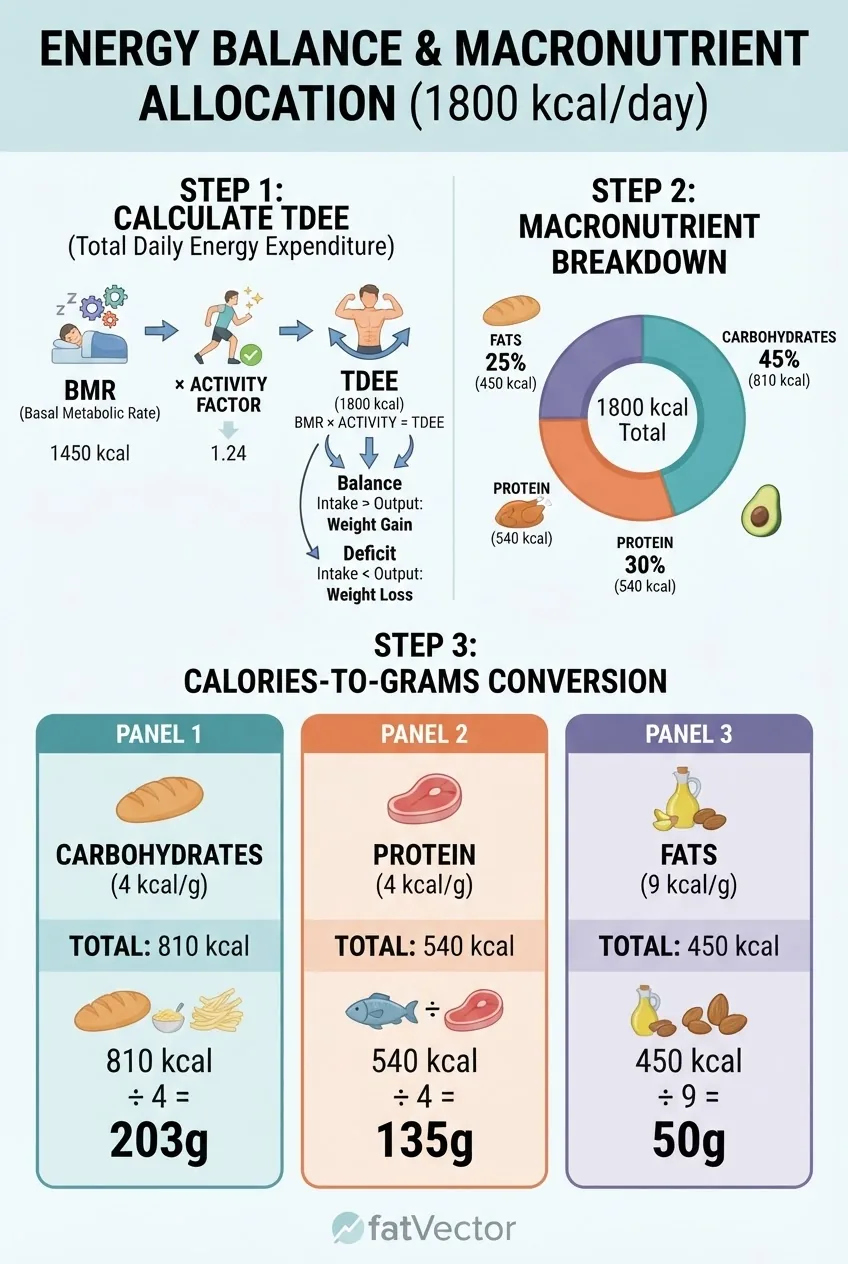
How do you calculate daily calorie needs and macros? (worked example)
Answer: Calculate calorie needs by estimating BMR (using Mifflin–St Jeor), multiply by activity factor to get total daily energy expenditure (TDEE), then allocate macros by percentage or grams based on goals; adjust with monitoring every 2–4 weeks.
Term: TDEE: total daily energy expenditure, the sum of BMR, activity energy, thermic effect of food and non-exercise activity thermogenesis.
Step-by-step worked example for a 35-year-old Texas woman, 70 kg, 165 cm, moderately active (exercise 3–4x/week):
- Estimate BMR using Mifflin–St Jeor:
BMR = 10 × weight(kg) + 6.25 × height(cm) – 5 × age(years) – 161 = 10×70 + 6.25×165 – 175 – 161 = 700 + 1031.25 – 336 = 1395.25 kcal/day (rounded 1395 kcal).
- Apply activity factor (moderately active ≈ 1.55):
TDEE = 1395 × 1.55 ≈ 2162 kcal/day.
- Set calorie goal: for modest weight loss subtract 300–500 kcal → target ≈ 1662–1862 kcal/day.
- Allocate macros for a balanced approach (30% protein, 30% fat, 40% carbs) on 1800 kcal:
- Protein: 30% of 1800 = 540 kcal → 540/4 = 135 g protein/day.
- Fat: 30% of 1800 = 540 kcal → 540/9 ≈ 60 g fat/day.
- Carbs: 40% of 1800 = 720 kcal → 720/4 = 180 g carbs/day.
Track intake with apps or food logs and re-evaluate weight, strength, energy and lab markers every 2–4 weeks to refine calories and macro balance.
Which dietary patterns have the strongest scientific support for long-term health?
Answer: Dietary patterns with strong evidence include the Mediterranean diet, DASH, and plant-forward patterns emphasizing whole foods, vegetables, legumes, whole grains, nuts, lean proteins and limited processed foods, each supported by randomized trials and long-term cohort data.
Key shared features of evidence-based dietary patterns:
- High intake of vegetables, fruits, whole grains and legumes.
- Moderate intake of fish, poultry and dairy (depending on pattern).
- Limited refined grains, added sugars, processed meats and ultra-processed foods.
- Use of healthy fats such as olive oil, nuts and fatty fish.
Examples and clinical uses:
- Mediterranean diet: lowers cardiovascular events and improves metabolic markers; practical for general population and longevity-focused nutrition.
- DASH (Dietary Approaches to Stop Hypertension): reduces blood pressure and improves cardiovascular risk—preferred for people with hypertension.
- Plant-forward diets: lower all-cause mortality and incidence of type 2 diabetes when well-planned to include adequate protein and micronutrients.
Local application (Texas): prioritize regionally available vegetables, lean proteins, and whole grains, adapting cultural foods into evidence-based patterns for sustainability and adherence.
How do specific nutrients affect chronic disease risk?
Answer: Specific nutrients influence disease risk through mechanisms such as lipid modulation, inflammation, glycemic control and oxidative stress; for example, saturated fat can raise LDL cholesterol while dietary fiber lowers colorectal cancer and cardiovascular risk.
Term: LDL cholesterol: low-density lipoprotein cholesterol, often labeled “bad” cholesterol because higher levels associate with greater atherosclerotic cardiovascular disease risk.
Evidence-summary by nutrient:
- Dietary fiber: reduces risk of colorectal cancer, lowers LDL cholesterol and improves glycemic control; target ≥25–30 g/day for adults.
- Saturated fat: higher intake linked to increased LDL cholesterol and cardiovascular events; replace with unsaturated fats (poly- and monounsaturated) for risk reduction.
- Added sugars: excessive intake increases risk of obesity, type 2 diabetes and dental disease; limit to ≤10% of calories, ideally <5% for additional benefit.
- Omega-3 fatty acids (EPA/DHA): reduce triglycerides and may reduce cardiovascular events in high-risk populations when provided by fatty fish or supplements.
- Sodium: high intake raises blood pressure; DASH suggests ≤2300 mg/day and lower for hypertension management.
- Vitamin D and calcium: important for bone health; deficiency and insufficiency require testing and targeted supplementation.
Clinical application uses labs (lipid panels, HbA1c, 25(OH)D) and risk calculators to prioritize dietary changes and, when necessary, pharmacotherapy alongside nutrition interventions.
What are the main research methods in nutrition science and their limitations?
Answer: Main methods include randomized controlled trials (RCTs), cohort (prospective) studies and cross-sectional studies; RCTs infer causality but may be short or expensive, while observational studies provide long-term associations but are vulnerable to confounding.
Term: Randomized controlled trial (RCT): an experimental study where participants are randomly assigned to intervention or control groups to test causal effects.
Method strengths and limitations:
- Randomized controlled trials: strong internal validity for specific interventions (e.g., nutrient supplementation), but often limited in duration, sample size, and adherence; dietary pattern RCTs are logistically complex.
- Prospective cohort studies: track large populations over decades to detect associations between diet and outcomes; strong for long-term effects but cannot fully eliminate confounding variables.
- Cross-sectional studies: provide snapshots of diet and health at one time; useful for hypothesis generation but cannot determine cause and effect.
- Mechanistic and metabolic studies: provide biochemical understanding (e.g., insulin response), but translate to humans variably.
Critical appraisal must consider study design, sample size, funding sources, dietary assessment validity and whether outcomes are clinical endpoints (mortality, disease events) or surrogates (blood lipids).
How can you evaluate nutrition claims and emerging research in the news?
Answer: Evaluate claims by checking study type (RCT vs observational), sample size, population, duration, funding sources, peer review, and whether findings are replicated; prioritize systematic reviews and meta-analyses over single studies.
Practical checklist for news reports:
- Identify study type and sample size—small or animal studies generate hypotheses, not definitive guidelines.
- Look for replication—single studies rarely change guidelines.
- Check conflicts of interest—industry funding can bias outcomes and interpretation.
- Verify peer-reviewed publication in reputable journals and whether reputable bodies (AHA, ADA, USDA) update recommendations.
- Assess magnitude and relevance—statistical significance may not equal clinical relevance.
Use authoritative syntheses such as systematic reviews, meta-analyses and guideline statements to guide major dietary changes and remain skeptical of sensationalized headlines that claim single foods are “miracle” cures.
What role do dietary supplements play in scientific nutrition?
Answer: Supplements can correct documented deficiencies, support specific clinical conditions, or provide nutrients when dietary sources are inadequate, but they are not substitutes for healthy dietary patterns and require professional oversight for dosing and interactions.
Term: Dietary supplement: a product taken orally that contains dietary ingredients intended to supplement the diet, such as vitamins, minerals, herbs, amino acids or enzymes.
Evidence-based supplement uses:
- Vitamin B12 for people on strict plant-based diets or with malabsorption.
- Iron when iron-deficiency anemia is confirmed by labs.
- Vitamin D for individuals with low 25(OH)D levels or limited sun exposure.
- Omega-3 supplementation for individuals with high triglycerides or limited fish intake.
Risks and quality control:
- Supplements can interact with medications (e.g., vitamin K and warfarin) and have adverse effects at high doses.
- Product purity varies; choose third-party tested brands and prefer food-first approaches.
How do you translate scientific nutrition into practical meal planning?
Answer: Translate evidence into meals by using plate-based frameworks: half vegetables and fruit, one-quarter lean protein, one-quarter whole grains or starchy vegetables, plus healthy fats and fiber; match portion sizes to calorie goals and cultural preferences for sustainable adherence.
Daily meal-planning template for an 1800 kcal target (example):
- Breakfast (400–450 kcal): whole-grain cereal or oats, 1 serving fruit, 1 serving dairy or plant-based protein, 1 serving nuts or seeds.
- Lunch (500–550 kcal): salad with 3–4 cups mixed vegetables, 3–4 oz protein (chicken, legumes), 1/2–1 cup whole grain, olive oil dressing.
- Snack (150–200 kcal): Greek yogurt with berries or an apple with nut butter.
- Dinner (600–650 kcal): 3–5 oz fish or plant-protein, 1 cup cooked whole grain, 1–2 cups non-starchy vegetables, small healthy fat portion.
Meal-prep tips to increase adherence:
- Batch-cook proteins and grains once weekly for convenience.
- Use portion containers or a kitchen scale for the first 2–4 weeks to calibrate portions.
- Plan culturally familiar meals using the plate template to improve sustainability.
For more beginner-level guidance, see the related guide on Nutrition for Beginners and practical tips in 10 Ways to Eat Better.
How should athletes and active people apply nutrition science?
Answer: Athletes optimize performance and recovery by matching carbohydrate intake to training intensity and duration, ensuring adequate protein for repair (1.2–2.0 g/kg/day), timing carbohydrates and protein around workouts, and maintaining hydration and electrolyte balance.
Term: Nutrient timing: scheduling food and nutrient intake around exercise to maximize performance, recovery and adaptation.
Practical guidelines:
- Pre-exercise: 1–4 g/kg of carbohydrate in the 1–4 hours before long or intense sessions depending on tolerance.
- During prolonged activity (>60–90 minutes): consume 30–60 g/hour of carbohydrates to maintain performance (higher rates for ultra-endurance).
- Post-exercise recovery: 20–40 g high-quality protein and 1–1.2 g/kg carbohydrate within 2 hours for glycogen resynthesis and muscle repair.
- Daily protein: 1.2–2.0 g/kg depending on training load, with even distribution across meals for muscle protein synthesis.
How do you monitor progress and when should you adjust a plan?
Answer: Monitor progress with objective measures—weight and body composition, blood markers (lipids, HbA1c, nutrient labs), performance metrics and subjective energy/symptom tracking—and adjust calories, macros or food choices every 2–8 weeks based on trends and goals.
Useful monitoring tools and timelines:
- Weight: check weekly under consistent conditions; expect gradual change (0.5–1% body weight/week for safe weight loss).
- Body composition: measure every 8–12 weeks using DEXA, bioelectrical impedance or skinfolds to assess fat vs lean mass.
- Blood tests: repeat lipids, HbA1c, ferritin and vitamin D at clinically appropriate intervals (e.g., 3–6 months after major changes).
- Functional outcomes: record energy levels, sleep, gastrointestinal symptoms and exercise performance to inform adjustments.
Adjustment principles:
- If weight loss stalls for 4–8 weeks, reduce calories by 100–300 kcal or increase non-exercise activity and reassess.
- If energy or performance declines, prioritize protein and carbohydrate intake and consider increasing calories modestly.
- If labs show nutrient deficiency, address food sources first and supplement only when necessary under clinical guidance.
What are the latest scientific nutrition insights (2023–2026) practitioners should know?
Answer: Recent insights emphasize food quality over single nutrients, the health harms of ultra-processed foods, benefits of plant-forward diets, individualized carbohydrate tolerance for metabolic health, and better understanding of the gut microbiome’s role in modulating diet response.
Concise summary of emergent evidence:
- Ultra-processed foods: accumulating cohort and randomized data link higher consumption with increased all-cause mortality, obesity and cardiometabolic disease.
- Personalized nutrition: genetic, metabolic and microbiome data explain some inter-individual responses to identical meals—practical personalization can improve glycemic control in some people.
- Plant-forward benefits: higher intake of minimally processed plant foods correlates with lower chronic disease incidence and environmental benefits.
- Protein quality and distribution: evidence supports higher daily protein with evenly spaced servings to preserve muscle mass in aging populations.
- Omega-3 evidence refinement: high-dose EPA/DHA shows benefit in select cardiovascular risk populations, but routine dosing should follow clinical indication.
These insights refine guidelines but rarely overturn core recommendations; clinicians should integrate new findings with established evidence before changing patient care plans.
How can Texas residents find reliable nutrition professionals and services?
Answer: Find credentialed professionals (registered dietitian nutritionists, RDNs) through state and national registries, check licensure in Texas, prefer evidence-based practice, and consider telehealth or local clinics with experience in your condition for convenient, personalized care.
Term: Registered dietitian nutritionist (RDN): a credentialed nutrition professional who has completed accredited coursework, supervised practice and national registration.
Steps to select a provider:
- Confirm credentials (RDN, RD) and Texas licensure where applicable.
- Ask about clinical experience with your specific goals (weight management, diabetes, sports nutrition, geriatrics).
- Request an evidence-based approach and measurable outcomes.
- Consider accessibility: in-person vs telehealth, insurance coverage and sliding-scale options.
Local resources: check university medical centers, community health clinics and professional organizations such as the Academy of Nutrition and Dietetics for Texas-based referrals.
How much do evidence-based nutrition services cost and how to budget for them?
Answer: Costs vary: a single RDN visit in Texas typically ranges from $75–$200 without insurance; packages and telehealth may lower per-visit cost—budget for initial assessment, follow-ups, and possible labs or supplements when planning care.
| Service | Typical Cost (Texas, uninsured) | Notes |
|---|---|---|
| Initial RDN assessment | $100–$200 | 60–90 minutes, individualized plan |
| Follow-up RDN visit | $50–$120 | 30–60 minutes, progress checks |
| Telehealth package (multiple visits) | $150–$400 | May include meal plans, tracking |
| Laboratory testing | $25–$300+ | Depends on panels and insurance |
Ways to reduce cost: check insurance coverage, employer wellness programs, community clinics, sliding-scale RDN services, and evidence-based group classes which often cost less per person.
How do food environment and social factors shape nutrition outcomes?
Answer: Food availability, affordability, cultural norms and marketing strongly influence dietary choices; interventions that change environment—improving access to fresh foods, educating communities and implementing policy—produce measurable improvements in population nutrition.
Key determinants:
- Food deserts and limited access to grocery stores reduce consumption of fresh produce.
- Price and marketing of ultra-processed foods drive higher intake of calorie-dense, nutrient-poor products.
- Work schedules, food literacy and cooking facilities affect ability to prepare healthy meals.
Effective interventions combine individual counseling with community-level changes such as farmers’ market incentives, school nutrition improvements and workplace wellness programs to support sustained dietary improvements.
What steps should someone take to start applying scientific nutrition today?
Answer: Start with an evidence-based baseline: assess current intake, set measurable goals, choose a sustainable dietary pattern (e.g., Mediterranean or DASH), calculate TDEE and macros, prepare simple meal plans, and schedule regular follow-ups to adjust using objective markers.
- Record a 3–7 day food log to identify patterns and gaps.
- Set one specific, measurable goal (e.g., add one serving of vegetables at dinner daily for two weeks).
- Choose a dietary framework that fits your culture and schedule.
- Calculate approximate calorie needs and a practical macro split (see worked example).
- Plan grocery lists and batch-cook to lower barriers to healthy eating.
- Monitor weight, energy and one lab value if clinically indicated, then iterate.
For structured meal examples and nutrient-dense recipes, explore related guides such as the pillar page on Nutritionally Complete Meal Guide with Balanced Diet Advice and tailored meal plans like the 7 Day Diet Menu to Lose Weight.
Frequently Asked Questions
What is the difference between nutrition science and a diet fad?
Nutrition science relies on reproducible research methods—randomized trials, cohort studies and meta-analyses—to form guidance; diet fads are often driven by anecdote, marketing or single small studies without replication and typically promise rapid, unsustainable results.
How quickly will I see results from evidence-based dietary changes?
Initial changes in energy and weight can appear in 2–4 weeks; meaningful improvements in blood markers (lipids, HbA1c) commonly require 8–12 weeks, while long-term disease risk reduction is measured over years—patience and consistent monitoring are essential.
Can I meet all nutrient needs on a plant-based diet?
Yes—well-planned plant-based diets meet nutrient needs when they include varied legumes, whole grains, nuts, seeds, fortified foods and attention to B12, iron and omega-3s; periodic lab checks and possibly supplementation for B12 and vitamin D are recommended.
Are low-carb diets safe and effective for weight loss and metabolic health?
Low- to moderate-carbohydrate diets can be effective for weight loss and improving glycemic control in many people; safety depends on nutrient quality, adequate fiber and monitoring for lipid changes—work with a clinician if you have comorbid conditions.
How important is meal timing for weight loss and health?
Meal timing can assist hunger management and glycemic control for some (e.g., aligning carbs around activity or using time-restricted eating), but total intake and food quality remain the primary drivers of weight change and metabolic health.
When should I consider seeing a registered dietitian (RDN)?
See an RDN when you need personalized plans (weight loss, chronic disease management, sports nutrition, pregnancy, or complex food intolerances) or when previous attempts at diet change have failed; RDNs provide evidence-based, measurable strategies and follow-up.
How do I know if a nutrition study is trustworthy?
Trust studies that are peer-reviewed, have large sample sizes, use validated dietary assessments, control for confounders, are funded transparently, and ideally are replicated or summarized in meta-analyses or guidelines from recognized authorities.