

Answer: Supplements for men that reliably support energy combine targeted vitamins, minerals and proven ergogenic aids — notably B vitamins, vitamin D, iron when deficient, magnesium, creatine, CoQ10 and sensible caffeine — used with proper dosing, testing and diet to treat deficiency or enhance performance rather than as a dietary substitute.
What supplements for men actually boost daily energy?
Answer: The most evidence-backed energy boosters for men are B-complex vitamins (especially B12), vitamin D when low, iron if deficient, magnesium, creatine, CoQ10, and controlled caffeine; adaptogens like rhodiola and ashwagandha can help resilience to fatigue in some studies.
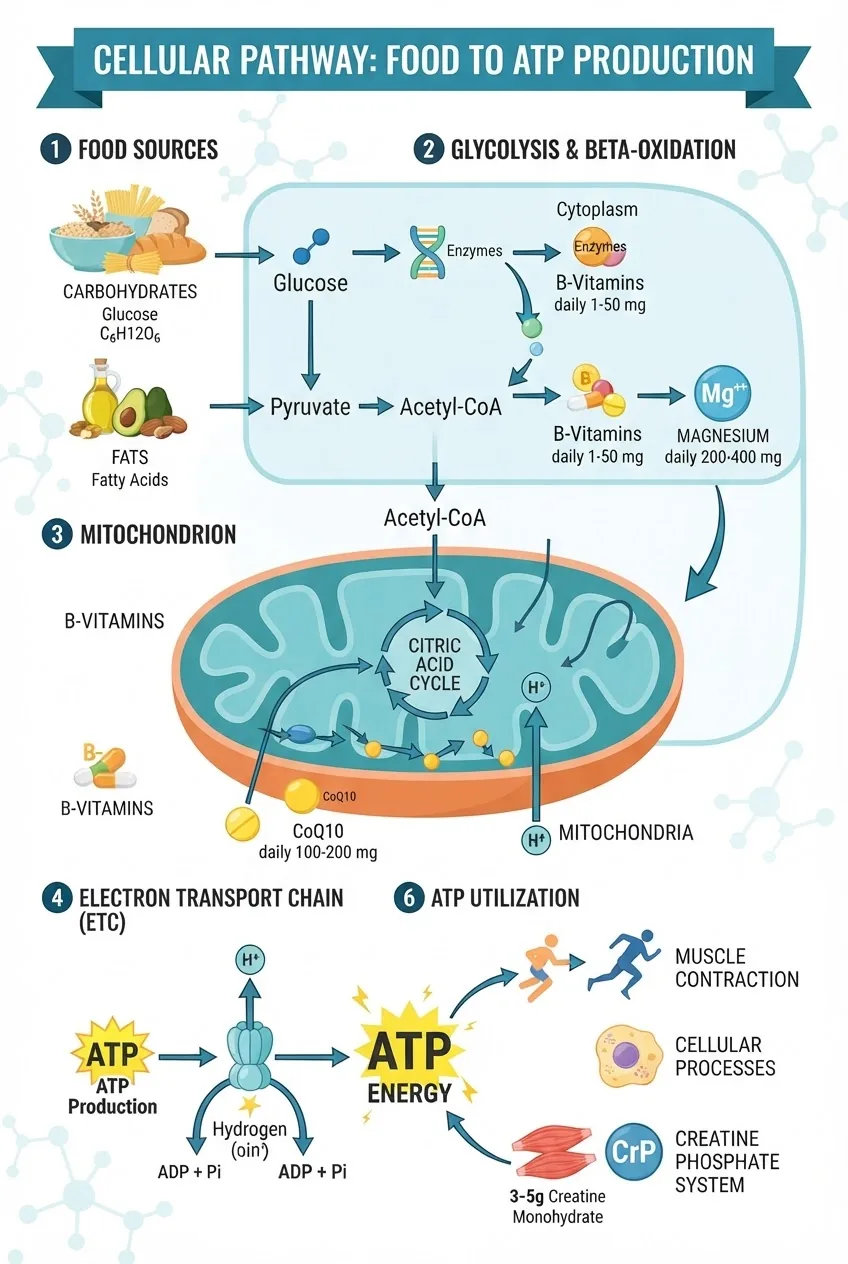
B vitamins: B vitamins are a group of water-soluble vitamins that help convert food into cellular energy (ATP) and support nervous system function.
Why these work: B vitamins function as coenzymes in metabolism; magnesium stabilises ATP; creatine replenishes high-energy phosphate stores in muscle; CoQ10 supports mitochondrial electron transport; caffeine stimulates the central nervous system for alertness. Treating a lab-proven deficiency often yields the largest, most reliable energy gains.
- Caffeine (50–200 mg): quick alertness, short duration; tolerance develops.
- Vitamin B12 (methylcobalamin 500–2,000 mcg weekly for deficiency): restores energy from deficiency-related anemia or neuropathy.
- Creatine monohydrate (3–5 g/day): increases high-intensity exercise energy and may boost cognition in sleep-deprived men.
- Magnesium (200–400 mg/day): reduces fatigue when low and improves sleep quality.
- CoQ10 (100–300 mg/day): helpful in statin-associated fatigue and older adults.
- Iron (ferrous sulfate or ferrous fumarate, dose per doctor): only when ferritin/iron deficiency is confirmed.
- Adaptogens (rhodiola 200–400 mg/day; ashwagandha 300–600 mg/day): modest evidence for reducing perceived fatigue and improving endurance.
What are the best vitamins for energy?
Answer: The best vitamins for energy are B-complex (B1, B2, B3, B5, B6, B7, B9, B12) plus vitamin D; B12 and B9 (folate) are critical for red blood cell production and nervous system function while vitamin D supports muscle function and mood.
Vitamin D: Vitamin D is a fat-soluble vitamin produced in skin by sunlight exposure that supports bone health, immune function, and muscle strength.
How they help:
- B-complex: acts as enzymatic cofactors in carbohydrate, fat and protein metabolism; deficiencies impair ATP production.
- Vitamin B12: prevents megaloblastic anemia and neurological symptoms; low B12 often presents as fatigue in men, especially older adults and those with malabsorption.
- Folate (B9): required for DNA synthesis and red blood cell formation; low folate can contribute to anemia-related fatigue.
- Vitamin D: deficiency correlates with muscle weakness and low energy; supplementation improves function when levels are insufficient.
Typical supplementation approach:
- Check labs for B12 and vitamin D first.
- Use a B-complex daily if diet lacks animal products or if testing shows borderline levels.
- Supplement vitamin D (800–2,000 IU/day or individualized higher doses after testing) to replete deficiency.
Should men take energy supplements every day?
Answer: Some energy supplements (multivitamin/B-complex, vitamin D, magnesium, creatine) can be taken daily, while stimulants (caffeine, high-stimulant pre-workouts) should be cycled and limited to avoid tolerance and sleep disruption.
Tolerance: Tolerance is a reduced response to a substance after repeated use, commonly seen with caffeine and stimulant blends.
Guidelines:
- Daily: B-complex, vitamin D, magnesium, creatine (maintenance dose) when indicated by diet or testing.
- Cycled: adaptogens may be cycled 6–8 weeks on/2–4 weeks off for sustained effect; caffeine should be limited to ≤400 mg/day and avoided within 6 hours of bedtime.
- Conditional: iron only with confirmed deficiency and under medical supervision, due to toxicity risk.
Monitoring: Reassess labs and symptoms every 3–6 months after starting targeted supplements; discontinue or adjust based on results and side effects.
Are there over-the-counter energy pills that work?
Answer: Yes—OTC products containing caffeine, green tea extract, rhodiola, B vitamins and low-dose creatine show measurable effects for alertness and exercise performance, but potency, safety and evidence vary widely across products.
OTC: Over-the-counter (OTC) refers to products available without a prescription, including many dietary supplements.
What to look for in OTC energy pills:
- Caffeine content declared in mg and kept ≤200 mg per serving for a single-use product; watch cumulative daily intake.
- Third-party testing seal (USP, NSF, or ConsumerLab) for purity and label accuracy.
- Avoid proprietary blends that hide individual ingredient amounts.
- Prefer clinically-studied ingredients with clear dosing references (e.g., rhodiola 200–400 mg/day).
Effectiveness examples:
- Caffeine pills (100–200 mg): increase alertness within 15–45 minutes.
- B-complex tablets: help correct deficiency-related fatigue but do not energize normally nourished men.
- Adaptogen formulations: small, reproducible benefits in trials for subjective fatigue.
Safety note: Stimulant-containing formulations and weight-loss blends can include synephrine, yohimbine or high-dose caffeine—avoid or use only under medical advice due to cardiovascular risks.
How should men choose supplements by age and goals?
Answer: Match supplements to life stage and goals: young active men focus on creatine and iron if training or vegan; midlife men add vitamin D, magnesium, CoQ10 and B-complex; older men prioritise vitamin D, B12, omega-3 and CoQ10 while screening for sarcopenia and low testosterone symptoms.
Decision factors:
- Dietary pattern (omnivore, vegetarian, vegan).
- Activity level (sedentary, endurance, strength-focused).
- Medical conditions and medications.
- Lab tests and symptoms (fatigue, poor recovery, cognitive fog).
| Age / Goal | Top supplement picks | Comment |
|---|---|---|
| 18–30, athletes | Creatine 3–5 g, B-complex, iron if low, protein powder | Creatine improves power; monitor iron in endurance athletes. |
| 31–50, busy professionals | Vitamin D, magnesium, B-complex, CoQ10 | Focus on sleep, stress resilience and muscle maintenance. |
| 50+, recovery & cognition | B12, vitamin D, CoQ10, omega-3, creatine for sarcopenia | Screen for malabsorption; prefer methylcobalamin if neuropathy present. |
Use individual assessment: order baseline labs (see “How to test for deficiencies”) and consult a clinician before starting hormone or high-dose therapies.
What are safe dosages and interactions for common energy supplements?
Answer: Safe daily ranges: caffeine ≤400 mg, creatine 3–5 g, magnesium 200–400 mg, vitamin D 800–4,000 IU (or individualized), CoQ10 100–300 mg, B12 up to 2,000 mcg for deficiency; check for drug interactions and avoid iron unless deficient.
CoQ10: Coenzyme Q10 is a fat-soluble compound that supports mitochondrial energy generation and can reduce statin-associated muscle symptoms.
Key interactions and cautions:
- Caffeine: interacts with stimulants and some psychiatric medications; raises heart rate and blood pressure in sensitive individuals.
- Creatine: generally safe with proper hydration; kidney disease patients should consult a doctor.
- Magnesium: high supplemental doses can cause diarrhea; some forms (oxide) are less bioavailable than citrate or glycinate.
- CoQ10: may lower warfarin effect—monitor INR if taking anticoagulants.
- Vitamin D: very high doses without monitoring can cause hypercalcemia; pair lab checks with therapy.
- Iron: can cause gastrointestinal side effects and toxicity; test ferritin and transferrin saturation first.
Medication flags:
- MAO inhibitors and high-dose stimulants: risk of hypertensive crisis—avoid uncontrolled stimulant stacks.
- Thyroid medications: separate supplements that affect absorption (iron, calcium) by several hours.
- Blood-thinners (warfarin): watch vitamin K interactions, and consult clinician before CoQ10 or high-dose vitamin E.
How do I test for deficiencies that cause low energy?
Answer: Order targeted blood tests — CBC with indices, ferritin, iron/TIBC, vitamin B12, 25-hydroxyvitamin D, TSH and basic metabolic panel — and add inflammatory markers and testosterone if clinically indicated.
Ferritin: Ferritin is a blood protein that stores iron and is the most reliable marker for body iron reserves.
Recommended baseline panel for low energy in men:
- CBC with differential — checks for anemia and infection.
- Ferritin, serum iron, TIBC — identifies iron deficiency or overload.
- 25-hydroxyvitamin D — determines vitamin D status.
- Vitamin B12 and methylmalonic acid (MMA) — assesses B12 sufficiency; MMA rises with deficiency.
- TSH and free T4 — screens for hypothyroidism causing fatigue.
- Basic metabolic panel (CMP) — screens electrolytes, kidney and liver function prior to supplementation.
- Total testosterone and SHBG — for midlife men with low energy, low libido or muscle loss.
Interpretation shorthand (men):
- Ferritin <30 ng/mL often suggests iron deficiency; <50 ng/mL with symptoms may still be significant, especially in athletes.
- 25(OH)D <20 ng/mL = deficient; 20–30 ng/mL = insufficient; target 30–50 ng/mL for most men.
- B12 <200 pg/mL is low; 200–350 pg/mL may be borderline and require MMA testing.
Next steps: Treat confirmed deficiencies first; re-evaluate symptoms and labs after 8–12 weeks of targeted therapy.
How should supplements fit with diet and exercise to maximize energy?
Answer: Use supplements to fill dietary gaps and enhance training: protein and creatine for strength, carbohydrate timing and caffeine for performance, B-vitamins and iron to support metabolic needs, and magnesium and vitamin D to optimise recovery and sleep.
Timing and pairing rules:
- Pre-workout: caffeine (50–200 mg) plus carbohydrate for endurance; creatine can be taken any time but some prefer pre/post with carbs for uptake.
- Post-workout: protein (20–40 g) with creatine to support muscle recovery and glycogen restoration.
- Daily: B-complex and vitamin D with meals that contain some fat (for vitamin D absorption); magnesium in evening to aid sleep when tolerated.
Food-first examples for men:
- Breakfast for all-day energy: eggs or plant protein, whole grains, spinach (iron), and a B-complex if diet lacks variety.
- Pre-lift snack: banana + 20–30 g whey protein; take creatine post-workout with a carbohydrate-containing beverage if preferred.
- Evening: magnesium glycinate 200–400 mg to support sleep onset and muscle relaxation if cramps or poor sleep present.
Integration with meal planning: A nutritionally complete diet reduces the need for broad-spectrum supplements — see the pillar guide on balanced meals for men for practical meal templates.
Internal resources: For complete meal planning, visit Nutritionally Complete Meal Guide with Balanced Diet Advice and for food choices that boost energy see Foods That Give You Energy Guide.
Which supplement forms and brands are best for absorption?
Answer: Choose clinically-studied forms with high bioavailability: creatine monohydrate, methylcobalamin for B12, magnesium glycinate/citrate, vitamin D3 (cholecalciferol) and ubiquinol or ubiquinone forms of CoQ10—buy from third-party tested brands.
Bioavailability: Bioavailability is the proportion of a nutrient that is absorbed and available for use in the body after ingestion.
Form-specific recommendations:
- Creatine: creatine monohydrate micronized is best-supported for efficacy and cost.
- Vitamin B12: methylcobalamin is preferred for neuropathy and for those who prefer a bioactive form; cyanocobalamin is widely used and stable but requires conversion in the body.
- Magnesium: glycinate and citrate are better tolerated and absorbed than magnesium oxide.
- Vitamin D: D3 (cholecalciferol) is preferred over D2 for raising serum 25(OH)D.
- CoQ10: ubiquinol may be better absorbed in older adults who convert ubiquinone less efficiently.
Brand selection checklist:
- Third-party testing (USP, NSF, ConsumerLab) or transparent Certificate of Analysis (COA).
- Clear labeling with ingredient amounts and forms.
- Avoid proprietary blends lacking individual quantities.
- Prefer minimal excipients and clear dosing instructions.
Related reading: For daily vitamin recommendations specific to men, see Best Supplements for Men with Daily Vitamin Recommendations.
How to stack supplements for energy safely and effectively?
Answer: Build simple stacks: morning basic (B-complex, vitamin D, magnesium if needed), pre-workout (caffeine 50–200 mg, creatine 3–5 g daily maintenance), and recovery (protein, magnesium, CoQ10 for statin users); avoid doubling stimulant sources.
Sample stacks with dosing:
- Daily morning stack — B-complex (per label), vitamin D3 1,000–2,000 IU, magnesium 200 mg (evening optional).
- Performance stack — 3–5 g creatine daily, pre-workout caffeine 100–200 mg 30–60 minutes before session, carbohydrate as needed.
- Recovery stack — 20–40 g protein post-workout, 100–200 mg CoQ10 if on statin, magnesium 200–400 mg at night for muscle recovery.
Stacking cautions:
- Track total stimulant intake (coffee + pills + pre-workout).
- Avoid multiple supplements containing the same high-dose vitamin unless directed by a clinician.
- Introduce one new item at a time for 2–4 weeks to monitor benefit and side effects.
What are realistic timelines: how long until supplements for energy work?
Answer: Timelines vary: stimulants work within minutes to hours, creatine reaches steady-state benefit in 1–3 weeks, vitamin D and iron repletion typically take 8–12 weeks to show symptom improvements, while B12 can improve energy within days if deficiency-related.
Typical onset windows:
- Caffeine: 15–60 minutes; effect duration 3–6 hours depending on dose and metabolism.
- B12 (deficiency): subjective energy may improve in 24–72 hours after injection or high-dose replacement; oral takes longer depending on absorption.
- Creatine: some strength gains in 1–2 weeks with loading; benefits often apparent after 3–4 weeks of regular use without loading.
- Vitamin D: blood level increases within weeks but symptomatic improvement in fatigue may require 8–12 weeks of consistent dosing.
- Iron: reticulocyte response in 7–10 days; hemoglobin rise usually seen by 3–4 weeks; full stores require months.
Clinical monitoring: Repeat targeted labs after 8–12 weeks of therapy to confirm biochemical response and adjust dosing.
How much will supplements for energy cost per month?
Answer: Monthly costs vary: common effective supplements range from $5–$60/month depending on quality and dose — basic B-complex and vitamin D are inexpensive while third-party tested creatine, CoQ10 and specialty adaptogen formulas cost more.
| Supplement | Typical dose | Approx. cost/month (USD) |
|---|---|---|
| B-complex (generic) | Daily tablet | $5–$12 |
| Vitamin D3 | 1,000–2,000 IU/day | $4–$15 |
| Creatine monohydrate | 3–5 g/day | $5–$15 |
| CoQ10 | 100–200 mg/day | $15–$50 |
| Magnesium (glycinate) | 200–400 mg/day | $8–$25 |
| Rhodiola / Ashwagandha | 200–600 mg/day | $10–$40 |
Cost reduction tips: buy creatine and basic vitamins in bulk, prioritise third-party tested products to avoid paying more for unverified “branded” blends.
What should men avoid when buying energy supplements?
Answer: Avoid products with proprietary blends, undisclosed stimulant amounts, questionable third-party testing, and high-dose single ingredients without medical indication (notably iron or stimulants) — focus on transparent labels and clinical dosing.
Red flags:
- Proprietary blends that do not disclose ingredient amounts.
- High stimulant stacks marketed with unrealistic claims (fat loss + sustained energy + appetite suppression).
- Unverified “miracle” ingredients lacking human trials.
- Products targeted at multiple conditions with a long ingredient list—higher risk of interactions.
Shopping checklist:
- Check for a COA or third-party testing mark.
- Verify ingredient forms and amounts match clinical studies.
- Read user reviews for consistency and post-purchase experiences.
- When in doubt, consult a pharmacist or clinician, particularly if on medication.
Can supplements replace food or sleep as energy solutions?
Answer: No—supplements are adjuncts to diet and sleep; they correct deficiencies and support performance but cannot substitute for adequate calories, macronutrient balance and restorative sleep when treating chronic low energy.
Hierarchy for addressing fatigue:
- Rule out medical causes with tests (anemia, thyroid, sleep apnea, depression).
- Prioritise sleep hygiene and a nutrient-dense diet.
- Use targeted supplements to correct deficiencies or improve recovery/performance.
When supplements help most: in confirmed deficiency, alongside structured training and improved sleep; when used alone without lifestyle changes, benefits are limited and often temporary.
How do I evaluate results and when to stop a supplement?
Answer: Evaluate objective and subjective markers: energy ratings, training performance, lab values and side effects; stop or re-assess after 8–12 weeks if no benefit or if adverse effects occur, and always re-check labs after correcting deficiencies.
Objective markers to track:
- Sleep duration and quality, using a sleep diary or tracker.
- Training metrics (strength, endurance, recovery times).
- Standardised fatigue scales or simple daily energy rating (1–10).
- Relevant labs for the supplement (25(OH)D, ferritin, B12, kidney function for creatine users).
Stopping rules:
- Worsening symptoms or new side effects after starting a supplement.
- No measurable benefit after 8–12 weeks for non-stimulant supplements.
- Elevated lab markers indicating excess (e.g., calcium with high-dose vitamin D).
Where should men buy supplements and what are trustworthy purchase practices?
Answer: Buy from pharmacies, reputable retailers, or direct from brands that publish third-party testing; avoid unregulated marketplaces for high-dose or exotic ingredients and check return policies and COAs before purchase.
Trusted purchase sources:
- National pharmacy chains and certified health stores with returns and authenticity policies.
- Manufacturer websites that publish Certificates of Analysis (COAs).
- Third-party marketplaces that verify sellers and testing marks (look for NSF, USP, or ConsumerLab reports).
Record-keeping: Keep supplement labels and batch numbers for three months in case of recalls or adverse events, and report serious adverse effects to the FDA MedWatch program.
How do supplements interact with common male medications?
Answer: Several common interactions exist: CoQ10 and vitamin K-related products can alter warfarin effects; iron reduces absorption of thyroid medication; stimulants interact with antidepressants and blood pressure meds; check with a clinician before combining.
Common interaction examples:
- Warfarin (coumadin): CoQ10 and high-dose vitamin E may reduce anticoagulant effect—monitor INR.
- Levothyroxine: separate iron, calcium and magnesium supplements by 4 hours to avoid absorption issues.
- Antidepressants (MAOIs, SSRIs): caution with stimulants and some adaptogens; rhodiola and high-dose caffeine may interact with MAOIs.
- Statins: CoQ10 may reduce myalgias; discuss dosing with prescriber.
What are key takeaways for men looking for better energy from supplements?
Answer: Start with testing and diet, prioritise evidence-backed supplements for documented deficiencies or performance goals, choose high-quality forms (creatine monohydrate, methylcobalamin, D3), monitor labs and symptoms, and avoid stimulant overload and proprietary blends.
Actionable checklist:
- Get baseline labs: CBC, ferritin, 25(OH)D, B12, TSH.
- Improve sleep and diet before layering supplements.
- Start one targeted supplement at clinically supported doses and reassess in 8–12 weeks.
- Prefer third-party tested brands and transparent labeling.
- Consult a clinician if on medications, with chronic disease, or if symptoms persist.
Frequently Asked Questions
Is there any over the counter energy pills that works?
Yes; OTC options with clear evidence include caffeine pills (100–200 mg) for immediate alertness and products containing B vitamins or rhodiola for mild fatigue; effectiveness depends on ingredient dose and baseline nutritional status, while safety requires limiting total daily stimulants to ≤400 mg and checking for interactions.
What is the best vitamin for energy?
The best vitamin for energy is the B-complex, especially vitamin B12 and folate for red blood cell production and nervous system support; vitamin D also influences muscle function and mood—test levels and correct deficiencies for measurable benefits.
What vitamins help for energy if I follow a vegetarian diet?
Vegetarians should prioritise vitamin B12 (methylcobalamin or monitored cyanocobalamin), iron with ferritin checks, a B-complex to support metabolism, vitamin D3 especially with low sun exposure, and omega-3 EPA/DHA if not consuming fatty fish.
Are adaptogens good supplements for energy?
Adaptogens like rhodiola and ashwagandha can reduce perceived fatigue and support stress resilience in some men at recommended doses (rhodiola 200–400 mg; ashwagandha 300–600 mg), but effects are modest and best used alongside sleep, diet and exercise strategies.
How long until creatine improves my energy and training?
Creatine commonly improves high-intensity exercise performance within 1–3 weeks when taken as 3–5 g/day; a loading phase (20 g/day for 5–7 days) accelerates muscle saturation, but steady daily dosing without loading also produces benefits within weeks.
Can supplements for energy harm my sleep?
Yes—stimulant supplements (high-dose caffeine, synephrine, some pre-workouts) can delay sleep onset, reduce sleep quality and blunt recovery; avoid stimulants within 6 hours of bedtime and limit total daily caffeine to under 400 mg to reduce risk.
How do I choose the right supplement brand?
Choose brands with clear ingredient lists, third-party testing (USP, NSF, ConsumerLab), published Certificates of Analysis, minimal filler ingredients and transparent dosing that matches clinical trial evidence; pharmacies and reputable retailers usually carry trusted options.
When should I see a doctor instead of self-medicating with supplements?
See a doctor if fatigue is severe, persistent, accompanied by weight loss, shortness of breath, chest pain, low libido or if baseline labs show anemia, thyroid dysfunction, low testosterone, or abnormal kidney/liver tests; supplements are adjunctive, not substitutes for medical care.