
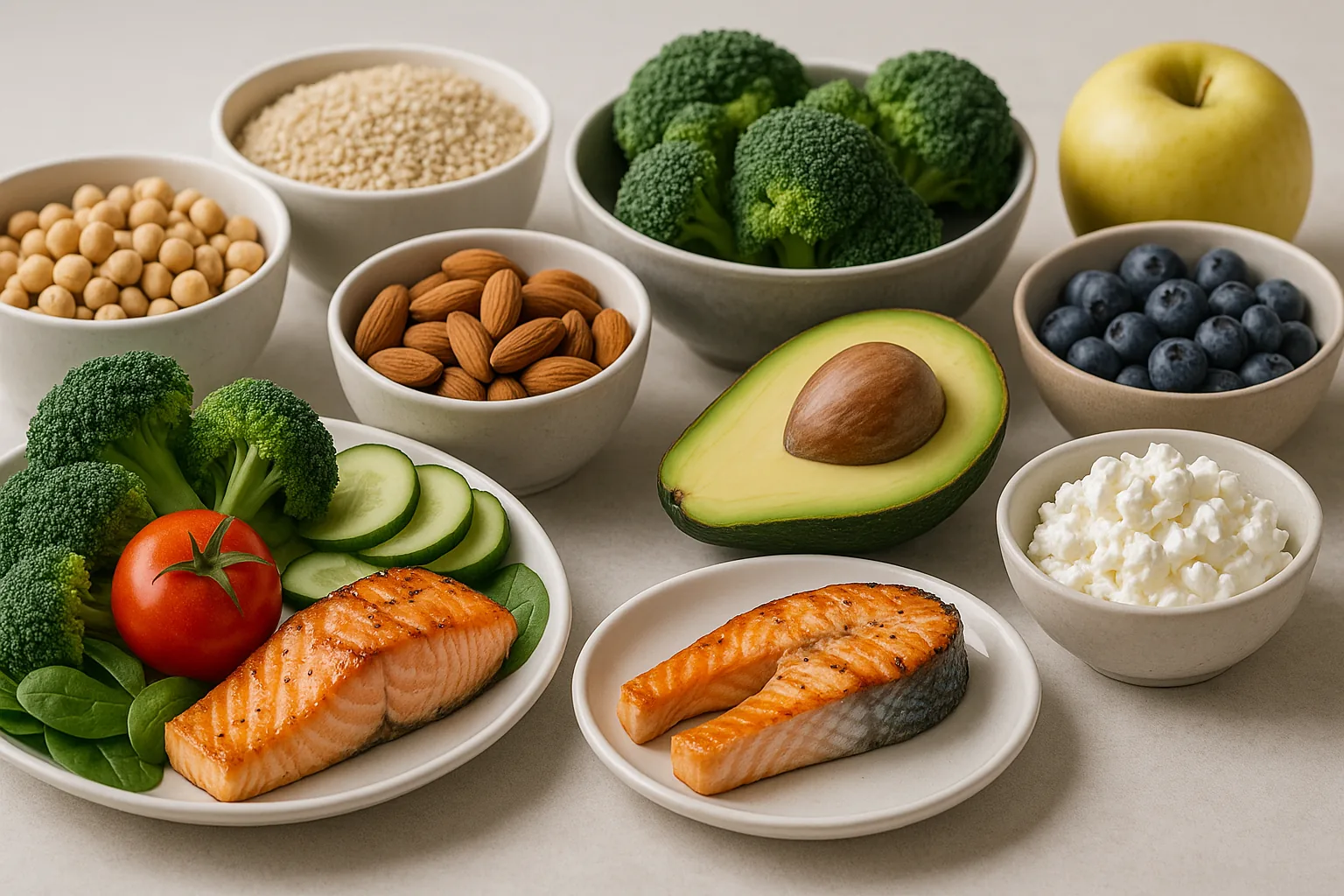
types of diets vary from balanced, calorie-focused plans to low-carb, plant-based, time-restricted and clinical nutrition programs; each works by changing calorie intake, macronutrient ratios, or meal timing to influence weight, energy and nutrient quality, and the best choice depends on goals, health conditions, and long-term adherence.
Introduction to Types of Diets
Answer: Types of diets are organized approaches to eating that prioritize certain foods, macronutrient ratios, or timing to meet goals such as weight loss, heart health, blood pressure control, or sustained energy; choosing among them requires weighing benefits, sustainability, and available foods.
Term: diet — a pattern of eating defined by food choices, macronutrient balance, portion control, or timing intended to support specific health or weight goals.
This guide explains the major categories of diets and nutrition programs, how each works mechanistically, who typically benefits, and practical notes on availability and adherence — including Texas-specific availability (regional produce, lean proteins, and affordable grain options) where relevant. For a concise definition for new readers see diet definition.
Transition: The next section breaks categories into clear, practical summaries so you can compare goals, pros and cons at a glance before examining benefits and choosing a plan.
Common Categories and Types of Diets Explained
Answer: Common diet categories include low-carbohydrate, low-fat, Mediterranean, plant-based, intermittent fasting, calorie-restricted, paleo and DASH; each category alters calories, macronutrients, or meal timing to affect weight, energy and chronic disease risk in distinct ways.

-
Low-Carbohydrate Diets (e.g., Keto, Atkins)
Answer: Low-carbohydrate diets limit starchy and sugary carbs to shift the body toward using fat (and sometimes ketones) for fuel; they range from moderate-carb restriction to strict ketogenic plans.
Term: low-carb — a diet that reduces carbohydrate intake to prioritize fats and/or protein for energy.
How it works: Reducing carbs lowers insulin response and depletes glycogen stores, encouraging lipolysis (fat breakdown) and, in very low-carb states, ketogenesis (production of ketone bodies) which can suppress appetite and increase fat oxidation.
Who it suits: People seeking faster initial weight loss, those with insulin resistance or type 2 diabetes (with clinician oversight), and individuals who prefer higher-protein or higher-fat foods. Texas note: ample availability of lean proteins (chicken, turkey, local beef) and low-carb vegetables makes adherence easier in many regions.
Example: A Houston office worker replaced daily tortillas and sugary sodas with eggs, grilled chicken and nonstarchy vegetables; after 12 weeks they lost 8% body weight and reported steadier afternoon energy. (Individual results vary; anecdote only.)
Further reading on carb management: consistent carbohydrate diet principles.
-
Low-Fat Diets
Answer: Low-fat diets restrict fat intake (often to 20–30% of calories) to reduce total energy density and saturated fat, promoting weight loss and heart-health when paired with whole foods.
How it works: Lowering dietary fat reduces calories per bite (fat is energy-dense) and can encourage larger food volumes of lower-calorie foods like vegetables and whole grains, improving satiety per calorie for some people.
Who it suits: People who prefer carbohydrate-rich meals, those targeting cholesterol reduction, or individuals comfortable eating more grains, legumes and fruits. Texas note: whole-grain tortillas or beans can be used as low-cost staples when prepared without added fats.
Example: A Dallas retail manager cut fried foods and used air-frying techniques with more beans and steamed greens; after six months they reported improved LDL cholesterol and steady weight loss.
-
Mediterranean Diet
Answer: The Mediterranean diet emphasizes fruits, vegetables, whole grains, legumes, nuts, olive oil and moderate fish/lean protein; evidence links it to heart and metabolic benefits.
How it works: Rich in monounsaturated fats, fiber and antioxidants, the pattern improves lipid profiles, reduces inflammation and supports steady weight over time when portions are controlled.
Who it suits: People seeking heart-healthy eating that is flexible and culturally adaptable; Texas markets supply citrus, greens, seafood and olive oil options for Mediterranean-style meals.
Example: A San Antonio teacher adopted Mediterranean dinners (grilled fish, salsa verde of herbs, beans and salad) and reported higher daytime energy and reduced blood pressure medications after discussion with their clinician.
-
Plant-Based Diets (Vegan, Vegetarian)
Answer: Plant-based diets center foods from plants; vegetarian variants may include eggs and dairy, while vegan diets exclude all animal products and require careful planning for certain nutrients.
Term: plant-based — a diet emphasizing whole plant foods (vegetables, fruits, legumes, whole grains, nuts and seeds) as primary foods for health and environmental reasons.
How it works: High fiber and lower energy density often reduce caloric intake naturally and improve gut health; nutrient attention is needed for vitamin B12, iron, calcium and omega-3s in stricter approaches.
Who it suits: People motivated by ethics, environment, or health; Texans can access legumes, grains, and seasonal produce widely, plus fortified foods for nutrient completeness.
Example: An Austin cyclist moved to a well-planned vegetarian diet and maintained performance while losing excess fat; they supplemented vitamin B12 and tracked protein via legumes and dairy.
-
Intermittent Fasting and Time-Restricted Eating
Answer: Intermittent fasting (IF) and time-restricted eating (TRE) schedule when you eat rather than what you eat; common patterns include 16:8 (16 hours fast, 8-hour eating window) and alternate-day fasting.
Term: intermittent fasting — an eating pattern alternating periods of fasting and eating, used to reduce overall caloric intake and affect metabolic pathways like insulin sensitivity.
How it works: By limiting eating occasions, IF often creates a caloric deficit and improves metabolic markers (insulin, blood pressure) for some people; circadian alignment (eating earlier) can support energy and sleep.
Who it suits: People who prefer fewer meals, those who want a simple behavioral change without tracking macros; caution for those with diabetes, pregnancy, or eating disorder history.
Example & Simple walkthrough: A teacher used 16:8—eating only 11:00–19:00—by shifting breakfast to a late brunch and dinner earlier; after eight weeks they lost 5% body weight and reported fewer mid-morning energy crashes. Step-by-step starter:
- Choose a 8–12 hour eating window (e.g., 10:00–18:00) and stick for two weeks.
- Focus on nutrient-dense meals during the window; avoid overeating to “make up” calories.
- Hydrate during fasting; stop if dizzy, hypoglycemic or otherwise unwell, and consult a clinician if on medication.
-
Calorie-Restricted Diets
Answer: Calorie-restricted plans reduce daily energy intake consistently (e.g., 500 kcal/day deficit) to produce steady weight loss while prioritizing adequate nutrients.
Term: calorie-restricted — a diet that intentionally reduces daily caloric intake below maintenance to induce weight loss.
How it works: Weight loss follows the caloric deficit principle (calories in < calories out); quality of calories matters to preserve lean mass and energy.
Who it suits: Those who prefer explicit calorie targets, weight-loss programs, or clinical supervision; see tailored meal plans such as 1200 Calorie Meal Plan for Balanced Weight Loss and 1400 Calorie Meal Plan for a Healthy Balanced Diet for structured examples.
Example: A nurse tracked intake at 1,400 kcal/day and combined it with strength training; after 4 months they reduced body fat while maintaining energy by prioritizing protein and fiber.
-
Paleo Diet
Answer: The paleo diet emphasizes whole, unprocessed foods similar to presumed Paleolithic patterns: lean meats, fish, fruits, vegetables, nuts and seeds while excluding grains, legumes, dairy and processed foods.
How it works: Eliminating processed foods and added sugars can lower calorie intake and improve metabolic markers, though exclusions (e.g., grains) can complicate adherence and nutrient diversity.
Who it suits: People who respond well to whole-food approaches and prefer meat-forward meals; in Texas, access to lean proteins and fresh produce supports practical paleo meals.
Example: A weekend hiker cut processed snacks, increased whole-food meals and reported improved digestion and steady weight loss over months.
-
DASH Diet (Dietary Approaches to Stop Hypertension)
Answer: DASH focuses on fruits, vegetables, low-fat dairy, whole grains, lean protein and reduced sodium to lower blood pressure and improve cardiovascular risk.
How it works: Emphasizes potassium, magnesium, calcium and fiber while lowering sodium and saturated fat, which clinically reduces systolic blood pressure in controlled trials.
Who it suits: People with hypertension, prehypertension or cardiovascular risk; the approach is flexible and sustainable for many households, including Texas families shopping for affordable produce and dairy.
Example: A retiree on a DASH plan reduced systolic blood pressure by 8–10 mmHg after 12 weeks in coordination with their physician.
Transition: You now have short, actionable explanations for each category; next we evaluate evidence-based benefits and how these diets perform for weight, energy and long-term health.
Benefits of Different Diets and How They Work
Answer: Different diets deliver benefits by producing caloric deficits, altering macronutrient-driven hormones (insulin, ghrelin), improving nutrient quality, or aligning meals with circadian rhythms; the most successful diets combine efficacy with long-term adherence and adequate nutrient intake.
Authoritative context: Dietary recommendations and evidence summaries are available from large institutions: USDA Dietary Guidelines, the American Heart Association, and public clinical trial summaries at National Institutes of Health. Clinical reviews and meta-analyses compare weight-loss outcomes across patterns.
Term: caloric deficit — consuming fewer calories than the body expends, causing the body to use stored energy (fat) and lose weight.
- Average short-term weight loss: many randomized trials report 5–10% body weight loss in 3–6 months across effective diets when a caloric deficit is maintained (According to a 2022 systematic review in peer-reviewed nutrition literature).
- Adherence and sustainability, not initial speed, predict long-term success (According to a 2021 meta-analysis of dietary adherence studies).
- Mediterranean-style and DASH patterns show consistent cardiovascular benefits in randomized trials (According to an AHA position review summary).
Comparison notes: Diets that change macronutrient ratios (low-carb, high-protein) can suppress appetite and preserve lean mass; time-restricted eating simplifies decisions and can reduce total energy intake; plant-based diets often improve fiber intake and reduce saturated fat exposure.
| Benefit | Diet Types That Deliver | Evidence Notes |
|---|---|---|
| Rapid initial weight loss | Low-carb, ketogenic, severe calorie restriction | Often larger short-term drops; may plateau without maintenance (According to a 2019 meta-analysis). |
| Sustained cardiometabolic benefit | Mediterranean, DASH, plant-forward | Consistent RCT and cohort evidence (According to AHA and public health reviews). |
| Improved daily energy and focus | High-protein, balanced meals, time-restricted eating | Protein and stable blood sugar support satiety and cognitive performance (According to a 2020 clinical nutrition review). |
Evidence summary and case study: A 2020 systematic review comparing low-carb and low-fat diets found similar weight loss at 12 months when adherence was equal (According to a peer-reviewed meta-analysis summary). A pragmatic clinical trial summarized by NIH reported that Mediterranean-style diets reduced cardiovascular events among at-risk adults over years (According to an NIH clinical trial summary).
For nutrient intake context see adequate intake nutritional requirements which clarifies Recommended Dietary Allowances and adequate intake levels referenced in trials.
To align diet choices with daily performance, review practical strategies on optimizing energy through diet, focusing on protein timing, complex carbs and hydration.
Trade-offs: Rapid weight-loss diets often score lower on long-term adherence; heart-healthy patterns score high on sustained risk reduction but may produce slower initial weight loss. The “most successful” diet for weight loss is the one an individual can sustain while meeting nutrient needs (According to multiple adherence-focused meta-analyses).
Transition: After weighing evidence and benefits, the next section provides a stepwise approach to choosing a diet that fits your goals, schedule and health profile.
How to Choose the Right Diet for Your Needs
Answer: Choose a diet by defining clear goals, evaluating health conditions, matching food preferences and lifestyle, testing feasibility for 4–12 weeks, and focusing on nutrient adequacy and adherence strategies rather than chasing a single “best” plan.
Follow these actionable steps:
- Define your primary goal. Weight loss, blood pressure control, energy, athletic performance or disease management? Be specific about timelines and metrics (lbs, blood pressure, labs).
- Screen health conditions. Check with a clinician if you have diabetes, kidney disease, pregnancy, or disordered eating history before starting restrictive plans.
- Match diet mechanics to preference.
- If you love meat and low-sugar foods, consider low-carb or higher-protein plans.
- If you prefer flexibility and heart health, consider Mediterranean or DASH patterns.
- If you want simplicity, try time-restricted eating to reduce decision fatigue.
- Estimate energy needs and set a realistic deficit. Use reliable calculators or clinician guidance; for many adults a 300–700 kcal/day deficit leads to sustainable 0.5–1.0 lb/week loss.
- Test for 4–12 weeks and measure outcomes. Track weight, energy, sleep, mood and relevant labs; adjust if energy plummets or adherence fails.
- Prioritize nutrient adequacy. Ensure protein, fiber, vitamins and minerals meet needs; consider supplementation only when needed.
- Plan for social and regional factors. In Texas, leverage local produce, legumes and lean proteins; plan for social eating and barbecue events by choosing leaner cuts and vegetable sides.
Practical guidance tips:
- Start with a small, specific change (e.g., add a vegetable at every meal) and build habits.
- Use meal planning tools, grocery lists and simple recipes to reduce decision fatigue.
- Monitor progress weekly rather than daily to avoid noise from water weight.
- If you need a calorie-controlled framework, see 1200 Calorie Meal Plan for Balanced Weight Loss or 1400 Calorie Meal Plan for a Healthy Balanced Diet for examples of structured energy targets.
- Be prepared to adapt: if a diet lowers energy or harms performance after 4–8 weeks, try a less restrictive option or consult a registered dietitian.
Transition: Use the guidance above to narrow options; the following extended comparison table lists many diets with key features to help finalize your choice.
Comprehensive List of Diets With Key Features (Extended List)
Answer: The table below compares common diets by category, key features, pros, cons and typical use cases so you can match a plan to your goals quickly.
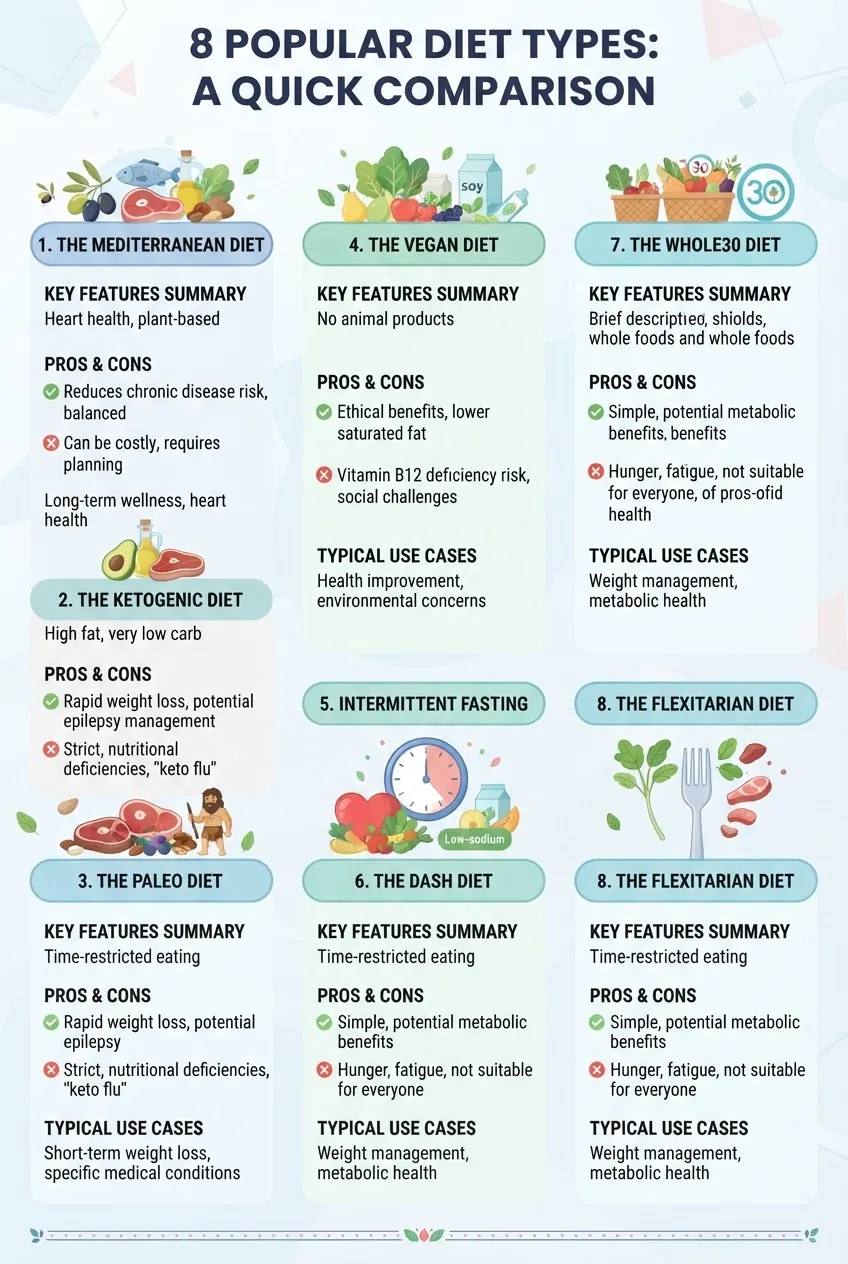
| Diet Name | Category | Key Features | Pros | Cons | Typical Use Case |
|---|---|---|---|---|---|
| Ketogenic | Low-Carb | Very low carbs (<30–50g/day); high fat; moderate protein | Rapid fat loss, appetite suppression | Restrictive, nutrient gaps, social limitations | Short-term weight loss, metabolic conditions under care |
| Atkins | Low-Carb | Phased carb reintroduction; high protein/fat early | Flexible long-term phases | Potential saturated fat increase | Gradual carb reintegration for maintenance |
| Low-Fat | Low-Fat | Fat <25–30% of calories; emphasize carbs and lean protein | Heart-friendly, satiating with fiber | May increase refined carb intake if unfocused | Cholesterol or LDL reduction goals |
| Mediterranean | Pattern | Olive oil, fish, legumes, whole grains, fruits, veggies | Cardio benefit, flexible, nutrient-dense | Less prescriptive for weight loss without portion attention | Long-term heart health and metabolic risk reduction |
| Vegan/Vegetarian | Plant-Based | Excludes some/all animal products; focus on plants | High fiber, lower saturated fat | Requires planning for B12, iron, omega-3s | Ethical or environmental motivations, lower chronic risk |
| Intermittent Fasting (e.g., 16:8) | Timing | Restricts eating window; no calorie rules required | Simplicity, less decision fatigue | May cause overeating in window; not suitable for everyone | Behavioral tool to reduce calories and improve insulin sensitivity |
| Calorie-Restricted (e.g., 1200–1800 kcal) | Energy-Focused | Fixed daily calorie targets; emphasizes balance | Predictable weight loss when calculated correctly | Requires tracking; risk of nutrient gaps if not planned | Structured weight-loss programs and clinical plans |
| Paleo | Ancestral Pattern | Whole foods; excludes grains, legumes, dairy | Reduces processed foods and added sugars | Nutrient diversity and fiber can be lower if poorly planned | Preference for whole-food, meat-forward meals |
| DASH | Cardiometabolic | Lower sodium, fruits, veggies, low-fat dairy, whole grains | Clinically proven BP reduction | May require sodium planning | Hypertension and cardiovascular risk reduction |
Transition: Use the table to shortlist 1–3 realistic diets; next learn how to maintain balanced nutrition while following any chosen plan.
Sustaining a Balanced Diet While Following a Specific Diet Plan
Answer: Sustaining balance requires planning meals for macronutrient adequacy, monitoring micronutrients, practicing portion control, and using visual tools and habit anchors to ensure long-term adherence and energy balance.
Core sustaining practices:
- Prioritize protein and fiber at meals to stabilize energy and reduce hunger.
- Plan weekly meals and grocery lists so you aren’t choosing convenience foods when busy.
- Monitor key micronutrients depending on the diet (e.g., B12 and iron for vegans; calcium and vitamin D if dairy is limited).
- Schedule regular weigh-ins or performance checks and adjust calories or macros as activity changes.
For foundational definitions and benchmarks on meal balance, see the pillar guide on balanced diet principles.
Use visual planning to keep portions realistic — helpful examples are in visualizing healthy meals.
For historical portion frameworks and to compare with modern models, review Food Pyramid 1990 guidelines and the updated healthy plate model for portion visualization.
Best practices to maintain energy and nutrient quality:
- Include at least one protein-rich item and one fiber-rich vegetable at each meal.
- Rotate food choices weekly to prevent nutrient monotony and improve adherence.
- Use fortified foods or supplements when necessary after consulting a clinician (e.g., B12 for vegans).
- Plan social meals and travel strategies in advance — pack protein snacks or map restaurants offering suitable options.
Transition: The final section summarizes next steps and a practical call-to-action for planning your diet change.
Conclusion and Next Steps for Diet Planning
Answer: Types of diets work by changing calories, macronutrients or timing; pick one that matches your health goals, food preferences and likelihood of staying consistent, then test it for several weeks while tracking energy and key biomarkers.
Key takeaways:
- Effectiveness depends on adherence; sustainability beats speed for long-term results.
- Balance macronutrients and monitor micronutrients to protect energy and health.
- Use institutional resources (USDA, AHA, NIH) and clinician guidance for medical conditions.
Ready step: choose one realistic diet from the comparison table, plan a two-week trial with meal prep and progress markers (weight, sleep, energy), and adjust based on objective and subjective data; consult a registered dietitian for personalized optimization.