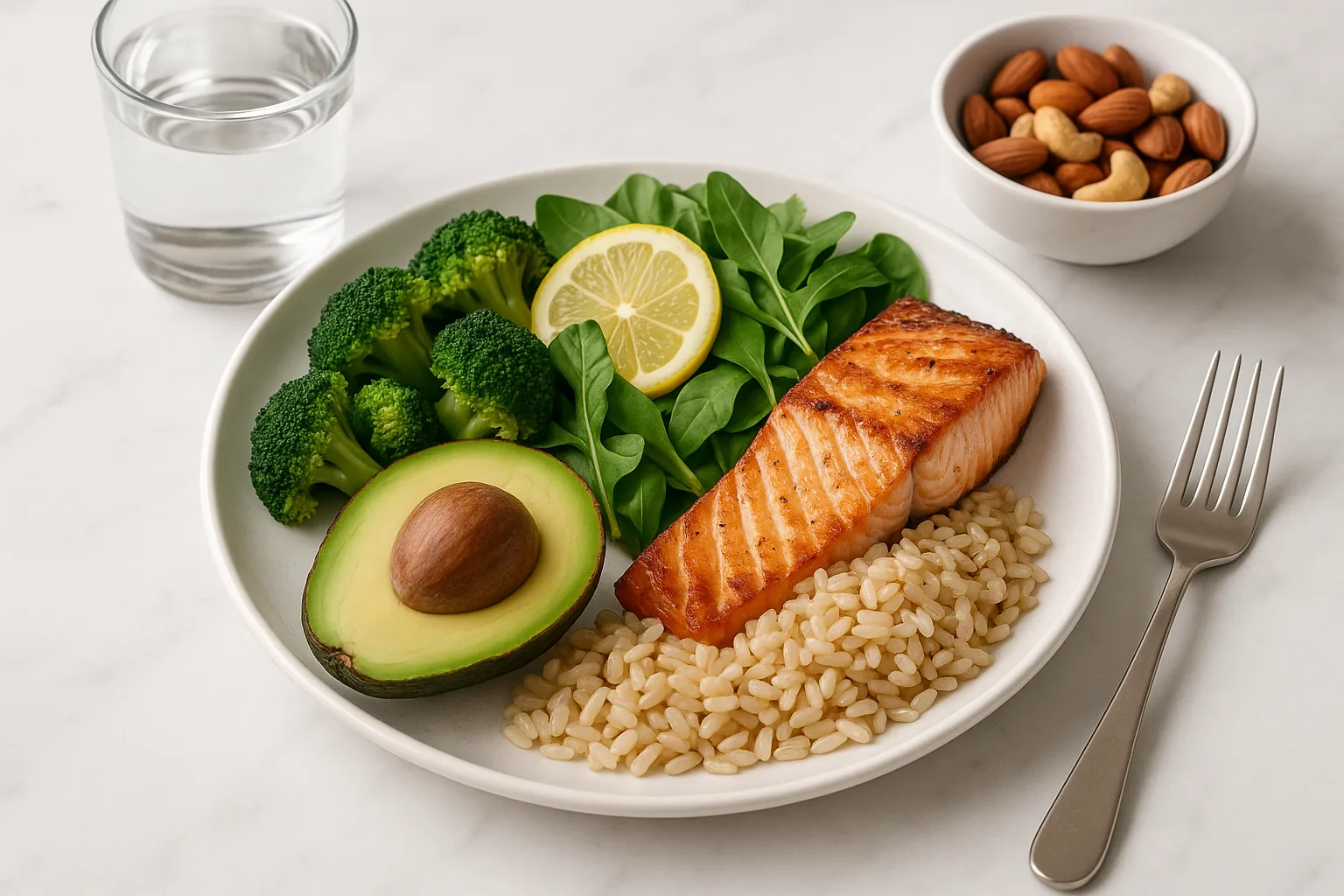
Balanced nutrition means eating a variety of nutrient-dense foods across all major food groups in portions that meet your energy needs while providing essential macronutrients, micronutrients, dietary fiber and adequate water—supporting health, growth, and daily function without relying on restrictive fad rules.
What Does Balanced Nutrition Mean?
Answer: Balanced nutrition means combining foods from all core food groups in proportions that supply sufficient macronutrients (carbohydrates, proteins, fats), micronutrients (vitamins and minerals), fiber, and water to meet physiological needs and support health across life stages.
Balanced nutrition: the state of meeting nutrient and energy needs through varied, nutrient-dense food choices and appropriate portioning.
A balanced diet prioritizes nutrient density—foods that deliver vitamins, minerals, fiber and beneficial compounds per calorie—over empty calories. Think of balanced nutrition as a well-tuned orchestra: carbohydrates supply rhythm (energy), protein provides structure (repair), fats add texture and signaling (cell function), and micronutrients tune the harmonies (biochemical reactions).
The practical hallmarks are variety, adequacy, moderation, and balance between energy intake and expenditure. According to the 2023 USDA Dietary Guidelines for Americans, balanced eating emphasizes vegetables, fruits, whole grains, lean protein foods, and low-fat dairy while limiting added sugars, saturated fat, and sodium. USDA Dietary Guidelines for Americans
Examples: A balanced breakfast could be oatmeal topped with berries and walnuts plus Greek yogurt; a balanced plate at lunch might be grilled chicken, quinoa, mixed greens with vinaigrette, and sliced fruit.
Understanding What a Balanced Diet Means
Answer: A balanced diet means meeting daily nutrient and energy requirements by including foods from the main food groups—fruits, vegetables, grains, protein foods, and dairy—while practicing portion control, variety, and moderation to support health and energy balance.
Start with the USDA MyPlate model: half your plate vegetables and fruits, roughly one-quarter grains (preferably whole grains), and one-quarter lean protein, with a serving of dairy or fortified alternative. USDA Dietary Guidelines for Americans provides the framework for this approach.
Key determinants that define “balanced” for an individual:
- Life stage and sex: Nutrient needs vary across childhood, pregnancy, older age and between sexes.
- Activity level: Physical activity changes energy and macronutrient distribution needs.
- Health status: Chronic conditions (e.g., diabetes, kidney disease) require tailored macronutrient and mineral guidance.
- Cultural and regional food availability: Food traditions influence how balance is achieved practically.
Concrete elements that make a diet balanced:
- Regular inclusion of all five MyPlate food groups.
- Preference for whole, minimally processed foods providing micronutrients and fiber.
- Appropriate portion sizes and mindful meal timing to support energy balance.
- Hydration with water as primary beverage.
- Flexibility and sustainability—meals you can maintain long-term.
Key Components of a Balanced Diet
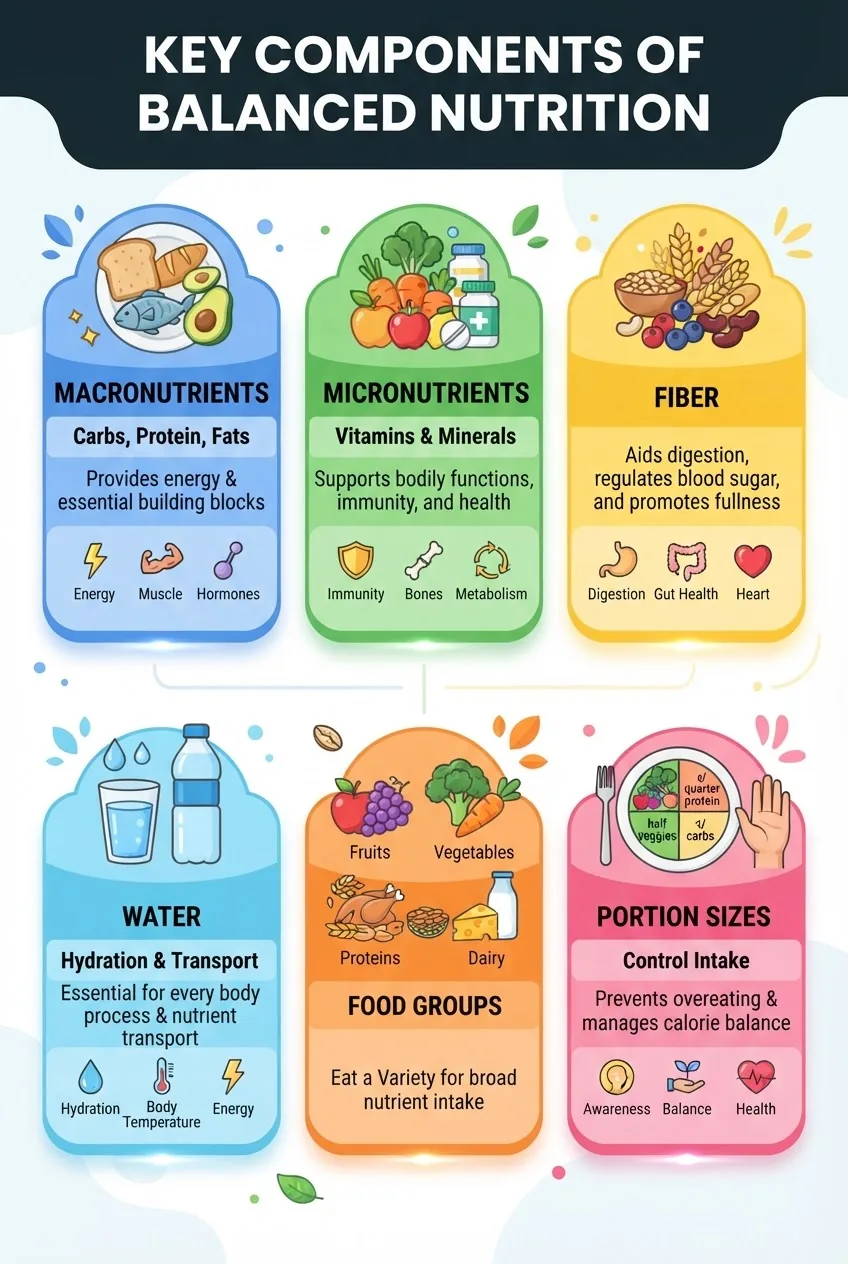
Answer: The essential components are macronutrients (carbohydrates, protein, fats), micronutrients (vitamins, minerals), dietary fiber, water, food groups (fruits, vegetables, grains, protein foods, dairy) and portion control to ensure nutritional adequacy.
Macronutrients: nutrients needed in larger amounts for energy and structure—carbohydrates, proteins, and fats.
-
1. Carbohydrates — primary energy source
Role: Carbohydrates fuel the brain, central nervous system and working muscles. Prefer whole grains, starchy vegetables, legumes and fruit over refined grains and added sugars.
Examples: brown rice, quinoa, oats, sweet potato, lentils, apples.
-
2. Protein — repair and maintenance
Protein: chains of amino acids required for tissue repair, enzymes, hormones and immune function. Include lean animal sources, seafood, eggs, dairy, legumes, nuts and seeds.
Examples: chicken breast, salmon, tofu, black beans, Greek yogurt.
Highest Protein Foods Chart Guide for Nutritional Protein Planning
-
3. Fats — essential for function and nutrient absorption
Role: Dietary fats support cell membranes, hormone production and absorption of fat-soluble vitamins (A, D, E, K). Favor unsaturated fats (olive oil, nuts, avocados) and limit saturated fat and trans fat.
Examples: extra-virgin olive oil, walnuts, avocado, fatty fish.
-
4. Vitamins and Minerals — biochemical cofactors
Micronutrients: vitamins and minerals required in small amounts to support metabolism, bone health, immune function and more; deficiencies undermine health. For nutrient specifics consult the NIH Office of Dietary Supplements.
-
5. Dietary Fiber — digestive and metabolic support
Role: Fiber (soluble and insoluble) supports bowel regularity, slows glucose absorption and contributes to satiety. Adults should aim for 25–35 grams/day depending on sex and energy needs.
Examples: beans, whole grains, vegetables, fruits, oats.
-
6. Water and Hydration
Role: Water supports temperature regulation, nutrient transport and waste removal. Hydration needs vary by body size, activity and climate; aim to replace fluids lost through sweat and normal function.
Practical: Water, unsweetened tea, and hydrating foods (melon, soups) are primary sources.
-
7. Food Groups and Portion Sizes
Role: Use food groups to structure meals; portion sizes determine energy intake and nutrient density. See the MyPlate distribution: half-plate vegetables and fruits, quarter-grains, quarter-protein, plus dairy/alternative.
-
8. Nutritional Adequacy and Energy Balance
Role: Nutritional adequacy means meeting recommended daily intakes of essential nutrients while energy balance aligns calories consumed with calories used for weight stability or change goals. “Energy balance” integrates intake with basal metabolic demands and activity.
What Is RDA Guide Explaining Recommended Dietary Allowance Basics
-
9. Dietary Variety and Moderation
Role: Variety reduces the risk of nutrient gaps; moderation prevents excessive intake of added sugars, sodium and saturated fats. Aim for colorful plates and rotation of protein and grain sources.
Six Classes of Nutrients Guide Explaining Essential Food Groups
-
10. Special Considerations: Fortification and Supplements
Role: Supplements can fill gaps when food intake is insufficient (e.g., Vitamin D in low sun environments); follow guidance from qualified professionals and the NIH Office of Dietary Supplements for dosing and safety.
Example: prenatal folic acid supplementation where indicated.
How to Decide What to Feed for Balanced Nutrition
Answer: Decide what to feed by planning meals around the MyPlate model, selecting nutrient-dense foods from each group, controlling portions to match energy needs, and using simple meal templates and shopping lists for consistency.
Begin with these stepwise actions:
- Assess needs: Identify age, sex, activity level and any health conditions—these drive calorie and nutrient targets. If clinical guidance is required, consult a registered dietitian or physician.
- Use a plate template: Adopt MyPlate for meals—half vegetables and fruit, quarter whole grains, quarter protein, with dairy/fortified alternative on the side. USDA Dietary Guidelines for Americans
- Choose nutrient-dense options: Favor whole foods: whole grains, legumes, lean protein, fatty fish, colorful vegetables, and fruit instead of processed snacks.
- Control portions: Use hand-portioning (palm for protein, cupped hand for carbs, thumb for fats) or measuring tools. For detailed portion visuals see the Portion Plate Control Guide for Managing Balanced Food Portions.
-
Plan weekly: Make a simple weekly plan with balanced breakfasts, lunches, dinners and snacks; batch-cook staples (grains, roasted vegetables, lean proteins) for quick assembly.
Meal Planner Printable Guide for Weekly and Daily Food Planning
- Account for special goals: If pursuing weight change or clinical goals, use calorie-aware plans; for example, see the 1200 calorie meal plan for weight loss or the 1400 calorie healthy balanced diet plan.
- Use visual aids: For help visualizing portions and balanced plates review balanced diet images.
- Shop smart: Build a shopping list emphasizing produce, whole grains, lean proteins and staples that support balanced meals. See regional produce availability and seasonal swaps (see Texas section below).
- Adjust for practicality and taste: Choose culturally familiar foods and swap smartly (e.g., brown rice for white rice, beans for processed meats) to keep changes sustainable.
Practical meal templates (examples):
- Breakfast: whole-grain toast, scrambled eggs, spinach, orange slices, and low-fat milk or fortified alternative.
- Lunch: mixed greens salad with grilled salmon, quinoa, roasted peppers, and a fruit dessert.
- Dinner: black bean chili with brown rice, side of steamed broccoli, and a small serving of plain Greek yogurt.
When to seek personalized planning: if you have diabetes, kidney disease, food allergies, or other medical conditions that change nutrient needs—work with a registered dietitian for individualized prescriptions.
Balanced Nutrition Guide Explaining What a Balanced Diet Means
Additional practical resources:
- 1200 calorie meal plan for weight loss — for calorie-specific weight loss guidance.
- 1400 calorie healthy balanced diet plan — moderate-calorie balanced option.
- balanced diet images — visual portion and plate examples.
- Portion Plate for Weight Loss Guide to Healthy Balanced Eating
Common Misconceptions and Clarifications About Balanced Diets
Answer: Common misconceptions include believing balanced diets mandate strict elimination, that all fats are bad, or that carbs inherently cause weight gain; accurate understanding recognizes quality, quantity, and context of foods.
Below is a myth versus fact comparison to clarify typical misunderstandings.
| Myth | Fact |
|---|---|
| A balanced diet means zero treats or indulgences. | Moderation is key; occasional treats can fit into a balanced plan without compromising overall diet quality. |
| All fats cause weight gain and should be avoided. | Unsaturated fats support health; portion control is important. Limit trans fats and excessive saturated fat. |
| Carbohydrates are always bad for weight control. | Quality matters—whole grains and fiber-rich carbs support satiety and metabolic health more than refined carbs and added sugars. |
| A single “superfood” can provide all needed nutrients. | No single food can supply all nutrients; dietary variety across food groups ensures completeness. |
| Balanced dieting is one-size-fits-all. | Balanced plans must be individualized by age, medical status and activity; consult professionals for tailored guidance. |
Myth vs. fact quick list:
- Myth: “Low-fat equals healthy.” Fact: Some low-fat processed foods are high in added sugars; choose healthy fats instead.
- Myth: “Eating late at night causes weight gain.” Fact: Total calorie balance and food quality matter more than meal timing for most people.
- Myth: “Supplements replace a balanced diet.” Fact: Supplements fill gaps; foods provide complex nutrient matrices and bioactive compounds not replicated by pills alone.
Evidence notes: According to a 2022 systematic review of diet quality and chronic disease risk, dietary patterns emphasizing whole foods and balance reduce cardiovascular and metabolic risk factors. (Source type: 2022 peer-reviewed review)
Popular Diets Guide Explaining Named Diets and Their Principles
SAD Diet Guide Explaining Standard American Diet Nutrition Basics
Benefits of Maintaining a Balanced Nutrition Plan
Answer: Maintaining balanced nutrition reduces chronic disease risk, supports healthy weight, stabilizes energy and mood, enhances immune function, and supports longevity through sustained nutrient adequacy.
Population evidence: According to a 2023 USDA report summarizing diet-related health outcomes, dietary patterns high in fruits, vegetables, whole grains and lean proteins are associated with lower rates of heart disease, type 2 diabetes and certain cancers (Source type: 2023 USDA Dietary Guidelines report).
Specific benefits with supporting evidence:
- Disease prevention: Diets rich in plant-based foods reduce cardiovascular disease risk factors—blood pressure, LDL cholesterol and systemic inflammation (Source type: 2021 meta-analysis).
- Weight management: Nutrient-dense, fiber-rich foods increase satiety and support sustainable weight control strategies (Source type: 2020 randomized controlled trial results).
- Energy and cognitive function: Balanced carbohydrate distribution and regular meals support steady blood glucose and sustained energy—helping concentration and mood regulation. For practical guidance on food choices that sustain energy see optimizing energy through diet.
- Bone and muscle health: Adequate protein plus calcium and vitamin D supports musculoskeletal health across the lifespan (Source type: 2022 clinical guidelines).
- Immune resilience: Adequate micronutrients (vitamin A, C, D, zinc) support immune response; deficiencies impair function (Source type: NIH ODS factsheets).
Quality of evidence varies by outcome, but a consistent theme across peer-reviewed research is that overall dietary pattern matters more than single nutrient fixation. For practical methods to increase dietary quality, consider gradual swaps (whole fruit instead of juice, grilled meat instead of fried) and consistent meal structures.
If your goal is increased energy for activity or work, consult the optimizing energy through diet resource for specific food timing and macro distribution strategies.
Regional Considerations: Balanced Diet in Texas, USA
Answer: In Texas, balanced nutrition adapts to regional foods (peppers, tomatoes, melons, legumes), seasonal availability, cultural cuisines and accessibility—integrating local produce and traditional dishes into the MyPlate framework supports adherence and nutrient balance.

Practical Texas-specific guidance:
- Use local produce: Texas grows bell peppers, tomatoes, sweet corn, melons, leafy greens and citrus—use these seasonally to boost variety and nutrient intake.
- Adapt traditional dishes: Modify favorites (e.g., chili, tacos) by adding beans, lean proteins, extra vegetables, and whole-grain tortillas to improve fiber and micronutrient content.
- Seafood options: Gulf coast seafood (shrimp, fish) provides lean protein and omega-3 fats—include when available for heart-health benefits.
- Accessibility and cost: Farmers markets and community-supported agriculture (CSA) can improve access to fresh produce; local food banks may offer seasonal produce boxes.
Survey note: According to a 2021 Texas nutrition and food access survey, many Texans cite cost and time as barriers to balanced eating—solutions include batch-cooking, using affordable staples (beans, eggs, frozen vegetables) and planning simple swaps to increase nutrient density (Source type: 2021 regional survey).
USA List of Food Guide for Balanced Nutrition and Meal Planning
Example Texas plate: grilled catfish, black bean and corn salad, roasted sweet potatoes, collard greens, and a grapefruit—or swap in a breakfast of whole-grain tortillas with scrambled eggs, salsa, avocado and a side of mixed fruit.
Cultural tailoring preserves familiar flavors while improving balance—salsa and peppers add flavor without extra calories; beans add protein and fiber; vegetables bulk meals affordably.
Tips for Sustaining Balanced Nutrition Long-Term
Answer: Sustain balance with simple systems—meal prep, consistent shopping lists, mindful eating habits, flexible recipes, and periodic review of goals—prioritize small, maintainable changes over radical short-term rules.
- Plan a weekly menu: Create repeatable breakfasts and two interchangeable lunches/dinners to simplify choices.
- Batch cook staples: Roast vegetables, cook grains and prepare lean proteins in advance for quick meal assembly.
- Use a shopping template: Keep a running list organized by store section to avoid impulse buys and ensure healthy staples are always available. Meal Planner Printable Guide for Weekly and Daily Food Planning
- Practice mindful eating: Eat without screens, chew slowly and stop at comfortable fullness to improve portion control.
- Build flexible recipes: Have base recipes with interchangeable proteins, grains and vegetables to avoid monotony.
- Keep healthy snacks visible: Pre-cut vegetables, fruit and portioned nuts make balanced snacking easier.
- Set realistic goals: Aim for gradual improvements—add one vegetable serving per day or switch to whole-grain bread.
- Track trends, not days: Evaluate diet quality across a week rather than a single meal to reduce guilt and improve sustainability.
- Consult professionals when needed: For medical conditions or complex goals, seek a registered dietitian or qualified clinician.
Healthy Diet Worksheet Guide with Printable Nutrition Templates
Practical caveat: Individual medical conditions require tailored plans—this guide offers general principles; consult a healthcare professional for individual medical advice.
Conclusion
Balanced nutrition means choosing varied, nutrient-dense foods from all core groups in portions matched to your needs, prioritizing whole foods, hydration, and sustainable routines. Start with small swaps, use plate templates, and adapt regional foods like Texas produce to your plan. For deeper planning tools and calorie-specific options, follow the linked resources and consult professionals when needed.
Next step: apply one concrete change this week—add one extra vegetable to a meal, swap a refined grain for a whole grain, or plan three balanced lunches—then build from that success.
Further reading: