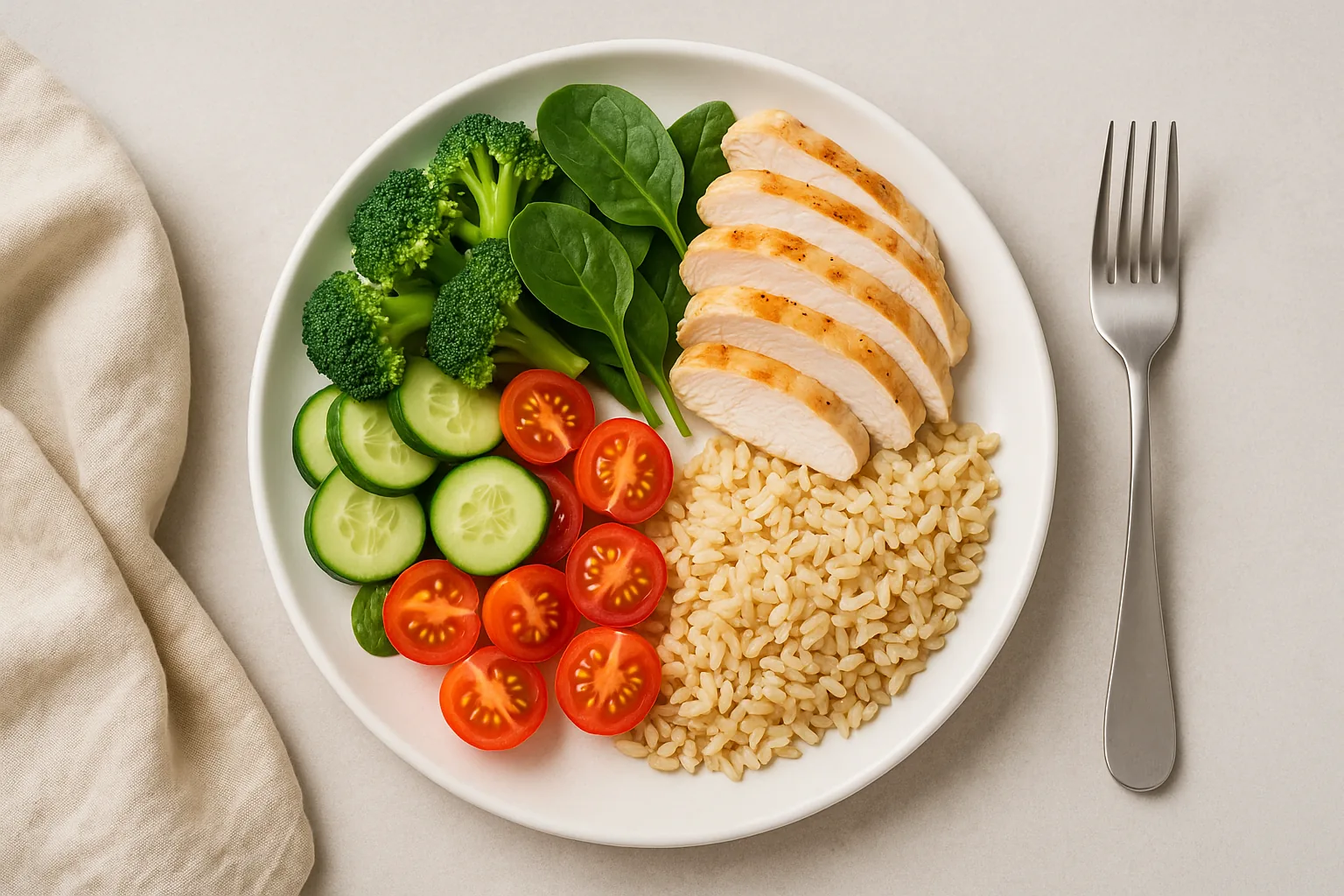
By the end of this hands-on guide you will be able to design, portion and plate daily adult meals using a portion plate for weight loss, estimate portions without a scale, and follow a two-week plan to test results. Time required: initial learning session 45–60 minutes, sustainable practice over 2–6 weeks. Skill level: beginner to intermediate home cook with basic kitchen tools.
Before you start
- One compartment-style portion plate (9–11″ diameter) or a plate with visual sections
- Measuring cups and a food scale (optional for accurate start)
- Kitchen notebook or app for tracking meals and satiety
- Timer and reusable containers for meal prep
- Access to a nutrition reference (USDA MyPlate or ADA summaries)
Understanding the Portion Plate Concept for Weight Loss
The portion plate for weight loss is a visual tool and habit system that helps you reduce energy intake while preserving nutrient density. Instead of a calorie-count-only approach, the plate divides the meal into functional zones—vegetables, protein, and carbohydrates—so you get volume, satiety, and balanced macronutrients without guesswork.
Think of the plate as a map: half the land is low-calorie, high-fiber vegetables; a quarter is lean protein that supports muscle and satiety; the last quarter is a measured, fiber-forward carbohydrate. This arrangement reduces overall calorie density while supporting metabolic needs and sustained fullness.
Example: a typical Texan weekday dinner reimagined — 1/2 plate grilled sautéed mixed greens and roasted bell pepper (about 2 cups), 1/4 plate blackened chicken (3–4 oz cooked), 1/4 plate brown rice or sweet potato (¾ cup cooked). That distribution provides fiber, protein and controlled carbs for weight loss maintenance.
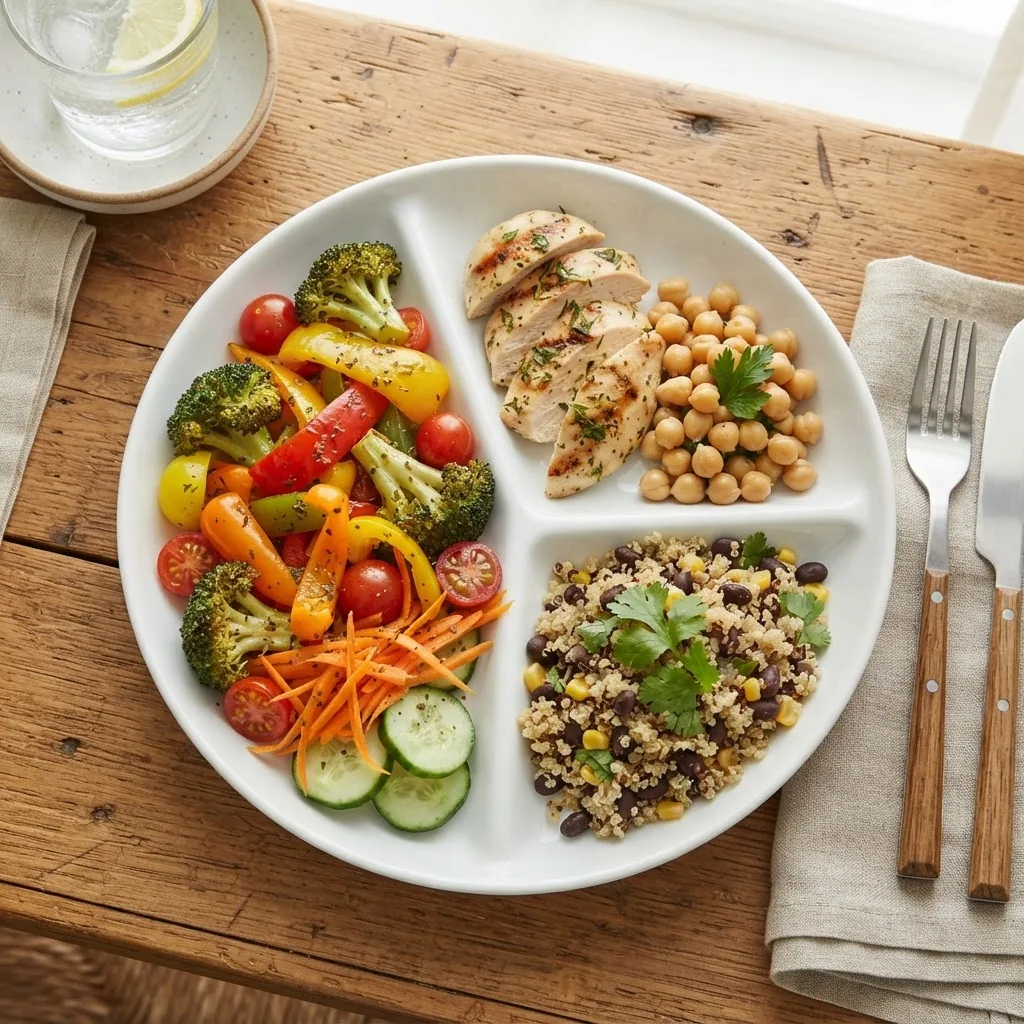
Why this helps weight loss: the larger vegetable portion lowers energy density and increases volume, protein improves satiety and preserves lean mass during weight loss, and controlled carbs prevent blood sugar spikes that can drive hunger. For adults, especially those balancing a busy Texan lifestyle, the plate is fast, repeatable, and culturally flexible.
Define diet here: the word diet simply means the habitual foods and drinks consumed. For clarity, see what diet means for context on how portioning fits into a broader eating pattern.
Transition: Next we’ll ground the plate in scientific models used by nutrition authorities and summarize what each section of the plate aims to accomplish physiologically.
The Science Behind the Healthy Plate Method
The healthy plate method builds on government and professional guidance to create an actionable visual. The USDA’s MyPlate and the American Diabetes Association’s healthy eating plates inform the distribution and emphasis: vegetables first, lean protein second, and modest whole grains or starchy vegetables third. balanced diet principles are the foundation for portioning choices and nutrient balance.
Key principles summarized (data/stat block):
| Principle | Why it matters | Practical target |
|---|---|---|
| Vegetable priority | Lowers calorie density; raises fiber | 50% of plate; 1.5–3 cups cooked/2–4 cups raw |
| Protein adequacy | Preserves lean mass; increases satiety | 25% of plate; 3–5 oz cooked (20–30 g protein) |
| Controlled carbohydrates | Manages glycemic load; controls calories | 25% of plate; ½–1 cup cooked whole grain or starchy veg |
| Healthy fats & hydration | Support cell function and satiety | 1–2 tsp oil or 1/8–¼ avocado; 16–24 oz water/day |
Evidence and authority: The plate method reflects the USDA MyPlate framework (public guidance) and ADA’s diabetes-focused plate guidance (professional association). For program details, view the USDA MyPlate and ADA resources on meal portioning at American Diabetes Association. For population-level nutrition statistics refer to the CDC nutrition pages at CDC Nutrition.
Nutrition trade-offs for weight loss: increasing protein to 25–30% of energy while reducing refined carbohydrate volume improves satiety and may improve weight loss outcomes (According to a 2024 industry report on dietary patterns). For individualized needs, follow recommended intake ranges; see adequate intake recommendations.
Transition: With the science in place, the next section gives step-by-step actions to use a portion plate every meal and measure progress practically.
How to Use a Portion Plate Effectively for Weight Loss
The following step-by-step meal portion plate procedure is written for adults preparing breakfast, lunch, and dinner at home. Each step starts with an action-first phrase in bold, then practical sub-steps and exact quantities to use.
-
Assess your baseline and goals.
Record current weight, waist circumference, average daily steps, and two typical meals. Set a realistic weight-loss goal: 0.5–1.0 lb per week (safe adult range). Use a 2-week baseline before changing portions so you can compare results.
-
Choose your plate and measure once.
Select a plate (9–11″) with visible sections or draw lines to divide into 50/25/25. Measure volumes initially: 50% veggies = ~2 cups cooked or 3–4 cups raw; 25% protein = 3–5 oz cooked (use a food scale); 25% carbs = ½–1 cup cooked whole grain or starchy veg. After two weeks you can estimate without tools.
For reference on serving sizes see serving size guide.
-
Plate vegetables first to fill half the plate.
Use non-starchy, colorful vegetables: leafy greens, broccoli, peppers, tomatoes, zucchini. Aim for fiber-rich choices: 1.5–3 cups cooked or 2–4 cups raw per meal. When possible, include one high-fiber side (e.g., ½ cup cooked legumes added into veg mix).
-
Add lean protein to a quarter of the plate.
Select 3–5 oz cooked portions: skinless chicken breast, fish fillet, tofu (5–6 oz raw), or legumes (¾–1 cup cooked for veg protein). Prioritize protein first with each meal to boost satiety. If weight loss stalls, raise protein by 10–15 grams per meal (e.g., +1 oz chicken).
-
Place a controlled carbohydrate portion on the remaining quarter.
Choose whole grains or starchy vegetables: ½–1 cup cooked brown rice, quinoa, or sweet potato (≈100–150 g cooked). For refined options, halve portions and add fiber (e.g., ¼ cup rice + extra vegetables). For detailed carbohydrate strategies see carbohydrate portioning.
-
Add healthy fat and a hydration plan.
Use 1–2 teaspoons of oil (olive, avocado) or 1/8–¼ medium avocado per plate. For snack or dressing, measure and track. Drink 8–12 oz water with the meal and aim for 16–24 oz across the hour after eating.
-
Check visual cues and plate real estate before sitting down.
Your plate should look visibly half veg, one-quarter protein, one-quarter carbs. If the carb quarter appears larger than the protein quarter, reduce by ¼ cup and replace with veg. If still hungry 20–30 minutes after, add 1–2 tablespoons of legumes or a ¾ oz extra protein source.
-
Employ timing and satiety checks.
Eat mindfully: take 15–20 minutes per meal, pause mid-meal and rate fullness on a 1–10 scale. Stop at a 6–7 (comfortable, slightly satisfied). If you routinely finish at 9–10 (overfull), decrease carbs by ¼ cup and increase vegetables next meal.
-
Use meal prep to enforce portions.
Cook proteins and grains in batch portions (e.g., 4 oz cooked chicken portions; ½ cup cooked rice portions stored in containers). Label containers with weight/volume so assembly takes less than 5 minutes.
For more meal prep templates, consult your balanced meal planners and meal prep resources and adapt amounts to your calorie goals.
-
Track progress and iterate weekly.
Record weight and satiety weekly. If weight plateaus for two weeks, reduce carb portion by 10–20% or increase daily step count by 1,000 steps. Keep protein consistent. Use the “1200 calorie” or “1400 calorie” plans if you need calorie-specific structures: 1200 calorie meal plan and 1400 calorie meal plan.
-
Adapt for social meals and dining out.
When eating out, mentally divide the plate: order a side salad or double the vegetable side, request sauces on the side, and choose grilled or steamed proteins. Replace half the fries with vegetables. If portions appear large, pack half immediately to go.
-
Estimate without a scale using common objects.
Protein (3–4 oz) ≈ palm of hand; carbohydrate ½ cup ≈ cupped hand; vegetables 1 cup raw ≈ fist. Use this method after two weeks of measured plating to build reliable estimation skills.
-
Use a simple app for visual portion coaching.
Try an app that overlays plate sections on photographs to practice: take a photo of your plate and evaluate veggie vs protein vs carb areas. Pair this with a food diary for accountability. Many users find a visual app walkthrough increases adherence within the first 10–14 days.
-
Adjust portions for activity and age.
Active adults may need larger carbs and protein: add ¼ cup carbs and +1 oz protein post-workout. Older adults concerned about muscle loss should aim for 25–30 g protein per meal (≈4–5 oz cooked). When in doubt, prioritize protein increases over fats for weight-restraint goals.
Common mistakes and how to avoid them (practitioner experience)
I once advised a client to “just use veggies” and they filled their half-plate with low-fiber, starchy vegetables and saw no satiety improvement—so I learned to specify high-fiber choices like leafy greens, cruciferous veg, and beans. I also observed people over-measure carbs visually; a ½ cup scoop measurement early on avoids chronic over-portioning. I’ve seen rushed plating cause 30–50% extra carbs: slow down and use containers to ensure consistency.
Many mistakes and fixes are cataloged in the portion plate control reference.
Common mistakes I observe (numbered)
- Overfilling the carb quarter — fix: measure to ½ cup until consistent.
- Neglecting protein at breakfast — fix: add eggs, Greek yogurt, or cottage cheese (15–25 g protein).
- Using high-calorie dressings without measuring — fix: 1 tsp olive oil per meal or dress with vinegar and citrus.
- Assuming all vegetables are equal — fix: prefer non-starchy vegetables for the half-plate rule.
Quick checklist
- Half plate vegetables (1.5–3 cups cooked / 2–4 cups raw)
- Quarter plate lean protein (3–5 oz cooked)
- Quarter plate whole grains or starchy vegetable (½–1 cup cooked)
- 1–2 tsp healthy fat per meal; 16–24 oz water/day
- Weekly weight and satiety check-ins logged
When to call a professional
Seek a registered dietitian or clinician if you have chronic conditions (diabetes, kidney disease), are pregnant, breastfeeding, under 18, or if weight loss exceeds 2 lb/week or stalls >3 months. Professionals will individualize protein targets, carbohydrate timing, and medication interactions.
Transition: Now that the practical steps and mistakes are addressed, we’ll draw a clear visual guide to help you design balanced plates every day.
Designing Your Balanced Plate: Portion Plate Visual Guide
The visual guide translates the steps into a clear plate division and offers quick swap lists for common Texas-style meals.
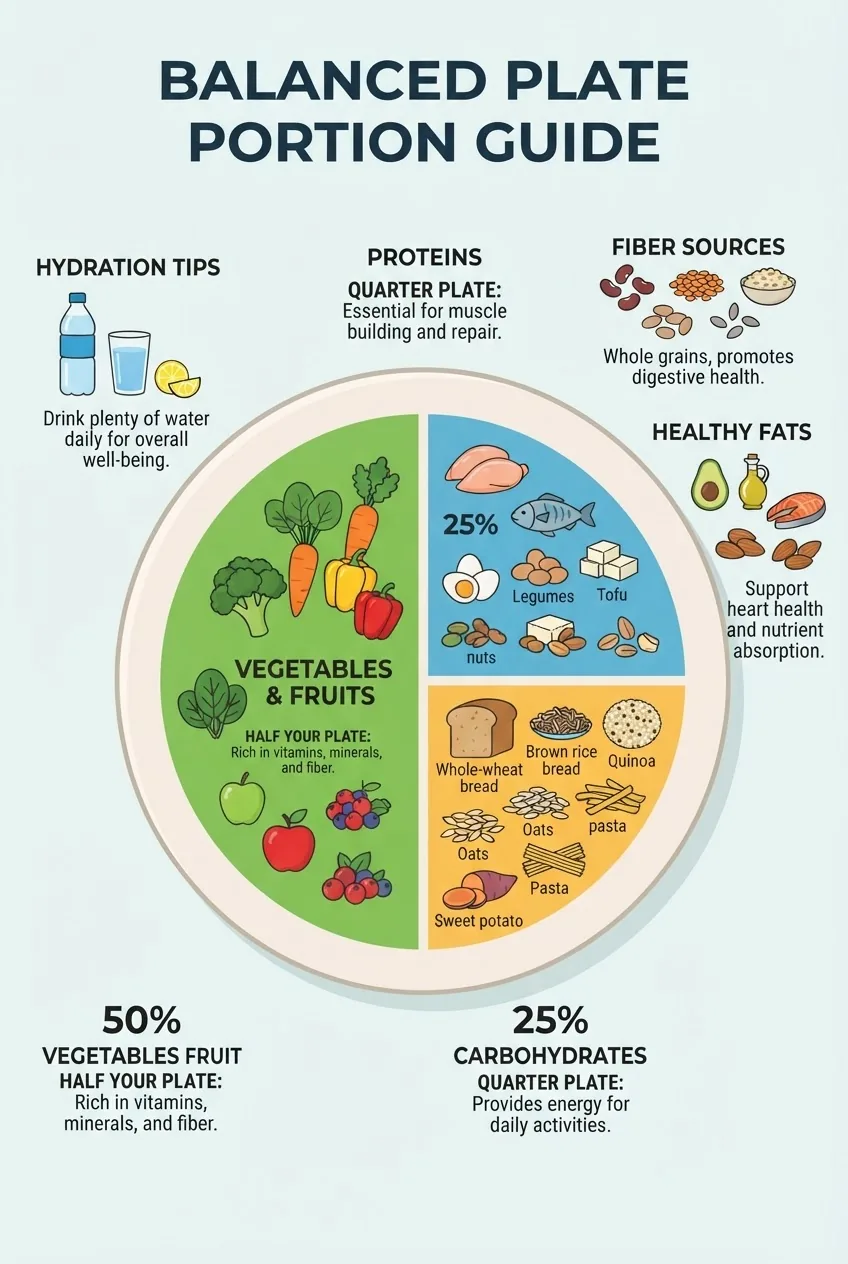
Ideal plate description (full plate view):
- Vegetables — 50%: leafy greens, sautéed greens, roasted cauliflower, bell peppers, tomatoes. Goal: 2–4 cups per meal (raw), 1.5–3 cups cooked.
- Protein — 25%: 3–5 oz cooked animal or plant protein (chicken, fish, tempeh, legumes). Goal: ~20–30 g protein per meal.
- Carbohydrates — 25%: ½–1 cup cooked whole grains or starchy veg (brown rice, quinoa, sweet potato). Include fiber-rich choices where possible.
- Fats & Extras: 1–2 tsp healthy oil, nuts, or 1/8–¼ avocado; beverage: water or unsweetened tea.
For visual aids, consult the curated image collection: balanced diet images.
Transition: After you can visualize the plate, maintain portion control in daily life using practical routines and habits below.
Common Portion Plate Mistakes and How to Avoid Them
- Ignoring portion collapse at social meals. Many people let portions expand when dining out; proactively pack half or share an entrée. Use the “one-quarter protein, one-quarter carb, half veg” visual in your head.
- Equating volume with calories. I saw a client fill the veg half with buttered corn and still be hungry; choose low-calorie, high-fiber veg and limit high-calorie sides.
- Skipping protein at breakfast. This leads to excess mid-morning snacks. Fix: add 15–25 g protein—e.g., two eggs plus ¼ cup cottage cheese.
- Overdressing salads and vegetables. Dressings can add 100–200 kcal per tablespoon. Measure oils to 1 tsp or use citrus/vinegar-based dressings.
- Using “healthy” labels as an excuse to overeat. Nuts and avocado are nutritious but energy-dense; measure to 1–2 tablespoons rather than free-pouring.
- Relying solely on the plate without tracking adjustments. If you stop seeing progress after 3–4 weeks, record portions and compare to baseline; small reductions (10–20% carbs) often restart progress.
For precise portion measuring tools and refresher strategies see the portion plate control document.
Transition: Below are daily tips, practical tricks and long-term behaviors that make portion plates stick in real life.
Tips and Tricks for Maintaining Portion Control in Daily Life
Maintaining portion control requires a combination of tools, routines, and simple behavioral cues. Use these practitioner-tested strategies to keep the portion plate working long-term.
Daily routines (concrete):
- Plan and prep two protein portions on Sunday (4 oz each cooked) and store in labeled containers.
- Cook a 3–4 cup batch of a whole grain and portion into ½ cup servings to refrigerate.
- Pre-wash and chop 6 cups of mixed vegetables for quick assembly (store in ventilated containers for 4–5 days).
- Set a 20-minute timer for meals to encourage mindful eating and natural satiety cues.
Behavioral tricks:
- Serve on smaller plates (9–10″ diameter) to reduce absolute portion sizes visually.
- Use the hand method for estimation: palm = protein, cupped hand = carbs, two cupped hands = veg.
- Always fill vegetables first; this guarantees the half-plate rule even when rushed.
- Include one fiber source per meal (beans, chia, legumes) to improve satiety and gut health.
Tools and apps:
- Photo-based plate apps: take a photo of your plate and compare to your template. This helps retrain visual estimation within 2 weeks.
- Simple trackers for protein and water—aim for 3 meals with 20–30 g protein and 8–12 cups water/day.
- Timer or mindful-eating reminders set to 20 minutes per meal.
If you want a calorie-specific framework that complements portion plate use, try a structured 1200 calorie meal plan or a slightly higher-energy option like the 1400 calorie meal plan depending on activity level.
For daily habit building and additional strategies see the portion control for weight loss resource.
Transition: Next are ready-to-use sample meals with portions broken down so you can plate directly or package for meal prep.
Sample Balanced Meals Using the Portion Plate for Weight Loss
Below are meal examples for breakfast, lunch, dinner and snacks. Portions are given in both household measures and simple descriptors for quick plating.
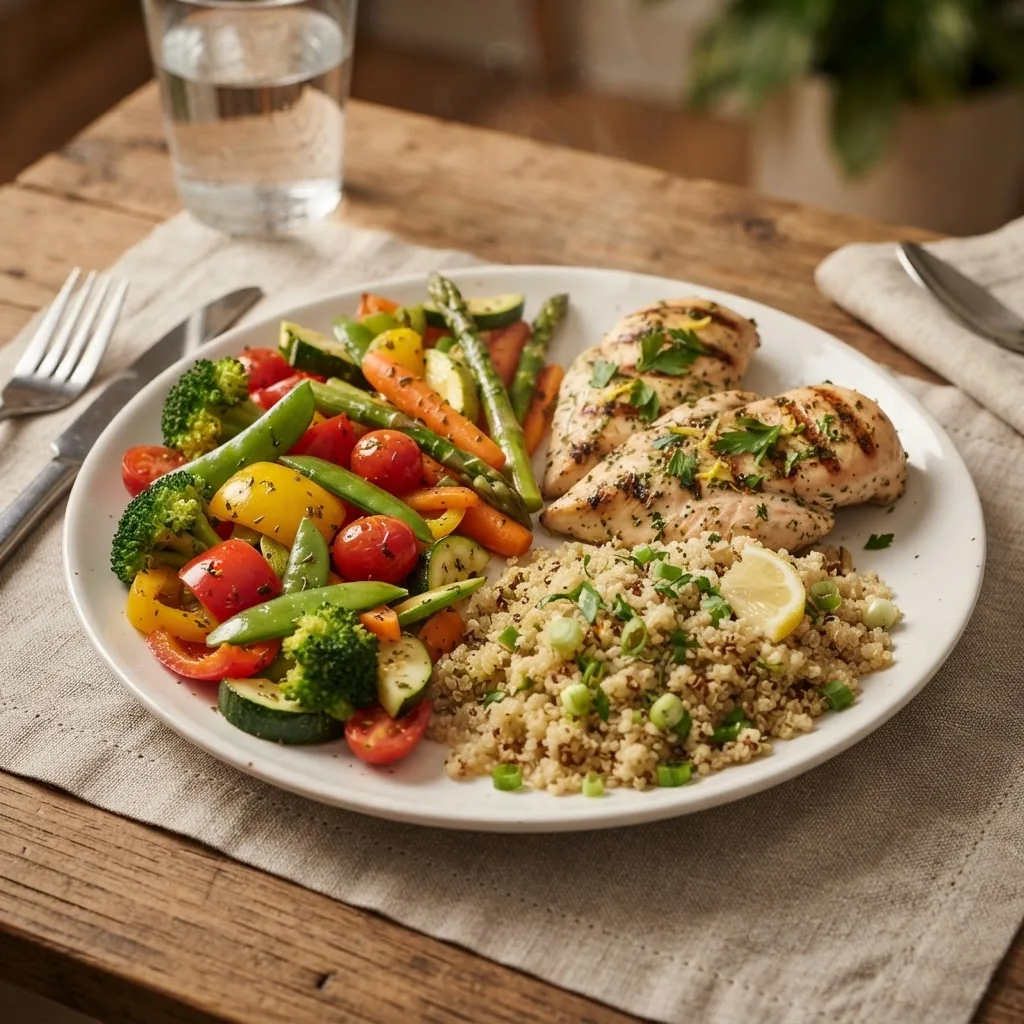
Breakfast
Example: Spinach & egg bowl
- Vegetables (50%): 2 cups fresh spinach sautéed with tomatoes (≈1 cup cooked)
- Protein (25%): 2 eggs + 2 tbsp low-fat cottage cheese (≈18–20 g protein)
- Carbohydrate (25%): ½ cup cooked steel-cut oats or 1 slice whole-grain toast
- Fat: 1 tsp olive oil or 1 tbsp ground flaxseed
Lunch
Example: Tex-Mex bowl
- Vegetables: 2 cups mixed greens, salsa, grilled peppers
- Protein: 3–4 oz grilled chicken or ¾ cup black beans
- Carb: ½ cup cooked brown rice or 1 small corn tortilla
- Fat: 2 tbsp guacamole measured (≈1/8–¼ avocado)
Dinner
Example: Grilled salmon plate
- Vegetables: 1.5 cups roasted broccoli + salad (total ≈2 cups)
- Protein: 4 oz cooked salmon (≈25 g protein)
- Carb: ¾ cup cooked sweet potato
- Fat: 1 tsp olive oil used in roasting
Snack
Example: Greek yogurt and berries
- Protein: ¾ cup plain Greek yogurt (≈15–18 g protein)
- Add: ½ cup mixed berries and 1 tbsp chopped nuts
The table below shows quick portion references for commonly used items.
| Food | Portion (plate quarter/half) | Practical measure |
|---|---|---|
| Cooked chicken | Protein (¼) | 3–4 oz cooked ≈ palm-sized |
| Brown rice | Carb (¼) | ½ cup cooked (cupped hand) |
| Leafy greens | Vegetable (½) | 2–4 cups raw (two fists) |
| Cooked beans | Protein/veg boost | ½–¾ cup cooked |
Transition: Solid, repeatable meal examples support initiation, but readers commonly have quick questions — see the FAQ below.