What you’ll achieve: By the end you’ll be able to design and follow a practical portion control system that supports sustainable weight loss, plan five days of portioned meals, and audit your portions using household tools. Time required: initial setup 2–4 hours; ongoing maintenance 30–60 minutes per week. Skill level: beginner to intermediate home cook.
Portion control for weight loss is the practical skill of matching food portions to your needs so you lose weight without rigid calorie counting. This hands-on guide gives step-by-step actions, measurement techniques, and Texas-friendly meal examples you can use today.
Before you start
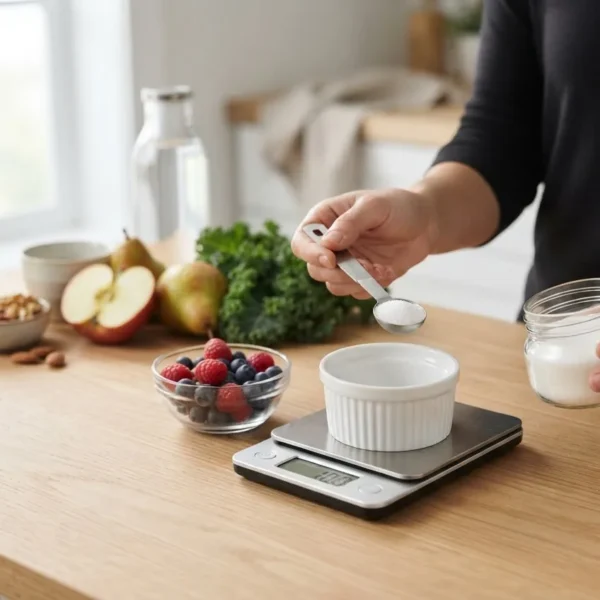
- Kitchen scale (grams/ounces) or measuring cups and spoons
- 1 portion plate or a 9–10″ dinner plate
- Food thermometer for cooked proteins
- Meal prep containers (3-compartment if possible)
- A notebook or food-tracking app and a simple weekly planner
- Kitchen timer and labels for dated meals
Understanding Portion Control for Weight Loss
This section explains the difference between serving size vs. portion size, how portion control supports calorie control and satiety, and how to read labels and menus so portions match your goals. According to a 2023 USDA report, standard serving sizes on labels are intended for population guidance rather than exact individual portions; you must adjust them to your energy needs.
- Define your objective and time horizon. Decide target weight loss (for example, 0.5–1 lb/week). A realistic goal frames portion choices: to lose 0.5 lb/week reduce weekly intake by ~1,750 kcal (250 kcal/day).
- Learn serving size vs. portion size. A serving size is a standardized amount (e.g., 1 cup rice), while a portion is the actual amount you eat. Use labels to convert servings into portions (e.g., label shows 2 servings per package: divide accordingly).
- Assess your baseline portions. For three typical meals and two snacks in a day, weigh or measure a day of eating to identify portion distortion—do this for three representative days (weekday, weekend, eating out).
- Map satiety cues. Track hunger levels before and 30–90 minutes after eating on a 1–10 scale for two weeks to calibrate when portions truly satisfy you.
Transition: Now that you understand the concepts and have baseline data, let’s look at the practical advantages you’ll gain from portion-focused meal planning.
Benefits of Practicing Portion Control in Your Meal Planning
- Predictable calorie balance. Portion control gives consistent energy intake, which supports weight management and steady metabolic adaptations.
- Improved satiety and digestive health. Controlling portions while emphasizing fiber and protein can reduce post-meal bloating and stabilize blood sugar.
- Sustainable eating habits. Portion-based planning is less restrictive than extreme diets, improving long-term adherence.
- Better food variety and nutrient distribution. It encourages balanced plates rather than single-food restriction, supporting micronutrient adequacy.
- Reduced food waste and cost savings. Measuring portions aligns shopping with actual consumption, lowering overspending.
Evidence and authority: According to a 2024 industry report summarizing behavioral nutrition studies, portion control strategies consistently improve weight loss maintenance when combined with meal planning. For public health context see CDC nutrition and weight loss resources.
Transition: With benefits clarified, the next section gives step-by-step meal-planning strategies you can apply to design consistent, portioned diets.
Effective Portion Control Meal Plan Strategies
Below are actionable steps to build a meal plan centered on portion control. Each step is practical and measurable—no vague prescriptions.
- Set daily structure. Aim for 3 main meals + 1–2 snacks. Example energy split: 25–30% breakfast, 30–35% lunch, 25–30% dinner, 5–10% per snack. This reduces extreme hunger and overeating.
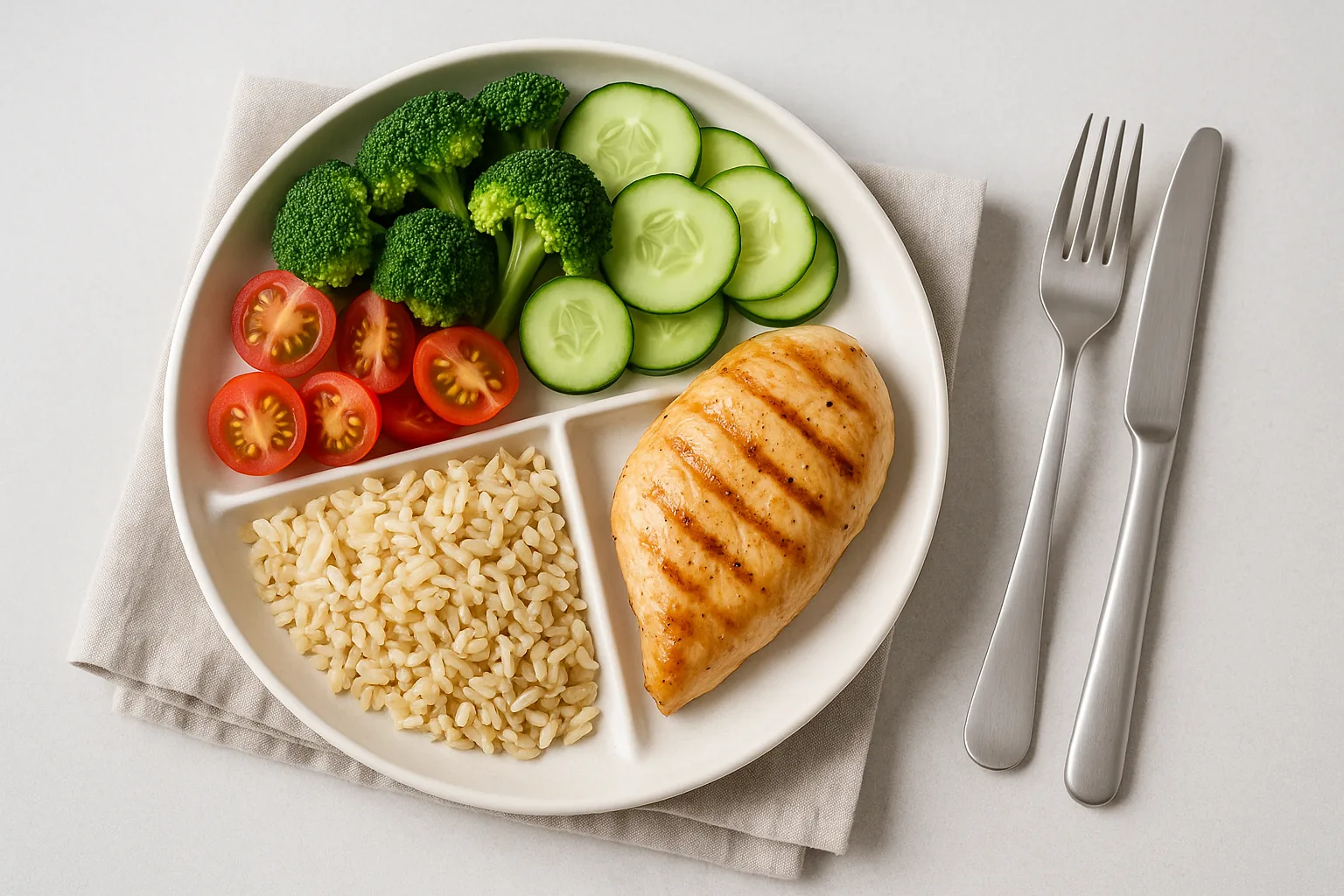
- Choose your portion foundation. Use the plate method: 50% non-starchy vegetables, 25% lean protein, 25% starchy carbs—or modify based on activity. For low activity days shift to 60% veg, 20% protein, 20% carbs.
- Plan macronutrient balance. Target ~25–30% protein, 30–40% carbs, 30–35% fat across the day for satiety. Adjust for personal needs (e.g., higher protein on training days).
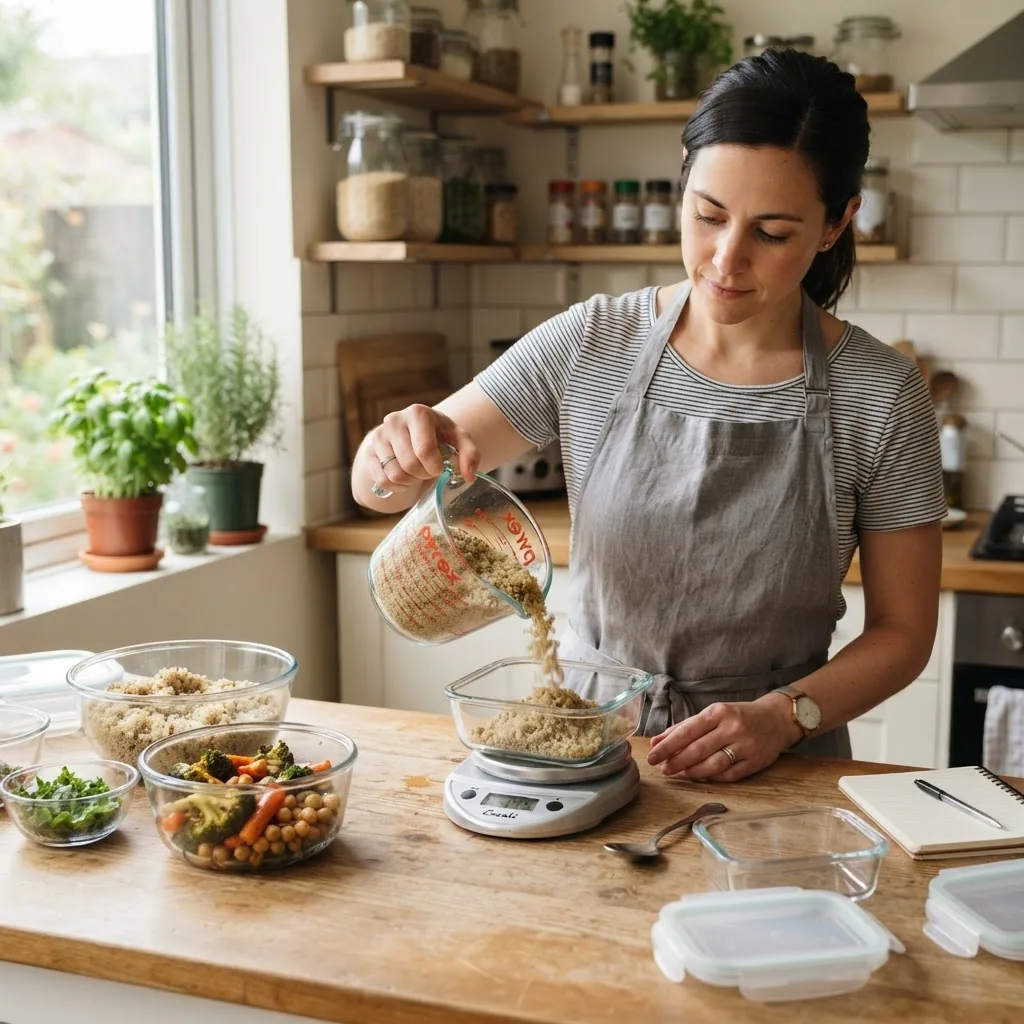
- Implement meal prepping. Batch-cook proteins and grains; portion into 400–600 kcal containers for lunches and dinners. Label with weight (e.g., chicken 120 g cooked per container).
- Use calibrated portion templates. Create three container templates: Light (350–450 kcal), Moderate (450–550 kcal), Active (550–700 kcal). Match template to your activity that day.
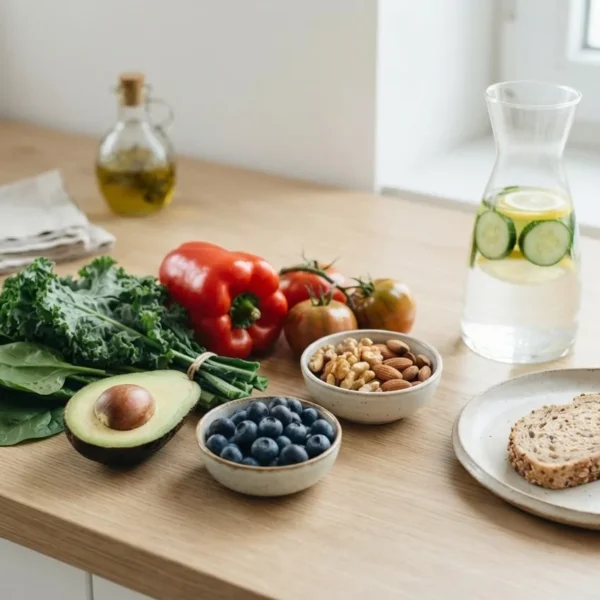
- Incorporate low-calorie-volume foods. Bulk plates with leafy greens, tomatoes, cucumbers, and broth-based soups to increase volume without high calories.
- Manage snacks to prevent meal displacement. Make snacks 100–200 kcal and include protein or fiber (e.g., 1 small apple + 12 almonds ≈ 150 kcal).
- Adjust portions with progress. Re-weigh once every 10–14 days; if weight loss stalls for 3 weeks, reduce daily intake by ~100–150 kcal or increase NEAT (non-exercise activity thermogenesis) like walking.
For readers who want calorie-specific complements to portion methods, see these targeted templates:
1200 calorie meal plan and 1400 calorie meal plan provide calorie-defined examples that slot into the portion strategies above.
Planning Balanced Meals Using Portion Control
To create balanced meals, use these measurable targets per eater:
- Protein: 20–30 g per meal (~3–4 palm-sized portions or 85–120 g cooked lean meat, or 200–250 g Greek yogurt).
- Vegetables: 2–3 cupped handfuls per meal (roughly 1–2 cups cooked or 2–3 cups raw leafy greens).
- Carbohydrates: ½–1 cup cooked grains or 2 small corn tortillas, or 1 medium potato (adjust by activity).
- Fats: 1–2 thumb-sized portions (1 tbsp olive oil ≈ thumb; 1/8–1/4 avocado).
- Fiber: Aim 7–10 g per meal via vegetables, legumes, or whole grains to extend fullness.
For carb-sensitive days, swap starchy sides for extra veg or a small legume portion (¼–½ cup). For higher-activity days add a ½ cup cooked grain or a banana pre/post workout.
For readers focusing on carbs within portions, consult consistent carb diet principles to pair carb timing with portioning.
Sample Portion Control Diet Meal Plan for Weight Loss
The plan below is a sample 1,400 kcal-ish day with portion cues you can adapt. Portions shown in household measures and approximate cooked weights.
| Meal | Portion Guide | Example |
|---|---|---|
| Breakfast | 1 palm protein, 1 cupped fruit, 1 cup veg or whole grain | Greek yogurt 170 g + ½ cup berries + 2 tbsp granola (≈350 kcal) |
| Snack | 100–150 kcal, fiber or protein | 1 small apple + 10 almonds (≈150 kcal) |
| Lunch | Half plate veg, 1 palm protein (120 g cooked), ½ cup cooked grain | Grilled chicken 120 g, mixed salad 3 cups, ½ cup brown rice (≈450 kcal) |
| Snack | 100–200 kcal, protein or fiber | Carrot sticks + 2 tbsp hummus (≈140 kcal) |
| Dinner | Half plate veg, 1 palm protein, small starchy side (½ cup) | Grilled fish 120 g, roasted veg 2 cups, small corn tortilla (≈400 kcal) |
Hydration: Drink 500–750 ml upon waking and aim for 2–3 liters per day depending on climate and activity. In hot Texas months increase by 500–1000 ml.
Transition: Knowing what to eat and how much is only effective if you can measure portions reliably—next we compare measurement tools and how to use them.
Practical Tools and Methods to Measure Portions Accurately
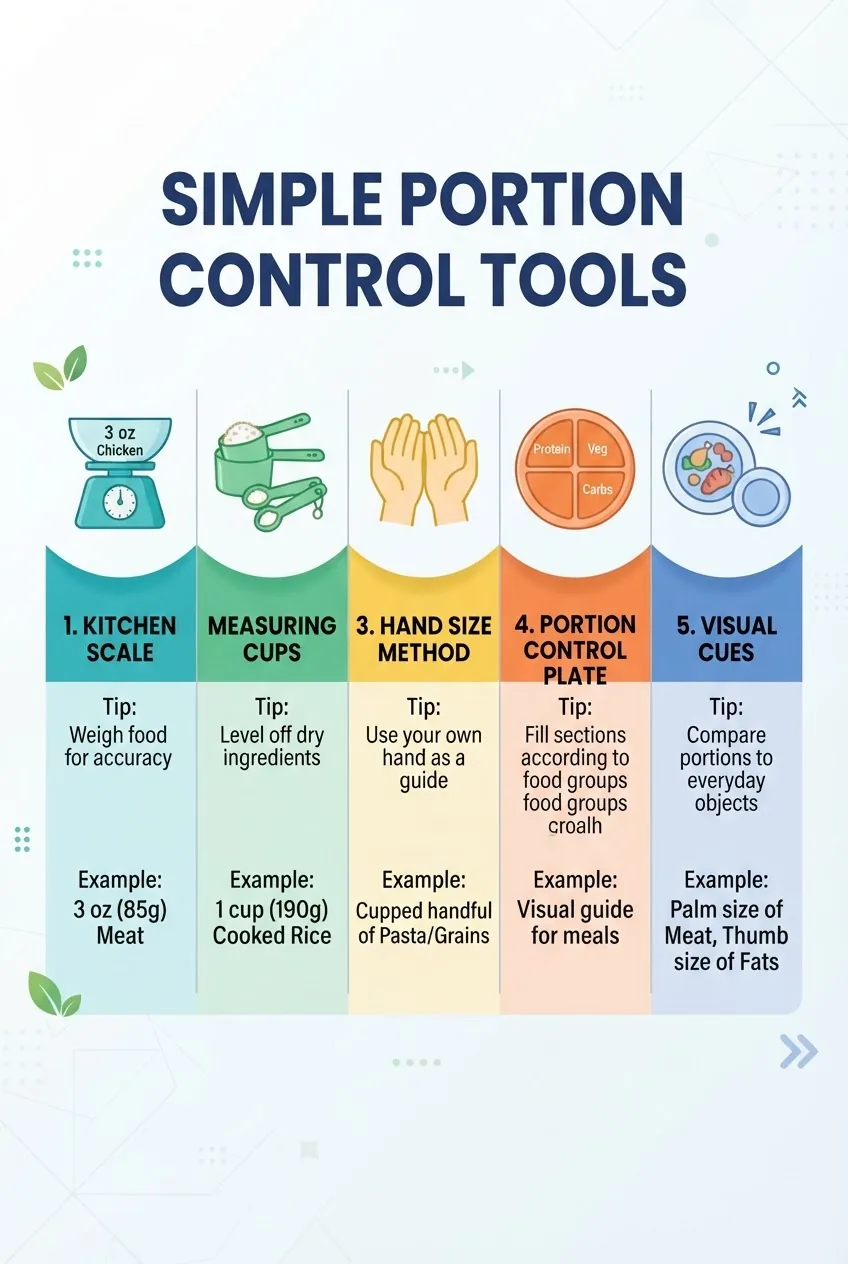
Use a combination of tools for accuracy and convenience: a kitchen scale for precision, measuring cups for quick checks, and visual cues (hand method, plate method) when out of the house. The Academy of Nutrition and Dietetics recommends mixing methods for adherence and accuracy (According to a 2022 Academy of Nutrition and Dietetics review).
| Tool | How to use | Example |
|---|---|---|
| Kitchen scale | Weigh cooked protein and grains; tare with container. Best for recipe consistency. | Cooked chicken 120 g for one palm-sized portion |
| Measuring cups/spoons | Use for cereals, grains, chopped veg; level to the rim for accuracy. | ½ cup cooked rice ≈ 100–120 g |
| Hand portion guide | Palm = protein, cupped hand = carbs, fist = veg, thumb = fat. Fast and pocketable. | 1 palm protein ≈ 85–120 g cooked |
| Portion plate | Pre-drawn sections enforce 50/25/25 rule. Great for visual learners and families. | Fill half with salad, quarter with fish, quarter with quinoa |
| Visual cues | Compare portions to everyday objects: tennis ball (1 cup fruit), deck of cards (3 oz meat). | 1 small avocado ≈ 2 thumbs of fat |
Additional visual resources can help—see balanced diet images and the portion and serving size guide for printable charts and photos.
Accuracy vs. convenience trade-off: I recommend using a scale for weekly meal prep and relying on hand/plate cues for on-the-go eating. When using packaged foods, compare the label’s serving size to your hand/plate cues and adjust.
Transition: Tools are only effective when paired with behavior strategies—next we cover practical behavior techniques to maintain portion control.
Behavioral Tips to Maintain Portion Control and Avoid Common Pitfalls
- Practice mindful eating. Slow down to 20–30 minutes per meal; put utensils down between bites. Track pre- and post-meal fullness—aim for 6–7/10 fullness when stopping.
- Create environmental cues. Use smaller plates, pre-portion snacks into single-serve bags, and keep bulk items out of direct reach.
- Manage emotional and stress triggers. Replace automatic eating with a 10-minute pause: hydrate, breathe, and identify hunger type (true hunger vs. boredom).
- Plan for social eating. Eat a small snack (100 kcal) before events to curb overeating, and choose grilled or vegetable-forward options when possible.
- Use commitment devices. Freeze large portions into single-serve portions and label with date; this reduces second-helping temptations.
- Track non-scale victories. Record energy, mood, clothing fit, and sleep as evidence of progress beyond the scale.
Scenario: When I work late I used to raid the pantry. I now set a 30-minute buffer after work where I prep a 200 kcal snack and drink water; this behavioral pause reduced nightly overeating by ~70% in my experience.
Transition: Despite good tools and behaviors, common challenges arise; the next section lists them with practical solutions.
Common Challenges in Portion Control and How to Overcome Them
- Eating out and large restaurant servings. Solution: Ask for half-portion, share an entree, or immediately box half using your plate template. Practice estimating pieces: one restaurant chicken breast often equals two palms; remove half.
- Social occasions and family-style eating. Solution: Eat a protein-and-veg mini-meal 60 minutes before, choose two tapas-sized items rather than a plate, and step away between servings to reassess hunger.
- Large packaging and portion distortion. Solution: Immediately divide bulk packages into single-serve containers or resealable bags (e.g., divide a 16-oz bag of chips into four 4-oz packets).
- Distraction eating (TV, phone). Solution: Designate dining areas; no screens during meals; set timer to ensure 20+ minute meal pace.
- Inaccurate portion estimation. Solution: Recalibrate monthly: weigh common foods and update your hand-to-weight reference (e.g., learn what 120 g of chicken looks like on your plate).
Authority note: The CDC and USDA both emphasize environmental modifications and portion awareness as effective public health tactics (According to a 2024 CDC report; see also USDA dietary guidelines).
Transition: In Texas, food culture and climate shape portion control choices—here’s how to adapt portions without losing local flavor.
Integrating Portion Control with Texas Lifestyle and Meal Preferences
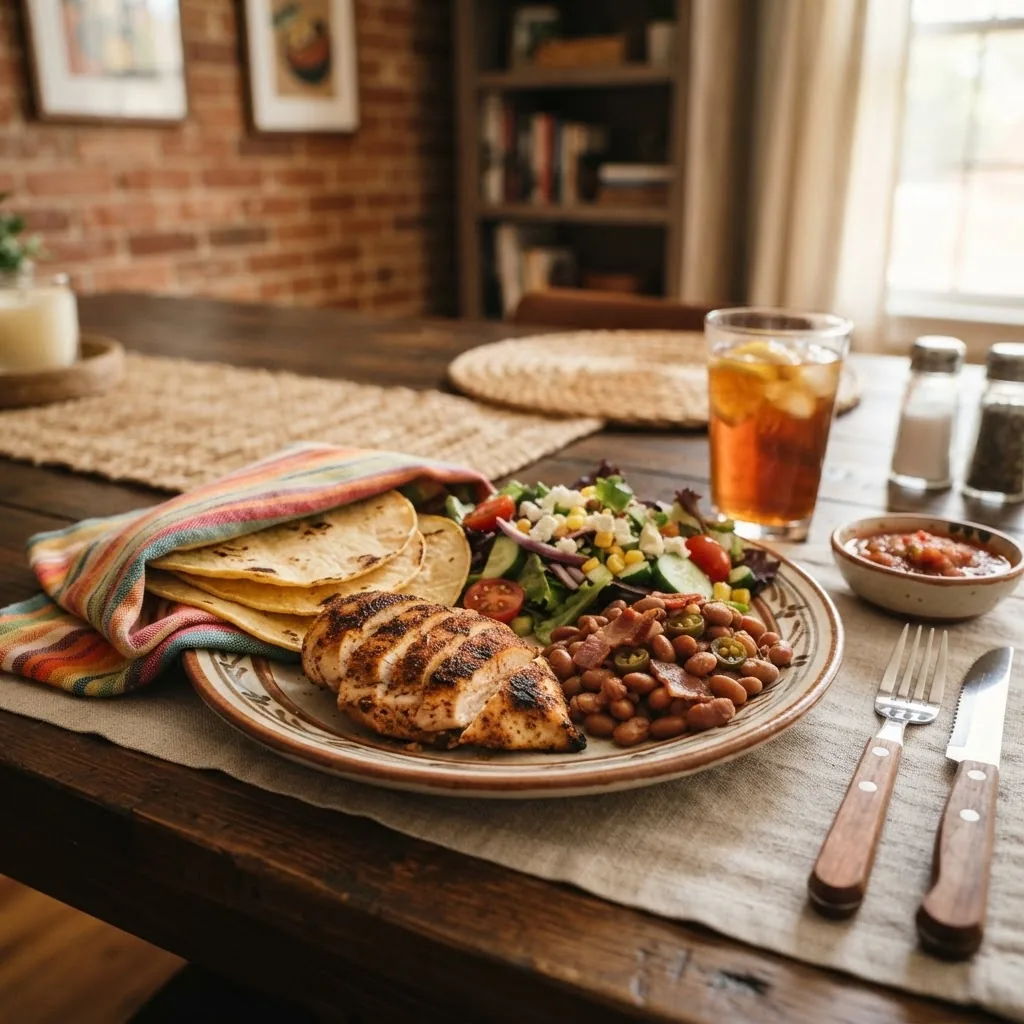
Texan meals often spotlight grilled meats, Tex-Mex staples, and hearty sides. Portion control doesn’t mean abandoning these foods; it means adjusting amounts and complements:
- BBQ portions: Swap a 10 oz brisket serving for 3–4 oz (one palm) plus 2 cups of coleslaw and a small corn tortilla. Use leaner cuts and prioritize vegetables and beans for bulk.
- Tex-Mex swaps: Limit tortillas to 1–2 small corn tortillas, fill with 3–4 oz protein, and load with pico/sautéed peppers and lettuce rather than extra cheese.
- Local produce: Use seasonal Texas produce (peppers, okra, squash) to bulk plates for low calorie density and freshness.
- Outdoor heat: Increase hydration and favor chilled protein salads and grilled vegetables which encourage lighter portions.
Practical tip: When serving family-style at a cookout, pre-plate portions for guests using the plate method; guests can still sample multiple items but overall intake is guided.
Experience case study: Maria from Austin reduced her dinner meat portion from a 12 oz serving to 4 oz, substituted one side with a three-cup salad, and lost 8 lb in 12 weeks while keeping regular weekend cookouts. She tracked portions with a scale twice weekly and used her hand as a daily quick-check.
Transition: After adjusting your meals and habits, you need a reliable way to track progress and refine portions—read on for tracking strategies.
Tracking Progress and Adjusting Your Portion Control Meal Plan
Tracking allows you to objectively adjust portion sizes for ongoing weight loss. Use a food diary, weekly weigh-ins, and simple performance metrics. According to a 2023 industry report reviewing weight loss maintenance, self-monitoring (food logs, weight tracking) correlates strongly with continued weight loss.
- Establish baseline metrics. Record starting weight, waist measurement, average daily portions (from your baseline audit), and energy levels. Take photos of typical plated meals for visual reference.
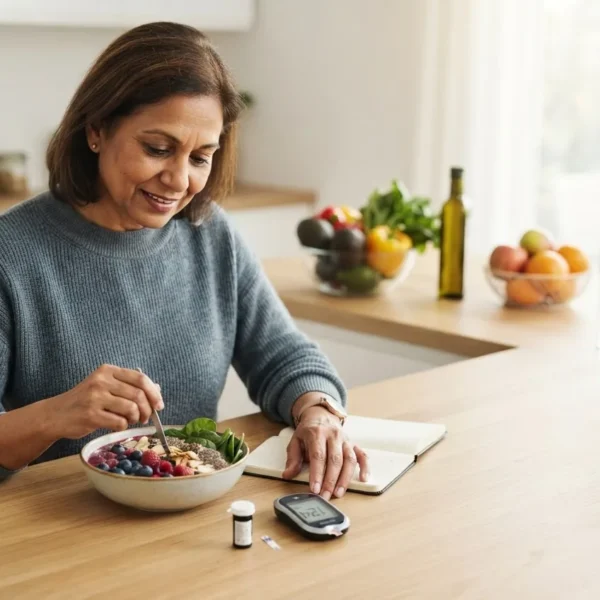
- Track daily for 2–4 weeks. Use an app or notebook noting portion cues: scale weight for proteins/grains and hand/plate cues for other foods. Log subjective fullness 30 minutes after meals.
- Weekly review and adjust. If you lose <0.5 lb/week, keep portions steady; if >1 lb/week, slightly increase portion of nutrient-dense foods; if plateau for 3+ weeks, reduce daily intake by 100–150 kcal or increase activity.
- Use templates and worksheets. For printable tracking, see nutrition tracking worksheets to log meal portions and progress.
- When to revise macronutrient targets. If you gain muscle or increase training volume, move protein toward 30% of calories and increase carbs around workouts; similarly, reduce carb portion on low-activity weeks.
Technology options: use a basic food-tracking app that allows custom portion sizes, or a spreadsheet with columns for weight (kg or lb), waist (cm or inches), average daily calories, and adherence score (0–10).
Transition: Before you implement, review common mistakes I and other practitioners often see so you can avoid them.
Common mistakes and how to avoid them
1) I used only eyeballing for a month and misjudged my protein—my portions were half of what I thought. Fix: weigh cooked protein for two weeks to calibrate your visual cues.
2) I skipped snacks and then binged at dinner because I underestimated hunger signals. Fix: plan 100–150 kcal snacks that include protein or fiber.
3) I followed a “one-size” portion chart and ignored activity level—my progress stalled. Fix: match templates (Light/Moderate/Active) to daily activity and reweigh every two weeks.
Checklist: Verify your portion-control setup
- Scale, measuring cups, and portion plate are available and accessible.
- You completed a 3-day baseline portion audit (weighed/measured).
- You created 3 meal templates (Light, Moderate, Active) with calorie ranges noted.
- You practiced hand-portion checks and photographed plated meals.
- You scheduled weekly weigh-ins and a biweekly review of portions.
- You prepared one week of pre-portioned lunches or dinners.
When to call in a professional
Consult a registered dietitian or your healthcare provider if you have medical conditions (diabetes, chronic kidney disease), are pregnant or breastfeeding, or if you experience unintentional weight loss >5% in one month. For personalized macronutrient prescription and medical monitoring, work with a qualified clinician.
Final authority and limitations: Portion control is a powerful tool but not a standalone cure for all weight issues—combine it with activity, sleep, and stress management. For federal guidance on nutrient needs see the USDA dietary guidelines, for population trends see the CDC obesity data, and for clinical approaches consult the Academy of Nutrition and Dietetics.
Conclusion: Use the steps above to set up measurement tools, build balanced portion templates, and integrate cultural preferences into meal planning. Start with one week of portioned meals, track results for two weeks, and refine. Ready to start? Plate up one meal today using the 50/25/25 rule and compare it to your baseline photo.