By the end of this guide you will be able to plan, prep, and cook a week’s worth of bright, satisfying light dinner ideas, pick ingredient swaps for better digestion, and plate balanced meals in 20–30 minutes. Expect hands-on steps, realistic timings (20–90 minutes per session), and a beginner-to-intermediate kitchen skill level.
Before you start
Gather these prerequisites and tools so you can follow the steps without interruption.
- Basic cookware: 10″ nonstick skillet, medium saucepan, sheet pan
- Small appliances: blender or immersion blender, rice cooker or pot with lid
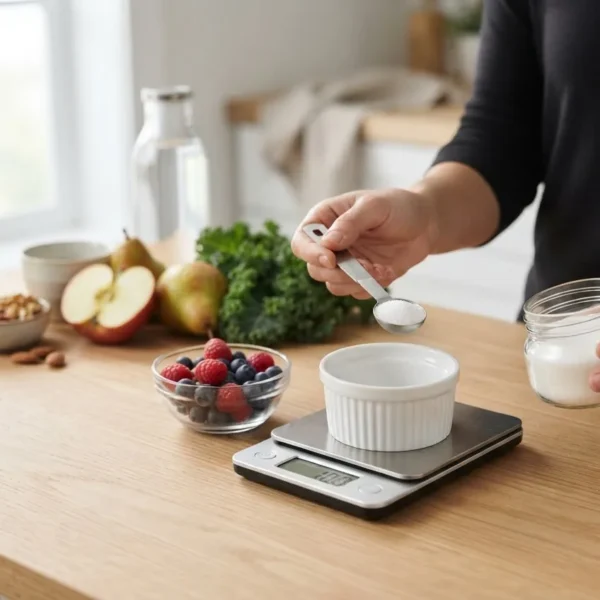
- Prep tools: chef’s knife, cutting board, measuring cups/spoons, kitchen scale (optional)
- Containers: 4–6 airtight meal-prep containers (16–24 oz) for fridge storage
- Pantry staples: olive oil, canned beans, low-sodium broth, whole grains (quinoa, brown rice), basic spices
- Perishable staples: 2–3 lean proteins (chicken breast, salmon fillets, extra-firm tofu), mixed greens, seasonal vegetables
-
Define what a light dinner means for you.
What Defines a Light Dinner? Understanding Light Meals and Their Benefits
A light dinner is a meal that leaves you satisfied without causing post-meal sluggishness or interfering with sleep. Practically, it emphasizes moderate portions, lean protein, high-fiber vegetables, and controlled starchy carbohydrates. Light meals often fall on the lower end of caloric density but prioritize nutritional balance (macros and micros) over minimal calories alone.
Health benefits snapshot:
- Improved nighttime digestion and sleep
- Steadier blood sugar and energy regulation
- Supports weight-management efforts when paired with overall balanced intake
According to a 2020 government dietary guideline (government agency), spreading calories sensibly across the day and choosing whole foods supports metabolic health.
Light dinners are not a strict calorie target — they are intentional. For many Texans shopping local markets, light dinner choices use accessible seasonal produce (e.g., peppers, tomatoes, greens) and lean proteins (e.g., chicken breast or grilled fish) you can find at regional farmers’ markets. If you want broader recipe collections to complement these ideas, see the
Yummiest Healthy Recipes Guide for Nutritious and Tasty Meals.Transition: Once you accept the definition, choose the ingredients and methods that deliver satisfaction with lightness — next we’ll walk through those key components step by step.
-
Assemble the right ingredients for balanced plates.
Key Components of Healthy Light Dinners: Nutrients and Ingredients to Include
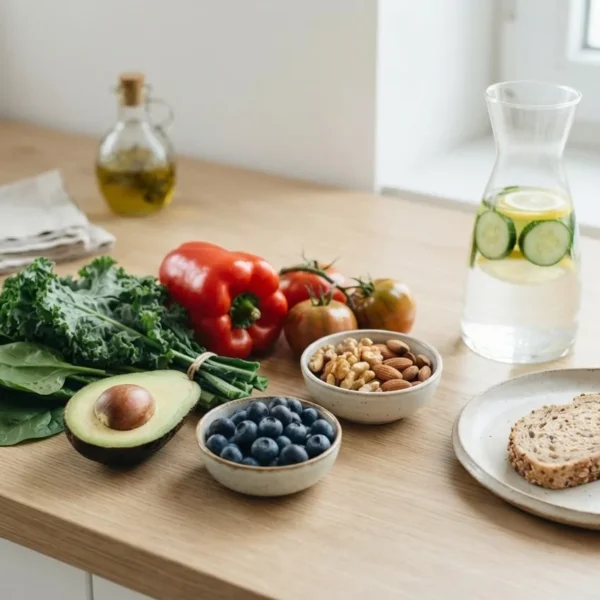
A light dinner balances macronutrients (protein, carbohydrates, healthy fats) and micronutrients (vitamins, minerals). Prioritize high-quality protein + fiber-rich vegetables + a modest serving of whole grains or starchy veg. Here are practical categories and portion targets to aim for on a typical plate:
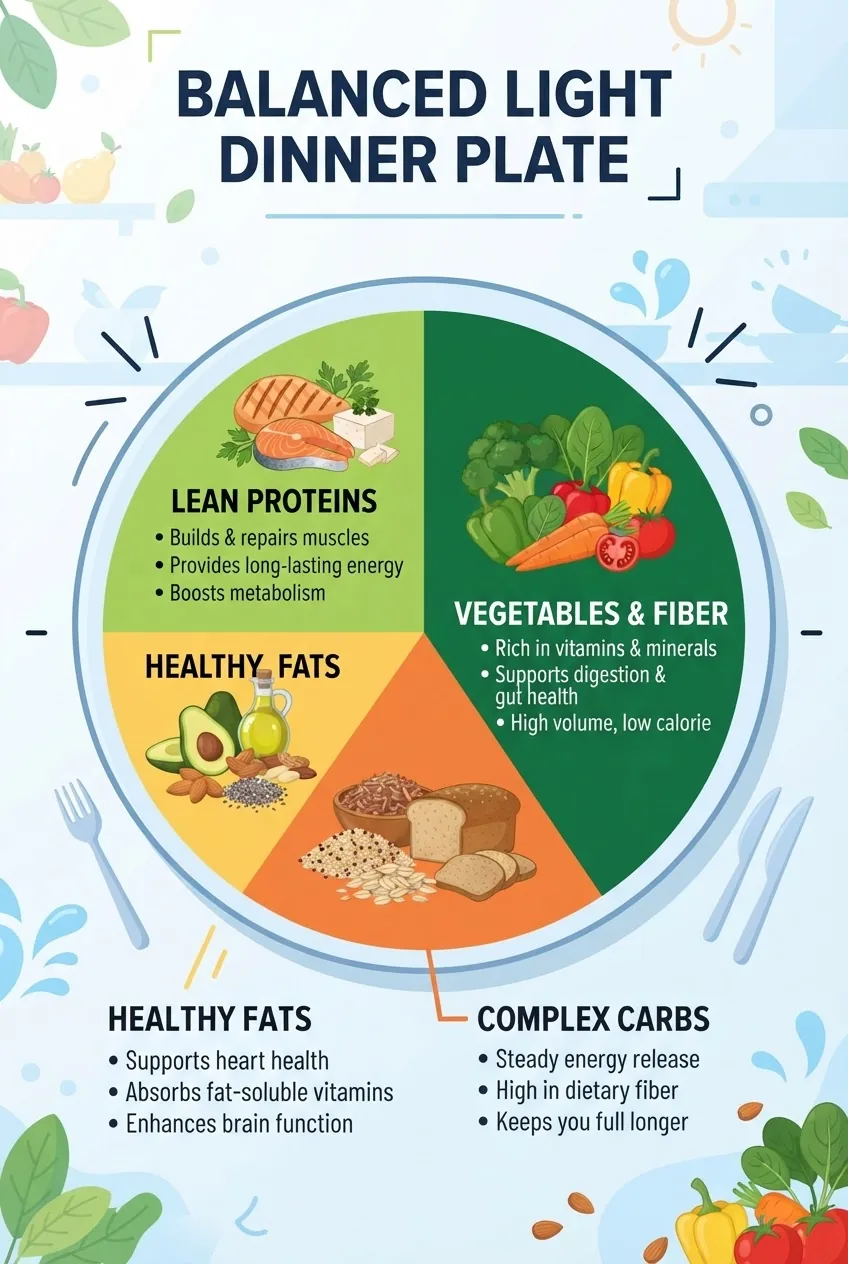
- Lean protein sources: 3–5 oz cooked per serving — chicken breast, fish (cod, salmon), shrimp, tofu, tempeh, legumes (½–1 cup). Protein stabilizes appetite and prevents late-night snacking.
- Fresh vegetables: 1–2 cups raw salad or 1–1½ cups cooked; choose high-fiber picks like leafy greens, cruciferous veg, peppers, and tomatoes.
- Whole grains & starches: ¼–½ cup cooked quinoa, brown rice, or a small sweet potato — keeps meals satisfying without heaviness.
- Healthy fats: 1 tbsp olive oil, ¼ avocado, or a small handful of nuts — supports micronutrient absorption and satiety.
- Low-calorie ingredients: Broth-based soups, vegetable-heavy stir-fries, and citrus/herb dressings instead of creamy sauces.
Practical nutritional tips:
- Choose cooking methods that reduce added fat: steaming, grilling, roasting at 400°F for 12–20 minutes, or quick sautéing with 1 tsp oil.
- For fiber and micronutrient density favor mixed greens, raw veg sides, and beans; fiber helps control post-meal blood sugar.
- Swap heavy cream sauces for yogurt-based dressings or smashed avocado; choose low-sodium broth for soups to avoid water retention.
- On a budget, consult resources like
cheap foods that are good for you for low-cost high-nutrient options.
Transition: With components chosen, the next section supplies fast, practical meal concepts you can cook tonight.
-
Pick a quick idea and source the components.
Easy and Tasty Light Dinner Ideas You Can Make Tonight
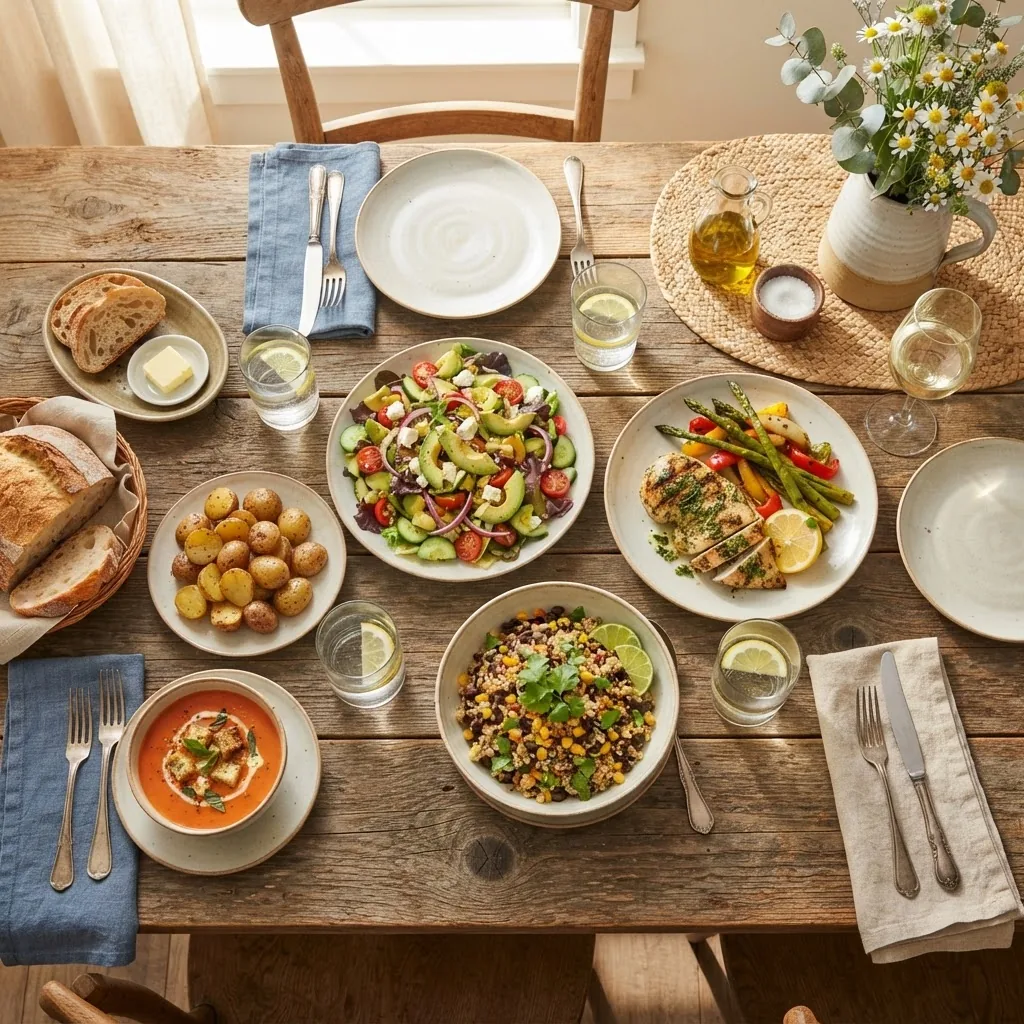
Below are 18 distinct light dinner ideas you can prepare in 10–35 minutes. Each entry lists the main ingredients and a short note on cooking method or swap options. If you prefer meals tied to a calorie goal, see related guides for 400, 500 and 600 calorie frameworks.
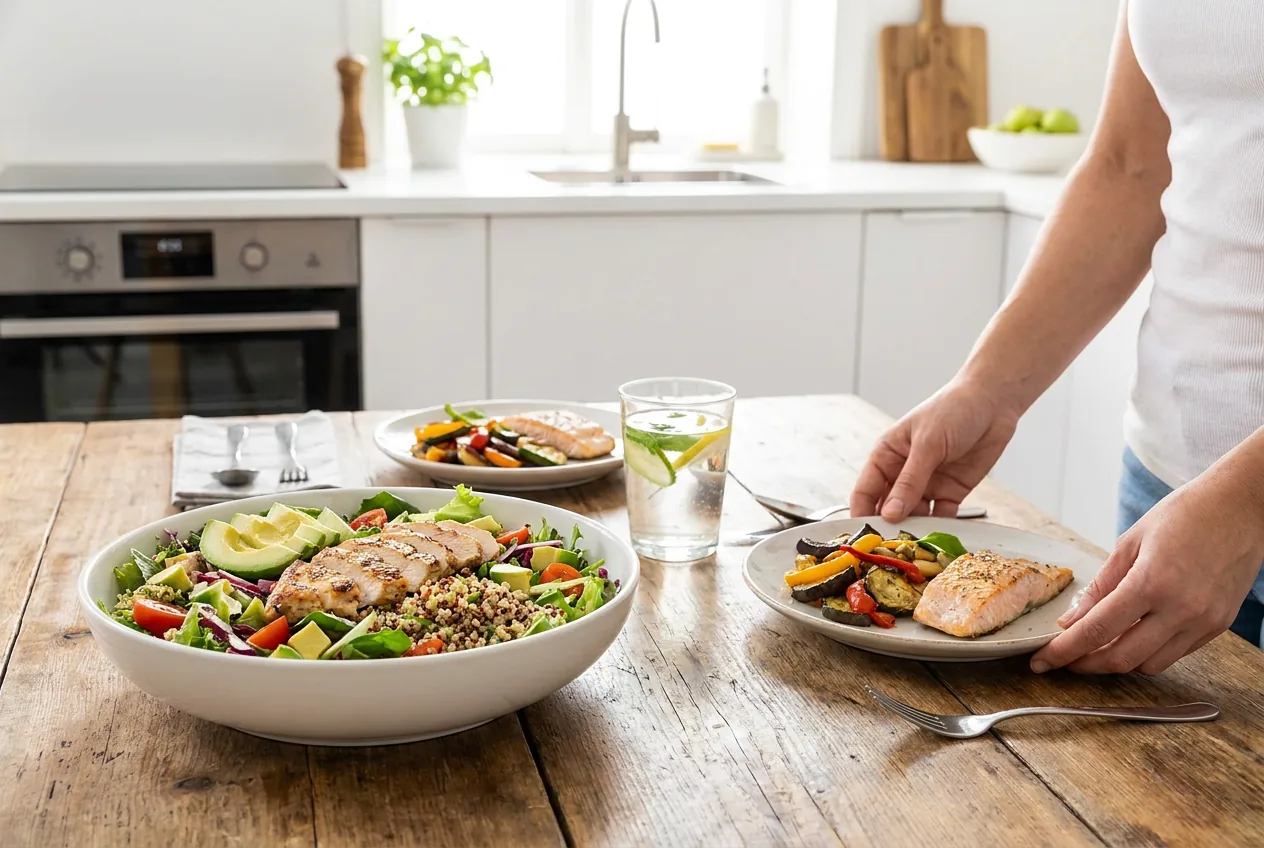
- Grilled lemon-herb chicken salad — grilled chicken breast (4 oz), mixed greens, cherry tomatoes, cucumber, lemon-olive oil vinaigrette. Quick: grill 6–8 minutes per side at medium-high.
- Salmon and steamed green beans — 4–5 oz salmon fillet, steam beans 4–6 minutes, drizzle with a tsp of olive oil and lemon. Pan-sear salmon 3–4 min/side.
- Quinoa and black bean bowl — ½ cup cooked quinoa, ½ cup black beans, roasted peppers, cilantro-lime dressing; serve warm or chilled.
- Vegetable-forward miso soup — low-sodium broth, miso paste (1 tbsp), tofu cubes, seaweed, sliced mushrooms and bok choy; simmer 6–8 minutes.
- Shrimp, zucchini, and tomato skillet — 4–6 oz shrimp, spiralized zucchini, cherry tomatoes, garlic; sauté 4–6 minutes.
- Turkey lettuce wraps — ground turkey (4 oz), water chestnuts, hoisin-lite sauce, butter lettuce cups; cook turkey 6–8 minutes.
- Greek yogurt chicken salad — shredded rotisserie chicken, plain Greek yogurt (2 tbsp), grapes, celery, herbs; assemble 5 minutes.
- Tofu and vegetable stir-fry — extra-firm tofu (4 oz), broccoli, bell pepper, tamari, 1 tsp sesame oil; stir-fry 6–8 minutes.
- Open-faced avocado and egg toast — 1 slice whole-grain toast, ½ avocado, 1 soft-poached egg, arugula garnish.
- Chickpea and spinach curry (quick) — canned chickpeas, fresh spinach, canned diced tomatoes, curry powder; simmer 10–12 minutes.
- Cold soba noodle salad — ¾ cup cooked soba, shredded carrot, edamame, scallions, sesame-ginger dressing.
- Tomato and white bean bruschetta — mashed cannellini beans, diced tomato, basil on grilled ciabatta (small slice), serve with mixed greens.
- Baked cod with lemon and capers — 4 oz cod baked at 425°F for 10–12 minutes, side of steamed asparagus.
- Shrimp ceviche-style salad — quick-cooked shrimp, lime, red onion, cucumber, cilantro, serve chilled.
- Mediterranean grain bowl — bulgur or farro (¼–½ cup cooked), kalamata olives (6), cucumber, tomato, 3 oz grilled chicken, tzatziki dollop.
- Veggie omelette with goat cheese — 2 eggs + 1 egg white, spinach, mushrooms, 1 tbsp goat cheese; cook 5–7 minutes.
- Roasted vegetable and hummus plate — 1 cup mixed roasted veg, ¼ cup hummus, whole-grain pita triangle.
- Warmed lentil salad with herbs — ½ cup cooked lentils, diced bell pepper, parsley, lemon vinaigrette, 1 tbsp olive oil.
If you want recipes that align with precise calorie targets, check these sibling collections:
400 calorie meals for healthy and balanced eating,
500 calorie nutritious dinner ideas, and
600 calorie healthy dinner recipes.Transition: pick 2–3 of these ideas for tonight and schedule a 20–30 minute prep block; next we’ll show how to set up meal-prep so the week runs smoothly.
-
Set a weekly prep routine that reduces nightly decisions.
Meal Prep Tips for Light Dinners: Save Time While Eating Healthy
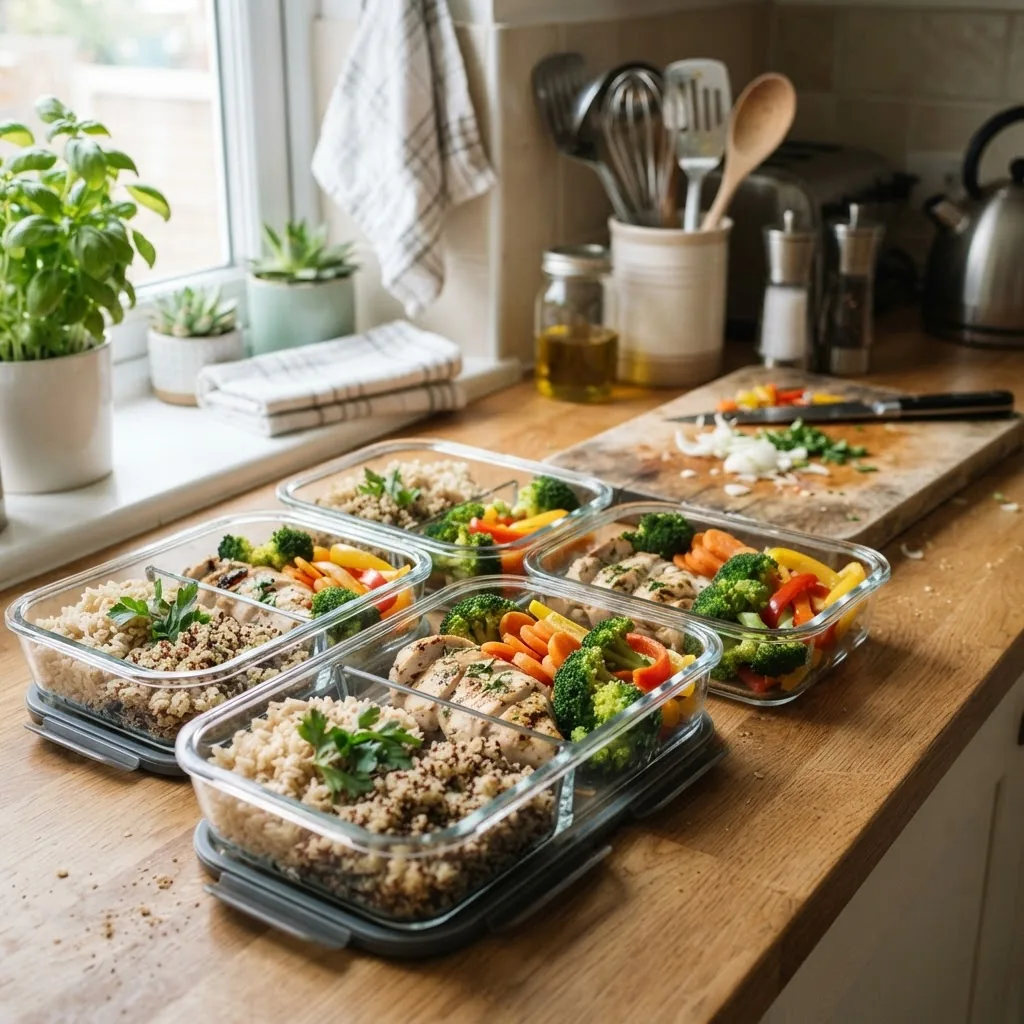
Meal prep transforms 30–90 minutes on a weekend into five 20-minute dinners. Below are step-by-step prep actions with specific timings and storage advice.
- Plan 3–4 base components (10–15 minutes planning) — choose two proteins (e.g., 3 chicken breasts and 4 salmon fillets), one whole grain (2 cups cooked quinoa), and three vegetables (roasted broccoli, salad greens, sautéed peppers).
- Batch-cook grains (20–25 minutes) — cook 2 cups dry quinoa (yields ~6 cups cooked) in a rice cooker or simmer 15 minutes; cool within 1 hour and refrigerate in shallow containers.
- Roast proteins and vegetables (25–40 minutes) — oven roast chicken breasts at 400°F for 20–25 minutes (internal temp 165°F), bake salmon at 425°F for 12–14 minutes. Roast vegetables at 425°F for 18–22 minutes on a sheet pan.
- Portion into containers (10–15 minutes) — use 16–24 oz containers: 3–5 oz protein + 1 cup veggies + ¼–½ cup grain. Label with date and reheat instructions (microwave 1–2 minutes or reheat in skillet).
- Prep quick sauces (5–10 minutes) — mix vinaigrettes, yogurt dressings, or simple herb oil; store in jars to add fresh before serving.
Storage rules: refrigerate cooked components within 2 hours; consume refrigerated proteins within 3–4 days. For frozen longer-term prep, flash-freeze portions on a tray 1–2 hours then transfer to freezer-safe bags for up to 3 months.
Transition: meal prep is flexible — next, we’ll map these light dinner concepts to common dietary preferences and restrictions.
-
Choose substitutions to match dietary needs.
Light Dinner Ideas for Different Dietary Preferences and Restrictions
Below are categorized options and swaps for common restrictions: vegetarian, gluten-free, low-carb, dairy-free, and other allergen-friendly choices. Each option gives a quick example and a 1-line swap method.
Dietary Need Example Light Dinner Quick Swap Vegetarian Lentil & roasted vegetable bowl with tahini-lemon dressing. Replace meat with ½–1 cup legumes or 4–6 oz tofu. Gluten-free Grilled shrimp over quinoa and arugula. Use rice, quinoa, or buckwheat noodles instead of wheat pasta. Low-carb Zucchini noodle stir-fry with chicken and mushrooms. Swap grains for spiralized veg or extra greens. Dairy-free Baked cod with olive oil, herbs, and citrus salad. Use yogurt alternatives or omit dairy-based dressings. Allergen-friendly Bean and veg bowl; nut-free pesto (use sunflower seeds). Swap nuts for seeds; choose gluten-free grains as needed. For a quick vegetarian evening for two, you may like
quick vegetarian dinner recipes for two.Transition: now that you can match meals to dietary needs, let’s discuss when and why a light dinner can help your health and routine.
-
Time your meal and choose portions to support digestion and sleep.
When and Why to Choose a Light Dinner: Timing, Health, and Lifestyle Factors
Choosing a light dinner often comes down to timing and lifestyle. Eating smaller meals 2–3 hours before bedtime can reduce acid reflux and improve sleep quality. According to a 2021 peer-reviewed study (peer-reviewed journal), earlier, lighter evening meals were associated with improved sleep latency in adults.
A few concrete rules:
- Finish the majority of your meal 2–3 hours before lying down; aim for a last bite no later than 9–10 PM if you sleep at 11 PM.
- Portion thresholds: aim for 3–5 oz protein, 1 cup non-starchy vegetables, and ¼–½ cup whole grain or starchy veg based on activity and hunger.
- For better sleep, avoid high-sugar dressings or large refined-carb portions within two hours of bedtime.
According to a 2022 registered dietitian association guidance (professional organization), balanced evening meals that include protein and fiber support both satiety and blood-sugar control.
For macronutrient guidance see
Dietary Guidelines for Americans and professional resources at
Academy of Nutrition and Dietetics.Transition: while light dinners offer many benefits, there are frequent pitfalls to avoid — we’ll cover those next.
-
Recognize and correct common selection and preparation mistakes.
Common Mistakes to Avoid When Choosing or Preparing Light Dinners
- Skipping protein: I’ve seen people choose only salad greens and then snack later. Always include 3–5 oz protein (animal or plant) to maintain fullness.
- Relying on sugary dressings: I once dressed a salad with store-bought dressing that contained 10g sugar per serving — opt for vinaigrettes (1 tbsp oil + acid) instead.
- Under-eating and rebounding: Eating an extremely small meal can trigger late-night overeating; target balanced portions rather than minimal calories.
- Using processed “low-calorie” convenience foods: I observed that many pre-packaged “light” options are high in sodium and preservatives; prioritize whole-food ingredients.
- Ignoring cooking method: Frying tilts a light meal heavy; favor broiling, steaming, grilling, or oven-roasting at 400–425°F for crispness with less oil.
Corrective advice: Measure protein portions with your palm (3–4 oz), use measuring spoons for oils (1 tsp–1 tbsp), and pre-portion snacks to avoid rebound eating.
Common mistakes and how to avoid them (practitioner notes)
From my work coaching clients I’ll outline three recurring failures and exactly how I fixed them in practice.
- Failure: I accepted that “salad equals light” — but salads lacked protein and left clients hungry. Fix: add 3–5 oz protein (grilled chicken, ½ cup chickpeas) and 1 tbsp healthy fat to slow digestion.
- Failure: I prepped soggy roasted veg by storing hot food uncovered. Fix: cool foods to room temp within 1 hour, then store in shallow containers and re-crisp in a hot skillet or oven at 425°F for 5–7 minutes.
- Failure: I recommended “low-fat” dressings that tasted bad and weren’t used. Fix: prepare simple 3:1 vinaigrettes (3 parts oil to 1 part acid) with mustard for emulsification; batch ½ cup at a time.
Quick verification checklist
- Protein present: 3–5 oz cooked per plate
- Vegetables present: at least 1 cup non-starchy veg
- Whole grain or starchy veg: ¼–½ cup cooked
- Healthy fat: 1 tsp–1 tbsp included
- Cooking method: grilled, roasted, steamed or lightly sautéed
- Meal timing: finished 2–3 hours before bedtime
- Meal-prep safe: components cooled and stored properly within 2 hours
When to call in a professional
Most light dinner planning can be done yourself. Consult a registered dietitian or physician when:
- You have a medical condition (diabetes, chronic GI disease, cancer) requiring tailored meal plans.
- You need precise macro/micro nutrient targets for recovery, pregnancy, or athletic training.
- You experience persistent digestive symptoms after light meals despite adjustments.
If you need vetted guidance, the Academy of Nutrition and Dietetics site can help locate credentialed professionals: eatright.org.
Conclusion
You now have a hands-on roadmap: define what “light” means for you, assemble balanced components, choose from 18 quick meal ideas, and use simple batch-prep steps to save time. Start tonight: pick one 20–30 minute recipe, add a protein and a veg, and note your plate against the verification checklist. For more meal ideas and full recipes to rotate through your week see the
Yummiest Healthy Recipes Guide for Nutritious and Tasty Meals.
Call to action: Try one light dinner from the list tonight, batch one base component for tomorrow, and adjust portions using the checklist — then share what worked for you so others can learn from your experience.