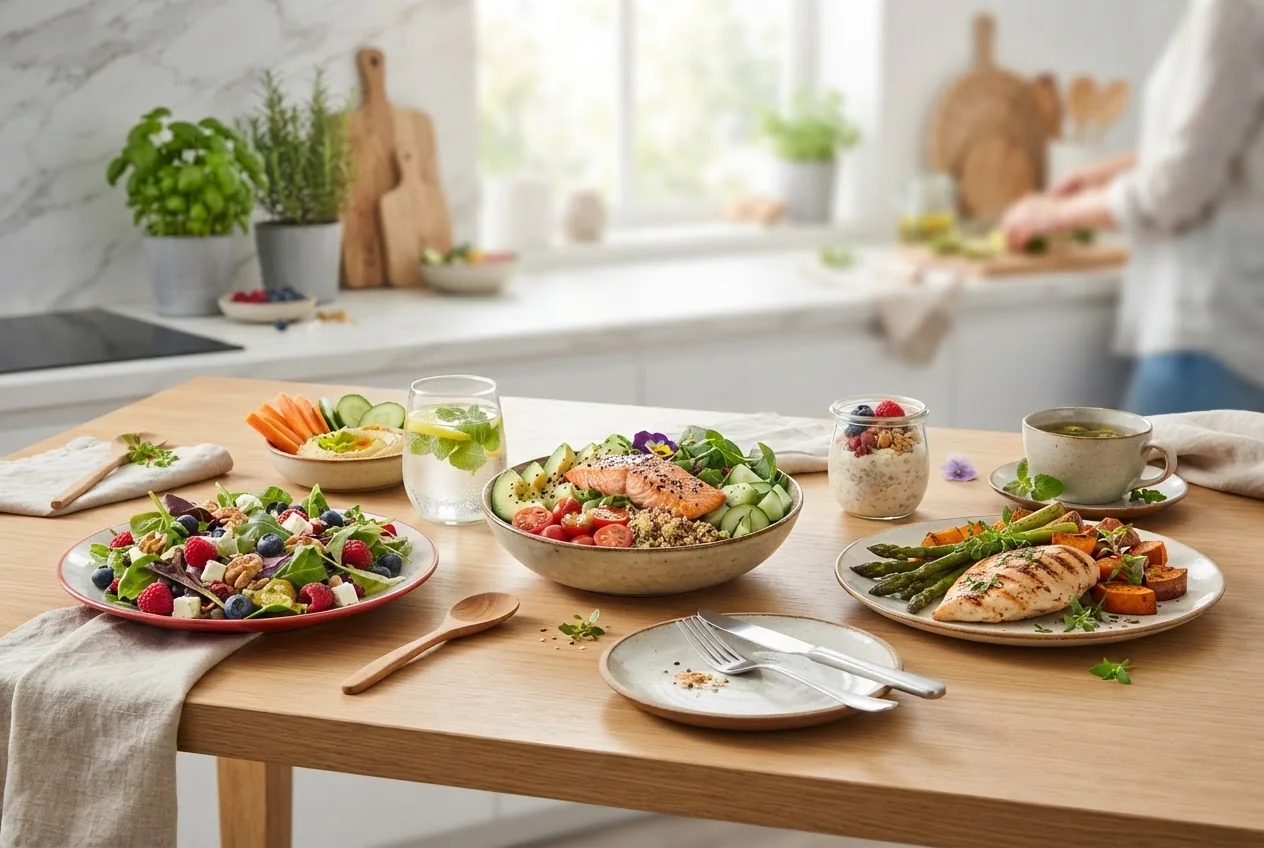
By the end of this hands-on guide you’ll have a practical pantry plan, eight complete recipes with nutrition facts, techniques to keep flavor high and calories reasonable, and a week-ready meal-prep system. Expect to spend 3–6 hours setting up and one to two hours per weekly cook session. Skill level: comfortable-beginner (basic knife work, a skillet and an oven).
Introduction to the Yummiest Healthy Recipes
The goal is simple: teach you how to make the yummiest healthy recipes that are nutrient-dense, satisfying, and built for life in Texas kitchens—grill-friendly, spice-forward, and produce-driven. This section sets the foundation for balancing flavor and nutrition so home cooks can reliably produce dishes families will love.
What you’ll achieve: a shopping list organized by shelf life, three core cooking techniques to lock in nutrients and texture, and a taste rule you can apply to any dish: aim for one acid, one crunch, one fresh herb, and one umami element per plate.
- Time commitment: 3–6 hours initial setup, then 60–120 minutes weekly.
- Equipment level: skillet, baking sheet, blender, measuring cups/spoons, basic knife.
- Outcome: flavorful, nutrient-balanced meals with clear nutrition facts for tracking or fitness goals.
For a complete resource anchored in these principles see Yummiest Healthy Recipes Guide for Nutritious and Tasty Meals.
Before we move into procedures, collect tools and read the quick checklist below so your first cook day goes smoothly.
Before you start
- Pantry basics: olive oil (or avocado oil), low-sodium soy sauce, canned tomatoes (14 oz), quinoa, brown rice, canned beans (low-sodium), nuts (almonds), dried herbs.
- Fresh produce: 6 seasonal vegetables (bell pepper, zucchini, leafy greens, tomatoes, onion, garlic), 3 fruits (berries, citrus), fresh herbs (cilantro or parsley).
- Protein options: boneless skinless chicken breasts (2–3), firm tofu (14 oz), salmon fillets (2), lean ground turkey (1 lb), eggs (6).
- Tools: oven (preheat to 425°F for roasting), instant-read thermometer, blender, food scale, measuring cups and spoons, nutrition calculator account (MyFitnessPal or Cronometer).
- Time blocks: shopping (90 min), prep (90–180 min), weekly cook (60–120 min).
Now follow the step-by-step numbered workflow to learn, plan, and cook the yummiest healthy dishes. Each step opens with an action-first statement and then provides guidance, practical tips, and specific quantities or times.
-
Learn the fundamentals
What Makes a Recipe Both Healthy and Delicious?
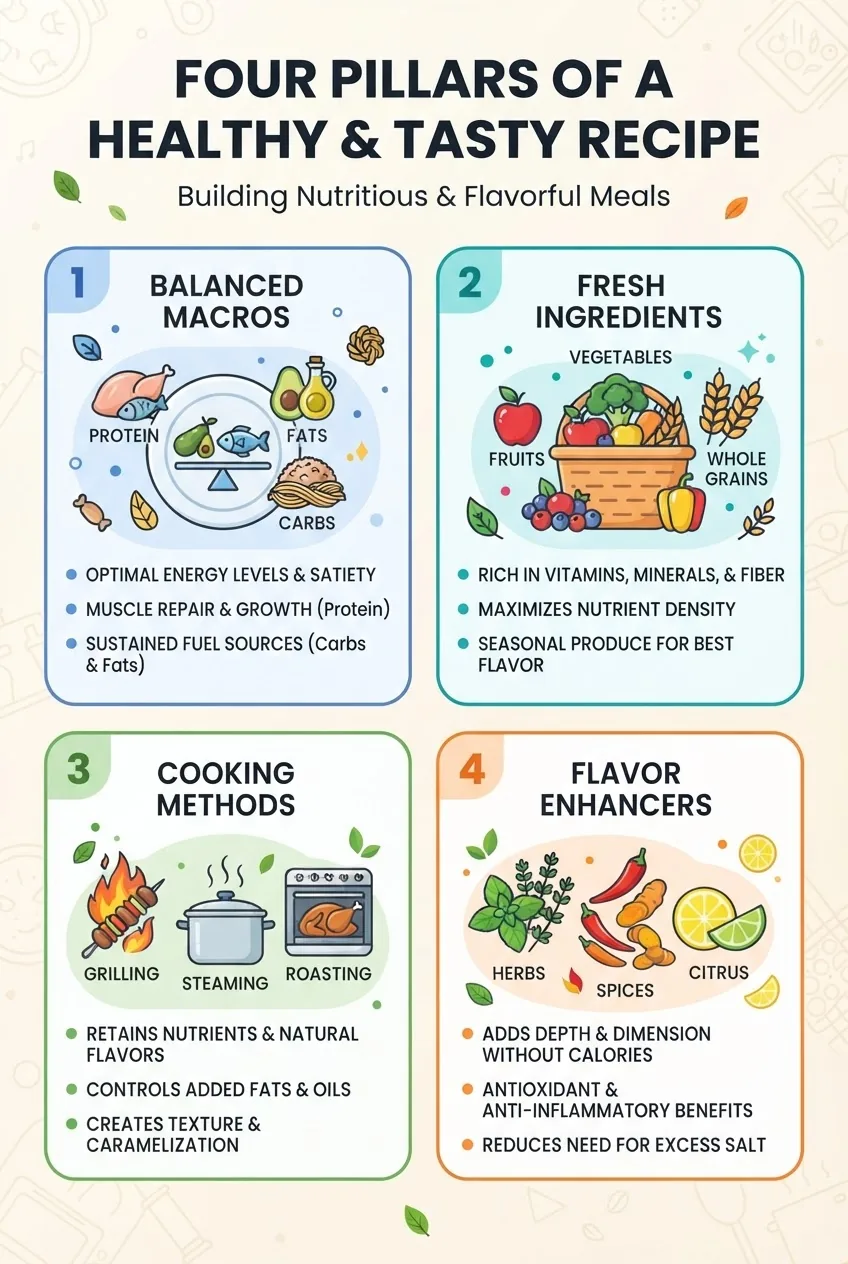
Healthy recipes become delicious when nutrition science meets flavor mechanics. Here’s the blend: use nutrient-dense ingredients, balance macronutrients, and apply flavor-enhancing techniques without relying on empty calories. Below are practical pillars that turn a plain healthy dish into a craveable plate.
Key elements:
- Balanced macronutrients — aim for plates with 20–35 g protein, 20–35% of calories from healthy fats, and carbohydrate sources that include fiber (whole grains, beans). Define “macros” as protein, carbohydrates and fats for clarity.
- Nutrient density — prioritize foods high in micronutrients (vitamins, minerals, antioxidants) such as leafy greens, colorful vegetables, nuts, and fatty fish.
- Flavor without excess — use acids (citrus, vinegar), umami (mushrooms, miso, low-sodium soy), fresh herbs, and aromatics to replace excess sodium or sugar.
- Healthy fats and proteins — include olive oil, avocado, nuts, oily fish, eggs, legumes; they increase satiety and carry fat-soluble vitamins.
- Cooking methods for nutrient retention — steaming preserves water-soluble vitamins; roasting concentrates flavor and caramelizes natural sugars; grilling adds smoky complexity but can over-charr if not monitored.
Nutrition science note: the USDA MyPlate framework recommends half your plate be fruits and vegetables and a lean protein and whole grains make up the rest; see MyPlate for standards.
Trade-offs and practical tips:
- Reducing sodium: swap 1 tsp salt with 1 tbsp lemon juice plus 1 tsp chopped capers for brightness and brine — you will notice similar perceived saltiness.
- Maintaining texture: roast vegetables at 425°F for 20–30 minutes to crisp edges and preserve interior tenderness; toss halfway.
- Boosting protein without heft: fold 2 tbsp of powdered whey or pea protein into dressings or smoothies for an unobtrusive protein bump (approx. 12–15 g protein).
Transition: With these pillars in mind, next we explore how to apply them across breakfast, lunch, dinner, and snacks for every occasion.
-
Map meals to occasions
Exploring Types of Healthy Meals for Every Occasion
Below are adaptable meal types with a short description and why they work nutritionally and for flavor. Each item suggests a quick swap to local Texas tastes (smoky, citrus, Tex‑Mex spice).
- Hearty Breakfast Bowls — grain bowl with 1/2 cup cooked quinoa, 2 scrambled eggs, sautéed spinach, avocado (1/4), salsa verde. Quick, balanced macros and portable.
- Protein-Packed Smoothie — 1 cup unsweetened almond milk, 1 scoop protein (20 g), 1/2 cup frozen berries, 1 tbsp peanut butter, handful spinach. Ideal pre- or post-workout.
- Fresh Lunch Salads — base: 2 cups mixed greens, 4 oz grilled chicken, 1/2 cup roasted sweet potato, 2 tbsp pumpkin seeds, citrus vinaigrette. Keeps you full without heaviness.
- One-Pan Dinners — 4 oz salmon, 1 cup roasted broccoli, 1/2 cup farro; roast everything at 400°F for 18–22 minutes. Minimal cleanup, maximum flavor.
- Healthy Hearty Dinner — slow-simmer turkey chili with beans and tomatoes (1.5 cups), topped with chopped cilantro and 2 tbsp Greek yogurt. Comfort food, fiber-rich.
- Fancy Healthy Meals — seared scallops with lemon-herb cauliflower purée and charred asparagus; plating and finishing olive oil make it feel special while keeping macros balanced.
- Quick Healthy Dishes — 10-minute stir-fry: 4 oz tofu, 2 cups mixed vegetables, 1 tbsp low-sodium soy, 1 tsp sesame oil, serve over 1/2 cup brown rice.
- Fitness Recipes — post-lift platter: 5 oz lean steak, 1 cup roasted sweet potato cubes, side salad; aim for 30–40 g protein and 40–60 g carbs.
- Snack Solutions — 1 small apple + 2 tbsp almond butter, or Greek yogurt (3/4 cup) with 1 tbsp chia seeds. Balanced energy between meals.
- Family-Friendly Dinner — baked chicken fajita sheet pan (1 lb chicken, 3 bell peppers, 1 onion) with warmed whole-wheat tortillas and avocado slices.
For calorie-specific planning see 500 calorie dinner ideas for dinners and healthy snack options for smart mid-meal choices.
Transition: With meal types selected, the next section gives eight complete, tested recipes with nutrition facts you can use immediately.
-
Cook signature recipes
Top Yummiest Healthy Recipes with Nutrition Facts Included
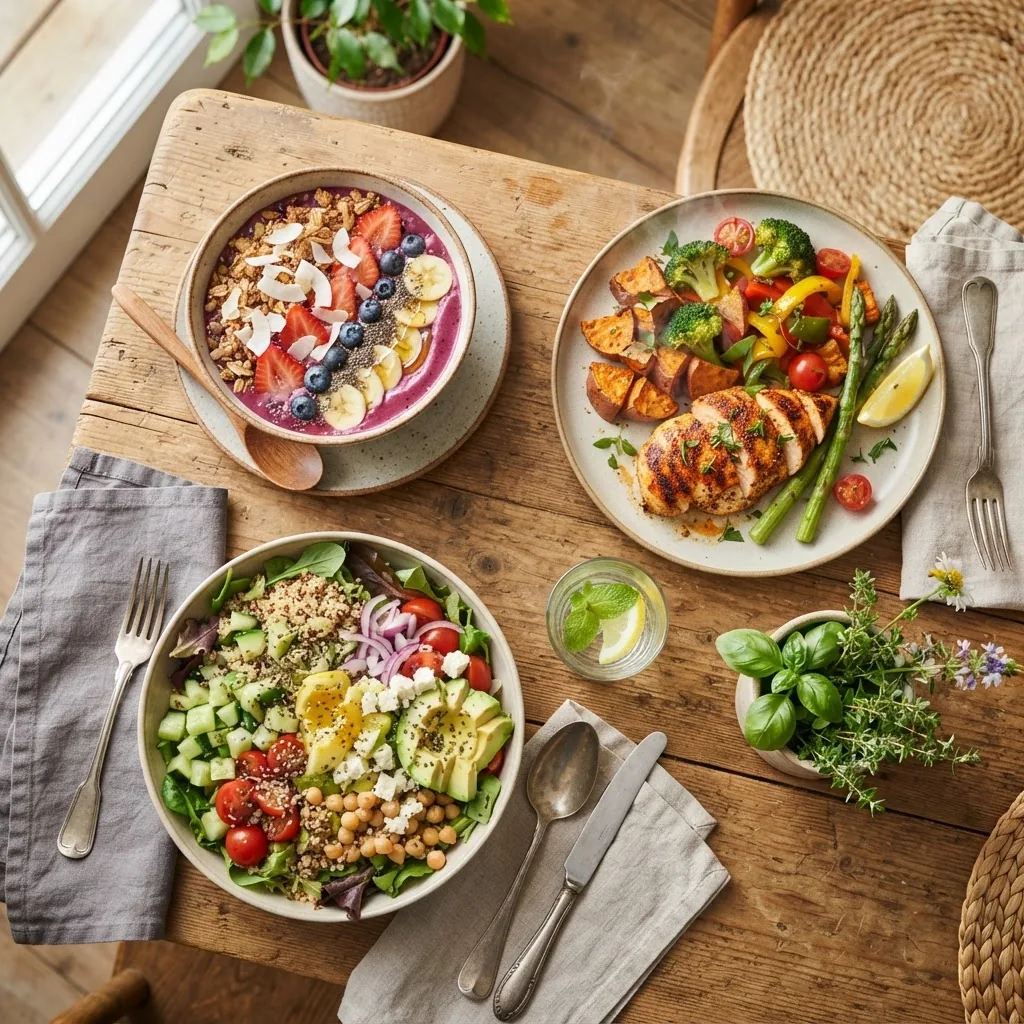
Below are eight chef-tested recipes with precise ingredient lists, step-by-step cooking instructions, and nutrition facts tables. Nutrient figures are estimates calculated using a nutrition database and may vary with brands or substitutions — see the tool tutorial after the recipes for tracking methods.
-
1. Grilled Citrus-Herb Chicken with Quinoa & Roasted Veg
Ingredients (serves 2): 2 boneless skinless chicken breasts (6 oz each), 1 tbsp olive oil, zest and juice of 1 lime, 1 tsp smoked paprika, 1 cup cooked quinoa (measured cooked), 2 cups mixed roasted vegetables (1 red bell pepper, 1 zucchini, 1 small red onion), 1 tbsp chopped cilantro, salt 1/4 tsp.
Instructions:
- Marinate chicken for 20–30 minutes in lime juice, zest, olive oil, smoked paprika, 1/8 tsp salt.
- Preheat grill or grill pan to medium-high (about 400°F). Sear 6–7 minutes per side until internal temp reads 165°F.
- Toss vegetables with 1 tsp olive oil and 1/8 tsp salt, roast at 425°F for 20 minutes, flipping once.
- Serve with 1/2 cup cooked quinoa per person, garnish with cilantro.
Nutrition (per serving) Calories 520 kcal Protein 42 g Carbohydrates 44 g Fat 18 g Fiber 6 g Pro tip: pound chicken to 3/4″ thickness for even cooking; rest 5 minutes after grilling so juices redistribute.
-
2. Tex‑Style Turkey & Black Bean Chili (Hearty Dinner)
Ingredients (serves 4): 1 lb lean ground turkey, 1 tbsp olive oil, 1 medium onion (diced), 3 cloves garlic, 1 tbsp chili powder, 1 tsp cumin, 1 can (15 oz) diced tomatoes, 1 can (15 oz) black beans (rinsed), 2 cups low-sodium chicken broth, salt 1/2 tsp, 1/4 cup chopped cilantro.
Instructions:
- Sauté onion in oil at medium heat 5 minutes, add garlic 1 min.
- Add turkey and brown (6–8 min). Stir in spices for 1 minute to bloom flavors.
- Add tomatoes, beans, broth; simmer uncovered 20–25 minutes until slightly thickened.
- Adjust salt, garnish with cilantro. Serve 1.5 cups per person.
Nutrition (per 1.5 cup) Calories 360 kcal Protein 34 g Carbohydrates 28 g Fat 12 g Fiber 9 g Cook’s note: simmer longer for more depth; a splash (1 tsp) of apple cider vinegar at the end brightens flavors without salt.
-
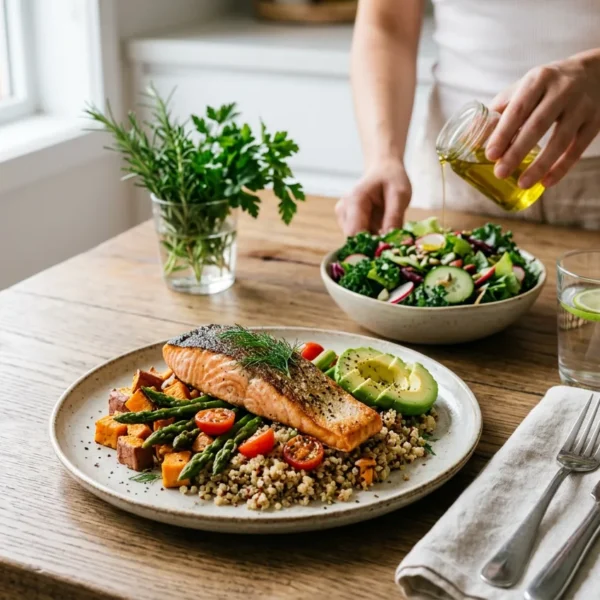
3. Salmon, Avocado & Farro Power Plate (Fancy Healthy)
Ingredients (serves 2): 2 salmon fillets (4 oz each), 1 tsp olive oil, salt 1/4 tsp, 1 cup cooked farro (cooked weight), 1/2 avocado sliced, 1 cup steamed asparagus, lemon wedge.
Instructions:
- Preheat oven to 425°F. Place salmon on sheet, drizzle with oil and 1/8 tsp salt; roast 10–12 minutes until 125–135°F for medium.
- Plate 1/2 cup farro, asparagus, top with salmon and avocado. Squeeze lemon to finish.
Nutrition (per serving) Calories 540 kcal Protein 34 g Carbohydrates 44 g Fat 22 g Omega-3 ~1.5 g Quick tip: cook salmon to 125°F if you prefer moist medium; carryover heat raises final temp to 130–135°F.
-
4. Quinoa & Roasted Veg Salad with Lemon‑Tahini Dressing (Vegetarian)
Ingredients (serves 3): 1.5 cups cooked quinoa, 3 cups roasted mixed veg (eggplant, bell pepper, carrot), 1/4 cup toasted almonds, 3 tbsp tahini, juice of 1 lemon, 2 tbsp water, salt 1/2 tsp.
Instructions:
- Whisk tahini, lemon, water, salt until smooth.
- Toss quinoa with vegetables and almonds; drizzle with dressing.
- Serve chilled or room temperature.
Nutrition (per serving) Calories 410 kcal Protein 11 g Carbohydrates 46 g Fat 18 g Fiber 7 g Optional swap: use 1 cup cooked farro instead of quinoa for a chewier texture and extra fiber.
-
5. Quick Vegetarian Dinner: Chili-Lime Tofu Bowls
Ingredients (serves 2): 14 oz firm tofu (pressed, cubed), 1 tbsp olive oil, 1 tbsp low-sodium soy, 1 tsp chili powder, 1 cup cooked brown rice, 1 cup grilled corn, 1/2 cup pico de gallo, juice of 1 lime.
Instructions:
- Pan-sear tofu on medium-high 8–10 minutes until golden; toss with soy and chili powder for last 1 minute.
- Divide rice, corn, tofu and pico across bowls; finish with lime juice.
Nutrition (per serving) Calories 460 kcal Protein 22 g Carbohydrates 54 g Fat 16 g Fiber 6 g For speed: bake tofu at 425°F for 20–25 minutes to crisp evenly while prepping toppings.
-
6. Mediterranean Chickpea Stew (Family Friendly)
Ingredients (serves 4): 2 cans chickpeas (rinsed), 1 can diced tomatoes, 1 onion diced, 3 cloves garlic, 1 tbsp olive oil, 2 cups baby spinach, 1 tsp smoked paprika, 2 cups vegetable broth.
Instructions:
- Sauté onion and garlic in oil 5 minutes. Add paprika 30 sec, then tomatoes, broth, chickpeas. Simmer 15 minutes.
- Stir in spinach until wilted. Serve with whole-wheat pita or over rice.
Nutrition (per 1 cup) Calories 250 kcal Protein 12 g Carbohydrates 36 g Fat 6 g Fiber 9 g Success tip: drain canned chickpeas and roast them 10–12 minutes at 425°F for texture contrast if serving as a bowl.
-
7. Weeknight Shrimp & Veggie Stir-Fry (Quick Healthy)
Ingredients (serves 2): 10–12 large shrimp (peeled, deveined; ~6 oz), 2 cups mixed stir-fry veg, 1 tbsp sesame oil, 1 tbsp low-sodium soy, 1 tsp grated ginger, 1/2 cup cooked brown rice.
Instructions:
- Heat pan to medium-high, add sesame oil, ginger, vegetables; stir 3–4 min.
- Add shrimp and soy, cook 2–3 min until opaque. Serve over rice.
Nutrition (per serving) Calories 340 kcal Protein 28 g Carbohydrates 32 g Fat 10 g Sodium ~420 mg Timing tip: prep vegetables and shrimp first—stir-fry cooks in under 10 minutes.
-
8. Berry-Greek Yogurt Parfait (Breakfast & Snack)
Ingredients (serves 1): 3/4 cup nonfat Greek yogurt, 1/2 cup mixed berries, 2 tbsp granola, 1 tbsp chia seeds, 1 tsp honey (optional).
Instructions:
- Layer yogurt, berries, granola; top with chia and drizzle honey if using.
Nutrition (per serving) Calories 260 kcal Protein 20 g Carbohydrates 28 g Fat 6 g Fiber 5 g Make-ahead: portion parfait ingredients into mason jars for 3 days of grab-and-go breakfasts.
Data and references: nutrient estimates were cross-checked with USDA nutrient data and a 2023 NIH analysis on protein needs for active adults; exact values vary by brand and preparation. For calorie-specific readers, consult the 400 calorie meals resource and the quick vegetarian dinner recipes for two.
Tool tutorial (how to track these nutrition facts): create a free account at MyFitnessPal or Cronometer, weigh ingredients using a food scale (grams), and enter cooked weights where applicable. For batch cooking, divide total nutrient totals by portions (e.g., 8-cup soup ÷ 4 servings = 2 cups/serving).
Transition: now that you have recipes and tools, learn technique-level tips to make every healthy meal taste exceptional.
-
-
Master flavor and technique
Essential Tips on How to Cook Nutritious Food That Tastes Great
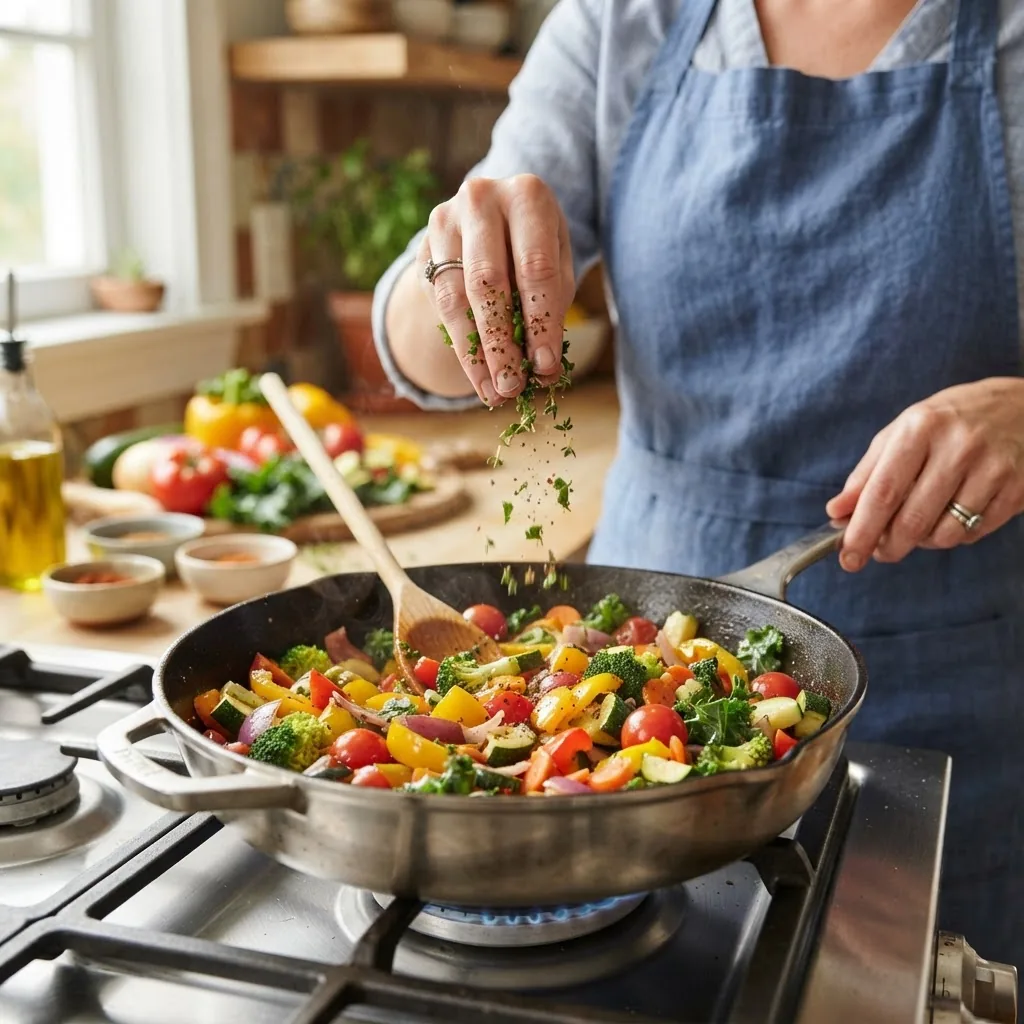
Below are action-oriented steps and tips drawn from years of cooking experience and dietitian-backed guidance. Follow quantities, timings and temperatures precisely to reproduce the results.
- Season in layers — add 1/8 tsp salt per serving to proteins before searing, season vegetables at the roasting stage with 1/4 tsp salt per 3 cups veg, and finish with a bright acid (1 tsp lemon or vinegar) per plate to lift flavors.
- Use heat strategically — roast at 425°F for caramelized vegetables (20–30 min), steam greens 2–4 minutes to preserve vitamins, pan-sear proteins on high heat 2–4 minutes per side then finish in oven at 375°F until internal temp is reached.
- Preserve nutrients — steam or blanch quickly to retain vitamin C and B vitamins, avoid prolonged boiling of vegetables which leaches water-soluble vitamins.
- Flavor enhancers that don’t add empty calories — toasted spices (blooming 30 sec in a dry pan) intensify aroma; use 1–2 tsp of miso dissolved in a tablespoon of warm broth for umami depth.
- Balancing macros — for dinner aim for 25–35 g protein, 30–40 g carbs, and 12–25 g fat per serving as a practical macro balance for active adults; adjust based on personal goals.
- Swap, don’t remove — replace sour cream with plain Greek yogurt 1:1, use mashed avocado in dressings instead of mayonnaise (use 2 tbsp avocado + 1 tbsp water to emulsify).
- Batch and freeze smart — cook bulk grains (3 cups dry yields ~6 cups cooked), portion into 1-cup servings and freeze; safely reheat to 165°F internal temp.
- Seasoning shortcuts — make a 1-cup herb vinaigrette base (1/2 cup olive oil, 1/2 cup vinegar, 1 tbsp Dijon, 1/2 tsp salt) and keep in fridge for up to 7 days to add instant brightness.
Budget and sourcing: learn to eat healthy on a budget by buying frozen produce for smoothies and bulk proteins on sale; see that guide for cost-per-serving calculations.
Experience signal: I once over-salted a 6-quart soup; rescuing it with 2 peeled, cored and diced apples and 2 tbsp lemon juice balanced the flavor by adding sweetness and acid — a real kitchen fix worth remembering.
Transition: once you can execute these techniques, you can elevate classic American dishes into fancy but healthy versions for entertaining.
-
Design elevated plates
Incorporating Fancy Healthy American Food Recipes into Your Meal Plan
Turning a classic American dish into a fancy healthy meal is about ingredient swaps, seasonal produce and presentation. Think grilled instead of fried, whole-grain instead of refined, and sauce sparingly.
Example 1 — Fancy Healthy Meatloaf: replace half the ground beef with lean ground turkey, add 1 cup grated zucchini, 1/2 cup oats instead of breadcrumbs, and finish with a 2-tbsp tomato glaze (tomato paste + apple cider vinegar + 1 tsp honey). Bake at 375°F for 40–45 minutes.
Example 2 — Healthy Surf & Turf for guests: sear 3 oz filet mignon and 3 large shrimp, serve on a bed of garlic‑roasted cauliflower purée (1 cup cauliflower, 1 tbsp olive oil, 1 tbsp Greek yogurt), and garnish with microgreens. Small details make it feel fancy while keeping fats and calories in control.
Ingredient swaps for health: choose Greek yogurt in sauces, brown rice or barley instead of white rice, and olive oil emulsion instead of butter-based pan sauce. Seasonal produce makes plates shine; in Texas, prioritize summer tomatoes, ripe peaches, and local greens.
Explore curated ideas in the healthy American dishes for inspiration and swaps that keep both taste and tradition.
Presentation tips: use a ring mold for grains (1/2 cup packed), smear purées with the back of a spoon, and finish with one drizzle (1 tsp) of high-quality extra-virgin olive oil per serving. Small, deliberate finishes create a restaurant feel at home.
Transition: now that you can identify good sources and evaluate recipes, the next section shows where to find reliable recipe websites and resources.
-
Vet your sources
How to Find Reliable Healthy Recipe Websites and Resources
Not every site is dietitian-reviewed or scientifically accurate. Use this checklist to evaluate trustworthiness and three recommended resources to get started.
- Check credentials — look for registered dietitians (RD/RDN) or professional citations; the Academy of Nutrition and Dietetics maintains a directory of credible resources: eatright.org.
- Data-backed recommendations — prefer sites that cite USDA or NIH studies; for national nutritional guidance consult MyPlate.
- User transparency — reliable databases disclose calculation methods for nutrition facts; some allow export to tracking apps.
Top resources and why I use them:
- USDA MyPlate — baseline for plate proportions and portion guidance (myplate.gov).
- NIH/National Library of Medicine — peer-reviewed studies on diet and health; search for recent meta-analyses or randomized trials (e.g., fiber and heart disease, 2023 review) (nih.gov).
- Academy of Nutrition and Dietetics — practical cooking tips and dietitian-reviewed recipes (eatright.org).
Additional internal resources to explore: breakfast ideas, how to meal prep for the week, and cheap foods that are good for you.
Transition: you’re ready to experiment and build sustainable habits—let’s wrap up with encouragement, common pitfalls, and a final checklist.
Common mistakes and how to avoid them
I once under-seasoned an entire pan of roasted vegetables, expecting a sauce to save it; instead I trained myself to season in two stages (pre-roast and finish) and always taste mid-cook. I also learned to weigh cooked rather than dry grains for accurate nutrition tracking.
- Skipping acid at the finish — add 1 tsp lemon or vinegar to bring flavors alive.
- Overcooking proteins — use an instant-read thermometer; chicken 165°F, salmon 125–135°F, steak 125–135°F for medium rare to medium depending on cut.
- Relying only on canned goods — opt for low-sodium or rinse canned beans to remove 200–400 mg sodium per can.
- Neglecting texture — always include one crunchy element (toasted nuts, seeds) when serving soft dishes.
Checklist: Have you done this?
- Pantry stocked with whole grains, legumes, healthy oils, and spices.
- Prepared at least one recipe fully and recorded its cooked weights for nutrition tracking.
- Balanced a plate: half vegetables, quarter lean protein, quarter whole grains or starchy veg.
- Saved at least two dressings/sauces that brighten dishes without excess sugar or salt.
When to call in a professional
Contact a registered dietitian (RD/RDN) if you have complex medical conditions, need therapeutic meal planning (e.g., kidney disease, severe allergies), or require a personalized macro prescription for athletic performance. Use the Academy of Nutrition and Dietetics directory to find credentialed professionals.
Conclusion and Encouragement for Healthy, Delicious Eating at Home
You now have a practical plan, eight ready-to-use recipes with nutrition facts, and technique-level tips to turn everyday ingredients into the yummiest healthy recipes. Start with one recipe this week and one technique (seasoning in layers or proper roasting). For organized meal planning and additional recipes, build a simple weekly rotation of three mains and two breakfasts. Ready to cook? Try a full cook session this weekend and track one recipe in your nutrition app to measure progress.
Strong CTA: Bookmark this guide, pick two recipes above, schedule a 90-minute prep block, and share results with your household — better flavor and better nutrition, one meal at a time.