
What you will have achieved, how long it takes, and the skill level
By the end of this guide you will have a complete, personalized plan for a healthy diet for women over 50: a weekly grocery list (quantities), a two-week interchangeable meal template with calorie and macronutrient targets, a one-hour weekly meal-prep workflow, and clear nutrient thresholds to monitor (calcium, vitamin D, protein, fiber, sodium, potassium, omega-3). Realistic time: initial assessment and plan — 2 hours. Weekly maintenance and meal prep — 60–120 minutes. Skill level required: basic kitchen skills (measuring cups, basic knife work), elementary math (multiplication, division), and comfort reading nutrition labels. No advanced cooking techniques required.
Before you start
- Prerequisites: recent bloodwork within 12 months (or plan to consult provider) for vitamin D, iron, kidney function if you have chronic disease.
- Tools and materials: digital kitchen scale, measuring cups and spoons, food tracking app (MyFitnessPal or Cronometer), 6–8 reusable meal containers (700–1000 ml), a 3-compartment dinner plate, and a notepad for grocery planning.
- Pantry basics to have on hand: olive oil, canned beans (4 x 15 oz cans), brown rice (3 lb), rolled oats (2 lb), plain Greek yogurt (32 oz), mixed nuts (12 oz), low-sodium broth (2 qts), and canned tomatoes (2 x 28 oz).
- Medical/medication note: if you take blood thinners, have chronic kidney disease, or are on glucose-lowering medications, consult your clinician before changing vitamin K, potassium, or carbohydrate intake.
Overview: Core nutrition targets for women over 50 (numbers you will use)
These are the numeric targets you’ll aim for when building meals. They reflect general recommendations for most women over 50 living in Texas, USA, who are generally healthy. Adjust upward or downward with your clinician or a registered dietitian for specific medical conditions.
- Calories: maintenance range 1,600–2,200 kcal/day depending on activity. For weight loss, reduce by 250–500 kcal/day but not below 1,200 kcal/day without medical supervision.
- Protein: 1.0–1.2 g per kg body weight. Example: 70 kg (154 lb) → 70–84 g protein/day. For active or sarcopenic individuals target 1.2–1.5 g/kg.
- Fiber: 22–30 g/day. Aim for 7–10 g with breakfast, 7–10 g with lunch, remainder with snacks/dinner.
- Calcium: 1,200 mg/day from diet and supplements combined.
- Vitamin D: 800–1,000 IU/day (up to 2,000 IU/day if deficient and advised by your clinician).
- Sodium: aim for ≤1,500 mg/day if you have hypertension; otherwise target <2,300 mg/day.
- Potassium: 3,500–4,700 mg/day; increase potassium-rich foods unless you have kidney disease.
- Omega-3 (EPA/DHA): 250–1,000 mg/day from fatty fish or supplements.
Step-by-step plan — core steps
-
Assess your baseline: collect numbers and habits
Action: spend 30–45 minutes gathering your current data. Record your current weight, height, activity level (sedentary, light, moderate, active), usual bedtime and wake time, three representative days of food intake (you can use photos), and any medications or supplements. Use a kitchen scale to weigh portions for two meals to calibrate estimation.
Worked example: a 58-year-old woman, 5’4″, 154 lb (70 kg), light activity. Estimated maintenance calories = 1,800 kcal/day. Protein target 70–84 g/day. Fiber target 22–25 g/day. Sodium target <2,300 mg/day. Save these numbers — they'll be the baseline for Steps 3–6.
-
Calculate your calorie and protein targets
Action: use the Mifflin-St Jeor formula and activity multiplier, or simplify with the ranges above. For Mifflin-St Jeor (women): REE = 10 × kg + 6.25 × cm − 5 × age − 161. Multiply REE by activity factor: sedentary 1.2, light 1.375, moderate 1.55, active 1.725.
Worked example calculation (detailed): For the 58-year-old above: kg = 70; cm = 163. REE = 10×70 + 6.25×163 − 5×58 −161 = 700 + 1018.75 − 290 −161 = 1,267.75 kcal. Light activity multiplier 1.375 → Estimated needs = 1,744 kcal/day. Round to 1,750 kcal/day. For protein 1.2 g/kg → 84 g/day.
-
Choose your meal template and plate method
Action: adopt an interchangeable template you can repeat. I recommend a three-meal, two-snack structure: breakfast 350–400 kcal, lunch 450–500 kcal, dinner 500–600 kcal, two snacks 100–150 kcal each. That totals 1,500–1,800 kcal depending on choices.
Plate method to implement every meal (visual and reliable): divide your plate as 25% lean protein, 25% complex carbohydrates, 50% non-starchy vegetables (or 1–2 cups cooked veg + 1–2 cups salad). For breakfast, use the same proportion—protein first, then fiber-rich carbs, then fruits/veg.
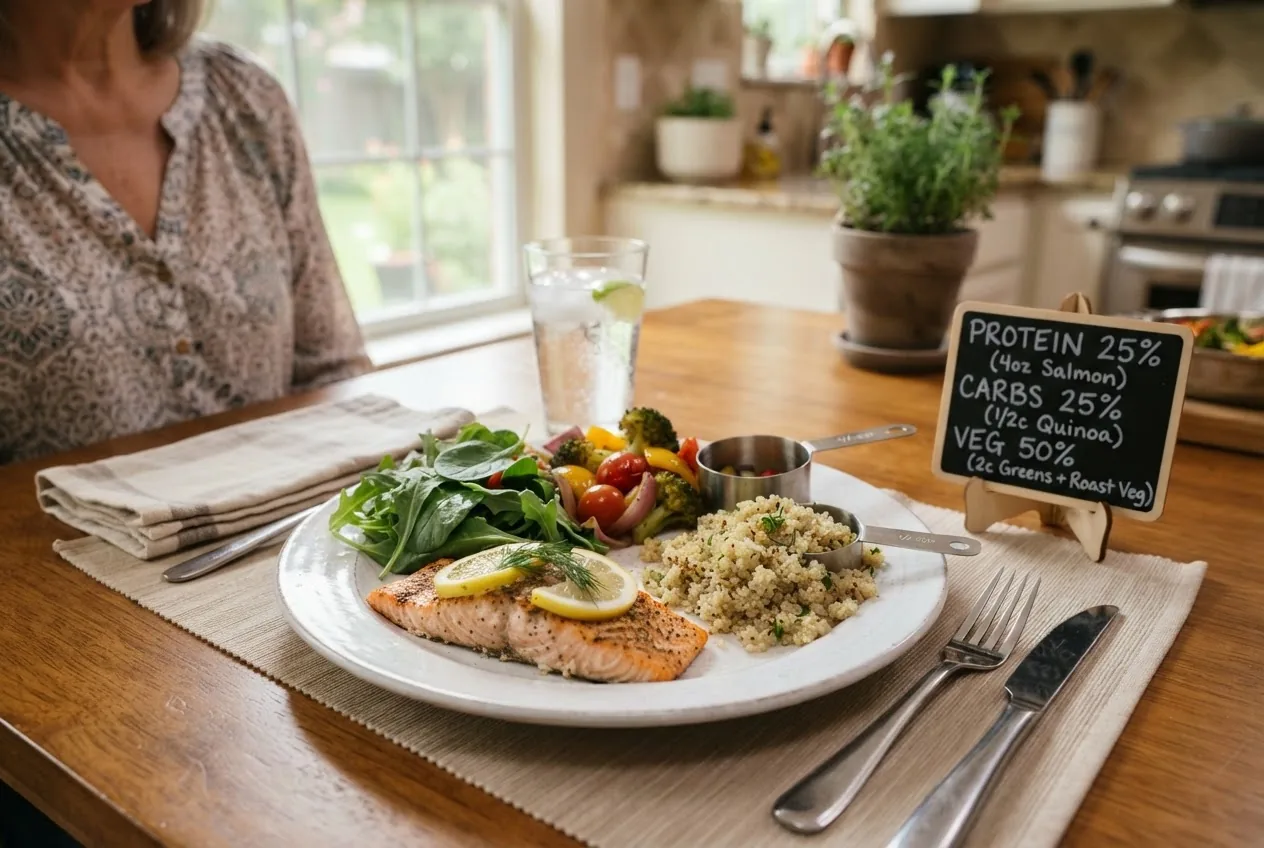
Example plate construction (dinner): 4 oz cooked salmon ~ 28 g protein and 240 kcal; 1/2 cup cooked quinoa ~ 111 kcal and 4 g protein; 2 cups mixed roasted vegetables ~ 120 kcal; olive oil for roasting 1 tbsp = 120 kcal. Total ~591 kcal, protein ~32 g.
-
Build a weekly shopping list with quantities
Action: convert meal templates into quantities for seven days. This saves time and prevents impulsive purchases. Below is a practical, standard weekly list for one person aiming for ~1,750 kcal/day and two meal-prep sessions.
- Proteins: fresh salmon or white fish 3 lb (3 dinners), boneless skinless chicken breast 2.5 lb (4 dinners), plain Greek yogurt 64 oz (breakfasts and snacks), eggs 12 large (breakfasts), tofu 14 oz (1 meal).
- Grains and starches: brown rice 2 lb (makes ~8 cups cooked), quinoa 1 lb, old-fashioned oats 2 lb, whole-grain bread 1 loaf (14 slices).
- Legumes/nuts: canned black beans 3 x 15 oz, lentils 1 lb dry, mixed unsalted nuts 12 oz.
- Vegetables: leafy greens 4 heads or 8 bags (salad packs), broccoli 3 heads, bell peppers 6, carrots 2 lb, zucchini 3, frozen mixed vegetables 2 x 16 oz.
- Fruits: apples 7, berries (fresh/frozen) 3 x 6 oz packs, oranges 5, banana 7.
- Dairy/alternatives: low-fat milk or fortified plant milk 1 gallon, cheddar or feta 8 oz.
- Pantry: extra-virgin olive oil 17 fl oz, vinegar, low-sodium soy sauce, spices (garlic powder, paprika, black pepper), canned diced tomatoes 2 x 28 oz.
Quantities assume three cooked dinners per week from fish and four from chicken; adjust if you prefer more vegetarian dinners (exchange 2 lb of chicken for extra beans and tofu).
-
Plan two weekly meal-prep sessions
Action: schedule one 90-minute session on Sunday and one 45–60 minute mid-week touch-up (Wednesday). The goal: cook base proteins and grains, chop vegetables, portion containers, and make breakfast staples.
- Sunday (90 minutes): Roast 2 lb chicken breast (sliced), cook 3 cups brown rice, prepare 6 cups mixed roasted vegetables (broccoli, carrots, bell peppers), hard-boil 6 eggs, portion 4 dinners into microwave-safe containers. Make two breakfasts: overnight oats jars (measure: 1/2 cup oats + 1/2 cup milk + 1/4 cup Greek yogurt per jar).
- Wednesday (45–60 minutes): Cook 1.5 lb salmon (baked or pan-seared, 4–6 oz portions), steam frozen mixed veg, cook a pot of lentils (1.5 cups dry), and refresh salads for the week.
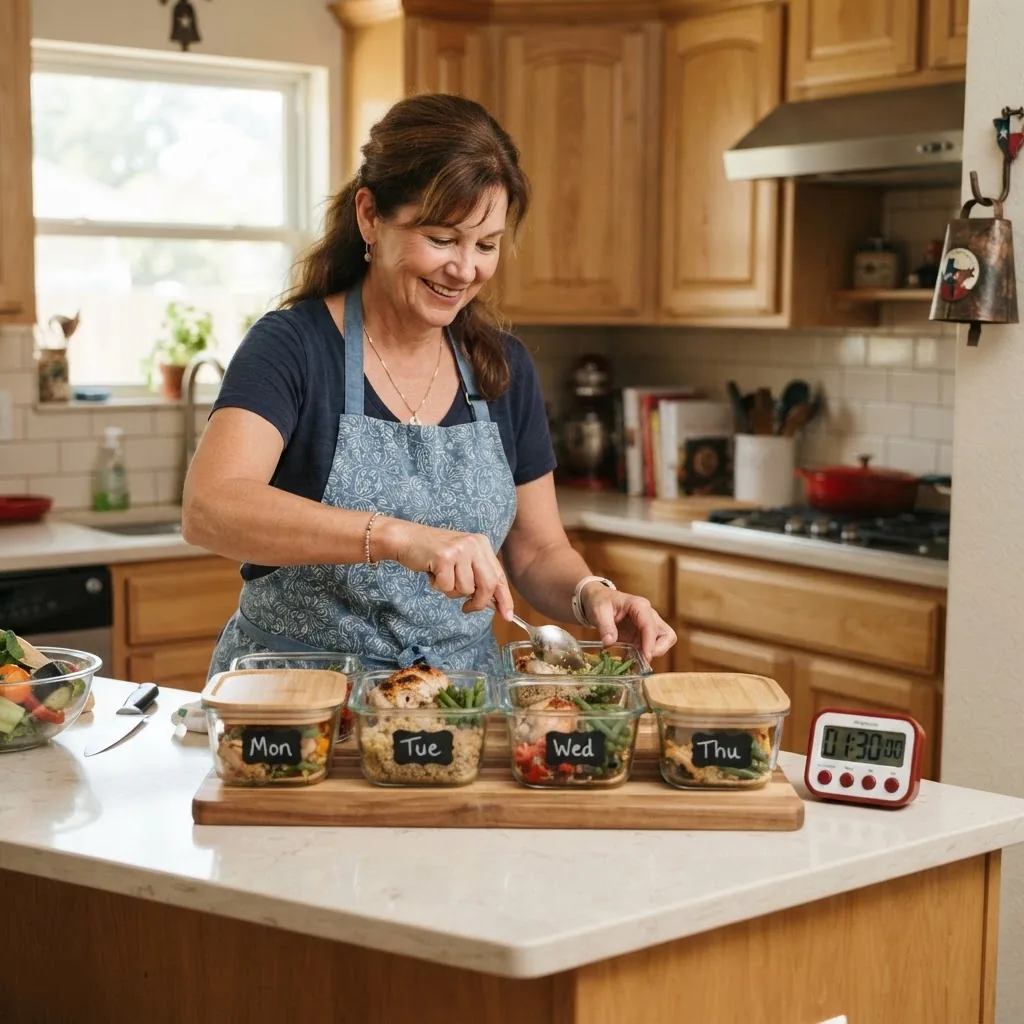
Storage rules: refrigerate cooked meals ≤3°C (≤40°F) and consume within 3–4 days; freeze extras in single-meal portions for up to 3 months.
-
Create interchangeable breakfasts and snacks
Action: write 4 breakfast options and 6 snack options that meet your daily protein and fiber goals. Keep portions fixed so tracking is simple.
- Breakfast A (350 kcal): Overnight oats — 1/2 cup rolled oats (150 kcal), 1/2 cup plain Greek yogurt (60 kcal), 1/2 cup berries (30 kcal), 1 tbsp chia seeds (60 kcal), water or 1/4 cup milk. Protein ~18–20 g; fiber ~8–10 g.
- Breakfast B (360 kcal): 2 scrambled eggs (140 kcal), 1 slice whole-grain toast (80 kcal), 1/2 avocado (120 kcal). Protein ~14 g; fiber ~7 g.
- Snack examples (100–150 kcal each): 1 small apple + 10 almonds (150 kcal), 1/2 cup cottage cheese + cucumber slices (120 kcal), 1 small banana + 1 tbsp peanut butter (150 kcal).
- Evening snack option to reach protein target: 1/2 cup Greek yogurt with 1 tbsp ground flaxseed (120 kcal, adds omega-3 ALA).
-
Manage sodium, potassium and fluid targets
Action: pick low-sodium options and intentionally include potassium-rich foods. Target sodium <2,300 mg/day (≤1,500 mg if hypertensive). Aim for 3,500–4,700 mg potassium per day from foods.
Practical rules: swap canned beans for low-sodium or rinse canned beans for 60 seconds (reduces sodium ~40%). Use herbs, lemon, and garlic instead of salt. Include potassium sources each day: 1 medium banana (~420 mg), 1 cup cooked spinach (~839 mg), 1 medium potato with skin (~926 mg), 1 cup cooked lentils (~731 mg).
-
Address bone health and micronutrients: calcium and vitamin D
Action: achieve 1,200 mg calcium/day and 800–1,000 IU vitamin D/day through diet and supplements if needed. Track intake for 7 days and compare to thresholds.
Food sources and examples: 1 cup low-fat yogurt = 300 mg calcium, 1 cup fortified plant milk = 300 mg calcium, 1 cup cooked kale = 100 mg. If dietary intake is <1,200 mg/day, add 500 mg calcium carbonate supplement with a meal (separate from iron supplements) and reassess with your clinician. For vitamin D, 800–1,000 IU daily is a safe general dose; if blood 25(OH)D <30 ng/mL your clinician may advise 1,000–2,000 IU/day or weekly high-dose therapy.
Note: take calcium supplements in divided doses ≤500 mg to improve absorption.
-
Optimize protein distribution across meals
Action: aim for ~20–30 g protein per main meal to maximize muscle protein synthesis. For a target of 84 g/day, aim for 28 g at breakfast, 28 g at lunch, and 28 g at dinner, with small amounts at snacks.
Practical portion sizes that deliver ~28 g protein: 4–5 oz cooked chicken breast (approx. 28–32 g protein), 5 oz cooked salmon, 1 cup Greek yogurt + 1/4 cup whey powder, or 1 cup cooked lentils + 1 oz cheese. If you struggle to reach this at breakfast, add a 20–25 g protein shake (whey or soy) after resistance training or with breakfast.
-
Swap recipes for heart and metabolic health
Action: modify three favorite recipes to reduce saturated fat, added sugar, and refined grains. This step is practical and prevents feeling deprived.
- Swap 50% whole-grain flour in baking: if a recipe calls for 2 cups all-purpose flour, use 1 cup whole-wheat + 1 cup all-purpose to start. Expect denser texture but higher fiber (+6–8 g per cake).
- Reduce sugar by 25%: if a muffin recipe calls for 1 cup sugar, use 3/4 cup and add applesauce 1/4 cup to maintain moisture.
- Swap frying for roasting or air-frying: 1 tablespoon oil used for pan-frying adds ~120 kcal; roast with a 1 tbsp spray and finish with a squeeze of lemon.
Use these swaps to lower saturated fat by ~20–30% and added sugar by 25–50% without sacrificing flavor.
-
Track for two weeks and adjust
Action: track every meal and snack for 14 days in a food diary or app. At day 7 and day 14 evaluate: average daily calories, protein grams, fiber grams, sodium, and whether you hit calcium/vitamin D targets.
Adjustment rules: if weight is stable but you want gradual loss, reduce intake by 250 kcal/day and retest two weeks later. If energy is low or you lose >1.5% body weight in a week, increase by 150–250 kcal/day. If protein average is
-
Use lab values to finalize supplementation
Action: within 3 months, review or order targeted labs: 25(OH) vitamin D, serum calcium, basic metabolic panel (for kidney function and potassium baseline), hemoglobin, ferritin if anemic, and TSH. Use results to finalize supplements.
Supplement rules I follow for most women over 50 with normal labs: daily vitamin D 800–1,000 IU, calcium supplement 250–500 mg if dietary intake is low, and a standard multivitamin with B12 if on restricted diets. Consider 1,000 mg combined EPA+DHA for cardiovascular benefit if dietary oily fish <2 servings/week. If ferritin <50 ng/mL and symptomatic, consult clinician for iron therapy; do not self-prescribe high-dose iron without testing.
External resource: For official guidance on older adult nutrition consult the National Institute on Aging: https://www.nia.nih.gov/health/healthy-eating.
-
Plan for special situations: menopause, diabetes, or renal limits
Action: if you are peri/ post-menopausal, prioritize bone-supporting nutrients and weight-bearing exercise; if diabetic, aim for consistent carbohydrate portions: 30–45 g per meal and 15–20 g per snack; if you have CKD stage 3–4, follow your nephrology dietitian for potassium and protein targets (often 0.6–0.8 g/kg).
Examples: for diabetes, a lunch plate could be: 3 oz turkey (21 g protein), 1/2 cup cooked barley (22 g carbs), large salad with 1 tbsp olive oil. For CKD, reduce potassium-rich items (limit bananas and potatoes) and monitor serum potassium every 4–8 weeks when changing diet.
-
Establish sustainable habits and schedule quarterly reviews
Action: set micro-habits to make changes stick: plan Sunday shopping and meal prep, log one meal daily, weigh weekly same day/time, and schedule a 20-minute review session every quarter to update targets. Use a consistent grocery rotation to simplify choices: rotate 8 protein choices, 8 vegetable choices, and 6 whole-grain choices.
Behavior tip: pair new habit with an existing cue — e.g., after morning coffee, fill a water bottle (helps hydration), or after dinner, prep next day’s lunch container for 3 minutes to reduce decision fatigue in the morning.
Worked example: building a 1,750 kcal day for a 58-year-old (detailed)
Below is an exact day with portion sizes, calorie counts and macro/fiber numbers you can copy.
- Breakfast (380 kcal): Overnight oats — 1/2 cup oats (150 kcal, 5 g protein, 4 g fiber), 1/2 cup plain Greek yogurt (60 kcal, 11 g protein), 1/2 cup mixed berries (30 kcal, 2 g fiber), 1 tbsp chia seeds (60 kcal, 5 g fiber), 1/4 cup skim milk (20 kcal). Breakfast protein ~16 g, fiber ~11 g.
- Snack 1 (130 kcal): 1 small apple (80 kcal, 3 g fiber) + 8 almonds (50 kcal, 2 g protein).
- Lunch (480 kcal): Salad with 4 oz grilled chicken (187 kcal, 35 g protein), 2 cups mixed greens (20 kcal), 1/2 cup cooked quinoa (111 kcal, 4 g protein), 1/2 cup cherry tomatoes (15 kcal), 1 tbsp olive oil + vinegar (120 kcal). Lunch protein ~39 g, fiber ~7 g.
- Snack 2 (120 kcal): 1/2 cup cottage cheese (100 kcal, 12 g protein) + cucumber slices.
- Dinner (640 kcal): 5 oz baked salmon (300 kcal, 34 g protein), 1 medium baked sweet potato with skin (112 kcal, 4 g fiber, 450 mg potassium), 1.5 cups steamed broccoli (70 kcal), 1 tsp butter (35 kcal), olive oil drizzle 1 tbsp (120 kcal). Dinner protein ~34 g, fiber ~6 g.
- Totals: ~1,750 kcal, protein ~101 g (exceeds required for preservation of muscle), fiber ~35 g, sodium estimated ~1,700 mg, calcium ~900 mg (add 300 mg from dairy or supplement to reach 1,200 mg).
Common mistakes and how to avoid them
I have seen these errors many times in practice; I write them here in first person so you can catch them early.
- I’ve seen people skimp on protein because they think “lower calories means less meat.” That caused muscle loss. Fix: always prioritize 20–30 g protein at each main meal; use Greek yogurt or protein powder if budget is tight.
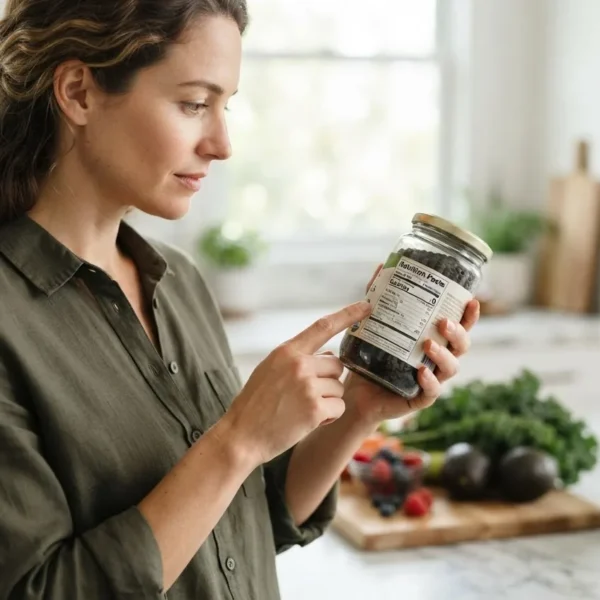
- I’ve watched clients rely on “low-fat” labels and end up eating more sugar. Fix: read ingredient lists — sugar and refined carbs can spike glucose and lead to weight gain. Prefer whole foods: beans, fish, eggs.
- I’ve noticed people under-measure portion sizes by eye, especially grains and oils. Fix: use a digital scale for 2 weeks to recalibrate your eye (1 cup cooked rice = ~150 g cooked; 1 tbsp oil = 14 g).
- I’ve seen women skip strength training thinking diet alone is enough. Fix: add two 20–30 minute resistance sessions weekly to preserve lean mass; protein needs may rise slightly when training.
- I’ve encountered over-supplementation: someone took 2,000 mg calcium daily plus high-dose vitamin D without checking labs and developed constipation and kidney stone risk. Fix: check labs and keep calcium ≤1,200 mg/day unless advised otherwise.
Compact checklist you can verify right now
- I have my baseline numbers recorded: weight, height, activity level, and estimated calories — yes / no.
- I know my protein target in grams per day and have meals mapped to 20–30 g per meal — yes / no.
- I scheduled a 90-minute Sunday meal-prep and a 45-minute mid-week touch-up — yes / no.
- I shopped using the weekly grocery list with quantities and refrigerated/freezer storage planned — yes / no.
- I’ve planned two breakfasts and four snacks that meet protein and fiber targets — yes / no.
- I will track food intake for 14 days and repeat labs (vitamin D, BMP, ferritin) within 3 months — yes / no.
When to call in a professional
Call a registered dietitian or your clinician if any of the following apply: significant unintentional weight loss >5% body weight in 3 months, new or worsening kidney disease, active cancer treatment, new diagnosis of diabetes requiring medication adjustment, persistent vitamin D deficiency despite supplementation, or if you want a personalized meal plan for multiple comorbidities. If you have complex medication interactions (e.g., warfarin), get diet-medication counseling before changing vitamin K–rich foods.
Resources and related reading
- For balanced meal construction and portion visuals see our pillar guide on nutritionally complete meals: Nutritionally Complete Meal Guide.
- To convert these steps into a short-term weight-loss menu, see the 7-day plan example: 7 Day Diet Menu to Lose Weight.
- For senior-focused planning and extra meal ideas, read Healthy Eating for Seniors and the article on diet for females over 60: Best Diet for Female Over 60.
Final practical tips to stay on track
- Set two non-negotiable food rules: e.g., “I eat protein at breakfast” and “I include a salad or cooked veg at lunch and dinner.”
- Keep a small “emergency snack kit” in your bag: 1 packet of mixed nuts (30 g), 1 small fruit, and a protein bar with ≥10 g protein and <10 g added sugar.
- Hydration: aim for 8 cups (64 oz) plain water daily, more if active or in hot Texas summers. Add an electrolyte tablet only if sweating heavily for >60 minutes.
- Alcohol: limit to ≤1 drink/day. A standard drink = 5 oz wine or 12 oz beer (~120–150 kcal) and adds empty calories and affects sleep and bone health when consumed daily.
Frequently Asked Questions
What is a healthy diet for women over 50 that helps maintain muscle and bone?
A healthy diet for women over 50 emphasizes 1.0–1.2 g protein per kg body weight daily, 1,200 mg calcium, 800–1,000 IU vitamin D, 22–30 g fiber, and adequate potassium (3,500–4,700 mg). Combine this with resistance exercise twice weekly and weight-bearing activity for bone and muscle preservation.
How many calories should a woman over 50 eat to lose weight safely?
Most women over 50 aiming to lose weight can start at 1,200–1,500 kcal/day for short-term loss or reduce maintenance calories by 250–500 kcal/day. Never drop below 1,200 kcal/day without medical supervision and ensure protein remains at 1.0–1.2 g/kg to protect lean mass.
Which foods should women over 50 eat every day for bone health?
Daily bone-supporting foods include 1–2 servings of dairy or fortified plant milk (for calcium), oily fish twice weekly (for vitamin D and omega-3), leafy greens (kale, collards), and legumes. If dietary calcium is <1,200 mg, add a divided supplement of 250–500 mg with meals after consulting your clinician.
Is intermittent fasting safe for women over 50?
Intermittent fasting can be safe if it doesn’t reduce daily protein or micronutrient intake. Avoid prolonged fasting if you are underweight, have diabetes requiring medication adjustments, or have a history of disordered eating. Prioritize protein distribution across eating windows and consult your clinician for individualized advice.
How should a woman over 60’s diet differ from one over 50?
Women over 60 often need the same core nutrients but may require higher attention to protein (1.2 g/kg), more frequent monitoring of vitamin D and B12, and gentler sodium limits if blood pressure rises. Energy needs typically decline with age, so focus on nutrient density over calories.