
What you’ll finish with, time required, and skill level
When you finish this guide you will have a documented 2–6 week dietary adjustments plan tailored to your goals (weight loss, blood-sugar control, reduced sodium, or plant-forward eating), concrete daily targets (calories and macronutrient grams), three tested meal swaps for every main meal, and a monitoring log to use for measured review every 7 days. Expect to spend 2–3 hours upfront to create the plan and 10–20 minutes per day to implement and record results. This guide assumes a confident beginner-to-intermediate skill level: you can read food labels, use a kitchen scale, and enter values into a food-tracking app (or spreadsheet).
Before you start
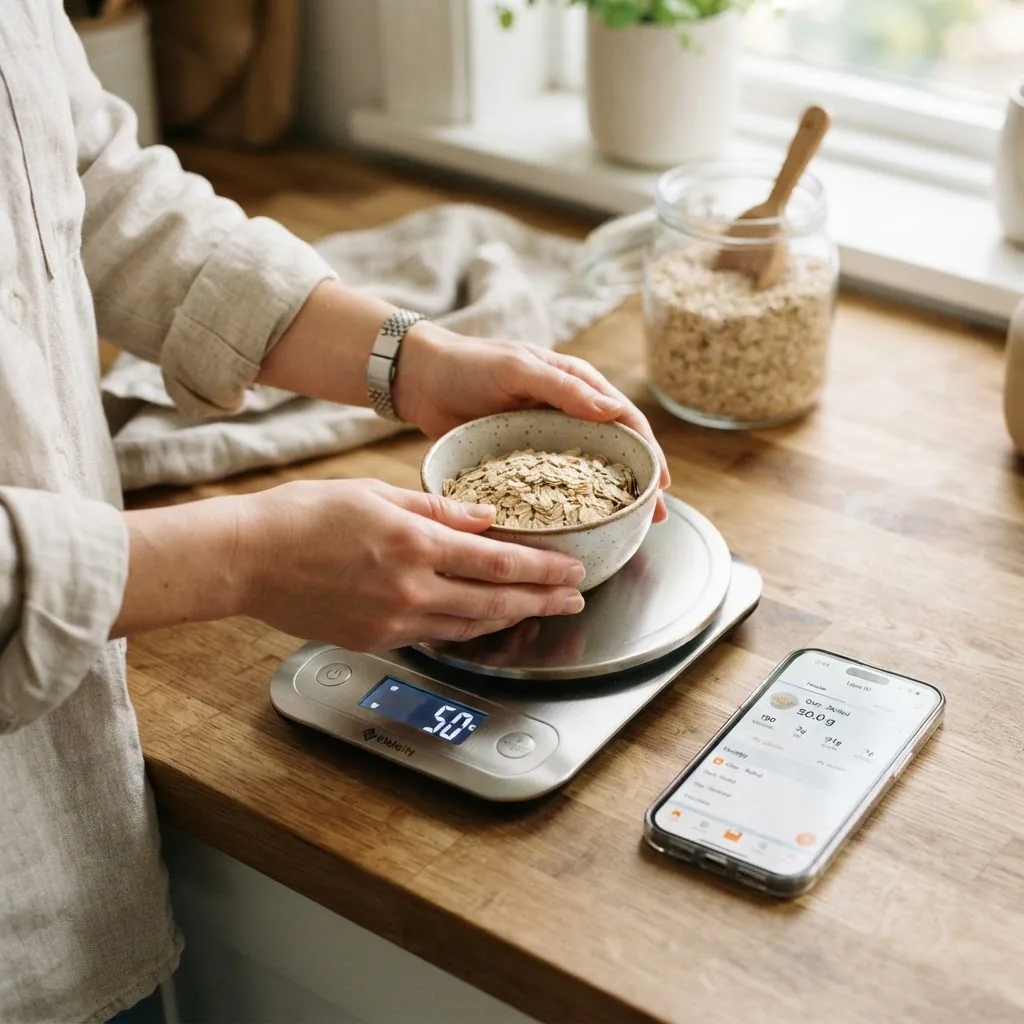
- Kitchen scale (±1 g) and measuring cups/spoons
- Food-tracking app or spreadsheet (e.g., MyFitnessPal or Google Sheets)
- Notebook or digital note for a baseline 7-day food log
- Access to basic lab values if you’re adjusting for medical reasons (last 12 months): fasting glucose, HbA1c, lipids, serum sodium if applicable
- Pen, highlighter, and printed nutrition facts labels for three commonly eaten packaged foods
- Optional: blood pressure cuff (home), glucometer if diabetic
Core step-by-step procedure
-
Step 1 — Collect a 7-day baseline food log.
Record everything you eat and drink for seven consecutive days including times, portions (use your scale), and preparation method (fried, baked, raw). Note condiments, oils, and beverages. Aim for exact gram weights for solid foods and milliliters for liquids when possible; otherwise record household measures (cup, tbsp) and convert later.
Why seven days: it captures weekday/weekend variation. If you miss data, extend to 10 days rather than guessing.
Specifics to capture: calories (if using an app), grams of carbohydrate, protein and fat per meal, sodium mg, and added sugar grams. If you don’t have those, record brand + package size and photograph the nutrition label for later entry.
-
Step 2 — Calculate your daily targets from goals.
Decide the primary goal: fat loss, maintenance, muscle gain, blood-glucose control, or sodium/sugar reduction. Use these concrete targets:
- Weight loss: reduce total daily calories by 300–500 kcal from maintenance for 0.5–1.0 lb/week. Estimate maintenance with 15–16 kcal per lb bodyweight (e.g., 165 lb × 15 = 2,475 kcal). Set target = maintenance − 400 kcal.
- Maintenance: use 15–16 kcal per lb bodyweight; adjust by ±100 kcal if activity level changes.
- Muscle gain: add 250–350 kcal/day and increase protein to 1.0–1.2 g per lb of bodyweight.
- Blood-glucose control: aim for 45–60 g carbohydrate per meal and 10–20 g per snack (choose lower if your clinician advises).
- Sodium reduction: limit to <= 1,500–2,300 mg/day depending on hypertension status (1,500 mg recommended for diagnosed hypertension).
Set macronutrient grams from calories: protein 4 kcal/g, carbs 4 kcal/g, fat 9 kcal/g. Example for a 2,000 kcal weight-loss plan: protein 120 g (480 kcal, 24%), carbs 200 g (800 kcal, 40%), fat 80 g (720 kcal, 36%). Record the precise gram targets in your plan document.
-
Step 3 — Compare baseline intake to targets and flag large gaps.
Aggregate your 7-day log into averages: daily calories, protein (g), carbs (g), fat (g), sodium (mg), added sugar (g). Calculate averages by summing values then dividing by seven. Example table format (enter into spreadsheet):
Metric Baseline avg/day Target/day Gap Calories 2,500 kcal 2,100 kcal −400 kcal Protein 70 g 120 g +50 g needed Sodium 3,200 mg ≤ 2,300 mg −900 mg to reduce Flag any item where the gap is ≥15% of the target (e.g., protein shortfall ≥18 g on a 120 g target). Those require prioritized adjustments.
-
Step 4 — Prioritize three concrete adjustments to implement this week.
Choose no more than three measurable changes to apply immediately. Examples with exact values:
- Increase protein at breakfast by 30 g: add two large eggs (12 g) + 30 g Greek yogurt (6 g) + 20 g whey (12 g) = 30 g extra protein.
- Reduce daily sodium by 900 mg: swap one serving of canned soup (1,200 mg) for 1.5 cups homemade vegetable stew with 150 mg sodium per serving.
- Reduce added sugar by 20 g/day: replace a 16 oz sweetened iced tea (40 g added sugar) with unsweetened iced tea + 1 tsp honey (4 g) for a net reduction of 36 g.
Write each adjustment as an if-then rule in your plan. Example: “If craving afternoon snack, then choose 28 g almonds (6 g protein, 3 g carbs, 14 g fat, 0 mg sodium) instead of a 45 g candy bar (210 kcal, 28 g sugar, 100 mg sodium).”
-
Step 5 — Create precise meal swaps for breakfast, lunch, dinner, and two snacks.
Design swaps that meet your gram and kcal targets. Below are five tested swaps with measured values for a 2,100 kcal weight-loss plan with 120 g protein target.
- Breakfast swap: Replace 2 slices buttered toast (360 kcal, 8 g protein, 20 g fat) with 3-egg scramble + 1 cup spinach + 30 g feta (360 kcal, 28 g protein, 24 g fat). Net protein +20 g.
- Morning snack: Replace store muffin (420 kcal, 5 g protein, 50 g sugar) with 1 medium apple (182 g, 95 kcal) + 28 g peanut butter (170 kcal, 7 g protein). Net sugar −45 g.
- Lunch swap: Replace deli sandwich (800 kcal, 30 g protein, 1,400 mg sodium) with 4 oz grilled chicken breast (120 g raw, cooked yield ~100 g) + 2 cups mixed greens + 1 cup cooked quinoa (185 g cooked) + 1 tbsp olive oil (120 kcal): total ~650 kcal, protein 40 g, sodium 350 mg.
- Afternoon snack: Replace bagged chips (160 kcal, 170 mg sodium, 2 g protein) with Greek yogurt 170 g nonfat plain + 15 g chia seeds: 150 kcal, protein 17 g, sodium 40 mg.
- Dinner swap: Replace restaurant pasta entrée (1,200 kcal, 60 g protein, 2,000 mg sodium) with 5 oz baked salmon (140 g cooked) + 1 cup roasted vegetables + 1/2 cup brown rice = ~620 kcal, protein 42 g, sodium 220 mg.
Enter each swap into your tracking app as a meal template so you can apply it without re-calculating each time.
-
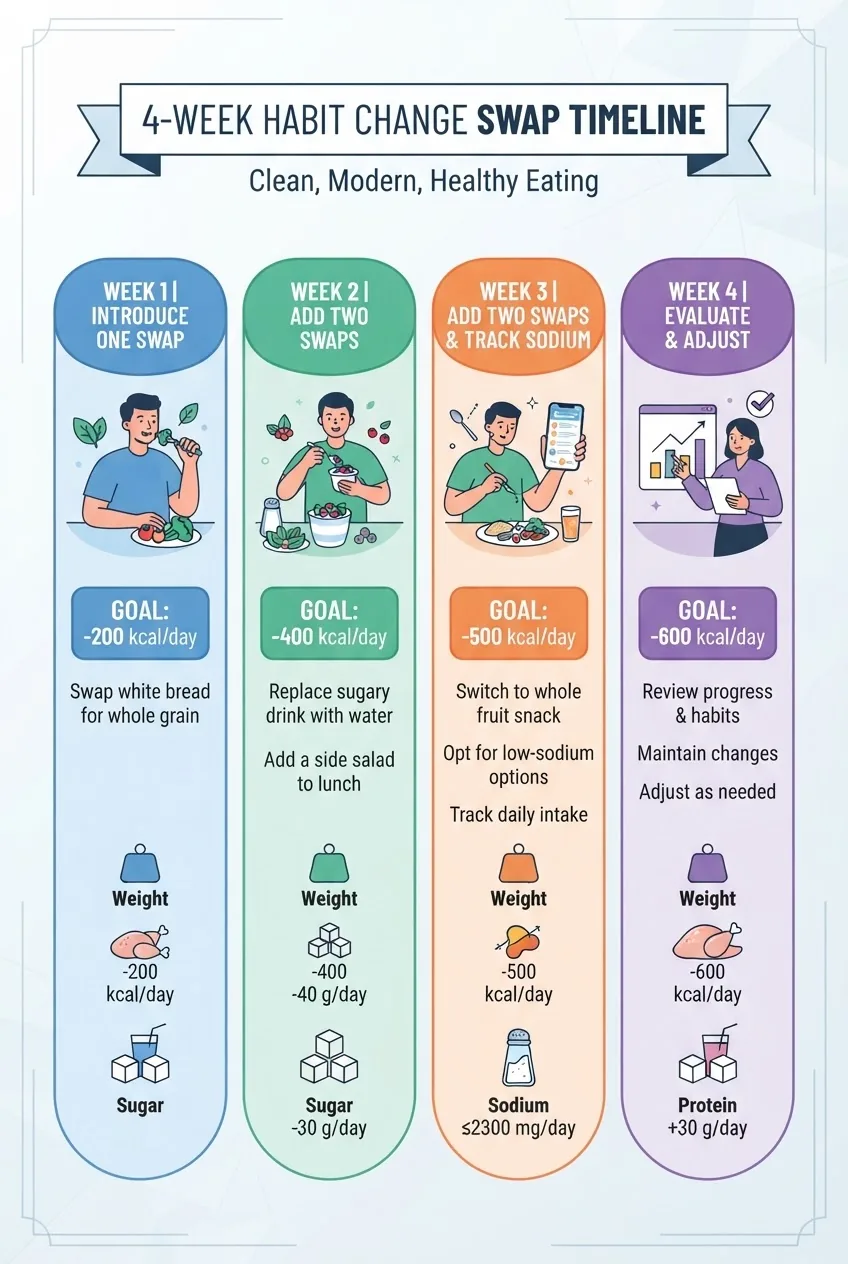
Step 6 — Implement progressive substitutions: week 1 to week 4.
Apply changes gradually rather than all at once. Use this four-week cadence with exact metrics.
- Week 1 (Days 1–7): Implement one high-impact swap (e.g., lunch swap above) every weekday and record adherence. Goal: 5/5 weekdays followed by 2 weekend flexible meals.
- Week 2 (Days 8–14): Add the breakfast swap and morning snack swap; maintain lunch swap. Goal: 80% adherence across 7 days.
- Week 3 (Days 15–21): Add afternoon snack and dinner swaps; begin sodium tracking; measure home blood pressure daily if hypertensive.
- Week 4 (Days 22–28): Evaluate weight and subjective energy. If weight change is within expected range (−0.5 to −1.0 lb/week) keep pace. If not, adjust calories by ±150–250 kcal and retarget protein by ±10 g.
Record weekly averages and compare to initial baseline. Use thresholds to decide: if protein still < 90% of target after Week 2, prioritize protein-first swaps.
-
Step 7 — Use portion control and simple cooking methods to hit targets.
Cooking methods change calorie density. Use these absolute parameters:
- Oven bake, steam, grill: use 1 tsp (5 mL) olive oil per 100 g of vegetables or 1 tbsp per 4 oz protein grilled (14 g fat, 120 kcal per tbsp).
- Pan-fry: reduce fat to 1 tsp (5 mL) per 100 g protein to save ~100 kcal per meal vs. using 2 tbsp oil.
- Sauces: limit to 2 tbsp (30 g) per meal; store-bought sauces can add 200–300 kcal and 400–800 mg sodium per 2 tbsp — substitute with 1 tbsp lemon + 1 tsp olive oil where possible.
Quantitative portion rule: when unsure, follow a plate model for a standard meal (total ~600 kcal for dinner on a 2,100 kcal plan): 25% protein by plate volume (~4 oz cooked / 110–140 g), 35% non-starchy vegetables (2–3 cups), 25% moderate starch (1/2 to 1 cup cooked rice/pasta), 15% healthy fat (1 tbsp olive oil or 30 g avocado).
-
Step 8 — Adjust for special needs: diabetes, sodium restriction, vegetarian diets, seniors.
Concrete adjustments by condition:
- Type 2 diabetes: target 45–50 g carbs per main meal, 10–20 g per snack; prefer high-fiber carbs (≥5 g fiber per 30 g carbs). Test post-meal glucose 1–2 hours after meals for two meals/day during Week 2; aim for <180 mg/dL at 1–2 hours per ADA guidance unless your clinician prescribes other targets.
- Hypertension / sodium sensitivity: set sodium goal ≤1,500 mg/day. Replace canned/processed foods with fresh or low-sodium equivalents; rinse canned beans (reduces sodium by ~40%); use herbs and lemon instead of 1 tsp table salt (2,300 mg sodium per tsp is not accurate—table salt is ≈2,300 mg sodium per tsp of salt — remove or reduce by half).
- Vegetarian: target protein 0.8–1.0 g per lb via plant combinations: 1 cup cooked lentils = 18 g protein; 170 g Greek yogurt = 17 g; 30 g mixed nuts = 6 g. Example day: breakfast 200 g Greek yogurt (20 g), lunch 1.5 cups lentils (27 g), dinner 1 cup tempeh (31 g) = ~78 g; add 1–2 protein snacks to reach 120 g if needed.
- Seniors (65+): increase protein to 1.0–1.2 g/lb to prevent sarcopenia, spread protein evenly across meals (≥30 g protein per meal). Monitor vitamin D status and consider 800–1,000 IU/day if deficient per clinician.
-
Step 9 — Track, test, and retune every 7 days using measurable metrics.
Metrics to track daily: total calories, protein grams, carbs grams, fat grams, sodium mg, water intake (mL), and a 0–10 energy rating. Weekly metrics: body weight at same time of day (fasted, after voiding, clothed equally), waist circumference (midpoint between lowest rib and iliac crest), and fasting blood glucose if indicated.
Decision thresholds after each 7-day review:
- Weight loss slower than expected: if <0.25 lb/week for two consecutive weeks, reduce daily calories by additional 150 kcal and increase daily steps by 1,000 steps/day for 7 days.
- Protein shortfall >20% after implementation: add 20 g whey or 3–4 oz lean meat at one meal.
- Sodium not reduced by at least 300 mg after week 2: eliminate one processed item per day (e.g., deli meat, canned soup, packaged sauce).
- Energy <4/10 for more than 5 days: increase complex carbs at breakfast by 15–20 g or add 100 kcal snack with 10 g protein and reassess.
-
Step 10 — Build a sustainable shopping and meal-prep routine.
Create a weekly shop and two-hour prep window with explicit tasks and quantities.
Example shopping list quantities for one person for 7 days (2,100 kcal target):
- Chicken breast, raw: 2.1 kg (~3.5 lb) — provides eight 4 oz cooked portions (28 g protein each).
- Salmon fillets: 700 g (two 6 oz dinners)
- Quinoa, dry: 350 g (makes ~6 cups cooked)
- Frozen mixed vegetables: 1.4 kg (about 10 cups cooked)
- Greek yogurt, plain nonfat: 1.2 kg tub
- Eggs: 2 dozen
- Leafy greens: 3 large bags (for salads)
- Olive oil: 250 mL
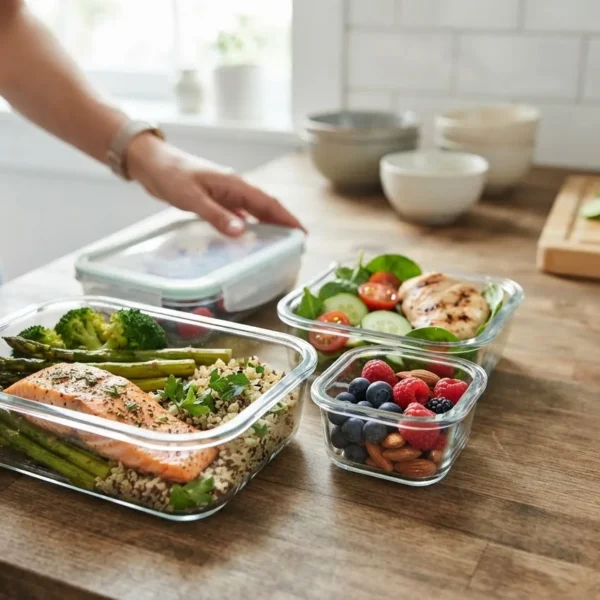
Meal-prep session (2 hours): bake 4 chicken breasts (20 minutes at 400°F / 205°C), roast 6 cups of vegetables (25 minutes at 425°F / 220°C with 1 tbsp olive oil total), cook quinoa in batch (15 minutes) and portion into 5 containers. Label containers with date and meal macro snapshot (e.g., “Lunch A: 420 kcal — P40/C45/F12”). Store protein portions in fridge up to 4 days; freeze extras.
-
Step 11 — Troubleshoot appetite, cravings, and social eating with planned rules.
Use precise rules and fallback options:
- If you crave sweets after dinner, wait 15 minutes and drink 250 mL water; if craving persists, have 40 g plain Greek yogurt + 1 tsp cocoa powder (120 kcal, 12 g protein, 2 g sugar).
- At restaurants, choose the protein-first rule: ask for protein portion (6 oz / 170 g if possible), request sauce on the side, ask for no butter. Estimate restaurant portions and subtract 150–350 kcal if large portions are served.
- Social drinks: cap alcohol to ≤10 g ethanol per occasion for weight-loss weeks (roughly 1 standard beer or 4 oz wine); log and add those calories to your daily limit. If you expect two drinks, reduce meal carbs by 20–30 g that day.
-
Step 12 — Maintain micronutrient adequacy and decide on supplements.
After you’ve hit macronutrient and sodium goals, verify micronutrients using a one-week nutrient intake summary in your app or a nutrient-analysis tool. Check these thresholds and act if averages fall below them:
- Calcium: aim ≥1,000 mg/day (1,200 mg if female 51+). If below, add 1 cup milk (300 mg) or 170 g yogurt (300 mg).
- Vitamin D: aim for 600–800 IU/day; test 25(OH)D if you’re at risk; supplement 800–2,000 IU/day only with clinician approval.
- Iron (pre-menopausal women): aim ≥18 mg/day; if diet low, add 3 oz beef (2.7 mg per 3 oz) or consider clinician-guided supplement.
- Fiber: aim ≥25–30 g/day; add 1/2 cup cooked beans (6–7 g fiber) or 1 tbsp chia (5 g) to meet target.
Do not start prescription-dose supplements without blood tests and clinician approval. Use a daily multivitamin (one-a-day) only if food variety is limited; prioritize whole-food corrections first.
-
Step 13 — Run a 2-week validation: measure outcomes and finalize the new baseline.
After four weeks of phased implementation, perform a two-week validation where you strictly follow your plan 6/7 days and record metrics. Compare the 14-day averages to your original baseline. Accept the new plan as your baseline if:
- Weight trend is within target (e.g., −0.5 to −1.0 lb/wk for weight loss).
- Protein intake is ≥95% of target averaged over 14 days.
- Sodium is at or below your target on at least 10 of 14 days if sodium restriction was primary.
- Subjective energy ratings are ≥6/10 on most days.
If two or more conditions are not met, return to Step 4 and swap in stronger protein sources or further reduce high-sodium items by replacing one additional packaged item per day.
Common mistakes and how to avoid them
I once recommended only calorie cuts to a client; they lost weight quickly but dropped protein to 55 g/day and lost muscle mass. I learned to prioritize protein and strength training simultaneously — now I always set a minimum protein floor of 0.8–1.0 g per lb and specifically quantify it per meal.
I used to advise “reduce processed foods” without specifics. A client interpreted that as “eat salads” and still drank three high-sugar smoothies a day. Now I give precise swaps: swap 16 oz sweetened beverage (40 g sugar) for unsweetened tea with 1 tsp honey (4 g) and specify which brands or recipes to use.
I once told a busy couple to prep meals “as you can” — they never did. The fix was prescriptive: two-hour meal-prep session on Sunday, bake four chicken breasts (20 min), roast vegetables at 425°F for 25 minutes, cook quinoa for 15 minutes, portion into 5 labeled containers. I now always give exact times and quantities.
Worked example: converting a 2,500 kcal baseline to a 2,100 kcal plan
Baseline averages: 2,500 kcal/day, protein 70 g/day, sodium 3,200 mg/day, added sugar 80 g/day. Goal: 2,100 kcal/day, protein 120 g/day, sodium ≤2,300 mg/day, added sugar ≤25 g/day. Concrete conversion steps:
- Cut 400 kcal/day by replacing two high-calorie items: swap daily 16 oz sweetened latte (250 kcal) with black coffee + 1 tbsp milk (15 kcal) = −235 kcal; replace nightly 2-scoop ice cream (300 kcal) with 150 g plain Greek yogurt + 10 g honey (140 kcal) = −160 kcal. Total −395 kcal.
- Increase protein +50 g: add 1 scoop whey (24 g), 2 eggs at breakfast (12 g), 100 g cooked chicken at lunch (31 g) and remove lower-protein snack. Net +67 g; adjust to hit 120 g target by choosing appropriate protein-containing swaps.
- Reduce sodium by 900 mg: replace canned soup at lunch (1,200 mg) with homemade vegetable soup (150 mg) and eliminate deli meat at two meals (−500 mg combined).
- Reduce added sugar 80 g → 25 g: remove two sweet drinks per day and one dessert every other day; replace with fruit and small dark chocolate (10 g) on dinner days.
After implementing, track for 14 days. If weight loss is 0.75 lb/week and energy >6/10, accept changes as sustainable. If energy <5/10, add 50–75 kcal carbohydrate at breakfast and retest.
Shopping templates and label-reading checklist
When shopping, use this quick filter rule and exact thresholds — if an item fails any one test, skip it:
- Sodium: packaged main dishes >800 mg per serving — avoid.
- Added sugar: beverages >12 g per 8 oz (≈48 g per 32 oz) — avoid for daily consumption.
- Protein density: per 100 kcal, protein grams should be ≥5% for packaged meals (≥5 g per 100 kcal) if used as a main meal.
- Fiber: snack items <3 g fiber per serving are low; prefer ≥5 g for snacks that should be filling.
Label reading action steps (exact): check serving size first, multiply to match the portion you will eat, then calculate sodium per your portion and record in the app before purchase if you’re sodium-limited.
Quick recipe: 20-minute high-protein dinner (serves 2)
Ingredients and exact quantities:
- 2 × 4 oz (113 g each) skin-on salmon fillets
- 300 g broccoli florets (about 3 cups)
- 120 g dry quinoa (yields ~2 cups cooked)
- 1 tbsp olive oil (15 mL)
- 2 tsp lemon zest and 1 tbsp lemon juice
- Salt: 0.25 tsp (≈575 mg sodium) total to split between two plates — adjust if reducing sodium
Method: preheat oven to 425°F (220°C). Rinse quinoa and boil 2 parts water to 1 part quinoa for 15 minutes. Toss broccoli with 1/2 tbsp olive oil and roast at 425°F for 12 minutes. Bake salmon skin-side down on foil at 425°F for 10–12 minutes (internal temp 145°F / 63°C). Plate half the quinoa and half the broccoli with one fillet. Nutrition (per serving): ≈620 kcal, protein 40 g, carbs 55 g, fat 24 g, sodium 300–600 mg depending on salt.
Compact verification checklist
- Documented 7-day baseline food log with gram/mL measures — Yes / No
- Daily calorie and macronutrient targets set with numeric gram values — Yes / No
- Three prioritized adjustments written as if-then rules — Yes / No
- Five meal swaps created and saved in tracking app — Yes / No
- Two-hour weekly meal-prep plan scheduled and labeled containers prepared — Yes / No
- Weekly metrics recorded (weight, waist, energy) and compared to baseline — Yes / No
- Micronutrient shortfalls identified and food-based corrections planned — Yes / No
When to call in a professional
Hire or consult a registered dietitian or physician immediately if any of the following apply:
- You’re on medication for diabetes, heart disease, or a thyroid condition — medication adjustments may be required when changing diet.
- You have unintentional weight loss >5% of body weight in 3 months or persistent poor appetite.
- Your baseline labs show uncontrolled glucose (HbA1c ≥7.5%), potassium abnormalities, or renal impairment; a clinician should set sodium and protein targets.
- You are pregnant, breastfeeding, or planning pregnancy — individualized nutrition counseling is recommended.
For local options in Texas, search for an RDN with diabetes specialization (CDCES) and check state licensure. Use telehealth if local providers are limited.
Internal resources and further reading
For a deeper primer on building nutritionally complete meals, refer to the pillar guide on balanced meals: Nutritionally Complete Meal Guide with Balanced Diet Advice. If you need simple grocery lists tuned to swaps above, see the Healthy Grocery List Guide. For help with calorie targets and calculators, this sibling article explains estimation and adjustment: How Many Calories Must I Eat a Day Guide.
Frequently Asked Questions
How long does it take to see results from dietary adjustments?
Expect measurable results in 2–6 weeks for weight or blood-sugar trends: weight typically changes 0.5–1.0 lb/week if calories are reduced 300–500 kcal/day; blood-glucose improvements can be seen in days to weeks with carb reductions, but confirm with lab tests at 4–12 weeks.
What is the simplest way to reduce sodium to 1,500 mg/day?
Remove one high-sodium item daily: swap canned soup or deli meat for fresh-cooked alternatives, rinse canned beans (reduces sodium ~40%), and use herbs/lemon instead of 1 tsp salt; track sodium and aim for ≤1,500 mg by week 3 with measured swaps.
How much protein should I aim for during weight loss?
For adults aiming to preserve muscle during weight loss, target 0.8–1.2 grams per pound of bodyweight daily and spread roughly 30 g protein across three meals; increase toward 1.0–1.2 g/lb for older adults or those doing resistance training.
Can I apply these dietary adjustments on a tight budget?
Yes. Choose budget-friendly protein and carb sources: dried beans and lentils (1/2 cup cooked ≈6–9 g protein), frozen vegetables, oats, and whole-grain rice. Buy larger packages (e.g., 2–5 lb) and plan two bulk-cook sessions per week to reduce per-meal cost.
What should I do if I feel low energy after cutting calories?
If energy is <5/10 for more than five days, add 100–150 kcal from complex carbs at breakfast or increase protein by 10–20 g at a meal. Reassess sleep and hydration, and if symptoms persist consult a clinician to rule out anemia or thyroid issues.