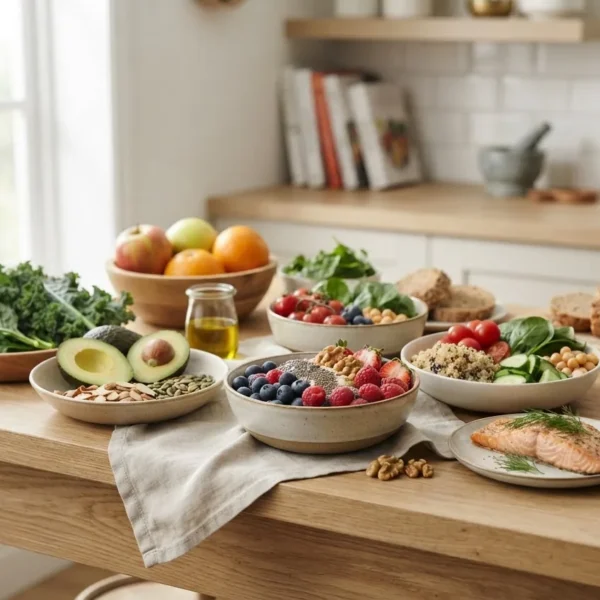

What you will finish with, time required, and assumed skill level
By the time you finish this guide you will have a complete, personalized 7‑day meal plan and a repeatable weekly shopping and meal‑prep routine tailored for the best diet for female over 60. Expect to spend 2–4 hours on initial assessment and planning, then 2–3 hours weekly for shopping and batch prep. Skill level: basic kitchen skills (chopping, stovetop, oven) and comfort reading nutrition labels.
Before you start
- Weight and height measurements (scale accurate to 0.5 lb, measuring tape)
- Most recent blood work or physician summary (cholesterol, HbA1c, vitamin D, kidney function if available)
- List of current medications and diagnosed conditions (hypertension, diabetes, osteoporosis)
- Tools: kitchen scale, measuring cups, 9×13 baking dish, slow cooker or Instant Pot, microwave, food storage containers (4–8 containers), basic knife set
- Apps or paper: food log (MyFitnessPal or notebook), calendar for cooking schedule
- Pantry staples: olive oil, canned beans, low‑sodium broth, rolled oats, canned tomatoes, brown rice, frozen vegetables
Overview: dietary goals and hard targets for women 60+
Here are the specific daily targets we will use to build menus. These numbers are a practical starting point for an average active female aged 60+ at a healthy weight; adjust with your clinician if you have medical needs.
| Target | Daily value (typical) | Notes |
|---|---|---|
| Calories | 1,400–1,800 kcal (sedentary–moderately active) | Adjust ±200 kcal for weight goals |
| Protein | 1.0–1.2 g/kg body weight ≈ 60–90 g/day | Aim for 20–30 g protein per meal |
| Calcium | 1,200 mg/day | From dairy, fortified plant milk, or supplements |
| Vitamin D | 800–1,000 IU/day (2,000 IU if deficient per doc) | Confirm with bloodwork |
| Fiber | 22–28 g/day | From whole grains, fruit, vegetables, legumes |
| Sodium | ≤1,500–2,300 mg/day | 1,500 mg target for hypertension |
Step-by-step plan: core workflow in numbered steps
-
Gather baseline data and set your daily calorie goal.
We start with numbers. Weigh yourself and note height. Use this quick calculation: Basal Metabolic Rate (Mifflin‑St Jeor) then multiply by activity factor.
Example: 65 years, 5’4″ (162.5 cm), 150 lb (68 kg). BMR = (10 × 68) + (6.25 × 162.5) − (5 × 65) − 161 = 1,263 kcal. Multiply by activity factor: 1.2 (sedentary) → 1,515 kcal maintenance. For gentle weight loss, subtract 200–300 kcal → target 1,200–1,300 kcal/day; for maintenance choose 1,400–1,600 kcal/day. I recommend starting at 1,400 kcal unless your clinician says otherwise.
-
Calculate protein requirement and distribute it per meal.
Protein preserves muscle mass and supports recovery. Target 1.0–1.2 g/kg body weight. For 68 kg, target 68–82 g/day. Distribute as 25–30 g breakfast, 25–30 g lunch, 20–25 g dinner, with optional 10–15 g from snacks.
Quick protein equivalents: 3 oz cooked chicken = ~22 g; 1 cup Greek yogurt = 17–20 g; 1 cup cooked lentils = 18 g; 1 large egg = 6 g.
-
Prioritize bone health: plan calcium and vitamin D sources.
Schedule two or three calcium-containing servings daily (300–500 mg each). Example servings: 1 cup low‑fat milk = 300 mg, 3/4 cup fortified plant milk = 300 mg, 6 oz yogurt = 300–400 mg, 1.5 oz cheddar = 300 mg. If bloodwork shows vitamin D deficiency, follow your physician; a common maintenance dose is 800–2,000 IU/day.
-
Set sodium and fiber thresholds per meal plan.
To protect blood pressure, cap sodium at ≤1,500 mg/day if hypertensive, otherwise ≤2,300 mg/day. That means choosing low‑sodium broths, rinsing canned beans (reduces sodium by ~40%), and seasoning with herbs and lemon. For fiber aim 22–28 g/day: 1 medium apple = 4.4 g, 1/2 cup black beans = 7.5 g, 1 cup cooked oats = 4 g.
-
Build a sample daily plate using portion sizes.
Concrete plate rule: 1/2 non starchy vegetables, 1/4 lean protein, 1/4 whole grain or starchy veg, plus a small healthy fat. Example day at ~1,500 kcal:
- Breakfast (7:30 am): 3/4 cup cooked oats (150 kcal), 1 scoop whey or 3/4 cup Greek yogurt added (20–25 g protein), 1/2 cup berries, 1 tbsp flaxseed.
- Lunch (12:30 pm): Salad with 4 oz grilled salmon (25 g protein, 240 kcal), 2 cups leafy greens + 1 cup mixed veg, 1/2 cup quinoa (110 kcal), 1 tbsp olive oil dressing (120 kcal).
- Snack (3:00 pm): 1 medium apple + 1 oz almonds (160 kcal, 6 g protein).
- Dinner (6:00 pm): 3 oz roasted chicken (22 g protein), 1 cup steamed broccoli, 3/4 cup sweet potato (120 kcal), 1 tsp butter (35 kcal).
-
Draft a 7‑day meal schedule focusing on variety and repetition.
Work from a template: 7 breakfasts, 7 lunches, 7 dinners, and planned snacks. Reuse core proteins twice per week and rotate grains and vegetables. Below is a compact example; expand portion sizes per your calorie/protein target.
- Day 1: Breakfast — Greek yogurt with oats and berries; Lunch — turkey and avocado wrap (whole wheat); Dinner — baked cod, green beans, brown rice.
- Day 2: Breakfast — scrambled eggs with spinach and tomato; Lunch — lentil soup (1.5 cups) and side salad; Dinner — grilled chicken, roasted Brussels sprouts, quinoa.
- Day 3: Breakfast — overnight oats with whey; Lunch — salmon salad bowl; Dinner — chili with lean ground turkey and black beans.
- Day 4: Breakfast — cottage cheese with pineapple; Lunch — tuna salad over mixed greens; Dinner — stir-fry tofu, mixed vegetables, 1/2 cup brown rice.
- Day 5: Breakfast — smoothie (1 cup milk, 1 cup spinach, 1/2 banana, 1 scoop protein powder); Lunch — grilled chicken sandwich (whole grain), side raw veggies; Dinner — baked trout, asparagus, baked potato (small).
- Day 6: Breakfast — two poached eggs, slice whole grain toast; Lunch — vegetable and bean stew; Dinner — lean beef stew (3 oz beef), large salad.
- Day 7: Breakfast — pancakes (oat base) with nut butter; Lunch — quinoa salad with chickpeas; Dinner — roasted turkey breast, sautéed kale, wild rice.
-
Create a shopping list organized by department and week.
List quantities for one week for one person at ~1,500 kcal/day. Example quantities:
- Produce: 10 cups leafy greens, 8 apples, 6 bananas, 4 cups berries (frozen ok), 2 heads broccoli, 2 lb sweet potatoes
- Protein: 24 oz chicken breast, 12 oz salmon, 12 oz lean ground turkey, 1 dozen eggs, 32 oz Greek yogurt
- Grains/Legumes: 2 lb brown rice, 1 lb quinoa, 1 lb rolled oats, 2 cans black beans, 1 lb lentils
- Dairy/Alternatives: 1 quart low‑fat milk or fortified plant milk, 8 oz cheddar or 16 oz cottage cheese
- Pantry: olive oil (250 ml), low‑sodium broth (2 cartons), canned tomatoes (2), spices, 8 oz almonds
Tip: buy frozen vegetables (1–2 bags) to reduce waste and keep fiber consistent.
-
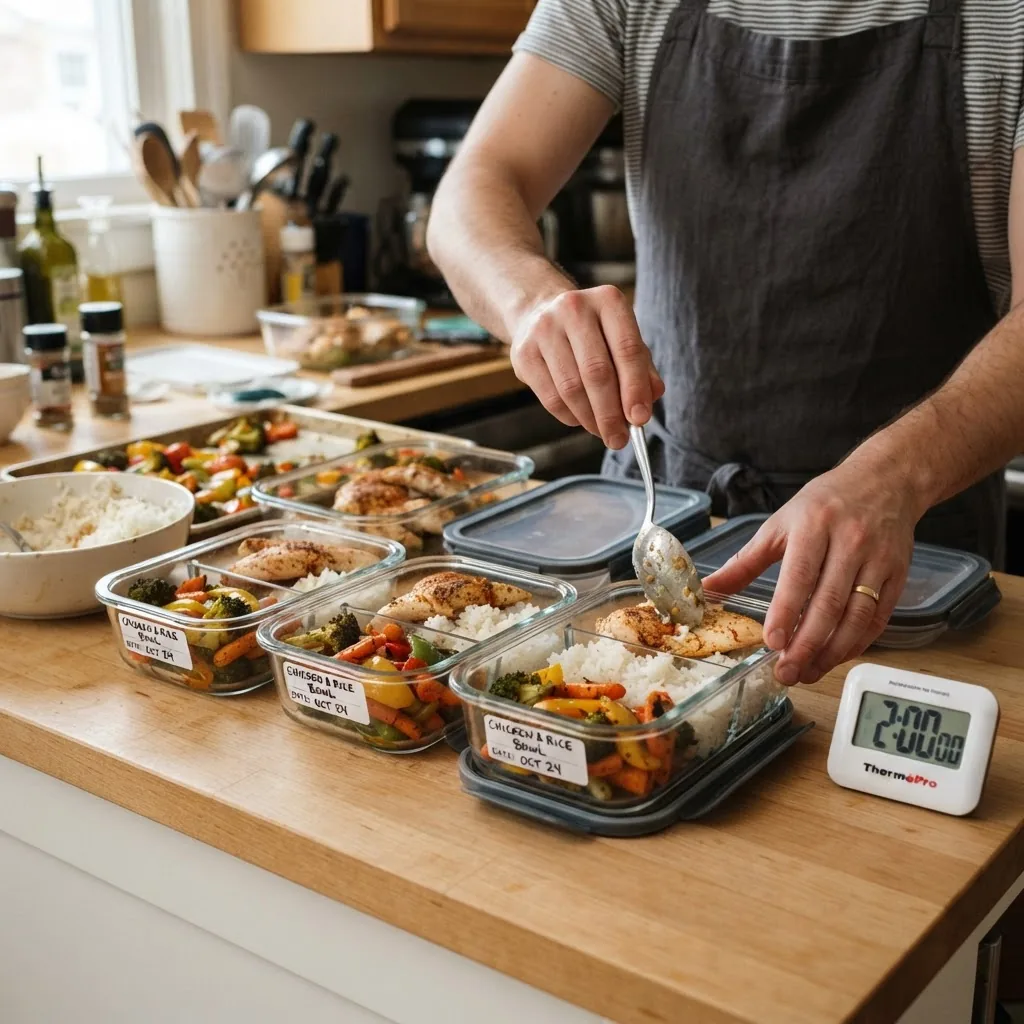
Schedule a single 2–3 hour meal‑prep session and batch cook target items.
Batch cook the proteins and grains most useful across several meals: roast 24 oz chicken breast (45 minutes at 375°F / 190°C), cook 3 cups dry brown rice (yields ~6 cups cooked) on stovetop (45 minutes including rest), roast sweet potatoes (45–60 minutes at 400°F / 205°C), and steam or roast a large tray of mixed vegetables (25–30 minutes).
Divide cooked food into 4–6 containers: aim for 25–30 g protein per container. Cool to room temperature (≤2 hours), then refrigerate in airtight containers for up to 4 days or freeze portions for up to 3 months.
-
Adjust meals for diabetes or prediabetes.
If you have diabetes or prediabetes, prioritize low‑glycemic carbs and consistent carbohydrate portions. Aim for 30–45 g carbs per meal and 15–20 g per snack as a practical target. Replace white rice with 1/2 cup cooked quinoa or 3/4 cup cooked barley. Choose non‑starchy vegetables (2 cups raw or 1 cup cooked) and include protein at every meal to blunt glucose spikes.
Example: swap a plain baked potato (30–40 g carbs) for 1/2 cup sweet potato (15–20 g carbs) plus 1/2 cup steamed broccoli.
-
Adjust meals for hypertension and heart health (DASH principles).
Follow DASH-style swaps: increase vegetables and fruit to 4–5 servings each daily, choose 2–3 low‑fat dairy servings, and reduce lean red meat to <3 servings/week. Target sodium ≤1,500 mg if your clinician recommends it. Use fresh herbs, lemon juice, vinegar and spice blends without salt to flavor food.
Consciously choose fish twice weekly (4–6 oz servings) and keep saturated fat low: limit butter to ≤1 tsp per cooking day and choose olive oil (1 tbsp ≈ 120 kcal).
-
Plan supplements only after checking labs and physician advice.
Common considerations for women over 60: vitamin D (800–2,000 IU/day depending on level), calcium (if dietary sources <1,200 mg/day consider supplement 300–600 mg), B12 (500–1,000 mcg sublingual or 1,000 mcg oral daily if low absorption), and a daily low‑dose multivitamin if diet is restricted. I do not recommend extra iron unless blood tests show deficiency; excess iron can be harmful.
Record all supplements and discuss with your clinician, especially if you take anticoagulants or other interacting medications.
-
Track intake for two weeks and test small changes.
Use a food log app or notebook. Track calories, protein, fiber, sodium, and weight. After two weeks, evaluate: if weight loss >0.5 lb/week, keep same; if none and desired, drop 150–250 kcal/day or increase daily walking by 30–45 minutes. I recommend adding a 20–30 minute strength session twice weekly (bodyweight or bands) to preserve muscle.
-
Refine taste and compliance with simple swaps and recipes.
If a recipe is unpalatable, swap spices rather than the entire meal. Examples: add 1 tsp smoked paprika to roasted vegetables, or swap plain Greek yogurt for sour cream 1:1 to adjust texture. Replace a disliked grain with one you enjoy while keeping portion carb-equivalent: 1/2 cup cooked quinoa ≈ 1/2 cup cooked brown rice ≈ 1/2 cup cooked barley.
-
Set monthly review checkpoints and plan seasonally.
Every 4 weeks check weight, energy, bowel regularity, sleep, and adherence. Swap in-season produce and rotate proteins to keep meals interesting. Make one new recipe every two weeks to broaden your palate.
Worked example: converting goals to a concrete 1,500 kcal day
This worked example shows exact quantities and nutrition approximations to hit our targets: 1,500 kcal, ~75 g protein, 25 g fiber, ≤1,800 mg sodium.
-
Breakfast (7:30 am) — Protein oats.
Cook 3/4 cup rolled oats (dry weight 60 g) in 1 cup water + 1/2 cup low‑fat milk; stir in 1 scoop (25 g) whey protein powder (≈20 g protein), 1/2 cup blueberries, 1 tbsp ground flaxseed. Approx nutrition: 420 kcal, 28 g protein, 7 g fiber, 220 mg sodium.
-
Lunch (12:30 pm) — Salmon grain bowl.
4 oz cooked salmon (120 g), 1/2 cup cooked quinoa, 2 cups mixed greens, 1/2 cup cherry tomatoes, 1 tbsp olive oil + lemon. Approx: 420 kcal, 32 g protein, 6 g fiber, 120 mg sodium.
-
Snack (3:00 pm).
1 medium apple + 1 oz almonds. Approx: 200 kcal, 6 g protein, 5 g fiber, 0 mg sodium.
-
Dinner (6:00 pm) — Chicken and vegetables.
3 oz roasted chicken (85 g), 1 cup roasted broccoli, 3/4 cup mashed sweet potato (unsweetened), 1 tsp olive oil for finishing. Approx: 400 kcal, 22 g protein, 7 g fiber, 110 mg sodium.
-
Totals and commentary.
Approx daily totals: 1,440 kcal, 88 g protein, 25 g fiber, ~550 mg sodium (well under 1,800 mg because we used low‑sodium ingredients). If you need 1,600–1,700 kcal, add a 1/2 cup extra quinoa at lunch and increase almonds to 1.5 oz at snack.
Cooking techniques and tips to protect nutrients and flavour
Use gentle cooking to retain vitamins and maintain texture: steam vegetables 6–8 minutes until tender‑crisp; roast at 400°F / 205°C for 20–30 minutes for caramelization; poach fish at simmer for 7–10 minutes depending on thickness. When reheating, use 325°F oven or microwave at 60% power to prevent drying and preserve texture.
Specific adaptations for common conditions
Osteoporosis
Ensure total calcium ≥1,200 mg/day and vitamin D 800–2,000 IU/day. Include 2–3 daily servings of dairy or fortified alternatives. Add a 10–15 minute balance and resistance routine 3 times weekly to reduce fall risk.
Chronic kidney disease (CKD)
If you have CKD stage 3 or higher, protein, potassium, phosphorus and sodium targets change. Do not follow this plan without nephrology guidance. Typical adjustments: lower protein to 0.6–0.8 g/kg if advised, limit potassium (target-specific), and use phosphate binders if prescribed.
Type 2 diabetes
Follow the earlier carbohydrate distribution: 30–45 g carbs per meal, include protein and fiber in every meal, and monitor postprandial glucose 1–2 hours after meals during the first two weeks to see how your body responds.
Practical food swaps and kitchen shortcuts
- Swap full-fat dairy for low‑fat to reduce saturated fat while keeping calcium.
- Use canned or pouched wild salmon for convenience (check sodium and choose low‑sodium brands).
- Cook extra grains on Sunday and freeze in 1‑cup portions to reheat quickly.
- Use pre‑washed salad greens and bagged frozen vegetables to save 30–60 minutes weekly.
How to read labels for women over 60 — a precise checklist
When you read a nutrition label, check these numbers per serving and the package’s serving count:
- Calories per serving: multiply by servings you’ll eat
- Total fat and saturated fat: prefer ≤3 g saturated fat per serving for high‑fat foods
- Sodium: prefer ≤140 mg per serving for packaged foods; aim ≤400 mg per meal
- Protein: choose ≥7–10 g per serving for snack foods to contribute meaningfully
- Fiber: look for ≥3 g per serving
Common mistakes and how to avoid them
From my practice: I see people under‑estimate protein needs and then complain about fatigue. I fixed that by prescribing protein targets in grams and a simple meal formula (25–30 g/meal). I also see people over‑rely on “low‑fat” processed foods that are high in sodium — I now teach checking sodium per serving and multiplying by expected portions.
Other recurring mistakes and fixes:
- I once recommended a “low calorie” soup and the patient consumed the whole can thinking it was a single serving. Fix: read servings per container and use measuring cups for portions.
- People commonly skip strength work because they think cardio is enough. Fix: prescribe 2 short resistance sessions weekly using bodyweight or bands and log them on the calendar.
- Clients assume “more calcium = better” and take large supplements which caused constipation and interference with other minerals. Fix: prioritize dietary calcium and only supplement the difference to reach 1,200 mg after discussing with their clinician.
Compact verification checklist (what to confirm before you declare the plan done)
- Daily calories set to within ±100 kcal of the target for your activity level
- Daily protein = 1.0–1.2 g/kg body weight (confirm grams)
- Calcium intake ≥1,200 mg/day (food + supplement)
- Vitamin D plan documented or physician‑approved dose
- Weekly shopping list with quantities and a 2–3 hour meal‑prep block scheduled
- Sodium cap documented (1,500 mg if hypertensive; otherwise 2,300 mg)
- Two-week food log template ready to track results
When to call a professional
Call a registered dietitian or your physician immediately if any of the following apply:
- Recent unintentional weight loss >5% body weight in 1 month
- New or worsening kidney disease, advanced heart failure, or fragile diabetes needing insulin adjustments
- Bloodwork showing vitamin D <20 ng/mL or calcium abnormalities
- Difficulty chewing or swallowing that limits food intake
For personalized medical nutrition therapy (MNT), search for a dietitian specializing in geriatrics or chronic disease. If you are in Texas and need in‑person care, ask your primary care office for a local outpatient nutrition referral.
Resources and internal links for continued learning
For deeper guidance on balanced meal composition and nutritionally complete meals, refer to the pillar article on creating nutritionally complete meal plans: Nutritionally Complete Meal Guide with Balanced Diet Advice. For an easy 7‑day meal template and printable menus you can adapt, see the 7‑day diet menu guide: 7 Day Diet Menu to Lose Weight with Meal Planning Guide. If you want a shopping list and pantry-building tips, review the healthy grocery list: Healthy Grocery List Guide for Smart and Nutritious Shopping.
Final notes from a senior practitioner
Practicality wins. If a precise 25 g protein breakfast means adding a single scoop of protein powder to your oatmeal and that keeps you consistent, that is a good choice. Focus on measurable targets — grams of protein, mg of sodium, minutes of resistance training — and adjust them every 4 weeks based on real results and any medical guidance. This approach protects muscle, bones, and independence while keeping meals enjoyable.
Frequently Asked Questions
What is the best diet for female over 60 to maintain muscle and bone strength?
The best diet emphasizes 1.0–1.2 g/kg protein daily, 1,200 mg calcium from food and supplements as needed, 800–2,000 IU vitamin D pending bloodwork, plus daily resistance activity. Prioritize lean proteins, dairy or fortified alternatives, whole grains, fruits, vegetables and controlled sodium.
How many calories should a woman over 60 eat to lose weight safely?
Most women over 60 lose weight safely with a target 1,200–1,500 kcal/day depending on current weight and activity. Use BMR × activity factor to estimate maintenance, then reduce 150–300 kcal/day for gradual loss ~0.5 lb/week; check with a clinician if on medications affecting weight.
What is a simple 3-day meal plan for a senior who dislikes cooking?
Pick easy, repeatable items: Day 1 — Greek yogurt + oats; canned tuna salad over greens; microwaved steamed veggies + rotisserie chicken. Day 2 — protein smoothie; lentil soup + whole grain toast; baked fish + frozen vegetables. Day 3 — scrambled eggs + toast; bean salad; tofu stir‑fry. Use pre‑washed greens and frozen produce.
Should women over 60 take calcium and vitamin D supplements?
Supplement only after assessing dietary calcium and blood vitamin D. Typical goals: total calcium 1,200 mg/day and vitamin D 800–2,000 IU/day if deficient. Discuss dosing with your clinician, especially if you have kidney disease or take medications that affect mineral balance.
How can I lower sodium without making food taste bland?
Use acid (lemon, vinegar), umami sources (tomatoes, mushrooms), and herbs/spices in layers. Rinse canned beans and choose low‑sodium broths. Swap processed snacks for nuts and fruit and season with smoked paprika, garlic powder, or citrus zest to maintain flavor without salt.
How long before I see benefits from this diet plan?
You may notice more consistent energy and better digestion in 1–2 weeks; measurable weight or strength improvements usually require 4–12 weeks with consistent nutrition and resistance training. Reassess targets every 4 weeks and consult your clinician for bloodwork follow up.