What you’ll achieve, time needed, and assumed skill level
By the end of this guide you’ll be able to choose a weight loss meal delivery service, calculate a 300–700 kcal daily deficit, place a first order of diet food delivery, and set up a four-week tracking and adjustment plan so meals delivered actually produce consistent weight loss. Realistic time investment: one focused planning session (60–90 minutes), then 30–60 minutes per week to manage deliveries and log progress. Skill level: beginner to intermediate — basic arithmetic, familiarity with a web browser or mobile app, and comfort reheating pre-prepared food.
Before you start
- Body-weight and height measurements (to calculate BMI and estimate calories).
- Recent food diary: 3–7 days of typical intake (use phone notes or a printed list).
- List of medical conditions and medications (diabetes, kidney disease, allergies).
- Kitchen basics: microwave, oven, fridge with 48–72 hours of space, 6 airtight containers (1.2–1.8 L), 10 reusable thermal meal bags for transport.
- Tools: kitchen scale (0.1 oz / 1 g accuracy), measuring cups, food tracking app (e.g., MyFitnessPal or Cronometer), calendar or planner.
- Budget target: decide weekly spend range (typical weight loss meal delivery costs $9–$14 per meal).
- Account-ready items: credit card, delivery address, and preferred delivery day/time window.
Core step-by-step plan: order, receive, and use weight loss meal delivery
-
Calculate your target daily calories.
Start by estimating your Total Daily Energy Expenditure (TDEE) and subtracting a practical deficit. Use this formula set:
- Calculate Basal Metabolic Rate (BMR) using Mifflin-St Jeor:
- Men: BMR = 10 × weight(kg) + 6.25 × height(cm) − 5 × age + 5
- Women: BMR = 10 × weight(kg) + 6.25 × height(cm) − 5 × age − 161
- Multiply BMR by activity factor:
- Sedentary (desk): ×1.2
- Light activity (1–3 workouts/wk): ×1.375
- Moderate (3–5 workouts/wk): ×1.55
- Active (6–7 workouts/wk): ×1.725
- Choose a daily calorie deficit:
- Conservative: −250 kcal/day → ≈0.5 lb/week
- Moderate (recommended for most): −500 kcal/day → ≈1 lb/week
- Aggressive (medical supervision): −700–1000 kcal/day → faster loss but riskier
Worked example: 38-year-old woman, 82 kg (180 lb), 167 cm (5’6″), moderate activity: BMR = 10×82 + 6.25×167 − 5×38 −161 = 820 + 1044 −190 −161 = 1513 kcal. TDEE = 1513×1.55 = 2345 kcal. Minus 500 = target 1845 kcal/day. Use this target to pick meal plans labeled 1,200–1,800 kcal/day plus a controlled snack or breakfast as needed.
- Calculate Basal Metabolic Rate (BMR) using Mifflin-St Jeor:
-
Set macro and protein targets linked to weight loss.
For weight loss while preserving lean mass, set protein at 1.2–1.6 g per kg body weight. Use this guideline:
- Protein: 1.2–1.6 g/kg. Example: 82 kg → 98–131 g protein/day.
- Fat: 25–35% of calories. Example on 1,845 kcal → 461–646 kcal from fat → 51–72 g fat/day.
- Remaining calories from carbohydrates. Example: 1,845 − (4×115 g protein≈460 kcal) − (9×60 g fat≈540 kcal) = ~845 kcal → ~211 g carbs.
When comparing diet meal delivery menus, prioritize services that list per-meal calories, protein grams, and fat content. Aim for meals delivering 25–45 g protein each if you eat three meals, or 18–30 g protein for four meals.
-
Define your non-negotiables: allergies, dislikes, schedule, and budget.
Write these as bullet points and use them as filters when you evaluate weight loss food delivery services. Example list (use exact items):
- Allergies: shellfish, tree nuts (exclude any service that uses these in batches without segregation).
- Dislikes: cilantro, olives — set these to “exclude” where possible.
- Delivery windows: weekday mornings (Mon–Fri delivery between 8:00–11:00) or weekend Saturdays between 9:00–13:00.
- Budget: $85–$120 per week for 10 meals ($8.50–$12/meal).
- Diet preference: low-GI carbs, moderate sodium (<600 mg per meal), 300–650 kcal per meal.
-
Research and shortlist candidate services.
Spend 30–45 minutes comparing 4–6 providers. Use these filters and record exact values in a comparison table: price per meal, calories per meal, protein per meal, subscription flexibility (skip/cancel without charge within 3 days), delivery coverage (Texas ZIP codes you use), and whether they post full nutrition facts.
Include both general healthy prepared meals and specialized diet food delivery companies — look for labels like “weight-loss menu”, “calorie-counted”, or “high-protein.” I recommend shortlisting a mix: one premium ($12–$14/meal), two mid-range ($9–$12/meal), and one budget option (<$9/meal) to evaluate value.
Service $ / meal Calories/meal Protein/meal Skip/cancel Service A (premium) $12.50 300–550 kcal 22–40 g 48 hrs Service B (mid) $9.75 350–600 kcal 18–35 g 72 hrs Service C (budget) $7.95 400–650 kcal 15–28 g 1 week Record exact service names, terms, and whether they supply full nutrition panels (calories, macros, sodium, sugars). Eliminate any service that fails to publish full nutrition facts for each menu item.
-
Match menu items to your daily calorie and macro targets.
Open shortlisted services’ menus and build a sample day’s intake. Use exact numbers from the menu and a food-tracking app to validate. Example three-meal plan for a 1,845 kcal target:
- Breakfast (if ordering): Greek yogurt bowl from Service A — 350 kcal, 28 g protein.
- Lunch: Chicken & quinoa bowl from Service B — 520 kcal, 38 g protein.
- Dinner: Salmon & greens from Service A — 620 kcal, 45 g protein.
- Snack: 2 boiled eggs at home — 140 kcal, 12 g protein.
Total = 1,630 kcal, protein ≈123 g — good match to the example target. If your total is outside ±150 kcal, swap menu items or add a single controlled snack (e.g., 150 kcal apple + 20 g protein shake = ~250 kcal and 20 g protein).
-
Check storage, reheating instructions, and portion formats before ordering.
For each candidate meal, note: refrigeration life (e.g., “keep refrigerated, use within 5 days”), whether the meal arrives frozen, and precise reheating steps. Practical thresholds:
- Refrigerated meals: usable 3–5 days. If you expect delivery delays >48 hours, prefer frozen.
- Frozen meals: shelf-stable in freezer for 6–12 months; thaw in fridge 24 hours before reheating.
- Microwave reheating: 2–4 minutes at 800W / 1000W depending on portion; sections should list wattage and time.
Add to your shortlist only services that provide clear reheating steps with wattage or oven temperature and specific times (e.g., “Microwave on high 90–120 sec; stir; continue 60–90 sec”).
-
Order a trial week with exact tracking rules.
Place a first order limited to one week (7–10 meals). Use this tracking protocol:
- Log meal name, calories, protein, and time eaten in your tracking app immediately after reheating.
- Weigh and log body weight each morning on an empty bladder for baseline.
- Record hunger and energy on a 1–5 scale after each meal and at the end of day.
Choose a trial that includes at least 4 different entrees to test consistency. Expect 7–10 minutes to enter each meal’s data; commit 10–12 minutes each morning for weighing and notes.
-
Receive and inspect the delivery using a 3-point checklist.
When the box arrives, perform these checks immediately and take a photo timestamped on your phone:
- Temperature check: interior packaging should be cool to the touch; frozen meals should be fully frozen; refrigerated meals between 34–40°F (1–4°C). Use a thermometer if available.
- Label and date: each meal should show name, calories, protein, and a “use-by” date (e.g., “Use by 2026-10-12”).
- Packaging integrity: no leaks, no punctured seals, and insulation intact.
If any item fails these checks, contact customer service within 2 hours and keep the original packaging for a claim.
-
Label and organize meals for the week using simple FIFO storage.
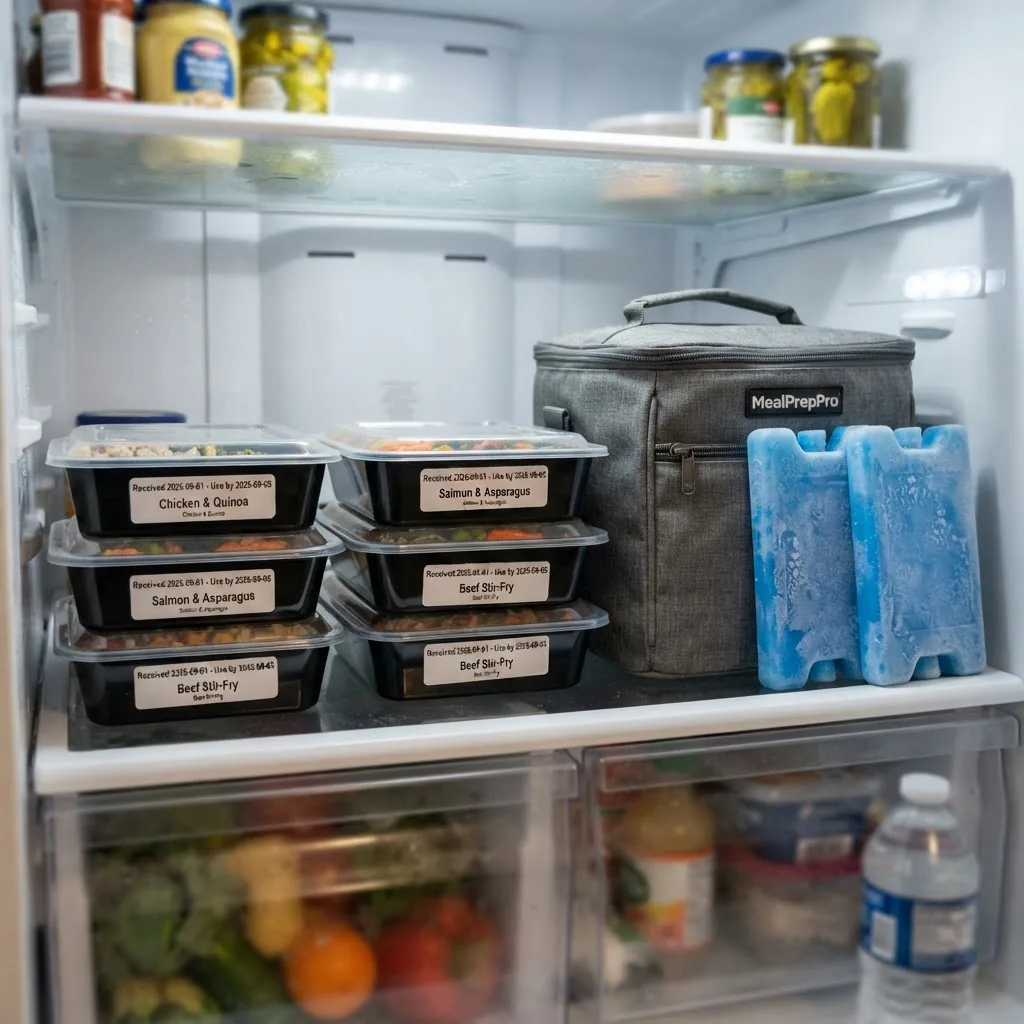
On delivery day: transfer meals into a dedicated fridge zone. Use a permanent marker to add the date received and the “use-by” date if missing. Store meals by earliest use-by first (First-In, First-Out). Practical numbers:
- Allocate one shelf for “consume within 3 days”.
- Reserve an insulated bag and two cold packs for transporting up to three meals per day. Cold packs should be frozen at −10°F to 0°F and wrapped in a towel when used.
-
Reheat exactly to the provider’s instructions; log any modifications.
Follow the listed reheating steps to avoid concentrations of fat or sodium from reduced volume. If you add anything (olive oil, hot sauce), weigh and log it. Specific reheating rules I use and recommend:
- Microwave (800W): cover vented, 90 seconds; stir; 60 seconds; rest 30 seconds.
- Oven: preheat 375°F; transfer to oven-safe dish; 12–18 minutes depending on density; check internal temp 165°F for poultry.
- Frozen: thaw in fridge 18–24 hours; microwave per chilled instructions adding 40–60 seconds.
After reheating, measure portion temperature and weigh the meal if you’re aiming for exact calories (use kitchen scale). Log any added salt or condiments: 1 tsp table salt = 2,325 mg sodium; track to keep daily sodium under 2,300 mg if you target heart-healthy intake.
-
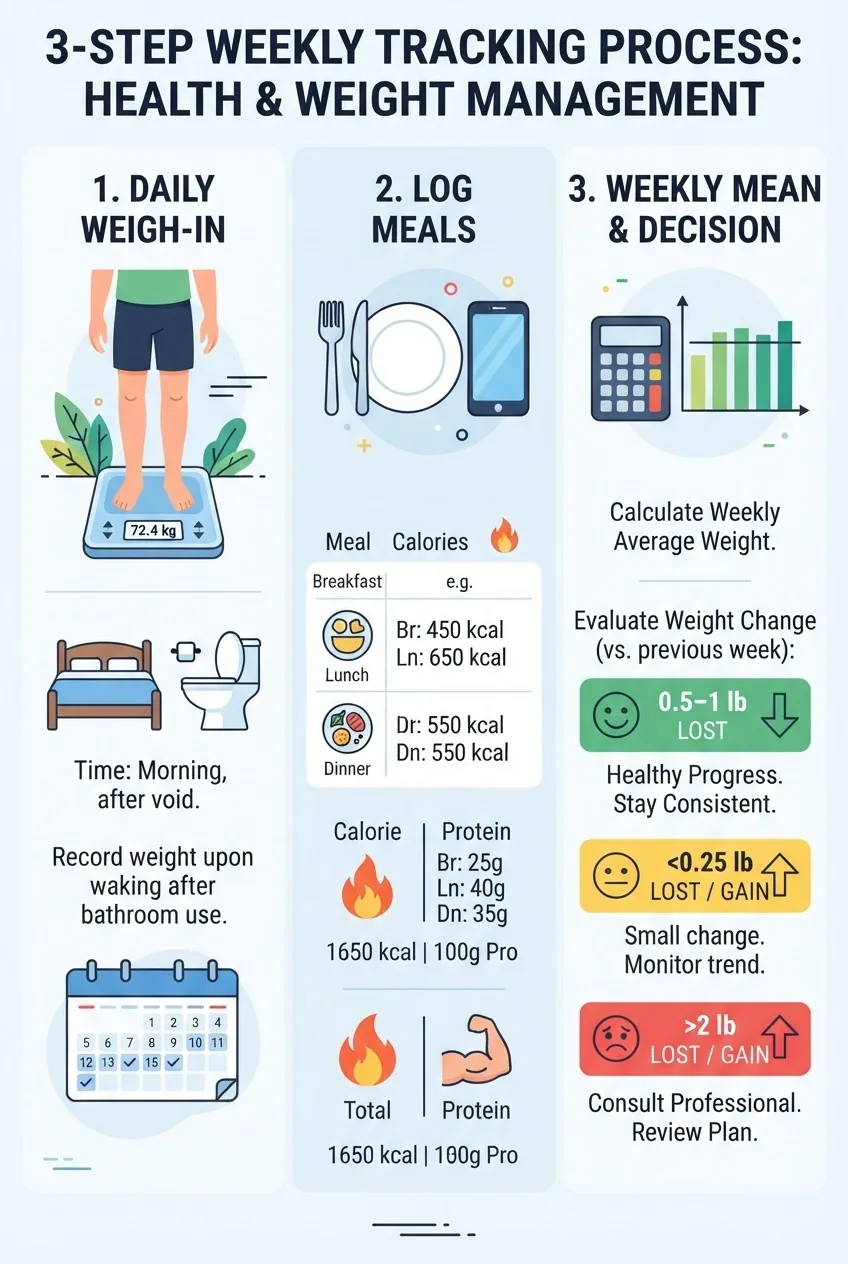
Track intake and weekly weight; analyze trends every 7 days.
Use a digital food log to record exact menu items and macro totals. Protocol:
- Daily: log all meals, weigh morning weight (after voiding), and record a short note on adherence (Y/N) and energy (1–5).
- Weekly: calculate mean weight for the past 7 days, not a single measurement; compare to previous week.
- Thresholds for action: if weekly mean weight drops by 0.5–1.0 lb → keep plan; if <0.25 lb after two weeks → reduce intake by 100–150 kcal/day or increase weekly cardio by 75–100 minutes; if >2 lb/week loss → increase calories by 100–200 kcal/day and check for symptoms like fatigue or lightheadedness.
-
Adjust portioning or add controlled snacks when macros miss targets.
If your protein is too low: add one 20–25 g protein snack (e.g., 1 scoop whey isolate = ~25 g protein, 110–130 kcal) after lunch or before bed. If calories are too low for energy: add 100–150 kcal in nutrient-dense options (1 tbsp peanut butter = 95 kcal; 1 small avocado = 160 kcal). If sodium is high (>2,300 mg/day), swap two meals per week to lower-sodium alternatives (<400 mg per meal).
-
Rotate meals weekly to avoid adaptation and nutritional gaps.
Plan a 3-week rotating menu so each week you have at least 12 unique entrees across lunch and dinner. This reduces palate fatigue and improves micronutrient diversity. Practical rotation rule: at least 3 fish/seafood dishes, 3 lean poultry, 3 vegetarian high-protein, and 3 red-meat or plant-protein recombinants over three weeks.
-
Implement a weekly savings and cost-control routine.
Track actual spend versus budget. Realistic per-meal costs for weight loss meal delivery in Texas:
- Premium: $11–$14/meal → weekly for 14 meals: $154–$196.
- Mid-range: $9–$11/meal → weekly for 14 meals: $126–$154.
- Budget: $7–$9/meal → weekly for 14 meals: $98–$126.
To reduce cost: mix in 3 home-cooked meals per week using leftovers and bulk-cooked lean proteins (e.g., 1.8 kg chicken breasts cooked → 10 portions). Use subscription discounts, promo codes (<10–20% off first order), and skip weeks when travel reduces meal use by >30%.
-
Use customer service tests on trial orders to evaluate responsiveness.
Send a simple query after delivery (e.g., “My salmon was partially thawed; can I get a credit?”). Measure response time and resolution: acceptable response = within 24 hours with an offered credit or replacement; red flag = no response within 48 hours. Keep a log of responses and terms; this is crucial before committing to a monthly plan.
-
Scale the plan for long-term adherence: set 4-week, 8-week and 12-week checkpoints.
At four weeks, review weight trend, hunger scores, and budget. Specific targets:
- 4-week: expect 2–4 lb loss for a −500 kcal/day deficit; confirm protein intake average ≥1.2 g/kg.
- 8-week: expect 4–8 lb loss; review micronutrients — ensure at least 2 vegetables per day and 3 different vegetables across meals weekly.
- 12-week: evaluate whether to continue service, change caloric target, or call a professional if stalled beyond 4 weeks with adherence.
-
Cancel, pause, or switch providers using concrete timing rules.
Before starting a recurring subscription, note the provider’s cut-off times. Standard rules I enforce:
- To avoid charges, pause/skip at least 72 hours before your billing or delivery window.
- Canceling within trial: do it within first 7 days if quality or delivery fails. Expect some services to charge a final delivery fee.
- Switching: set new provider to deliver one week after your last delivery to avoid overlap and food waste.
-
Keep a one-page summary of what worked and what didn’t for each service.
After two trial weeks, complete a one-page evaluation with these fields and exact entries:
- Service name and price per meal.
- Average meal calories and protein (numbers).
- Delivery punctuality: % on-time out of 7 deliveries.
- Customer service rating (1–5) with examples (response time and outcome).
- Palate score (1–5) and meal reuse likelihood (Yes/No).
- Decision: continue / switch / pause — and next review date (exact).
Common mistakes and how to avoid them (from my practitioner experience)
I once ordered a 14-meal plan without checking use-by dates; four meals arrived with two-day use-by and I had two missed deliveries that week — half the food spoiled. Now I always confirm refrigerator life and schedule delivery day 1–2 days before a free day to start eating.
I used to assume “low-calorie” meant low-sodium; I learned the hard way when my blood pressure rose after two weeks on a popular plan. I now scan sodium per-meal and keep daily sodium under 2,300 mg.
I once ignored protein and focused only on calories; the scale dropped but I lost muscle mass and energy. I corrected by adding 25 g protein at lunch and bumping protein target to 1.4 g/kg.
I have misjudged transport: meals got warm during a 45-minute commute because I didn’t use frozen gel packs. After that, I keep two frozen packs and an insulated bag ready — cold packs should be solid to the touch when used.
Compact verification checklist
- Target daily calories calculated and documented (number in kcal).
- Protein target set at 1.2–1.6 g/kg and verified in daily menu (grams).
- Trial order placed for one week (7–10 meals) with tracking protocol in place.
- Delivery inspection performed within 2 hours (temperature confirmed between 34–40°F or frozen).
- Meals labeled, organized by use-by date, and stored with FIFO method.
- Reheating instructions followed precisely and any additions logged (grams and calories).
- Weekly mean weight and meal logs reviewed; action taken if trend <0.25 lb/week after two weeks.
- Customer service responsiveness tested and recorded.
- Cost tracked versus budget and decision made to continue/pause after 4 weeks.
When to call in a professional
Contact a registered dietitian or physician if any of the following apply:
- You have diabetes requiring insulin adjustments (call your clinician immediately before changing meal plans).
- You need a medically-prescribed diet (renal, hepatic, or complex GI disorders).
- Weight loss exceeds 2% body weight per week for two consecutive weeks.
- You experience persistent dizziness, fainting, extreme fatigue, or heart palpitations.
If you want a tailored plan, use a dietitian to convert your TDEE and goals into a supervised meal prescription, and to review micronutrient gaps from a delivery-only approach.
Practical examples and mini case studies
Case study 1 — Busy professional in Austin, TX
Client: 42-year-old male, 95 kg, 178 cm, light activity. Goal: lose 10 kg over 6 months. Steps taken: calculated TDEE (BMR 1,800 kcal ×1.375 = 2,475 kcal), set target 1,975 kcal (−500 kcal). Ordered a mid-range service with 11–12 g protein per oz and meals averaging 450 kcal and 36 g protein. Mix: 2 delivered meals per day (lunch, dinner) and a protein-rich homemade breakfast (Greek yogurt + 30 g whey). Result after 8 weeks: 4.1 kg lost, energy maintained, protein average 1.35 g/kg.
Case study 2 — Retiree in Dallas experimenting with frozen options
Client: 67-year-old female, 72 kg, 160 cm, sedentary, with hypertension. Goal: lose 6–8 lb and reduce sodium. Chose frozen weight loss meals with per-meal sodium <400 mg. Thawed meals 24 hours in fridge and reheated in oven to preserve texture. After 6 weeks: 3.6 kg lost; blood pressure reduced by 6/4 mmHg. Notes: frequent salt-checking and two home-cooked soups per week with low-sodium broth filled gaps.
Choosing the best meal delivery service for weight loss in Texas — checklist for regional fit
Texas-specific considerations:
- Coverage: confirm the service ships to your ZIP code (some services exclude remote West Texas areas).
- Heat during summer: pick frozen shipments in July–August to avoid partial thaw in transit.
- Local pick-up options: some services offer Dallas/Austin pick-up savings — compare whether it reduces per-meal cost by $1–3.
- Farm-to-table preferences: if you prioritize local sourcing, request provenance data; this can affect sodium and portion sizes.
Anchor pages that help expand your knowledge: see our detailed Nutritionally Complete Meal Guide for balanced diet advice at /nutrition-tips/nutritionally-complete-meal-guide-with-balanced-diet-advice/ and the 7-day menu planning example at /nutrition-tips/7-day-diet-menu-to-lose-weight-with-meal-planning-guide/. If you’re new to dieting basics, read /nutrition-tips/best-diet-for-beginners-guide-with-easy-nutrition-tips/.
Advanced tips for experienced users
- Use a continuous glucose monitor temporarily (if available and prescribed) to see how different delivered meals affect postprandial glucose; prioritize low postprandial spikes.
- Swap sides: if a meal has a starch you dislike, replace with same-calorie steamed vegetables; match calories by weighing (e.g., 120 g cooked rice = 160 kcal; 120 g broccoli = 40 kcal — add 3 tsp olive oil (120 kcal) to match energy).
- Batch protein: if a service lacks a high-protein entrée, add 100 g cooked chicken breast per meal (+31 g protein, +165 kcal) and reduce a snack accordingly.
- Micronutrient check: every 4 weeks, ensure at least two servings of dark leafy greens per day or add a greens powder (provided it contains no added sugars). Track iron and vitamin D if you have deficiencies.
Sample shopping list to supplement delivered meals
- Protein: 1.8 kg raw chicken breasts (for 8 portions), 24 eggs (boiled for snacks), 700 g whey isolate (20 g scoops).
- Fresh produce: 7 heads of leafy greens, 10 medium tomatoes, 7 bell peppers, 14 apples.
- Pantry: 1 jar olive oil (250 mL), low-sodium broth (2 L), 1 bag dry quinoa (1 kg), low-sodium canned beans (3 cans).
- Transport: 2 insulated meal bags, 6 cold gel packs.
How to evaluate long-term success beyond the scale
Measure these objective and subjective markers every 4 weeks:
- Body composition if possible (clinic or home body-fat scale). Expect slow improvement if protein is adequate.
- Strength metrics: number of push-ups or weight-lifting performance (stable or rising strength indicates preserved muscle).
- Resting energy and sleep quality (scale 1–5). Improved sleep and energy typically reflect better diet quality.
- Clothing fit and waist circumference (measure at naval): target 1–2 cm reduction every 4 weeks is realistic for many people.
Final recommendations — a one-page plan you can execute today
- Today (60–90 minutes): measure weight/height, calculate TDEE, set calorie and protein target, shortlist 3 services and place a one-week trial order.
- Delivery day: inspect, photo, label, and store meals using FIFO; log all meals and weigh-in daily for the next 7–10 days.
- Week 1 review: confirm average calories and protein match targets; check sodium and adjust if needed.
- Week 4 review: evaluate weight trend, energy, and cost; decide to continue, pause, or switch services.
Frequently Asked Questions
What is weight loss meal delivery and how does it differ from regular food home delivery?
Weight loss meal delivery supplies pre-portioned, calorie- and macro-counted meals designed for weight loss goals. Unlike general food home delivery, these services publish nutrition facts per meal, focus on protein and portion control, and often provide options labeled by calorie tiers (e.g., 300–500 kcal meals).
How much does diet meal delivery cost per week in Texas?
Typical costs in Texas range: budget $98–$126/week for 14 meals ($7–$9/meal), mid-range $126–$154/week ($9–$11/meal), premium $154–$196/week ($11–$14/meal). Include $10–$20 delivery fees and expect first-order discounts of 10–20%.
Can weight loss meals delivered preserve muscle mass during dieting?
Yes—if you meet protein targets (1.2–1.6 g/kg/day) and include resistance exercise. Choose meals that provide 25–40 g protein each or supplement with a 20–25 g protein snack. Tracking macros ensures you maintain protein while staying in a calorie deficit.
What should I do if my delivered meals arrive partially thawed?
Immediately photograph the packaging and temperature, check use-by dates, and contact customer service within 2 hours requesting a refund or replacement. Do not consume meals that were fully thawed and left unrefrigerated beyond two hours at room temperature.
How quickly will I see weight loss after starting weight loss meal delivery?
Expect measurable change within 1–2 weeks: a practical target is 0.5–1.0 lb per week for a −500 kcal/day deficit. Use weekly mean weights (7-day average) rather than daily values to confirm a consistent trend.