

A nutritionist online provides personalized nutrition assessment, individualized meal planning, ongoing virtual coaching, and measurable progress tracking using telehealth tools; you can compare credentials, costs, and services, then choose per condition, timeline, and budget to get remote dietary care that fits Texas insurance and lifestyle constraints.
Term: Nutritionist: a professional who provides dietary advice; credentialing and scope vary by jurisdiction.
Term: Online dietitian: a credentialed Registered Dietitian (RD) or Registered Dietitian Nutritionist (RDN) who delivers nutrition care through virtual platforms.
Term: Telehealth: remote delivery of healthcare services via secure video, phone, or messaging technology.
What is a nutritionist online and how does a virtual diet consultation work?
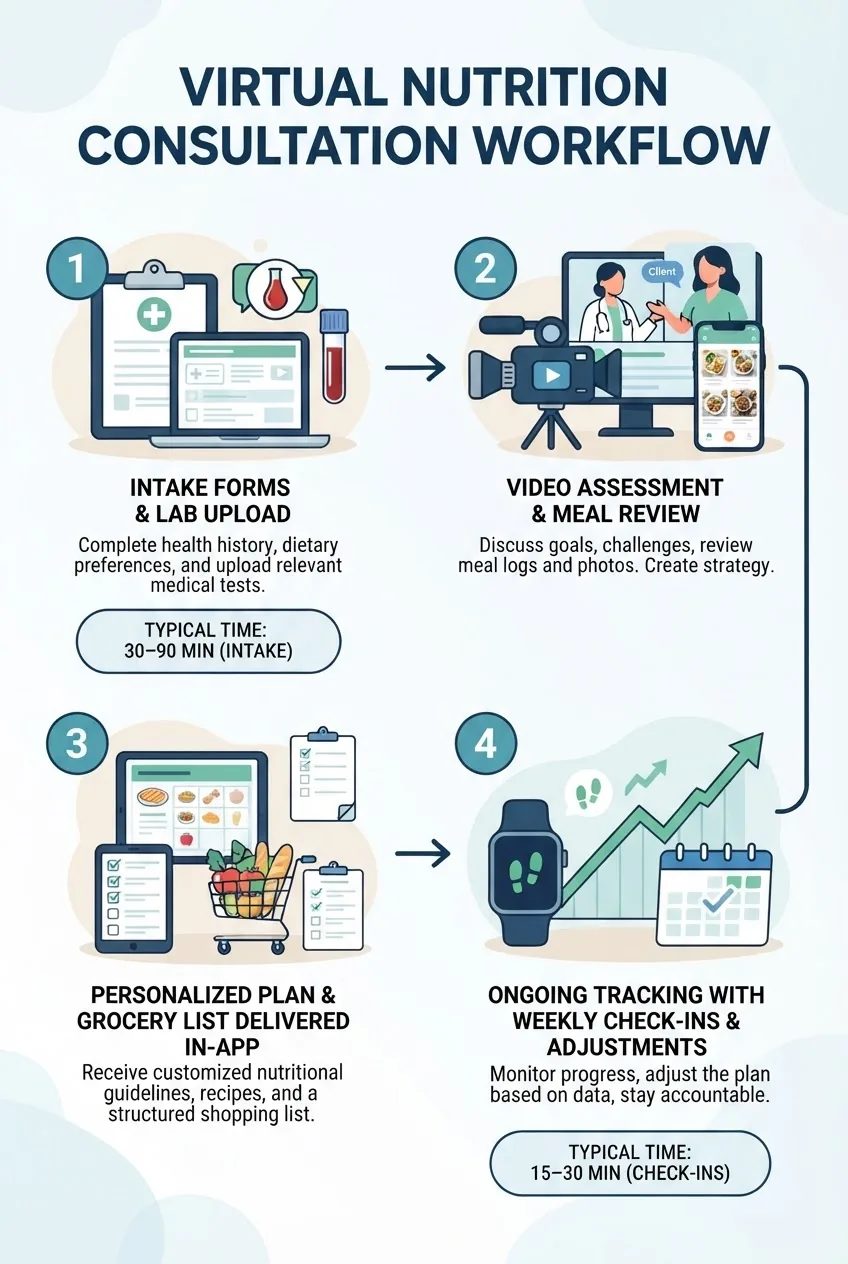
Direct answer: A nutritionist online offers assessment, education, and personalized plans using video or messaging; consultations begin with intake, remote assessment of diet and health metrics, a tailored plan, and scheduled follow-ups delivered through a secure telehealth platform.
Virtual diet consultations follow this predictable workflow and use measurable goals to guide care.
- Intake: health history, medications, allergies, and goals are collected via secure forms or live interview.
- Assessment: the nutritionist reviews dietary patterns, anthropometrics (weight, height), and available lab results.
- Plan: customized meal plans, macronutrient targets, and behavior-change strategies are prescribed.
- Follow-up: progress reviews, adjustments, and accountability occur through scheduled video calls, messages, or app-based tracking.
Many online nutritionists use apps for food logging, photo-based meal review, and integrated activity or glucose data to refine recommendations between visits.
How do I choose between a nutritionist online and an online dietitian?
Direct answer: Choose an online dietitian (RD/RDN) for medical or regulated needs and a licensed nutritionist for general healthy-eating, wellness coaching, or lifestyle guidance; verify credentials, insurance acceptance, and experience with your condition before hiring.
Key differences include education, clinical training, and legal scope of practice.
| Feature | Online Dietitian (RD/RDN) | Nutritionist / Wellness Coach |
|---|---|---|
| Credentials | Bachelor’s/master’s + accredited supervised practice; credentialed by a national board. | Varies widely; may hold certificates or state licenses depending on location. |
| Scope | Medical nutrition therapy, chronic disease management, nutrition diagnostics. | Behavior change, general nutrition advice, meal planning for healthy clients. |
| Insurance | More often reimbursed when physician referral exists; CPT codes used. | Less commonly reimbursed; often self-pay or bundled in wellness programs. |
| Best for | Diabetes, renal disease, malnutrition, GI conditions, complex medical needs. | Weight management, sports nutrition basics, general healthy-eating plans. |
What services can I expect from an online nutritionist?
Direct answer: Expect services such as comprehensive dietary assessment, personalized meal plans, lifestyle coaching, supplement guidance, nutrient deficiency screening, and follow-up monitoring via apps, email, or video calls.
Typical online nutritionist service list:
- Initial nutrition assessment and goal-setting.
- Personalized meal and snack plans with portion guidance.
- Macronutrient and micronutrient analysis.
- Behavioral strategies: habit formation, mindful eating, and relapse prevention.
- Supplement recommendations when appropriate and evidence-based.
- Support for food allergies, intolerances, and dietary preferences (vegan, gluten-free).
- Coordination with healthcare providers for lab review or referrals.
Some nutritionists add value with grocery lists, recipe modifications, and food-prep coaching tailored to Texas food availability and cultural preferences.
How much does a virtual diet consultation cost and what are common pricing models?
Direct answer: Virtual dietitian fees range from approximately $60–$250 per session depending on credentials and location, with common pricing models including single session rates, multi-session packages, and monthly subscription coaching.
Common pricing options and what they typically include:
| Model | Typical price (USD) | Includes |
|---|---|---|
| Single consultation | $60–$200 | 60–90 min intake or focused follow-up. |
| Package (3–6 sessions) | $180–$1,000 | Initial + multiple follow-ups, email support, plan revisions. |
| Monthly subscription coaching | $80–$400/month | Weekly check-ins, messaging, app access, ongoing plan updates. |
| Group programs | $20–$100/session or fixed course fee | Education, peer support, generalized meal plans. |
Insurance reimbursement varies: RDs may bill under medical nutrition therapy codes but often need a physician referral for coverage. Use HSA/FSA cards for many self-pay services if eligible.
Term: Medical nutrition therapy (MNT): therapeutic dietary management for specific medical conditions provided by a qualified dietitian.
How do online nutrition assessments and personalized meal plans work in practice?
Direct answer: Assessments combine patient-reported intake, anthropometrics, and labs with validated tools to calculate energy needs and nutrient targets, then produce a meal plan adjusted for preferences, budget, and medical constraints.
Step-by-step assessment and plan process:
- Collect baseline data: height, weight, age, sex, activity level, medical history, medications, and recent labs.
- Estimate energy needs using an equation such as Mifflin–St Jeor and adjust for activity and goals.
- Determine macronutrient split and micronutrient priorities based on condition (e.g., higher protein for sarcopenia, carbohydrate timing for diabetes).
- Create sample menus, portion guides, and grocery lists consistent with cultural and regional food access.
- Set measurable short-term and long-term goals with metrics (weight, waist circumference, blood glucose, blood pressure).
Worked example: calculating calorie needs
Direct answer: Use Mifflin–St Jeor to estimate basal metabolic rate (BMR) then multiply by an activity factor to get total daily energy expenditure (TDEE), and adjust for weight goals.
Term: Basal metabolic rate (BMR): the number of calories required to keep the body functioning at rest.
Example for a 38-year-old Texas woman, 68 inches (173 cm), 165 lb (75 kg), moderate activity, aiming for slow weight loss (0.5 lb/week):
- Convert weight to kg (75 kg) and height to cm (173 cm).
- Mifflin–St Jeor for women: BMR = (10 × weight kg) + (6.25 × height cm) − (5 × age) − 161.
- BMR = (10 × 75) + (6.25 × 173) − (5 × 38) − 161 = 750 + 1081.25 − 190 − 161 = 1480.25 kcal/day.
- Apply activity factor (moderate activity ≈ 1.55): TDEE ≈ 1480 × 1.55 = 2294 kcal/day.
- To lose 0.5 lb/week subtract ~250–500 kcal: target ≈ 1794–2044 kcal/day (practical target ~1850 kcal/day).
From TDEE, the nutritionist sets protein at ~1.2–1.6 g/kg for weight loss and preservation of lean mass, allocates fats and carbohydrates based on medical needs and preferences, and produces example meals matching the calorie and macronutrient goals.
Are online consultations secure and compliant with health privacy laws?
Direct answer: Legitimate online nutrition services use HIPAA-compliant platforms, encrypted messaging, and informed-consent processes to protect privacy, but always confirm the provider’s compliance and data-handling policies before sharing sensitive health data.
Term: HIPAA: U.S. federal law that sets standards for protecting sensitive patient health information.
Security checklist to verify before a session:
- Use of a named telehealth platform with HIPAA-compliant encryption.
- Clear privacy policy describing data storage, retention, and third-party sharing.
- Secure intake forms and patient portal access with two-factor authentication if available.
- Explicit informed consent for electronic communication and telehealth limitations.
If a nutritionist uses standard consumer video platforms without a Business Associate Agreement, they should disclose risks; consider providers who sign HIPAA BAA agreements for stronger protection.
How should I prepare for my first virtual nutritionist appointment?
Direct answer: Prepare by compiling recent labs, a 3–7 day food and activity log, a list of medications and supplements, realistic goals, and photos of typical meals; test your video setup and ensure privacy for the call.
Pre-appointment checklist:
- Upload or have on-hand recent bloodwork, thyroid panels, glucose/A1C, lipids if available.
- Record 3–7 days of food intake including portion sizes, meal timing, and beverages; include weekends.
- List medications, supplements, and known allergies or intolerances.
- Measure and report recent weight, height, and waist circumference if possible.
- Note lifestyle constraints: work schedule, cooking ability, food budget, and access to grocery stores common in your Texas area.
- Prepare specific goals (example: improve A1C to target, lose 6–8 lb in 12 weeks, reduce GI symptoms).
- Test your camera, microphone, and internet connection 10–15 minutes prior to the call.
Clear expectations and organized documentation enable the nutritionist to use appointment time efficiently and create an actionable plan during the first session.
How are specialized diets and medical conditions handled in online consultations?
Direct answer: Credentialed online dietitians manage specialized diets (diabetes, CKD, celiac, allergies) by integrating labs, medical history, and medication profiles into a tailored therapeutic plan and coordinating with physicians when necessary.
Handling of common medical scenarios:
- Diabetes: carbohydrate counting, insulin adjustment coordination, glucose data review (CGM or SMBG).
- Chronic kidney disease: tailored protein and electrolyte guidance aligned with eGFR and nephrologist input.
- Celiac disease: strict gluten avoidance with cross-contamination education and nutrient repletion.
- Food allergies: elimination strategies, safe substitutions, emergency medication review.
- Eating disorders: screening and referral; RDs collaborate with mental health professionals for medically supervised care.
Red flags requiring in-person or urgent care include unintentional rapid weight loss, severe dehydration, unstable blood glucose, or signs of malnutrition; online services should have clear escalation and referral protocols.
What technology and setup produce the best online dietitian visit?
Direct answer: Use a modern laptop or tablet with a high-quality camera, reliable broadband (≥10 Mbps), headphones for privacy, and a quiet well-lit space; install the provider’s recommended app and upload forms beforehand.
Essential tech checklist:
- Device: laptop, desktop, or tablet with working camera and microphone.
- Internet: stable broadband (10–25 Mbps recommended for HD video).
- Software: latest browser or provider app; grant camera/microphone permissions.
- Accessories: earbuds or headset to reduce echo and improve audio clarity.
- Lighting: face the light source to make facial expressions visible for rapport and nonverbal cues.
- Privacy: choose a quiet, private room; avoid public Wi‑Fi for protected health information.
What outcomes and timelines can I expect from virtual nutrition coaching?
Direct answer: Expect measurable changes within 4–12 weeks for behavior and initial biomarker shifts, and 3–6 months for sustained weight or metabolic improvements when sessions are consistent and data-driven.
Typical timelines and milestones:
- 1–2 weeks: clarification of goals, initial small behavior changes, baseline data collection.
- 4 weeks: early changes in dietary habits, increased adherence, possible small weight changes or glucose stabilization.
- 8–12 weeks: measurable improvements in weight, blood pressure, A1C, or lipid trends when applicable.
- 3–6 months: consolidation of habits and clinically meaningful outcomes (5–10% weight loss, improved labs).
Outcomes depend on baseline status, comorbidities, frequency of contact, and client adherence; nutritionists typically report better results with regular follow-up (bi-weekly or monthly) and objective tracking tools.
How do online nutritionists measure progress and track compliance remotely?
Direct answer: Progress is tracked via objective metrics (weight, waist, glucose, labs) and behavior metrics (food logs, adherence scores, photo diaries) using apps, spreadsheets, and periodic lab reviews to adjust plans.
Tracking methods and sample metrics:
- Anthropometrics: weight, BMI, waist circumference measured weekly or biweekly at home.
- Biomarkers: A1C, fasting glucose, lipids, or thyroid tests at intervals recommended by clinician.
- Dietary intake: daily food logs, 24-hour recalls, or photo-food journals analyzed for portions and nutrient patterns.
- Behavioral markers: sleep, stress, physical activity, and medication adherence tracked weekly.
Example progress-tracking table a client might share:
| Metric | Baseline | 4 weeks | 12 weeks |
|---|---|---|---|
| Weight | 165 lb | 161 lb | 155 lb |
| Waist | 36 in | 35.2 in | 33.5 in |
| Fasting glucose | 110 mg/dL | 102 mg/dL | 96 mg/dL |
Nutritionists use these tracked metrics to quantify progress and make incremental changes, which improves adherence and clinical outcomes over time.
How does insurance and reimbursement work for online nutritionist services?
Direct answer: Insurance coverage varies: Registered Dietitians may bill insurance for medical nutrition therapy when a physician referral exists and the condition qualifies, while most nutritionists and wellness coaches are paid out of pocket or via employer wellness programs.
Insurance and payment considerations:
- Medicare covers limited MNT for diabetes and renal disease when provided by a registered dietitian under defined conditions; check current CMS policies for telehealth allowances.
- Private insurers differ; many require physician referral and may limit number of covered sessions per year.
- Use of CPT codes: RDs commonly use codes such as 97802–97804 for MNT when accepted by insurers (verify current coding and payer policies).
- Flexible Spending Accounts (FSA) and Health Savings Accounts (HSA) often reimburse eligible nutrition services; verify plan rules.
Before booking, request a superbill from your provider to submit to insurers and confirm whether telehealth nutrition visits are accepted by your specific plan in Texas.
Term: CPT code: Current Procedural Terminology code used for medical billing to describe services provided.
How do I verify a nutritionist online’s credentials and reputation?
Direct answer: Verify credentials by checking state licensing boards, national registration (e.g., Commission on Dietetic Registration for RDs), client reviews, published work, and by asking for references and a clear scope-of-practice statement.
Practical vetting checklist:
- Ask directly: Are you an RD/RDN? What are your state licenses or certifications?
- Request copies of professional credentials and liability insurance.
- Check online reviews and testimonials; ask for client outcomes specific to your situation.
- Confirm experience with your medical condition, cultural dietary patterns, and food access constraints in Texas.
- Ask about continuing education and up-to-date evidence-based practices.
Red flags to avoid: providers promising rapid unrealistic weight loss, selling unproven supplements, or refusing to coordinate with medical providers when necessary.
Can an online nutritionist provide grocery shopping or meal-prep support?
Direct answer: Yes—many online nutritionists offer grocery lists, recipe kits, virtual shopping tours, and meal-prep coaching; some partner with delivery services or local meal-prep businesses to bridge planning and food access.
Typical grocery and meal-prep supports:
- Annotated grocery lists with brand and budget-friendly local options suitable for Texas stores.
- Recipe adaptation for time, equipment, and taste preferences with portion control guidance.
- Virtual grocery tours (live or recorded) to teach label reading and smart shopping strategies.
- Coordination with meal delivery or meal-kit services if the nutritionist has partnerships; these may be paid separately.
When using meal delivery, confirm sodium, calorie, and macronutrient customization options for clinical needs.
What are common limitations and red flags of online nutrition consultations?
Direct answer: Limitations include inability to perform physical exams, reliance on self-reported data, potential privacy risks on insecure platforms, and reduced suitability for severe malnutrition, unstable medical conditions, or complex eating disorders that require in-person care.
Situations where in-person care or integrated medical supervision is preferable:
- Severe malnutrition, rapid unintentional weight loss, or complex metabolic instability.
- Acute GI bleeding, progressive neurological deficits affecting swallowing, or severe eating disorder medical instability.
- Need for hands-on measures: bioelectrical impedance, DXA scans, or clinical swallowing assessments.
- Clients without reliable internet or private space making telehealth impractical.
Ensure your online provider has protocols to identify red flags and refer promptly to in-person care or emergency services when required.
How can I integrate my online nutritionist’s advice with my fitness program?
Direct answer: Share training goals and exercise logs with your nutritionist so they can match energy and macronutrient distribution to training phase—prioritizing protein for muscle repair, adequate carbohydrates around workouts, and timing of meals for performance and recovery.
Integration tips:
- Provide weekly workout schedules and estimated energy expenditure so the nutritionist can set caloric targets.
- Adjust protein to 1.2–2.0 g/kg for strength or hypertrophy goals, distributed across meals.
- Plan pre- and post-workout carbohydrate and protein for optimal performance and glycogen restoration.
- Coordinate with your coach/trainer; nutritionists can supply fueling plans aligned with periodization cycles.
Example: On heavy resistance days, increase carbohydrate portions by 10–20% and maintain protein at ~0.3–0.4 g/kg per meal immediately after training to support recovery.
How do I select the right session frequency and follow-up schedule?
Direct answer: Start with an initial in-depth intake plus bi-weekly follow-ups for 6–12 weeks, then transition to monthly maintenance or as-needed check-ins once behaviors and metrics stabilize.
Suggested scheduling based on goals:
- Behavior change or weight loss: intake + bi-weekly sessions for 8–12 weeks, then monthly.
- Chronic disease management: intake + weekly or bi-weekly early on, then monthly with lab checks as directed by the RD.
- Sports performance: intake + weekly to bi-weekly to match training cycles and competitions.
- Maintenance: monthly or quarterly check-ins, with messaging support as needed.
Higher-frequency contact improves accountability and faster course corrections; budget and availability often dictate the practical cadence.
What questions should I ask during a consult to ensure it’s a good fit?
Direct answer: Ask about the provider’s credentials, experience with your condition, approach to behavior change, expected outcomes and timelines, communication methods, data privacy practices, and cancellation/refund policies.
Sample interview questions:
- Are you a registered dietitian or licensed nutritionist? May I see credentials?
- How many clients with my condition have you treated, and what were typical outcomes?
- Which platform do you use, and is it HIPAA-compliant?
- How will progress be measured and how often will we review labs or metrics?
- What kind of between-session support do you provide (email, messaging, app)?
- What is your cancellation and refund policy?
How do online nutritionists work with other healthcare providers?
Direct answer: Qualified online dietitians coordinate care by requesting and reviewing medical records, consulting with treating physicians, and providing written care plans or letters to support medication and treatment decisions.
Coordination practices often include:
- Requesting relevant labs and physician notes with patient consent.
- Sending progress summaries and recommendations to the referring clinician.
- Collaborative telehealth sessions involving the patient, nutritionist, and primary clinician when complex decisions are needed.
- Referring to specialists (endocrinology, nephrology, mental health) when beyond scope.
Effective coordination requires written consent for information exchange and clear communication channels between providers.
What are typical success metrics used by online nutritionists?
Direct answer: Success is measured by objective clinical markers (weight change, A1C, lipids, blood pressure), behavior adherence (food logs, habit completion), and patient-reported outcomes (energy, sleep, GI symptoms, quality of life).
Commonly tracked success metrics include:
- Weight and body composition changes (percent body fat when available).
- Biomarker improvements: A1C, fasting glucose, LDL, triglycerides, blood pressure.
- Functional outcomes: stamina, recovery, symptom reduction (e.g., reflux, bloating).
- Behavioral adherence scores and frequency of lapses.
Nutritionists set individualized threshold targets and specify review dates to determine if the plan is effective or needs revision.
How do virtual programs differ from in-person care in effectiveness?
Direct answer: Research shows virtual nutrition interventions can be as effective as in-person care for many conditions when they include structured feedback, objective monitoring, and frequent contact, though very complex or medically unstable cases benefit from in-person evaluation.
Key factors that maintain effectiveness virtually:
- Regular objective data (weights, glucose, photos) for timely adjustments.
- Behavioral strategies and accountability through frequent, scheduled contact.
- Use of evidence-based protocols and outcome monitoring.
When choosing virtual care, prioritize providers who use validated outcome measures and transparent progress reporting.
How should Texas residents factor state laws into selecting an online nutritionist?
Direct answer: Texas residents should confirm the provider is authorized to practice in Texas or operates under interstate telehealth rules, understand state licensing for nutrition counselors, and verify scope-of-practice differences versus registered dietitians.
State-specific considerations:
- Check whether the nutritionist is licensed or authorized to provide services to Texas residents.
- Know that only RDs/RDNs have nationally recognized credentials for medical nutrition therapy across states; some states regulate use of the term “nutritionist.”
- Ask the provider how they handle cross-state practice and whether they have malpractice coverage for Texas clients.
How do reviews, case studies, and guarantees reflect service quality?
Direct answer: Transparent reviews and outcome-focused case studies that include measurable before/after metrics are strong quality signals; guarantees that promise unrealistic results are red flags and should be avoided.
What to look for in evidence of quality:
- Before/after data with timelines and objective metrics rather than anecdotal one-line testimonials.
- Published protocols or peer-reviewed contributions from the provider indicate evidence-based practice.
- Client retention rates and long-term follow-up case summaries demonstrate sustained outcomes.
How can I compare multiple online nutritionist options efficiently?
Direct answer: Create a short comparison matrix that lists credentials, services, fees, insurance compatibility, communication style, and client outcomes, then prioritize providers who meet your medical needs, budget, and communication preferences.
Sample comparison checklist (use for 3–5 candidates):
- Credentials and licenses (RD/RDN, state license).
- Specialty experience relevant to your condition.
- Pricing model, session length, and package discounts.
- Insurance acceptance and superbill availability.
- Communication channels and expected response time.
- Client outcomes and sample success metrics.
Use an initial 15-minute discovery call to confirm fit before committing to a paid intake session.
Related resources: see our Nutritionally Complete Meal Guide for balanced meal structures and 10 Ways to Eat Better for practical habit changes; for structured meal plans try Meal Plans Guide.
Frequently Asked Questions
What is the difference between an online nutritionist and an online dietitian?
A nutritionist may provide general dietary advice with variable credentialing, while an online dietitian (RD/RDN) has accredited education and supervised clinical training and is qualified to deliver medical nutrition therapy for disease management; choose the RD for clinical conditions and a certified nutritionist for lifestyle coaching.
How long is an initial virtual nutrition consultation and what happens?
Initial virtual consultations typically last 45–90 minutes and include a comprehensive intake (medical history, medications, diet recall), goal-setting, preliminary plan delivery, and scheduling follow-ups; expect the practitioner to request labs and a food log before or immediately after the session.
Can online nutrition services help with diabetes management remotely?
Yes—credentialed RDs provide diabetes medical nutrition therapy via telehealth, review glucose logs or CGM data, adjust carbohydrate targets, and coordinate with prescribers for medication changes; regular follow-ups, typically every 2–4 weeks initially, are important for safe glucose control.
Will my insurance cover virtual dietitian visits in Texas?
Coverage varies by insurer and plan; Registered Dietitians may be reimbursed for medical nutrition therapy when a referral is provided and the condition qualifies, but many clients pay out of pocket and submit superbills—verify with your insurer and request a superbill from the provider.
How do nutritionists calculate calorie needs online without an in-person exam?
Nutritionists use validated equations (e.g., Mifflin–St Jeor) plus self-reported height, weight, age, sex, and activity level to estimate energy needs, then adjust the plan using tracked weight trends, food logs, and objective biometric data supplied by the client over time.
What data should I track between sessions to show progress?
Track at minimum weekly weight, waist circumference, daily food logs or photo meals, physical activity minutes, sleep quality, and any symptom changes; for clinical conditions include glucose readings or symptom-specific measures and upload labs as requested for objective progress assessment.
How quickly can I expect results from virtual nutrition coaching?
Initial behavior changes often appear in 2–4 weeks with measurable biomarker shifts by 4–12 weeks; clinically meaningful outcomes such as 5–10% weight loss, improved A1C, or improved lipids typically require 3–6 months with consistent follow-up and adherence.
What should I avoid when choosing an online nutritionist?
Avoid providers who promise rapid fixes, push unproven supplements, refuse to coordinate with medical providers for complex conditions, lack transparent credentials, or ask you to use insecure communication channels—demand a clear scope of practice and privacy policy before starting.