Mediterranean diet shopping list planning completed: by the end you will have a Texas-tailored, fully categorized grocery list, a one-week menu, and a practical shopping-and-prep routine you can implement in one afternoon (2–4 hours). Skill level: beginner to competent home cook.
Before you start, gather the basics and review your goals below.
Before you start
- Clear out expired pantry items and empty one shelf for new staples.
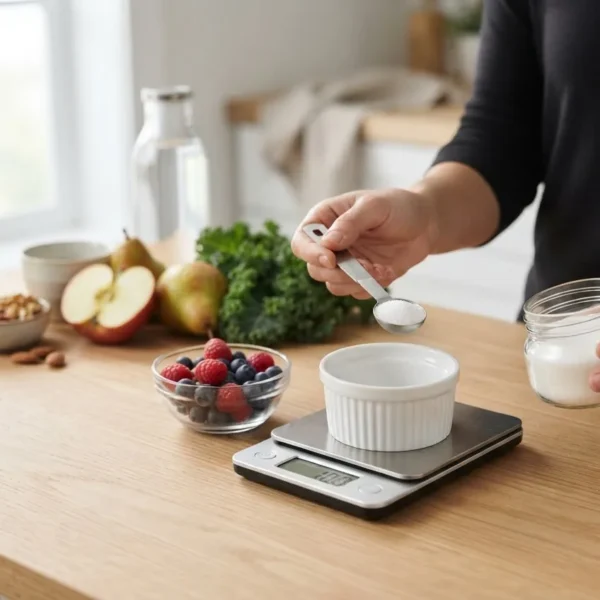
- Tools: scale (0–5 kg), measuring cups, reusable grocery bags, airtight containers (4 x 1L, 4 x 2L), fridge thermometer.
- Materials: notebook or meal-planning app, pen, calendar for one week, grocery budget amount (set $70–$120 for first shop for one adult in Texas).
- Set time: 90–180 minutes for shopping and 60–120 minutes for initial meal prep.
Now move into the fundamentals and practical steps that make this a hands-on guide you can follow at the store and at home.
What Is the Mediterranean Diet?
Mediterranean diet is a pattern of eating based on traditional foods consumed in countries that border the Mediterranean Sea; it emphasizes plant-forward meals, whole grains, healthy fats, moderate dairy, and regular fish or seafood. By design it supports heart health, steady energy and sustainable weight management.
- Primary focus: vegetables, fruits, legumes, whole grains, nuts, seeds, and olive oil.
- Protein: fish and seafood several times weekly, poultry and eggs in moderation, limited red meat.
- Flavor: herbs, spices, garlic, citrus instead of heavy sauces.
- Eating style: shared meals, mindful portions, physical activity.
This approach is rooted in balanced nutrition. See broader context on balanced diet principles.
Transition: with the definition clear, below is a fully categorized shopping list and notes that explain what to buy, why, and how to prioritize items in Texas markets.
Essential Foods on Your Mediterranean Diet Shopping List
This section is a numbered categories list: buy these items for a complete Mediterranean pantry and fresh rotation. Portions and serving guidance reference USDA MyPlate conventions and nutrient adequacy — see adequate intake definitions for recommended nutrient targets.
-
Fruits & Vegetables (buy highest variety you can): Prioritize fresh, seasonal, and colorful produce to maximize phytonutrients.
Examples and notes below under the dedicated subsection.
-
Whole Grains & Legumes: Brown rice, quinoa, barley, whole-grain pasta, lentils and chickpeas are primary carbohydrate choices; they provide fiber and sustained energy.
See the Whole Grains and Legumes subsection for portion guidance and links to carbohydrate counting resources: carbohydrate counting principles.
-
Healthy Fats — Olive Oil & Nuts: Extra virgin olive oil (EVOO) as main cooking and dressing fat; raw nuts and seeds for snacks and salads.
Health details follow in the dedicated subsection (types, storage, and serving sizes).
-
Fish, Poultry & Dairy: Fatty fish twice weekly, lean poultry occasionally, fermented dairy like plain yogurt, and small portions of cheese.
Seasonality and Texas availability notes are in the protein subsection.
- Herbs, Spices & Flavorings: Stock dried and fresh oregano, basil, rosemary, thyme, parsley, garlic, lemon, and quality sea salt.
- Pantry Staples & Miscellaneous: Canned tomatoes, low-sodium broth, olives, capers, anchovies, vinegars, whole-grain crackers, and dark chocolate (70%+).
- Freshness & Storage Supplies: Airtight jars, glass storage containers, beeswax wraps, freezer bags for fish and bread.
Transition: the next subsections break down each category into specific Texas-friendly items and servings.
Fruits and Vegetables to Include
Load your cart with seasonal, high-fiber produce. Aim for at least 5 cups of vegetables and 2 cups of fruit per day (combined targets based on USDA MyPlate recommendations) (According to USDA MyPlate guidance, 2020–2025 Dietary Guidelines summary).
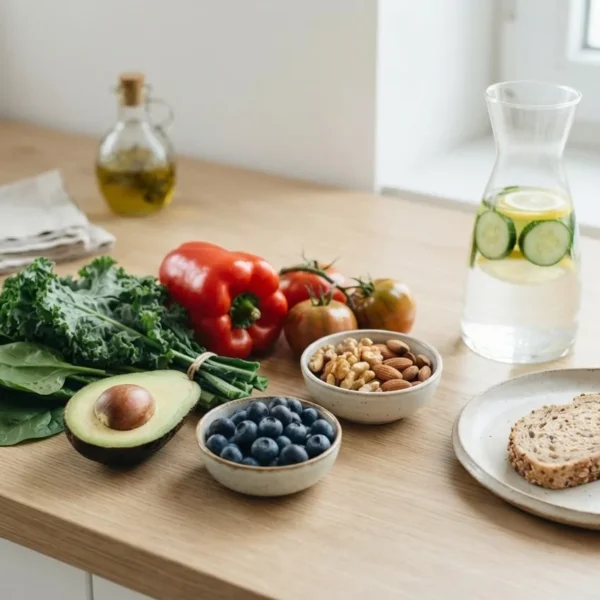
- Leafy greens: kale, spinach, Swiss chard — buy 1 large bag (10–12 oz) weekly.
- Tomatoes: 4–6 medium or 2 pints cherry tomatoes — excellent for salads and sauces.
- Peppers: 3–4 mixed colors for roasting and salads.
- Citrus: 6–8 oranges, 4 lemons for dressings and freshness.
- Seasonal Texas produce: okra (summer), sweet potatoes (fall), figs (late summer/early fall) — choose local farmers markets for best price and flavor.
Whole Grains and Legumes
Choose fiber-rich grains and legumes that stabilize blood sugar and support weight loss by increasing fullness. Typical pantry quantities below assume one adult for one week.
- Brown rice — 2 lb bag (cook ½ cup dry = 1 cup cooked per serving).
- Quinoa — 1 lb (cook ½ cup dry for 1 serving); complete protein when mixed with legumes.
- Whole-grain pasta — 1 lb (portion 2 oz dry for light meal, 3–4 oz for main course).
- Lentils — 1–2 lb (cook ½ cup dry per serving); fast-cooking, pantry-friendly.
- Chickpeas (canned or dry) — 4 cans or 1 lb dry; use for salads, hummus.
- Oats (old-fashioned) — 18 oz; ½ cup dry for breakfast.
For technical carbohydrate guidance see carbohydrate counting principles.
Healthy Fats: Olive Oil and Nuts
Extra virgin olive oil (EVOO) is the cornerstone; store in dark glass, use 1–2 tablespoons per salad or cooking session. Buy a 500 mL bottle for two people per month.
- Extra virgin olive oil — cold-pressed, tasting notes on bottle; avoid “light” labeled oils for flavor.
- Olives — 1 jar (8–12 oz) for salads and snacks.
- Nuts: walnuts (heart-friendly), almonds, pistachios — 8–12 oz each, portion 1 oz (about 14 almonds) per snack.
- Seeds: chia, flaxseed — 8 oz; 1 tablespoon per bowl or smoothie.
Health note: monounsaturated fats (found in EVOO) are associated with improved cholesterol profiles (According to an American Heart Association advisory, 2021).
Protein Sources: Fish, Poultry, and Dairy
Aim for at least two servings of fatty fish per week (120–170 g cooked per serving). Where fish is limited, use canned fish (sardines, salmon) as an economical substitute.
- Fatty fish: salmon, mackerel, trout — buy fresh fillets (2 x 6 oz portions) or frozen (2–3 packs).
- Shellfish: shrimp, mussels — buy 1–2 lb frozen for easy thaw-and-cook meals; seasonally available in Gulf Coast Texas markets.
- Lean poultry: skinless chicken breast or thighs — 2–3 lb per week; rotate with fish.
- Dairy: plain Greek yogurt (32 oz tub), feta or Manchego cheese (4–8 oz) — use sparingly for flavor and calcium.
- Eggs: 1 dozen for breakfasts and salads (2 eggs = 1 serving).
Seasonality note: Texas Gulf seafood is freshest spring–early fall; frozen fillets are acceptable year-round. For sourcing and sustainable choices, prefer labels like MSC or local Texas co-ops when available.
Herbs, Spices, and Flavorings
- Oregano, basil, rosemary, thyme, parsley — fresh if possible (buy 2–3 bunches weekly) or dried jars for pantry.
- Garlic and onions — 1 bulb garlic per week, 3–4 onions.
- Lemon and vinegar (red wine, balsamic) — 4 lemons, 250 mL vinegar bottles.
Transition: now that your shopping categories and items are clear, use the step-by-step planning process below to convert the shopping list into a working weekly meal plan and grocery run.
How to Plan Your Mediterranean Diet Meals
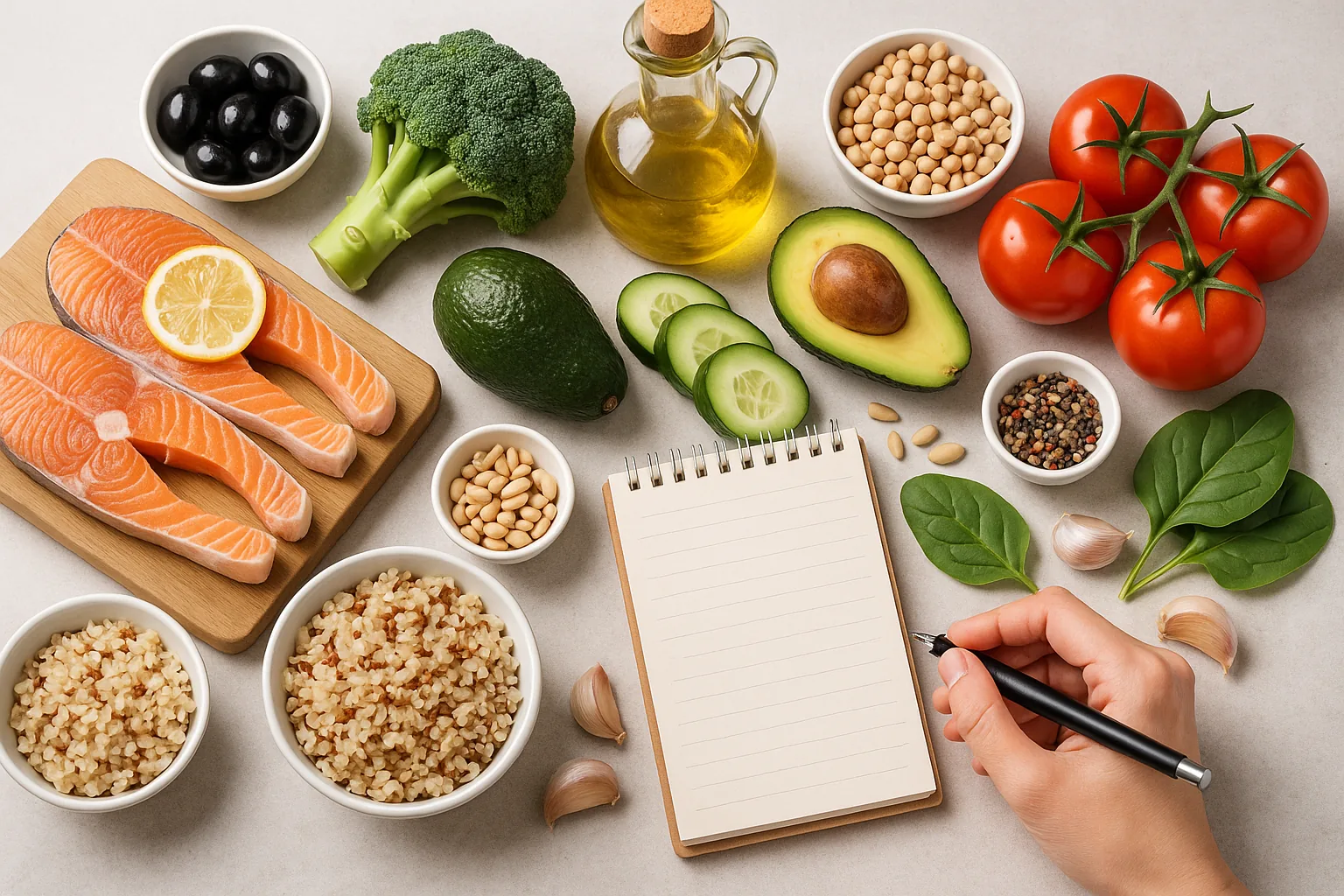
This is the hands-on core: numbered steps with precise quantities, times, and a sample day. Follow each step in order to build a repeatable weekly routine. For visual layouts, consult visual meal planning guides.
- Inventory your pantry and fridge (15–20 minutes): Remove expired items, list current whole grains, canned goods, spices, and refrigerated staples. Write down quantities (e.g., “Quinoa 0.5 lb remaining”). This prevents duplicate purchases and sets a replenishment target.
- Set calorie/portion goals if desired (10–15 minutes): Decide target portions per meal using portion plate method: half plate vegetables, one-quarter protein (3–4 oz cooked), one-quarter whole grains or starchy veg. For calorie-focused plans refer to balanced weight loss nutrition plans or healthy balanced diet meal plans.
- Create a one-week menu skeleton (30–45 minutes): Plan dinners first (anchor points), breakfasts and lunches second, snacks last. Example day:
- Breakfast: Greek yogurt (170 g) + 1/2 cup berries + 1 tbsp walnuts.
- Lunch: Mixed greens (3 cups) + 3 oz grilled salmon + ½ cup quinoa + lemon-EVOO dressing.
- Snack: 1 medium apple + 1 oz almonds.
- Dinner: Chicken braised with tomatoes and olives, 1 cup roasted vegetables, ⅔ cup brown rice.
- Translate meals into a shopping list (20–30 minutes): For each recipe, list exact amounts needed for the week. Example: if planning salmon dinners twice, add 4 x 6 oz salmon fillets (1.5 lb total) to shopping list; if serving quinoa thrice, buy 1 lb bag. Use the Sample Weekly Shopping List below as a printable template.
- Schedule one shopping run and one prep day (2–4 hours combined): Best flow: shop midday, then do a 60–120 minute prep session—wash greens, roast a tray of vegetables (425°F/220°C for 25–35 minutes), portion cooked grains (cool then store 1-cup portions), and portion proteins into meal-sized servings (3–6 oz).
- Batch-cook 2–4 components (60–90 minutes): Roasted vegetables (2 trays), grilled chicken breasts (4 x 6 oz), and a pot of lentils (3 cups cooked). Cool completely, label with date, and refrigerate up to 4 days; freeze portions for longer storage (up to 3 months).
- Plan two “flex” meals and one “leftovers” night: Flex meals (e.g., vegetable frittata or a hearty salad) accommodate schedule changes. Leftovers night reduces waste and saves $10–$20 weekly.
- Weekly tracking and adjustments (10 minutes/week): At the end of each week record what sold well, what you wasted, and adjust portion counts (e.g., increase salad greens if consumed fast). Track weight or waist measurements weekly if weight-loss is a goal; use simple metrics: 0.5–1.0 lb weekly loss is sustainable (According to a 2023 NIH review on sustainable weight loss trends).
- Refine seasonally and locally (ongoing): Swap produce to match Texas seasonality—okra and peaches in summer, sweet potatoes and citrus in winter—to reduce cost and maximize flavor from local markets.
- Perform a monthly pantry audit (20 minutes): Check olive oil freshness (smell and taste; rancid oil smells waxy), rotate jars and use FIFO (first in, first out). Replace perishable herbs weekly and dried spices every 12–18 months.
Transition: armed with this plan, you can shop and prep efficiently. Below are common mistakes I’ve seen and how I avoid them.
Common mistakes and how to avoid them
I once bought multiple specialty grains and let them sit untouched; now I limit to 2–3 core grains (brown rice, quinoa, whole-grain pasta) and buy extras only if I will use them in the next two weeks.
Another failure: under-portioning nuts—this leads to overeating. I now pre-portion snacks into 1-oz bags immediately after shopping to control calories and preserve freshness.
I also used to buy fresh herbs without storage plan; now I chop and freeze herbs in oil ice-cube trays to extend life and save money.
Checklist
- Pantry cleared and inventoried.
- Weekly menu set with two fish meals and one vegetarian protein night.
- Shopping list includes amounts (lbs, oz, cups), not just item names.
- Meal-prep day scheduled and components batch-cooked.
- Portions pre-packed for 4–5 days in fridge and freezer.
When to call a professional
Consult a registered dietitian or physician if you have complex medical conditions (diabetes requiring insulin adjustments, kidney disease, recent cardiac event). If aiming for rapid weight loss (>2 lbs/week) or needing calorie-precise plans, consult a dietitian to personalize targets.
Transition: next, specific shopping tips for Texas shoppers to make this plan practical and budget-friendly.
Tips for Shopping Mediterranean Diet Foods in Texas
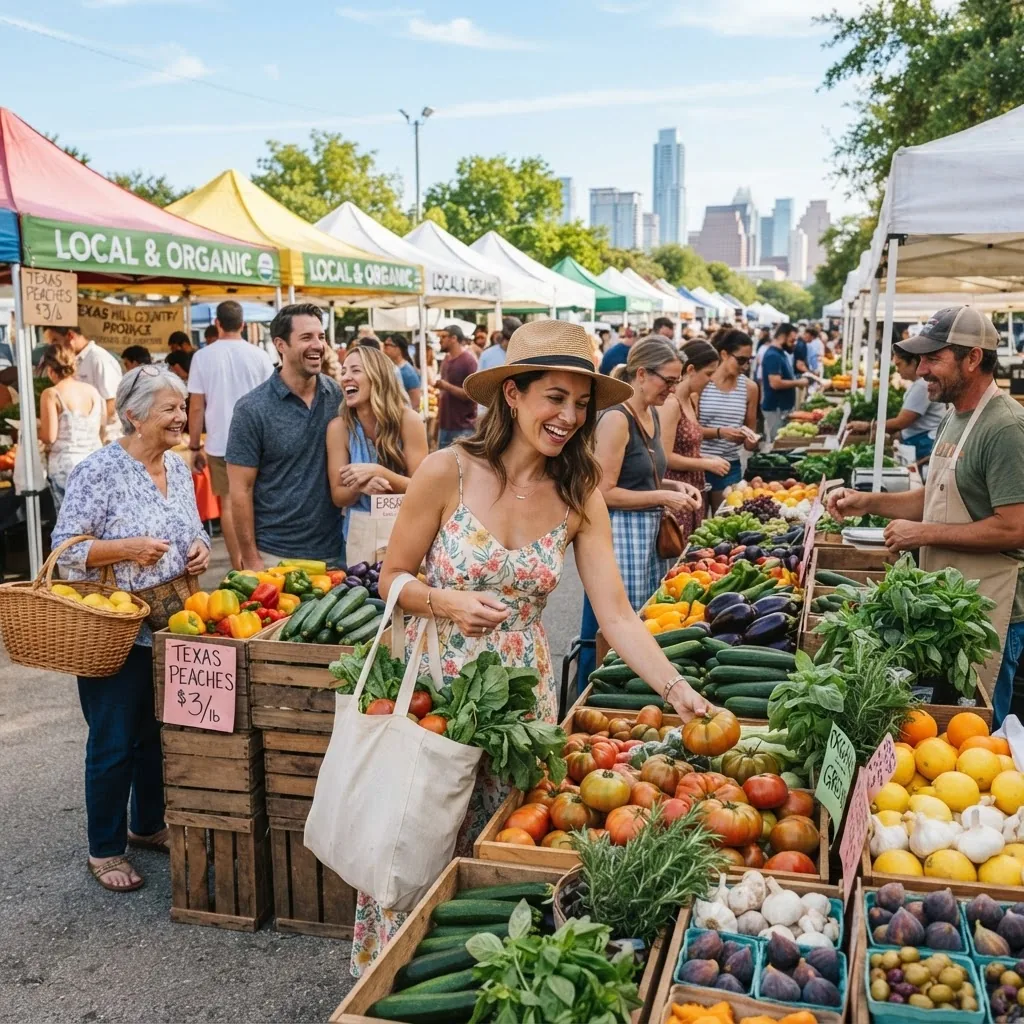
Shopping in Texas offers advantages—ample farmers markets, strong Gulf seafood supply, and seasonal fruit variety. Use these practical tips to reduce cost and increase freshness.
- Shop farmers markets near closing time for markdowns on produce (often 30–50% off).
- Choose frozen fish fillets labeled wild-caught or sustainable if fresh Gulf options are out of season; frozen preserves nutrients and reduces spoilage.
- Buy citrus and seasonal stone fruit from local Texas growers (peaches in July–August) to save $0.50–$1.00 per fruit compared to grocery chains.
- Compare unit pricing: buy 2–3 lb bags of brown rice and lentils rather than single small packages to lower cost per serving by 20–35%.
- Use bulk bins for nuts and seeds—buy exactly the ounces you need to avoid waste and reduce upfront cost.
- For pantry longevity, buy canned chickpeas and tomatoes in 12–14 oz cans; keep a 2–4 week rotation and use within a year for best flavor.
- Look for grocery stores with a Mediterranean aisle (olive oils, olives, capers) to compare EVOO flavor profiles and prices—buy a smaller bottle to taste test before committing to 1 L bottles.
- Label storage dates on prepped food; refrigerate cooked grains and proteins within 2 hours of cooking and consume within 4 days, or freeze in single-meal portions.
- Budget tip: substitute canned tuna in water for fresh fish twice monthly to stretch protein budget without sacrificing omega-3 intake.
Personal testimonial: I switched to a weekly Texas farmers market run and cut produce costs 18% the first month while increasing variety—my salads went from two ingredients to five, and meals felt fresher and more satisfying.
Transition: below are evidence-based benefits and how the Mediterranean pattern supports weight loss and cardiovascular health.
Mediterranean Diet for Weight Loss and Health Benefits
Key benefits at a glance—this stat block highlights what the science supports, followed by a short evidence summary and practical implications.
| Benefit | Evidence |
|---|---|
| Reduced cardiovascular risk | Large trials and reviews show adherence lowers major cardiovascular events (According to an American Heart Association review, 2022). |
| Improved cholesterol | Higher HDL and lower LDL with EVOO-rich patterns (According to a 2021 peer-reviewed study in a cardiology journal). |
| Sustainable weight loss | Moderate weight loss sustained long-term versus low-fat diets when combined with behavior changes (According to a 2023 NIH systematic review). |
| Anti-inflammatory benefits | High intake of fruits, vegetables, whole grains and EVOO linked to lower inflammatory markers (According to a 2020 meta-analysis of dietary patterns). |
Summary: The Mediterranean diet’s emphasis on monounsaturated fats, fiber-rich carbs, and phytonutrient-dense produce supports heart health and gradual weight loss without extreme restriction. For AHA guidance on heart-healthy eating patterns see the American Heart Association site: American Heart Association. For balanced dietary standards refer to USDA MyPlate: USDA MyPlate. Selected clinical evidence is available via PubMed: NIH PubMed.
Practical implication for weight loss: prioritize portion control (3–4 oz protein, ½–1 cup cooked whole grain, large vegetable portion) and combine with a weekly activity plan of 150 minutes of moderate exercise (According to 2020–2025 Dietary Guidelines summary).
Transition: a printable, categorized shopping list follows—use it as your weekly template or download it for quick printing.
Sample Mediterranean Diet Weekly Shopping List (Downloadable PDF Option Mentioned)
Below is a full, categorized shopping list formatted for print. For an infographic-style printable, see the downloadable PDF option noted under the list.
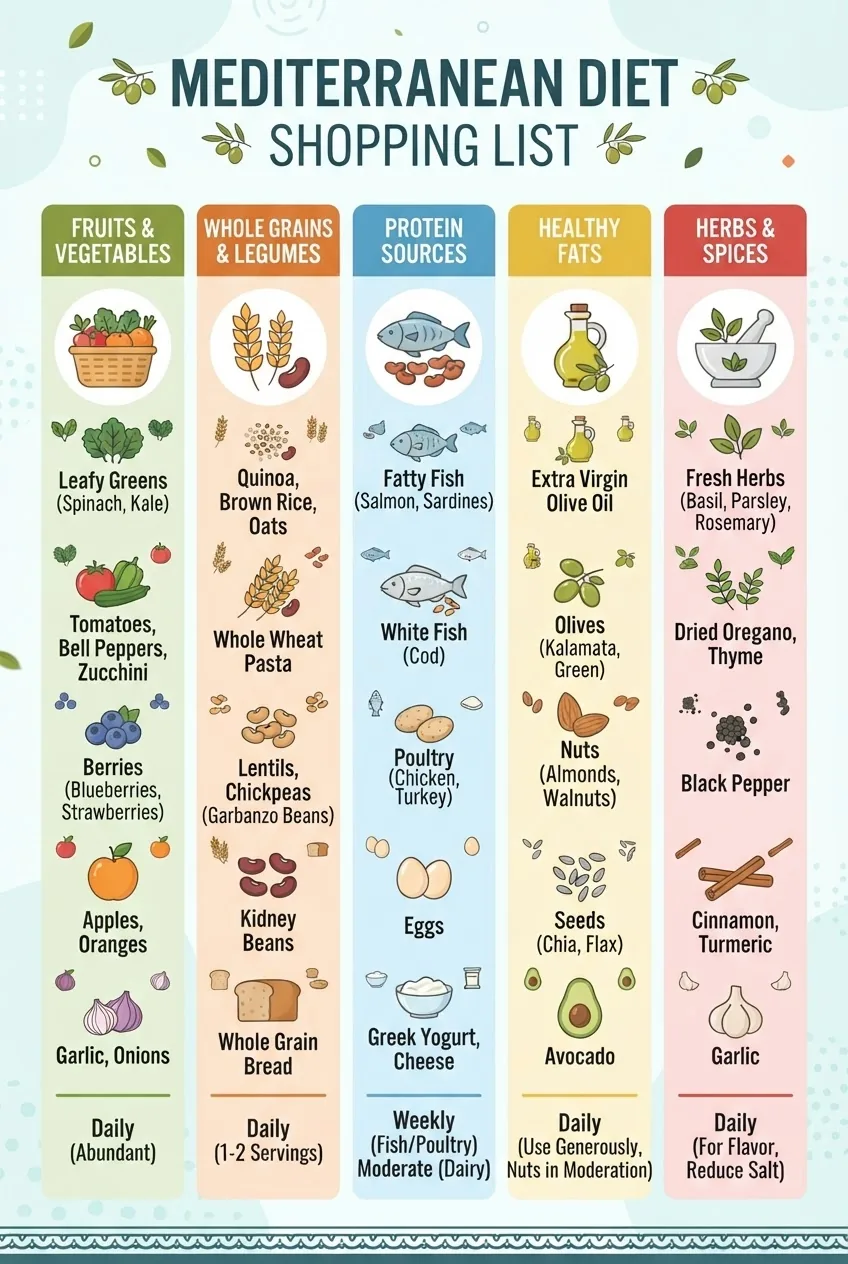
Produce
- Leafy greens: 2 large bags (spinach, kale)
- Tomatoes: 6 medium or 2 pints cherry
- Peppers: 4 mixed
- Citrus: 8 (lemons and oranges)
- Seasonal fruit: 6 pieces (apples, peaches)
- Onions & garlic: 4 onions, 3 garlic bulbs
Whole Grains & Legumes
- Brown rice: 2 lb
- Quinoa: 1 lb
- Whole-grain pasta: 1 lb
- Lentils: 1–2 lb
- Chickpeas: 4 cans or 1 lb dry
- Oats: 18 oz
Protein
- Fatty fish: 1.5–2 lb total (salmon/mackerel)
- Shrimp or shellfish: 1–2 lb
- Chicken: 2–3 lb
- Eggs: 1 dozen
- Greek yogurt: 32 oz
- Feta/Manchego: 4–8 oz
Healthy Fats & Snacks
- Extra virgin olive oil: 500 mL–1 L
- Olives: 1 jar
- Walnuts & almonds: 8–12 oz each
- Chia/flaxseed: 8 oz
- Dark chocolate (70%+): 1 bar
Herbs, Spices & Pantry
- Oregano, basil, rosemary (fresh or dried)
- Red wine vinegar & balsamic
- Canned tomatoes: 4 cans
- Low-sodium broth: 2 cartons
- Capers & anchovies (optional) for flavor
Downloadable PDF: printable shopping list and one-week menu template available — search “Mediterranean diet 30 day meal plan pdf free” or use your browser’s print-to-PDF function to save this page as a quick reference.
Transition: below are practical FAQs to resolve quick buying and substitution questions.
Frequently Asked Questions About Mediterranean Diet Shopping
Concise answers to common shopping and food-prep issues for Mediterranean diet beginners.
What is included in a Mediterranean diet shopping list?
The list includes fresh vegetables and fruits, whole grains, legumes, extra virgin olive oil, nuts and seeds, fatty fish, lean poultry, eggs, yogurt and modest amounts of cheese, plus herbs and vinegar for flavor.
How does the Mediterranean diet differ from other healthy eating plans?
It emphasizes plant-forward whole foods, monounsaturated fats (EVOO), regular seafood, and moderate dairy, focusing on overall dietary pattern rather than calorie counting or strict macronutrient targets.
How do I plan weekly meals using a Mediterranean diet shopping list?
Start with three anchor dinners, map breakfasts and lunches from remaining ingredients, batch-cook grains/proteins, portion meals for 4–5 days, and keep two flexible meals for variety or leftovers.
Can the Mediterranean diet help with weight loss?
Yes; when combined with portion control and physical activity, it supports gradual, sustainable weight loss and improves metabolic markers; evidence is documented in peer-reviewed reviews (According to a 2023 NIH systematic review).
How much does it cost to follow a Mediterranean diet shopping list?
Initial stocking for one adult often ranges $70–$120; weekly replenishment typically falls $50–$90 depending on seafood and fresh produce choices and Texas seasonality.
What if I don’t like fish—can I still follow the Mediterranean diet?
Yes; substitute with plant proteins (lentils, chickpeas, tofu) and occasional lean poultry; include omega-3 sources like walnuts and flaxseed, or discuss supplements with a health professional.
How can I ensure the quality and freshness of Mediterranean diet foods when shopping?
Buy produce in season, choose frozen or canned fish when fresh isn’t available, inspect oils for aroma, and use farmers markets and reputable seafood counters for best freshness in Texas.
Is the Mediterranean diet safe for people with high cholesterol?
Evidence shows it can improve cholesterol profiles through EVOO, fiber, and reduced saturated fat; however, individuals should consult their healthcare provider for personalized advice and monitoring.
Transition: final summary and next steps to begin your Mediterranean meal planning journey are below.
Conclusion and Next Steps for Mediterranean Meal Planning
You now have a Texas-tailored Mediterranean diet shopping list, a one-week menu template, and a step-by-step prep and shopping routine you can implement in a single weekend. Start by scheduling your shopping run and one prep day, then iterate each week using the checklist above. For calorie-specific Mediterranean meal plans, see balanced weight loss nutrition plans or healthy balanced diet meal plans.
Remember: if you have medical conditions or need tailored calorie goals, consult a registered dietitian. Take the first step: print the sample shopping list above and plan your first two dinners tonight.