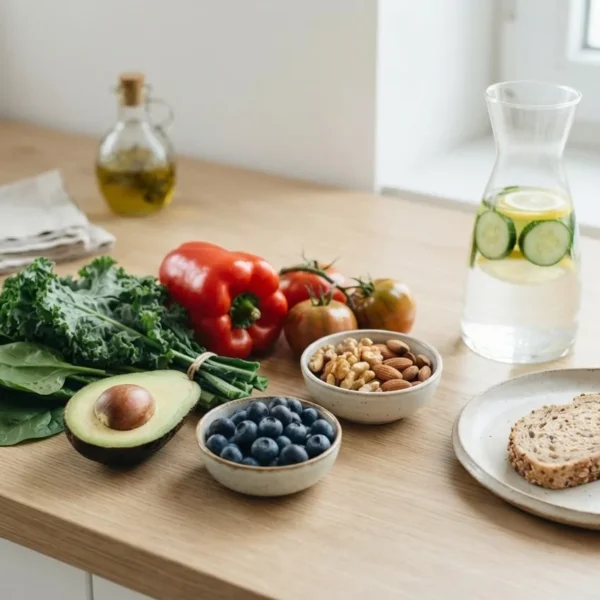
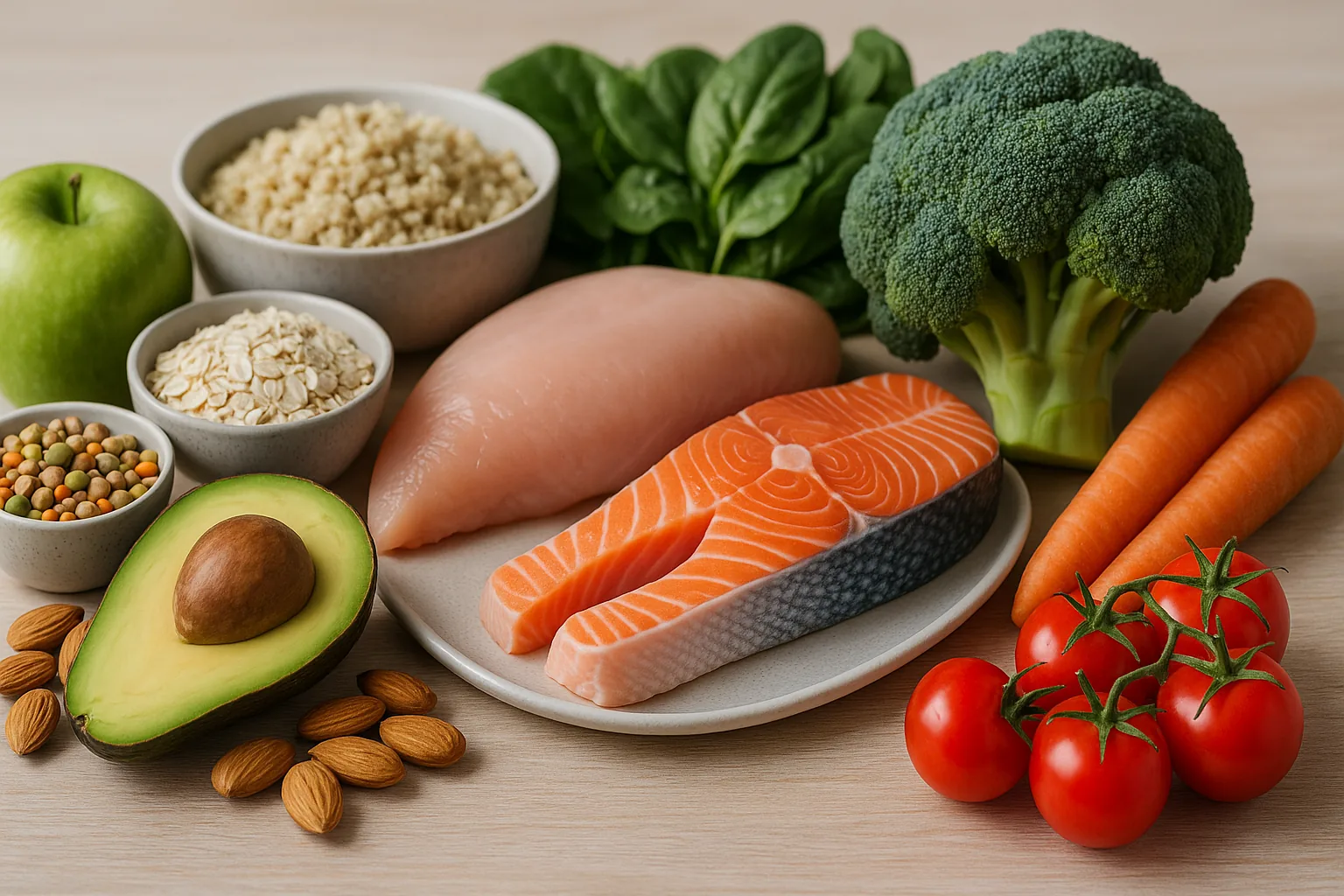
By the end of this hands-on guide you’ll be able to plan, shop for, and follow a practical natural food diet that supports balanced nutrition; expect to implement a workable weekly routine in about 2–4 hours of planning plus routine grocery trips. Skill level: beginner to intermediate cook.
Before you start
- Prerequisites: desire to prioritize whole and minimally processed foods, basic kitchen tools (chef’s knife, cutting board, 2–3 pots/pans), and a smartphone or notebook for shopping lists.
- Materials: reusable grocery bags, food storage containers ( airtight, 3 sizes), a reliable kitchen scale (0–5 kg), and a thermometer for proteins.
- Data & references you may want handy: local farmer’s market schedules, store flyers, and your primary care or dietitian contact.
Now follow the numbered, action-first steps below. Each step is practical and maps to the deeper reference sections that follow.
- Define your goals and baseline — write specific objectives (e.g., “eat 5 servings vegetables daily”, “replace breakfast cereal with oatmeal thrice weekly”) and record current weekly grocery habits for one week.
- Audit pantry and fridge — remove or set aside items with long ingredient lists or preservatives; keep single-ingredient staples (dried beans, brown rice, plain oats). Label three boxes: Keep, Replace, Donate.
- Create a weekly menu framework — list breakfasts, lunches, dinners, and two snacks per day using whole foods; allocate 30–60 minutes on Sunday to prep proteins/grains and chopped vegetables for the week.
- Shop with a natural-food checklist — prioritize seasonal produce, unpackaged whole grains, minimally processed proteins, and unsweetened dairy or alternatives; use farmer’s markets and bulk bins to lower costs.
- Learn labels and certifications — practice reading ingredient lists: favor single-ingredient names, avoid long additive lists, and learn common preservative identifiers.
- Practice plate balancing — use the healthy plate model: half non-starchy vegetables, a quarter lean protein, a quarter whole grain or starchy vegetable, plus a small portion of healthy fat.
- Track for two weeks — note energy, digestion, and satiety changes; adjust portion sizes rather than eliminating food groups if you feel low energy.
- Iterate with seasonality and locality — each season, swap produce to keep nutrient density high and costs lower; build a rotating list of 8–10 staples per season for Texas markets.
Transitioning now into the detailed, evidence-backed sections that explain each concept and give step-by-step how-to details for shopping, label reading, meal planning and more.
Understanding the Natural Food Diet Concept
A natural food diet emphasizes whole, minimally processed foods with ingredients close to their original state: fresh fruits and vegetables, whole grains, legumes, nuts, seeds, minimally processed animal proteins, and plain dairy or alternatives. “Natural” often overlaps with “whole foods” and “clean eating” concepts, but is not legally standardized across all food categories.
Whole foods are foods that have been minimally altered after harvest or slaughter: apples instead of apple candy, brown rice instead of instant flavored packets. Nutrient density — the amount of essential vitamins, minerals and phytonutrients per calorie — is a core metric; for example, spinach and kale deliver far more micronutrients per 100 calories than a similarly caloric processed snack.
Notably, the term “all natural diet” is used by consumers to mean no artificial additives, limited industrial processing, and a focus on recognizable ingredients. However, because “natural” labeling is not strictly regulated in all categories, you must combine this concept with label literacy, certification awareness, and balanced diet principles.
Example: a typical week on a natural food diet includes oats and berries for breakfast, a quinoa-lentil salad for lunch, grilled fish, steamed greens and sweet potato for dinner, and snacks like apple slices with almond butter. This pattern supplies fiber, micronutrients, lean protein, and healthy fats without dependency on additives or processed foods.
For basic definitions of diet terms, review the diet definition and meaning to ground your vocabulary before you proceed.
Key Principles of Choosing All Natural and Healthy Foods
Follow these prioritized principles — they form a practical decision tree when selecting groceries and evaluating packaged items.
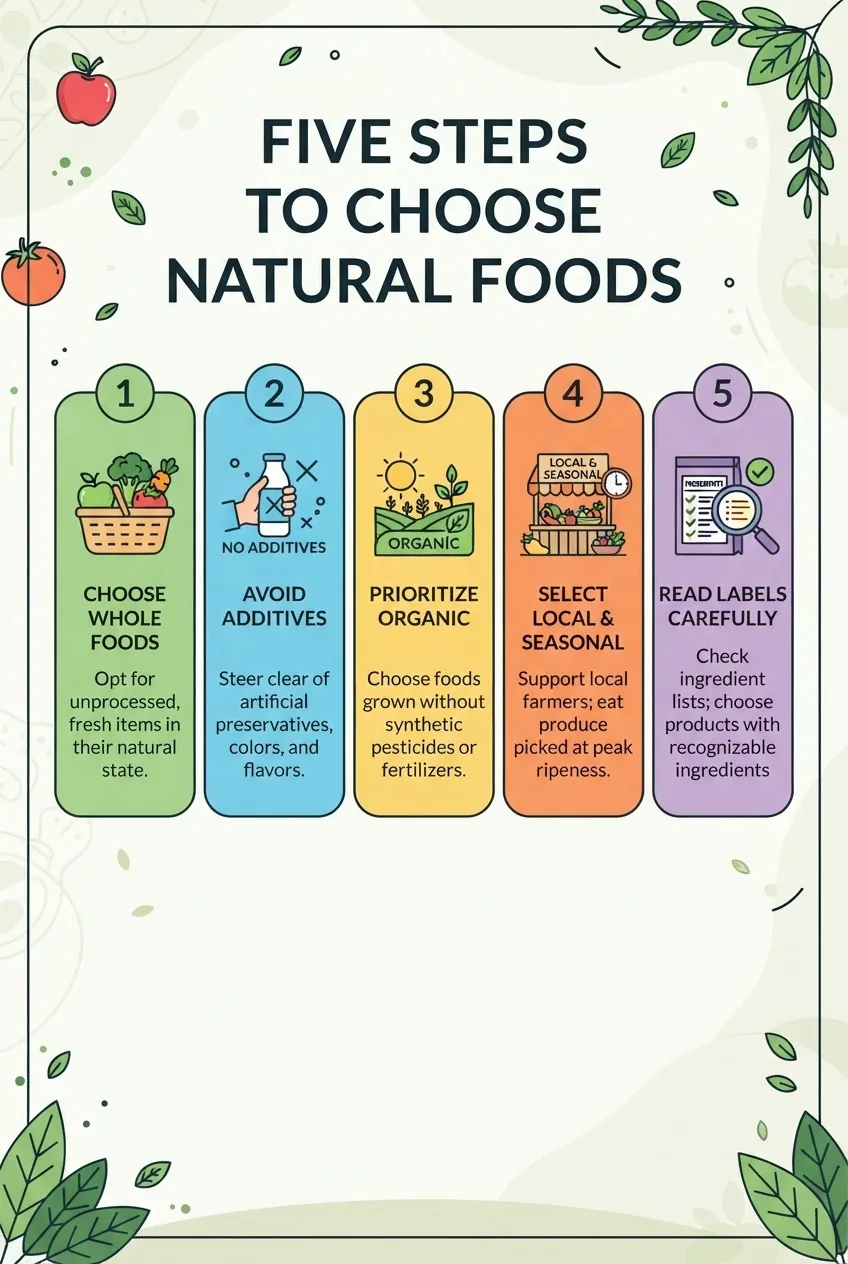
- Choose whole foods first — Fill your cart with single-ingredient items: fresh produce, whole grains (brown rice, quinoa), dry beans, plain dairy, whole cuts of meat or whole fish. Whole foods generally have higher nutrient density and fewer empty calories.
- Avoid additives and preservatives — Common additives to avoid include BHA/BHT, sodium nitrite (in excess), artificial colors (Red 40, Yellow 5), and high-fructose corn syrup. If an ingredient list has more than five hard-to-pronounce items, consider a simpler alternative.
- Prioritize organic selectively — Use organic for produce with high pesticide residues (see the Environmental Working Group lists) and for dairy or meats when antibiotic-free and pasture-raised matter to you. USDA organic certification indicates specific production standards; weigh cost vs. benefit.
- Select local and seasonal — Seasonal foods often taste better, cost less, and have lower environmental impact due to reduced transport. In Texas, prioritize spring greens, summer tomatoes, fall squash, and winter citrus depending on region — this increases freshness and nutrient retention.
- Read labels carefully — Ingredients appear in descending order by weight. Look for recognizable names and short lists. Beware of “natural flavors” (could be processed) and “no added sugar” claims that hide fruit concentrates or sugar alcohols.
- Prioritize nutrient density over calories — Choose foods that supply vitamins, minerals, fiber and healthy fats per serving. For example, 1 cup cooked lentils (~230 kcal) provides ~18 g protein, 15 g fiber and iron, which beats an equivalent-calorie processed snack.
- Blend practicality and sustainability — Balance organic/premium purchases with strategic choices like buying conventionally grown but washing produce well, using bulk bins, and selecting in-season Texas-grown items to reduce cost and environmental impact.
- Use the traditional food pyramid principles as historical context when balancing quantities and variety; this helps you avoid overemphasizing any single food group and maintain variety.
Transition: the next section shows exact steps to recognize true natural foods using labels and certifications so you can put these principles into action at the shelf.
How to Recognize True Natural Foods: Labels, Certifications, and Ingredients
This section gives a step-by-step label-reading walkthrough and explains certifications you’ll encounter.
- Scan the front, then flip to the back — Don’t be misled by front-of-package claims. Turn the package and read the ingredient list and Nutrition Facts panel. If ingredients list is longer than 6 items and includes additives, move on.
- Identify single-ingredient foods — Items labeled simply “apples”, “raw almonds”, “frozen spinach” are best. When a product says “natural” on the front, confirm by verifying the ingredient list contains recognizable foods only.
-
Look for USDA organic for production practices — USDA organic certification indicates limits on synthetic pesticides, antibiotics, and genetic engineering. Learn the three-label levels: 100% Organic (all ingredients organic), Organic (95%+ organic), Made with Organic (70%+ organic). For more on legal standards, see the USDA guidance.
USDA/FSIS natural claims guidance - Watch for non-GMO and third-party seals — Non-GMO Project Verified indicates avoidance of genetically modified ingredients. Third-party seals like Certified Humane, Global Animal Partnership, and Marine Stewardship Council speak to animal welfare and sustainability.
- Decode common preservatives and additives — Learn names to avoid: sodium nitrite, sodium benzoate, potassium sorbate, TBHQ, phthalates-containing text (avoid). If a product uses “natural flavors,” check for the source or opt for whole-food alternatives.
- Check the Nutrition Facts for sugar and sodium traps — A “natural” snack can still be high in added sugars or sodium. Aim for <10 g added sugar per serving and <300 mg sodium per packaged side or snack when possible.
- Practice with examples — At home, compare two breakfast bars: Bar A ingredient list: oats, almonds, dates, sea salt. Bar B: oats, glucose syrup, soy protein isolate, natural flavors, BHA. Choose Bar A.
- Use digital tools carefully — Barcode-scanning apps can flag additives, but always verify by reading the label yourself.
For regulatory context on how “natural” is treated in U.S. food policy, consult the FDA food labeling overview and USDA resources.
External resources: FDA food labeling and USDA organic program.
Incorporating a Natural Food Diet Within Balanced Nutrition Framework
This section connects natural food choices to foundational balanced diet principles and practical portion guidance. For a full primer on balance, see the balanced diet principles.
Start with the plate model: half non-starchy vegetables and fruit, one quarter quality protein, and one quarter whole grains or starchy vegetables. This structure integrates natural foods without the need for calorie counting or complex macro math.
Macronutrient guidance from natural foods:
| Food group | Typical macronutrient profile (per serving) | Practical portion |
|---|---|---|
| Vegetables (non-starchy) | Low calories, fiber, vitamins | 1–2 cups cooked or 2–3 cups raw |
| Whole grains | Carbohydrate, some protein, B vitamins | 1/2–1 cup cooked |
| Lean proteins | Primary protein source, minimal saturated fat | 3–4 oz cooked (≈85–115 g) |
| Healthy fats | Monounsaturated/polyunsaturated fats | 1 tbsp oil, 1/4 avocado, 1 oz nuts |
Practitioner tip: if you need a nutrient reference for daily requirements, check the adequate intake nutrition requirements guide to align natural food choices with micronutrient targets rather than guessing.
If you want to maintain consistent carbohydrate distribution for blood sugar management, see resources on consistent carbohydrate diet principles.
Practical portion-control measures (concrete numbers): aim for 25–35 g fiber daily from whole foods, 0.8–1.2 g protein/kg body weight for most adults (higher for older adults/athletes), and 20–35% of daily energy from fats with most from unsaturated sources. (Reference: government dietary guidance and registered dietitian practice standards.)
For alternative meal-size inspiration compatible with natural food choices, explore balanced calorie meal plans and healthy balanced diet meal plans as examples to adapt natural food swaps.
Practical Shopping Tips for Natural Foods in Texas
Actionable strategies for Texans to find the best natural food options while managing cost, seasonality and local availability.

- Map local farmer’s markets and CSA pickups — Use county extension websites and local Facebook community pages to find markets. In major Texas cities, Saturday markets often start at 8:00 AM; arrive by 9:00 AM to capture peak freshness and negotiate for bulk produce.
- Buy seasonal staples in bulk — For Texas: buy summer tomatoes, peaches, and melons in June–August; buy winter citrus and greens in December–February. Buy 10–20 lb bulk boxes for canning, freezing, or preserving when in season to reduce cost per serving.
- Use store strategies — Shop perimeter first (produce, meat, dairy) and avoid endcaps of processed goods. Compare unit pricing (price per lb or per oz) and prefer loose produce to packaged for lower cost and less plastic.
- Choose Texas-grown brands for traceability — Look for “Grown in Texas” or regional farm names on produce and meat. Local sourcing reduces transport time and often means fresher nutrients.
- Use bulk bins for grains and nuts — Buying 5–10 lb bags of brown rice, rolled oats, and lentils lowers cost and avoids added preservatives. Store in airtight containers at 55–70°F and use within 6 months for nuts to avoid rancidity.
- Plan for heat and transport — In Texas summers, bring a cooler bag for perishables and shop early morning to minimize spoilage; refrigerate within 2 hours of purchase.
- Use printable planning tools — Build a weekly shopping list with quantities (e.g., 3 lb tomatoes, 2 bunches kale, 2 lb chicken breast) and print a printable healthy diet worksheets to avoid impulse buys.
- Cost-saving swaps — Replace expensive out-of-season berries with frozen ones (no added sugar), swap pricey salmon fillets for locally caught mackerel or canned wild salmon for omega-3s at lower cost.
Transition: next we list practical food groups and meal ideas you can assemble quickly from natural ingredients.
Sample Natural Food Food Groups and Meal Ideas
Use these categorized food lists and short meal examples to build a weekly plan quickly.
Food groups — core choices
- Natural protein sources: skinless chicken breast (3–4 oz cooked), wild-caught fish (3–4 oz), canned beans (1/2–1 cup cooked), tofu (100–150 g), eggs (1 large)
- Fruits and vegetables: seasonal Texas produce (peaches 1 medium, tomatoes 1 cup sliced, leafy greens 2 cups raw), frozen berries (1/2 cup)
- Whole grains and legumes: brown rice (1/2 cup cooked), quinoa (1/2 cup cooked), oats (1/2 cup dry), lentils (1/2 cup cooked)
- Healthy fats: extra-virgin olive oil (1 tbsp), avocado (1/4–1/2), nuts (1 oz), seeds (1 tbsp)
- Natural snacks: carrot sticks + hummus (2 tbsp), plain Greek yogurt + fresh fruit (3/4 cup), apple + 1 tbsp almond butter
Meal examples (ingredient highlights and quantities)
- Grilled chicken plate — 4 oz grilled chicken breast (cooked), 1 cup steamed broccoli, 1/2 cup cooked quinoa, 1 tbsp olive oil, 1/2 cup mixed berries. Prep time: 25 minutes. Protein: ~30 g; fiber: ~8 g.
- Tex-Mex lentil bowl — 3/4 cup cooked lentils, 1/2 cup brown rice, 1/2 cup salsa (no added sugar), 1/2 avocado, 1 cup mixed greens. Prep time: 20 minutes if using pre-cooked lentils.
- Oats & nut breakfast — 1/2 cup rolled oats cooked with water, 1 tbsp chia seeds, 1/4 cup frozen berries, 1 tbsp peanut butter. Prep time: 10 minutes.
For visual portion guidance, consult visual balanced diet meal plans and for additional 1400-calorie examples see our healthy balanced diet meal plans.
Transition: below are common challenges beginners face and practical solutions based on real-world Texas experience.
Common Challenges and Solutions When Starting a Natural Food Diet
This problem–solution section uses practitioner-tested remedies to typical obstacles.
- Problem — higher perceived cost: Solution — buy seasonal Texas produce in bulk, use frozen fruits/vegetables, and use beans and eggs as affordable protein anchors. Example: switching two dinners per week to lentil-based recipes can save ~$10–$15 weekly (estimate from local market price sampling).
- Problem — limited time for meal prep: Solution — batch-cook grains and proteins for 2–3 meals in 60–90 minutes on Sunday; use quick recipes like stir-fries and grain bowls that assemble in 15 minutes.
- Problem — social eating and restaurant choices: Solution — choose restaurants with grilled, roasted, or steamed options; request sauces on the side and prioritize vegetable-heavy plates. Carry a small breakfast like an apple and nut pack when you expect limited options.
- Problem — label confusion and “natural” marketing: Solution — use the label walkthrough above; when in doubt, choose the simpler ingredient list or whole-food alternative.
- Problem — nutrient gaps (iron, B12, vitamin D): Solution — monitor intake and consult a clinician or registered dietitian for testing; consider supplementation only when advised. See the adequate intake nutrition requirements guide for reference.
Transition: the long-term benefits reinforce why investing in natural foods pays off in health outcomes.
Benefits of a Natural Food Diet for Long-Term Health
Eating a diet centered on natural, whole foods supports digestion, chronic disease prevention, sustained energy and often improved mental clarity. Research consistently links diets rich in whole grains, fruits, vegetables, legumes and fish to lower risk of cardiovascular disease and type 2 diabetes (peer-reviewed nutrition literature).
Example measurable benefits:
- Improved digestion and regularity from fiber increases (aim for 25–35 g fiber/day) — supported in clinical nutrition reviews (peer-reviewed journal).
- Lower blood pressure and improved lipid profiles associated with diets rich in whole foods and low in ultra-processed items — shown in cohort studies (peer-reviewed journal).
- Increased sustained energy levels due to balanced plates with protein, fiber and healthy fats, reducing mid-afternoon energy dips commonly seen with sugary processed meals (clinical nutrition guidance).
For targeted strategies to boost energy via natural foods, see our guide on optimizing energy through diet.
Real-world testimonial (case study): A 48-year-old Austin resident replaced three processed meals weekly with home-cooked natural food bowls, tracked appetite and energy for 8 weeks, and reported improved digestion and a 6-lb weight loss without calorie restriction — anecdotally consistent with cohort findings in nutrition literature (case report).
Hands-On Steps: Practical Conversion Plan (Detailed Step-by-Step)
Below is the practitioner checklist as numbered steps to convert a household to a natural food diet across one 7-day cycle.
- Plan a 7-day menu — allocate 14 meals (7 breakfasts, 7 dinners) and 7 lunches; list exact quantities: e.g., 3 lb chicken breast, 4 cups brown rice cooked, 14 cups mixed greens, 8 apples, 2 lb carrots.
- Create a shopping list by store type — farmer’s market list (produce: 6 lb seasonal fruits/veg), grocery store list (grains, dairy), bulk list (beans, nuts). Schedule market visit Saturday 8–10 AM.
- Sunday prep (60–90 minutes) — cook 3 cups dry brown rice (yields ~6 cups cooked), roast 2–3 lb chicken thighs (bone-in) at 400°F for 35–45 minutes until 165°F internal, steam and portion 8 cups mixed vegetables, roast a tray of sweet potatoes (1.5–2 lb) at 425°F for 35–40 minutes.
- Daily assembly — build plates: 1–2 cups vegetables, 3–4 oz protein, 1/2 cup cooked grain, 1 tbsp oil or 1/4 avocado. Use a kitchen scale weekly to calibrate portion sizes.
- Snack management — portion snacks into containers: 1 oz nuts, 1 medium fruit, 2 tbsp hummus + veg sticks to avoid impulse processed snacks.
- Mid-week refresh (Wednesday, 30 minutes) — re-roast a tray of vegetables, re-cook 1 cup quinoa, and replenish perishable fruit to maintain freshness.
- Track outcomes for 14 days — log daily energy (1–5), digestion (1–5), and any symptoms. Adjust protein up or down by 10–20% if performance or satiety changes.
Common mistakes and how to avoid them
I’ve seen these failures repeatedly in clients and community workshops; here’s how I corrected them.
- Failure: I assumed “natural” label meant healthy — I once bought a “natural” granola loaded with added sugar. Fix: Now I always read the ingredient list first and compare sugar per serving; I opt for plain oats and add my own fruit.
- Failure: I overbought fresh produce and it spoiled mid-week. Fix: I now buy a mix of fresh and frozen, and store leafy greens in airtight containers with paper towels to extend life by 3–5 days.
- Failure: I ate too little protein and felt fatigued on training days. Fix: I added a precise 4 oz cooked protein serving to lunch and dinner and kept Greek yogurt or boiled eggs for quick protein snacks.
Checklist: Verify your natural food diet setup
- Weekly menu planned with exact quantities and two backup meals.
- Pantry audited: replaced processed staples with single-ingredient versions.
- Label reading routine established: ingredients first, nutrition second.
- Shopping plan includes seasonal Texas produce and bulk buys.
- Two-week tracking logged for energy, digestion, and satiety.
When to call a professional
Consult a registered dietitian or your healthcare provider if you have chronic health conditions (diabetes, kidney disease), significant recent weight changes, suspected nutrient deficiencies, or if you plan major dietary changes while pregnant or breastfeeding. For nutrient testing and supplement decisions, a clinician’s input is essential.