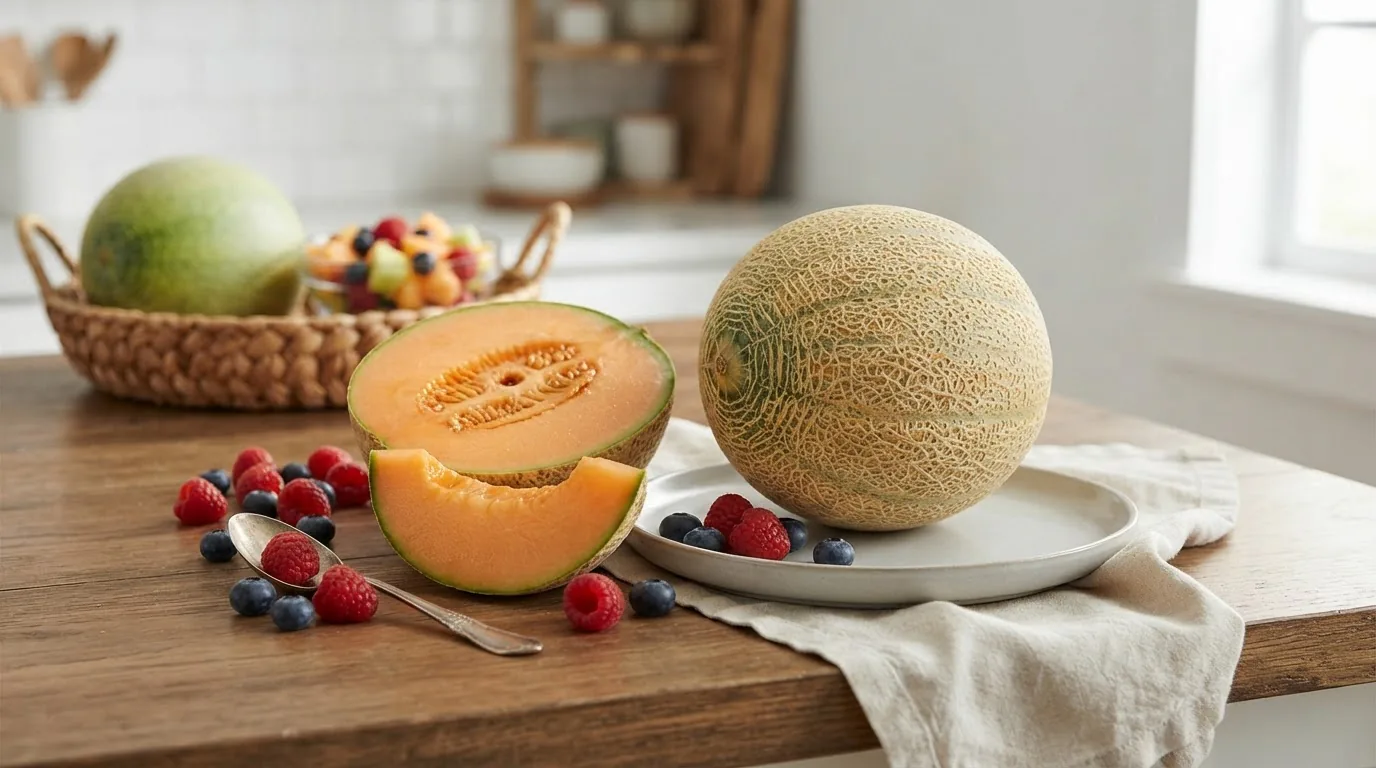
Cantaloupe season timing matters if you want the sweetest, juiciest fruit—and this guide shows you exactly when cantaloupe and honeydew ripen in the U.S., how to tell when they’re perfect to eat, and practical buying and storage tips to keep melons at peak freshness.
Introduction to Cantaloupe and Honeydew Melons
Melons rank among the most refreshing seasonal fruits for summer menus. This guide focuses on two widely consumed types—cantaloupe and honeydew—covering their seasonal rhythms, regional differences, ripening signs, and how to buy and store them for best results. You’ll find clear timelines and actionable tips designed for U.S. shoppers and home cooks who want reliable, region-aware advice about fresh produce and melon varieties.
Melons are broadly categorized by flesh texture, rind type, and flavor: many cantaloupes (often labeled “netted” melons in grocery stores) have orange flesh and a netted exterior, while honeydews typically have smooth, pale rinds and green flesh. Understanding these differences helps when reading seasonal calendars and choosing fruit at markets.
For readers who want a broader primer on seasonal produce benefits and fruit categories, see Types of Fruit Guide: Fresh Fruits and Vegetables Benefits.
Transitioning now into specific seasonal timelines, below we dive into the U.S. cantaloupe harvest calendar and regional variations so you can plan purchases with confidence.
Understanding Cantaloupe Season in the USA
Cantaloupe season in the U.S. follows a distinct pattern influenced by planting dates, climate zones, and regional production cycles. In general, cantaloupe harvests ramp up in late spring and peak through mid-to-late summer, although exact timing depends on the growing region and yearly weather.
Key points at a glance:
- Primary U.S. production windows: late May through September for most supply chains.
- Peak availability: June to August in many markets, with the sweetest fruit often in mid-summer.
- Early and late-season windows exist due to greenhouse production and warm-winter regions.
Below is a seasonal calendar that summarizes typical regional harvest windows across major U.S. cantaloupe-producing areas. Dates are general guides—annual weather and farming practices shift exact harvest weeks.
| Region | Typical Harvest Window | Peak Months | Notes |
|---|---|---|---|
| California (Central & Imperial Valleys) | Late May – September | June – August | Major early- and mid-season supplier for U.S. markets; warm sunny days produce high-sugar fruit. |
| Arizona/Southwestern deserts | June – October | July – September | Late-summer heat can extend sweet-ripe production into early fall. |
| Florida | March – July (small-scale & early) | April – June | Warmer subtropical zones yield earlier harvests; supply is more regional. |
| Midwest & Northeast (local, field-grown) | July – September | August | Shorter growing season; locally grown melons peak later than West Coast supply. |
| Imported (Mexico, South America) | Year-round import windows | Varies by origin | Imports fill gaps outside domestic peak; quality varies by cultivar and handling. |
According to a 2024 industry report on U.S. produce distribution, California and Arizona together supply the majority of commercially shipped cantaloupes during the U.S. summer, while Florida and local growers supply early- and late-season niche windows (source: industry distribution analysis, 2024).
How harvest timing works: commercial cantaloupe growers schedule planting to match desired market windows. Daylength, daytime temperatures, and soil warmth drive growth and sugar accumulation. Cantaloupe is generally harvested at a “slip” stage—when the stem naturally detaches from the fruit—indicating mature sugar development, though some early picking occurs for transport durability.
Varieties matter. Common U.S. market varieties include Hale’s Best, Ambrosia, Athena, and various hybrids marketed as “netted melons.” Each has subtle differences in days-to-maturity and ideal harvest conditions; experienced growers select cultivars by region and target market timing.
Transitioning to honeydew: while cantaloupe tends to dominate mid-summer produce displays, honeydew follows a slightly different timeline and ripening profile—details follow in the next section.
Honeydew Season: When Do Honeydew Melons Ripen?
Honeydew melon season in the U.S. overlaps with cantaloupe but generally has a slightly later peak. Honeydews develop sugar and aroma more gradually and are often harvested closer to full maturity, which affects availability and retail cues.
Typical timeline summary:
- Most domestic honeydew harvests: June through September.
- Peak availability: July to September, with the sweetest fruit typically in late summer.
- Imports from Mexico and South America help maintain shelf supply outside peak months.
| Feature | Honeydew Season | Cantaloupe Season |
|---|---|---|
| Typical U.S. Harvest Window | June – September | Late May – September |
| Peak Availability | July – September | June – August |
| Ripening Cue | Subtle softening at blossom end, slight waxy sheen, aroma | Stem slip, pronounced aroma, deeper netting color |
| Flavor Profile | Mild, honeyed sweetness with green flesh | Robust, musky sweetness with orange flesh |
Nationwide availability: honeydews are often harvested later than cantaloupes and can be more sensitive to handling because they bruise more easily; retailers rely on careful staging and cooling to deliver ripe fruit to shelves. According to a 2024 agricultural extension summary, honeydew yields and market timing are more variable across regions than cantaloupe due to cultivar sensitivity (source: university extension review, 2024).
Comparison notes: honeydews are usually judged by a subtle change in rind texture and blossom-end softness, rather than the more obvious stem slip of cantaloupe. This means retail staff and shoppers must rely more on touch and aroma cues for honeydew selection.
Transitioning now to a broader comparison of melon types and seasonal windows to help you plan purchases across varieties.
When Are Melons in Season? Comparative Overview Across Types
“Melons” as a category include cantaloupe (muskmelon), honeydew, and other varieties such as Galia, Persian (sharlyn), and watermelon. Each type follows its own seasonality driven by cultivar maturity periods and regional climates. The chart below compares common melon types and their general U.S. season windows.
| Melon Type | Flesh Color | Typical U.S. Season | Notes |
|---|---|---|---|
| Cantaloupe (netted muskmelon) | Orange | Late May – September | Peak summer; strong aroma when ripe. |
| Honeydew | Green | June – September | Smoother rind; ripens slightly later than cantaloupe. |
| Galia | Green to pale orange | June – August | Hybrid with floral aroma; popular in specialty markets. |
| Persian / Sharlyn | Orange | June – September | Thicker rind; sweet, compact flesh. |
| Watermelon | Red or yellow | May – September | Extended season due to many plantings and regions. |
Analysis: Most melons are seasonal primarily in late spring through early fall in the U.S., with summer representing the high point for sweet, locally produced fruit. Imported fruit can make melons available year-round, but peak flavor aligns with domestic harvest windows.
For a side-by-side seasonal overview by month, here’s a concise calendar to guide shopping:
| Month | Cantaloupe | Honeydew | Other Melons |
|---|---|---|---|
| March | Early Florida supply | Limited | Limited (imports) |
| April | Limited local/greenhouse | Limited | Limited |
| May | Starting (West Coast) | Starting | Some |
| June | High | Growing | Available |
| July | Peak | Peak | Peak |
| August | Peak to taper | Peak to taper | Peak |
| September | Tapering | Tapering | Late season |
| October–February | Imported/specialty | Imported | Mostly imports |
According to a 2024 USDA regional production summary, domestic cantaloupe acreage and shipped volumes concentrate in California and Arizona from May through September, with imports filling winter supply (source: USDA NASS summary, 2024). This pattern explains why supermarket quality and price often reflect mid-summer domestic peaks.
Transitioning to practical identification: knowing seasonal windows is helpful, but being able to judge ripeness by touch, smell, and appearance ensures you pick the best melon.
How to Identify Ripeness in Cantaloupe and Honeydew
Identifying ripe melons relies on sensory checks—touch, smell, and look. Below are step-by-step, experienced-backed cues to help you pick ripe cantaloupe and honeydew reliably at stores and farmers’ markets.
- Check the aroma. Bring the blossom end (opposite the stem) close to your nose. A ripe cantaloupe offers a strong, musky-sweet aroma; a ripe honeydew has a faint honey-like scent. No scent often means underripe.
- Look at the rind and netting. For cantaloupe, the netting should be well-defined and the background rind color should shift from greenish to a creamy beige beneath the netting. For honeydew, a pale, slightly yellowish tint under the smooth rind signals ripeness.
- Press gently at the blossom end. A ripe honeydew gives slightly at the blossom end without feeling mushy; cantaloupe should be slightly yielding but firm overall.
- Check for stem slip on cantaloupe. Commercially ripe cantaloupe often detaches with a slight stem slip—look for a clean shoulder separation where the stem was attached. Absence of slip doesn’t always mean bad, but slip is a strong ripe indicator.
- Assess weight. Heft the melon: ripe melons feel heavy for their size due to high water content, indicating juiciness.
- Inspect for soft spots and damage. Avoid melons with large soft spots, split seams, or significant bruising—these are signs of overripe or poor handling.
- Observe the skin sheen. Honeydews can develop a slight waxy sheen when ripe; cantaloupes often have a dry, raised netting surface that contrasts with the underlying ground color change.
- Perform the knock test (optional). A dull, hollow sound when tapped lightly can indicate ripeness in some melons, but this test is less reliable than smell and touch for cantaloupe and honeydew.
- Consider season and source. If it’s peak domestic season for your region, preferred cues (aroma, slip, weight) are more likely to indicate true ripeness; off-season fruit may be picked early for shipping and may not develop full aroma.
- Use experience and compare. When shopping, compare several melons of the same type; the one with the strongest appropriate aroma, correct firmness, and weight is often the ripest.
Practical tip from growers’ practice: ethylene sensitivity differs by cultivar. While cantaloupe exhibits climacteric ripening (a rise in ethylene and respiration near maturity), honeydew is less strongly climacteric, so aroma can be subtler. For technical readers, see research on fruit ripening and ethylene for the underlying physiology.
Transitioning from selection to post-purchase handling: once you pick a ripe melon, proper storage preserves flavor and shelf life—details below.
Buying and Storing Melons During Their Season
Buying and storing melons correctly extends freshness and maintains flavor. Follow these how-to steps and best practices for both cantaloupe and honeydew.
How to buy: step-by-step
- Select by aroma and weight: choose melons with appropriate scent and a heavy feel for size.
- Inspect for damage: avoid cuts, large bruises, or mold near the stem or blossom ends.
- Ask about origin and harvest date: if buying at a farmers’ market, ask growers when fruit was harvested; recently harvested fruit often has the best flavor.
- Buy slightly underripe for longer shelf life: if you won’t eat it within 1–2 days, choose a melon that’s ripe but still slightly firm to allow short storage.
- Consider pre-cut options carefully: pre-cut melon sells convenience but has shorter shelf life and requires refrigeration immediately.
Storage best practices
- Whole melons: store at room temperature if underripe to allow final ripening (1–3 days). Once ripe, move to the refrigerator to slow further ripening and microbial growth.
- Refrigeration: whole ripe melons keep 5–7 days in the fridge; cut melon should be refrigerated in airtight containers and consumed within 3–4 days.
- Cutting and cleanliness: wash the rind under running water and dry before cutting to reduce transfer of surface bacteria to flesh.
- Wrap cut pieces: store cut melon in airtight containers or wrapped tightly with plastic wrap to maintain moisture and reduce odor transfer in the fridge.
- Freezing: melon can be frozen for smoothies—cut into cubes, flash-freeze on a tray, then store in freezer bags for up to 10–12 months; texture will change, so use in blended preparations.
- Avoid leaving cut melon at room temperature for more than 2 hours to limit bacterial growth.
Storage lifespans (typical):
- Whole ripe cantaloupe/honeydew refrigerated: 5–7 days.
- Cut melon refrigerated (airtight): 3–4 days.
- Frozen melon (best for smoothies): up to 12 months, quality declines over time.
For more seasonal storage and recipe ideas beyond melons, see fall fruits storage and recipes.
Transitioning to how climate and regional differences shape those season and storage recommendations.
Impact of Climate and Regional Differences on Melon Seasons
Climate zones and regional farming practices determine planting dates, harvest windows, and fruit quality. In the U.S., production concentrates where growing seasons are long and soils warm early—California, Arizona, and parts of Florida—each offering distinct season implications.
Region case studies and examples:
- California: Central Valley and Imperial Valley provide long sunny days and warm nights ideal for sugar accumulation. Growers schedule sequential plantings to maintain steady supply through the summer. According to a 2024 USDA distribution summary, California supplies the majority of U.S. cantaloupe volume in summer (source: USDA distribution report, 2024).
- Arizona: Desert-grown melons benefit from intense sunlight; late-summer heat extends harvest into September and sometimes October. Dry climate can speed sugar concentration but requires careful irrigation scheduling.
- Florida: Subtropical warmth supports earlier cantaloupe windows (spring to early summer). However, humidity and tropical storms can shorten harvest windows or affect fruit quality in some years.
- Midwest and Northeast: Local field-grown melons in these regions have shorter growing seasons; plantings later in spring push harvest into August and early September, often yielding smaller but very fresh fruit for local markets.
Climate impact notes:
- Warm, consistent day/night temperature cycles favor sugar development and stable ripening.
- Excessive heat or drought stress can reduce fruit size and cause quality issues; conversely, cool, cloudy conditions delay sugar accumulation and push harvest later.
- Unusual weather events—late frosts, hurricanes, heat waves—can make a season “early” or “late” compared with historical averages; growers adapt with cultivar choices and staggered plantings.
For growers and gardeners seeking practical planting and seasonal cultivation guidance related to spring planting and regional practices, refer to spring vegetables growing requirements.
Regional variability means shoppers should lean on local markets and growers for the most accurate, up-to-date harvest timing in their area. Extension services frequently publish seasonal availability updates and cultivar recommendations tailored to climate zones; for university-backed growing notes, see UC Davis extension on melons and state extension resources.
Transitioning to a brief nutrition snapshot to round out how melons fit into seasonal eating patterns.
Nutritional Snapshot of Cantaloupe and Honeydew (Brief Section)
Melons are low-calorie, hydrating fruits that provide vitamins and minerals supportive of seasonal diets.
| Nutrient (per 1 cup, ~160g) | Cantaloupe | Honeydew |
|---|---|---|
| Calories | ~53 kcal | ~61 kcal |
| Vitamin C | ~65% DV | ~53% DV |
| Vitamin A (as beta-carotene) | High (source of provitamin A) | Low |
| Potassium | ~9% DV | ~8% DV |
| Water content | ~90% | ~90% |
| Dietary fiber | ~1.4 g | ~1.4 g |
For guidance on recommended fruit portions and potential overconsumption risks, see fruit intake guide and risks, and for broader health benefits and nutrition of fruits.
To compare melon calories and carbohydrate content in the context of other fruits, see carbohydrates in fruits chart and calorie content of vegetables and fruits for broader calorie comparisons.
For cross-referencing vitamin sources in seasonal fruits, see sources of vitamins in fruits, and for comparisons with other healthy seasonal offerings like avocado, see avocado nutrition and costs.
Transitioning to wrap up practical takeaways and shopper tips for the season.
Conclusion and Seasonal Melon Buying Tips
Understanding the U.S. patterns for cantaloupe season and honeydew helps you buy the sweetest fruit and store it for best quality. Key takeaways: cantaloupe typically peaks June–August, honeydew peaks slightly later July–September, and regional production (California, Arizona, Florida, local growers) dictates precise timing.
Actionable tips:
- Buy by aroma, weight, and appropriate firmness—use the blossom-end sniff test.
- Shop local during summer for optimal flavor; ask farmers about harvest dates.
- Store whole ripe melons in the fridge for up to a week; cut melon lasts 3–4 days refrigerated in airtight containers.
- When off-season, expect imports with variable flavor; plan to buy a few and test for ripeness before serving to guests.
For a broader seasonal produce reference, see complete guide to seasonal produce.
Enjoy peak-season melons by buying during domestic harvest windows, using the ripeness cues above, and storing correctly to extend freshness. Want real-time recommendations for your area? Visit local extension resources or farmers’ markets this season.
Frequently Asked Questions
What is the typical cantaloupe season in the USA?
Typical U.S. cantaloupe season runs from late May through September, with peak availability in June–August. Regional variations occur: Florida provides earlier fruit, California and Arizona supply most summer volume. (Data based on USDA and 2024 industry distribution summaries.)
When are different types of melons in season throughout the year?
Most melons are seasonal late spring through early fall: cantaloupe late May–Sept, honeydew June–Sept, and specialty melons like Galia and Persian typically June–August. Imports fill winter months but often lack peak domestic flavor.
How does honeydew melon season differ from cantaloupe season?
Honeydew season overlaps but typically peaks slightly later—July–September—than cantaloupe’s June–August peak. Honeydews ripen more gradually and show subtler aroma and softness cues compared to cantaloupe’s stem slip and stronger scent.
How can I tell if a cantaloupe or honeydew melon is ripe?
Use smell, touch, and appearance: ripe cantaloupe has a musky aroma, defined netting, and may slip at the stem; ripe honeydew shows slight blossom-end give, a waxy sheen, and a faint sweet scent. Heft the fruit—ripe melons feel heavy for size.
How should I store melons after purchase to keep them fresh?
Store underripe melons at room temperature to finish ripening; once ripe, refrigerate whole melons for 5–7 days. Cut melon should be sealed in airtight containers and used within 3–4 days. Wash rind before cutting to reduce contamination.
Can melons be available year-round, or are they only seasonal?
Melons can be available year-round through imports and controlled greenhouse production, but peak flavor and value are seasonal—domestic cantaloupe and honeydew are best and most abundant late spring through early fall.
What are common problems when selecting melons at the store?
Avoid melons with soft spots, cuts, or mold. Common issues include underripe fruit without aroma, overripe bruising, and imported melons picked early for shelf life that never fully develop flavor.
Are cantaloupes and honeydews safe to eat if not fully ripe?
Yes—mildly underripe melons are safe but less sweet and aromatic. Allow underripe fruit to ripen at room temperature for 1–3 days; avoid eating overly underripe or damaged melons as texture and flavor will be poor.