By the end of this hands-on guide you will have a repeatable, week-to-month freezer meal prep system, ten healthy make-ahead recipes you can freeze, and a tested packaging and reheating routine. Expect to spend one to three hours planning and shopping, and one focused 3–6 hour cook-and-freeze session for a week’s worth of meals. Skill level: beginner to intermediate home cook familiar with basic stove and oven techniques.
Freezer meal prep saves hours and keeps nutrition intact when done correctly; below is a practical, Texas-friendly workflow you can follow today.
Before you start: prerequisites and tools
- Freezer space or chest freezer (3–5 cu ft for a household week; larger for monthly batches).
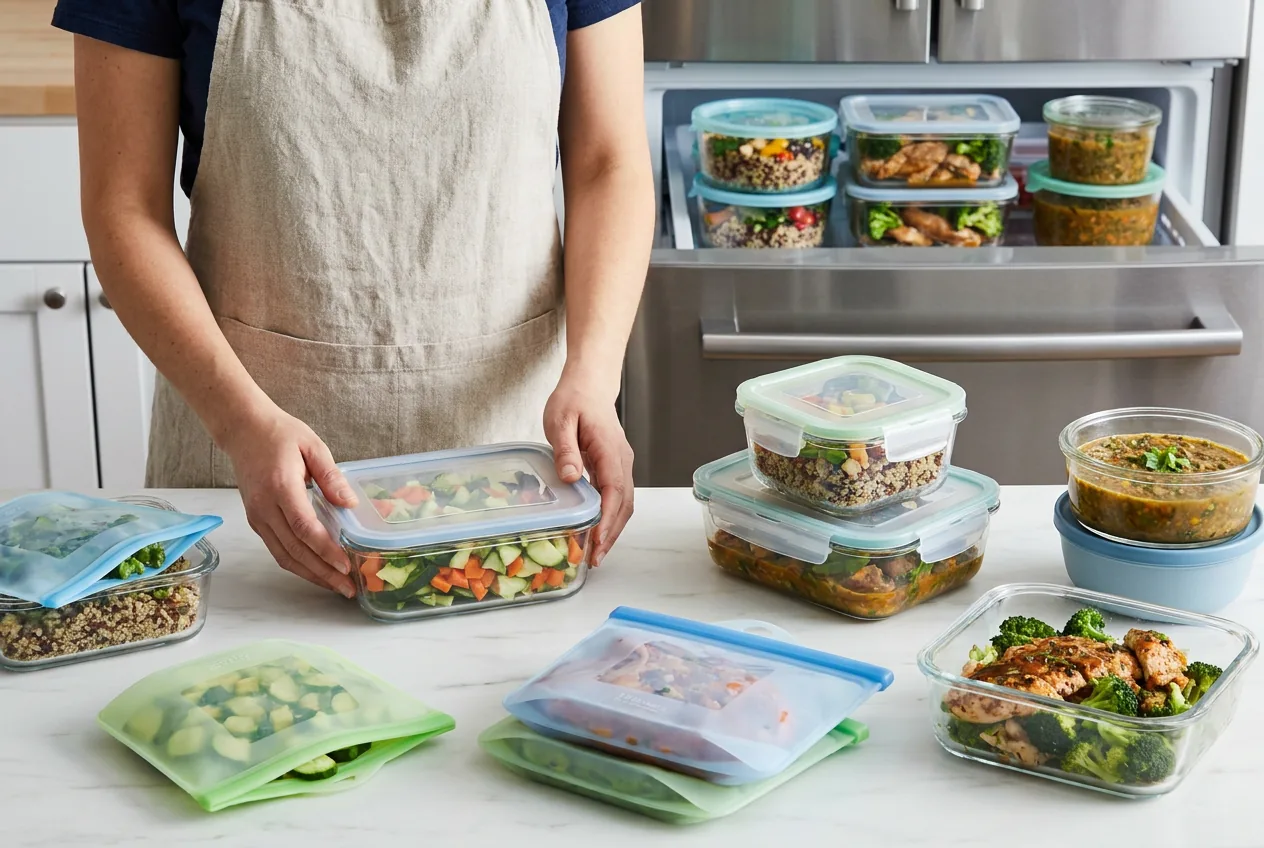
- Meal storage containers: 8–16 oz and 2–4 cup rigid plastic or glass with snap lids; 1–2 mil freeze-safe bags.
- Labeling supplies: waterproof freezer labels, permanent marker, date format (MM/DD/YYYY).
- Kitchen tools: large stockpots, sheet pans, slow cooker/instant pot, sharp knife, cutting board, digital food thermometer.
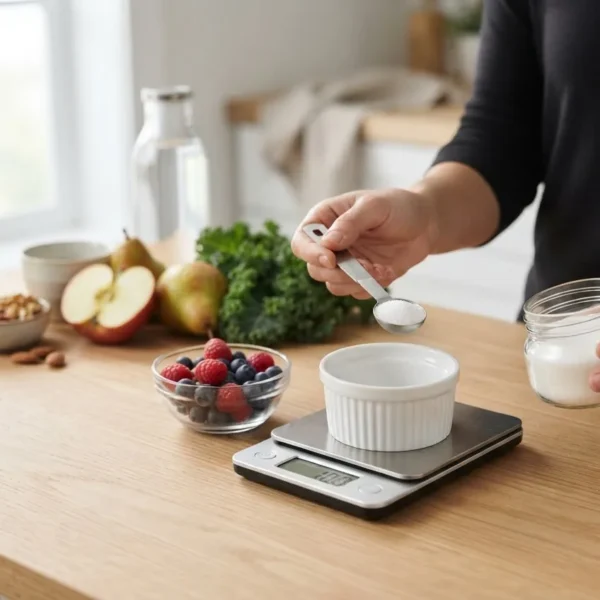
- Small kitchen scale (grams/oz), measuring cups/spoons, cooling racks.
- Ice bath setup: large bowl + ice for rapid cooling steps.
Introduction to Freezer Meal Prep for Healthy Living
This section gives a clear framework to understand why meal prep freezer meals work for healthy living in Texas-style households and how to integrate them into busy weeks.
Freezer cooking delivers time-saving meals, predictable portions, and consistent nutrition when you pick the right recipes and follow food storage tips. A focused session means breakfasts, lunches, or dinners are ready for busy workdays, extracurriculars, and travel. For broader healthy cooking inspiration that pairs well with your freezer strategy, see Yummiest Healthy Recipes Guide for Nutritious and Tasty Meals.
Advantages that matter: reduced food waste, cheaper per-serving cost, and improved consistency for portion control and nutrition. Nutrient retention in frozen vegetables and proteins is often comparable to fresh when blanched and frozen quickly — many dietitian resources confirm this (see external references later). With a practical freezer meal prep methodology, you avoid the twin pitfalls of bland reheated meals and unsafe storage.
Transition: Now that you understand the payoff, let’s go into the essential tips and best practices that make freezer meals actually work.
Essential Tips and Best Practices for Freezer Meal Prep
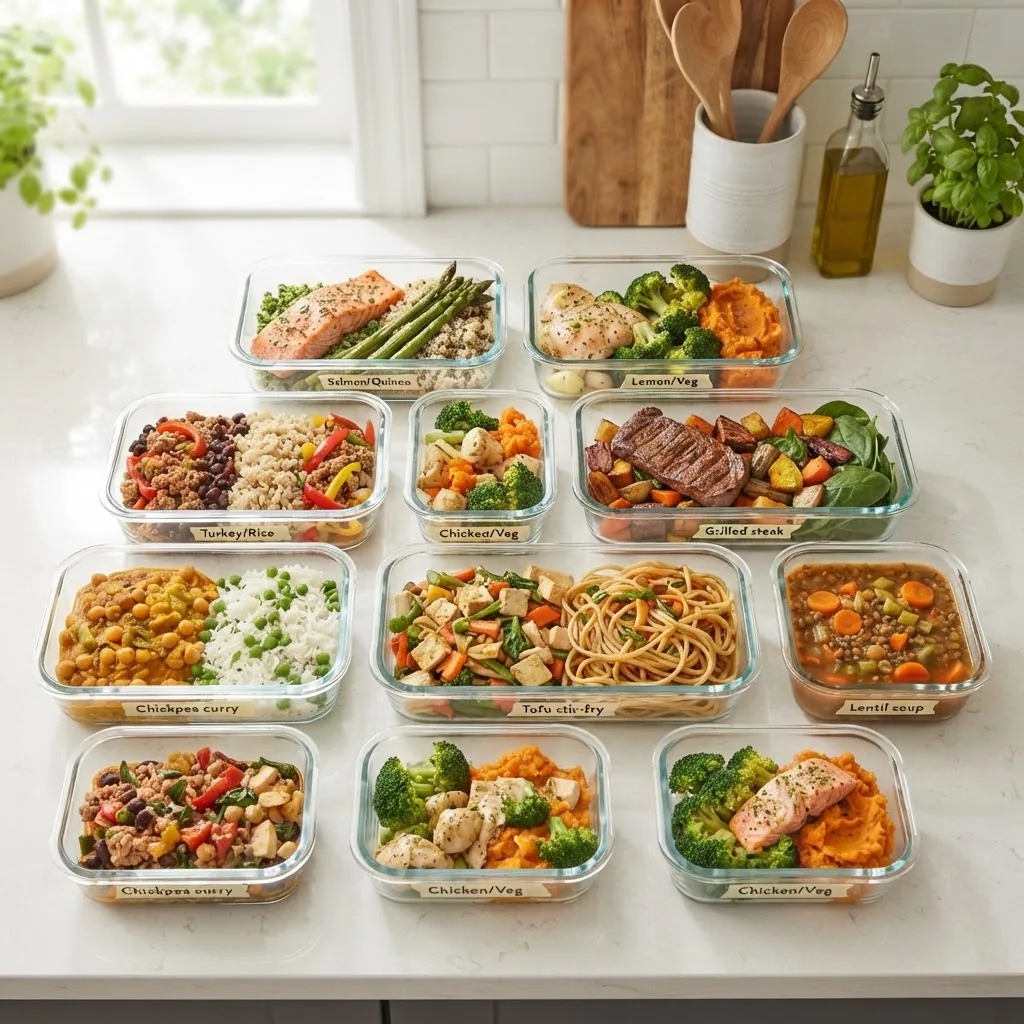
- Plan meals by protein and vegetable pairings. Choose 4–6 base recipes (one poultry, one fish, two plant-based, one beef/pork, one grain-based) to rotate. Aim for at least two vegetable types per meal to preserve variety and nutrients.
- Create a practical shopping list and batch strategy. Buy proteins in larger portions when on sale, and plan to blanch and freeze vegetables within 48 hours of purchase. Batch like techniques: roast all sheet-pan vegetables at once, use one-pot sauces to divide into portions later.
- Use the right containers and packaging. Freeze-safe rigid containers, tempered glass, and heavy-duty freezer bags minimize freezer burn. Leave 1/2 inch headspace for liquids. For soups or stews, freeze flat in bags for faster thawing.
- Prioritize quick cooling before freezing. Rapid cooling preserves texture and safety. Use ice baths for soups and large pots; divide into shallow pans (no deeper than 2 inches) to cool to 40°F within 4 hours, as recommended in food safety guidelines.
- Master meal portioning. Weigh portions using a kitchen scale: 4–6 oz cooked lean protein per adult serving, 1–1.5 cups veggies, and 1/2–1 cup grains. Number your desired servings and portion to those exact weights to keep make ahead freezer meals consistent.
- Keep meals freezer-friendly. Avoid high-water produce (e.g., cucumbers) or raw potatoes for long freezes without blanching. Use recipes designed as freezer friendly meals or adapt them (blanch, undercook pasta, or add dairy at reheating).
- Label everything with clear dates and reheating instructions. Write date frozen, contents, reheating method (microwave 2–3 minutes, oven 350°F for 25–35 minutes), and “use by” date — typical safe freezer storage times are 3 months for prepared meals containing vegetables, 4–6 months for meats; note USDA guidance below.
- Optimize freezer space and airflow. Store flat bags vertically once frozen for space-efficiency and quick inventory checks. Keep a high-traffic shelf for the upcoming week’s meals and long-term boxes in a chest freezer.
- Balance nutrition intentionally. Add leafy greens at the end of reheating or freeze them in separate packets. Consider adding a quick fresh side (salad, raw slaw) to complement reheated dishes and maintain vitamin C intake.
- Use ingredient swaps smartly. Swap heavy creams for low-fat coconut milk or blended silken tofu for curry bases to maintain texture after freezing. For low-sodium cooking, reduce salt pre-freeze and season after reheating.
- Leverage seasonal and affordable ingredients. Buy local produce in-season from Texas markets and freeze for later — for cost-effective choices, see affordable healthy foods.
- Keep a simple inventory system. Use a whiteboard or digital note with categories: breakfast, lunch, dinner, and month. Rotate oldest-first (FIFO) to avoid waste.
Transition: With those best practices in place, you’ll be able to choose and adapt recipes that freeze well — the next section gives a proven selection and preparation methods.
How to Choose and Prepare Recipes That Freeze Well
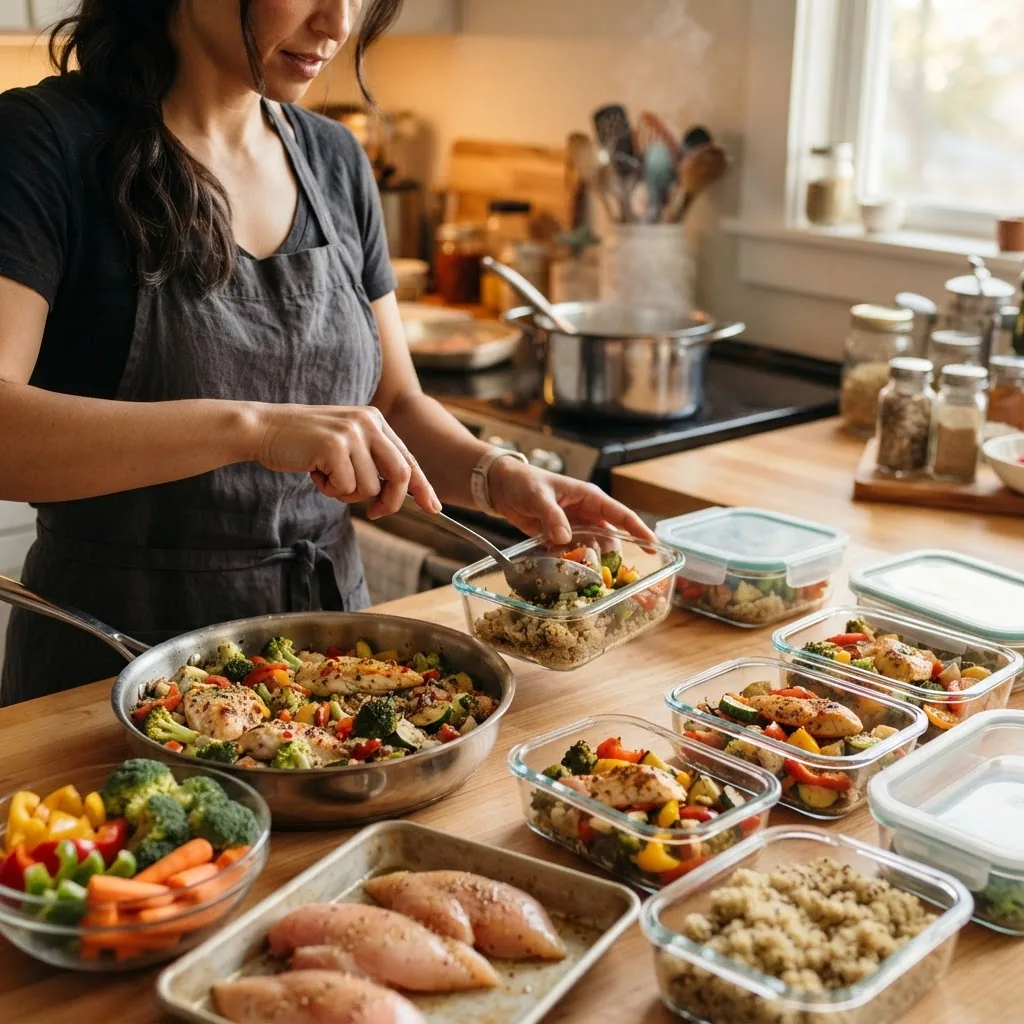
This how-to explains the selection criteria and stepwise preparation for recipes to freeze, with examples and cooking methods that preserve flavor and nutrition.
- Identify freezer-friendly recipe types.
Best candidates: soups, stews, casseroles, grain bowls, marinated proteins, and cooked legumes. Avoid recipes with raw lettuce, fresh cucumbers, or delicate sauces with raw dairy unless you plan to add them after reheating.
- Adapt recipes: reduce dairy and starchy breakdown.
For creamy dishes, use lower-fat alternatives or stir in dairy at reheating. For pasta dishes, undercook pasta by 2–3 minutes and finish cooking during reheating to prevent mush.
- Apply correct cooking techniques before freezing.
Examples: brown proteins fully then finish cooking during reheating, roast vegetables slightly underdone, and fully cook legumes and grains to safe internal temperatures. For fish, partially cook (to about 90%) before freezing to maintain texture.
- Blanch vegetables when needed.
Blanching preserves color and nutrients. Standard times: green beans 3 minutes, broccoli florets 3 minutes, cauliflower 3 minutes, carrots 2–3 minutes. Immediately plunge into an ice bath, drain thoroughly, then dry before packaging.
- Portion methodically.
Use measured cups or scale weights for individual servings (e.g., 1.5 cups chili, 1 cup grain + 4 oz protein). For family meals, package 3–4 servings per container. Mark each package with both portion count and weight.
- Use sauces and marinades strategically.
Freeze sauces separately when they contain fresh herbs or citrus to avoid bitterness. For meals with sauces, combine on reheating for fresher flavor.
- Flash-freeze delicate items.
For individually portioned meatballs, burgers, or cut fruit for smoothies, place pieces on a parchment-lined sheet pan spaced apart, freeze 1–2 hours until solid, then transfer to labeled bags. This prevents sticking and preserves shape.
- Examples: quick recipe adaptations.
– Turkey & Veg Chili: Brown 1.5 lb lean turkey, add 3 cups chopped tomatoes, 2 cups cooked beans, 1 cup diced carrot, 1 cup diced bell pepper; simmer 20 minutes. Cool, portion 2 cups per bag. Freeze flat.
– Southwest Grain Bowls: Roast 3 cups butternut squash, 2 cups black beans (cooked), 3 cups cooked quinoa. Pack 1 cup quinoa + 1 cup veg + 4 oz protein per container. Add lime wedges and cilantro packets frozen separately.
– Lentil Bolognese: Cook 3 cups lentils with tomato sauce and aromatics; portion over undercooked pasta or freeze sauce separately. - Test one recipe before committing to a batch.
Freeze a single portion, store 48 hours, thaw and reheat using your planned method. Note texture, flavor, and reheating time; adjust next batch choices accordingly.
- Case study: a weekly freezer cooking routine (practitioner example).
In my weekly routine I spend three hours on Sunday producing: 8 turkey-chili portions, 6 grain bowls, 8 breakfast burritos, and 4 braised chicken meals. I flash-freeze burritos and freeze sauces separately; rotating two protein templates keeps variety high and waste low. This reduced weeknight prep to 5–10 minutes for assembly and reheating.
Transition: Having selected and prepped recipes that tolerate freezing, here are concrete, easy and healthy recipe ideas you can apply immediately.
Easy and Healthy Freezer Meal Prep Ideas and Recipes
Below are practical easy freezer meal recipes and short descriptions you can follow or adapt. Each entry notes why it freezes well and reheating tips.
- Breakfast: Spinach & Feta Egg Muffins (make-ahead)
Description: Whisk 12 eggs with 1 cup milk (or dairy alternative), 2 cups chopped spinach (blanched), 1 cup crumbled feta, salt/pepper. Bake in muffin tins at 350°F for 18–20 minutes. Cool, flash-freeze on a tray 1 hour, then bag 2 muffins per serving.
Why it freezes well: Egg structure holds and reheats quickly in microwave (90–120 seconds). Thaw in refrigerator overnight for best texture.
- Lunch: Turkey & Veg Chili
Description: See prep example above. Portion 2 cups per bag. Reheat in a pot or microwave to 165°F internal temp.
Link: For portion-controlled pairings compatible with calorie goals, try 400 calorie meal options and 500 calorie dinner ideas for serving ideas.
- Dinner: Mediterranean Chicken & Farro Bake
Description: Sear 2–3 lb chicken thighs, combine with 3 cups cooked farro, 2 cups cherry tomatoes, 1 cup artichoke hearts, 1/2 cup olives, 1 cup low-sodium broth. Bake 25 minutes at 375°F until internal temp 165°F. Portion 1.5 cups per serving.
Why it freezes well: Grains and proteins hold texture when slightly undercooked before freezing. Reheat in oven 350°F for 20–25 minutes from frozen.
- Vegetarian: Lentil Shepherd’s Pie
Description: Cook 3 cups lentils with onion, garlic, 3 cups mixed veg, tomato paste, thyme. Top with mashed sweet potato. Bake or freeze pre-baked. Reheat covered at 375°F for 30–40 minutes.
For more plant-based ideas see vegetarian freezer meal recipes.
- One-Pot: Beef & Barley Stew
Description: Brown 2 lb stew beef, add 4 cups low-sodium beef broth, 2 cups barley, 3 cups root vegetables; simmer 45 minutes. Cool, portion 2 cups per container. Reheat on stovetop or microwave to 165°F.
- Seafood: Lemon Dill Salmon Packets
Description: Portion 4 oz salmon fillets, top with lemon, dill, and a drizzle of olive oil; place in parchment or freeze-safe bag with a splash of white wine or broth. Freeze flat. Bake from frozen, wrapped in foil, at 375°F for 20–25 minutes.
Tip: Freeze fish no longer than 3 months for best flavor.
- Grain Bowls: Southwest Quinoa + Black Beans
Description: Cook 4 cups quinoa, combine with 3 cups black beans, 2 cups corn, 2 cups roasted peppers, cumin, lime. Portion 1.5 cups per bowl. Freeze flat. Add avocado or fresh salsa after reheating.
Pair with easy lunch freezer meal prep ideas for midday routines.
- Comfort: Turkey Meatballs in Marinara
Description: Make 36 turkey meatballs, cook in sauce 10 minutes, cool and flash-freeze. Store 3–4 per bag. Reheat in sauce to 165°F and serve with undercooked pasta finished in sauce.
- Breakfast Make-Ahead: Whole-Wheat Breakfast Burritos
Description: Scramble eggs, add black beans, diced peppers, 1/2 cup shredded cheese per 2 burritos. Wrap tightly in foil or parchment, flash-freeze, then bag. Reheat 2–3 minutes in microwave or 20 minutes in a 350°F oven from frozen.
Useful for pairing with 600 calorie healthy dinner ideas when balancing day totals.
- Snack/Prep: Smoothie Packs
Description: Pre-portion 1 cup mixed berries, 1/2 banana slices, 1/2 cup spinach into freezer bags. Freeze flat. Blend from frozen with 1 cup milk or dairy alternative for smoothies.
Transition: Once meals are cooked and portioned, correct packaging and labeling are essential for food safety and organization.
Packaging, Labeling, and Storing Freezer Meals
Effective freezer meal packaging and refrigerator-to-freezer workflows are the backbone of any meal prep system. Follow these practical steps.
- Select containers:
- Rigid containers: 8–16 oz for single servings; 2–4 cup for family meals.
- Bags: 1–2 mil heavy-duty freezer bags for soups and flat-freezing.
- Use microwave- and oven-safe glass for oven reheating (allow thermal shock cooldown/heat time).
- Labeling protocol:
- Write: contents, date frozen (MM/DD/YYYY), “use by” date (3 months for most cooked veg meals; 4–6 months for meat-based dishes), reheating instructions (method and time), and portion count.
- Place label on the top/visible side; use permanent marker with waterproof labels to avoid smudging.
- Storage layout:
- Top shelf: quick-use week’s meals (1–2 weeks).
- Bottom/drawer or chest: long-term storage for monthly batches.
- Arrange flat bags vertically like file folders for easy scanning.
- Practical packing steps:
- Cool to ≤40°F within 4 hours: use ice bath or shallow pans no deeper than 2 inches.
- Remove excess air from bags, press flat, and seal; for rigid containers, leave 1/2 inch headspace for expansion.
- Freeze on a single layer until solid (2–4 hours) before stacking.
- Freezer organization tools:
- Inventory app or whiteboard with date columns (week 1, month 1–3).
- Transparent bins labeled by meal-type (breakfast/lunch/dinner) for quick access.
For official freezing and storage times, refer to USDA/Federal guidance and follow recommendations for cooked vs. raw storage to ensure quality and safety.
Transition: Packaging well gets you most of the way there — next, reheating and thawing safely preserves both safety and flavor.
Reheating and Using Freezer Meals Safely
Correct reheating and thawing maintain both food safety and the taste profile of your reheating freezer meals. Follow these stepwise guidelines and safety thresholds.
- Thawing methods (preferred order):
- Refrigerator thawing: Move meal from freezer to fridge 24 hours before use. This is the safest method; USDA/FSIS guidance supports refrigerator thawing to keep foods below 40°F while thawing. USDA/FSIS freezing & thawing guidance.
- Cold water thawing: Submerge sealed bag in cold water, changing water every 30 minutes until thawed (faster: 1–3 hours depending on thickness).
- Microwave thawing: Use microwave defrost setting and reheat immediately; this is acceptable for last-minute meals but can lead to partial cooking.
- Reheating to safe temperatures:
Always reheat to a minimum internal temperature of 165°F (74°C) for 15 seconds. Use a digital thermometer to confirm. For casseroles and thick stews, cover and reheat in preheated oven at 350°F until 165°F internal.
- Microwave reheating tips:
Stir halfway through microwaving to avoid cold spots. Use power settings: 70–80% power for thicker dishes, 100% for single-serve egg muffins (~90–120 seconds).
- Do not refreeze thawed cooked meals.
Refreezing after thawing reduces quality and increases safety risk unless the food was reheated to 165°F and cooled properly — even then flavor/texture degrade.
- Check for signs of spoilage:
Discard meals with off-odors, color changes, or freezer burn that affects palatability. Freezer burn is not a safety hazard but reduces flavor — see next FAQ for prevention.
- External food-safety resources:
Consult federal guidance for exact times and temperatures: USDA and FDA food safety resources provide current storage and reheating standards.
Transition: With reheating handled, the last major piece is long-term planning to make freezer cooking sustainable and aligned with your weekly and monthly goals.
Meal Prep Planning: Weekly and Monthly Strategies for Freezer Cooking
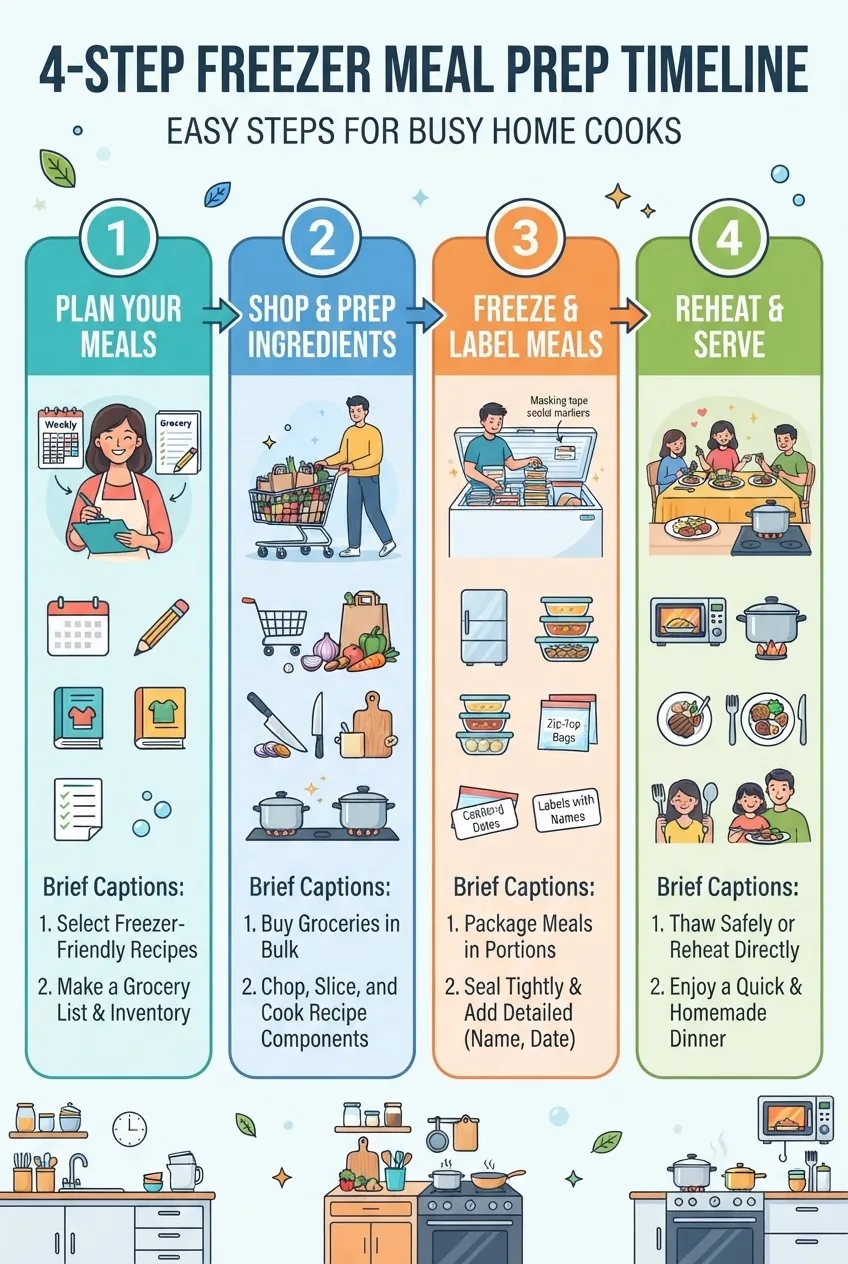
Successful freezer meal prep depends on clear meal planning strategies that balance variety, nutrition, and frequency. Here are pragmatic approaches for weekly and monthly planning with numbered steps to implement.
- Week-by-week plan (repeatable):
Step 1 — Sunday planning (30–45 minutes): choose 4 dinners, 5 lunches, and 5 breakfasts. Step 2 — Shop strategically for proteins, frozen staples, and seasonal produce. Step 3 — One 3–4 hour cook session to complete and freeze meals for the upcoming week.
- Monthly batch plan (1–2 sessions per month):
Step 1 — Pick 8–12 recipes you can freeze well (mix of breakfasts, lunches, dinners). Step 2 — Schedule two 4–6 hour cooking days (e.g., first and third Saturdays). Step 3 — Freeze and inventory with “use by” tracking to rotate batches.
- Balancing meal variety and nutrition:
Use a simple template: Protein + Grain/Starch + Two Veg types. Alternate proteins weekly to avoid monotony. Use sauces/sides frozen separately to adjust flavor at serving.
- Batch-sizing rules of thumb:
- Single adult: 7 lunches + 7 breakfasts = plan for 10–12 single portions per session.
- Small family of 3–4: 12–18 family-size portions per monthly session.
- Scale ingredient quantities by 25–50% for second batches to take advantage of oven/stove efficiency.
- Weekly rotation checklist (numbered steps):
- Inventory current freezer on Friday night (10–15 minutes).
- Pick 2–3 meals to thaw for upcoming week; move them to fridge Sunday.
- Plan grocery list for replenishment and fresh sides (salad, fruit) to complement reheated meals.
- Meal diversity techniques:
Make modular components instead of finished plates: Cook proteins, grains, and 2 veg types separately. Combine differently across meals (e.g., roasted chicken + quinoa + kale one night; chicken + brown rice + stir-fried veg another).
- Integrate breakfast make-ahead meals:
Prepare breakfast burritos, egg muffins, and smoothie packs in your freezer plan. For additional breakfast ideas see breakfast make-ahead meals.
- Support tools and apps:
Use a digital calendar to block cook days and a simple spreadsheet for inventory and FIFO dates. For broader weekly planning frameworks consult weekly meal prep strategies.
- When to streamline vs. diversify:
If you’re time-poor, standardize 3–4 core meals and rotate sides each week. If you seek variety, set a goal of one new freezer recipe per month to test and refine.
Common mistakes and how to avoid them (practitioner notes)
I once froze spinach directly in a stew and found it turned mushy; now I blanch and add leafy greens after reheating when texture matters. I also used thin sandwich bags for soups — they leaked. Lesson: use rated freezer bags and leave headspace. Finally, I used vague labels (“soup”) and then guessed; now I write contents and date clearly every time.
Checklist: confirm before you freeze
- Meals cooled to ≤40°F within 4 hours (ice bath if large batches).
- Portions weighed and match your serving plan (grams/oz noted).
- Labels include contents, freeze date (MM/DD/YYYY), “use by” date, and reheating method.
- Packages sealed with minimal air; bags frozen flat for space.
- Inventory logged and first-in-first-out order established.
When to call a professional
If you manage large-scale batches (more than 50 meals per month), consider consulting a commercial food-safety specialist for long-term storage planning or a registered dietitian to align freezer meal plans with medical dietary needs. Also call a professional if you experience repeated freezer malfunctions or inconsistent freezer temperatures below 0°F.
Transition: Final practical notes and safety reminders are collected below.