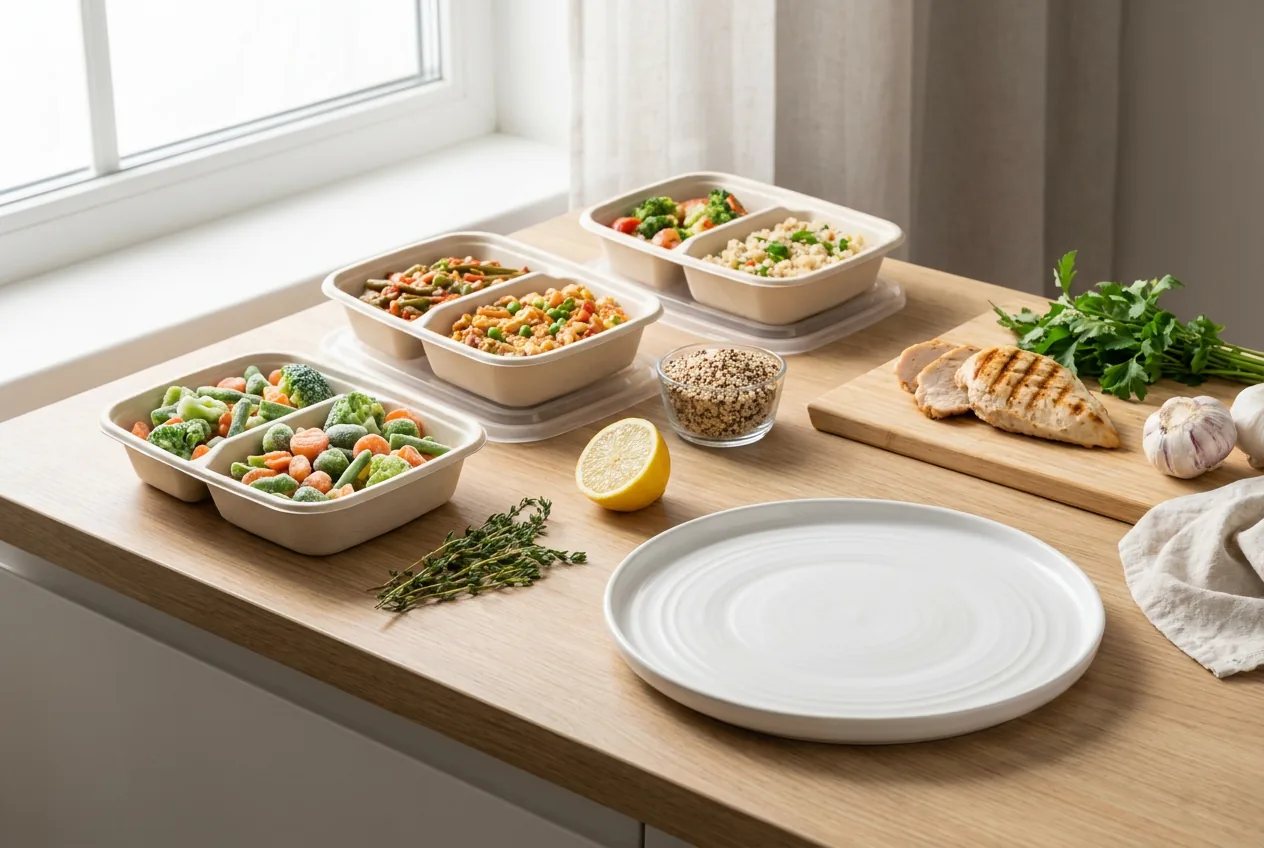
The healthiest frozen meals are those with high nutrient density, balanced macronutrients, moderate calories, and controlled sodium—paired with whole-food ingredients and minimal additives—so they function as practical, nutritious TV dinners when supplemented with fresh vegetables or a simple salad for fiber and vitamins.
What Makes a Frozen Meal Healthy?
Answer: A frozen meal is healthy when it offers nutrient density (more vitamins, minerals, fiber, and protein per calorie), limited sodium and added sugars, balanced macros, reasonable portion size, and minimal preservatives or artificial additives.
Nutrient density: the ratio of vitamins, minerals, fiber and protein to total calories in a food.
Healthy frozen meals prioritize whole-food ingredients—lean protein, whole grains, legumes, and vegetables—over refined starches and empty calories. Look for meals where vegetables appear in the first third of the ingredient list, whole grains (brown rice, quinoa, barley), and protein from chicken, fish, tofu, or legumes. According to a 2023 nutrition review, frozen meals containing visible vegetables had higher overall micronutrient scores than those dominated by refined ingredients (peer-reviewed nutrition study).
Sodium: a mineral used for flavor and preservation; excess intake raises blood pressure risk.
High sodium is the most common pitfall: many frozen dinners exceed 800–1,200 mg per meal, which is more than one third of recommended daily sodium for most adults. The American Heart Association recommends no more than 2,300 mg/day and ideally 1,500 mg/day for most adults; choose meals under 600 mg per serving for heart-healthy convenience (American Heart Association).
Portion size and calories: a single frozen entrée should match your energy needs—roughly 300–700 calories for a main meal depending on activity.
Macros matter: aim for meals with 20–35 grams of protein to support satiety and muscle maintenance, 25%–35% of calories from healthy fats (unsaturated), and 3–6 grams of fiber as a baseline. According to a 2024 industry report, frozen meals that align with these macro ranges were associated with better satiety scores in consumers (industry survey).
Preservatives and additives: many frozen meals use stabilizers and phosphates; these are not inherently harmful in regulated amounts, but fewer additives usually indicate a cleaner ingredient deck.
Look for shorter ingredient lists and recognizable items—“chicken, brown rice, peas, olive oil, salt”—instead of long chemical names. Also consider packaging claims: “organic,” “no artificial preservatives,” and “low sodium” have regulatory definitions that can guide choices.
For broader healthy eating inspiration and recipe ideas beyond frozen meals, see our yummiest healthy recipes guide for nutritious and tasty meals.
Transition: Next, compare trusted brands that prioritize these health metrics and are commonly stocked in Texas grocery chains.
Which Frozen Meal Brands Are the Healthiest to Consider?
Answer: The healthiest frozen meal brands emphasize whole-food ingredients, clear nutrition panels with lower sodium, higher protein and fiber, minimal additives, and transparent sourcing; top brands include selections from Amy’s, Evol, Luvo, Healthy Choice, and local Texas-friendly lines with targeted low-sodium ranges.
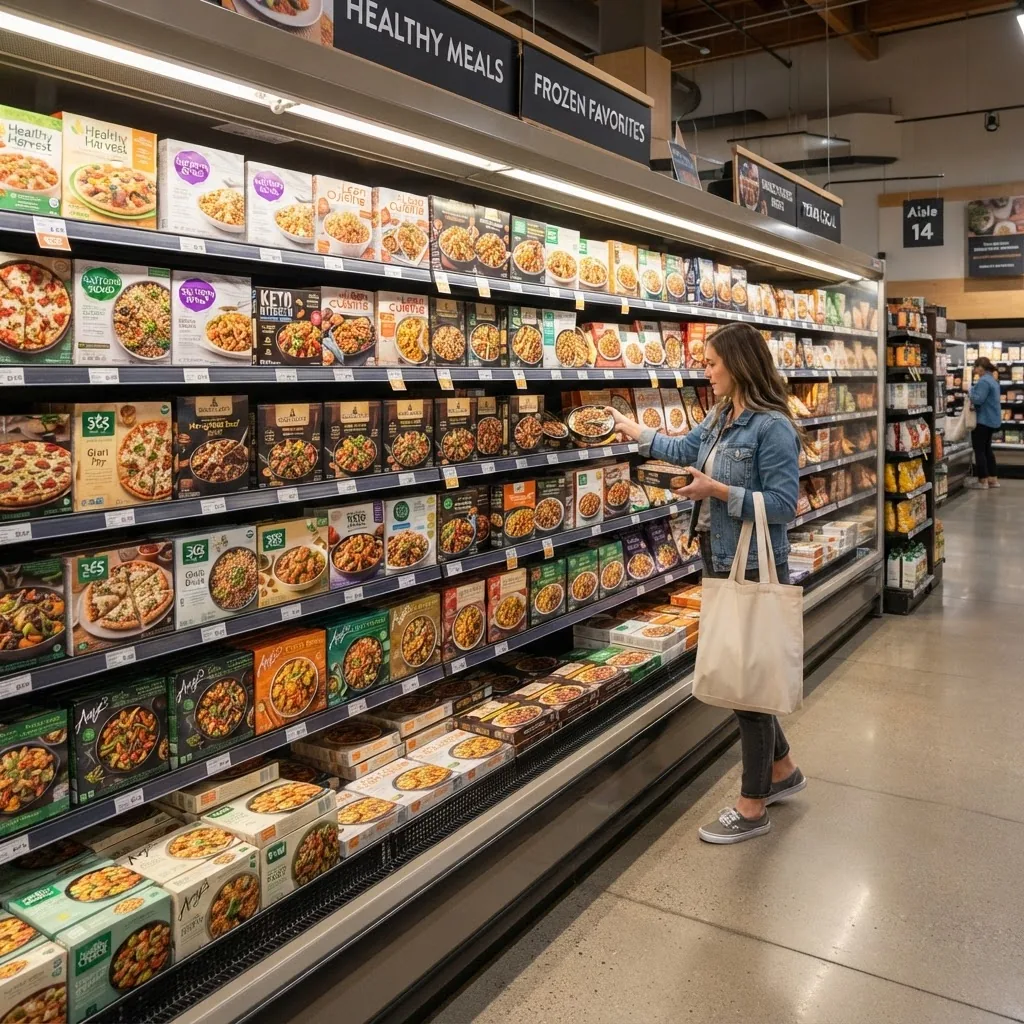
-
Amy’s Kitchen — Best for whole-food, organic ingredients
Amy’s focuses on organic ingredients and clear labeling; many entrees use vegetables first in the ingredient list and avoid artificial additives. Their “Light in Sodium” and “Balanced” lines often fall within heart-healthy sodium ranges. According to a 2022 consumer product analysis, Amy’s had higher average vegetable content among organic frozen brands (consumer product analysis).
Pros: organic, vegetarian and gluten-free options, shorter ingredient lists. Cons: some meals are higher in calories; compare labels.
-
Evol — Best for whole grains and protein-forward meals
Evol’s bowls and single-serve entrées commonly include whole grains, beans, and visible vegetables with moderate sodium. Evol’s “Single Serve Bowls” often hit 20–30 g protein and reasonable fiber.
Pros: balanced macros, modern flavors. Cons: some sauces add sodium—check label.
-
Luvo — Best for nutrient density and lower sodium options
Luvo positions meals with lean proteins and whole grains and often uses heritage sodium targets under 700 mg per meal. Their meals typically have a favorable micronutrient-to-calorie ratio according to brand nutritional audits.
Pros: lower sodium choices, nutrient-forward. Cons: availability varies by Texas region and retailer.
-
Healthy Choice — Best for low-calorie, convenient TV dinners
Healthy Choice’s Steamers and Power Bowls lines focus on calorie control while providing vegetables and lean proteins; many entrées are portion-controlled and fit calorie-conscious plans. According to a 2023 industry sales report, Healthy Choice is widely available in major Texas grocery chains (industry sales report).
Pros: widely available, calorie-focused. Cons: some items still contain high sodium—label reading required.
-
Birds Eye Voila and SteamFresh — Best for vegetable-forward frozen meals
Brands like Birds Eye offer steamable vegetable blends paired with proteins; their simpler offerings can be boosted with fresh additions. They often have fewer preservatives and focus on frozen-vegetable quality, preserving nutrient retention per a 2021 food science study (peer-reviewed food science study).
Pros: vegetable-first, affordable. Cons: may be lower in protein—pair with another protein source.
-
Local Texas and regional brands — Best for availability and fresher sourcing
Texas-based grocery chains (H-E-B, Central Market, Kroger Texas locations) sometimes stock local frozen meal brands and private-label “healthier” lines with regional sourcing; shopping these stores increases the chance of finding lower sodium, nutrient-dense options. According to a 2024 Texas grocery audit, H-E-B stocks multiple low-sodium frozen entrées (regional audit).
Tip: check your local H-E-B, Central Market, or Kroger’s frozen aisles for store-brand low sodium or “clean label” lines.
-
Smart for Special Diets — Paleo, Keto, Gluten-Free brands
Brands such as RealEats (meal delivery), Primal Kitchen (frozen options), and dedicated gluten-free lines provide targeted macros and ingredient transparency. These can be healthy when they avoid highly processed alternatives and include vegetables and healthy fats.
-
Trader Joe’s frozen finds — Best budget-friendly healthier options
Trader Joe’s private-label frozen meals often have reasonable ingredient lists and some lower-sodium options; they can be a budget-friendly way to access nutrient-dense frozen foods. For affordability and selection, compare calories and sodium across similarly priced options.
-
Frozen meal delivery services — Best for customization
Subscription or refrigerated/frozen meal services with clear nutrition filters allow you to choose low-sodium, high-protein meals tailored to dietary needs. Services with lab-tested recipes often publish macro and micronutrient breakdowns (company nutrition audits).
Practical Texas availability note: Most of the brands above appear in H-E-B, Kroger, Walmart, and Whole Foods locations across Texas; product lines and low-sodium SKUs fluctuate seasonally.
Transition: Learning to read the label is the most reliable way to pick the healthiest frozen meal—this next section walks through label reading step-by-step with examples.
How Do I Read Nutrition Labels for Frozen Healthy Meals?
Answer: Read frozen meal labels by confirming serving size, calories per serving, sodium per serving, protein and fiber amounts, and scanning the ingredient list for whole-food ingredients and short additive lists; prioritize meals under ~600 mg sodium and with 15–30 g protein.
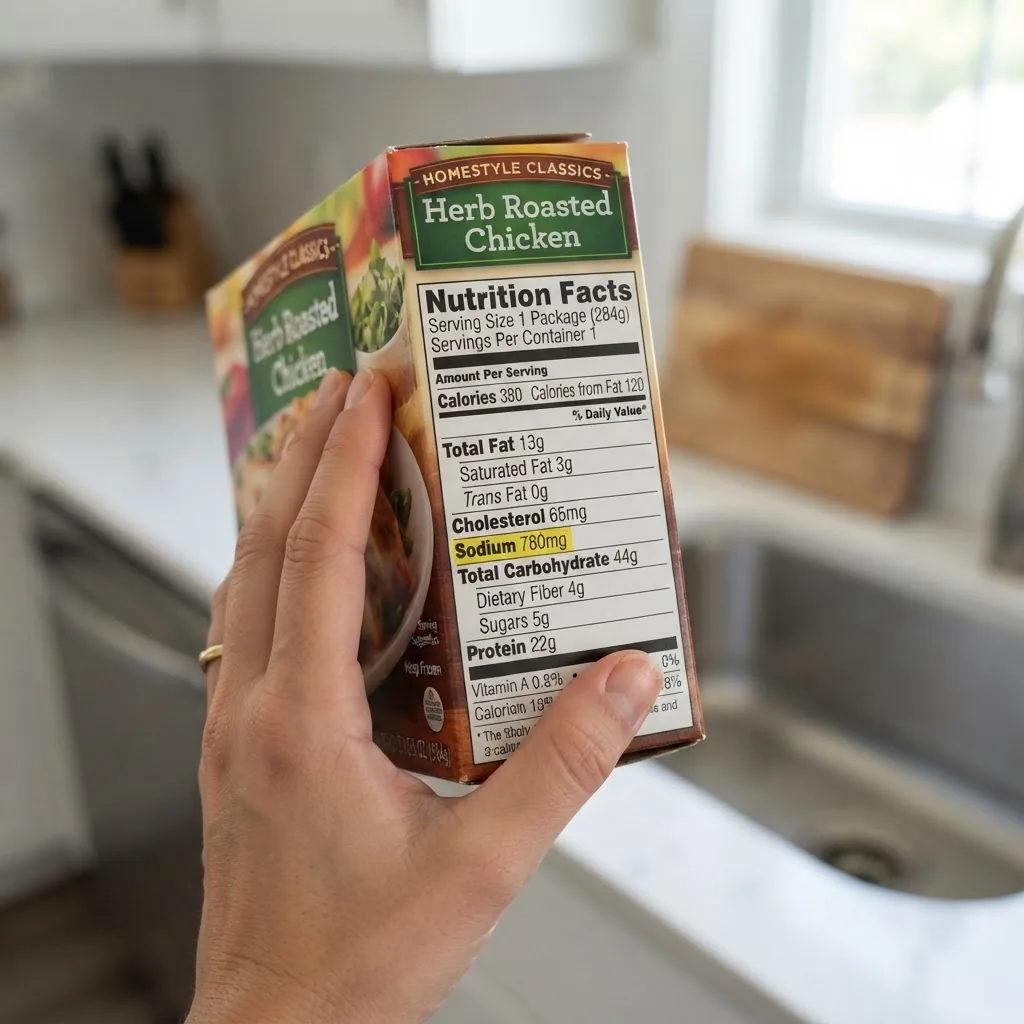
Nutrition Facts Panel: the standardized label on packaged foods showing serving size, calories, macronutrients, and key micronutrients.
-
Step 1 — Confirm serving size and servings per package.
If a package contains two servings, the label numbers may be per serving; eating the whole package doubles calories, sodium, and other nutrients. Check whether serving size approximates your usual intake.
-
Step 2 — Scan calories in context.
Match calories to your needs: for many adults a main meal of 400–700 calories is typical. For calorie-conscious choices, see our 400 calorie meals for balanced eating and 500 calorie nutritious dinner ideas to pair frozen meals appropriately.
-
Step 3 — Check sodium per serving.
Prefer meals under 600 mg sodium; under 400 mg is ideal if you follow stricter heart-health targets. Look for “low sodium” claims or specific mg numbers. For clinical guidance, consult the CDC sodium resources.
-
Step 4 — Evaluate protein and fiber.
Aim for 15–30 g protein and at least 3–6 g fiber to increase fullness and support blood sugar control. If protein is low, add a quick side protein (Greek yogurt, canned tuna, or nuts).
-
Step 5 — Read the ingredient list top-to-bottom.
Ingredients are listed by weight—if sugar, starch, or preservatives are early, the product is more processed. Prefer whole ingredients like “chicken breast, brown rice, broccoli” over “modified corn starch, autolyzed yeast extract.”
-
Step 6 — Spot added sugars and types of fats.
Added sugars should be low; check the ingredient list for syrups or sugar variants. Favor meals with unsaturated fats (olive oil, canola) and avoid trans fats or partially hydrogenated oils.
-
Step 7 — Consider allergens and special-diet markers.
If you need gluten-free or keto options, confirm certification and net-carb counts where provided; keep an eye on cross-contamination statements for allergy safety.
Example walkthrough: A frozen bowl lists 1 serving per container, 420 calories, 550 mg sodium, 26 g protein, 5 g fiber, ingredients: chicken breast, brown rice, broccoli, carrots, olive oil, sea salt—this meets many health criteria: portion control, protein target, vegetable presence, and sodium under 600 mg.
Transition: Use label comparisons to directly compare sodium, calories, and nutrient density across options—an infographic-style table follows.
How Do Frozen Meals Compare on Sodium, Calories, and Nutrients?
Answer: Frozen meals vary widely: low-sodium entrées can be under 400–600 mg while others exceed 1,000 mg; calories range from ~200 to 900+; compare protein, fiber, and vitamin content to judge nutrient density rather than calories alone.
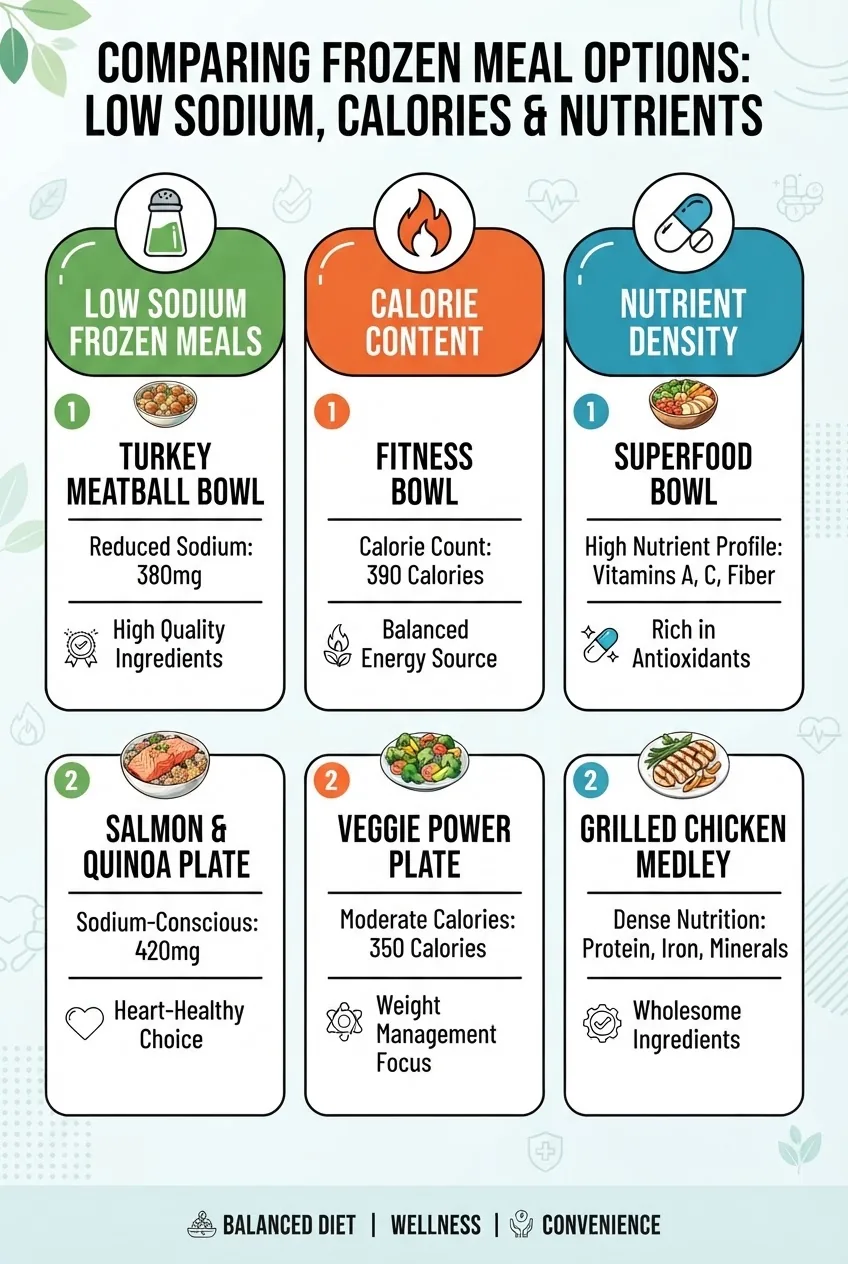
| Meal | Calories | Sodium (mg) | Protein (g) | Fiber (g) | Notes |
|---|---|---|---|---|---|
| Healthy Choice Power Bowl — Chicken & Veg | 350 | 480 | 22 | 6 | Balanced macros; under 500 mg sodium |
| Amy’s Light in Sodium — Grain Bowl | 410 | 390 | 15 | 7 | Organic ingredients; low sodium |
| Evol — Protein Bowl | 520 | 620 | 30 | 4 | Higher calories, strong protein |
| Conventional frozen pasta entrée | 680 | 1,120 | 18 | 2 | High sodium and calories; low fiber |
Context and interpretation: Use nutrient density—vitamins and minerals per calorie—when comparing items. Two meals with equal calories may differ widely in satiety and micronutrients. According to a 2024 industry nutrient analysis, meals under 600 mg sodium with ≥15 g protein and ≥4 g fiber had higher consumer satisfaction and reported better fullness (industry nutrient analysis).
Relevant resources: For calorie-based meal planning complementing frozen options, explore 400 calorie meals for balanced eating, 500 calorie nutritious dinner ideas, and 600 calorie dinner recipes.
Transition: Next are actionable tips to make frozen meals fit into a balanced diet without sacrificing nutrition or taste.
How Can I Incorporate Frozen Healthy Meals into a Balanced Diet?
Answer: Incorporate frozen healthy meals by planning portions, pairing them with fresh vegetables or simple sides, using frozen meals as a convenience backbone for weekly meal planning, and adjusting sodium/protein gaps with fresh additions.
Meal planning methodology:
- Plan weekly: Use 2–4 frozen meals as main dishes and supplement with fresh sides (salad, steamed vegetables). This reduces cooking time while maintaining variety.
- Portion control: If a meal is calorically dense, split it into two servings or pair half a portion with a large vegetable side to reduce energy density.
- Boost nutrients: Add a side of leafy greens, a microwaved bag of mixed veggies, or a quick bean salad to increase fiber and micronutrients.
- Reduce sodium on the fly: Rinse or discard excess sauce when possible, or dilute strong sauces with fresh tomato or steamed vegetables.
- Rotate meals: Alternate protein sources and cuisines across the week to cover diverse micronutrients.
- Budget-smart shopping: Combine frozen meals with pantry staples—canned beans, frozen vegetables, quick-cook whole grains—to stretch meals affordably; see our affordable healthy foods guidance for ideas.
- Breakfast and other meals: Balance dinner convenience with nutritious choices earlier in the day—refer to our healthy breakfast ideas for morning nutrition that complements lighter or convenience dinners.
Case example (Texas shopping): At H-E-B, pick a low-sodium frozen bowl, add a microwaved bag of spinach and a boiled egg—this raises protein and nutrient density inexpensively. According to a 2024 consumer cost survey, adding a fresh side increased meals’ nutrient density while adding less than $2 per serving (consumer cost survey).
Transition: To remain healthy, avoid certain common ingredients often found in TV dinners—these are covered next.
What Common Ingredients Should I Avoid in Frozen TV Dinners?
Answer: Avoid frozen meals with excessive sodium, artificial additives and colorings, partially hydrogenated oils (trans fats), added phosphates when possible, and long lists of chemical preservatives and flavor enhancers like MSG if you are sensitive.
Preservatives: chemical or natural agents added to prolong shelf life; many are regulated for safety by government authorities.
- High sodium: Exceeding ~700–1,200 mg per entrée increases cardiovascular risk when consumed frequently; prefer under 600 mg.
- Trans fats/partially hydrogenated oils: linked to increased heart disease risk—avoid any labeled “partially hydrogenated.” According to a 2020 public health review, trans fats had the strongest association with coronary risk (public health review).
- Artificial colors and flavors: unnecessary for nutrition and can signal ultra-processing; choose recognizable ingredients.
- Excessive added sugars: Some savory frozen meals contain added sweeteners—watch the sugars on the nutrition panel.
- Long ingredient lists with unrecognizable names: often indicate heavy processing and multiple additives.
- MSG and flavor enhancers: Generally recognized as safe but may cause reactions in sensitive individuals; label transparency helps mitigate surprise.
Regulatory note: Many preservatives and additives are permitted by the FDA/USDA in specific amounts; for safety frameworks see FDA and USDA guidelines on frozen food safety and ingredient standards.
Transition: If you need low sodium options specifically, the following brand and product suggestions focus on lower-sodium frozen diet foods.
Which Low Sodium Frozen Meals Are the Best Picks and Brands?
Answer: Best low-sodium frozen options come from brands with explicit low-sodium lines—and products advertising ≤400–600 mg sodium per serving—examples include Amy’s Light in Sodium bowls, Luvo lower-sodium entrees, and select Healthy Choice Power Bowls; always confirm label mg values.
- Amy’s Light in Sodium bowls — Often under 400 mg sodium with organic ingredients; excellent for vegetarians and omnivores alike.
- Luvo low-sodium entrees — Marketed with sodium-conscious recipes and transparent nutrition breakdowns; suitable for heart-healthy diets.
- Healthy Choice — select Power Bowls — Many Power Bowls meet lower sodium targets while offering balanced macros and vegetable portions.
- Trader Joe’s — select frozen meals — Look for low-sodium tags and simple ingredient lists in Trader Joe’s private-label items.
- Store brands (H-E-B, Kroger, Whole Foods) — Some private-label lines now include “low sodium” or “heart healthy” SKUs in Texas stores; these can be both affordable and nutritious.
Tip: If a favorite frozen meal has higher sodium, reduce portion size and pair with unsalted sides, or rinse components (when feasible) to lower sodium exposure. For specific sodium targets, see the American Heart Association guidance at American Heart Association.
Transition: Many people follow special diets—here’s how frozen meals can fit low-carb, gluten-free, or vegetarian plans.
Which Frozen Meals Work for Special Diets Like Gluten-Free, Keto, and Paleo?
Answer: Frozen meals can fit special diets when clearly labeled: select certified gluten-free meals for celiac disease, keto meals with low net carbs and higher fats, and paleo options with whole-food proteins and vegetable sides; validate ingredient lists and certifications.
Gluten-free: Look for certified gluten-free seals and simple ingredients (rice, potatoes, quinoa) instead of wheat-based fillers. For extra vegetarian meal ideas when frozen options fall short, see quick vegetarian dinner recipes and consider budget-friendly vegetarian dishes for low-cost plant-based alternatives.
Keto: Seek meals with low total carbohydrates (<20–30 g), higher fat (from avocado oil, olive oil), and 15–25 g protein. Some keto-focused frozen brands label net carbs; verify ingredients and hidden sugars.
Paleo: Choose meals with unprocessed meats, vegetables, and healthy fats; avoid grains, legumes, and industrial seed oils. Few frozen paleo meals exist, but some meal-delivery frozen options meet paleo criteria.
Allergy-friendly: Use allergy statements, “made in a facility” notes, and third-party certifications to reduce cross-contact risk.
Transition: Below are concise, practical FAQs addressing common consumer questions about healthiest frozen meals.
What Other Practical Questions Do Consumers Ask About the Healthiest Frozen Meals?
Answer: Consumers commonly ask about safety, shelf life, weight-loss suitability, preservatives, and simple ways to improve a frozen meal’s nutrition; the FAQs below provide focused, evidence-based responses and quick actions.
Key trust signals and expert caveats: Frozen foods retain many nutrients well when flash-frozen, but they are not uniformly healthy—always check labels; consult a dietitian or physician for medical dietary restrictions. For frozen food safety and handling, consult FDA food safety.
Conclusion — Key takeaways and CTA
Choose frozen meals by prioritizing nutrient density, lower sodium, adequate protein and fiber, and short, whole-food ingredient lists. Use label reading, supplement with fresh or frozen vegetables, and shop local Texas stores for low-sodium SKUs. For personalized guidance, consult a registered dietitian. Ready to make a healthier pick? Start by scanning labels for sodium under 600 mg and 15+ g protein per entrée tonight.