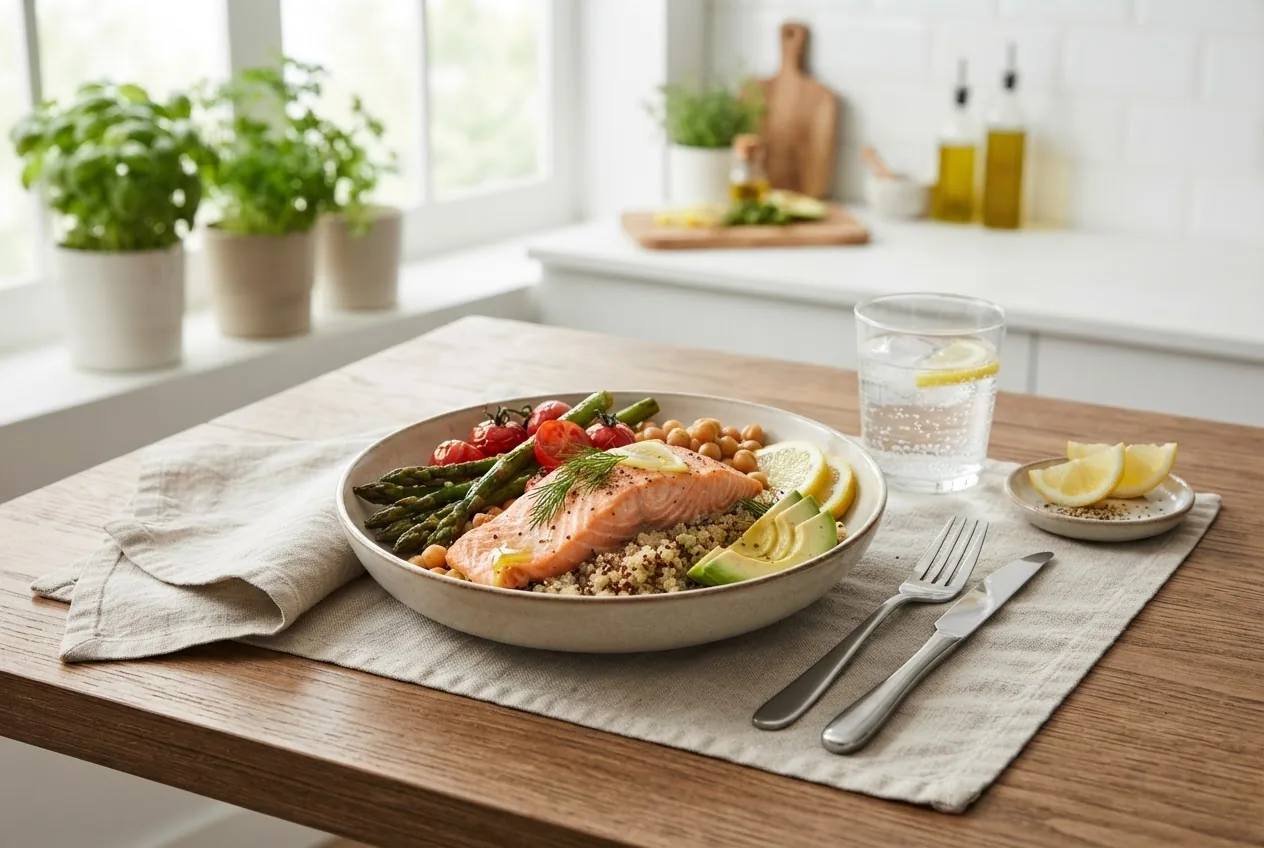
What you’ll achieve: By the end you’ll have a week-long set of practical, tested low cholesterol recipes, a repeatable dinner plan and low-carb options you can make in 15–40 minutes. Total upfront work: about 90–120 minutes to meal-plan and one 60–90 minute cook session. Skill level: basic home-cook—knife skills, oven, and stovetop experience assumed.
This hands-on guide walks you step-by-step through choosing cholesterol-friendly ingredients, cooking methods that protect heart-healthy nutrients, and 25+ concrete recipes and menus you can start using tonight.
Before you start
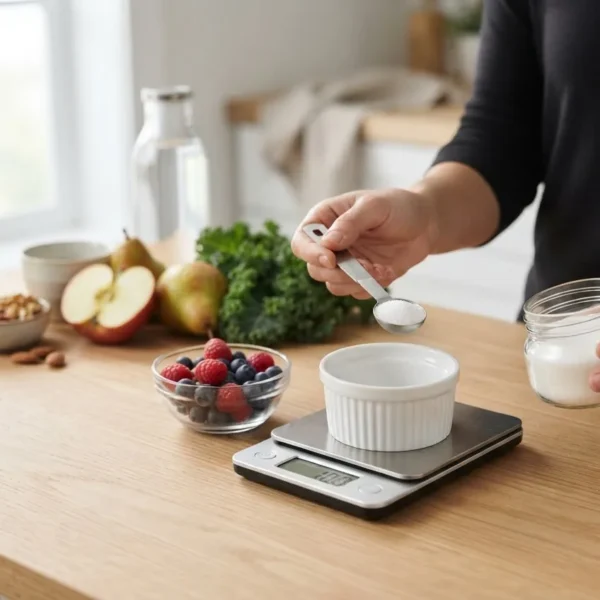
- Tools: 10″ nonstick skillet, baking sheet, saucepan, steamer basket, food scale, measuring cups.
- Pantry basics: rolled oats (1 lb), extra-virgin olive oil (250 ml), canned chickpeas (2 cans), raw walnuts (8 oz), quinoa (1 lb), low-sodium broth (1 L), ground flaxseed (6 oz).
- Fresh goods to buy: 2 salmon fillets (6 oz each), 1 avocado, 1 bunch spinach, 1 head broccoli, seasonal fruit (blueberries or citrus).
- Timing: plan a 60–90 minute session for batch-cooking grains, legumes and a protein; midweek quick cooks are 15–25 minutes.
- Medical: have last lipid numbers handy and clear major diet changes with your clinician if you take statins or have complex conditions.
Understanding Low Cholesterol Diets and Their Importance
A practical low cholesterol diet focuses on reducing circulating LDL (“bad”) cholesterol and supporting HDL (“good”) cholesterol through food choices and cooking methods. Here you’ll learn the how and why, with definitions and evidence so you can design meals that actually change blood lipids.
- Define the targets: LDL (low-density lipoprotein) is the “bad” cholesterol linked to plaque build-up; HDL (high-density lipoprotein) helps remove cholesterol from arteries. Blood cholesterol is measured in mg/dL; aim reductions vary by risk profile—work with your provider.
- Understand dietary cholesterol vs blood cholesterol: Dietary cholesterol (from eggs, shellfish) has less impact on blood LDL than saturated and trans fats for most people. Replace saturated fats with unsaturated fats and add soluble fiber to lower LDL.
- Use evidence-based tactics: Soluble fiber (oats, psyllium, beans) binds bile and lowers LDL; plant sterols block cholesterol absorption; omega-3 fats (fatty fish) improve triglycerides. According to a 2024 American Heart Association report, dietary patterns rich in soluble fiber and plant-based foods reduce LDL and cardiovascular risk—see the American Heart Association for guidelines.
- Prioritize cooking methods: Prefer baking, grilling, steaming, and poaching over frying. For example, bake salmon at 375°F for 12–14 minutes rather than pan-frying in butter; steaming broccoli for 4–6 minutes retains nutrients without added fat.
- Quantify nutrient goals: Aim for 25–30 grams of soluble fiber per day (mix oats, beans, fruits), 1–2 servings of fatty fish per week (3.5–4 oz per serving), and keep saturated fat under 7% of daily calories if managing high LDL.
- Measure outcomes: Expect dietary changes to show a measurable LDL drop in 4–12 weeks. According to a 2023 CDC report on cholesterol, lifestyle changes show meaningful population-level improvements when adopted consistently.
Yummiest Healthy Recipes Guide for Nutritious and Tasty Meals
Transition: Now that you understand the targets and science, let’s list the ingredients that actually move the needle on cholesterol.
Key Ingredients for Cholesterol Busting Recipes
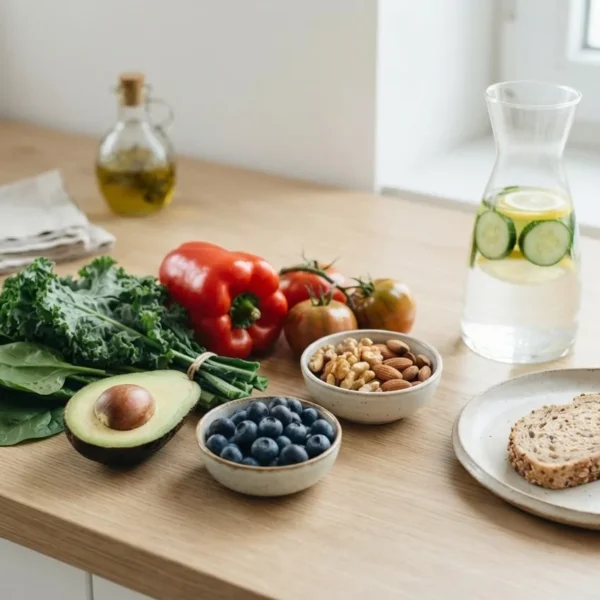
Use these ingredients as the backbone of weeknight cooking. Each entry includes the practical dose and a short nutritional rationale you can use when shopping in Texas markets or on a budget.
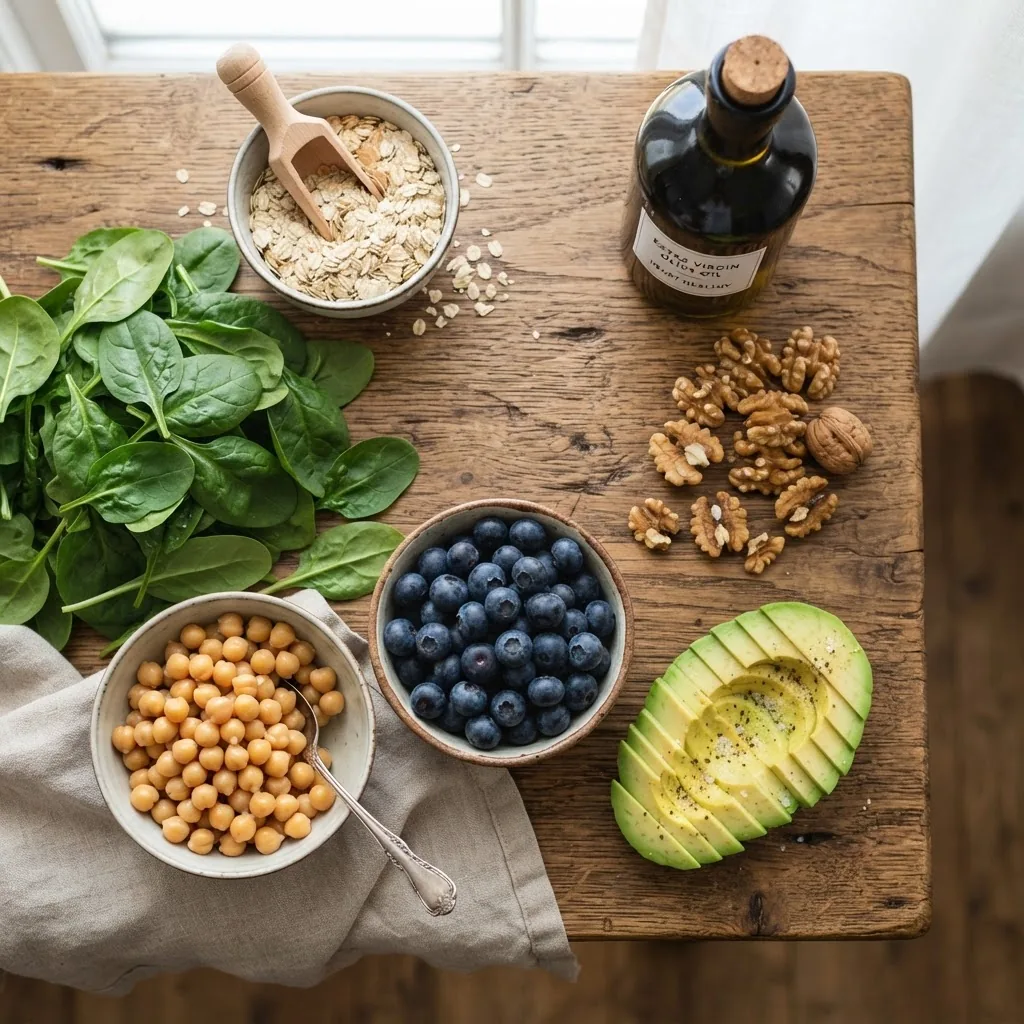
- Oats (rolled oats): 1/2 cup cooked oats provides ~2–3 g soluble fiber; eat daily at breakfast or in muffins to lower LDL. Soluble fiber reduces cholesterol absorption—meta-analyses show 3–5% LDL reductions with ~3–10 g/day soluble fiber.
- Nuts (walnuts, almonds): 1 oz (about 14 walnut halves) daily adds mono- and polyunsaturated fats and plant sterols. Nuts improve lipid profiles without raising weight when eaten in place of high-SFA snacks. For budget options see budget-friendly healthy foods.
- Legumes (beans, lentils, chickpeas): 1 cup cooked lentils = 15–16 g fiber, half soluble; swaps for processed meats reduce LDL and provide plant protein for Texas-style chili or salads.
- Olive oil (extra-virgin): Use 1–2 tbsp/day as a replacement for butter; provides heart-healthy monounsaturated fat and preserves flavor in dressings and sautés.
- Fatty fish (salmon, mackerel): 3.5–4 oz cooked twice weekly supplies ~1–2 g EPA/DHA to lower triglycerides and provide anti-inflammatory benefits. Grilled or baked at 375°F for 12–18 minutes keeps texture and nutrients.
- Fruits and vegetables: Aim for 5+ servings daily. Citrus and berries are high in soluble pectin and polyphenols; leafy greens add magnesium and nitrate-rich vasodilators that support heart health.
- Plant sterol-fortified foods: Look for spreads or yogurts with plant sterols (1.5–3 g/day shown to reduce LDL 6–12%). Use as an occasional swap, not a sole strategy.
- Whole grains and quinoa: Swap white rice for quinoa or brown rice — 1 cup cooked quinoa provides fiber, protein and micronutrients that support cholesterol lowering and satiety.
- Avocado: 1/4–1/2 small avocado daily offers monounsaturated fat and fiber; use in dressings, tacos, or atop grilled proteins.
Transition: With ingredients in your pantry, here are clear dinner recipes you can prepare quickly that emphasize the cooking methods and portion sizes needed to lower cholesterol.
Easy Low Cholesterol Dinner Recipes for Everyday Cooking
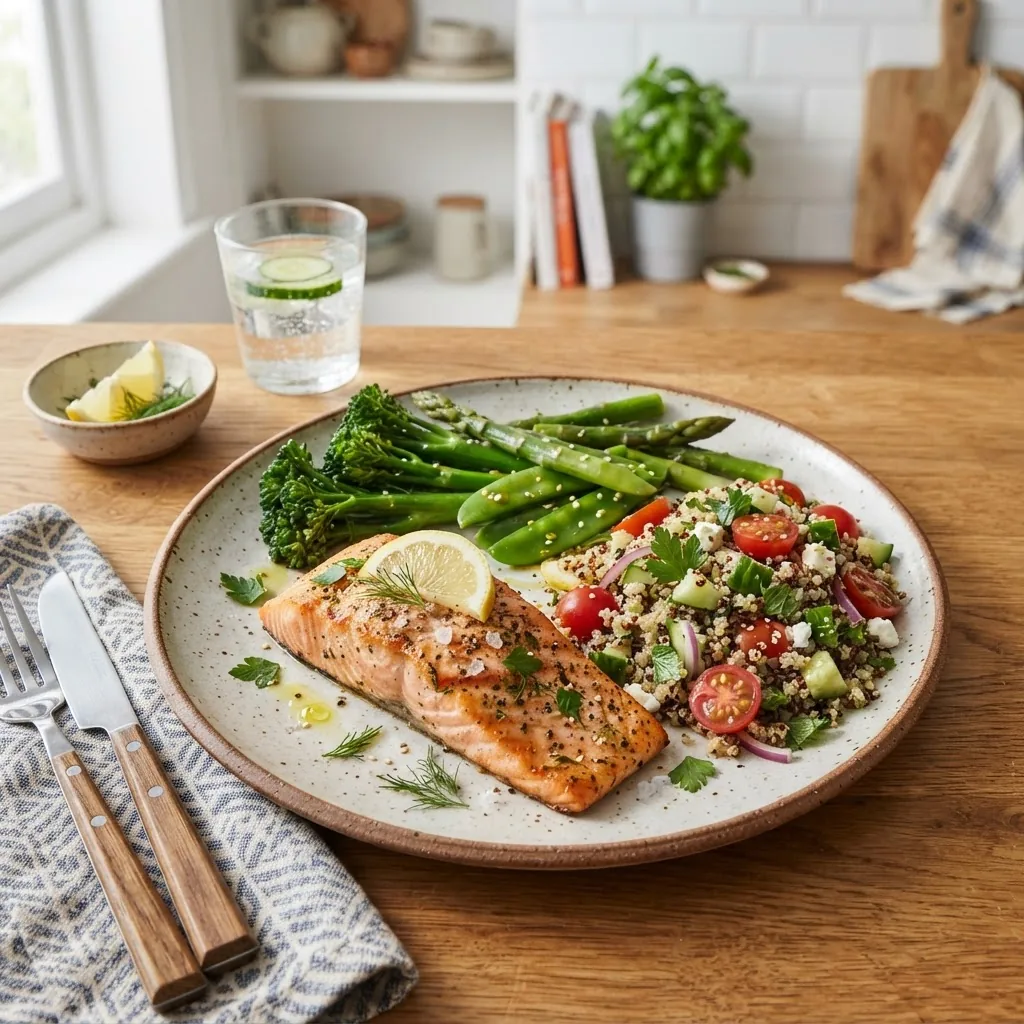
This numbered list gives 8–10 practical dinners with prep timings, portions and the specific cholesterol-busting mechanism (fiber, plant sterols, omega-3s, lower saturated fat). For calorie-capped choices see nutritious 500 calorie dinner ideas and larger portions see 600 calorie healthy dinner recipes.
- Grilled salmon with quinoa & steamed broccoli — 25 minutes: 4 oz salmon, 1/2 cup cooked quinoa, 1 cup steamed broccoli. Health benefit: omega-3s (EPA/DHA) lower triglycerides; fiber from quinoa and broccoli supports LDL reduction. Cook salmon at 400°F grill or broil 10–12 minutes.
- Tex-Mex black bean skillet — 25 minutes: 1 cup cooked black beans, 1/2 cup brown rice, 1/2 cup corn, chopped tomatoes, 1 tsp olive oil, chili powder. Health: soluble fiber from beans reduces LDL; replace refried beans and cheese-heavy toppings to cut saturated fat.
- Baked lemon-garlic tilapia with sautéed spinach — 20 minutes: 4 oz tilapia baked at 375°F for 10–12 minutes; 2 cups spinach sautéed in 1 tsp olive oil. Health: low in saturated fat, adds omega-3 precursors and potassium.
- Chicken and white bean stew — 40 minutes: 4 oz skinless chicken breast, 1 cup cannellini beans, low-sodium broth, rosemary. Health: beans add viscous fiber; poaching/braising preserves lean protein without added fats.
- Quinoa-chickpea salad with avocado dressing — 15 minutes prep (no-cook): 1 cup cooked quinoa chilled, 1/2 cup chickpeas, 1/4 avocado mashed with lemon as dressing. Health: plant protein, fiber and monounsaturated fats for LDL improvement.
- Grilled portobello tacos with slaw — 20 minutes: 2 medium portobello caps, corn tortillas (2), cabbage-lime slaw with 1 tsp olive oil. Health: mushroom “meat” texture with high fiber slaw reduces reliance on processed meats.
- Turkey-stuffed bell peppers — 45 minutes (bake 30–35 mins): 4 oz lean ground turkey (93% lean), 1/2 cup cooked brown rice, tomato sauce, herbs. Health: lower saturated fat than beef; add beans to increase fiber and sterol effect.
- Pan-seared trout with citrus salsa and roasted asparagus — 25 minutes: 4 oz trout pan-seared with 1 tsp olive oil; salsa of orange, cilantro, red onion; asparagus roasted 10 minutes at 425°F. Health: omega-3s, vitamin K and polyphenols for vascular support.
- Slow-cooker lentil chili — 6–8 hours low or 3–4 hours high: 2 cups dried lentils (makes ~6 cups cooked), crushed tomatoes, chili powder, onions, 1 tbsp olive oil. Health: batch-cooks soluble fiber and plant protein that lower LDL when eaten regularly. Make a 4–6 meal batch and freeze portions.
- Stir-fried tofu and broccoli over cauliflower rice — 20 minutes: 3.5 oz firm tofu, 2 cups broccoli, 1 tsp toasted sesame oil (use sparingly), cauliflower rice. Health: plant-based proteins, low carb swap, and soy has lipid-neutral or cholesterol-improving evidence when replacing animal fats.
Transition: If you’re combining low-carb goals with cholesterol control, here’s how to choose ingredients and recipes that satisfy both aims.
Recipes to Help Lower Cholesterol Using Low-Carb, Heart-Friendly Ingredients
This list focuses on reduced-carb dinners that still use heart-healthy fats and fiber where possible. Each item includes why it helps cholesterol and quick nutrition notes.
- Salmon & zucchini noodles with pesto (15–20 mins): 4 oz salmon + 2 cups zoodles + 1 tbsp olive oil pesto. Low-carb effect: replaces pasta; omega-3s + MUFAs support lipid profile and keep carbs low for glycemic control.
- Chicken shawarma salad (20 mins): 4 oz grilled sliced chicken, 3 cups mixed greens, 2 tbsp tzatziki (low-fat yogurt), cucumber, tomato. Low-carb benefit: high protein, fiber from veggies; use olive oil and lemon instead of creamy dressings.
- Eggplant and lamb meatballs over roasted cauliflower (35 mins): 3–4 meatballs (3 oz total lean lamb), roasted cauliflower 1.5 cups. Note: use lean lamb sparingly—prefer lean beef or turkey; add herbs and a pea-puree to increase soluble fiber if needed.
- Seared tuna steak with avocado-cucumber salad (10–12 mins): 4 oz tuna + 1/4 avocado + cucumber. Health: high protein, omega-3s, minimal carbs; potent for triglyceride control.
- Turkey lettuce wraps with mashed white beans (20 mins): 4 oz ground turkey, 1/2 cup mashed cannellini for fiber hidden in low-carb format; use butter lettuce leaves. Benefit: lowers carb load while adding soluble fiber to help LDL.
- Greek-style baked chicken with olives and tomatoes (40 mins): 4 oz chicken, 1/4 cup chopped olives (watch sodium), grape tomatoes. Use 1 tsp olive oil and herbs. Health: heart-healthy MUFAs; keep olive portion moderate because of calories.
- Spinach & feta omelette with flaxseed (10 mins): 2 whole eggs + 2 egg whites, 1 tsp ground flaxseed, 1 cup spinach. Eggs are acceptable in moderation; flaxseed adds omega-3 ALA and soluble fiber to help LDL.
Transition: Now combine recipes into a workable week using portion control and Texas flavor adaptations that keep meals familiar and satisfying.
Planning a Cholesterol Friendly Dinner Menu: Tips and Sample Menus
Plan using 3 simple rules: (1) 1–2 weekly servings of fatty fish, (2) 3–5 servings of legumes/whole grains weekly, and (3) replace saturated fats with olive oil, nuts, and avocados. Follow step-by-step planning below, then use the sample menus.
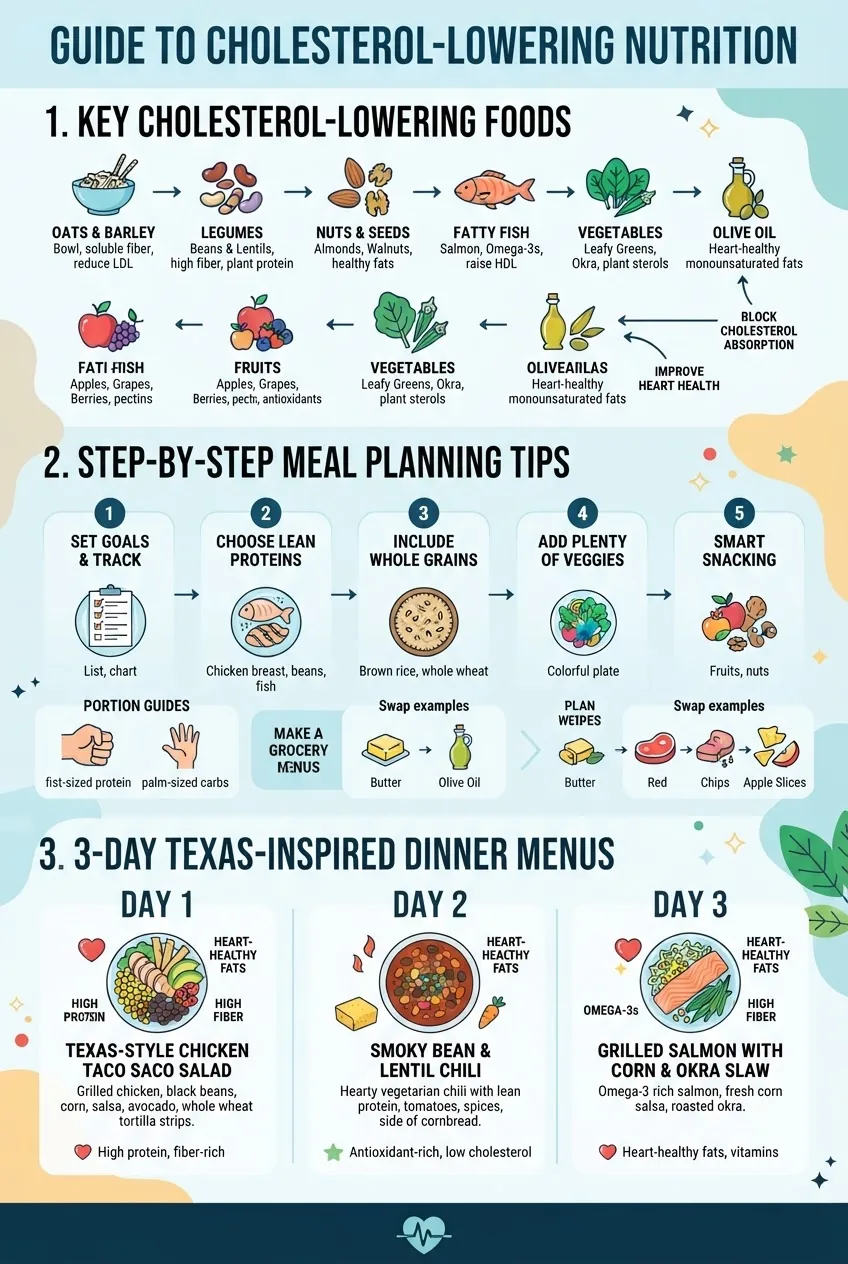
- Inventory & goals (15 minutes): List proteins (salmon, chicken, beans), grains (quinoa, brown rice), fresh veg. Set goals: 2 fish meals/week, 3 bean-based dinners/week, < 7% calories from saturated fat daily. Use a food scale to portion proteins to 3.5–4 oz cooked portions.
- Create a 3-day rotating shopping list (20 minutes): Buy perishable proteins for 3 days and frozen/ canned legumes for backup. For Texas markets: swap black beans for pinto, use local citrus for dressings, and choose seasonal greens like collard or mustard for southern-style sides.
- Batch-cook staples (60–90 minutes): Cook 3 cups quinoa (yields ~6 cups), 3 cups beans (or 3 cans drained), and roast a tray of mixed vegetables at 425°F for 20–25 minutes. Store in airtight containers for 4–5 days.
- Plate portions and assemble (5–10 minutes per meal): Use visual plate-rule: 1/2 non-starchy vegetables, 1/4 lean protein (3.5–4 oz), 1/4 whole grains or beans. Limit added oil to 1 tbsp per plate (120 kcal) and salt to <600 mg per meal if sodium-sensitive.
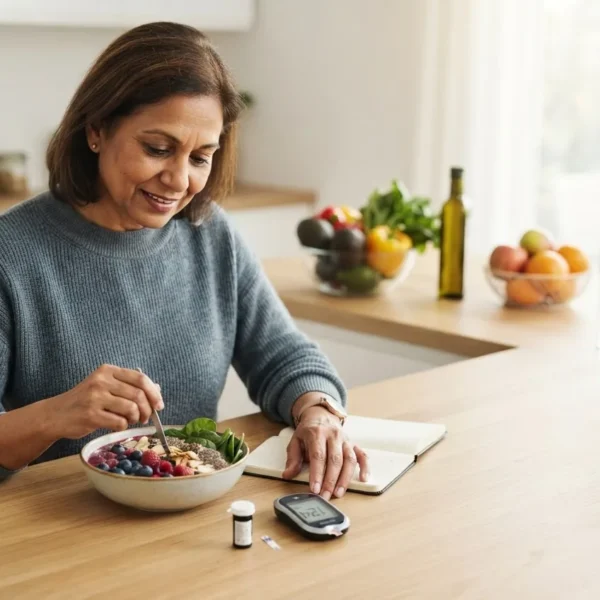
- Monitor and adjust (monthly): Recheck lipids at 8–12 weeks after consistent dietary changes and adjust protein/fish frequency as needed with your clinician.
Sample Menu A — Weeknight (3 days)
- Day 1: Grilled salmon, quinoa salad with spinach & citrus, steamed green beans.
- Day 2: Tex-Mex black bean skillet, avocado-lime slaw, corn tortillas (2).
- Day 3: Baked lemon-garlic tilapia, roasted sweet potato (1 small), sautéed kale.
Sample Menu B — Texas-inspired (3 days)
- Day 1: Blackened catfish (use paprika and dried herbs, 1 tsp olive oil), collard greens braised with garlic, brown rice (1/2 cup).
- Day 2: Chicken & white bean stew with cumin and cilantro, side of grilled corn (1 ear, no butter).
- Day 3: Slow-cooker lentil chili with diced poblano, topped with 1 tbsp chopped walnuts for crunch.
Transition: Breakfast, lunch and snacks can reinforce dinner work; here are cholesterol-friendly ideas you can make quickly.
Cholesterol Busting Recipes for Other Meals: Breakfast, Lunch, and Snacks
Quick recipe lists for other meals that support cholesterol management. For more vegetarian dinners see vegetarian dinner recipes that support cholesterol control and for breakfast ideas see heart-healthy breakfast ideas.
Breakfast (5–7 recipes)
- Overnight oats with 1 tbsp ground flaxseed and 1/2 cup blueberries — soluble fiber + ALA.
- Greek yogurt parfait (5 oz) with 1 tbsp walnuts and sliced citrus — protein + MUFA.
- Spinach & mushroom omelet with 2 egg whites + 1 whole egg and 1 tsp olive oil — balanced protein and fat.
- Whole-grain English muffin with 1/4 avocado and tomato slices — fiber and MUFA.
- Steel-cut oatmeal (1/2 cup cooked) with 1 tbsp psyllium husk for extra soluble fiber.
Lunch (5–7 recipes)
- Chickpea salad with cucumber, red onion, lemon and 1 tsp olive oil — 1 cup chickpeas provides ~6–8 g fiber.
- Quinoa bowl with roasted sweet potato, black beans, and salsa — balanced carbs and soluble fiber.
- Turkey & avocado whole-grain wrap with spinach — 3.5 oz turkey, 1/4 avocado.
- Lentil soup (1.5 cups) with carrots and celery — high soluble fiber and low fat.
- Grilled vegetable and hummus plate (1/3 cup hummus) — plant sterols and fiber from legumes.
Snacks (5–7 recipes)
- Apple slices with 1 tbsp almond butter — soluble pectin + MUFA.
- Handful (1 oz) of mixed nuts — satiety and healthy fats.
- Carrot sticks with 1/4 cup edamame — fiber and plant protein.
- Air-popped popcorn (3 cups) with nutritional yeast — low calorie, whole grain snack.
- Low-fat cottage cheese (1/2 cup) with sliced peaches — protein-rich and calcium-supportive.
Transition: Flavor keeps any therapeutic diet sustainable—here are tactics to boost taste without hurting your LDL goals.
Tips for Making Your Low Cholesterol Recipes More Flavorful and Appealing
Use these actionable, cook-tested techniques to add punch while keeping fat and sodium in check.
- Use acid for brightness: Add 1 tsp lemon or vinegar at the end of cooking to brighten sauces and vegetables without extra salt.
- Toast whole spices: 1–2 minutes in a dry skillet amplifies aroma—cumin, coriander and smoked paprika work especially well in Texas-style dishes.
- Herb-forward finishing: Add 1–2 tbsp chopped fresh herbs (cilantro, parsley, basil) per plate right before serving to boost perceived richness.
- Swap butter for compound oil: Mix 1 tbsp olive oil with minced garlic and parsley as a drizzle to replace butter on vegetables.
- Layer umami: Use small amounts of low-sodium soy, miso (1 tsp), or nutritional yeast to increase savory taste without saturated fat.
- Crunch for satisfaction: Sprinkle 1 tbsp toasted seeds or chopped nuts on salads and bowls for texture and added heart-healthy fat.
- Smart sweetening: Use citrus zest, roasted fruit, or a teaspoon of honey rather than sugar-heavy sauces; this reduces refined carbohydrate load while adding flavor.
Transition: Even experienced cooks fall into traps—here’s what I see most and how to fix it.
Common Mistakes in Low Cholesterol Cooking and How to Avoid Them
- Using too much “healthy” oil: I once drizzled 3 tbsp olive oil over a salad thinking it’s all good—overdoing oils adds calories and can stall weight-related cholesterol benefits. Solution: measure to 1 tbsp per serving.
- Relying on processed “low-fat” foods: I replaced full-fat yogurt with low-fat variants that added sugar—hidden sugars can harm lipids. Solution: choose plain low-fat yogurt and sweeten with fruit or a dash of cinnamon.
- Skipping portion control: I served large portions of nuts and avocados expecting them to be harmless—calorie excess undermines LDL improvements. Solution: weigh 1 oz nut servings and 1/4 avocado portions.
- Over-salting to make lean proteins palatable: I added excessive salt to chicken breasts—high sodium raises blood pressure risk. Solution: use herbs, citrus, and smoked paprika instead of >1/2 tsp salt per meal.
- Cooking methods that destroy nutrients: I boiled salmon in excess water, losing omega-3 oils—use gentle baking, poaching, or pan-searing with 1 tsp oil to retain fats.
Conclusion: Embracing a Low Cholesterol Lifestyle Through Delicious Recipes
Adopting a purposeful set of cholesterol friendly recipes and cooking practices can lower LDL within 4–12 weeks when paired with portion control and regular physical activity. According to a 2024 American Heart Association report, dietary patterns emphasizing soluble fiber, plant sterols and healthy fats produce clinically meaningful LDL reductions. Start with two swaps this week—replace one fried meal with a bean-based dinner and add a daily serving of oats—and measure results at 8–12 weeks. If you need more targeted calorie control, check 400 calorie meals for balanced nutrition.
Common mistakes and how to avoid them (practitioner notes)
From practicing with clients in Texas kitchens, I often see these failures: overfilling plates with perceived “healthy fats”, mistaking low-fat labels for low-sugar options, and skipping batch-cooking which leads to fast-food choices. My fixes are to pre-weigh servings, read labels for added sugars, and reserve two hours Sunday for batch prep.
Checklist: Verify your low cholesterol meal plan
- Includes 1–2 fatty fish meals per week (3.5–4 oz portions).
- Provides 3–5 servings/week of legumes or soluble fiber sources.
- Uses olive oil or nut oils as primary fats, <7% calories from saturated fat target considered.
- Cooking methods: baking, steaming, grilling preferred; frying avoided.
- Portion control in place: proteins measured 3.5–4 oz cooked, nuts 1 oz, avocado 1/4 per serving.
- Plan for 60–90 minute weekly batch-cook session and 15–30 minute nightly assembly.
When to call a professional
See a registered dietitian or your clinician if you have LDL >190 mg/dL, familial hypercholesterolemia, are on lipid-lowering medication with unclear goals, or if you plan a major diet change while pregnant or with multiple comorbidities. Registered dietitians can tailor soluble fiber targets and calorie needs to accelerate safe LDL reductions.
Final CTA: Pick two recipes from the dinner list, schedule one 60–90 minute batch-cook on Sunday, and repeat the checklist weekly to see progress in 8–12 weeks.
| Ingredient | Primary cholesterol benefit | Typical serving |
|---|---|---|
| Oats | Soluble fiber lowers LDL | 1/2 cup cooked |
| Walnuts | MUFAs & plant sterols; improves lipids | 1 oz (14 halves) |
| Salmon | EPA/DHA lower triglycerides | 3.5–4 oz cooked |