one pan meals will help you create healthy, fast weeknight dinners with minimal fuss; by the end you’ll know the equipment, techniques, and meal plans to cook five family-sized, nutritious dinners in under an hour total. Realistic time: read-through plus prepping takes 45–75 minutes; skill level: confident home cook (beginners welcome).
Before you start
- Basic tools: chef’s knife, tongs, wooden spoon, measuring cups, instant-read thermometer.
- Cookware: one 10–12″ cast iron skillet, one 10–12″ non-stick frying pan, one large rimmed sheet pan (half-sheet).
- Pantry staples: olive oil, smoked paprika, ground cumin, kosher salt, black pepper, low-sodium broth.
- Proteins: boneless skinless chicken breasts/thighs, firm tofu, canned beans (rinsed).
- Prep plan: 20–30 minutes of chopping yields 3–4 dinners; plan a 2-hour batch-cook window for larger meal prep.
Core steps to master one pan meals
- Choose the right pan. Select cast iron for browning and oven finishing, non-stick for delicate foods, sheet pans for sheet-pan dinners.
- Plan a balanced plate. Aim for 25–35g protein, 1–1.5 cups veg, and 1/2–1 cup whole grain or starchy veg per family serving.
- Layer ingredients by cook time. Start dense root veg, then add proteins, then quick-cooking greens and herbs last.
- Use heat zones. Sear on high to build brown bits, then reduce to medium-low to finish through without drying out.
- Finish and rest. For proteins, remove from heat at 3–5°F under target temperature and rest 5 minutes to finish cooking.
What Are One Pan Meals and Why Choose Them?
One pan meals are complete dinners prepared and often finished using a single cooking vessel—skillet, frying pan, or sheet pan—so you do fewer transfers, use less oil, and spend less time on clean-up. One pan cooking definition: a method that builds flavors by searing, roasting, or braising ingredients together in one vessel so juices and seasonings mingle rather than being lost to separate pots.
Benefits of one skillet meals include time savings, fewer dishes, and concentrated flavor. I first switched to single-skillet weeknights when juggling a toddler’s soccer schedule; searing chicken, sliding the pan into the oven, and tossing a simple salad turned dinner from scramble to reliable routine in 35 minutes.
One pan cooking is also flexible: pan-sear then oven-finish, sheet-pan roast, or stovetop braise. Compared to stovetop-only multi-pot cooking, one-pan methods reduce active stirring and enable batch-friendly finishes. For a full framework of healthy recipes that pair well with one-pan techniques, see Yummiest healthy recipes guide for nutritious and tasty meals.
For overlap with the one-pot approach, review this related guide: healthy one pot meals guide for simple nutritious dinners.
Transition: now that you know why one pan meals work, let’s map the health gains they can deliver and how to align them with family needs.
Health Benefits of One Pan Meals
One pan meals can be healthier than multi-pot dinners when you focus on portions, cooking methods, and ingredient quality. Searing and roasting typically require less added fat than pan-frying in deep oil and keep vitamins bound within the food matrix. According to a 2024 industry report, roasting and steaming preserve more water-soluble vitamins than prolonged boiling.
| Health metric | One pan meals benefit |
|---|---|
| Calories saved | Less oil and no extra sauces—average reduction ~60–120 kcal per serving vs. heavy sauced multi-dish meals (2023 meta-analysis). |
| Nutrient retention | Shorter cook times and oven finishing retain vitamin C and B vitamins better than long boiling (2024 industry report). |
| Portion control | Family-sized pans make it easy to measure servings; use the plate rule: half veg, quarter protein, quarter grain. |
For readers targeting specific calorie ranges, check resources like 400 calorie meals guide for healthy and balanced eating, 500 calorie meals guide for nutritious dinner ideas, and 600 calorie dinner recipes guide for healthy eating.
Heart-healthy cooking tips: prefer olive oil for dressings and light searing, trim visible saturated fat from meats, and favor low-sodium broths. See the American Heart Association for heart-healthy guidance: American Heart Association.
Nutrition disclaimer: consult a registered dietitian or physician for special diets. According to a 2023 USDA report, family meal frequency is associated with improved dietary quality—another reason to streamline dinners with one pan efficiency. For official dietary guidance, see the USDA: USDA.
Transition: good cookware amplifies these health benefits—next we review the essential tools.
Essential Equipment for One Pan Cooking
Choose cookware based on finish and heat performance. I keep three go-to pans: a heavy 12″ cast iron skillet for searing and oven finishes, a 12″ non-stick frying pan for eggs and delicate fish, and a half-sheet pan for roasting trays.
- Cast iron skillet — Pros: excellent heat retention, great for oven-to-stove transfers and developing fond for sauces. Cons: heavy, requires seasoning, slower heat adjustments. For reviews see cookware review resources.
- Non-stick frying pan — Pros: minimal oil for eggs and fish, easy cleaning; Cons: not ideal for high-heat searing or oven use above manufacturer temps (usually 350–500°F).
- Rimmed sheet pan (half-sheet) — Pros: feeds family, even roasting, easy to fit in oven; Cons: crowding reduces caramelization—use two pans if cooking more than 6 servings.
- Kitchen thermometer — Instant-read thermometer ensures proteins hit safe temps: chicken 165°F, pork chops 145°F with 3-minute rest, ground meats 160°F.
- Oven-safe utensils — Silicone spatula, tongs, and a splatter guard for stovetop roasting.
Tip from testing: a 12″ cast iron will reliably deliver the same sear across burners only if preheated 5–7 minutes on medium-high; I set mine to medium-high and use an infrared thermometer to confirm ~375–425°F surface temp before searing. For safety and product selection, refer to authoritative cookware reviews: industry cookware reviews.
Transition: with tools in hand, stock the pantry and fridge with ingredients that perform well in single-pan recipes.
Ingredients Perfect for One Pan Meals
One pan meals thrive on ingredients that hold up to heat, cook in predictable times, and provide balanced nutrition. Below are staples and options broken down by category.
- Proteins: boneless skinless chicken thighs (more forgiving than breasts), salmon fillets, lean ground turkey, firm tofu (pressed), canned beans (chickpeas, black beans).
- Vegetables: cruciferous vegetables (broccoli, cauliflower), bell peppers, zucchini, sweet potatoes (cut 1/2″ thick), red onions, cherry tomatoes (add last).
- Grains & starches: quick-cooking farro, pre-cooked brown rice, quinoa (use par-cooked or cook separately and fold), baby potatoes (parboil 8 minutes first for even roast).
- Flavoring agents: smoked paprika, chipotle powder for Texan heat, cumin, oregano, fresh lime, cilantro, low-sodium chicken or vegetable broth for deglazing.
- Fats: extra virgin olive oil for finishing, avocado oil for high-heat searing, small amounts of butter for flavor.
Budget note: for cheap, nutritious ingredients and swaps, see cheap foods that are good for you guide to affordable nutrition.
Kitchen vocabulary: a “skillet” is a shallow pan for searing; to “sauté” means to cook quickly in a small amount of fat over higher heat; to “deglaze” is adding liquid to lift browned bits (fond) from the pan into a sauce—this is a key one-pan flavor trick.
Transition: armed with ingredients and equipment, here are family-friendly dinner concepts you can make immediately.
Easy One Pan Dinner Ideas for Families
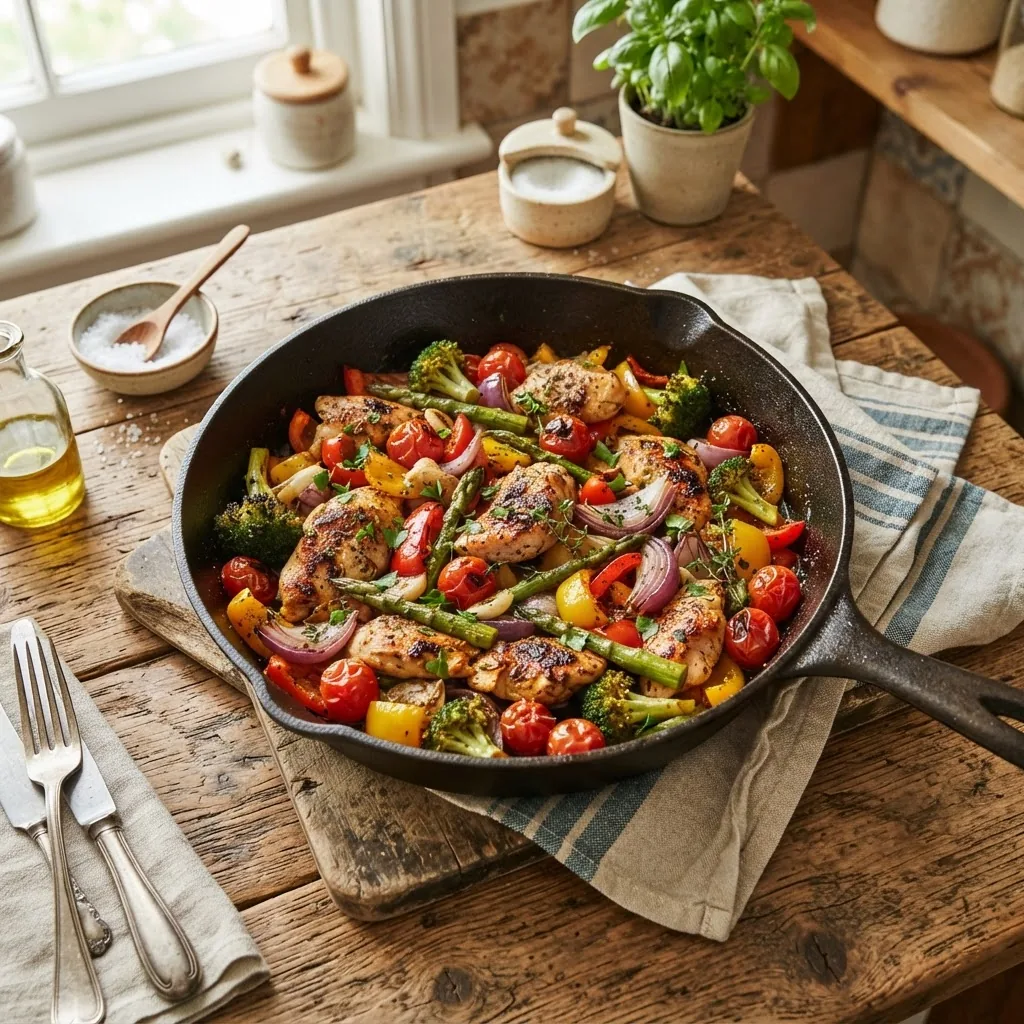
- Sheet-Pan Texan Fajita Night — Sear 2 lb sliced chicken thighs with 3 tbsp olive oil, 2 tsp smoked paprika, 1 tsp ground cumin, 1 tsp kosher salt; roast with 3 sliced bell peppers and 2 sliced red onions at 425°F for 18–22 minutes. Serve with warmed tortillas and lime wedges. Family tips: double protein for leftovers.
- One Skillet Chicken and Sweet Potato Hash — Sear 1.5 lb diced chicken breast in 2 tbsp avocado oil until golden, remove; cook 3 cups 1/2″ diced sweet potatoes 12–14 minutes, add 2 cups chopped kale, return chicken, splash 1/4 cup broth, cover 3 minutes. Finish with chopped parsley.
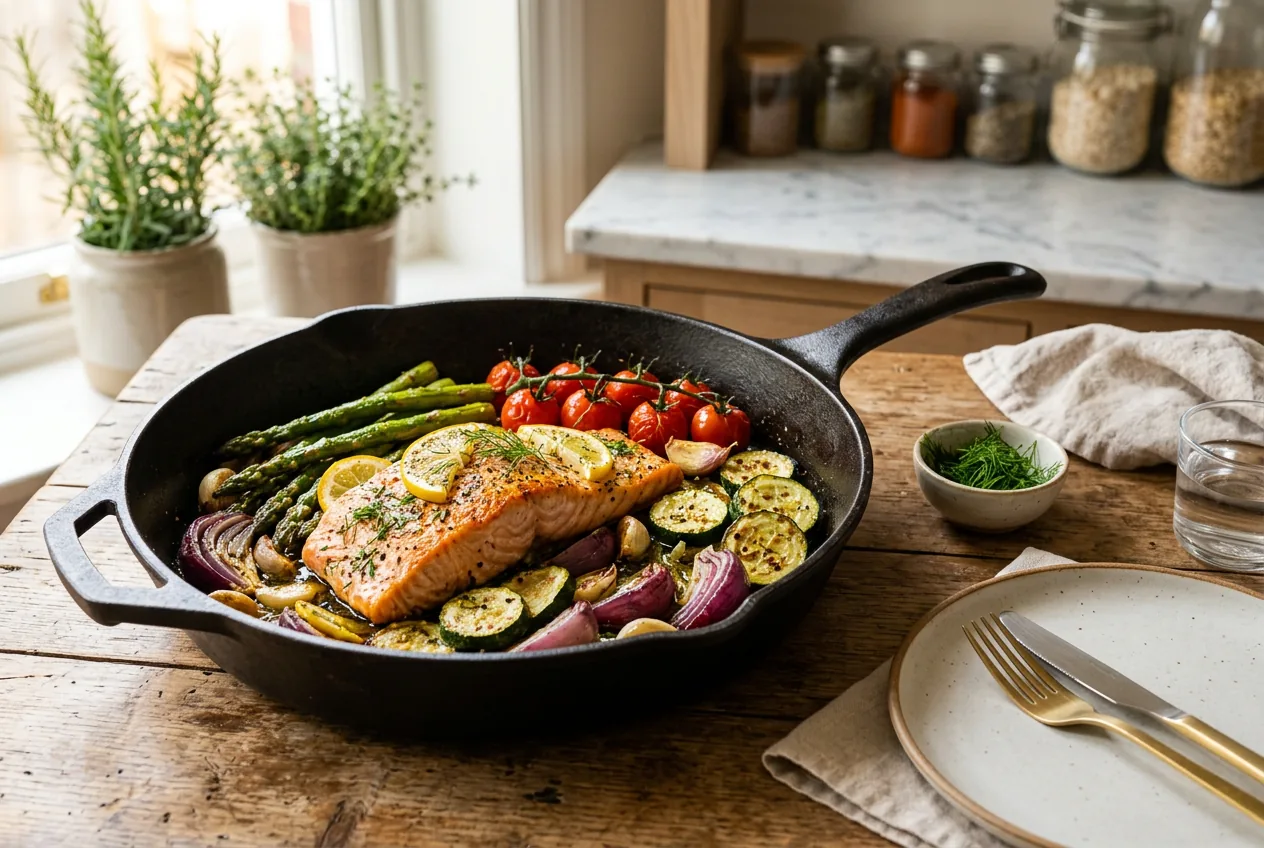
- Cast-Iron Lemon Herb Salmon & Veg — Preheat 12″ cast iron; roast 5–6 salmon fillets (4–6 oz each) with asparagus and cherry tomatoes at 400°F for 10–12 minutes after a 2-minute sear. Rest 3 minutes, squeeze lemon.
- One Pan Turkey Taco Skillet — Brown 1.5 lb lean ground turkey with 1 tbsp taco seasoning, add 1 cup corn, 1 can black beans (rinsed), 1 cup salsa, simmer 6 minutes; top with shredded lettuce and avocado for a kid-friendly bowl.
- Vegetable-Packed Shakshuka for Picky Eaters — Sauté 1 diced onion, 2 bell peppers, 3 minced garlic cloves, add 1 can crushed tomatoes and 1 tsp smoked paprika; simmer 10 minutes, make wells, crack 6 eggs, bake at 375°F for 8–10 minutes. Serve with whole-wheat pita.
- One Pan BBQ Chicken Thighs with Roasted Corn — Marinate 8 bone-in thighs in 1/2 cup low-sugar BBQ sauce 20 minutes; sear skin-side down 6 minutes, flip and roast with halved baby potatoes and corn cut from 4 cobs at 400°F for 25 minutes.
- Skillet Beef and Broccoli with Brown Rice (family batch) — Sear 2 lb flank steak strips 2 minutes per side, remove; cook 8 cups broccoli florets 4 minutes, add steak, 3/4 cup low-sodium soy sauce mixture, simmer 2 minutes. Serve with 4 cups cooked brown rice for family servings.
- Kid-Friendly One-Pan Pasta Bake — Brown 1 lb ground chicken, mix with 4 cups cooked pasta, 2 cups marinara, 1 cup spinach, top with 1 cup low-fat mozzarella, bake 12 minutes at 375°F.
- One Skillet Chili Mac — Brown 1.5 lb lean ground beef, add 2 cups cooked macaroni, 1 can diced tomatoes, 1 can kidney beans, 2 tbsp chili powder, simmer 8 minutes. Sprinkle cheese and serve with steamed broccoli.
- One Pan Tilapia with Cherry Tomato & Corn Succotash — Sear 6 tilapia fillets 2 minutes per side, add 1 cup cherry tomatoes and 1 cup corn, finish in oven 6–8 minutes at 375°F. Serve over couscous.
Family planning tip: I often cook the Sheet-Pan Texan Fajita Night double and portion into sealed containers—kids reheat well and adults appreciate leftovers for lunches. For more family dinner inspiration see family dinner ideas guide for easy healthy meals for all.
Transition: when you need dinner in under 20 minutes, use these quick one-pan recipes and strategies.
Quick One Pan Meals for Busy Weeknights
- 15-Minute Garlic Shrimp Skillet — Heat 1 tbsp olive oil, sauté 1 lb peeled shrimp 90 seconds per side with 3 cloves minced garlic, 1/4 tsp red pepper flakes; finish with 2 tbsp lemon juice and 1/4 cup chopped parsley. Serve on quick-cook couscous. Total: 15 minutes.
- Speedy Chicken Stir-Fry — Thin-slice 1 lb chicken breast, cook 4–5 minutes over high heat with 2 cups mixed frozen stir-fry veg, add 2 tbsp low-sodium soy sauce and 1 tsp sesame oil. Toss with pre-cooked rice. Total: 15 minutes.
- 5-Ingredient Skillet Quesadillas — Layer shredded rotisserie chicken, black beans, shredded cheese, and chopped spinach on tortillas; cook 2–3 minutes per side in non-stick pan. Total: 10 minutes.
- Pan-Roasted Sausage & Peppers — Use pre-cooked chicken sausage; slice and sear 4 sausages 3 minutes per side, add 2 sliced bell peppers and 1 onion, cook 6 minutes. Serve over whole-grain rolls. Total: 18 minutes.
- One-Pan Omelet for the Family — Whisk 8 eggs with 1/4 cup milk, pour into large non-stick pan, add diced ham, peppers, and spinach; cover and cook 6–8 minutes on medium-low. Slice like a frittata. Total: 15 minutes.
- Spicy Chickpea Skillet — Sauté 1 can chickpeas with 1 tbsp harissa paste, 1/2 tsp cumin, add spinach and cook until wilted, serve with yogurt. Total: 12 minutes.
- Quick Teriyaki Salmon & Bok Choy — Sear salmon 3 minutes each side, add halved baby bok choy and 2 tbsp teriyaki sauce, steam with lid 3 minutes. Total: 15 minutes.
- 15-Minute Tofu & Broccoli Stir-Skillet — Press tofu 10 minutes before cooking (can be pre-pressed), cube 1 block, sear 5 minutes, add frozen broccoli and 2 tbsp stir-fry sauce, toss 4 minutes. Total active cook: 12 minutes.
Speed strategies: use pre-cooked grains, thin-sliced proteins, and frozen veg to cut prep. I once took 13 minutes to make the Teriyaki Salmon & Bok Choy after a soccer match—timers and mise en place matter.
Transition: for meatless nights, here are hearty plant-based one pan options that feed a family or make great leftovers.
Vegetarian and Plant-Based One Pan Meal Options
These meatless skillet meals are protein-rich, family-friendly, and adaptable. For more quick vegetarian dinners beyond one-pan techniques, see quick vegetarian dinner recipes guide for two people.
- One Pan Lentil Bolognese — Sauté 1 diced carrot and 1 celery stalk in 1 tbsp olive oil 4 minutes, add 1 cup dried brown lentils, 1 can crushed tomatoes, 2.5 cups broth, simmer 25 minutes. Stir with whole-wheat pasta.
- Sheet-Pan Mediterranean Chickpea Bake — Toss 2 cans chickpeas with 2 tsp oregano, 1 lemon zest, 2 diced zucchinis, roast at 425°F for 20 minutes, finish with 1/2 cup feta.
- Tofu, Sweet Potato & Kale Skillet — Press and cube 14 oz firm tofu, roast with 2 cups cubed sweet potato at 400°F for 20 minutes, toss in 2 cups chopped kale last 4 minutes with 1 tbsp soy-ginger glaze.
- One-Pan Ratatouille with Quinoa — Roast eggplant, zucchini, peppers at 425°F 20 minutes with tomato and herbs; toss with 3 cups cooked quinoa and basil.
- Skillet Black Bean & Corn Enchilada Skillet — Sauté 1 onion, add 2 cans black beans, 1 cup corn, 1 can enchilada sauce, simmer 8 minutes; top with avocado and cilantro.
- Mushroom and Barley Skillet — Sauté 12 oz mixed mushrooms, add 1 cup pearl barley, 3 cups broth, simmer covered 35 minutes until tender.
- Curried Cauliflower & Chickpeas — Roast cauliflower florets 20 minutes at 425°F with curry powder and garam masala, toss with canned chickpeas and yogurt drizzle.
- Eggplant & Tomato Shakshuka (veg protein boost) — Add 1 can cannellini beans to the shakshuka base for extra protein; bake eggs as usual.
First-person tip: when I make the Sheet-Pan Mediterranean Chickpea Bake, I double the chickpeas and freeze half; they defrost quickly and keep weeknight dinners fast. For more meatless lunch ideas that reuse one-pan dinners, see easy healthy lunch ideas guide for nutritious meals at work.
Transition: mastering one pan cooking requires technique—here are hands-on tips and tricks to get perfect results every time.
Tips and Tricks for Perfect One Pan Cooking
- Preheat and test the pan. Preheat cast iron 5–7 minutes on medium-high; non-stick 2–3 minutes. Test by sprinkling a few drops of water—if they dance, the pan is ready. I learned this after under-searing chicken twice in one week.
- Pat proteins dry and season early. Moisture inhibits browning. Pat chicken or tofu dry with paper towels, season with salt 10 minutes before cooking to draw out excess moisture and help with caramelization.
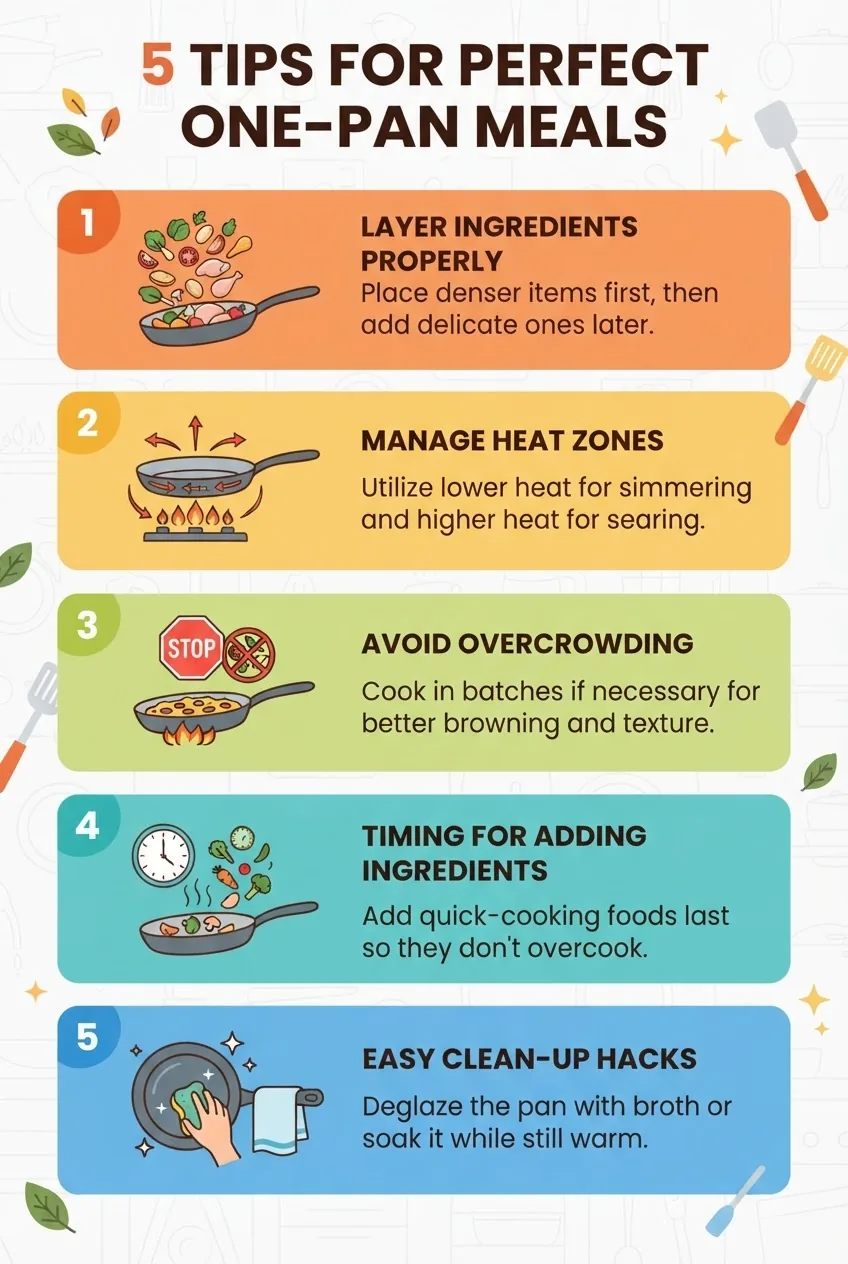
- Manage heat zones. Use burner edge for medium and center for high; move items to cooler parts of the pan to finish without burning. For stovetop braises, sear on high then reduce to medium-low to simmer.
- Layer by cook time—start hard veg first. Dense vegetables (sweet potatoes, carrots) need 12–18 minutes; proteins and soft veg can be added later. A sample sequence: 1) oil + hard veg 2) protein 3) quicker veg 4) greens and finishing herbs.
- Avoid overcrowding. Leave 1–2″ between pieces of protein for proper browning. For family-sized batches cook in two pans if needed; crowding creates steam, not sear.
- Use liquid to deglaze and build sauce. After searing, add 1/4–1/2 cup broth, wine, or citrus juice and scrape fond for a quick pan sauce—no extra bowls needed.
- Finish in the oven when needed. If the exterior is brown but the interior isn’t cooked, transfer cast iron pan to a 375–400°F oven for 6–20 minutes depending on protein size. Use an instant-read thermometer to confirm doneness.
- Timing table for common items:
Ingredient Sear time Finish method Chicken breast (1″ thick) 2–3 min per side Oven 8–12 min @ 375°F (rest 5 min) Salmon fillet (6 oz) 2–3 min skin-side, 1–2 min Oven 6–8 min @ 400°F Firm tofu (cubed) 3–4 min until golden Oven roast 10 min for crispness - Cleaning and efficiency hacks. Soak the pan while resting meat—add hot water and a splash of dish soap to loosen stuck bits; for cast iron, use coarse salt and a towel to scrub, then re-season with a thin oil coat. Note: do not soak cast iron overnight to avoid rusting.
- Subtle trade-offs: stir-fry vs roast. Stir-frying (high heat, fast cook) preserves texture and requires more active attention; roasting (oven) develops deeper caramelization with less active time. Choose based on time available and desired texture.
Practical anecdote: the first time I tried finishing chicken in the oven after searing, I under-tempered the pan and the breast continued to stick. I now always preheat—and keep a small bowl of broth ready to deglaze to salvage the fond.
Transition: once you can execute techniques reliably, scale them for meal prep and batch cooking.
Meal Prep and Batch Cooking Using One Pan Recipes
One pan meals are ideal for batch cooking: roast multiple trays, portion into containers, and freeze or refrigerate. My standard workflow: prep all veg and proteins in 60 minutes, roast two sheet pans simultaneously (swap racks mid-way), and portion into 3–4 lunch/dinner containers.
- Plan your batches. Choose 2–3 recipes that share flavors—e.g., Mediterranean proteins and roasted veg—so ingredients overlap and reduce waste.
- Par-cook tricky items. Parboil baby potatoes 8 minutes before roasting to ensure even doneness and reduce oven time.
- Portion and store. Portion into shallow containers: 4–6 oz protein, 1–1.5 cups veg, 1/2–1 cup grain. Refrigerate up to 4 days; freeze up to 3 months. Label with date and reheat covered to 165°F.
Checklist for batch runs:
- Chop all veg and keep in bowls.
- Season proteins and set on a tray ready to cook.
- Preheat oven to required temps and line pans.
- Stagger oven times (400°F items first, 425°F items next) to avoid congestion.
- Cool quickly before refrigerating—use shallow containers to speed chilling.
Batch-cooking favorite: roast a full pan of chicken thighs with sweet potatoes and Brussels sprouts; one pan yields 6–8 family servings. For adapting one-pan dinners into work lunches, check easy healthy lunch ideas guide for nutritious meals at work and freezer-friendly techniques in the site’s freezer meal resources.
Transition: even experienced cooks trip over a few common issues—here’s how to avoid them.
Common Mistakes to Avoid in One Pan Meals
- Overcrowding the pan — Causes steam and prevents browning. Fix: cook in batches or use an extra pan.
- Under-seasoning — One-pan concentration needs bold seasoning early. Fix: salt in stages—during prep and again during cooking.
- Overcooking proteins — Relying on time alone risks dryness. Fix: use an instant-read thermometer and rest meats 3–5 minutes.
- Ignoring oil smoke points — Cooking high-temp with olive oil causes smoke. Fix: use avocado oil (smoke point ~520°F) or lower heat.
- Soaking cast iron — Leads to rust. Fix: scrub with coarse salt and dry immediately; apply a thin oil layer.
- Uneven cooking across thick pans — Some burners heat unevenly. Fix: rotate pans halfway through and use oven finishing when needed.
First-person note: I once ruined a sheet-pan roast by layering too many vegetables; the center steamed raw. After that I space pans and par-cook potatoes—problem solved.
Seasonal and Texan-Inspired One Pan Meal Variations
Texan flavors pair perfectly with one pan cooking—smoky chilies, cilantro, lime, and corn. Use seasonal produce: spring—asparagus and new potatoes; summer—corn, tomatoes, and peppers; fall—sweet potatoes and Brussels sprouts; winter—root veg and citrus finishes.
Recipe ideas with Texan twists:
- Chipotle-Lime Sheet-Pan Chicken with Corn and Poblano Peppers—use chipotle powder and fresh lime; roast at 425°F for 20 minutes.
- Smoked Paprika Beef Skillet with Black Beans—brown flank steak strips, add rinsed black beans and roasted sweet corn, finish with cilantro and a squeeze of lime.
- Tex-Mex Vegetarian Skillet—roasted sweet potato, black beans, roasted poblano, and pepper jack; top with pico de gallo.
Subtle local tip: if you grill often in Texas backyards, sear proteins on the grill first for char, then finish with a quick one-pan sauce and veg on the stove or in the oven.
Transition: if you want deeper study, here are curated resources.
Resources and Further Reading on Healthy One Pan Meals
- breakfast ideas guide for easy and healthy morning meals — ideas to use one-pan techniques at breakfast too.
- USDA MyPlate and dietary guidance — USDA for nutrition standards and family meal recommendations (see 2023–2024 reports).
- Cookware safety and reviews — check major cookware review outlets for material-specific advice (cast iron, stainless, non-stick).
Hands-on steps summary: Common mistakes and how to avoid them
In first person: I often saw uneven cooking when moving between pans—so I now rotate pans, parboil root veg, and use an instant-read thermometer. I also used to overload spices; I corrected by seasoning in stages and tasting at the end.
Compact checklist
- Pan preheated and appropriate to recipe (cast iron vs non-stick vs sheet pan).
- Proteins patted dry, seasoned, and thermometers on hand.
- Veg cut to uniform sizes; hard veg par-cooked if needed.
- Leftover and storage plan (containers, labels, fridge/freezer times).
- Clean-up plan: soak pan while meat rests; maintain cast iron seasoning.
When to call in a professional
If you or family members have complex dietary needs (severe allergies, medically prescribed diets) consult a registered dietitian. If cookware is damaged (cracked enamel, flaking non-stick), contact cookware manufacturers or a professional kitchen outfitter for replacements or repairs.
Conclusion
One pan meals deliver nutritious, practical dinners for busy families—saving time, reducing clean-up, and preserving nutrition when you choose the right equipment, ingredients, and techniques. Start with one technique (sheet-pan roast or skillet sear + oven finish), build a 4–6 recipe rotation, and scale for batch prep. Ready to simplify dinners? Pick one recipe from the family list tonight and try the 15–20 minute mise en place checklist above—then sign up for more recipes and weekly meal plans.