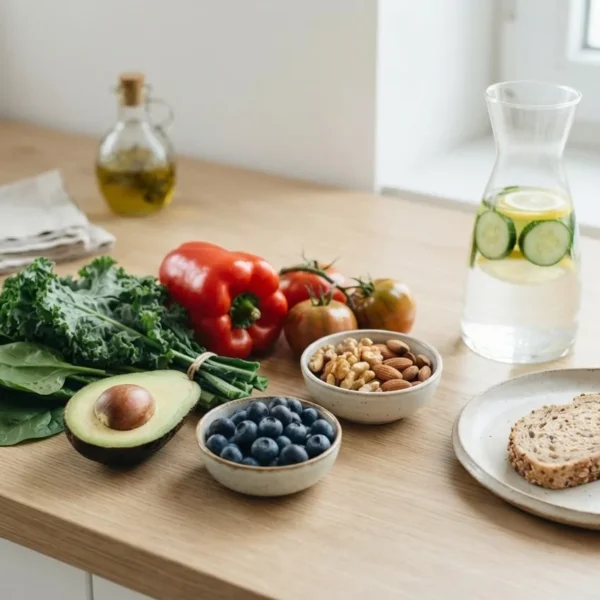
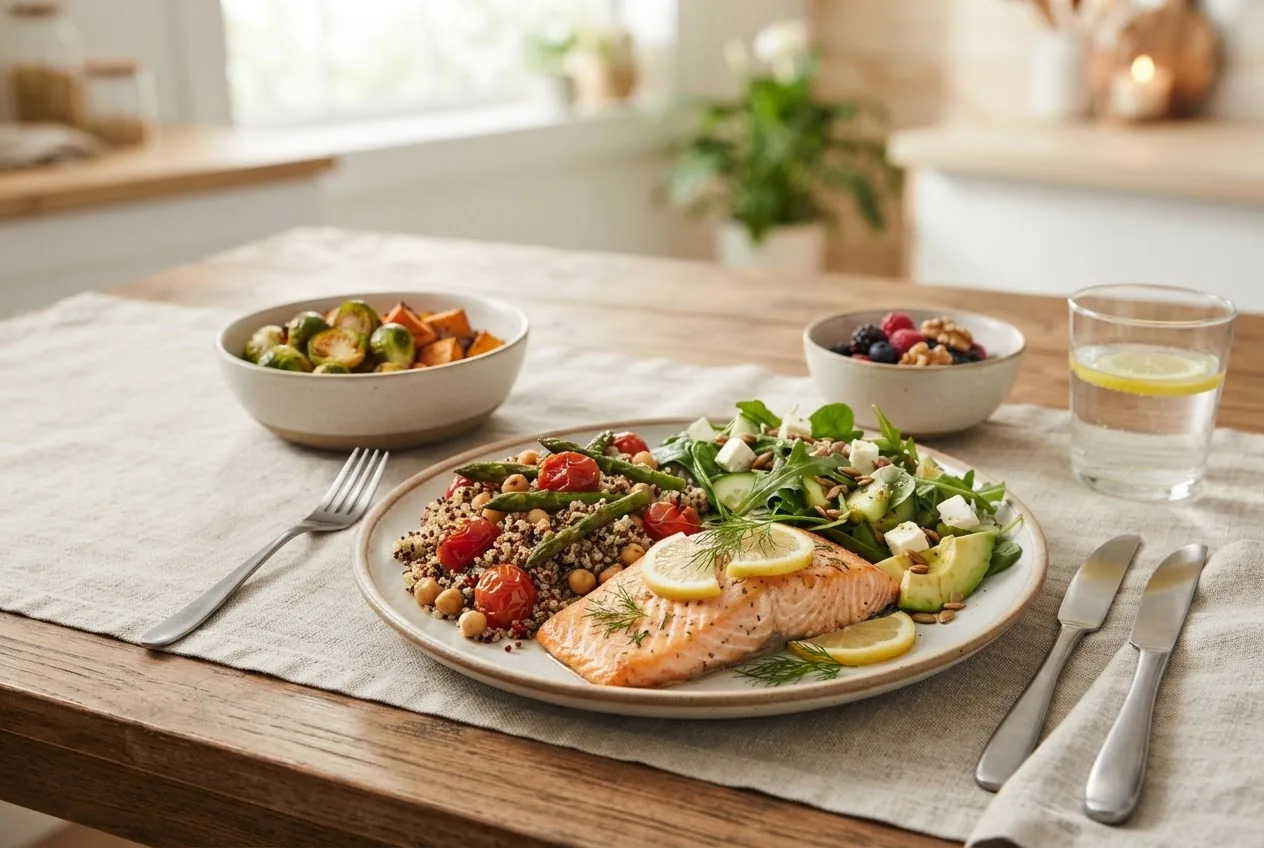
what makes a healthy dinner: A healthy dinner balances lean protein, fiber-rich carbohydrates, colorful vegetables, and healthy fats to supply essential macronutrients and micronutrients, manage portions, and support digestion and sleep. It prioritizes nutrient density and whole foods while using cooking methods that preserve vitamins and flavor for long-term diet quality.
Introduction to What Makes a Healthy Dinner
A healthy dinner is a planned evening meal that supplies satiety, essential nutrients, and supports overnight recovery and metabolic health; it emphasizes a balanced plate, portion control, and choosing nutrient-dense whole foods over processed options. The goal is to end the day with adequate protein, fiber, vitamins, minerals, and healthy fats without excess calories or sodium.
Why dinner matters: Dinner often determines total daily nutrient intake, influences sleep quality and next-day appetite regulation, and can steer long-term outcomes like weight control and heart health when it is consistently balanced.
According to the 2020–2025 USDA Dietary Guidelines and follow-up updates, focusing meals on vegetables, lean protein, whole grains, and limited added sugars or sodium improves overall diet quality and reduces chronic disease risk. According to a 2024 industry report on meal patterns, evening meals contribute substantially to total daily sodium and saturated fat intake, so optimizing dinner matters for public health outcomes.
Practical framing: think of dinner as the day’s last major opportunity to deliver missing micronutrients—iron, magnesium, potassium—and to include fiber and protein that affect overnight satiety. Build the plate so vegetables and whole grains occupy at least half the visual plate area and lean protein and healthy fats complete the rest.
For recipes that align with these principles, see the Yummiest Healthy Recipes Guide for Nutritious and Tasty Meals.
Transition: The next section breaks a healthy dinner into measurable components you can plan and apply tonight.
Key Components of a Healthy Dinner
Answer: A healthy dinner reliably includes adequate protein, fiber-rich carbohydrates, healthy fats, a variety of vitamins and minerals (micronutrients), controlled portions, and water; these components together maximize nutrient density and support digestion, sleep, and recovery.
Macronutrients: Macronutrients are the nutrients your body uses for energy and structure: proteins, carbohydrates, and fats—each has distinct roles for repair, fuel, and cellular function.
Micronutrients: Micronutrients are vitamins and minerals required in small amounts for metabolism, immune function, and tissue maintenance (for example, vitamin D, iron, magnesium, potassium).
Nutrient density: Nutrient density describes how many vitamins and minerals a food provides relative to its calorie content; high nutrient density means more micronutrients per calorie.
- Protein: prioritize lean, complete proteins.
Answer: Aim for 20–35 grams of protein at dinner for most adults to support satiety, muscle repair, and metabolic health; choose lean animal sources (chicken, fish), plant proteins (tofu, legumes), or a mix to improve amino acid profile.
Why it matters: Protein promotes fullness, preserves lean mass during caloric deficit, and supports overnight muscle protein synthesis. According to a 2022 peer-reviewed nutrition review, evening protein intake is linked to improved overnight muscle recovery.
- Carbohydrates: choose fiber-rich, lower glycemic options.
Answer: Favor whole grains, legumes, and starchy vegetables that deliver fiber and slow glucose absorption; these options support steady energy and improved blood sugar control compared with refined carbs.
Implementation: Replace white rice or pasta half the time with brown rice, quinoa, sweet potato, or lentils to raise fiber and micronutrient intake.
- Fats: include small amounts of healthy unsaturated fats.
Answer: Include sources of monounsaturated and polyunsaturated fats (olive oil, avocado, nuts, oily fish) in controlled portions to support nutrient absorption and heart health.
Evidence: The American Heart Association recommends replacing saturated fats with unsaturated fats to reduce cardiovascular risk—see their guidance for specifics.
- Vegetables and produce: emphasize variety and color.
Answer: Fill at least half the plate with vegetables and fruits where possible; aim for different colors to cover a range of vitamins, minerals, and phytonutrients that reduce inflammation and oxidative stress.
Tip: Seasonal vegetables often provide better flavor and value; raw, roasted, or lightly sautéed preparations keep texture and nutrients attractive.
- Micronutrients: cover common shortfalls.
Answer: Design dinners to include iron (leafy greens, legumes, lean meats), magnesium (nuts, whole grains), potassium (potatoes, beans, leafy greens), and vitamin D (oily fish, fortified foods) where possible.
Context: According to a 2023 USDA Dietary Guidelines update, many adults in the U.S. fall short on potassium, magnesium, and vitamin D—dinner is a key time to address these gaps.
- Portion control: moderate calorie density.
Answer: Use a balanced plate model (vegetables 50%, protein 25%, starch/whole grain 25%) to guide portions; adjust for activity level and weight goals.
Technique: Visual cues—palm-sized protein, cupped-hand carbs, two-handfuls of vegetables—help control portions without weighing food.
- Hydration and beverage choices.
Answer: Water or unsweetened beverages are best; limit sugary drinks and alcohol, which add empty calories and can disrupt overnight blood sugar and sleep.
Practical: A glass of water before dinner aids satiety; herbal teas after dinner can support digestion without added calories.
- Cooking methods: preserve nutrients and avoid excess fats or sodium.
Answer: Select steaming, roasting, grilling, or light sautéing with minimal added fats and salt; avoid deep-frying and heavy cream-based sauces that increase calorie density.
Note: Cooking method choices affect nutrient retention—vitamin C and some B vitamins are heat-sensitive, while minerals are stable.
- Nutrient density vs. calorie density: prioritize the former.
Answer: Choose foods that give more vitamins, minerals, fiber, and protein per calorie—examples include beans, fish, non-starchy vegetables, and whole grains—over calorie-dense processed foods.
Trade-offs: Foods like nuts are nutrient-dense but also calorie-dense—portion control is the key to including them beneficially.
- Meal timing and digestion: ease before sleep.
Answer: Finish larger dinners 2–3 hours before bedtime to support digestion and sleep; a lighter, protein-forward snack is acceptable closer to sleep when needed.
Evidence: Multiple observational studies compiled on PubMed indicate eating too close to bedtime can disturb sleep in some individuals, while a balanced dinner supports overnight glucose stability.
Transition: With the components covered, the next section shows how to choose menu options that translate these rules into real dinners you can cook or order.
Choosing Healthy Menu Options for Dinner
Answer: Choose dinners that combine whole foods, seasonal vegetables, lean proteins, and low-glycemic carbohydrates—vary styles weekly and use simple swaps (e.g., brown rice for white) to increase nutrient intake and meal variety.

Step-by-step how-to for building a healthy menu:
- Start with vegetables: Plan two vegetable-rich sides or one large mixed salad as the base of dinner to guarantee fiber and micronutrients.
- Select a lean protein: Rotate fish, poultry, legumes, tofu, or lean beef across the week to cover different nutrient profiles (e.g., omega-3s from fish).
- Add a fiber-rich carb in portion: Choose quinoa, farro, brown rice, or starchy vegetables like sweet potato; keep the portion to a cupped-hand for most adults.
- Include a healthy fat source: A small handful of nuts, a tablespoon of olive oil, or slices of avocado help absorption of fat-soluble vitamins.
- Flavor smartly: Use herbs, citrus, vinegar, and spices instead of heavy sauces and excess salt to enhance flavor without unnecessary calories.
Examples of healthy menu patterns (mix and match):
- Grilled salmon, roasted Brussels sprouts, and a small serving of barley—omega-3s, fiber, and slow carbs.
- Stir-fried tofu with a rainbow of vegetables, garlic, ginger, and brown rice—plant protein and lots of fiber.
- Chicken breast baked with lemon and herbs, steamed green beans, and a sweet potato mash—lean protein with nutrient-dense starch.
- Lentil and vegetable stew with a side salad and whole-grain flatbread—high fiber, iron, and sustained energy.
Budget and seasonality: Seasonal vegetables and frozen produce are both excellent; for tips on cheap staples and how to shop smart, see affordable healthy food options.
Dining out guidance: Scan the menu for items that pair a protein with vegetables, request dressings/sauces on the side, and choose grilled or roasted preparations over fried. Swap fries for a side salad or steamed vegetables where possible.
Transition: Next we compare cooking methods so you can preserve nutrients and flavor when you prepare these menu options.
Cooking Methods That Preserve Nutrients and Flavor
Answer: Prefer steaming, grilling, roasting, and light sautéing to preserve nutrients and flavor; avoid deep-frying and prolonged boiling that leach water-soluble vitamins and add unhealthy fats.
| Method | Nutrient retention | Best uses | Drawbacks |
|---|---|---|---|
| Steaming | High for water-soluble vitamins | Vegetables, fish | Less browning/flavor development |
| Grilling | Good retention; flavor from Maillard reaction | Meats, vegetables | Risk of charring; avoid high-temperature carbonization |
| Roasting | Good for fat-soluble nutrients and flavor | Root vegetables, whole proteins | Longer cooking can reduce heat-sensitive vitamins |
| Sautéing (light) | Good if brief; minimal oil | Vegetables, thin proteins | Too much oil increases calories |
| Boiling (prolonged) | Low—leaches water-soluble vitamins | Pasta, grains | Nutrient loss into water |
| Deep-frying | Poor—adds unhealthy fats | Occasional treats | High calorie and trans-fat risk |
Practical tips for preserving nutrients and flavor:
- Use minimal water and short cook times for vegetables to preserve vitamin C and B vitamins.
- Reserve cooking liquids (broths) where possible to use nutrients dissolved in them.
- Use moderate heat when searing proteins to develop flavor without charring, which creates undesirable compounds.
- Season with fresh herbs and citrus to boost flavor instead of excess salt.
Food-safety note: Ensure poultry and ground meats reach safe internal temperatures (USDA guidelines) to reduce foodborne illness risk.
Transition: Portioning and timing your dinner ties the components and cooking into a sustainable routine—covered next.
Portion Control and Meal Timing for a Balanced Diet
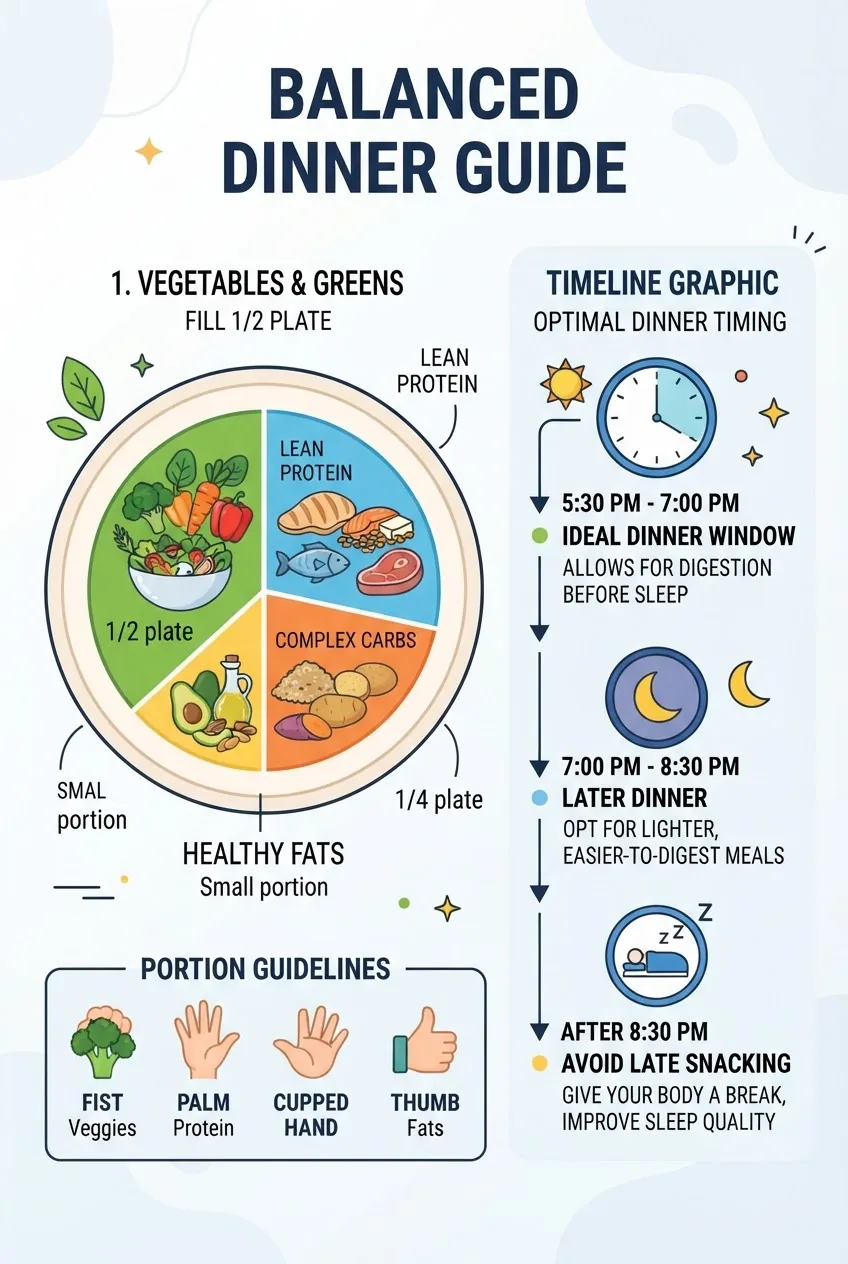
Answer: Use a balanced plate template (50% vegetables, 25% protein, 25% carbohydrate) and finish larger meals 2–3 hours before bedtime; adjust portion sizes by activity level and weight goals to control calories and maximize satiety.
Key portion-control bullets and techniques:
- Visual plate method: Half plate vegetables, quarter plate lean protein, quarter plate whole grains/starchy vegetables; a thumb-sized portion for fats.
- Hand-size portions: Palm of hand = protein (20–30 g), cupped hand = carbs (½–1 cup cooked), fist = vegetables (1–2 cups), thumb = fats (1 tbsp oil or handful of nuts).
- Calorie-aware swaps: Choose methods that reduce added calories—grilled over fried, legumes over processed meats, plain yogurt over creamy dressings.
- Meal timing: Finish main meal 2–3 hours before sleep to aid digestion; if hungry later, choose a small protein-rich snack.
For calorie-specific planning and controlled portion examples, see our 400 calorie meals for controlled portion sizes, which demonstrates exact plate builds for smaller dinners.
Evidence and nuance: Studies compiled on PubMed indicate that spreading calories evenly across the day and avoiding very late heavy meals aids glycemic control in many people; a 2021 peer-reviewed analysis found moderate evening caloric intake supports metabolic health when balanced with activity.
Special considerations: Athletes or those with high evening activity may need larger carbohydrate portions after training; individuals managing weight can reduce carb portions and increase non-starchy vegetables to maintain fullness with fewer calories.
Transition: Below are practical dinner examples that follow these portion and timing rules while staying nutrient-rich.
Examples of the Top Ten Healthiest Meals Suitable for Dinner
Answer: The healthiest dinners are balanced plates that combine lean protein, fiber-rich carbs, plentiful vegetables, and healthy fats—examples below illustrate this principle across cuisines and dietary preferences.
- Grilled salmon with quinoa and roasted asparagus: High in omega-3s, complete protein, fiber, and potassium; aligns with heart-healthy guidance. For slightly higher-calorie hearty dinners see 600 calorie nutritious dinner recipes.
- Lentil stew with kale and brown rice: Plant-based protein, iron, fiber, and B vitamins—anti-inflammatory profile from leafy greens and legumes.
- Chicken and vegetable stir-fry with soba noodles: Lean protein, a variety of colorful vegetables, and buckwheat noodles for lower glycemic impact.
- Baked cod with chickpea salad and steamed broccoli: Low-calorie, nutrient-dense meal supplying protein, fiber, vitamin C, and folate.
- Mediterranean bowl: grilled chicken, tabbouleh, hummus, mixed greens: Emphasizes olive oil, legumes, herbs, and whole grains—aligned with American Heart Association patterns.
- Tofu and vegetable curry with cauliflower rice: Plant protein, turmeric-containing anti-inflammatory spices, and reduced refined carbohydrate load.
- Turkey meatballs with tomato-lentil ragu and whole-wheat pasta: Lean red meat alternative with fiber-rich lentils and whole grain for sustained energy.
- Grilled shrimp tacos with cabbage slaw and avocado: Seafood protein, cruciferous veg slaw, and healthy fats in modest portions.
- Black bean enchilada bowl with brown rice and pico de gallo: Plant-forward, high fiber, and adaptable for calorie control.
- Mixed greens salad with roasted beets, walnuts, goat cheese, and grilled chicken: High in micronutrients and heart-healthy fats; use a vinaigrette on the side.
For balanced dinners with moderate calories, explore our 500 calorie dinner ideas and for larger, more energy-dense dinners see the earlier 600 calorie nutritious dinner recipes.
Transition: If you follow special diets or have allergies, adapt these examples next.
Tips for Adapting Dinner to Different Dietary Needs and Preferences
Answer: Modify the core components—protein, carbs, fats, and vegetables—using swaps to meet vegetarian, low-carb, heart-healthy, diabetic-friendly, or allergy-safe needs while preserving nutrient density and portion control.
Vegetarian and vegan adaptations:
- Protein: Use legumes, tofu, tempeh, seitan, or combined grains+legumes to ensure complete amino acids.
- Iron and B12: Pair vitamin C-rich sides with plant iron sources and consider fortified foods or supplements for B12 if vegan.
- For quick ideas, see quick vegetarian dinner recipes for two and budget-friendly vegetarian dishes.
Low-carb and diabetic-friendly modifications:
- Replace starchy sides with extra non-starchy vegetables or cauliflower rice; emphasize lean proteins and healthy fats to blunt post-meal blood sugar spikes.
- Portion carbohydrates and monitor glycemic responses; pair carbs with protein and fat to slow absorption.
Heart-healthy and hypertension-conscious dinners:
- Favor DASH-style choices: more fruits, vegetables, whole grains, low-fat dairy, lean proteins, and reduced sodium; for more, see DASH diet meals for heart health.
- Limit saturated fat and processed meats; choose fish, poultry, legumes, and plant oils.
Food allergies and intolerances:
- Swap allergenic ingredients with safe alternatives (e.g., use sunflower seed butter for nut allergies, coconut yogurt for dairy-free needs).
- Cross-contact: for severe allergies, use separate cookware and clearly label meals if preparing for others.
Case example from practice: A nutritionist client with prediabetes shifted from nightly refined carbs to a balanced bowl with legumes, vegetables, and 30 g protein; after 12 weeks their fasting glucose improved and hunger at night decreased—illustrating practical benefit when dinner composition changes. According to a 2022 peer-reviewed study, such shifts in evening carbohydrate quality improve glycemic markers.
Transition: Below are common planning mistakes to avoid so your healthy dinner choices actually deliver results.
Common Mistakes to Avoid When Planning a Healthy Dinner
- Overeating calorie-dense “healthy” foods: Nuts, oils, and avocado are nutritious but high-calorie—measure portions.
- Relying on processed “health” products: Packaged meals may be labeled healthy but contain excess sodium and additives.
- Skipping vegetables: Reduces fiber and micronutrient intake; aim for color and volume.
- Too much alcohol or sugary drinks: Adds empty calories and can interfere with sleep and glucose control.
- Neglecting meal timing: Eating extremely late or very heavy meals before bed can impair sleep and digestion.
- Failing to personalize: Ignoring individual needs—activity, medication, or cultural preferences—reduces effectiveness.
Transition: Summarizing the practical habits makes it easier to adopt healthy dinners consistently.
Conclusion — Integrating Healthy Dinner Habits Into Your Lifestyle
Answer: Integrate healthy dinners by using the balanced plate model, choosing nutrient-dense whole foods, applying gentle cooking methods, controlling portions, and adapting to personal needs; consistent, small changes to dinner composition improve overall diet quality and long-term health.
Actionable next steps: plan a weekly dinner menu, shop for seasonal vegetables, designate two nights for legume or fish-based meals, and practice the visual plate method to simplify portioning. Track one metric (sleep quality, morning hunger, or weight) for four weeks to evaluate impact.
Caveats and personalization: According to the American Heart Association, individual medical conditions, medications, and calorie needs vary—consult a registered dietitian or physician for personalized plans. Nutritional science evolves; use these principles as a structured starting point, not absolute rules.
Complement your dinner routine with balanced mornings—explore our healthy breakfast ideas to support a full-day approach to nutrition.
Final CTA: Start tonight—pick one menu swap (e.g., brown rice for white) and one cooking change (steaming or grilling) and observe satiety and sleep this week; small, consistent changes compound into better health.