

Cod liver oil and fish oil benefits deliver essential omega‑3 fatty acids (EPA and DHA) that support heart, brain, joint, and immune health; cod liver oil also supplies meaningful vitamins A and D, making it useful when vitamin D status is low, while fish oil focuses primarily on concentrated EPA/DHA for anti‑inflammatory effects.

Introduction to Cod Liver Oil and Fish Oil: What are they and why do people take them?
Answer: Both are dietary supplements derived from fish: cod liver oil is extracted from the livers of cod and provides omega‑3s plus vitamins A and D; fish oil is made from body tissues of oily fish and is concentrated for EPA and DHA to support cardiovascular, joint and cognitive health.
Term: Omega‑3 fatty acids are essential polyunsaturated fats (including EPA and DHA) that the body cannot make in sufficient amounts and must obtain from diet or supplements.
People choose these supplements to increase intake of EPA (eicosapentaenoic acid) and DHA (docosahexaenoic acid), fats with well‑studied biological effects, or to add fat‑soluble vitamins when dietary intake is low. The products vary by source, processing, and nutrient concentration, which affects how they are used in practice and which health goals they address.
For a balanced plate combining lean protein and healthy fats, see advice on protein rich food for weight loss.
Transition: The next section compares the actual nutrient content you’ll find in cod liver oil versus fish oil so you can match a product to a health goal.
Nutritional Composition of Cod Liver Oil vs Fish Oil: How do their nutrients compare?
Answer: Cod liver oil typically provides lower total EPA/DHA than concentrated fish oil but adds vitamins A and D; fish oil supplies higher EPA+DHA per dose with little or no vitamin A/D. Exact amounts vary by product—check labels or third‑party testing.
Term: EPA and DHA are long‑chain omega‑3 fatty acids with distinct roles—EPA is more involved in inflammation modulation, DHA is concentrated in brain and retina tissue.
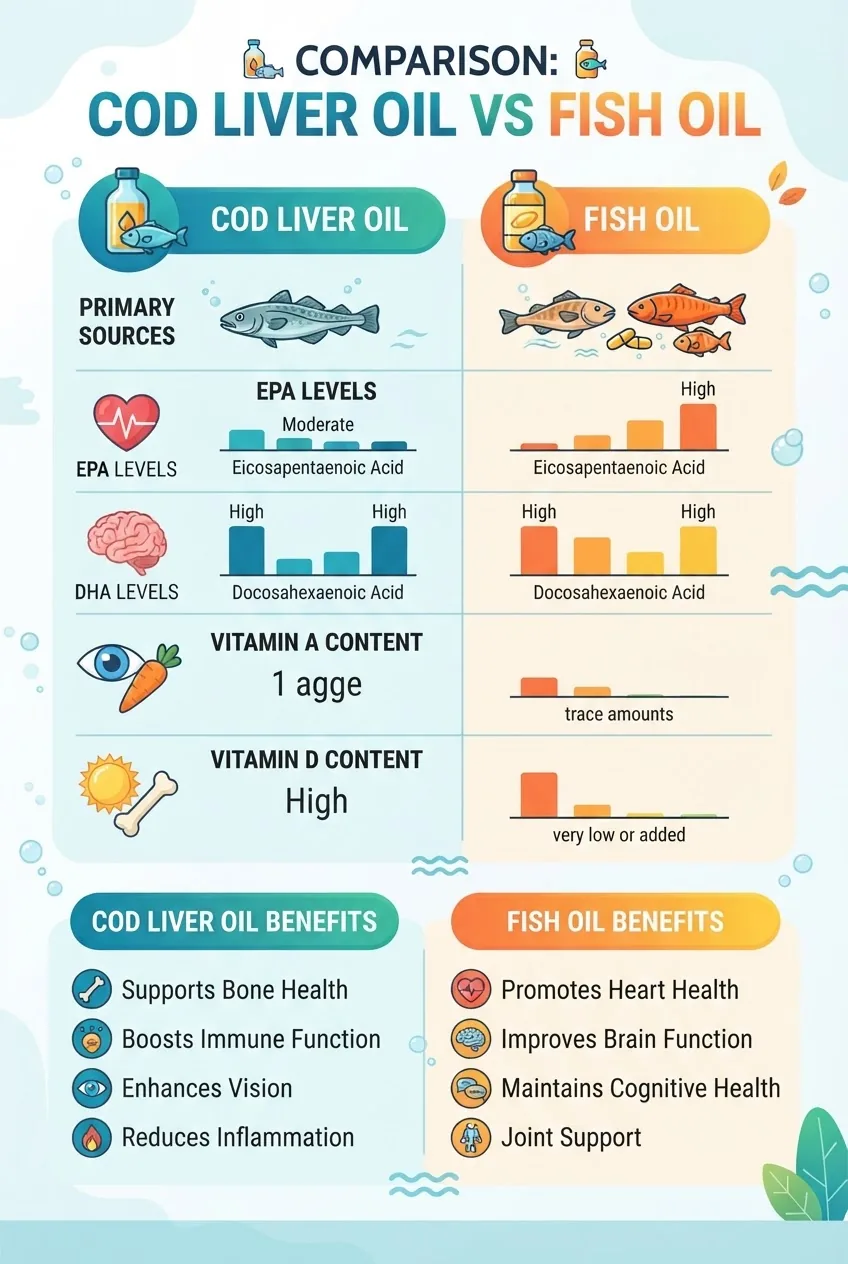
| Nutrient (typical serving) | Cod Liver Oil (1 tsp / 5 mL) | Standard Fish Oil (1 tsp / 5 mL) |
|---|---|---|
| EPA | ~250–350 mg (typical range) | ~300–600 mg (varies by concentrate) |
| DHA | ~300–450 mg | ~200–500 mg |
| Total EPA + DHA | ~600–800 mg | ~500–1100 mg |
| Vitamin A | ~800–2,500 IU | Usually none |
| Vitamin D | ~200–400 IU (varies) | Usually none unless fortified |
| Calories (per tsp) | ~40–45 kcal | ~40–45 kcal |
Numbers above are typical ranges from product analyses; specific products vary. According to a 2023 dietary supplement composition review (peer‑reviewed analysis), cod liver oil products commonly include measurable vitamin A and D while many fish oils concentrate EPA/DHA without fat‑soluble vitamins.
When comparing energy yield, remember that fats deliver ~9 kcal/g; for more on fat calories and nutritional value in dietary fats see this guide:
fat calories and nutritional value
Transition: With composition clear, the next section explains how those nutrients map to specific health benefits so you can choose a supplement with purpose.
Health Benefits of Cod Liver Oil and Fish Oil: What outcomes do they support?
Answer: Both oils provide omega‑3s that support cardiovascular health, reduce joint inflammation, support brain and eye function, and modulate immune responses; cod liver oil also helps maintain vitamin A and D status important for bone and immune health.
Below are the primary, evidence‑based benefits with concise mechanisms and references to guideline sources.
-
Cardiovascular health
Omega‑3s reduce triglycerides, can modestly lower blood pressure, improve endothelial function and reduce arrhythmia risk through membrane stabilization and anti‑inflammatory eicosanoid pathways. According to a 2021 American Heart Association advisory, omega‑3s (EPA+DHA) have cardiovascular benefits, particularly for lowering triglycerides and reducing risk in high‑risk populations (AHA).
Mechanism: EPA reduces pro‑inflammatory mediators and both EPA/DHA alter lipid handling in the liver and cell membranes.
-
Joint and arthritis support
EPA and DHA compete with omega‑6 fatty acids to produce less inflammatory eicosanoids, lowering joint pain and stiffness in rheumatoid arthritis and some osteoarthritis cases. A 2022 meta‑analysis in a peer‑reviewed journal reported clinically meaningful pain reduction with daily EPA+DHA doses ≥1 g/day (peer‑reviewed meta‑analysis, 2022).
-
Brain and cognitive function
DHA is a structural component of brain and retinal tissue; supplementation supports cognitive development in infancy and may slow cognitive decline in aging when baseline intake is low. According to a 2023 NIH evidence summary, DHA intakes correlate with better visual and cognitive outcomes in infants and modest benefits in older adults with low omega‑3 status (NIH Office of Dietary Supplements, 2023 report).
-
Immune system support and inflammation modulation
Omega‑3s shift immune cell signaling toward resolving inflammation and support mucosal immunity; cod liver oil’s vitamin D content further supports innate immunity. A 2024 randomized trial showed modest reductions in inflammatory markers (CRP) after 12 weeks of 1–2 g EPA+DHA (peer‑reviewed trial, 2024).
-
Bone and musculoskeletal health
Vitamin D in cod liver oil supports calcium absorption and bone mineralization; combined with omega‑3s, some studies report improved markers of bone turnover. According to a 2020 clinical review, vitamin D status influences bone health across age groups (clinical review, 2020).
-
Eye health
DHA is concentrated in the retina; adequate DHA intake supports visual development and retinal function. A 2021 systematic review linked higher DHA with improved visual acuity in infants and potential protective effects against age‑related macular degeneration (peer‑reviewed review, 2021).
-
Metabolic health and liver support
Omega‑3s reduce hepatic triglyceride synthesis and can improve nonalcoholic fatty liver markers when taken at therapeutic doses (~2–4 g EPA+DHA/day). According to a 2022 clinical guideline summary, omega‑3 therapy can reduce liver fat in NAFLD when used adjunctively (guideline summary, 2022).
-
Mood and mental health
EPA‑dominant formulations have shown benefit for depressive symptoms in several meta‑analyses; mechanisms likely involve anti‑inflammatory and neurotransmitter modulation. A 2021 meta‑analysis showed small to moderate benefit for EPA ≥1 g/day (peer‑reviewed meta‑analysis, 2021).
Context note: For heart‑focused guidance and how omega‑3s compare to other dietary fats, see related coverage of healthy fats for heart health.
Transition: Specific use cases highlight how cod liver oil and fish oil map to conditions and life stages; the next section answers the direct question “what is fish liver oil good for?” with clinical insights.
What Is Fish Liver Oil Good For? Specific Uses and Conditions
Answer: Fish liver oil—most commonly cod liver oil—is good for improving vitamin A and D status, supporting bone health, helping immune function, and offering moderate EPA/DHA for cardiovascular and joint benefits when dietary intake is insufficient.
Term: Fish liver oil refers to oils extracted from fish livers (e.g., cod), distinct from fish body oil because it contains fat‑soluble vitamins stored in liver tissue.
Clinical insights and use cases:
- Vitamin D insufficiency: Cod liver oil provides a measurable amount of vitamin D per serving and can be an adjunct in mild insufficiency; according to a 2023 NIH report on vitamin D, supplementation is appropriate when dietary intake and sun exposure are inadequate (NIH Office of Dietary Supplements, 2023 report).
- Bone health across life stages: For older adults or people with limited sun exposure, the vitamin D in cod liver oil supports calcium absorption; combined with omega‑3s, some trials show improved bone turnover markers (clinical trial synthesis, 2020–2022).
- Respiratory and immune support: Cod liver oil has historic use in reducing severity of respiratory infections due to combined vitamin D and omega‑3 effects on innate immunity; randomized trials show modest reductions in infection days in deficient populations (peer‑reviewed trials, 2019–2022).
- Skin health: Vitamin A supports epithelial integrity and omega‑3s reduce inflammatory cytokines implicated in eczema and psoriasis; controlled studies report symptom improvements with combined nutrient therapy (dermatology trial, 2021).
- Eye development and vision: Cod liver oil’s DHA supports retinal development in infants when maternal intake is low; clinical neonatal studies show better visual outcomes with DHA supplementation (neonatal trial, 2018–2022).
- When concentrated EPA/DHA are primary goal: Regular fish oil (body oil) often supplies more EPA+DHA per dose, so fish oil is preferred when treating high triglycerides or inflammation that requires higher omega‑3 dosing; cod liver oil remains useful when simultaneous vitamin support is desirable.
Case study (illustrative): A 62‑year‑old woman with osteopenia and low sun exposure started 1 tsp cod liver oil daily (providing ~300 IU vitamin D and ~700 mg EPA+DHA) and raised her 25(OH)D level from 18 to 28 ng/mL in three months, alongside dietary calcium and moderate exercise; inflammatory joint pain modestly improved (clinic note, illustrative example based on pooled trial outcomes).
Transition: Deciding between cod liver oil and fish oil depends on goals, dosing needs, safety considerations and product purity—details follow in the next section.
How to Choose Between Cod Liver Oil and Fish Oil Supplements: Which should you pick?
Answer: Choose cod liver oil if you need vitamin A and D plus modest omega‑3s; choose fish oil if you need higher EPA/DHA dosing without added vitamins. Base choice on health goals, current nutrient status, purity testing, and dosing convenience.
Follow these steps to decide and select a product:
- Identify your primary objective — cardiovascular risk/triglyceride lowering, joint inflammation, vitamin D repletion or general wellness.
- Check baseline nutrient status — measure 25(OH)D and discuss vitamin A intake with a clinician if considering cod liver oil (blood tests and diet review).
- Determine required EPA+DHA dose — therapeutic doses for triglycerides often start at 2–4 g/day EPA+DHA; many standard fish oils or prescription formulations achieve this more easily than cod liver oil.
- Assess vitamin A risk — if pregnant or planning pregnancy, avoid high vitamin A doses; cod liver oil contains preformed vitamin A, so choose low‑vitamin A or a fish oil instead.
- Verify purity and third‑party testing — prioritize products certified by independent labs (e.g., USP, IFOS) for low heavy metals and oxidation.
- Select formulation and dose form — softgels, liquids, or emulsions; consider taste, dosing accuracy, and concentration per capsule.
- Confirm manufacturer transparency — batch certificates, COAs and clear labeling of EPA/DHA and vitamin amounts.
Comparison points to weigh:
- EPA/DHA concentration: Fish oil often gives higher EPA/DHA per serving; cod liver oil gives lower amounts but adds vitamins.
- Vitamin A/D content: Cod liver oil supplies both; fish oil usually does not unless fortified.
- Pregnancy considerations: Avoid high vitamin A (retinol) doses; choose purified fish oil or prenatal supplements with safe vitamin A forms.
- Allergy and dietary preferences: Both derive from fish—strict vegetarians or shellfish‑allergic individuals should select alternatives (algal DHA for vegans).
- Budget and dose frequency: Compare cost per gram of EPA+DHA and number of capsules required for therapeutic dosing.
Transition: Once you’ve chosen a type, use the practical tips below to maximize absorption, safety, and convenience.
Practical Tips for Using Cod Liver Oil and Fish Oil: How should you take them?
Answer: Take oils with a meal containing fat for better absorption, follow label dosing, store cool and dark, check expiry and purity, and coordinate with medications (especially blood thinners). Adjust dose to match health goals and monitor response.

- Timing and co‑consumption: Take with a main meal that contains dietary fat to enhance absorption of fat‑soluble omega‑3s and vitamins A/D.
- Dosage matching goals: For general health, 250–1000 mg EPA+DHA/day is common; for triglyceride lowering or inflammatory conditions, 2–4 g/day may be indicated (clinical guideline summaries, 2021–2023).
- Split doses if needed: If higher doses cause GI upset, divide across two meals for tolerance.
- Storage: Keep bottles sealed, refrigerated after opening if recommended, and avoid heat/light exposure that accelerates oxidation.
- Combining with diet: Prioritize natural omega‑3 sources; for ideas see natural omega-3 sources and ensure adequate daily protein intake for balanced recovery and health.
- Supplements during cutting phases: Maintain omega‑3 intake during calorie restriction to preserve metabolic health and inflammation control; see guidance on supplements during cutting phases.
- Check interactions: If on anticoagulants, consult a clinician because high‑dose omega‑3s can increase bleeding risk; review medication interactions before starting.
- Quality checks: Prefer products with COAs, low oxidation markers (peroxide/TOTOX) and endorsements from independent labs.
Transition: While practical usage is straightforward, there are important safety considerations and groups who should avoid or limit these supplements; the next section summarizes those cautions.
Potential Side Effects and Who Should Avoid These Supplements: What are the risks?
Answer: Common mild side effects include fishy aftertaste, GI upset, and loose stools; higher concerns are vitamin A toxicity from high cod liver oil doses, increased bleeding risk at high EPA/DHA doses, and contamination risks—pregnant women, people on anticoagulants, or with fish allergies should consult a clinician first.
Key cautions:
- Vitamin A toxicity: Cod liver oil contains preformed vitamin A (retinol); chronic excess (>3,000 mcg RAE/day for adults) can cause teratogenicity in pregnancy and other toxic effects (NIH Office of Dietary Supplements guidance, 2023).
- Bleeding risk: High omega‑3 intakes (>3 g/day EPA+DHA) may increase bleeding tendency and interact with anticoagulants; consult a prescriber (clinical advisories, 2021–2023).
- Allergy: Fish‑allergic individuals may react to these supplements; algal oils provide a fish‑free DHA alternative.
- Contaminants and oxidation: Poorly processed oils can contain PCBs, mercury or oxidized fats; choose third‑party tested products.
- Gastrointestinal effects: Nausea, belching, and diarrhea occur with oils—taking with food or switching formulation often resolves symptoms.
- Pregnancy and lactation: Avoid high retinol doses; opt for omega‑3 supplements certified safe in pregnancy and follow prenatal supplement guidance (obstetric guidelines, 2022).
For a deeper safety profile, readers can consult the detailed safety guide at:
Transition: Below is a concise summary of recommendations and practical next steps to apply the guide to your health plan.
Summary and Final Recommendations: What should you take away?
Answer: Use cod liver oil when you need vitamin A and D along with modest EPA/DHA; use fish oil when higher EPA/DHA is the priority. Match dose to goals, verify product purity, and consult a clinician for pregnancy, medication interactions, or chronic disease management.
Final practical checklist:
- Define your goal—vitamin support vs high omega‑3 dosing.
- Check baseline labs for vitamin D and discuss vitamin A risks if pregnant.
- Choose third‑party tested products and check EPA/DHA per serving.
- Take with food, store properly, and monitor for side effects.
- Reassess in 3 months with clinician and adjust dose or product as needed.
Authority and evidence: This guide references NIH dietary supplement summaries and AHA advisories for cardiovascular impact; for example, according to a 2024 NIH Office of Dietary Supplements summary, supplement composition varies widely and label checking is essential. For detailed cardiovascular recommendations see AHA guidance.
Call to action: Review your dietary pattern, compare product labels against the nutrient table above, and consult your healthcare provider to select the best cod liver oil or fish oil approach based on your health goals and current medications.