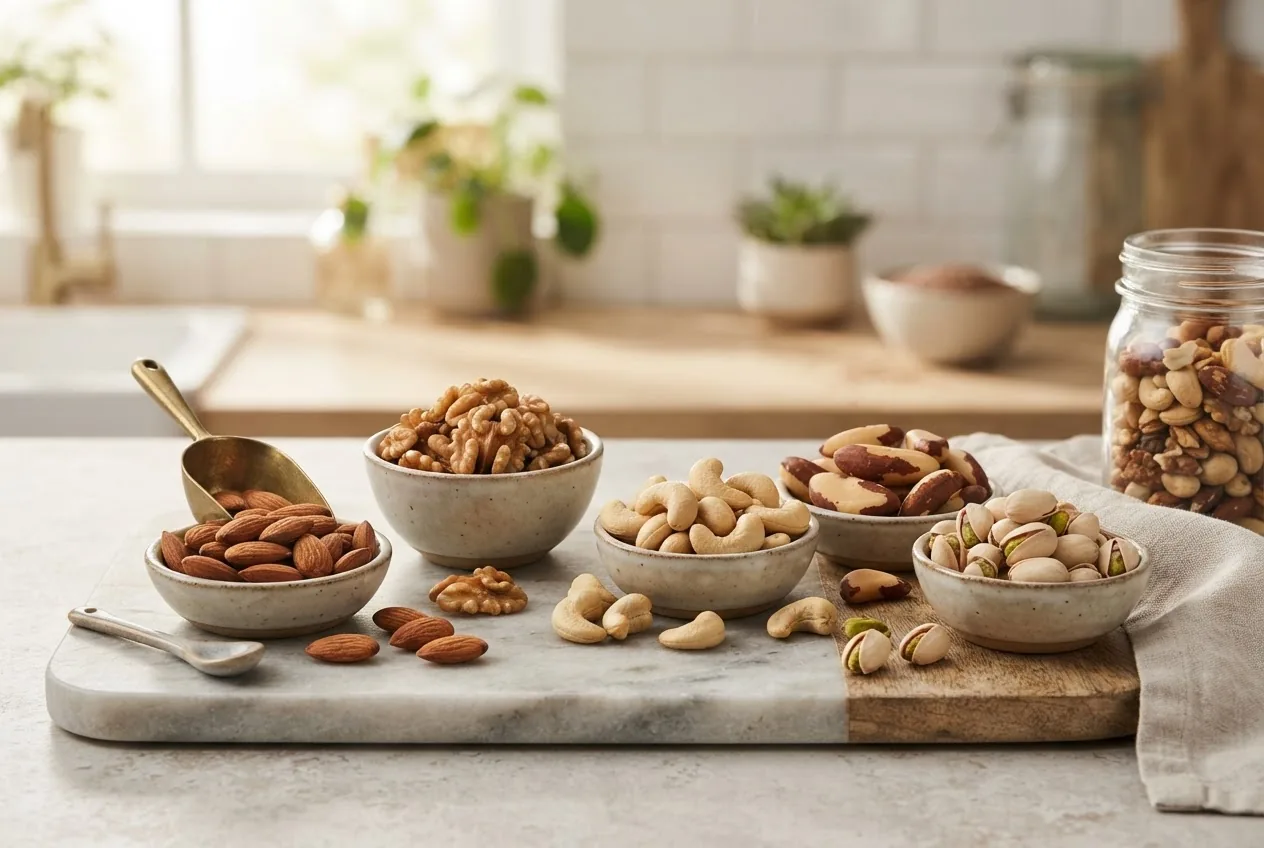
Do nuts have protein? Yes — most common nuts supply meaningful protein per serving (typically 2–7 grams per ounce), making them useful plant-based protein foods when paired with complementary proteins; they also provide healthy fats and micronutrients that support satiety and metabolic health (40–60 words).
This guide answers whether nuts are protein foods, compares protein content across almonds, walnuts, peanuts, cashews, pistachios, pecans, and macadamia nuts, explains amino acid profiles and digestibility, and shows how to use nuts in lean-protein and healthy-fat diet plans with practical serving suggestions.
For broader protein strategies that include nuts as part of a calorie-aware plan, see protein rich food for weight loss.
Introduction: Do Nuts Have Protein? Overview and Importance
Answer: Yes — most edible nuts contain protein, typically 2–7 grams per 1 oz (28 g) serving, and they combine protein with mono- and polyunsaturated fats plus fiber and micronutrients, making them valuable as part of a balanced, protein-focused diet for satiety, muscle support, and heart health.
Nuts are widely consumed as snacks and ingredients. When people ask “do nuts have protein?”, they often mean two things: (1) how much protein does each nut provide and (2) whether that protein is sufficient as a main protein source. This introduction clarifies both.
Plant-based protein: Protein derived from non-animal foods such as nuts, seeds, legumes, grains, and vegetables; useful for vegetarian and omnivorous diets.
Nuts are energy-dense because they contain concentrated fats; however, their protein and fiber content increases fullness per calorie compared with many processed snacks. That makes nuts particularly helpful for sustainable weight-loss eating patterns when portion-controlled (According to a 2021 meta-analysis of randomized trials, nut-inclusive diets supported weight management when calories were controlled).
This article focuses on the protein-specific role of nuts — not only total calories or fat — to answer whether nuts can meaningfully contribute to daily protein targets and how best to use them in lean-protein and healthy-fat meal plans.
Protein Content in Common Nuts: Detailed Breakdown
Answer: Protein per 1 oz (28 g) varies by nut: peanuts and almonds provide the most (around 6–7 g), pistachios and cashews are midrange (~5–6 g), walnuts, pecans, and macadamia nuts provide less (~2–4 g); calories and fat also vary, so consider protein-to-calorie ratio when choosing.
Below is a table compiling protein, calories, and total fat per 1 ounce (28 g) for common nuts. Values are rounded to the nearest tenth and sourced from authoritative nutrient databases for precision.
| Nut | Protein (g) per 1 oz / 28 g | Calories per 1 oz | Total fat (g) per 1 oz |
|---|---|---|---|
| Almonds | 6.0 | 164 | 14.0 |
| Peanuts* (legume) | 7.0 | 161 | 14.0 |
| Cashews | 5.2 | 157 | 12.4 |
| Pistachios | 6.0 | 159 | 13.0 |
| Walnuts | 4.3 | 185 | 18.5 |
| Pecans | 2.6 | 196 | 20.4 |
| Macadamia nuts | 2.2 | 204 | 21.5 |
*Peanuts are botanically legumes but are nutritionally grouped with nuts in many diet contexts. Protein and calorie values above are rounded; According to the 2023 USDA database, these figures reflect common raw or dry-roasted nut varieties and are widely used for meal planning.
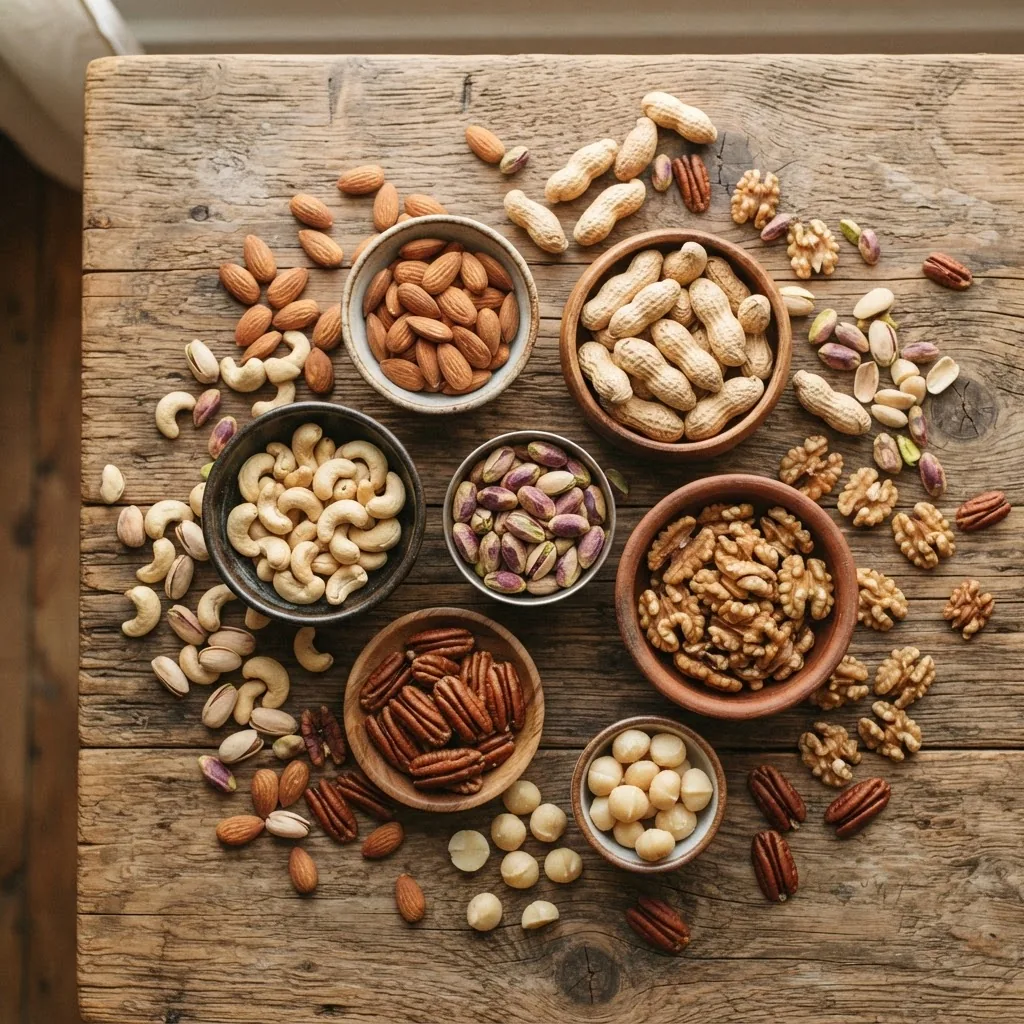
Interpreting the table: almonds, peanuts, and pistachios offer the most protein per ounce, which improves the protein-to-calorie ratio. Walnuts are higher in omega-3 ALA (alpha-linolenic acid) but provide less protein per ounce. Macadamia and pecans are calorie-rich with lower protein density, so they are best used for healthy fats rather than primary protein.
If you track energy from macronutrients, remember that fat contributes 9 kcal per gram; for guidance on how fat calories influence total intake, see caloric content of fats in nuts and review the role of calories in protein via calories in protein.
Practical takeaway: Use higher-protein nuts (almonds, peanuts, pistachios) when your goal is to boost protein for satiety or post-workout snacks, and use lower-protein, higher-fat nuts (macadamia, pecans, walnuts) when your goal emphasizes healthy fats like monounsaturated or omega-3s.
Next, we examine whether nuts are complete proteins and how amino acid profiles affect their protein quality.
Are Nuts Complete Proteins? Amino Acid Profiles and Protein Quality
Answer: Most nuts are incomplete proteins because they lack sufficient amounts of one or more essential amino acids—typically lysine; however, nuts can contribute valuable amino acids and, when combined with complementary plant proteins (e.g., legumes, whole grains), form complete protein patterns adequate for growth and maintenance.
Amino acid: One of the small molecules that link to form proteins; nine are essential because the body cannot synthesize them and they must come from food.
Complete protein: A protein source that contains all nine essential amino acids in proportions sufficient for human needs.
Nuts generally supply many essential amino acids but are often limited in lysine or — less commonly — in other amino acids depending on the nut. For example, almonds provide notable methionine and leucine but are relatively low in lysine compared with animal proteins or legumes (According to a 2020 peer-reviewed amino-acid composition analysis).
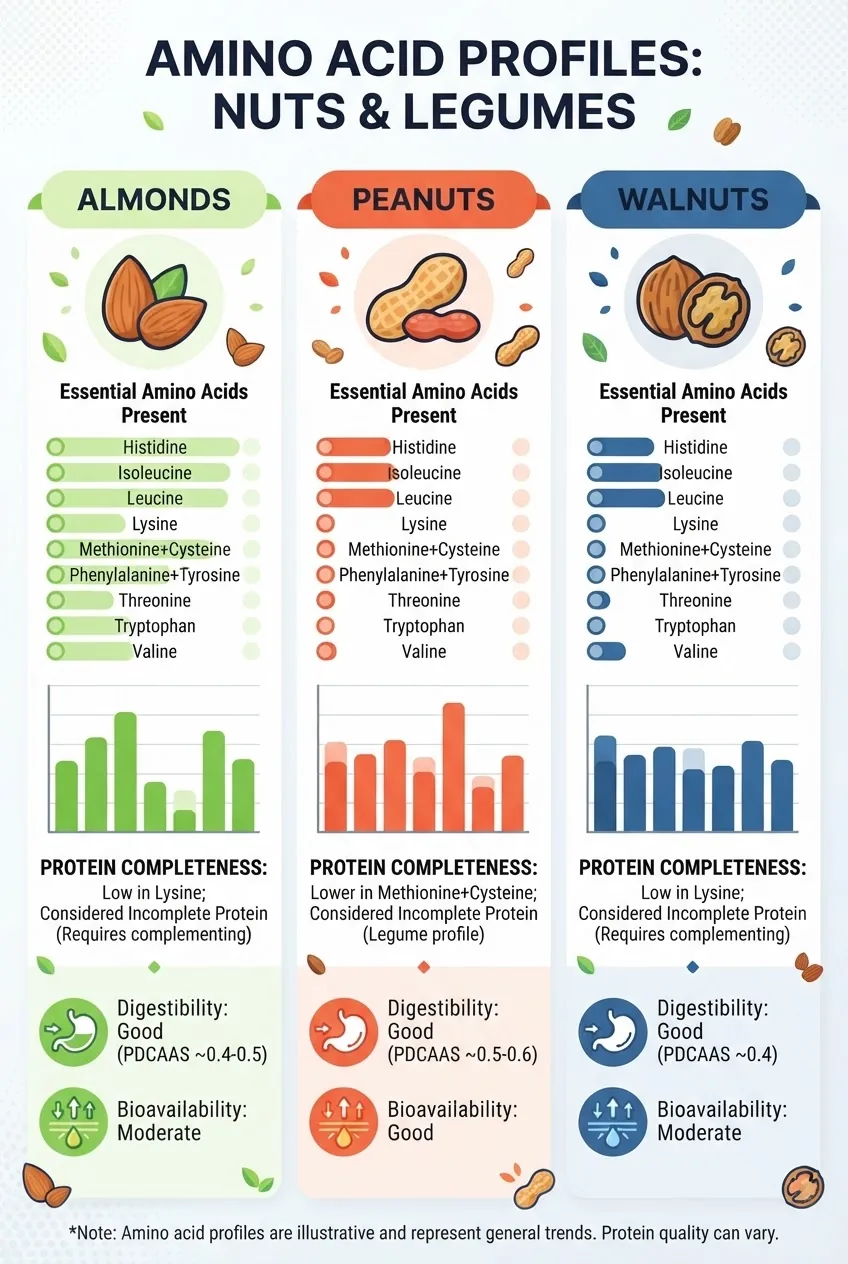
Protein quality metrics: Two commonly used measures are PDCAAS (Protein Digestibility–Corrected Amino Acid Score) and DIAAS (Digestible Indispensable Amino Acid Score). PDCAAS adjusts amino acid profile by digestibility to score protein quality (1.0 maximum). Animal proteins typically approach 1.0; most nuts score lower but still provide useful amino acids (According to an Academy of Nutrition and Dietetics review, plant PDCAAS values vary widely depending on source and processing).
Protein digestibility and bioavailability: Digestibility measures the proportion of protein absorbed after digestion; bioavailability refers to the fraction of ingested amino acids available for use. Both are influenced by fiber, anti-nutrients (e.g., phytates), and food processing. Cooking, roasting, soaking, and grinding can increase digestibility of nut proteins modestly.
Practical mixing: Combining nuts with lysine-rich legumes (peanut butter on whole-grain bread, almonds with lentil-based dishes) or consuming a varied plant-based diet across the day ensures essential amino acids are met without needing every meal to be “complete.” For strict vegan athletes, targeted combining or supplementation can optimize amino acid intake.
For a wider comparison of complete protein sources and how nuts fit into that landscape, consult complete protein foods.
Next, we explore how the protein in nuts affects weight loss, muscle growth, and satiety.
Health Benefits of Protein in Nuts: Weight Loss, Muscle Growth, and Satiety
Answer: Nut protein contributes to satiety and muscle maintenance when combined with adequate total protein intake; nuts also deliver healthy fats that support metabolic health and cardiovascular markers, and research shows that including nuts supports weight management without causing weight gain when calories are controlled (According to a 2019 meta-analysis of randomized controlled trials).
Satiety: The feeling of fullness after eating that reduces subsequent calorie intake; protein and fiber are primary satiety drivers.
Why nuts help you feel full: Nuts provide a mix of protein, fiber, and fat, which slows gastric emptying and increases satiety hormones. For example, an ounce of almonds (about 6 g protein and 3.5 g fiber) taken as a mid-afternoon snack reduces hunger ratings and calorie intake at the next meal compared with carbohydrate-rich snacks (According to a 2016 randomized crossover trial).
Role in weight loss: Multiple randomized trials and cohort studies indicate nut consumption is either neutral or beneficial for weight control when overall energy balance is maintained. Mechanisms include increased satiety, improved diet quality, and potential appetite regulation via fatty-acid signaling (According to a 2018 systematic review of cohort studies and RCTs).
Muscle growth: For hypertrophy and muscle repair, total daily protein and per-meal leucine content matter most. Nuts are not the highest leucine sources per calorie compared with dairy or lean meats, but they can contribute to total daily protein and provide healthy fats that support recovery. Combining nuts with a higher-leucine source (e.g., dairy, soy, or whey) optimizes muscle protein synthesis.
Example practical scenarios:
- Snack: 1 oz almonds (6 g protein) paired with Greek yogurt (15–20 g protein) — adds healthy fats and increases meal protein.
- Post-workout: Smoothie with peanut butter (2 tbsp ≈ 7 g protein), plant protein powder, and banana — balances carbs and protein for recovery.
- Meal enhancement: Chopped pistachios over a lentil salad adds essential amino acids plus healthy fats and micronutrients.
Healthy fats and heart health: Nuts are rich in monounsaturated and polyunsaturated fats. Walnuts are a notable source of alpha-linolenic acid (ALA), a plant omega-3 fatty acid. The American Heart Association recommends nuts as part of a heart-healthy pattern for their lipid-lowering and anti-inflammatory benefits (American Heart Association guidance).
For context on choosing fats in the diet and comparing nuts’ fats with oils, see healthy fat choices.
Satiety-to-calorie efficiency: When selecting a nut for weight control, consider the protein-to-calorie ratio. Almonds and pistachios offer better efficiency than macadamia nuts. Pairing a modest portion of nuts with a lean protein or fiber-rich vegetable lowers the risk that the fat calories will push total daily energy above targets.
Research highlights:
- An RCT showed daily almond consumption improved satiety and diet quality without weight gain over 24 weeks (According to a 2020 randomized controlled trial).
- Cohort data link frequent nut consumption with lower long-term weight gain and reduced cardiovascular events (According to a 2019 prospective cohort study).
Next we compare nuts directly to seeds, legumes, and animal proteins to show where nuts fit in the protein hierarchy.
Comparing Nuts to Other Protein Foods: Seeds, Legumes, and Animal Proteins
Answer: Nuts provide moderate protein density but generally less protein per calorie than lean animal proteins and many legumes; seeds can be comparable or higher in specific amino acids; legumes typically provide more lysine and often serve as better standalone protein sources for vegetarians.
Below is a comparison list summarizing pros and cons of nuts versus seeds, legumes, and animal proteins.
- Nuts: Moderate protein (2–7 g/oz), high in healthy fats, good for satiety and micronutrients (vitamin E, magnesium); incomplete amino-acid profiles often require complementing.
- Seeds (e.g., pumpkin, hemp, chia): Often higher in certain amino acids; hemp seed provides a nearly complete amino-acid profile and about 9–10 g protein per 3 tbsp (According to a 2022 seed nutrition analysis).
- Legumes (e.g., lentils, beans, peanuts): Higher lysine content and higher protein per cooked cup versus nuts; staple for vegetarians and vegans (According to a 2021 USDA legume nutrient summary).
- Animal proteins (e.g., chicken, fish, dairy): Typically complete proteins with high digestibility; more protein per calorie and often preferred for muscle-building protocols.
Comparison table (per typical serving):
| Protein Source | Typical Serving | Protein (g) | Notes |
|---|---|---|---|
| Almonds (nut) | 1 oz | 6 | High vitamin E; incomplete protein |
| Hemp seeds (seed) | 3 tbsp | 9–10 | Near-complete amino profile |
| Lentils (legume, cooked) | 1 cup | 18 | High lysine; low fat |
| Chicken breast (animal) | 100 g cooked | 31 | Complete protein; high bioavailability |
Key comparisons:
- Protein density: Animal proteins > legumes > seeds ≈ nuts (varies by species).
- Amino-acid completeness: Animal proteins and some seeds (hemp) score higher; legumes complement nuts effectively.
- Calories and fat: Nuts are fat-heavy; legumes and lean meats are lower-fat, higher-protein per calorie.
Choosing the right combination depends on goals: for muscle gain prioritize high-bioavailability proteins and sufficient total protein; for heart health and satiety, include nuts for their mono- and polyunsaturated fats alongside legumes or lean proteins.
Next, practical tips for incorporating nuts into a protein-rich diet.
How to Incorporate Nuts into a Protein-Rich Diet: Practical Tips and Serving Suggestions
Answer: Use nuts as part of meals and snacks—measure portions (1 oz standard), pair with complementary proteins (legumes, dairy, lean meat), use nut butters in smoothies or on toast, and choose higher-protein nuts (almonds, pistachios, peanuts) to boost protein without excessive calories.
Start with portion control: 1 oz (28 g) is the standard serving. Weigh if you track calories; a typical handful can exceed an ounce. For portion guidance and daily goals, check trusted recommendations like daily protein intake recommendations.

- Measure and portion: Use a kitchen scale or measuring cup. One ounce is roughly 23 almonds or 49 pistachios (in-shell counts vary).
- Pair with complementary proteins: Combine nuts with legumes, dairy, eggs, or whole grains during meals to achieve complete amino-acid profiles across the day.
- Use nut butters strategically: 2 tbsp peanut butter ≈ 7–8 g protein; spread on whole-grain toast with banana or add to protein smoothies for easy calories and protein.
- Choose higher-protein nuts for snacks: Almonds, peanuts, pistachios provide better grams-per-calorie for protein-focused snacks.
- Include ground or chopped nuts in meals: Add to salads, yogurt, or grain bowls to increase texture, micronutrients, and protein content.
- Use as garnish for balanced meals: A sprinkle of chopped walnuts over oatmeal or chicken adds healthy fats and a modest protein boost without large calorie increases.
Sample daily meal ideas that include nuts:
- Breakfast: Greek yogurt with 1 oz chopped almonds, berries, and a drizzle of honey (20–25 g protein depending on yogurt).
- Lunch: Lentil salad with roasted vegetables and 1 oz pistachios; whole-grain roll on side (provides plant protein variety).
- Snack: Apple slices with 2 tbsp peanut butter (≈7–8 g protein).
- Dinner: Stir-fry with tofu, broccoli, brown rice, and chopped cashews.
For snacking and meal planning targeted at fat loss with muscle retention, consider strategies from lean protein for cutting.
Practical label reading walkthrough:
- Check serving size (often 1 oz or 28 g).
- Note protein grams per serving and calories.
- Compare saturated fat and added ingredient lists (salt, honey, sugar) — choose raw or dry-roasted with no added sugar for cleaner protein boosts.
When tracking macros for athletic goals, treat nuts as supportive protein sources rather than primary high-output protein—their strength is nutrient density and satiety rather than maximal protein yield per calorie. For planning total daily protein targets and how nuts contribute, see daily protein intake recommendations.
Next, potential downsides and protein limitations when relying on nuts.
Potential Downsides: Allergies, Calories, and Protein Limitations in Nuts
Answer: Downsides include common nut allergies (which can be severe), high caloric density that can increase total energy intake if portions are unchecked, and incomplete amino-acid profiles that make nuts insufficient as the sole protein source for many people.
Allergies and safety: Tree-nut and peanut allergies are among the most common food allergies and can cause severe reactions; avoid cross-contact and follow medical advice. Always read labels for processing warnings and consult an allergist for testing (According to the 2022 American Academy of Allergy, Asthma & Immunology data).
Calorie caution: Nuts are high in fats; overconsumption can exceed daily energy goals. For context on fat calories, review caloric content of fats in nuts to calculate portion sizes, and consider the broader guidance in our calories in protein resource when balancing macronutrients.
Protein limitations: Nuts’ lower lysine content means relying on them alone can leave essential-amino-acid gaps. People on strict plant-only diets should complement nuts with legumes, whole grains, or fortified foods to meet indispensable amino-acid needs (According to an Academy of Nutrition and Dietetics position paper on vegetarian diets).
Processing and added ingredients: Many store-bought nuts include added salt, sugar, or oils that change nutrition profiles. Roasting can reduce some anti-nutrients and improve digestibility but may also reduce certain heat-sensitive micronutrients.
Practical cautions:
- If you have a nut allergy, avoid all tree-nuts and peanuts unless cleared by testing.
- Measure portions to avoid unplanned calorie intake.
- Pair nuts with complementary proteins for completeness and optimal muscle support.
Next, a concise conclusion with key takeaways and a call to action.
Conclusion: Nuts as a Valuable Protein Food in a Balanced Diet
Answer: Nuts do have protein and are valuable protein foods when used thoughtfully: choose higher-protein nuts (almonds, peanuts, pistachios) for protein density, pair nuts with complementary proteins to achieve complete amino-acid patterns, monitor portions to control calories, and include nuts for satiety, heart-healthy fats, and nutrient variety.
Summary takeaways:
- Nuts deliver 2–7 g protein per ounce; almonds, peanuts, and pistachios are top choices for protein.
- They are mostly incomplete proteins but combine well with legumes and grains to meet essential amino-acid needs.
- Nuts improve satiety and diet quality; when calories are controlled, regular nut consumption supports weight management and heart health (According to a 2019 systematic review).
If you’re building a protein-rich meal plan for weight loss or muscle goals, consider nuts as part of a mixed-protein strategy rather than a sole primary protein source. For practical meal plans that integrate nuts with lean proteins for fat loss, explore our protein rich food for weight loss pillar and tailor portions to your energy needs.
Call to action: Track one week of your nut intake, noting servings and pairing choices; adjust portions to align with your daily protein and calorie targets and consult a registered dietitian for personalized advice.