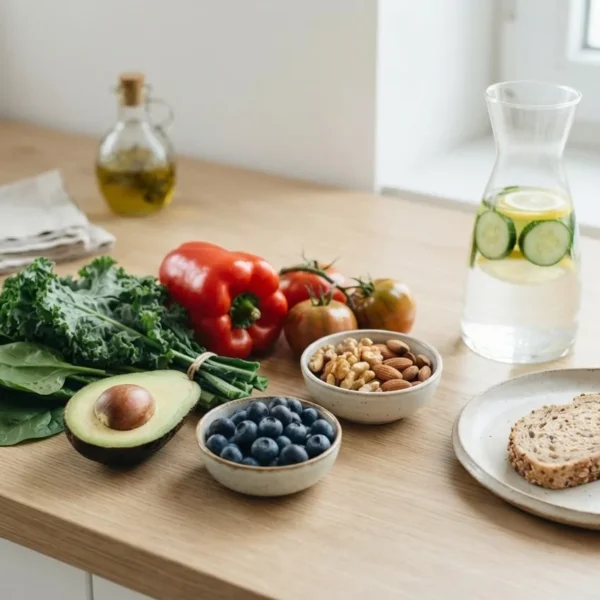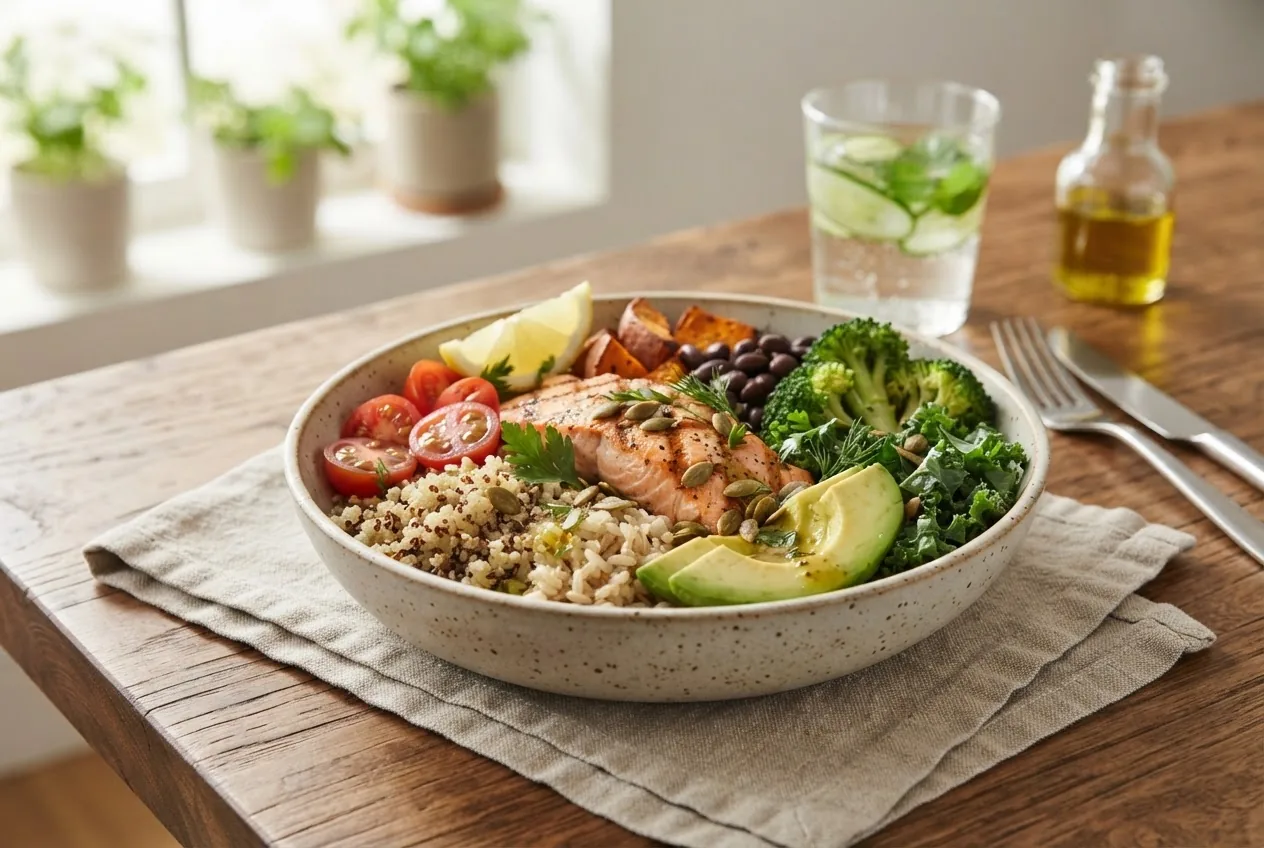
High carb meals are the focus of this hands-on guide. By the end you will be able to design, prep and time balanced high-carb meals paired with lean protein and healthy fats to support energy, workouts and satiety. Expect to spend 2–5 hours learning and a weekly 2–4 hour meal-prep commitment; skill level: beginner-to-intermediate nutrition/practical cook.
Before you start
- Kitchen basics: measuring spoons and cups, food scale (0.1 oz/1 g precision), oven or grill, nonstick pan.
- Pantry staples: whole grains (brown rice, quinoa), legumes (black beans, lentils), olive oil, vinegar, salt, pepper.
- Proteins: boneless skinless chicken breast, canned tuna, Greek yogurt, eggs, canned beans, extra-firm tofu.
- Produce: starchy vegetables (sweet potatoes, corn), fresh fruit, leafy greens, avocados.
- Reference sources: open the USDA nutrient database (for portion lookups) and a reliable food scale app.
- Health check: if you have diabetes, metabolic disease or special medical conditions, have recent lab results available and consult your clinician.
-
Step 1 — Learn the basics: Understanding why carbs matter
Understanding High Carb Meals
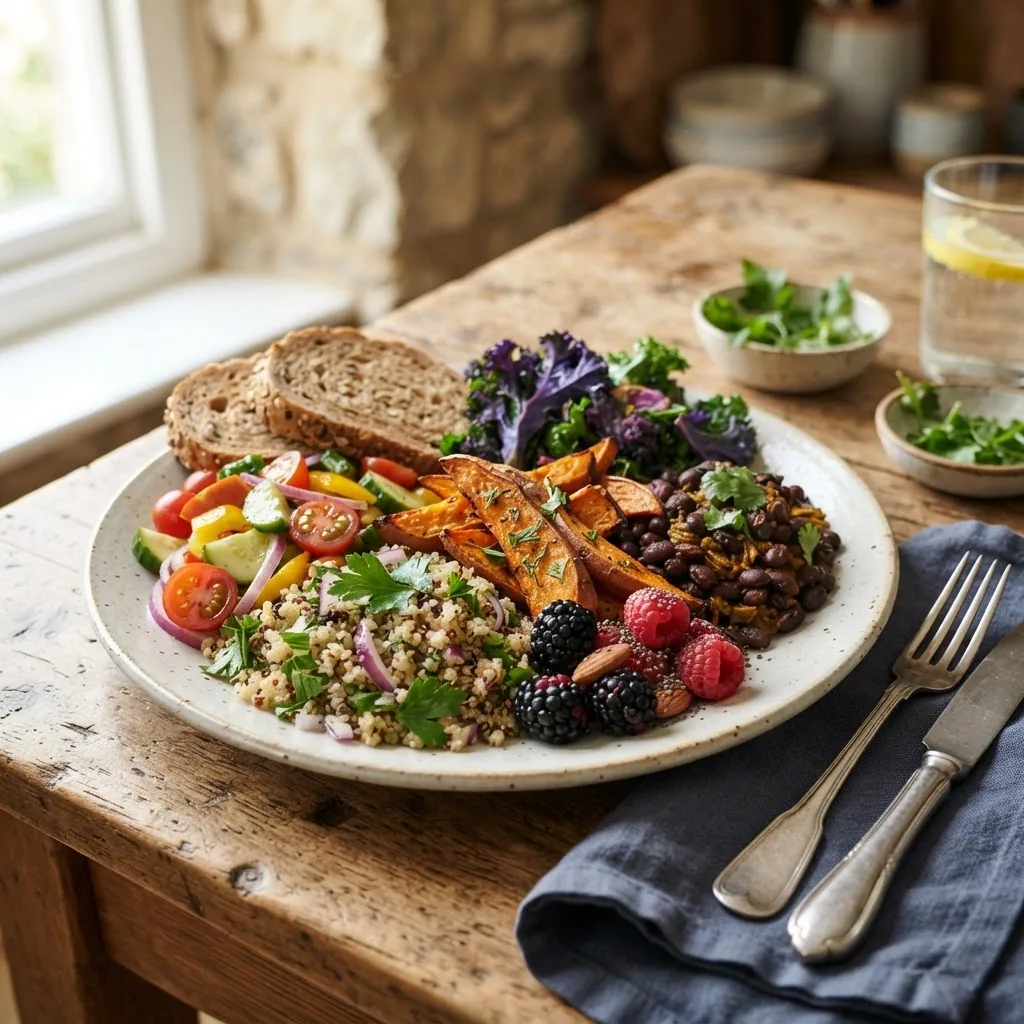
Complex carbohydrates and simple sugars make up the practical categories you’ll use when building high carb meals. Complex carbohydrates (starches and fiber from whole grains, legumes, starchy vegetables) digest more slowly and provide sustained energy; simple sugars (fruit sugars, table sugar, syrups) absorb faster and spike blood glucose more quickly. The glycemic index (GI) is a ranking of how quickly foods raise blood glucose: low-GI foods release glucose slowly, high-GI foods raise it quickly. Dietary fiber is the indigestible portion of plants that slows digestion, improves satiety and supports gut health.
Think of carbohydrates as the fuel for daily activity — “carbs are the fuel that keeps your body’s engine running, just like gasoline for a car.” For training days, longer active shifts or manual jobs common in Texas outdoor lifestyles, prioritize complex carbohydrates plus fiber for stable energy. For the evening or short-rest periods, lower total carb portions paired with protein and fat can prevent late-night glycemic swings.
Mechanics in simple terms: after you eat carbs they are broken into glucose, absorbed into the blood, and either used for immediate energy, stored as glycogen in muscle and liver, or converted to fat if consistently consumed in excess. That metabolic pathway is why meal composition, timing and portion size matter.
Key definitions (practical):
- Complex carbohydrates: whole grains, oats, brown rice, quinoa, legumes, sweet potatoes — slow-release energy, high in fiber and micronutrients.
- Simple sugars: fruit (fructose), table sugar (sucrose), juices — faster energy, useful around intense exercise but best limited at other times.
- Glycemic Index: a practical tool — combine high-GI with protein/fat to blunt spikes.
- Dietary fiber: soluble and insoluble — aim for whole-food fiber sources to improve satiety and gut function.
Practical takeaway: design plates where at least 50–60% of carbohydrate servings are complex and fiber-rich, with controlled portions of simple sugars for performance windows (pre- or post-exercise). Transition: now that you know the categories, we’ll quantify benefits and trade-offs.
-
Step 2 — Compare benefits, risks and the science
Nutritional Benefits and Considerations of High Carb Meals
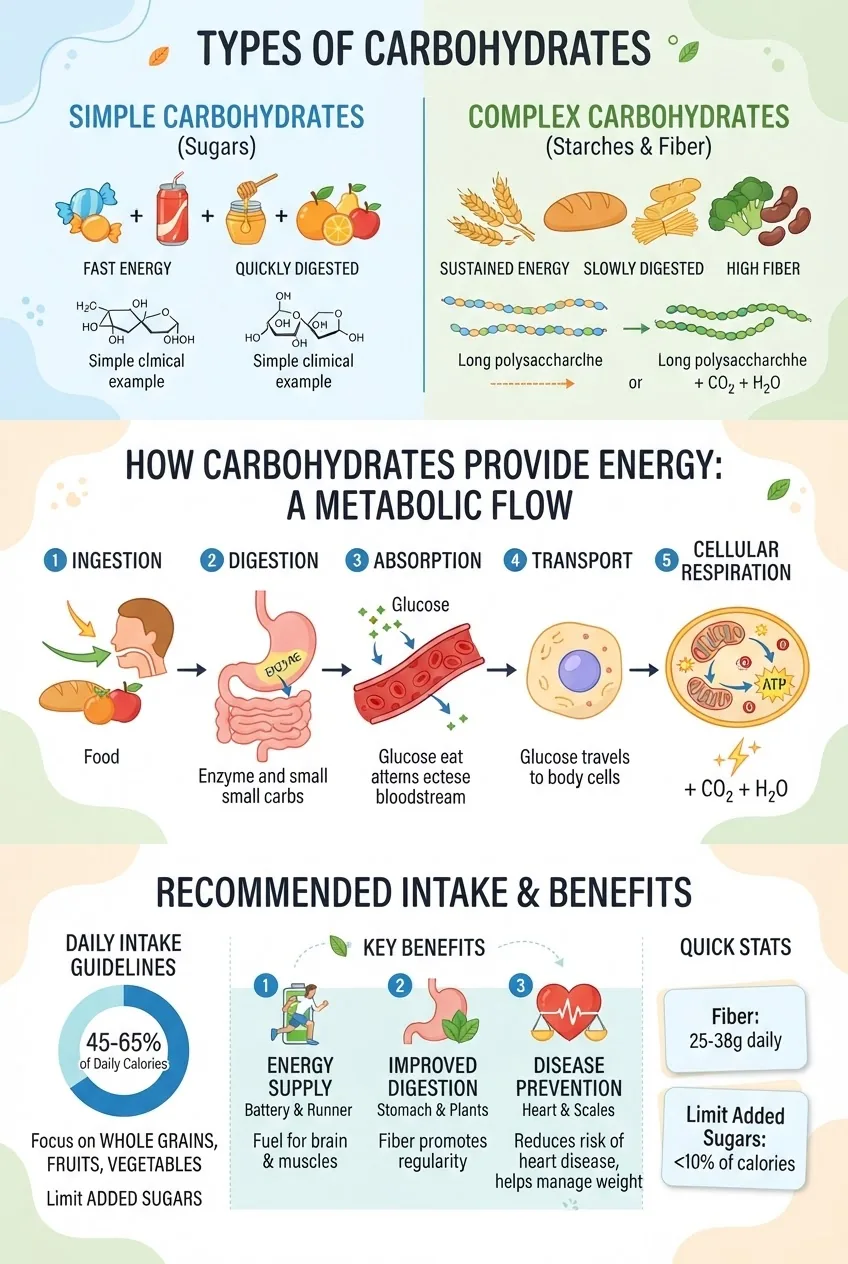
Carbohydrates are the primary rapid-energy macronutrient. They supply glucose for brain function, ATP for working muscle and refill glycogen stores after exercise. Energy metabolism from carbs relies on glycolysis, glycogen storage and oxidative phosphorylation during aerobic work. The practical implications: the speed and duration of the energy you need dictate carb type and timing.
Below is a concise scientific stat block comparing carbohydrate energy and applicable guidance:
Metric Value Source note Energy per gram (carb) ~4 kcal/gram According to the 2023 USDA Dietary Guidelines and nutrient database. Recommended daily percentage (general adult) 45–65% of total calories from carbs According to the 2023 USDA Dietary Guidelines. Glycogen repletion window 6–24 hours depending on activity Based on consensus sports-nutrition reviews (academic sources). Fiber recommendation 25–38 g/day depending on age/sex According to the Academy of Nutrition and Dietetics guidelines. Benefits of high carb meals (summarized): improved endurance, faster glycogen recovery, cognitive sharpness, and more food volume for satiety at lower energy density when you choose high-fiber carbs. Considerations and risks: high intake of simple sugars can raise fasting triglycerides and blood glucose variation; excess total energy from carbs can drive weight gain when beyond expenditure.
When discussing energy from macronutrients, remember fats yield ~9 kcal/g.
Methodology notes for practitioners: use the thermic effect of food (TEF) as a rule-of-thumb — protein has the highest TEF (~20–30% of its energy used for processing), carbs intermediate (~5–10%), and fat lowest (~0–3%). This means meal composition slightly shifts net usable energy. When calculating energy balance, track portions by grams and use USDA nutrient entries for precise values.
Source anchors for readers: access the USDA nutrient database for portion-level values (USDA FoodData Central), consult the American Heart Association for healthy-fat guidance (American Heart Association), and review balanced-meal planning from the Academy of Nutrition and Dietetics (Academy of Nutrition and Dietetics).
Transition: now that you can weigh benefits and risks, we’ll map how to combine carbs with protein for muscle support and blood sugar control.
-
Step 3 — Learn to pair carbs with protein and fat for performance and recovery
High Carb High Protein Meals: Why and How to Combine Them
Pairing carbohydrates with lean protein and some healthy fat is the practical strategy for steady energy, muscle recovery and weight-management support. Carbs refill muscle glycogen — protein provides amino acids for repair — fats slow digestion and improve nutrient absorption. The synergy matters most around workouts, long shifts and active weekends common to many Texans.
Why combine them (core physiology): after a workout, muscle is primed for glycogen synthesis and protein synthesis. Consuming carbs with ~20–40 g of protein within a 2-hour post-exercise window speeds recovery and increases net muscle protein balance. For daily meals, balanced macronutrient plates that distribute carbs and protein across 3–5 meals improve satiety and reduce extreme hunger-driven choices.
- Benefit 1 — Faster glycogen repletion: carbs supply glucose; protein modestly enhances insulin response to shuttle glucose into muscle.
- Benefit 2 — Improved muscle recovery: essential amino acids from protein support muscle protein synthesis after training.
- Benefit 3 — Better blood sugar control: protein and fat lower the post-meal glucose spike from carbs by slowing gastric emptying.
- Benefit 4 — Greater satiety and appetite control: mixed meals reduce overall daily energy intake in many studies.
- Benefit 5 — Practical performance gains: endurance athletes and manual laborers maintain power output when carbs are available.
Examples of pragmatic pairings (portion-level guidance):
- Endurance recovery plate: 1.0–1.2 g/kg/hour carbs for first 4 hours post-endurance event + 0.3 g/kg protein per serving (e.g., 1 cup cooked quinoa ~39 g carbs + 4 oz grilled chicken ~35 g protein).
- Resistance workout meal: 0.5–0.8 g/kg carbs within 2 hours + 20–40 g protein (e.g., 1 medium sweet potato ~26 g carbs + 3 eggs + 1 cup Greek yogurt).
- Everyday balanced lunch: 40–60 g carbs + 20–30 g protein + 10–15 g healthy fat to moderate glycemic response (e.g., brown rice bowl, 4 oz salmon, 1/4 avocado).
Support details on protein amounts: see the guidance on
daily protein requirements
protein calorie equivalentsContextual note: pairing carbs with protein is also a core tool when using protein for weight loss. For deeper tactics on using protein strategically, reference the pillar on
Protein Rich Food for Weight LossTransition: the next section lists common high-carb ingredients to keep in your pantry and fridge, including regional Texas staples to make meals familiar and convenient.
-
Step 4 — Stock the right high-carb ingredients
Common Sources of High Carb Ingredients in Meals
Below are categorized, ready-to-use carb sources with short descriptions and portion notes so you can build plates quickly.
- Whole grains
- Brown rice — 1 cup cooked = ~45 g carbs. Slow-release, versatile for Tex-Mex bowls.
- Quinoa — 1 cup cooked = ~39 g carbs and ~8 g protein; good for vegetarian high-carb high-protein meals.
- Oats — 1/2 cup dry = ~27 g carbs; ideal for breakfast and pre-workout meals.
- Legumes and pulses
- Black beans — 1 cup cooked = ~40 g carbs + 15 g protein; staples for Texas bowls and chili.
- Lentils — 1 cup cooked = ~40 g carbs + 18 g protein; fast-cooking and high-fiber.
- Fruits
- Bananas — 1 medium = ~27 g carbs; excellent pre-workout for quick glucose.
- Berries — 1 cup = ~15 g carbs + high fiber; lower GI than many fruits.
- Starchy vegetables
- Sweet potatoes — 1 medium = ~26 g carbs; high in beta-carotene and fiber.
- Corn — 1 cup = ~30 g carbs; used in Texan cuisine as side or salad ingredient.
- Refined and simple sources (use sparingly)
- White bread, candy, juices — fast-acting carbs; useful in short performance windows but not for everyday meals.
- Texas regional carb sources
- Whole-kernel corn (elotes-style) — common at markets; combine with beans and protein for balanced plates.
- Pinto beans — classic side in Texan plates; 1 cup cooked = ~45 g carbs + ~15 g protein.
- Hominy/masa (corn tortillas) — tortillas are a convenient high-carb base (1 medium tortilla = ~15–20 g carbs).
Transition: with ingredients in place, the next section gives practical, portioned meal options that combine carbs, protein and healthy fats for real-world cooking and meal prep.
- Whole grains
-
Step 5 — Build and prep balanced high-carb meals (10 ready options)
Sample High Carb Meal Options with Protein and Healthy Fats
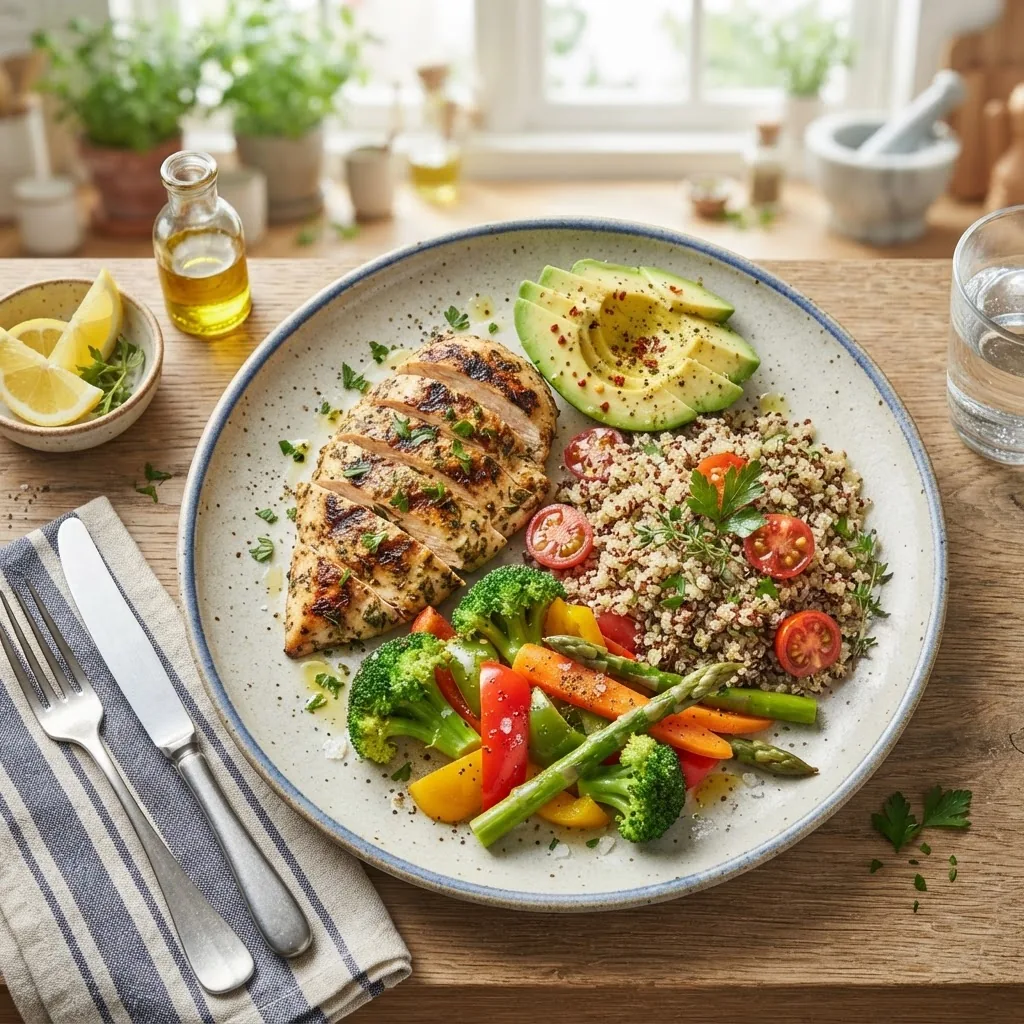
The recipes below are written to be concrete: exact portions, ingredient highlights, cooking or assembly steps and how they support energy, recovery and satiety. Where fats are suggested, include a nod to and to enhance nutrient quality.
heart-healthy cooking oils
omega-3 rich foods-
Quinoa & Black Bean Bowl — Performance Lunch
Serves: 1. Prep time: 25 min. Cooked quinoa 1 cup (39 g carbs), black beans 1/2 cup (20 g carbs, 7.5 g protein), grilled chicken breast 4 oz (35 g protein), 1/4 avocado (7 g fat), salsa, lime. Assembly: layer quinoa, beans, chicken, avocado. Drizzle 1 tsp olive oil. Purpose: 40–45 g carbs + 30–40 g protein; ideal within 60–120 min post-resistance training.
-
Sweet Potato & Salmon Plate — Recovery Dinner
Serves: 1. Bake medium sweet potato (26 g carbs) at 400°F for 45 min. Grill 4 oz salmon (22 g protein) with 1 tsp olive oil. Side: 1 cup steamed broccoli. Purpose: omega-3 rich meal with 26 g carbs + 20–25 g protein to support overnight recovery.
-
Oatmeal Power Bowl — Breakfast for Long Shifts
Serves: 1. 1/2 cup dry oats (27 g carbs) cooked with 1 cup skim milk, add 2 tbsp chopped walnuts (10 g fat), 1 scoop whey or 1/2 cup Greek yogurt (20 g protein), 1/2 banana. Purpose: sustained energy for 4–6 hours with balanced macros.
-
Brown Rice & Turkey Fiesta — Tex-Mex Lunch
Serves: 2. 1 cup cooked brown rice per serving (45 g carbs), lean ground turkey 4 oz per serving (32 g protein), 1/2 cup corn, pico de gallo, 1 tbsp olive oil split. Serve with 2 corn tortillas (30–40 g carbs extra if desired). Purpose: familiar Texas profile, high-carb-high-protein dinner alternative.
-
Lentil Soup with Whole-Wheat Bread — Comfort Prep Meal
Serves: 4. 2 cups cooked lentils total (80 g carbs, 36 g protein) simmered with vegetables and 1 tbsp olive oil. Serve 1 bowl (1.5 cups) + 1 slice whole-wheat bread (12 g carbs). Portion: ~45 g carbs + 18 g protein per bowl. Batch-cook 40 min; refrigerate 4 days.
-
Pasta Primavera with Grilled Shrimp — High-Intensity Prep
Serves: 2. 3/4 cup cooked whole-grain pasta per serving (30–35 g carbs), 5–6 large shrimp (20 g protein), mixed veggies sauteed in 1 tsp extra virgin olive oil. Toss with lemon. Purpose: moderate-high carbs for pre-race or long hike fueling.
-
Bean & Rice Burrito Bowl — Portable Meal
Serves: 1. 1/2 cup cooked brown rice (22 g carbs), 1 cup pinto beans (45 g carbs, 15 g protein), 3 oz grilled lean steak or tofu (20 g protein), shredded lettuce, pico. Purpose: high carb, high protein portable option for field work.
-
Greek Yogurt Parfait with Berries & Granola — Post-Workout Snack
Serves: 1. 1 cup plain Greek yogurt (20 g protein), 1/2 cup mixed berries (8–10 g carbs), 1/4 cup granola (20–25 g carbs). Purpose: fast carbs and 20 g protein within 30–60 min after anaerobic training.
-
Tofu Stir-Fry with Brown Rice — Plant-Based Option
Serves: 2. 1 cup cooked brown rice per serving (45 g carbs), 6 oz extra-firm tofu per serving (20 g protein), mixed vegetables, 1 tbsp sesame oil (split). Marinate tofu 15 min, pan-fry 6–8 min. Purpose: vegetarian high-carb high-protein balanced plate.
-
Overnight Oats with Peanut Butter & Chia — Quick Fuel
Serves: 1. 1/2 cup oats (27 g carbs), 1 cup milk or milk alternative, 1 tbsp peanut butter (8–10 g fat, 3–4 g protein), 1 tbsp chia seeds (3 g protein, 5 g fiber). Refrigerate overnight. Purpose: grab-and-go high-carb breakfast providing 30–40 g carbs and some protein.
Meal-prep walkthrough (example): For the Quinoa & Black Bean Bowl, cook 2 cups quinoa (dry) to yield ~6 cups cooked over 20 min; portion 1 cup per container. Rinse and drain two 15-oz cans black beans; heat with cumin and garlic for 8 minutes. Grill 3 chicken breasts (6–8 min per side at medium heat) to reach internal temp 165°F (use a thermometer). Assemble 4 containers: quinoa 1 cup, beans 1/2 cup, sliced chicken 4 oz, 1/4 avocado. Refrigerate up to 4 days. This walkthrough demonstrates portion control and timing: batch-cook ~90 minutes total for 4 lunches.
Fats selection note: choose or finish cooking with oils highlighted in for cardiovascular benefits. Add fatty fish twice weekly to include .
Transition: after building meals, the next step reviews practical tips for integrating these plates into daily life without overconsuming carbs.
-
-
Step 6 — Adopt sustainable habits: timing, portions and lifestyle fit
Tips for Incorporating High Carb Meals into a Healthy Lifestyle
These are prescriptive, with exact thresholds and routines you can test over 2–4 weeks.
- Portion control: measure starchy carbs by volume or weight — target 40–60 g carbs per main meal for most active adults; 20–40 g at smaller meals/snacks. Weigh 1 cup cooked rice = ~195 g (use the USDA database for exact numbers).
- Meal timing: pre-workout: 30–60 g carbs 1–3 hours before moderate exercise; post-workout: 0.5–1.2 g/kg/hour carbs during the first 4 hours if rapid repletion is needed. Follow with 20–40 g protein as noted in the High Carb High Protein section.
- Carb cycling option: on high-activity days, increase carbs by 20–40% relative to baseline; on rest days drop carb portions by 10–30% and keep protein constant at 20–30 g per meal.
- Mindful eating: eat slowly, pause between bites for 20–25 seconds to sense fullness; this reduces overeating of carbohydrate-dense foods.
- Texas lifestyle factors: if you do outdoor work or play in hot conditions, schedule 1–2 higher-carb meals around peak activity for electrolyte and energy needs. Carry dried fruit or a banana for emergency energy during long outdoor tasks.
- Meal-prep cadence: set aside 2–4 hours weekly to batch-cook grains and proteins; store in 3–4 day rotation containers. Freeze portions beyond 4 days to maintain safety.
- Lean protein swap for cutting: when aiming to cut body fat, swap fattier proteins for leaner choices while keeping carbs from whole grains and legumes — see suggested .
lean protein options for cuttingMonitoring and adjustment: track meal macros for two weeks using food-log apps and compare energy, sleep and training performance. If you experience large glycemic excursions (lightheadedness, extreme thirst), reduce simple sugars and consult a clinician.
Transition: finally, the FAQ addresses the most common practical questions to clarify quick decisions.
Common mistakes and how to avoid them
I once prepped high-carb bowls with too much white rice and saw increased mid-afternoon cravings; I fixed it by swapping half the rice for lentils and adding 20 g extra protein per meal. I also used to under-measure post-workout carbs — I now weigh portions to ensure 0.5–1.2 g/kg when recovery is the goal. Another repeated error I observed is over-relying on fruit juices as a “healthy” carb; I avoid them except during performance windows and prefer whole fruit for fiber.
Quick checklist
- Have a food scale and measure 1–2 meals by grams during week 1.
- Choose at least three complex-carb staples and two legume sources for weekly rotation.
- Plan 20–40 g protein with main carb meals; log for two weeks.
- Include 10–15 g healthy fat per meal for satiety and nutrient absorption.
- Follow safety: refrigerate cooked meals within 2 hours; consume within 4 days or freeze.
When to call a professional
Call a registered dietitian or your clinician if you have diabetes, prediabetes, unexplained weight gain despite following portion-controlled plans, or if you need a tailored carb prescription for competitive sports. If you experience repeated post-meal hypoglycemia or large glycemic variability, seek medical evaluation and personalized medical nutrition therapy.
Conclusion
You now have the tools to design and prep practical high carb meals that pair carbs with lean protein and healthy fats for steady energy, recovery and appetite control. Start by selecting three balanced recipes, measure portions for two weeks, and adjust carb timing based on activity. Ready to try a week of the sample meals? Prep one recipe today and track how you feel; for individualized plans, consult a dietitian.