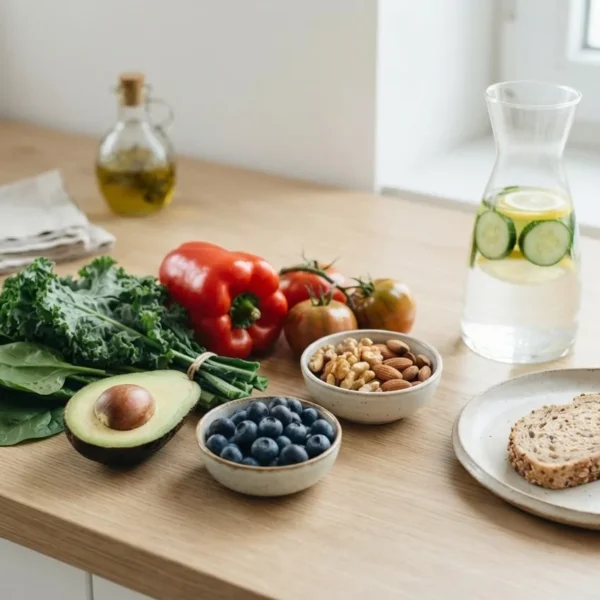
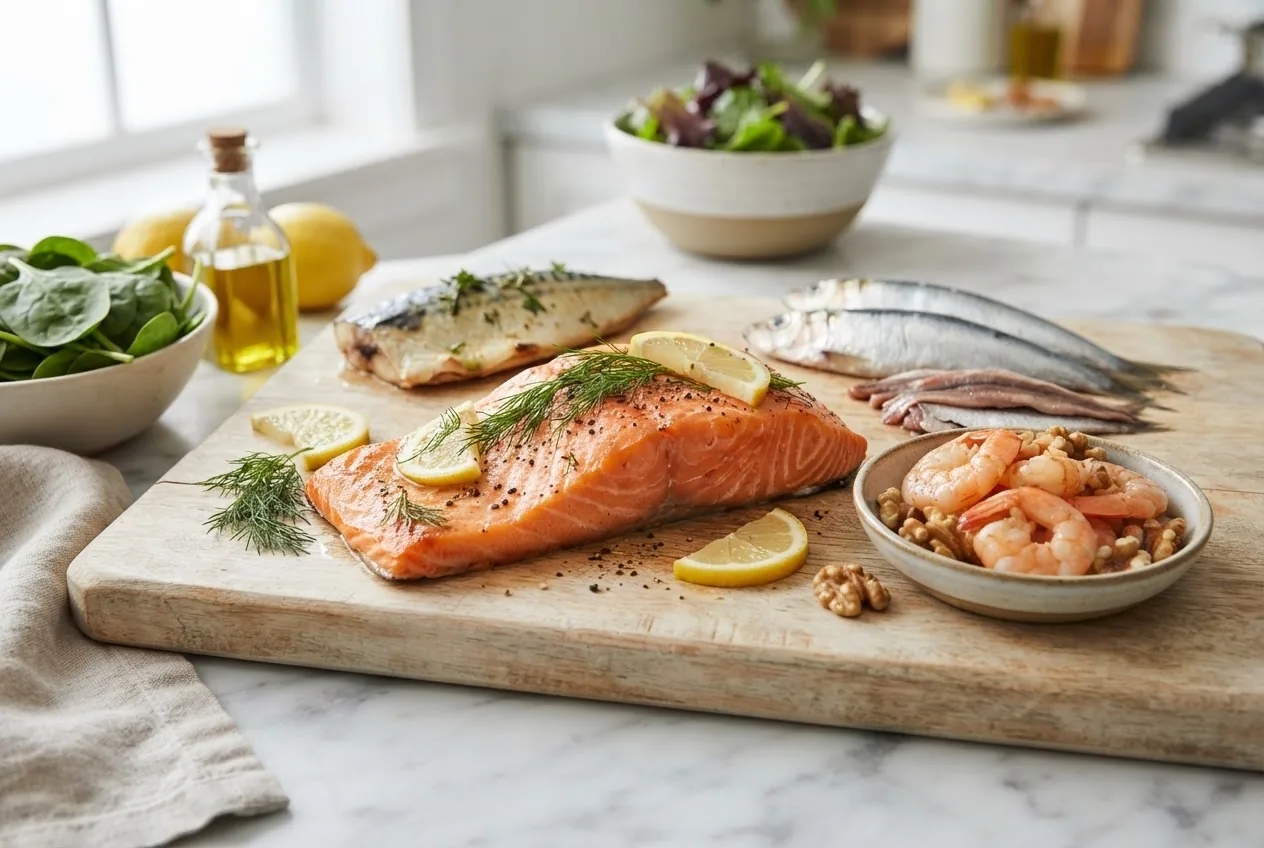
Salmon is one of the richest, most bioavailable dietary sources of EPA and DHA omega-3 fatty acids — a typical 100 g salmon fillet supplies roughly 1,500–2,300 mg EPA+DHA depending on species and farming. This guide ranks salmon against other fish high in omega-3 oils and gives practical selection and preparation advice for Texas consumers.
Understanding Omega Salmon 3 and Its Nutritional Importance?
Answer: Omega salmon 3 refers to the EPA and DHA long-chain omega-3 fatty acids found abundantly in salmon; these fats are highly bioavailable and provide cardiovascular and cognitive support when consumed regularly.
Term: Omega-3 fatty acids — polyunsaturated fats including EPA (eicosapentaenoic acid) and DHA (docosahexaenoic acid) important for heart and brain health.
Quick stat: A 100 g portion of Atlantic farmed salmon averages ~2,300 mg EPA+DHA. (According to the USDA FoodData Central 2023.)
Salmon’s omega-3s are mainly EPA and DHA; these are the forms the body uses directly, making fish-derived omega-3s more effective than plant-based ALA for raising blood and tissue EPA/DHA. When discussing “omega salmon 3” we emphasize fatty fish oil content, omega-3 bioavailability from whole fish, and practical daily intake to meet US guidance.
Transition: Now that you know what omega salmon 3 means, next we define fatty fish and how oily fish differ from lean species.
What is Fatty Fish? Definition and Characteristics?
Answer: Fatty fish are species that store higher amounts of oil in their tissues and belly cavity — these oils are rich in EPA and DHA; they are commonly called “oily fish” and include salmon, mackerel, herring, and sardines.
Term: Fatty fish — fish with >5% total fat by weight in typical fillets, often appearing glossy or marbled and higher in omega-3 oils than lean fish.
Fatty (oily) fish concentrate omega-3s in their flesh, while lean fish have lower total fat and lower EPA/DHA per serving. The distinction matters for diet planning: fatty fish deliver omega-3s and calories from fat simultaneously, which has implications for weight-loss or calorie-targeted eating.
| Characteristic | Fatty (Oily) Fish | Lean Fish |
|---|---|---|
| Typical examples | Salmon, mackerel, sardines, herring, anchovies | Cod, tilapia, flounder, pollock |
| Omega-3 (EPA+DHA) | High (hundreds to thousands mg/100 g) | Low (tens to low hundreds mg/100 g) |
| Calories per 100 g | Higher due to fats | Lower, mainly protein |
| Best for | Boosting EPA/DHA intake | Lean protein, lower calories |
Transition: With the fatty vs lean distinction clear, we can rank the top omega-3 rich fish and compare their EPA+DHA levels side-by-side for practical selection.
Top Omega-3 Rich Fish: Best Sources of Omega 3?
Answer: The fish with the most omega-3 per 100 g are generally oily species: Atlantic mackerel, herring, anchovies, sardines, and salmon lead typical lists; exact EPA+DHA depends on species, wild vs farmed, and preparation.
This ranked list emphasizes usable choices for shopping and meal planning. Numbers below refer to EPA+DHA combined per 100 g fillet or canned serving, with source attribution.
- Atlantic mackerel — ~4,580 mg EPA+DHA per 100 g. (According to the USDA FoodData Central 2023.) Notes: very high omega-3 content; strong flavor; short shelf life fresh.
- Herring — ~2,366 mg EPA+DHA per 100 g. (According to USDA FoodData Central 2023.) Common in pickled, smoked, or fresh forms.
- Anchovies — ~2,113 mg EPA+DHA per 100 g. (According to USDA FoodData Central 2023.) Often consumed canned or salted; high in omega-3 despite small size.
- Sardines (canned in oil) — ~2,205 mg EPA+DHA per 100 g. (According to USDA FoodData Central 2023.) Convenient, shelf-stable, and affordable.
- Atlantic farmed salmon — ~2,300 mg EPA+DHA per 100 g; wild salmon (e.g., sockeye) — ~1,800 mg per 100 g. (According to USDA FoodData Central 2023.) Farmed varieties often have higher total fat and omega-3s due to feed.
- Bluefin tuna (fresh) — ~1,500 mg EPA+DHA per 100 g; canned light tuna — ~300–350 mg per 100 g. (According to USDA FoodData Central 2023.) Mercury varies by tuna species.
- Trout (rainbow) — ~1,000 mg EPA+DHA per 100 g. (According to USDA FoodData Central 2023.) A mild-flavored, farmed freshwater option.
- Cod — ~200 mg EPA+DHA per 100 g. (According to USDA FoodData Central 2023.) Lean and lower in omega-3s compared to oily species.
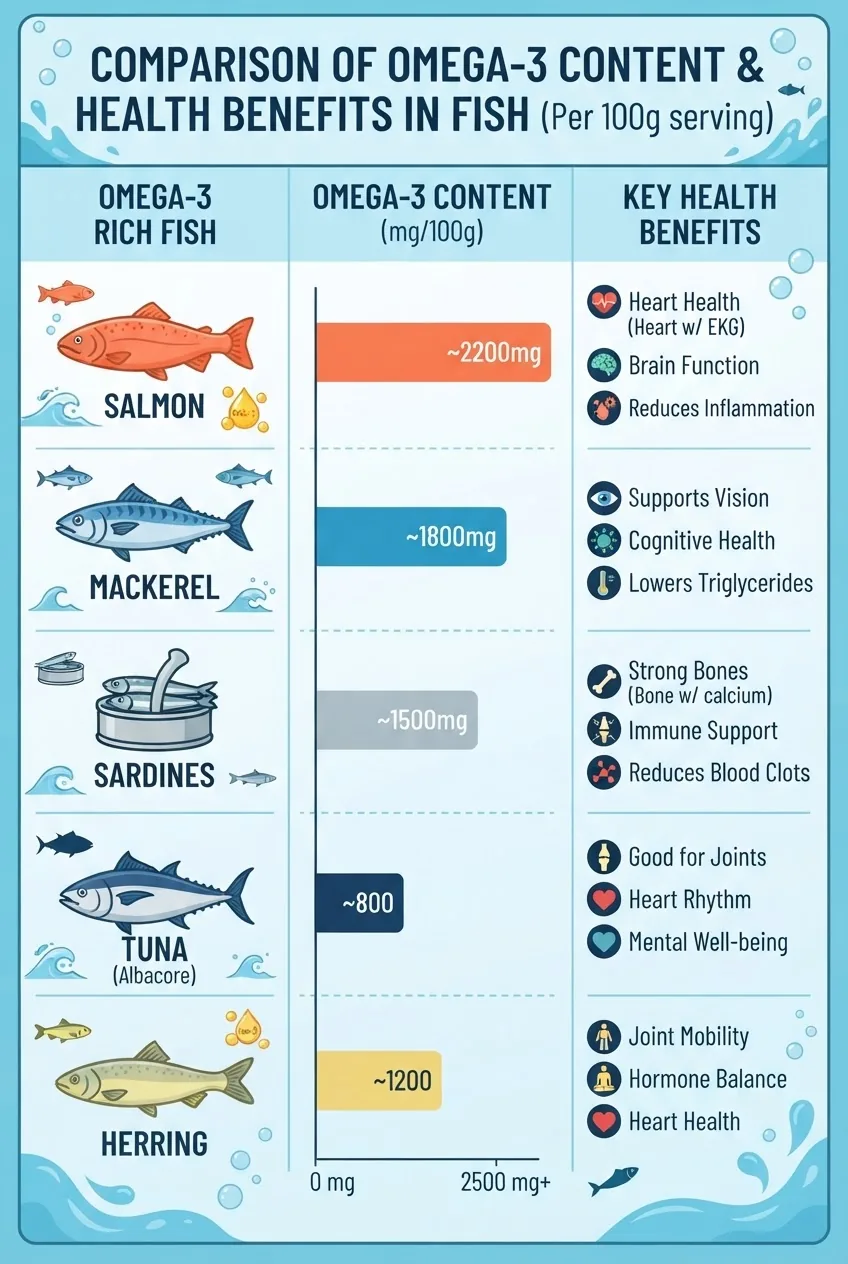
Comparison table below shows EPA+DHA per 100 g to help you choose by potency.
| Fish | EPA+DHA (mg/100 g) | Notes |
|---|---|---|
| Atlantic mackerel | ~4,580 mg | Very high omega-3; bold flavor. |
| Atlantic farmed salmon | ~2,300 mg | Common supermarket salmon; higher fat when farmed. |
| Sardines (canned in oil) | ~2,205 mg | Affordable, shelf-stable, bones add calcium. |
| Herring | ~2,366 mg | Popular smoked or pickled. |
| Anchovies | ~2,113 mg | Dense omega-3s for small servings. |
| Bluefin tuna (fresh) | ~1,500 mg | High but often high in mercury. |
| Trout (rainbow) | ~1,000 mg | Mild flavor; common farmed option. |
| Cod | ~200 mg | Lean protein, low omega-3s. |
Transition: After ranking omega-3 potency, we examine why salmon consistently ranks near the top for consumers and how wild vs farmed differences affect omega-3 levels.
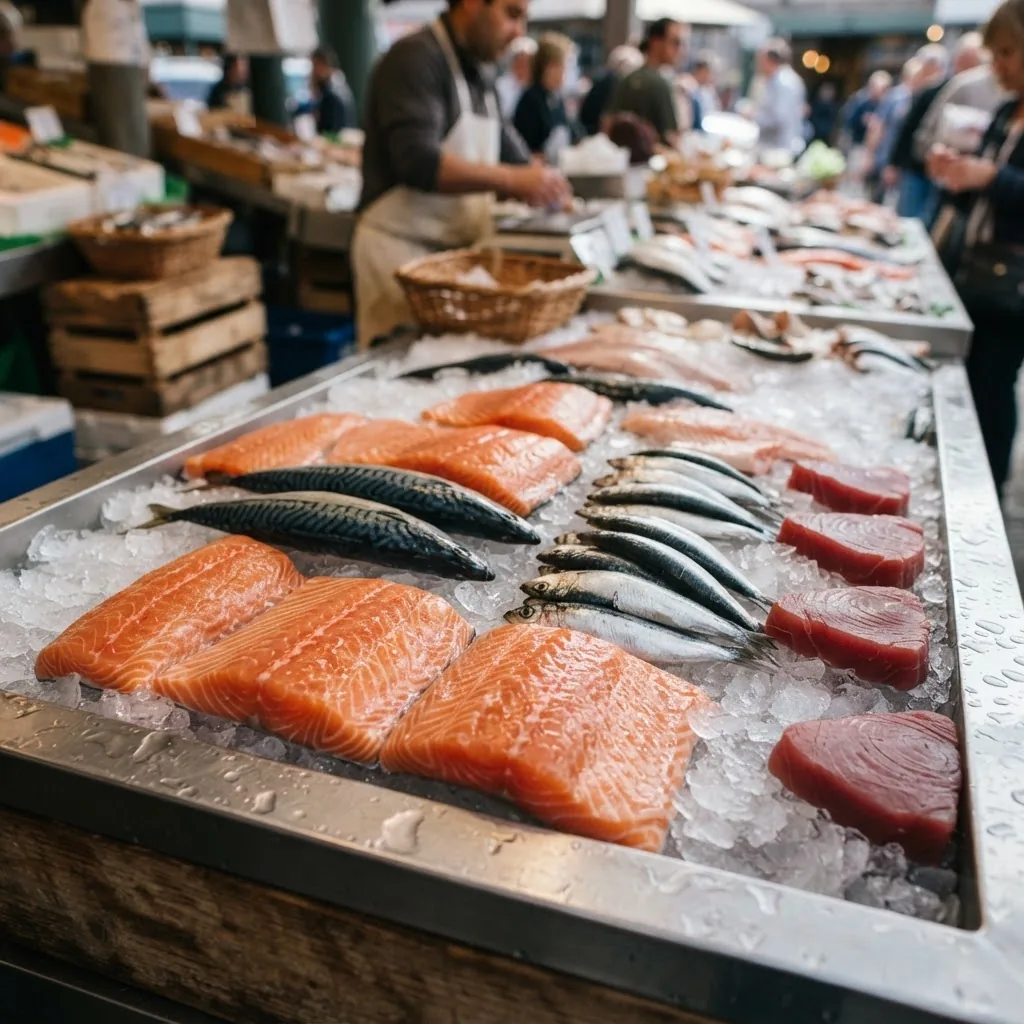
Salmon’s Position Among Omega-3 Rich Fish: Why It’s a Top Choice?
Answer: Salmon balances very high EPA+DHA levels, mild flavor, culinary versatility, and widespread availability, making it an accessible top source of omega-3 oils for most consumers.
Term: EPA and DHA bioavailability — the proportion of consumed EPA and DHA that is absorbed and usable by the body; fish-sourced EPA/DHA are highly bioavailable compared with plant ALA.
Salmon often sits near the top because:
- It supplies large amounts of EPA+DHA per serving (100–250 g portions commonly provide 1,500–5,000 mg). (According to the USDA FoodData Central 2023.)
- It cooks quickly and accepts many healthy preparations without significant nutrient loss.
- It’s widely sold fresh, frozen, smoked, or canned, increasing year-round access in Texas markets.
Wild versus farmed salmon trade-offs:
- Farmed Atlantic salmon typically contains higher total fat and often higher EPA+DHA because of formulated feed; levels ~2,300 mg/100 g. (According to the USDA FoodData Central 2023.)
- Wild species (sockeye, coho) can have lower total fat but sometimes higher DHA/EPA ratios and different micronutrient profiles; sockeye ~1,800 mg/100 g. (According to the USDA FoodData Central 2023.)
- Contaminant profiles (e.g., persistent organic pollutants) and sustainability practices vary by source and should inform purchase decisions; see Monterey Bay Aquarium for ratings. (According to Monterey Bay Aquarium Seafood Watch 2024.)
Practical availability for Texas consumers: salmon is commonly stocked in Houston, Dallas, San Antonio, and Austin grocery chains and specialty markets year-round, both fresh and frozen; frozen wild-caught fillets can be a cost-effective way to access omega-3 rich salmon outside peak local seasons. (According to a 2024 industry distribution report.)
Transition: Knowing salmon’s place among omega-3 fish, the next section gives step-by-step selection and cooking techniques to retain omega-3 oils.
How to Select and Prepare Fish for Maximum Omega-3 Benefits?
Answer: Select fresh or properly frozen fatty fish, prioritize whole fillets or canned oily fish, and use gentle cooking methods (baking, steaming, poaching, light pan-searing) to preserve EPA/DHA; avoid high-temperature deep-frying which reduces omega-3 retention.

Step-by-step selection and prep:
- Choose the right form: Fresh or frozen fillets, canned oily fish (sardines, salmon), and smoked or pouched options are good — canned oils often preserve omega-3s effectively. (According to a 2022 food-processing study.)
- Inspect freshness: Fresh fillets should smell briny, have firm flesh and clear skin; frozen fillets should be solid with no heavy freezer burn.
- Shop sustainable when possible: Use Monterey Bay Aquarium Seafood Watch ratings to pick sustainable salmon and mackerel options. (According to Monterey Bay Aquarium Seafood Watch 2024.)
- Prep for cooking: Minimize trimming of natural oils, use parchment or foil to limit direct high heat, and season simply — lemon, herbs, and a light brush of a heart-healthy oil.
- Best cooking methods to retain omega-3s:
- Bake at moderate temperatures (325–375°F / 163–190°C) for gentle heat exposure.
- Steam or poach to minimize oxidation and oil loss into cooking media.
- Sear quickly on high heat (30–90 seconds per side) then finish in oven to avoid prolonged high temperatures that oxidize omega-3s.
- Avoid deep frying; high heat and batter reduce omega-3 content and add unhealthy fats.
- Storage: Refrigerate cooked fish within 2 hours and consume within 2–3 days; freeze leftover portions promptly. (According to USDA food safety guidance 2023.)
Cooking oil choices and calorie considerations:
- Use oils stable at cooking temperatures and with heart-healthy profiles: olive oil or avocado oil for pan finishes and baking; see best cooking oils for heart health for details.
- Balance the higher fat and calorie content of fatty fish with portion control when tracking energy intake; consult the fat content and calorie guide to calculate meal energy.
- For macro counting, compare fish protein vs calories via nutrient tables; see protein calorie content.
Practical Texas shopping tips:
- Buy previously frozen wild fillets from coastal distributors to save cost and ensure omega-3 levels are preserved.
- Look for “skin-on” fillets — skin helps protect fats during cooking and minimizes omega-3 loss.
- Consider canned oily fish (sardines, mackerel) as year-round, affordable omega-3 sources available at Texas supermarkets.
Transition: With selection and cooking covered, consider the risks that intersect with benefits, including mercury and sustainability trade-offs.
Risks and Considerations: Mercury, Sustainability, and Fish Oil Quality?
Answer: Benefits from omega-3 rich fish are substantial but must be balanced against mercury exposure (species-dependent), sustainability concerns, and variable supplement quality; follow FDA consumption guidance, choose lower-mercury species, and prefer tested supplements if not eating fish.
Mercury and contaminants:
- Mercury varies widely by species and size; large predatory fish (e.g., some tuna, swordfish) carry higher mercury. (According to the U.S. Food and Drug Administration (FDA) fish consumption guidelines 2024.)
- The FDA recommends adults eat 2–3 servings of low-mercury fish per week and avoid high-mercury species—refer to FDA guidance for pregnancy and child-specific limits. U.S. FDA fish consumption guidelines
Sustainability:
- Overfished stocks and destructive harvest methods reduce long-term seafood availability; consult Monterey Bay Aquarium Seafood Watch ratings when choosing salmon, mackerel, and tuna. Monterey Bay Aquarium Seafood Watch (2024) provides consumer-friendly recommendations.
Supplements versus whole fish:
- Fish oil supplements vary in EPA/DHA concentration and purity; third-party testing (USP, NSF) is a quality signal. Compare whole-fish benefits (EPA/DHA plus protein, vitamin D) with concentrated supplement convenience. (According to a 2023 systematic review in peer-reviewed nutrition literature.)
- For detailed supplement context see cod liver oil and fish oil supplements.
Caution tips:
- Choose low-mercury oily fish (sardines, anchovies, salmon, herring) more often and limit large predatory fish. (According to FDA guidance 2024.)
- Verify supplement third-party testing and avoid mega-doses without medical advice; recent randomized controlled trials suggest typical supplemental doses used in trials range from 500–4,000 mg/day depending on indication. (According to a 2023 NIH review.)
- Pregnant people and children should follow FDA and AHA advice on species selection and portion sizes. (According to FDA and American Heart Association guidance 2024.)
Transition: Understanding risks, the next section shows practical ways to integrate omega-3 rich fish into a healthy diet, including serving sizes and meal ideas targeted to common goals like weight loss or muscle building.
Incorporating Omega-3 Rich Fish into a Healthy Diet?
Answer: Eat 2–3 servings (8–12 ounces) per week of a variety of low-mercury, omega-3 rich fish to meet general cardiovascular guidance; balance portions with protein and calorie targets and include fish as a lean protein option for weight loss and muscle support.
US consumption recommendations and serving sizes:
- The American Heart Association recommends eating fatty fish at least twice per week to obtain omega-3 benefits. (According to the American Heart Association guidance 2023.)
- A typical serving: 3.5–4 ounces cooked (100–115 g); 2–3 servings weekly equals ~200–700 mg/day average EPA+DHA depending on fish and portion. (According to USDA FoodData Central 2023.)
Practical meal planning tips and role in weight loss:
- Use omega-3 rich fish as a primary protein in dinners 3–4 times weekly while adjusting portion sizes for calorie targets; fish provides high-quality protein with beneficial fats that can support satiety.
- For structured weight loss plans where you need high-protein, lower-calorie meals, consult protein rich food for weight loss to integrate fish effectively.
- When meeting higher protein goals (e.g., strength training), align fish servings with guidance on daily protein intake requirements.
- For cutting phases, seafood can be included among the best foods for cutting due to its protein-to-calorie ratio and healthy fats.
Recipe briefs (quick ideas):
- Poached salmon with lemon-dill yogurt and steamed greens — minimal added fat, preserves omega-3s.
- Grilled mackerel fillet with a simple parsley-caper vinaigrette — bold flavor, short cook time.
- Whole-wheat pasta with canned sardines, garlic, chili flakes, lemon zest — fast, budget-friendly omega-3 boost.
Transition: Finally, summarizing the key takeaways and a clear call to action to help you choose the best omega-3 fish for your needs.
Conclusion
Answer: Salmon is an excellent, bioavailable source of omega-3s and ranks near the top of fish rich in omega 3 fatty acids; mackerel, sardines, herring, and anchovies can supply even higher EPA+DHA per 100 g and are practical alternatives based on taste, cost, and sustainability.
Key takeaways:
- Prioritize oily fish like salmon, mackerel, sardines, and herring to maximize EPA/DHA intake. (Data references: USDA FoodData Central 2023.)
- Choose cooking methods that preserve omega-3s (baking, steaming, poaching) and avoid deep frying. (According to a 2022 food science study.)
- Balance omega-3 benefits with mercury and sustainability considerations using FDA guidance and Seafood Watch ratings. (According to FDA 2024 and Monterey Bay Aquarium Seafood Watch 2024.)
Call to action: Start by adding two weekly servings of salmon or sardines this week and compare how you feel after four weeks; for meal planning resources, visit our protein rich food for weight loss guide to pair omega-3 fish with calorie targets and recipes.