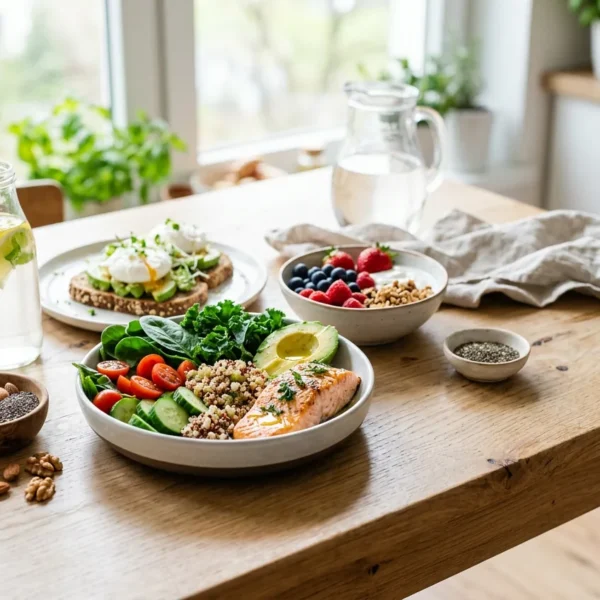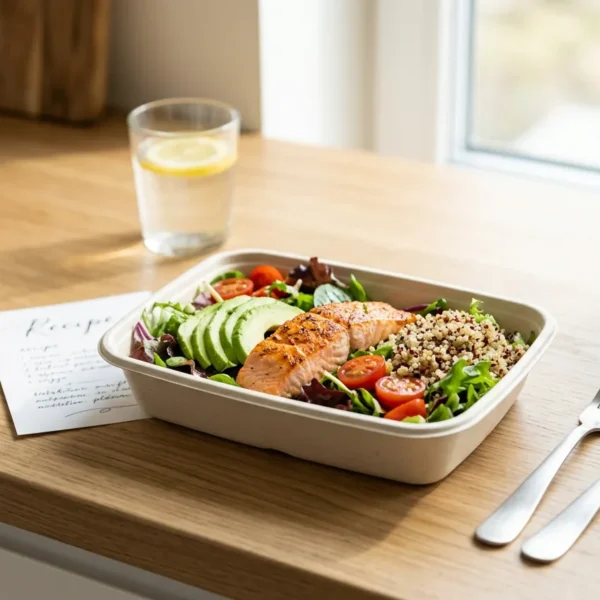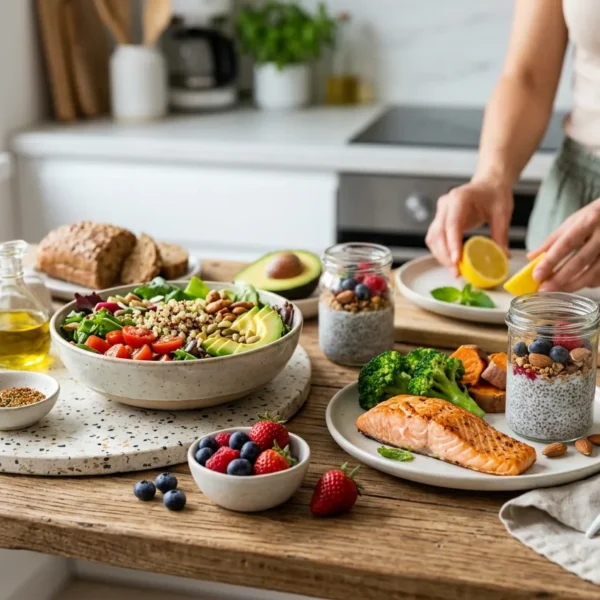
What you’ll achieve, time required, and skill level
By the end of this hands-on guide you will have: a personalized weekly plan that covers meals, hydration, movement, sleep and stress-management; one batch-cooked set of meals to get started; measurable daily targets (calories, macronutrients, water and steps); and a one-page checklist you can use every week. Realistic finish time to set this up is 3 to 5 hours for an initial assessment and meal-plan build, plus 2–4 hours weekly for ongoing planning and meal prep. This guide assumes beginner-to-intermediate kitchen skills, basic ability to track simple numbers (weight, steps, water), and no professional nutrition diagnosis required.
Before you start
- Tools: kitchen scale (±1 g), measuring cups and spoons, digital food scale app or notebook for tracking, basic cookware (2 pans, pot, 9×13 baking tray).
- Materials: a one-week supply shopping list aligned to the plan (see step 5), 1 reusable water bottle (1 L), cooler or insulated lunch bag for workdays.
- Devices: smartphone with step-tracker (or pedometer), timer, calendar app for scheduling meals/workouts.
- Baseline data to collect: current weight (kg or lb), typical daily calorie intake (estimate), how many hours you sleep on average, average daily steps.
- Time: set aside a 3–5 hour block for initial setup and a 90–120 minute weekly prep window.
Step-by-step guide: core actions to build a balanced health routine
-
Calculate your baseline needs — determine target calories and macronutrient ranges
Start by calculating a realistic daily calorie target. Use the Mifflin-St Jeor equation to estimate resting metabolic rate (RMR) then multiply by an activity factor.
Formula (men): RMR = 10 × weight(kg) + 6.25 × height(cm) − 5 × age + 5. Formula (women): RMR = 10 × weight(kg) + 6.25 × height(cm) − 5 × age − 161. Then multiply RMR by:
- 1.2 — sedentary (desk job, minimal exercise)
- 1.375 — lightly active (light exercise 1–3 days/week)
- 1.55 — moderately active (exercise 3–5 days/week)
- 1.725 — very active (exercise 6–7 days/week)
Set an initial calorie target: maintenance or a 300–500 kcal deficit for weight loss. For example: a 75 kg, 175 cm, 35-year-old woman with moderate activity: RMR = 10×75 + 6.25×175 − 5×35 −161 = 750 + 1093.75 −175 −161 = 1507.75 → ×1.55 = 2337 kcal/day maintenance. For weight loss choose ~1837–2037 kcal/day.
Macronutrient ranges to start with (daily): protein 1.2–1.6 g/kg bodyweight (for 75 kg = 90–120 g), fat 25–35% of calories (for 1800 kcal = 50–70 g), remainder as carbohydrates. Aim for 25–38 g fiber/day and sodium under 2,300 mg/day.
-
Audit your current habits — collect 7 days of real data and compare to targets
Track everything for seven full days: meals (portion sizes), snacks, water intake (mL), sleep start/end times, and steps. Use a tracking app or a paper log. Record the following fields each day:
- Meal time, food, approximate portions, estimated calories/macros.
- Number of 8-ounce (240 mL) water servings consumed.
- Total steps and time spent in moderate-to-vigorous physical activity (MVPA).
- Bedtime, wake time, and number of nighttime awakenings.
After seven days, compute averages: total daily calories, protein grams, fiber grams, water mL, hours of sleep. Compare each average to the target values from step 1 and note the gaps. Concrete example: if your average protein is 60 g but target is 100 g, plan to add ~40 g protein across meals (about +15 g at breakfast, +25 g at dinner).
-
Create a daily structure — routine timing for meals, movement and sleep
A consistent daily routine reduces decision fatigue. Use these specific windows as a starting template you can shift ±30–60 minutes to fit your schedule:
- Wake: 06:00–07:30
- Breakfast: within 60 minutes of waking, 07:00–08:30
- Mid-morning snack (optional): 10:00–10:30
- Lunch: 12:00–13:00
- Movement break or workout: 16:00–18:00 (or 30–60 minutes continuous earlier)
- Dinner: 18:30–20:00
- Sleep window: get into bed 22:00–23:30 for 7–9 hours
Movement goal: 150 minutes of moderate aerobic activity per week OR 75 minutes vigorous (minimum), plus two resistance sessions focused on major muscle groups. Concrete weekly target: 30 minutes brisk walk 5×, plus two 30–40 minute strength sessions. Step count target: 7,000–10,000 steps/day as a practical healthy range for many adults in Texas; adjust to baseline.
-
Plan nutritionally complete meals — compose plates with protein, veg, whole grains and healthy fats
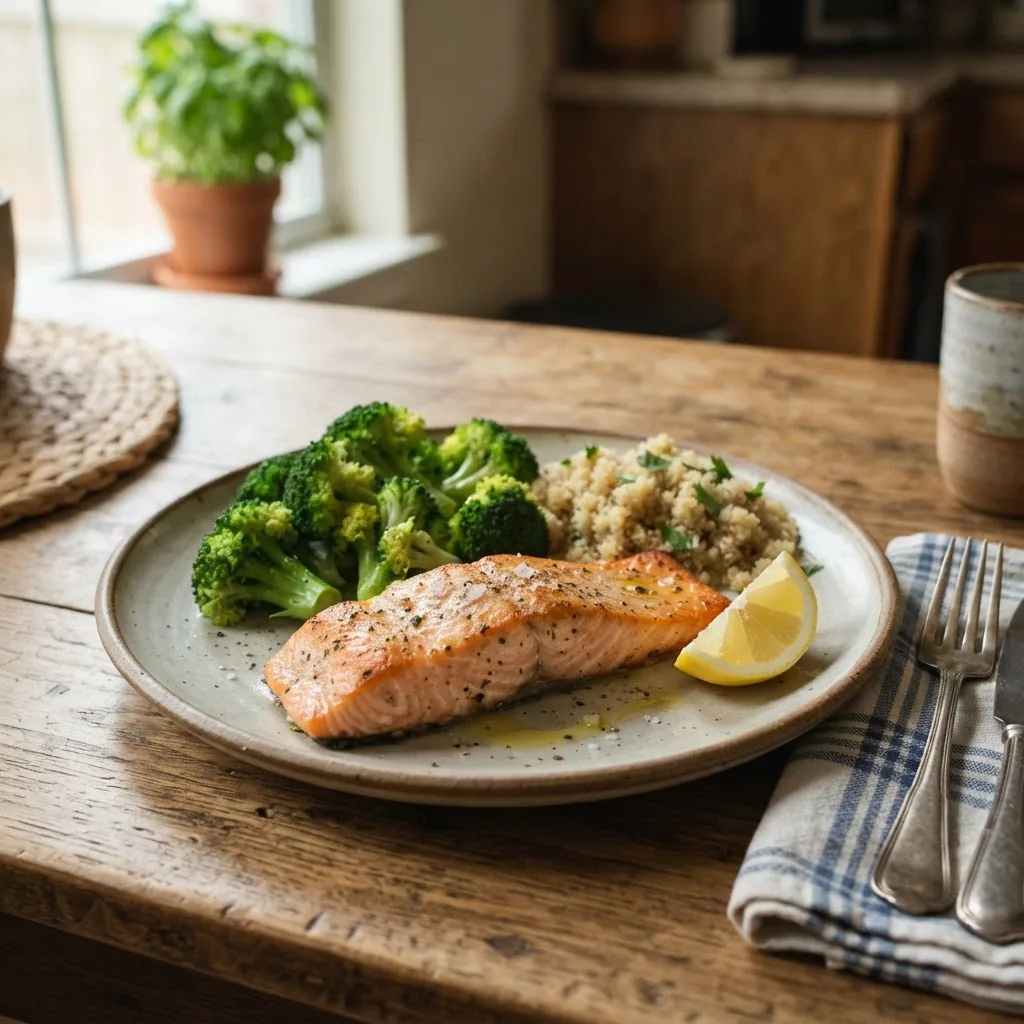
Each meal should include a source of lean protein, non-starchy vegetables, a whole grain or starchy vegetable, and a small portion of healthy fat. Use these portion targets per plate:
- Protein: 20–40 g cooked (roughly 80–150 g raw depending on type). Example: 120 g cooked salmon ≈ 25–28 g protein.
- Vegetables: 1.5–2 cups non-starchy (150–300 g) — aim for 2 different colors per meal.
- Whole grains/starch: 3/4 cup cooked (about 150 g cooked quinoa, brown rice or sweet potato).
- Fat: 1 tablespoon (14 g) olive oil, 10–15 g nuts, or 1/4 avocado (30–50 g).
Sample meal: breakfast — 2 eggs (12 g protein), 1/2 cup Greek yogurt (10 g protein), 1/2 cup berries, 2 tbsp oats (10 g carbs) and 1 tbsp flaxseed. Lunch — 100 g grilled chicken (25 g protein), large mixed salad (2 cups), 1/2 cup cooked brown rice, 1 tbsp olive oil. Dinner — see the image plate above.
For vegetarian options, substitute legumes and tofu: 1 cup cooked lentils ≈ 18 g protein; 150 g firm tofu ≈ 15–20 g protein. Aim to meet the daily protein target calculated in step 1 by distributing protein across 3–4 meals.
-
Build a 7-day meal plan and shopping list — concrete example and batch-cook schedule
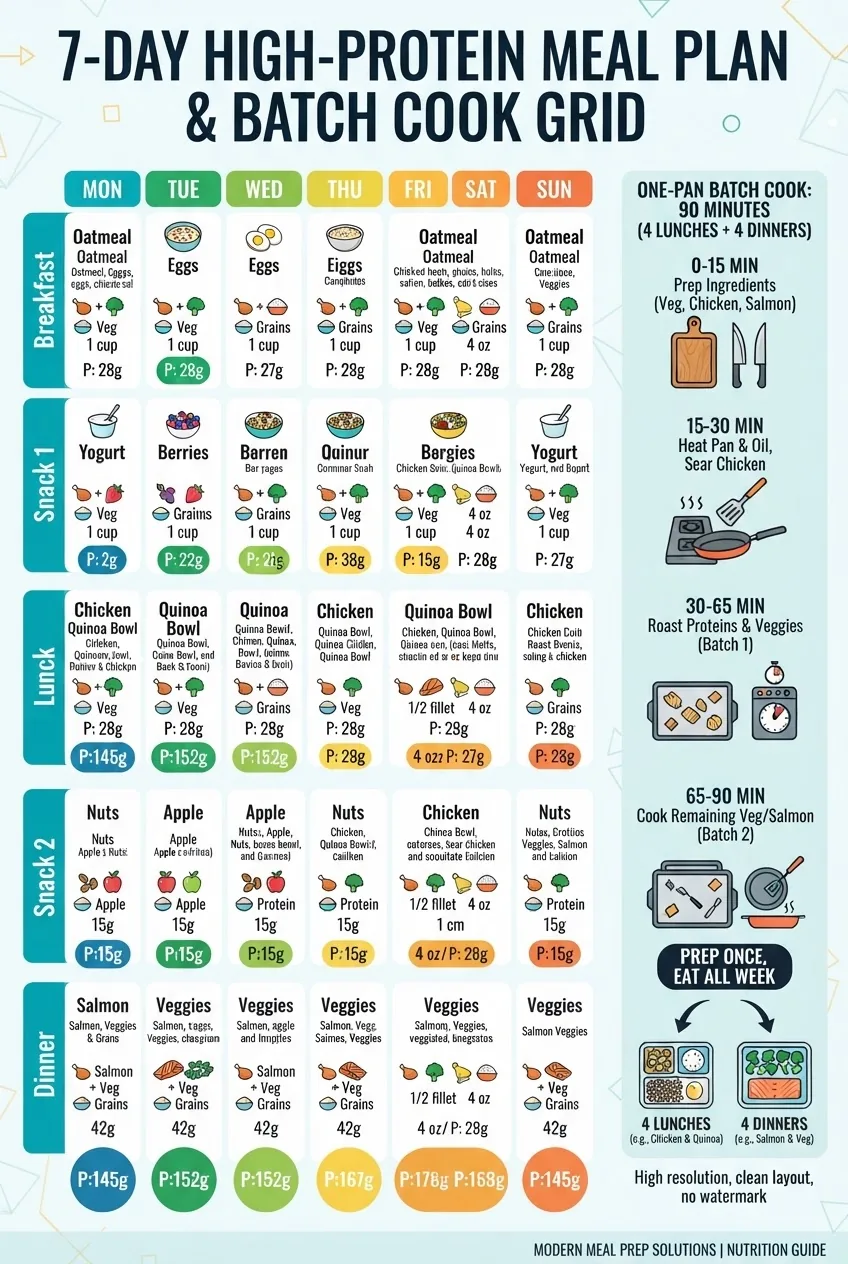
Use the following practical 7-day plan as a template. Portions align to a 1,800–2,000 kcal/day target with ~100 g protein/day. Adjust quantities ±20% to match your calorie goal.
- Day 1–3 (Batch A): Breakfast — 1 cup steel-cut oats with 30 g whey/plant protein, 1 small banana. Lunch — 150 g roasted chicken breast, 1.5 cups mixed veg, 3/4 cup cooked quinoa. Dinner — baked salmon 120 g, 1 cup green beans, 1 small baked sweet potato. Snacks — 1 apple, 20 g almonds.
- Day 4–7 (Batch B): Breakfast — 2 scrambled eggs + 1 slice whole-grain toast + 1/2 avocado. Lunch — lentil salad 1 cup cooked lentils, 1 cup cherry tomatoes, 1 cup cucumber, 1 tbsp olive oil. Dinner — turkey chili 200 g lean turkey, 1 cup black beans, 1 cup mixed peppers. Snacks — Greek yogurt 150 g, 1 pear.
Shopping list (quantities for one person, 7 days): 2.1 kg chicken breast (150 g × 14 meal portions), 840 g salmon (120 g × 7), 1.2 kg lean ground turkey, 1.4 kg mixed vegetables (frozen ok), 2 kg potatoes/roots, 700 g quinoa or brown rice (dry), 14 eggs, 1 kg lentils/beans (dry or canned equivalent), olive oil 250 mL, nuts 200 g, Greek yogurt 1.05 kg, 7 pieces fruit + 7 vegetables for snacks.
Batch-cook schedule (single 90-minute session): 0–15 min: preheat oven, chop veg; 15–45 min: roast chicken and mixed veg on two trays at 200°C (400°F); 30–50 min: bake sweet potatoes; 45–60 min: cook quinoa and lentils on stovetop; 60–90 min: pan-sear salmon in two 4–5 minute batches and portion into containers. Cool to room temperature for 20 minutes and refrigerate promptly. Label containers with date; eat within 4 days or freeze beyond that.
Link this plan to further reading on building a nutritionally complete plate: Nutritionally Complete Meal Guide, and to ideas for improving everyday choices: 10 Ways to Eat Better.
-
Use simple meal-prep recipes — three reliable recipes with exact portions
Three fail-proof recipes you can batch-cook with times and portions.
- Sheet-pan chicken & veg (serves 4): 800 g chicken breast (200 g each), 600 g chopped carrots + broccoli (150 g each per serving), 4 tsp olive oil (20 mL total), 2 tsp dried herbs, salt 1/2 tsp, pepper. Roast at 200°C (400°F) for 25–30 minutes until internal temp 75°C (165°F). Yield per serving: ~35–40 g protein, 2 tbsp oil fat split across servings.
- Lentil salad (serves 4): 2 cups dried lentils (about 500 g cooked), 2 cups chopped cucumber/tomato, 60 mL olive oil, juice of 1 lemon, salt 1 tsp. Mix and refrigerate. Per serving: ~18–20 g protein, 9–12 g fiber.
- Turkey chili (serves 6): 1.2 kg lean ground turkey, 2 cans (800 g) crushed tomatoes, 1 can (400 g) black beans drained, 2 cups chopped peppers, 1 tbsp chili powder, simmer 25–30 minutes. Per serving: ~35 g protein, 300–400 kcal depending on grain side.
Plate and portion by weighing cooked protein and grains to match the targets you set in step 1. Use labeled containers: breakfasts separate from lunches/dinners so reheating is easy.
-
Track and adjust macros weekly — a worked example and thresholds to change course
Track intake daily for two weeks and then average the numbers. If you are losing weight at an average of 0.5–1.0% body weight per week (or about 0.5–1.0 kg/week for many people), continue. If weight loss stalls for 3 weeks, reduce daily calories by 150–250 kcal or increase weekly MVPA by 60–90 minutes.
Worked example for adjustment: you set a 1,900 kcal target, average intake is 1,950 kcal and weight hasn’t changed for 3 weeks. Option A: reduce portions by removing 1 tbsp oil at dinner (≈120 kcal) and cut a 20 g snack of nuts (≈120 kcal) — total −240 kcal → new intake ≈ 1,710 kcal. Option B: keep calories and add 3 brisk 30-minute walks per week (~150 kcal burned each) to create a weekly deficit.
Protein thresholds: if daily protein falls below 0.8 g/kg for two weeks and you experience increased hunger or loss of lean mass, raise protein by 10–20 g per day (e.g., add a 150 g Greek yogurt or 1 scoop protein powder).
-
Hydrate with targets, not vague rules — measure and time water intake
Set a daily water target: women 2.7 liters/day, men 3.7 liters/day, adjusted for exercise (add ~350–700 mL per 30 minutes of vigorous activity). Use your 1 L bottle to make this concrete: women aim for 3 refillings (3 × 1 L = 3 L) then reduce by food water content; men for 4 refillings. In hot Texas weather or after long workouts add 500–1,000 mL extra.
Timing: 400–600 mL within 30 minutes of waking, 200–300 mL with each meal, and 150–250 mL every 60–90 minutes during work. Avoid chugging more than 500 mL in 10 minutes to prevent discomfort.
-
Build a sleep routine with measurable sleep hygiene — schedule and environment checklist
Target 7–9 hours nightly. Create a 30–60 minute wind-down routine and stick to consistent lights-out and wake times within ±30 minutes on weekends. Concrete environmental targets:
- Bedroom temperature: 16–20°C (60–68°F).
- Darkness: blackout curtains or eye mask (lux under 10 lux).
- Electronic curfew: stop screen use 60 minutes before bed; use blue-light filter if necessary.
- Noise: under 40 dB baseline, use white noise at 35–45 dB if needed.
If you wake more than twice per night for three consecutive nights, log times and triggers (caffeine, alcohol, late heavy meals, stress) and apply corrective steps: reduce late caffeine after 14:00, avoid alcohol within 3 hours of bed, and move exercise earlier in the day.
-
Add strength training twice weekly — full-body routine with sets, reps and progression
Strength training preserves lean mass and improves metabolic health. Use this full-body beginner routine twice weekly (40–45 minutes each session). Use a weight that allows completion of listed reps with the last 2 reps challenging but doable.
- Squat or goblet squat: 3 sets × 8–12 reps. Rest 60–90 seconds between sets.
- Push: push-ups or chest press: 3 sets × 8–12 reps.
- Pull: bent-over row or band row: 3 sets × 8–12 reps.
- Hinge: Romanian deadlift or kettlebell swing: 3 sets × 8–12 reps.
- Core: plank 3 × 30–60 seconds.
Progression: increase load or reps by ~5% each week or add one extra set every 3–4 weeks. If time is limited, do one circuit of each exercise (all exercises back-to-back) twice to reach the same metabolic stimulus in 20–25 minutes.
-
Include daily stress-management micro-habits — quick practices with timings and frequency
Stress undermines sleep, appetite and recovery. Invest in brief daily practices: 4 minutes of box breathing (inhale 4s, hold 4s, exhale 4s, hold 4s — repeat 4 cycles) twice daily; 10 minutes of mindful walking at a 3–4/10 exertion rate after lunch; and a weekly 45-minute low-effort activity you enjoy (gardening, brisk nature walk, or a long bike ride).
If you notice resting heart rate elevated by >8 bpm above your usual baseline for 3 consecutive days, add an extra 20–30 minute low-intensity session and prioritize sleep that night.
-
Monitor progress with simple metrics — what to check daily, weekly and monthly
Daily checks (1–2 minutes): weigh yourself at the same time each morning after voiding (note value but expect daily variance ±0.5–1.0 kg). Record sleep hours and meeting step goal.
Weekly checks (5–15 minutes): average daily calories, protein intake, fiber, water consumed, minutes of MVPA. Compare to your targets. If two or more weekly metrics are off-target for 3 straight weeks, make one specific change (example: reduce portion sizes at dinner or add an extra 30 minutes of walking across two days).
Monthly checks (30–60 minutes): measure progress photos, circumference measurements (waist, hips, chest) and review how clothes fit. If you’re gaining fat (>1–1.5% bodyweight per month) or losing lean mass, consult a professional (see “when to call in a professional”).
-
Refine for nutrition quality and food variety — targets for micronutrients and variety counts
A balanced lifestyle includes micronutrient sufficiency. Targets to watch for weekly:
- Vegetable servings: ≥21 servings/week (3 per day average). A serving = 80 g or 1 cup raw leafy greens.
- Fruit servings: 10–14 per week (1–2 per day).
- Include 2 servings/week of oily fish (salmon, mackerel) to supply EPA/DHA (~250–500 mg/day equivalent).
- Calcium: aim for 1,000–1,300 mg/day through dairy or fortified alternatives.
- Vitamin D: target 600–800 IU/day through sun and diet; supplement if blood levels are low (test first).
Variety rule: aim to eat at least 25 different plant foods per week (count nuts, legumes, herbs), which supports gut health and a broad spectrum of micronutrients.
-
Create a maintenance routine after 12 weeks — what to keep and what to tweak
After 12 weeks of consistent adherence, either maintain or build to a new goal. Keep these elements as long-term habits: twice-weekly strength, nightly sleep routine, and weekly batch-cook session. Tweak calorie targets gradually (+150–250 kcal every 2–4 weeks) if you want to increase muscle or energy without adding fat quickly.
If your goal shifts to performance (run a 5K or increase strength), prioritize targeted training plans and adjust macronutrients: increase carbohydrates to 5–7 g/kg on high-volume training days and protein to 1.6–1.8 g/kg to support recovery.
Common mistakes and how to avoid them
I’ve seen people fail because they try to change everything at once — I used to design overly complicated meal plans for clients that required exotic ingredients; almost none stuck with them. Instead, simplify to three reliable recipes and rotate. I also noticed habit tracking falls apart when people don’t set specific time blocks: set one 90-minute session on Sunday for planning and shopping and keep it sacred.
I once advised a determined reader to target very low calories immediately; they lost weight but then regained muscle and energy rapidly. Avoid aggressive calorie cuts greater than 800 kcal below maintenance. Use 300–500 kcal deficit for steady, sustainable change and track protein to prevent muscle loss.
Another recurring error is ignoring hydration and sodium changes during hotter months in Texas. I watched someone increase exercise without upping fluid intake; they suffered dizziness and poor performance. Increase water by at least 350–700 mL per 30 minutes of vigorous exercise and replace electrolytes if sweating heavily (sports drink or 1/4–1/2 tsp salt in 500 mL water plus a carbohydrate source).
Compact checklist: verify your work
- I set a daily calorie and protein target using the Mifflin-St Jeor estimate and activity factor.
- I logged 7 days of real intake and activity to establish a baseline.
- I built a 7-day meal plan with specific portion sizes and a shopping list for one person for 7 days.
- I completed one 90–120 minute batch-cook session and labeled portions for 4 days.
- I scheduled two 30–45 minute strength sessions and five 30-minute moderate activity blocks per week.
- I set a daily water target (women 2.7 L, men 3.7 L) and measured using a 1 L bottle or similar.
- I implemented a 30–60 minute nightly wind-down and targeted 7–9 hours sleep.
- I tracked metrics weekly (calories, protein, steps, sleep) and planned one small change if off-target for 3 weeks.
When to call in a professional
Call a registered dietitian or physician if any of the following apply: unexplained weight loss >5% body weight in one month; persistent fatigue despite 7–9 hours of sleep for 4 weeks; diagnosis of a chronic disease (diabetes, kidney disease, severe hypertension) requiring medical nutrition therapy; pregnancy or breastfeeding; or if you need a medically supervised calorie prescription. If you want personalized macronutrient targets for competitive sports, consult a certified sports dietitian. For musculoskeletal pain that limits exercise, see a physiotherapist before starting strength training.
Additional resources and internal reads
For deeper meal composition and nutrient timing read the Nutritionally Complete Meal Guide. For quick ideas to improve everyday choices see 10 Ways to Eat Better and for staple foods to include daily read 12 Foods You Should Eat Every Day.
Frequently Asked Questions
What are the most effective health and wellness tips for beginners?
Begin with three consistent habits: schedule and batch-cook balanced meals with target protein (1.2–1.6 g/kg), aim for 150 minutes weekly moderate exercise plus two strength sessions, and prioritize sleep 7–9 hours. Track one metric weekly (weight, steps or calories) and adjust by 150–250 kcal or 30–60 minutes of extra activity if progress stalls.
How do I improve overall health without counting every calorie?
Focus on plate composition: half non-starchy vegetables, one-quarter lean protein (80–150 g cooked), one-quarter whole grains or starchy veg, plus a tablespoon of healthy fat. Eat three meals/day with optional snacks, drink 2.7–3.7 L water/day, and meet movement targets; this reduces the need for precise calorie counting while improving diet quality.
What is an example of a healthy lifestyle I can follow this week?
Sample week: three balanced meals daily (protein 20–40 g each), two strength sessions (40 min), five 30-minute brisk walks, 7–9 hours sleep/night, and a 90-minute Sunday batch-cook. Follow the 7-day plan in step 5 and adjust portions to your calorie target.
How long before I see benefits from new health and wellness tips?
Short-term changes appear in 1–4 weeks: improved energy, better sleep, and small weight changes. Visible body composition shifts or fitness gains typically require 8–12 weeks of consistent nutrition and training. Track weekly metrics and reassess after 12 weeks before major plan changes.
My energy drops mid-afternoon; how can I fix it quickly?
Rule out inadequate sleep and dehydration first. Then add 15–25 g protein + 20–30 g complex carbohydrate at lunch (for example, 150 g chicken and 3/4 cup brown rice) and include a 10–15 minute light walk 30 minutes after lunch to improve glucose handling and alertness.