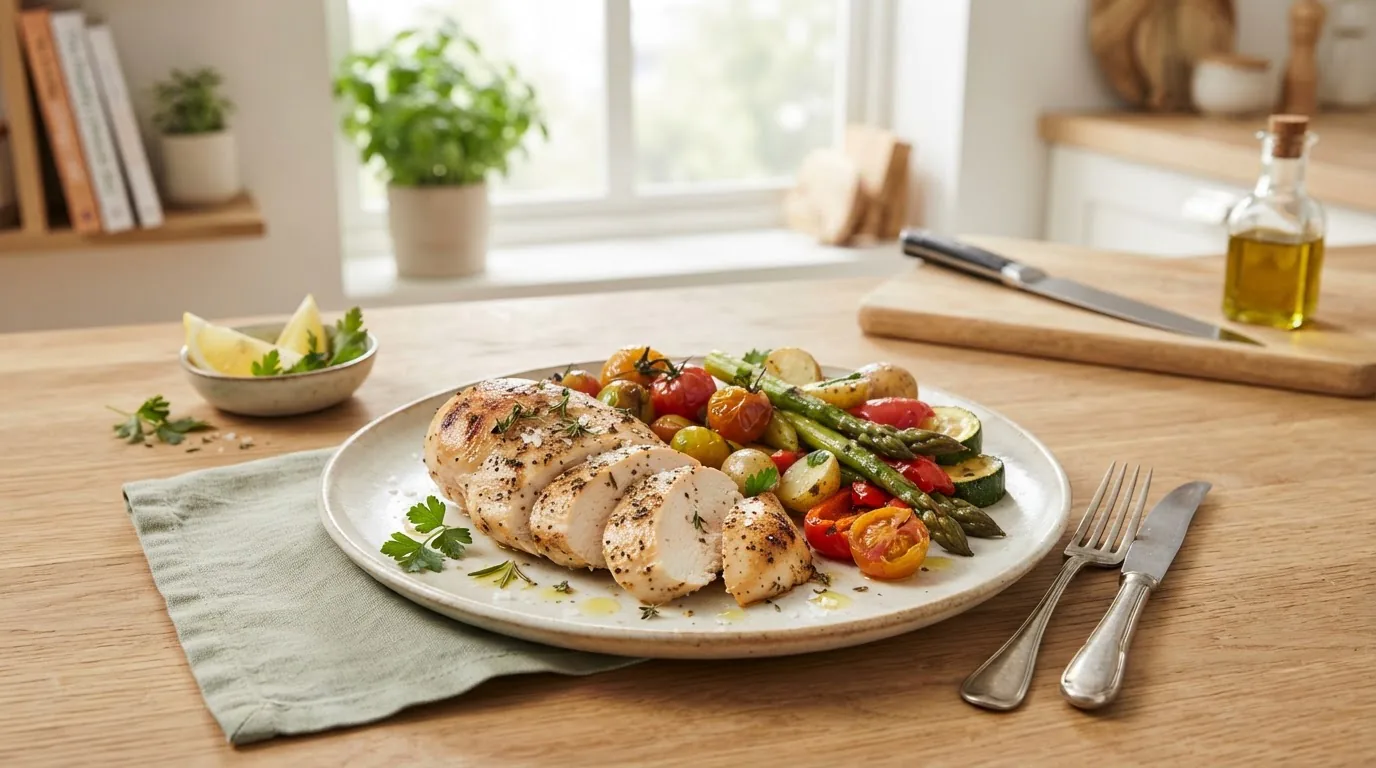
Healthy food recipes with chicken breast start with simple techniques that keep the meat moist, flavorful and nutritious—perfect for busy weeknights or relaxed weekend dinners. This guide focuses on baked chicken breast recipes that are easy to make, low in fat, and adaptable to common dietary needs.
For broader healthy recipe inspiration and nutrition notes, see our Yummiest Healthy Recipes Guide with Nutrition Facts and Tips.
If you enjoy exploring different chicken cuts and techniques, you might also like the chicken heart recipe guide for a different, nutrient-dense option.
Introduction to Healthy Food Recipes with Chicken Breast
Chicken breast is a lean, low-fat protein source prized for its versatility and ease of preparation. A 3-ounce cooked portion delivers high-quality protein with relatively low calories and saturated fat, making it a go-to for home cooks building balanced, nutrient-dense meals. Beyond macronutrients, chicken breast is a practical ingredient that adapts to global flavor profiles—Mediterranean herb rubs, Asian citrus-ginger glazes, or simple lemon-pepper seasoning all work well without added fat.
Healthy eating habits center on moderation, a variety of whole foods, and handling food safely. Baking chicken breast supports these habits by reducing added fats while preserving protein and flavor when done correctly. This introduction outlines why chicken breast fits into a healthy diet, offers quick shopping tips (look for skinless, boneless pieces or cook-to-order portions), and sets up the rest of this guide focused on baked, easy-to-make meals suitable for everyday cooking.
From simple weeknight dinners to family-friendly meals, these recipes prioritize balance—lean protein, fiber-rich vegetables, and whole-grain sides—so you can enjoy satisfying plates without complicated techniques or long ingredient lists.
Why Choose Baked Chicken Breast for Healthy Meals?
Baking is a gentle dry-heat method that reduces the need for added oils while maintaining even cooking and moisture. Compared with frying, baking often yields lower total fat and fewer calories because you rely on herbs, spices, and limited heart-healthy oils rather than high amounts of butter or deep-frying oil. When you bake at controlled temperatures and use simple moisture-preserving techniques—brining lightly, using yogurt-based marinades, or covering loosely with foil—you get tender results every time.
| Method | Typical fat use | Nutrition result | Ease for everyday cooking |
|---|---|---|---|
| Baking | Low (spritz or small drizzle of oil) | Lower calories and saturated fat vs frying; preserves protein | High—set-and-forget, reliable timing |
| Frying | High (oil absorption) | Higher total fat and calories; crisp texture | Medium—fast, but more cleanup |
| Grilling | Low to medium (brush oil) | Good flavor; potential for charring (manage heat) | Medium—best for outdoor or stovetop grill pans |
| Poaching/Steaming | None | Very low fat; can lack browning or texture | Medium—gentle, great for salads |
Baked chicken breast shines for everyday cooking because it balances health and convenience. Think of baking chicken breast as giving it a gentle spa treatment rather than a quick fry session: slow, moist, and controlled. From a health perspective, baking helps with portion control and keeps sodium and added fat in check when you use low-fat seasoning and smart marinades.
Transition: Next, learn essential techniques to bake chicken breast without drying it out or losing flavor.
Essential Tips for Cooking Healthy Baked Chicken Breast
-
Choose the right cut and thickness.
Even thickness ensures uniform cooking. Pound thicker breasts to an even ¾–1 inch or slice them into cutlets to reduce baking time and risk of dryness. Thinner pieces also make portion control easier.
-
Use a quick brine for moisture.
Marinate or brine skinless breasts in a simple solution—1 tablespoon salt per 2 cups water for 15–30 minutes—to increase juiciness. For added flavor, add a teaspoon honey or a splash of apple cider vinegar. (Marinate longer for thicker pieces.)
-
Try gentle marinades with acid and fat.
Balance an acid (lemon juice, vinegar) with a small amount of oil and herbs. Acid tenderizes while limited oil helps conduct heat and carry fat-soluble flavors from herbs. Marinate 30 minutes to 4 hours for best results.
-
Season smartly—low-sodium and high-flavor.
Use herbs, spices, citrus zest, garlic powder, smoked paprika, and pepper instead of relying on salt. Add umami with mustard, low-sodium soy sauce, or a dash of balsamic for depth without excess sodium.
-
Preheat the oven and use the right temperature.
Preheat to 375–425°F depending on thickness. Lower temps (350–375°F) are forgiving and keep meat moist; higher temps (400–425°F) help develop light browning. Recommended safe internal temperature is 165°F—see food safety below.
-
Use a thermometer for reliable results.
An instant-read thermometer takes the guesswork out of doneness. Insert into the thickest part; remove at 160°F and rest to reach 165°F for a juicier finish. This tip is used by many home chefs and professionals to avoid overcooking.
-
Rest before slicing.
Let baked chicken rest 5–10 minutes loosely tented with foil to redistribute juices. Cutting too soon causes moisture loss and a drier texture.
-
Opt for foil or parchment for steam-locking when appropriate.
Cover loosely with foil for the first part of cooking, then uncover to brown. This hybrid approach keeps moisture in while still achieving a roasted finish.
-
Mind portion sizes.
A typical healthy portion is 3–4 ounces cooked (about the size of a deck of cards). Use portion control to balance calories and pair with fiber-rich sides.
-
Season after baking for some preparations.
For salt-sensitive diets, season lightly before baking and adjust with citrus or herb finish after cooking to lift flavors without extra sodium.
-
Rely on no-fail flavor boosters.
Fresh herbs, lemon zest, grated garlic, and compound yogurt sauces add bright flavor without lots of calories. A small dollop of Greek yogurt mixed with chopped herbs doubles as a sauce and a source of protein.
-
Follow food safety temperatures.
To ensure safety, reach an internal temperature of 165°F. According to USDA Food Safety and Inspection Service guidance, this temp is the standard for poultry—use an instant-read thermometer for accuracy.
Transition: With these techniques in mind, try the following easy baked chicken breast recipes that prioritize health, flavor, and simplicity.
Easy and Healthy Baked Chicken Breast Recipes
The recipes below are designed for simplicity, short ingredient lists, and quick prep. Most bake between 18–30 minutes depending on thickness—use an instant-read thermometer and the timing notes below. These are ideal for weeknights and can be adapted for dietary needs with simple ingredient substitutions.
Lemon-Herb Baked Chicken Breast (Simple Weeknight Classic)
Serves: 4 | Prep: 10 minutes | Bake: 20–25 minutes
Ingredients: 4 skinless boneless chicken breasts (patted dry), 2 tablespoons olive oil, zest and juice of 1 lemon, 2 cloves garlic (minced), 1 teaspoon dried oregano, 1 teaspoon black pepper, ¼ teaspoon salt (optional), fresh parsley for garnish.
- Preheat oven to 400°F. Lightly oil a baking dish.
- Whisk olive oil, lemon zest, juice, garlic, oregano, pepper, and salt. Coat chicken and let sit 10–20 minutes.
- Place in dish and bake uncovered 20–25 minutes (thicker breasts may need longer). Use an instant-read thermometer and remove at 160°F; rest 5 minutes to reach 165°F.
- Garnish with parsley; serve with roasted vegetables or a small quinoa salad.
Hints: Substitute olive oil with 1 tablespoon of yogurt for lower fat; add capers for briny flavor.
Smoke-Paprika Greek Yogurt Marinated Chicken
Serves: 4 | Prep: 15 minutes + 30 minutes marinate | Bake: 22–28 minutes
Ingredients: 4 chicken breasts, ¾ cup plain Greek yogurt, 1 tablespoon smoked paprika, 1 teaspoon ground cumin, 2 cloves garlic (minced), 1 tablespoon lemon juice, ½ teaspoon salt, pepper to taste.
- Mix yogurt, paprika, cumin, garlic, lemon juice, salt and pepper to form a marinade.
- Coat chicken and refrigerate 30 minutes to 4 hours for tenderness and flavor.
- Preheat oven to 375°F. Arrange chicken in a single layer; bake 22–28 minutes until internal temp reaches 165°F after rest.
- Serve with a crisp salad and whole-grain pita or brown rice.
Substitutions: Use dairy-free yogurt if avoiding dairy; add a pinch of cayenne for heat.
Honey-Mustard Baked Chicken (Low-Sodium Option)
Serves: 4 | Prep: 8 minutes | Bake: 20–25 minutes
Ingredients: 4 chicken breasts, 2 tablespoons Dijon mustard (low-sodium), 1 tablespoon whole-grain mustard, 1 tablespoon honey, 1 tablespoon apple cider vinegar, 1 teaspoon olive oil, pepper.
- Stir mustards, honey, vinegar, oil and pepper. Coat chicken evenly.
- Preheat oven to 400°F; bake 20–25 minutes, checking temperature at the thickest part.
- Let rest 5 minutes; slice and serve over mixed greens or with steamed broccoli.
Budget tip: Substitute honey with a teaspoon of maple syrup or omit for lower sugar.
Mediterranean Tomato-Olive Baked Chicken
Serves: 4 | Prep: 10 minutes | Bake: 22–30 minutes
Ingredients: 4 chicken breasts, 1 cup cherry tomatoes (halved), ¼ cup low-sodium Kalamata olives (pitted, halved), 2 tablespoons olive oil, 1 tablespoon red wine vinegar, 1 teaspoon dried oregano, salt and pepper to taste, fresh basil for garnish.
- Preheat oven to 400°F. Toss tomatoes, olives, oil, vinegar, oregano, salt and pepper.
- Place chicken in baking dish; spoon tomato-olive mixture over breasts.
- Bake 22–30 minutes until done; rest 5 minutes and garnish with basil.
- Serve with whole-grain couscous or a side of roasted asparagus.
Flavor note: The tomato juices create a light pan sauce—no added cream needed.
Garlic-Thyme Sheet Pan Chicken with Root Vegetables
Serves: 4 | Prep: 15 minutes | Bake: 25–35 minutes
Ingredients: 4 chicken breasts, 2 carrots (sliced), 2 parsnips or sweet potatoes (cubed), 1 red onion (wedged), 3 tablespoons olive oil, 3 cloves garlic (minced), 1 tablespoon fresh thyme (or 1 tsp dried), salt and pepper.
- Toss vegetables with half the oil, half the garlic, salt and pepper; spread on a sheet pan.
- Rub chicken with remaining oil, garlic, thyme, salt and pepper; nestle among vegetables.
- Bake at 400°F for 25–35 minutes until vegetables are tender and chicken reaches 165°F after resting.
- Serve from the sheet pan for minimal cleanup.
Time-saving tip: Chop vegetables uniformly for even roasting; use root vegetables that keep well on a budget.
Asian Citrus-Ginger Baked Chicken (Weeknight Favorite)
Serves: 4 | Prep: 10 minutes + 20 minutes marinate | Bake: 20–25 minutes
Ingredients: 4 chicken breasts, 2 tablespoons low-sodium soy sauce or tamari, 1 tablespoon rice vinegar, 1 tablespoon sesame oil (optional), 1 tablespoon grated ginger, zest and juice of 1 orange, 1 teaspoon honey, sliced scallions and sesame seeds to garnish.
- Combine soy sauce, vinegar, sesame oil, ginger, orange zest/juice, and honey. Marinate chicken 20–60 minutes.
- Preheat oven to 375°F. Place chicken in a baking dish and bake 20–25 minutes.
- Rest 5 minutes, then top with scallions and sesame seeds. Serve with steamed edamame or brown rice.
Substitution: For lower sodium, use 1 tablespoon low-sodium soy and dilute with water or use coconut aminos.
For more ways to vary these meals and keep dinners interesting, check our healthy dinner ideas guide.
If you cook for two, adapt the recipes above and see recipe swaps in our healthy dinner recipes for two.
Looking for cozy versions of baked chicken? Try variations from our cold weather meals guide for more warming preparations.
Need lunchtime ideas using leftover baked chicken? See our yummy chicken lunch ideas for simple midday plates.
Transition: Now that you have several baked chicken recipes, pair them with healthy sides to make balanced meals.
Pairing Healthy Side Dishes with Chicken Breast Meals
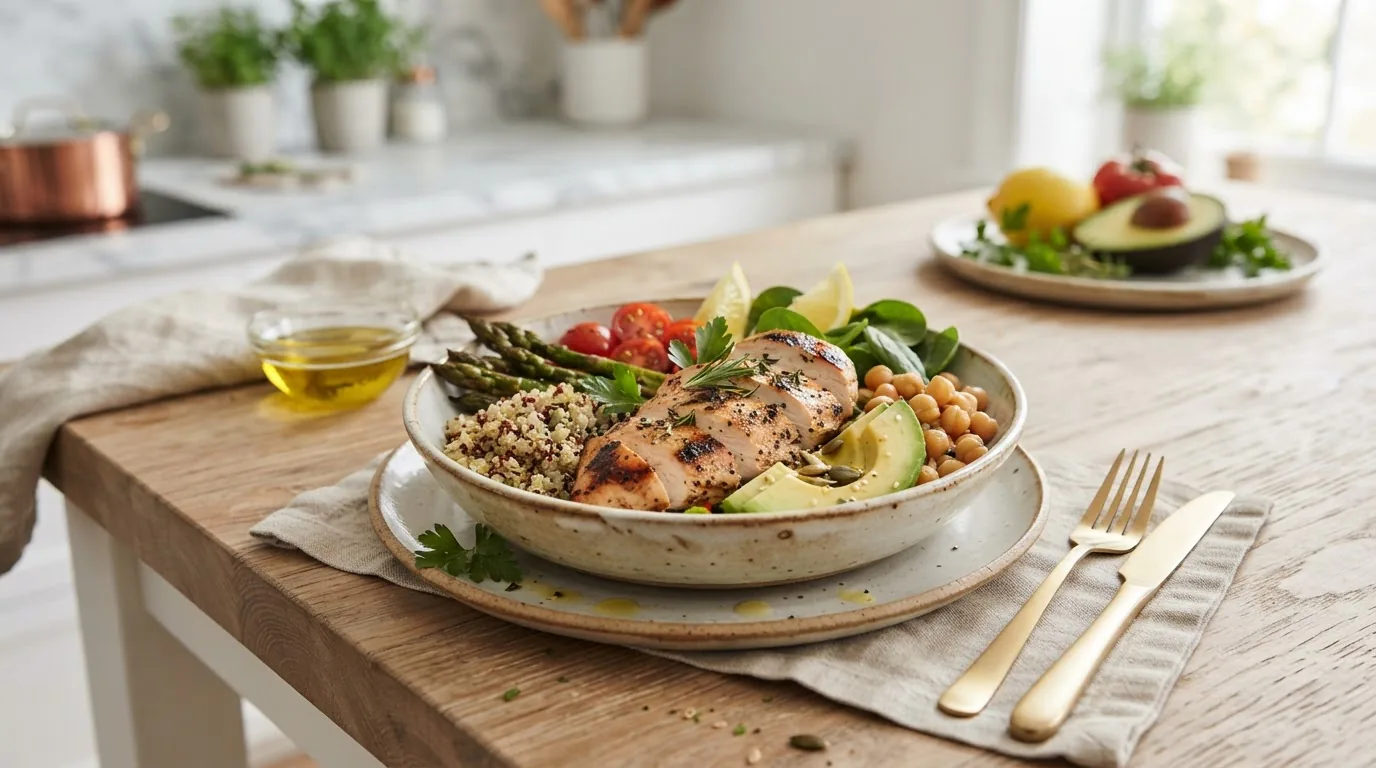
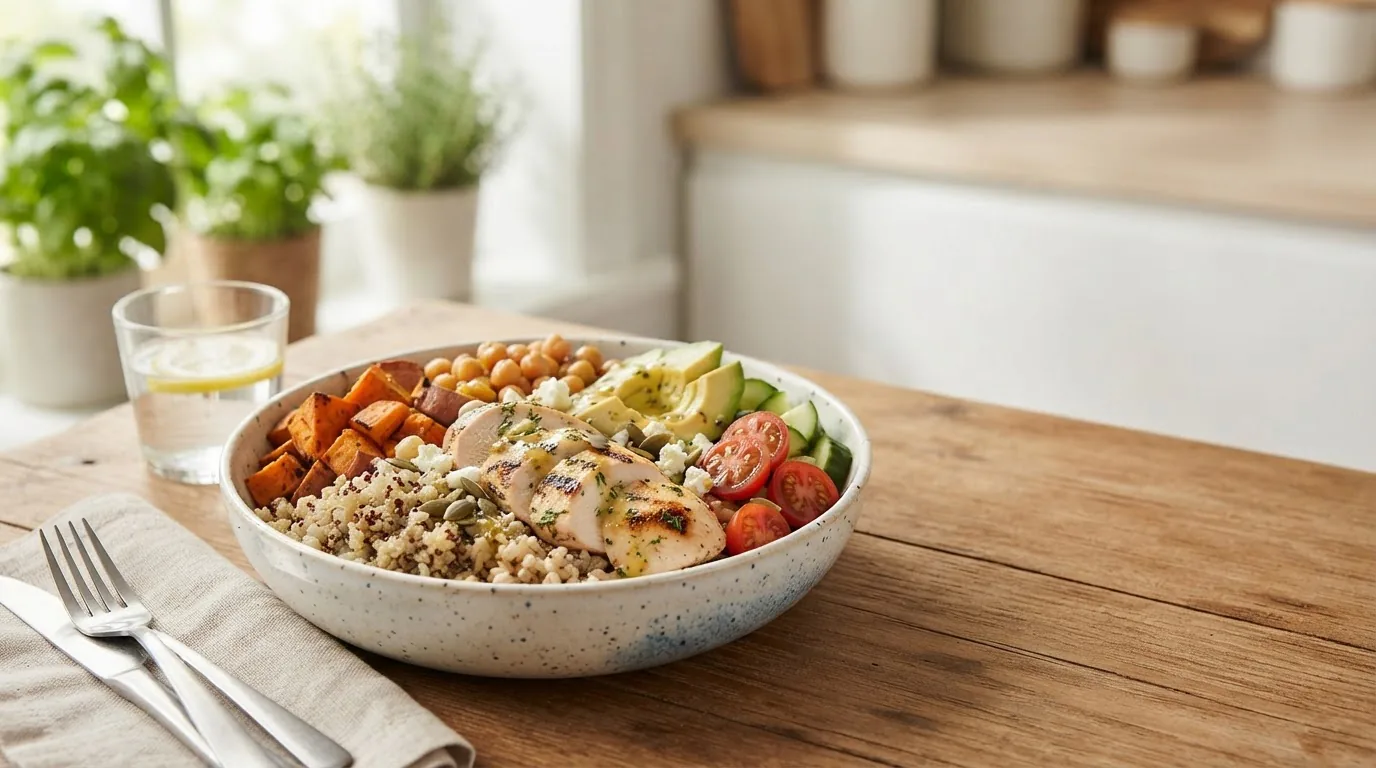
Balancing a chicken breast-centered meal means adding vegetables, whole grains or legumes, and a source of healthy fats. Aim for half your plate to be non-starchy vegetables, one quarter lean protein (like your baked chicken), and one quarter whole grains or starchy vegetables for sustained energy. For low-carb meals, increase non-starchy veggies and add plant-based fats like avocado or a drizzle of olive oil.
Good side pairings should be simple, quick, and nutrient-dense. Pairing ideas below fit the recipes above and offer variety for different dietary needs and meal budgets.
- Roasted Brussels sprouts with a squeeze of lemon and a sprinkle of Parmesan.
- Steamed or sautéed green beans with toasted almonds.
- Quinoa salad with cucumbers, tomatoes, parsley, and a lemon-olive oil dressing.
- Brown rice or farro tossed with fresh herbs and lemon zest for fiber and whole-grain carbs.
- Mixed greens with apples, walnuts, and a light vinaigrette for a crunchy contrast.
- Cauliflower rice or mashed cauliflower for a low-carb option.
- Roasted sweet potatoes seasoned with smoked paprika for color and beta-carotene.
- Steamed broccoli with a drizzle of tahini for a nutty finish.
- Simple cucumber and yogurt salad (tzatziki-style) to complement Mediterranean flavors.
- Chickpea salad with herbs and lemon for plant-based fiber and protein.
Want more vegetarian side ideas to round out a balanced plate? Explore our quick vegetarian dinner recipes for complementary options.
Transition: Next, practical meal planning and prep tips help you turn these recipes into dependable weekly meals.
Meal Planning and Prep Tips for Healthy Chicken Breast Meals
Batch planning and small steps save time without sacrificing freshness. Decide how many meals per week you want centered on chicken breast—2–3 is a common range for variety—and plan sides that reheat well (whole grains, roasted veggies, and chilled salads). Store components separately: cooked chicken in one container, grains in another, and greens or dressings in sealed containers to maintain texture.
- Cook in batches—but in moderation. Roast 4–6 breasts at once and use throughout the week in different dishes (salads, wraps, bowls). This reduces daily cooking time while keeping meals varied.
- Use the right containers. Store in shallow airtight containers to cool quickly and keep quality. Label with date and use within 3–4 days for safety.
- Freeze portions for longer storage. Slice cooked chicken and freeze in portioned bags for up to 3 months. Thaw overnight in the fridge before reheating.
- Reheating tips. Reheat gently in a 325°F oven (covered) or use the microwave with a splash of water to restore moisture. Avoid overheating, which dries meat out.
- Plan complementary sides ahead. Roast multiple vegetables at once and store separately. Grains like quinoa or brown rice reheat well and form the base of quick bowls.
- Make versatile sauces. Whip up a quick yogurt-herb sauce or vinaigrette to change flavor profiles—these can keep for 4–5 days refrigerated.
- Consider cost and portioning. Buy family packs and portion into meal-sized servings to control portions and costs.
- Use leftovers creatively. Turn leftover baked chicken into soups, salads, or grain bowls to avoid monotony.
- For make-ahead lunches, check our tips. If you want a full meal-prep plan tailored to packable lunches, see the easy lunch meal prep guide.
- For more chicken-specific strategies, consult the chicken meal prep ideas guide.
Transition: Knowing storage, reheating and planning sets you up for nutritionally balanced meals—next, check nutrition details and recommendations to tailor these recipes to health goals.
Health and Nutrition Considerations for Chicken Breast Recipes
Chicken breast fits well into a balanced diet due to its high-quality protein and low saturated fat when skinless and prepared without heavy sauces. Consider calories, macronutrient balance, sodium monitoring, and portion sizes when designing meals. For people focusing on muscle maintenance, chicken is a reliable lean protein; for those watching sodium, reduce added salt and choose low-sodium marinades.
According to a 2024 USDA report, skinless roasted chicken breast (per 100 g) contains roughly 165 calories and about 31 grams of protein—making it a nutrient-dense choice for many eating patterns. For specific nutrition guidance, registered dietitians recommend balancing protein with fiber and healthy fats for satiety and long-term adherence; see general recommendations at the Academy of Nutrition and Dietetics.
Typical Nutrition Values (per 100 g cooked skinless chicken breast)
Stat box: Calories ~165 kcal; Protein ~31 g; Total fat ~3.6 g; Saturated fat ~1 g; Carbohydrates 0 g; Sodium varies with seasoning.
Source: According to the USDA FoodData Central (2024) and corroborated by nutrition databases.
Portion control matters: a cooked 3–4 ounce portion (about 85–113 g) is a common serving recommended in many balanced-diet plans. If your goals emphasize higher protein intake (e.g., for strength training), explore specialized resources such as our high protein chicken breast recipes for strategies that increase protein while keeping meals balanced.
Food safety and nutrient preservation: to protect both health and flavor, follow USDA temperature guidance for poultry and avoid overcooking to retain moisture and nutrient quality. For food-safety recommendations on poultry handling and minimum internal temperatures, see USDA Food Safety.
Dietary substitutions and considerations:
- Low-sodium diets: use herbs, citrus, and low-sodium condiments to reduce sodium while keeping taste.
- Dairy-free: replace yogurt-based marinades with olive oil and citrus or coconut yogurt.
- Gluten-free: ensure mustard and soy sauces are labeled gluten-free or use tamari/coconut aminos.
- Vegetarian/vegan alternatives: swap chicken for baked tofu, tempeh, or hearty legumes paired with similar sides.
Disclaimer: Individual dietary needs vary. Consult a registered dietitian or healthcare provider for a personalized nutrition plan.
Transition: Even experienced home cooks face common baking challenges—here are quick fixes to troubleshoot issues you might encounter.
Troubleshooting Common Challenges When Baking Chicken Breast
- Dry chicken: Solution — Use a quick brine, lower oven temp slightly, remove at 160°F and rest to reach 165°F, or slice thin for faster cooking.
- Uneven cooking: Solution — Pound to even thickness or cut into cutlets so all pieces finish at the same time.
- Rubbery texture: Solution — Avoid over-marinating in acidic mixtures for too long; acid can “cook” and firm proteins.
- Flavor loss: Solution — Add finishing touches like fresh herbs, citrus zest, or a quick pan sauce after baking.
- Food safety concerns: Solution — Verify internal temp with an instant-read thermometer and store leftovers within two hours of cooking; refrigerate for 3–4 days.
Transition: With these solutions in mind, you’re ready to bake confidently and create healthy chicken meals that fit your week.
Conclusion and Encouragement for Healthy Cooking with Chicken Breast
Baked chicken breast is a practical, health-forward choice that supports balanced meals without complicated techniques. Use the simple methods and recipes here—brining briefly, minding oven temps, and pairing with fiber-rich sides—to craft satisfying plates that suit varied tastes and dietary needs. Experiment with herbs and low-sodium marinades to keep flavors fresh and rotating through the week.
Try one new recipe this week, adapt it to your schedule, and build a habit of combining lean protein, colorful vegetables, and whole grains. For continued inspiration and nutrition guidance, revisit our Yummiest Healthy Recipes Guide with Nutrition Facts and Tips and other linked resources throughout this article.
Call to action: Pick a baked chicken recipe above, plan one complementary side, and make a simple, healthy meal tonight—small steps lead to sustainable habits.
Frequently Asked Questions
What makes chicken breast a healthy choice for meals?
Chicken breast is a lean meat that provides high-quality protein with relatively low calories and saturated fat when skinless. It supports muscle maintenance and satiety and pairs easily with vegetables and whole grains for a balanced meal suitable for many healthy eating patterns.
How is baking chicken breast healthier than frying?
Baking reduces added fats because you don’t submerge meat in oil, lowering total calories and saturated fat. It preserves protein quality and can retain moisture with proper techniques like light brining or using a thermometer to avoid overcooking.
What are some easy seasonings for healthy baked chicken breast?
Try lemon zest with garlic and oregano; smoked paprika with cumin; yogurt, lemon and thyme; or a simple honey-Dijon mix. Use herbs, spices, and citrus to boost flavor without heavy salt or fat.
How long should I bake chicken breast to keep it juicy?
Bake skinless chicken breasts at 375–400°F for 20–28 minutes depending on thickness. Remove at 160°F and let rest 5–10 minutes so carryover heat reaches a safe 165°F while preserving juiciness.
Can I prepare healthy chicken breast meals on a budget?
Yes—buy family packs, roast multiple breasts at once, and repurpose leftovers into salads or wraps. Use seasonal vegetables and whole grains like brown rice or quinoa for cost-effective, nutritious meals.
Why does my baked chicken breast sometimes turn out dry and how can I fix it?
Dryness usually comes from overcooking or uneven thickness. Fix it by pounding breasts to even thickness, brining briefly, using an instant-read thermometer, and resting meat before slicing to retain juices.
How do I ensure baked chicken breast is safe to eat?
Use an instant-read thermometer to confirm the thickest part reaches 165°F. Cool leftovers within two hours, store in shallow containers, and refrigerate for no more than 3–4 days or freeze for longer storage.
What healthy side dishes go well with baked chicken breast?
Pair with roasted vegetables, steamed green beans, quinoa or brown rice, salads, cauliflower rice for low-carb meals, or legumes like chickpea salad for added fiber—aim for half the plate vegetables and one quarter grains.