Meal prep breakfast can transform rushed mornings into calm, nutritious starts — saving time and improving health. This guide shows you why make-ahead breakfasts work, what tools to own, step-by-step weekly schedules, and dozens of easy, healthy breakfast meal prep ideas you can use now.
What Is Meal Prep Breakfast and Why It Matters
Meal prep breakfast means preparing components or entire breakfasts ahead of time — typically for several days — so healthy morning meals are ready to eat or reheat quickly. The approach emphasizes planning, portion control, and balanced nutrition to reduce decision fatigue, avoid fast-food choices, and support consistent eating habits.
At its core, meal prep uses simple methods like batch cooking (prepare larger quantities, then divide into portions), overnight soaking (for oats and chia), and pre-portioning ingredients (fruit, nuts, cooked grains). These techniques help busy adults maintain a reliable breakfast routine without sacrificing variety or nutrition. Batch cooking is the practice of making multiple servings in one session; it reduces active cooking time and makes weekday mornings easier.
Nutritional advantages include steady energy from balanced macronutrients (protein, carbohydrates, healthy fats), improved micronutrient intake from planned fruit and vegetable portions, and better calorie control when portions are pre-measured. For example, including a lean protein and fiber-rich carbohydrate helps stabilize blood sugar and satiety through the morning. For evidence-based guidelines about balanced meals, consult the USDA.
Beyond nutrition, there are practical lifestyle benefits. According to a 2024 industry report on time-saving food behaviors, people who plan meals ahead report fewer skipped meals and reduced food-related stress (source: 2024 industry report). Anecdotally, many experienced meal preppers note routines like “Sunday 60-minute prep” drastically reduce weekday morning chaos: pre-cook proteins, portion into containers, and label by day. Common success markers are: consistent breakfast intake, quicker mornings, and reduced grocery waste.
Meal prep breakfast also helps meet long-term health goals — from weight management to muscle maintenance — because it creates a predictable, repeatable habit. However, it requires a little upfront planning and the right storage strategies to keep meals tasty and safe.
Next, let’s cover the essential tools and containers that make breakfast prep efficient and reliable.
Essential Tools and Containers for Effective Breakfast Prep
- Glass meal prep containers — Durable, non-porous, microwave- and oven-safe options are best for reheating and long-term use. Use 2–3 cup containers for single-serve meals and shallow 1-cup containers for yogurt parfaits. Tip: clear glass lets you see contents at-a-glance.
- Reusable silicone lids and silicone freezer bags — Flexible and space-saving for oatmeal packs, fruit, and smoothie ingredients. Freeze flat to stack vertically in the freezer.
- Insulated food jars — Great for hot breakfasts like oatmeal or savory grain bowls; they keep food warm for hours when you need to take breakfast on the go.
- Egg tray or silicone muffin pan — Essential for baked egg muffins and mini frittatas; one pan yields 12–18 portions depending on size.
- Sharp chef’s knife and cutting board — Speed up chopping for batch fruit, veggies, and herbs; a good knife cuts prep time dramatically.
- Weekly prep station items: measuring cups, kitchen scale, and mixing bowls — Measure portions accurately for consistent macronutrient targets and portion control.
- Freezer-safe labels and permanent marker — Date and label containers to avoid guesswork and practice FIFO (first in, first out).
- Portable to-go containers and utensils — If you commute, have one dedicated set to avoid disposable waste.
- meal prep container tips — Cross-link for more container strategies and organization ideas used in protein-focused meal preps; same rules apply to breakfast.
- High-speed blender — For smoothie packs and blended breakfasts; choose a model with a tough motor if you’ll include frozen fruit, oats, or nut butters regularly.
Usage tips: choose BPA-free containers, match container size to meal portion, and keep lids ventilated briefly when reheating to avoid steam buildup. Investing in a few quality items pays off in longevity and food safety.
With tools in hand, the next step is mapping your weekly plan so prep time delivers maximum convenience and nutrition.
Planning Your Weekly Healthy Breakfast Meal Prep
Planning is the backbone of successful healthy breakfast meal prep. Start by deciding how many breakfasts you need (workdays only or weekends too), dietary goals (calorie target, protein aim), and how many times you’ll reheat versus eat cold. A clear plan reduces waste and grocery costs.
Follow these step-by-step planning actions:
- Set goals and schedule: Determine how many breakfasts per week to prep (example: 5 weekday breakfasts). Decide prep day(s) — many people choose Sunday evening or two shorter sessions (Sunday + Wednesday).
- Create a simple weekly menu: Aim for variety but repeatable formats (overnight oats 2×, egg muffins 2×, smoothie packs 1×). Include one warm option, one grab-and-go, and one beverage-based meal.
- Make a grocery list by sections (produce, proteins, dairy/alternatives, grains, spices). Buy pantry staples in bulk to reduce cost.
- Portion control: Use a kitchen scale or measuring tools to portion calories and macronutrients. Typical balanced breakfast portions: 20–30 g protein, 30–45 g carbohydrates, 8–12 g fats, depending on individual needs.
- Prep schedule with timings (sample template below).
Sample one-hour Sunday prep schedule for five weekday breakfasts (real weekly meal prep example):
- 00:00–00:05 — Set up workspace: clean counter, gather containers, preheat oven if baking egg muffins.
- 00:05–00:20 — Roast or cook a batch of breakfast proteins (baked tofu or turkey sausage) and whole grains (quinoa or brown rice) in large trays.
- 00:20–00:35 — Whisk and bake egg muffins (12 muffins); while baking, portion overnight oats into jars and assemble chia puddings.
- 00:35–00:45 — Blend and portion smoothie base into labeled freezer bags; flash-freeze berries if needed.
- 00:45–00:55 — Cool baked items, divide into containers, add fresh fruit or crunchy toppings in separate small containers to preserve texture.
- 00:55–01:00 — Label, date, and store in fridge/freezer. Clean up.
This schedule is a practical example showing how batching similar tasks (baking + grain cooking) saves time. Adjust times based on appliance size and kitchen skill.
Sample weekly planner template (quick):
- Monday: Overnight oats (steel-cut oats, Greek yogurt, berries)
- Tuesday: Egg muffins + fruit
- Wednesday: Smoothie pack (spinach, banana, protein powder)
- Thursday: Chia pudding + nut topping
- Friday: Savory grain bowl (quinoa, roasted veggies, egg)
Link meal planning across the day: if you want a full weekly meal strategy, consider adding Easy lunch meal prep ideas to build a cohesive plan that complements breakfasts.
Now that you have a plan and schedule, here are practical, tested breakfast ideas that are easy, healthy, and meal-prep friendly.
Easy and Nutritious Meal Prep Breakfast Ideas
This section lists straightforward, tasty recipes optimized for prepping ahead. Each idea includes a short prep method, storage tips, and nutritional highlights to help you choose the best options for your goals.
-
Overnight Oats (Basic Berry + Greek Yogurt)
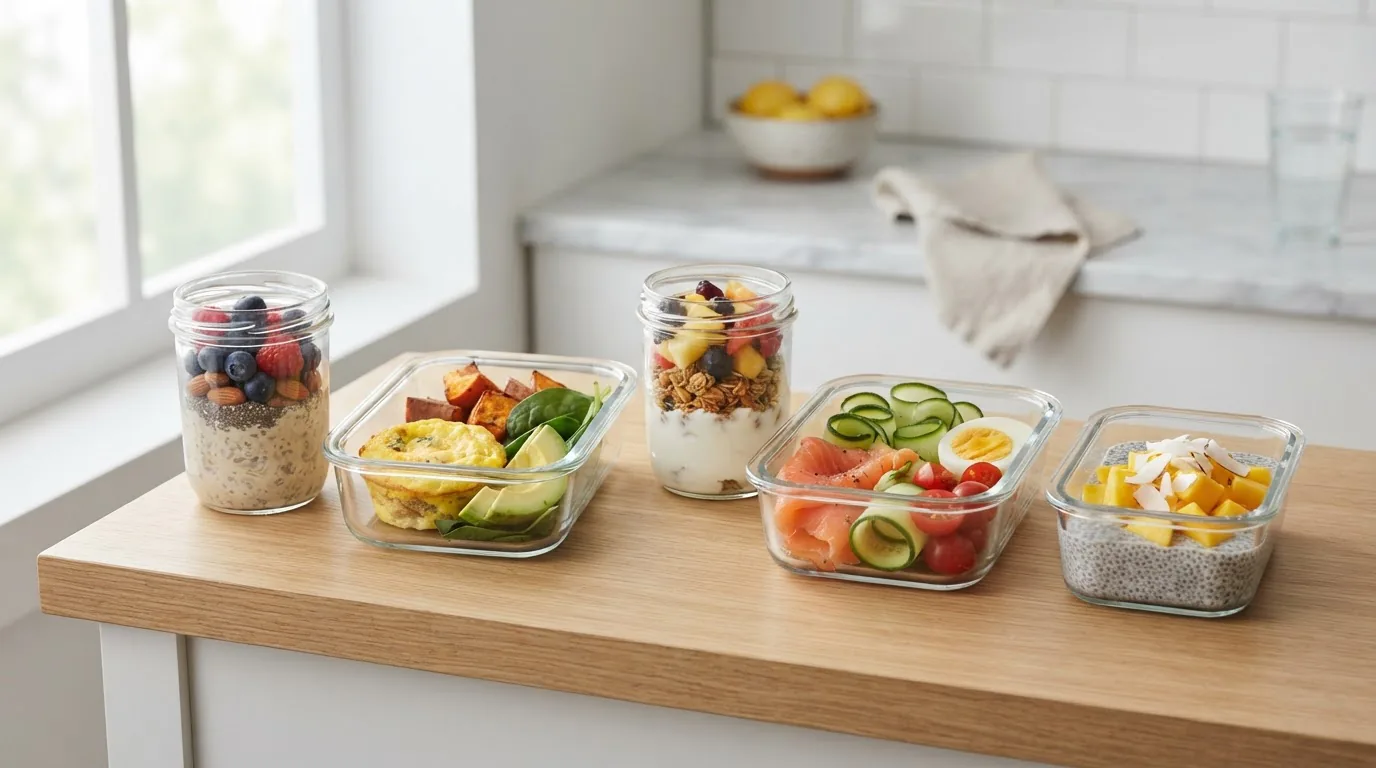
Prep: Combine 1/2 cup rolled oats, 1/2 cup milk (dairy or plant), 1/3 cup plain Greek yogurt, 1 tbsp chia seeds, and 1/2 cup mixed berries in a jar. Stir, seal, refrigerate overnight. Make 5 jars for the week.
Nutritional highlights: ~20–25 g protein with Greek yogurt, 8–10 g fiber from oats and chia, sustained morning energy.
-
Egg Muffins with Spinach and Feta
Prep: Whisk 8 large eggs (or 12 egg whites + 4 yolks), stir in 2 cups chopped spinach, 1/2 cup crumbled feta, salt, and pepper. Pour into greased 12-cup muffin tins. Bake 18–20 minutes at 350°F. Cool, store in containers.
Storage: Refrigerate up to 4 days or freeze up to 3 months. Reheat 30–60 seconds in microwave.
Nutritional highlights: About 12–14 g protein per two-muffin serving; low-carb, filling option.
-
Freezer Smoothie Packs
Prep: Portion combinations into freezer bags — e.g., 1 banana, 1 cup spinach, 1/2 cup frozen berries, 1 tbsp nut butter, 1 scoop protein powder. Freeze flat. In the morning, blend contents with 10–12 oz milk or water.
Storage: Keep bags up to 3 months. Blender-ready saves 5–7 minutes each morning.
Nutritional highlights: Easily hit 20–30 g protein with added powder; fiber and vitamins from fruit and greens.
warming breakfast meals for cold weather — choose warm oatmeal or baked grain bowls in colder months.
-
Chia Seed Pudding (Vanilla-Almond)
Prep: Mix 3 tbsp chia seeds with 1 cup unsweetened almond milk, 1 tsp vanilla, 1 tsp maple syrup. Stir, rest 5 minutes, stir again, refrigerate overnight. Add fruit and nuts before serving.
Nutritional highlights: High in fiber and omega-3s; ~6–8 g protein depending on milk and toppings.
-
Greek Yogurt Parfaits (Layered)
Prep: Layer 1 cup Greek yogurt, 1/3 cup granola (packed separately to keep crunchy), and 1/2 cup fruit in jars. Add honey or nut butter for extra flavor.
Storage: Assemble without granola, add granola day-of for texture. Refrigerate up to 5 days.
-
Mason Jar Breakfast Salads (Savory)
Prep: In a 24-oz jar, layer cooked farro or quinoa, roasted vegetables, fresh greens, cooked protein (chicken, tofu), and a small container of dressing. Shake and eat cold or reheat partially.
Nutritional highlights: Balanced macronutrients and fiber; suitable for savory breakfast lovers.
-
Make-Ahead Whole Grain Pancakes (Freeze & Reheat)
Prep: Make a double batch of whole-grain pancake batter, cook pancakes, cool, and freeze stacked with parchment between. Reheat in toaster or oven. Serve with nut butter or Greek yogurt for protein.
Storage: Freeze up to 2 months. Reheat from frozen in toaster for 2–3 minutes.
healthy breakfast ideas for weight loss — choose portion-controlled pancakes with high-protein toppings.
-
Savory Breakfast Bowls (Grain + Veg + Egg)
Prep: Cook grains (brown rice or quinoa), roast a tray of vegetables (sweet potato, bell pepper, onion), and cook proteins (black beans or diced chicken). Assemble portions and top with a hard-cooked or fried egg when serving.
Storage: Grains and roasted veggies last 4–5 days refrigerated; add eggs day-of or use pre-cooked eggs stored separately for 4 days.
-
Peanut Butter & Banana Overnight Oats (Protein-Boosted)
Prep: Combine 1/2 cup oats, 1 tbsp peanut butter, 1/2 mashed banana, 1 cup milk, and 1 scoop protein powder. Refrigerate overnight. Top with sliced banana and chia seeds.
Nutritional highlights: High-protein breakfast if using protein powder; satiating fats and carbs.
-
Vegetarian Tofu Scramble Meal Prep
Prep: Crumble firm tofu and sauté with turmeric, nutritional yeast, diced peppers, onions, and spinach. Portion with roasted potatoes or whole-grain toast. Refrigerate up to 4 days.
Nutritional highlights: Plant-based protein and iron from tofu; easy vegetarian option for weekday mornings.
vegetarian dinner recipes — for more vegetarian ideas across the day.
-
Protein-Packed Cottage Cheese Bowls
Prep: Portion cottage cheese into jars, top with sliced peaches and toasted almonds, or use diced cucumber, tomato, and olive oil for savory versions. Cottage cheese keeps 4–5 days refrigerated.
Nutritional highlights: Cottage cheese provides 14–20 g protein per cup depending on brand.
-
Batch-Baked Oatmeal (Slice & Reheat)
Prep: Mix rolled oats, milk, egg, mashed banana, and berries. Bake in a 9×13 pan, cool, slice into six portions, and refrigerate/freeze. Reheat individual slices in microwave.
Nutritional highlights: Easy portion control, fiber from oats, option to pack extra protein with Greek yogurt.
-
High-Protein Breakfast Burritos (Freeze-Friendly)
Prep: Scramble eggs with black beans, peppers, and cheese. Wrap in whole-wheat tortillas with salsa, foil-wrap, and freeze. Reheat wrapped burritos in oven or microwave.
Storage: Freeze up to 3 months. Reheat from frozen 2–4 minutes in microwave depending on wattage.
Recipe notes:
- Adjust portion sizes to meet individual calorie and macro goals.
- To increase protein, add Greek yogurt, cottage cheese, or a scoop of protein powder where appropriate.
- To make recipes vegetarian, swap animal protein for legumes, tofu, tempeh, or higher-protein dairy alternatives.
Good meal prep requires safe storage and smart freshness strategies — here’s how to keep breakfasts tasting great and staying safe.
Tips for Keeping Your Breakfast Meals Fresh and Safe
Food safety and freshness are critical. Follow these key tips based on official guidance and practiced meal-prepper techniques:
- Refrigeration: Store most prepared breakfasts at 40°F (4°C) or below. According to the FDA, perishable foods should not sit at room temperature for more than 2 hours.
- Freezing: Freeze portions meant for three days or longer. Freeze flat in bags to save space and speed thawing. For storage durations, follow USDA guidance on safe freezer times via the USDA.
- Labeling: Always date containers and use the FIFO system so older items are eaten first.
- Texture preservation: Store crunchy toppings (granola, nuts, seeds) separately; add day-of to prevent sogginess.
- Safe reheating: Reheat to an internal temperature of 165°F (74°C) for egg- and meat-containing breakfasts; use an instant-read thermometer when unsure.
- Storage durations: Hard-cooked eggs and cooked grains typically last 4–5 days refrigerated; cooked egg dishes (like frittatas) last 3–4 days. When in doubt, follow the CDC or FDA guidance on refrigeration and reheating.
- Avoid cross-contamination: Use clean utensils when portioning and avoid returning used utensils to the bulk prep bowl.
- Thawing: Thaw frozen breakfast items overnight in the fridge, or use the microwave’s defrost setting; avoid thawing at room temperature.
Practical freshness hack: Pre-portion dressings and acidic elements (lemon juice, vinaigrettes) separately to preserve cooked grains and vegetables for longer.
Meal prepping can also save money — here’s how to do breakfast prep without breaking the bank.
Cost-Effective Strategies for Healthy Breakfast Food Prep
Meal prep breakfast is an excellent way to cut food costs by minimizing waste, buying in bulk, and reducing convenience food purchases. Adopt these cost-saving strategies and review the mini case study below.
- Buy staples in bulk: oats, rice, frozen fruit, and canned beans are inexpensive and versatile.
- Use seasonal produce: Buying fruits and vegetables in season reduces per-unit cost and improves flavor.
- Cook once, eat multiple ways: A batch of roasted sweet potatoes can appear in breakfast bowls, wraps, or as a side for dinner.
- Freeze extras: Overproduce and freeze portions instead of discarding leftovers.
- Plan to use the same ingredient in 2–3 meals across the week to reduce waste (e.g., buy a tub of Greek yogurt and use in oats, parfaits, and pancakes).
Mini case study: Weekly breakfast budget for five weekday breakfasts (basic plan)
| Item | Qty | Cost (USD) | Notes |
|---|---|---|---|
| Rolled oats (bulk) | 2 lb | $3.00 | ~10 servings |
| Greek yogurt (large tub) | 32 oz | $4.50 | Used in oats & parfaits |
| Eggs | 1 dozen | $2.50 | Egg muffins for 5 days |
| Frozen berries | 2 lb | $6.00 | Smoothies and oats |
| Spinach | 1 bag | $2.50 | Egg muffins and bowls |
| Total estimated cost | $18.50 | ~$3.70 per breakfast |
By contrast, buying breakfast out frequently can cost $6–12 per meal. Over a month, prepping can save $100+ depending on choices. For budget-friendly dinner complements to stretch household savings, try affordable dinner meal ideas to balance costs across meals.
Additional money-saving tips: choose store brands, use discount apps and coupons, and plan meals that share ingredients to improve economies of scale.
Even with planning, issues come up. Here are common challenges and straightforward fixes.
Troubleshooting Common Challenges in Breakfast Prep
My breakfast gets soggy — how do I stop this?
Solution: Pack crunchy toppings separately, rinse fruit just before eating, and layer liquids at the bottom of jars (yogurt/oats then fruit) so textures remain protected.
I’m running out of fridge space.
Solution: Prioritize stacking and using vertical containers, freeze some portions, and invest in shorter, wider jars that fit better in limited shelving.
Prep takes too long on the weekend.
Solution: Break tasks into two shorter sessions (Sunday and Wednesday); double up on tasks when cooking (bake grains alongside egg dishes) to reduce total active time.
Meals taste repetitive and boring.
Solution: Rotate flavors weekly, use spice blends and fresh herbs, and switch toppings to change the mouthfeel (seeds, citrus zest, pickled vegetables).
Worried about food safety and spoilage.
Solution: Follow refrigerator time limits (most cooked items 3–5 days), freeze items for longer storage, and always label with dates. When in doubt, discard if odor or appearance changes.
How do I keep up with meal prep when traveling?
Solution: Prepare portable options like protein bars, nut mixes, and shelf-stable oatmeal cups; use hotel microwaves to reheat frozen breakfasts or choose instant-grab options prepared before travel.
To finish the guide, here’s how to adapt meal prep breakfasts for dietary needs and preferences.
Incorporating Dietary Preferences and Restrictions in Breakfast Prep
Meal prep can suit many dietary patterns. Below is a concise comparison of suitable prep ideas and modifications for common preferences and restrictions.
| Diet/Restriction | Good Prep Ideas | Simple Modifications |
|---|---|---|
| Vegetarian | Tofu scrambles, egg muffins, chia pudding, cottage cheese bowls | Use legumes, tempeh, Greek yogurt for protein; add seeds and nuts |
| Low calorie / weight loss | Overnight oats with less honey, chia pudding with low-fat milk, egg-white muffins | Reduce added sugars, increase veggies, control portions |
| High-protein | Egg muffins, cottage cheese bowls, protein-packed smoothies | Add protein powder, Greek yogurt, or lean chicken; see high-protein meals with chicken for ideas across the day |
| Gluten-free | Quinoa bowls, chia pudding, gluten-free oats | Use certified gluten-free oats and gluten-free breads/wraps |
| Diabetic-friendly | High-fiber, lower-sugar overnight oats, egg-based meals, vegetable bowls | Monitor portion sizes, focus on low glycemic carbs, consult a registered dietitian |
Notes on customization:
- For higher protein needs, add 15–30 g of protein per meal using Greek yogurt, protein powder, or lean meats.
- For diabetic- or blood-sugar-sensitive diets, prioritize fiber and protein while limiting simple sugars; a registered dietitian can personalize targets based on individual health metrics — see the Academy of Nutrition and Dietetics for evidence-based resources.
- vegetarian dinner recipes — use these dinner ideas to balance vegetarian protein intake across the day.
- high-protein meals with chicken — incorporate lean chicken across meals if not vegetarian.
Ready for a final push to make quick, healthy breakfasts part of your every day? Here’s the wrap-up.
Final Thoughts: Making Healthy Morning Meals Easy Every Day
Meal prep breakfast is a practical, sustainable approach to consistent nutrition and calmer mornings. By using batch cooking, smart containers, and a short weekly schedule, you can build a routine that saves time, money, and mental energy. Begin with one simple system (overnight oats or egg muffins) and expand as you gain confidence.
Remember the trade-offs: upfront time investment, refrigerator/freezer space, and occasional monotony. These are balanced by reliable nutrition, less food waste, and lower per-meal cost. For broader recipe inspiration and nutrition guidance that complements this breakfast-focused guide, explore the Yummiest Healthy Recipes Guide with Nutrition Facts and Tips.
Practical next steps: pick one prep-friendly recipe, schedule one 45–60 minute session this weekend, and shop using the simple grocery template above. If you have dietary restrictions or specific medical conditions, consult a registered dietitian or healthcare professional for personalized advice.
Make your mornings easier and healthier — start small, be consistent, and adjust as you learn what you like. Your future self will thank you for those calm, nutritious breakfasts.
Frequently Asked Questions
What does “meal prep breakfast” mean, and how does it work?
Meal prep breakfast means preparing breakfast components or full meals ahead of time—often weekly—so you can grab, reheat, or eat quickly. It uses batching, portioning, and storage strategies to save time, ensure balanced nutrition, and reduce morning decision-making.
How does meal prep breakfast differ from cooking breakfast fresh every day?
Meal prep focuses on advance preparation and portioning; cooking fresh requires daily time and effort. Prep reduces active morning cooking time, increases consistency, and helps control portions, while fresh cooking offers more immediate variety and texture.
What are the easiest healthy breakfast meal prep ideas for beginners?
Beginner-friendly options include overnight oats, egg muffins, chia pudding, yogurt parfaits (granola added day-of), and freezer smoothie packs—each requires minimal equipment and stores 3–5 days refrigerated or longer if frozen.
How long does a prepared breakfast typically last in the fridge or freezer?
Most cooked breakfasts last 3–5 days refrigerated; items like overnight oats and chia pudding usually last 4–5 days. Frozen portions can last 1–3 months depending on the item. Follow FDA/USDA guidance for specific foods.
How can I avoid my meal prep breakfasts becoming soggy or stale?
Keep crunchy toppings separate, add wet ingredients last, store dressings apart, and assemble jars with dry items on top. Use airtight containers and avoid mixing wet and dry components until serving day.
Can I meal prep breakfast if I follow a vegetarian or diabetic diet?
Yes. Vegetarian options include tofu scrambles, egg-based dishes, and Greek yogurt bowls; diabetic-friendly prep emphasizes fiber and protein, low added sugars, and portion control. Consult a dietitian for tailored guidance.
What kitchen tools do I need to start meal prepping breakfast effectively?
Essentials: glass meal prep containers, silicone freezer bags, a muffin pan for egg muffins, a good blender for smoothies, a chef’s knife, and labels. These items speed prep and ensure safe storage.
How much time should I set aside for meal prep breakfast each week?
Most people find 45–90 minutes weekly is sufficient for 4–7 breakfasts using batch methods. A one-hour Sunday session plus one midweek top-up works well for many schedules.